The Voice of Gloriya Avgust
How do you mould materials with the same sensibility with which you morph words into writing? The research-driven practice of visual artist Gloriya Avgust (1993, Bulgaria) moves between text, sculpture and performance in which the materiality of language is approached in an explicitly corporeal way.
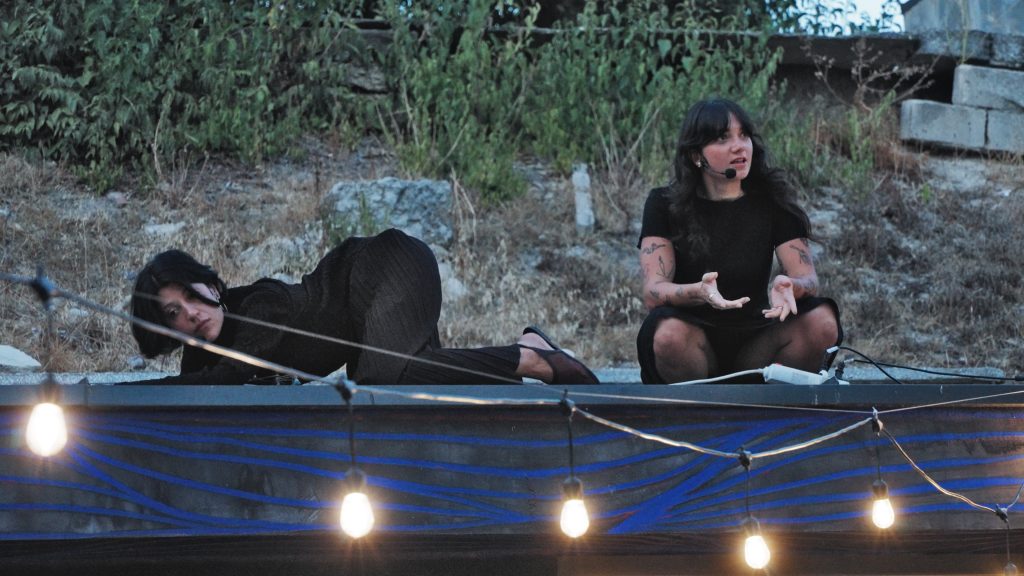
Avgust is an avid reader and deeply interested in feminist theory. The female voice as a subject of research and the ways in which women have systematically been muted throughout history speak innumerably to her. Writers like Audre Lorde, Anne Boyer and Gloria Anzaldúa are among the many prolific voices that have fed her artistic practice. “I saw how vulnerable and muted women can become inside extractive systems that do not truly care about their bodies. That brought me to feminist writers who had already lived those experiences.” This research is never directly addressed, but rather permeates her work.
Avgust received her MFA from Sint-Lucas Antwerp in 2021 and from the Piet Zwart Institute Rotterdam in 2023. She is one of the 92 emerging artists who recently received an Artist Start grant from the Mondriaan Fund, which enabled her to undertake a residency in Bulgaria. This inspired her latest artwork Performing a State of Permanence (2026), a ceramic installation that will be exhibited in the Prospects section of Art Rotterdam.
Embodied Text and Gestures
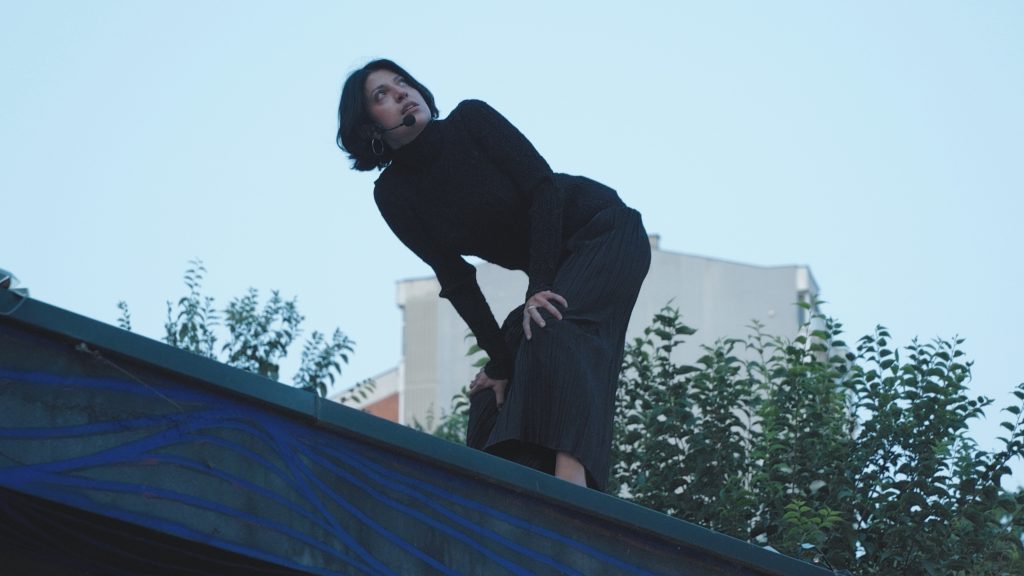
Vrouwenproblemen: Spinning the Mechanisms of Troublemaking (2025) is a strong example of her multifaceted and intersectional practice. The performance is developed together with Andrea Celeste La Forgia, a visual artist who is also exhibiting in the Prospects section of the fair. Conceptually, the work departs from two research lines that converge in one polyphonic translation.
“I’ve always had an affinity with language,” Avgust explains. “And often my writing builds the physical work where it is performed or embodied in choreographic gestures.” The movements of the performance are informed by The Weaver Speak, a hidden nonverbal language that women in the Textiel factory in Tilburg developed to communicate in secret. The script in the performance becomes a mix of archival elements and speculative forms of writing.
Avgust and Celeste La Forgia also researched Spinhuis in Amsterdam, which was the first reformatory institution and prison for women run by women. What initially appeared revolutionary in protecting women from abuse in mixed prisons ultimately housed another kind of abuse. “The women were taught how to spin wool and were basically practising free labour. During the weekends, the bourgeois visited them as if they were some kind of attraction,” Avgust says.
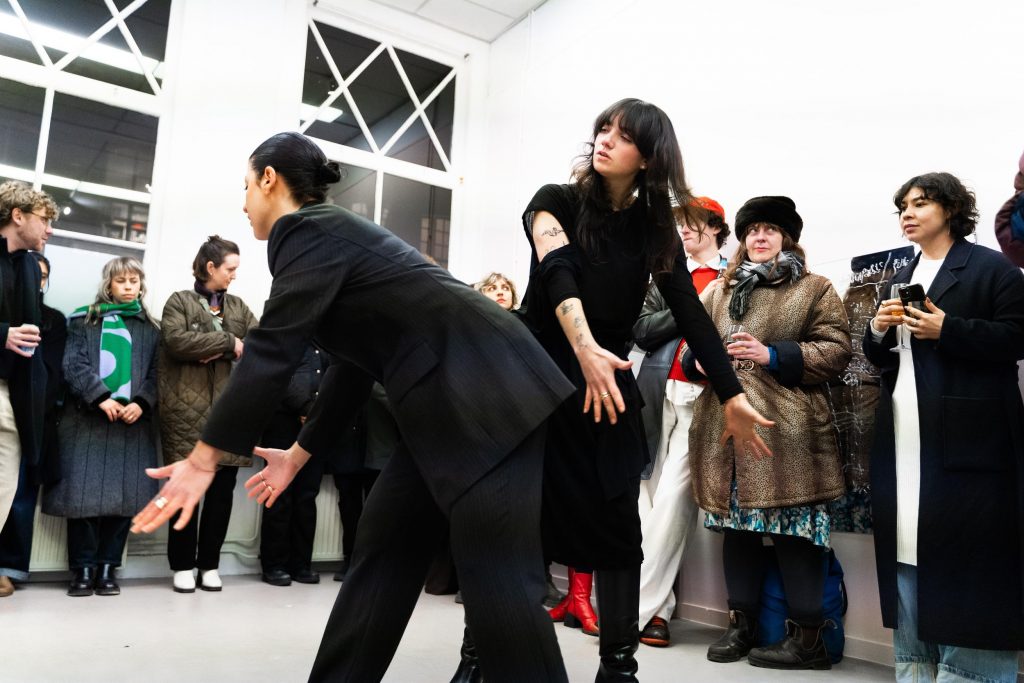
Another telling example of her performative practice is Slippages Of The Mouth (2025), which was also a collaboration with Andrea Celeste La Forgia. The visuals of the performance draw on the photographic archive of the controversial French neurologist Jean-Martin Charcot, who researched hysteria, a diagnosis applied almost exclusively to women. Charcot organised public demonstrations in which patients had to stage their ‘hysterical attacks’. These sessions were photographed, and since photography at the time still required long exposure times, the women had to hold these theatrical poses for extended durations.
Performing a State of Permanence
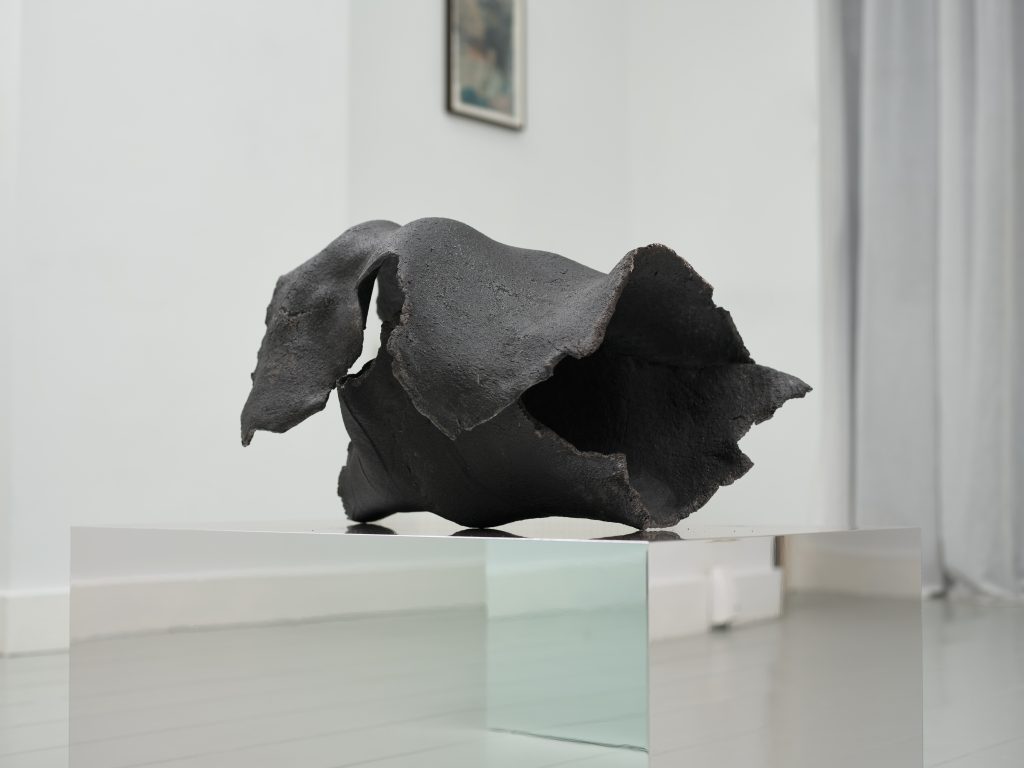
Performing a State of Permanence (2026) is still in development and will be exhibited at Prospects.
The ceramic work further builds on the motif of rupture that runs through Avgust’s practice. An ambiguous opening that at once holds a linguistic rupture, a physical incisional gesture, and a projection of violent beasthood onto the female body.
“Sappho, an Ancient Greek queer poet whose work survives only in fragments, really inspired my ceramic work. So much of her writing exists in bits and pieces, with lines missing or broken off. I think this is such a beautiful visual representation of the ripping of language, of stanzas, of meaning. And I wanted to physically translate that ripping into ceramics. The opening might be a mouth with a tongue and throat, but it could very well also look like a vagina and uterine wall. I’m intrigued by the theatricality of something that can open and close, that can reveal, conceal, threaten, mystify, where it has the potential to become a kind of stage.”
The image of the mouth as devouring organ folds back onto Charcot’s photography, where women’s bodies were staged as sites of hysterical animalistic excess. Avgust puts sharp rows of tin teeth in the hole as if an abstract monstrous creature is living inside.
The Voice of Glass
During her artist residency in Bulgaria, Avgust delved deep into spiritual rituals with pagan roots. “What I noticed is that much of that knowledge hasn’t been properly documented or archived, because a lot is transmitted by word of mouth and through songs,” she says. One ritual in particular stood out. “It was believed in Ancient Greece that the female voice was so cacophonous and piercing that when women gathered and wailed in the streets, it could open a portal to the underworld.” The practice was eventually banned because it was considered ugly and too disruptive. Yet similar traditions can still be found in Bulgaria and other Eastern- and Southern European countries, though they are also regarded as excessive.
From a patriarchal perspective, female togetherness is often framed as harmless or joyful, while anything that deviates from those expectations is quickly labelled disorderly. “Yet many of these rituals stemmed from collective grief and shared suffering, ” Avgust explains.
She links this lineage of thinking to Anne Carson’s essay The Gender of Sound in her book Glass, Irony and God. Carson observes how the female voice has historically been disciplined in tone, volume and emotional range and reflects on glass as a material that holds that tension: through glass one can see or hear someone, and still keep them at a distance.
It feels almost uncanny when Avgust mentions that the Bulgarian word for voice phonetically overlaps with “glass” in English. A serendipitous coincidence that will undoubtedly continue to inspire her practice where language and materials symbiotically feed one another.
Discover her newest work Performing a State of Permanence (2026) at the Prospects section of Art Rotterdam.
Written by Emily van Driessen


