Meet the nominees for the NN Art Award 2026: IV Tina Farifteh
This year marks the tenth edition of the NN Art Award. The annual incentive prize of €10,000 is awarded to a talented artist who completed their education in the Netherlands and presents work at Art Rotterdam (27–29 March at Rotterdam Ahoy). The professional jury nominated four artists: Fiona Lutjenhuis (Galerie Fleur & Wouter), Tina Farifteh (Gallery Vriend van Bavink), Mandy Franca (Night Café Gallery) and Kyra Nijskens (Prospects / Mondriaan Fonds). From 14 March to 25 May 2026, work by all nominees will be on view at Kunsthal Rotterdam.
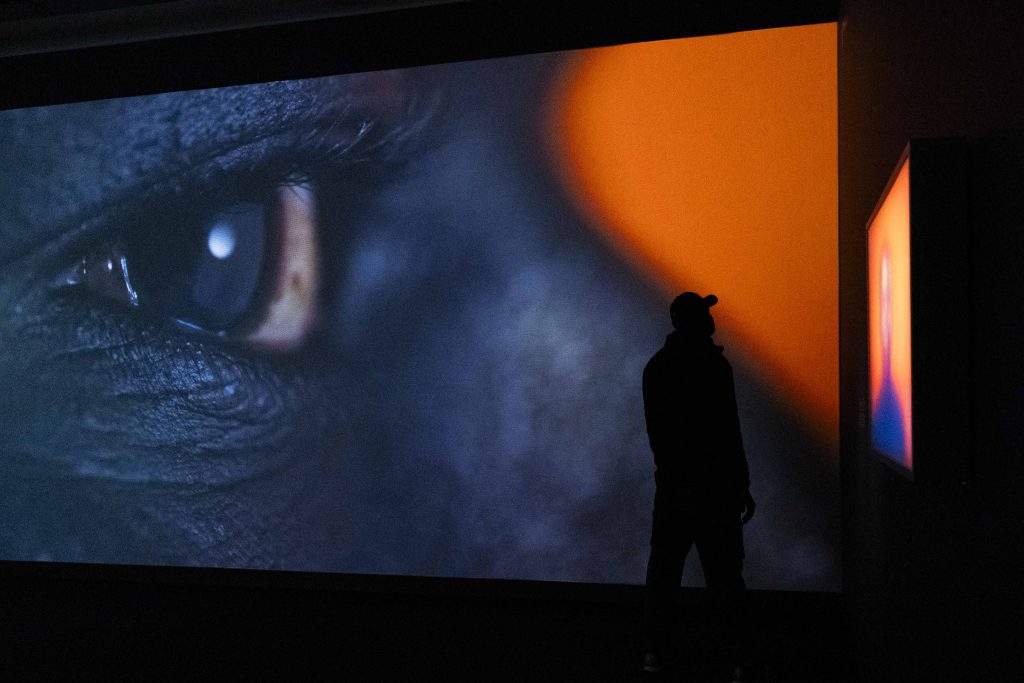
The multidisciplinary practice of Tina Farifteh examines the ways in which power structures shape the everyday lives of ordinary people, and how the images and words we hear and see influence our thinking, our actions and our emotions. As a photographer, filmmaker and visual artist she does not seek ready-made answers, but rather images that compel viewers to confront complex and uncomfortable truths. In doing so, she primarily appeals to our shared humanity. Through her installations, films and photographic projects, Farifteh attempts to narrow the gap between abstract political debates and human experience. Her work addresses feelings of home and belonging, migration and identity, empathy and exclusion, as well as policy, discourse and image-making.
Farifteh was born in Tehran in 1982 and moved to the Netherlands at the age of thirteen. She studied Photography at the Royal Academy of Art in The Hague and completed a master’s degree at Erasmus University Rotterdam. Her graduation project "The Flood" (2021) immediately attracted wide attention. In this audiovisual installation, visitors are surrounded by three enormous projections of a churning sea while a synthetic voice reads out the names, locations and statistics of missing and drowned refugees. Fragments of political rhetoric about migration can also be heard. The work reveals how refugees are often discussed in political discourse: in suspicious, criminalising and dehumanising terms, frequently through metaphors of waves, streams or tsunamis, words that are far from innocent because they shape our perception.
In the short documentary "Kitten or refugee?" (2023), Farifteh took a further step in her investigation into empathy. Test subjects were shown images and were asked to decide whom they would rescue in an emergency situation. But who deserves our help and why? The choices proved, unsurprisingly, to be strongly shaped by prejudice and reveal how quickly people attempt to rationalise their decisions. "Kitten or refugee?" was selected for the Debut Competition of the Netherlands Film Festival and received first prize in the Storytelling category of De Zilveren Camera.
In her installation "Toen ik de zon en de maan tegelijk zag" [“When I saw the sun and the moon simultaneously”], which was acquired by the Fries Museum, Farifteh poses a different, but related question. If society seems unable to offer a place to those who wish to feel at home somewhere, might the landscape provide space instead? With its openness and its apparent distance from political structures, the landscape here becomes a possible place of refuge. At the same time, the artist invites visitors to reflect on their own ideas about home, identity and exclusion, and not least on their own role.
Earlier this year, her most recent work was shown at the Rijksmuseum, which also acquired it for its collection. The museum invited her to visualise the theme ‘Asylum’ for the fiftieth edition of the annual photography commission Document Nederland. In this project, Farifteh reverses the perspective: instead of speaking about refugees, she allows them to speak themselves, showing us through their eyes who ‘we’ have become. Her practice is strongly rooted in research and for Document Nederland she spoke, often on location, not only with asylum seekers but also with specialists from across the field, from lawyers and staff members of COA and IND to journalists and people working for non-governmental organisations. This work also earned her a Zilveren Camera in the Storytelling category.
Can you tell us more about the work you present at Art Rotterdam and in Kunsthal Rotterdam?
For Document Nederland, the Rijksmuseum’s annual photography commission, I photographed and filmed the Dutch asylum system. The central figure is B., who after more than four months in immigration detention at Schiphol and a stay in Ter Apel is now in the middle of an asylum procedure. By presenting B. as a guide and narrator, I reverse the gaze: instead of speaking about asylum seekers, I allow the audience, quite literally, to listen to one of them. In doing so I hold up a mirror to the Netherlands. This exhibition is not about them but about us.
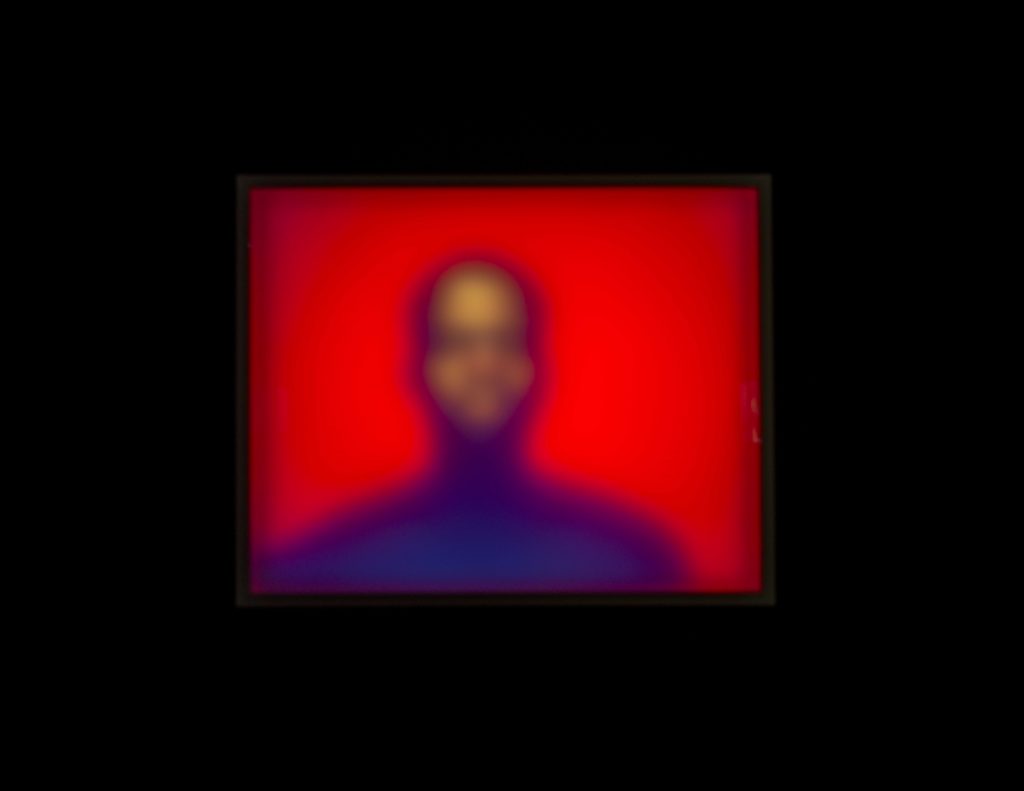
At Art Rotterdam and in Kunsthal Rotterdam I present several elements from this exhibition. One of the key works is titled "Naturalisatie van het portret van B” ["Naturalisation of the portrait of B”]. B. spent more than four months detained at the Schiphol detention centre. He does not feel protected by our laws: he asked for help and ended up in a cell. Yet he wants to share his story because he believes society should know what happens behind these walls, even though he fears the consequences. As an artist, I hold no political power, but I can create images and tell stories. Museums, cultural institutions and collectors can preserve those images for the future.
The final step in the asylum procedure is naturalisation, officially becoming Dutch. This is only possible after five years of legal residence. B. is still far from that point. So I wondered whether I could already ‘naturalise’ B.’s portrait. B., the Rijksmuseum and I agreed that his portrait will be included in the collection, but as long as B. feels unsafe his portrait will remain unrecognisable and visible only behind frosted glass. These agreements also apply to acquisitions at the fair or the display of the work in Kunsthal Rotterdam. Only when he feels safe, or when he feels he has nothing left to lose, will his face and identity become visible. In this way we record not only his story but also the time in which he felt unprotected.

What are your plans for 2026?
An exhibition is a powerful medium. It allows a public to be immersed in a story, to create an experience that resonates and lingers. But exhibitions are often temporary. That is why I want to make a book, a lasting form in which not only the story of B. takes centre stage but above all: the story of the Netherlands and how we deal with people who ask us for protection.
'Asiel' is a layered visual essay in book form in which I connect the past and the present through four pillars of Dutch identity: culture, religion, the rule of law and the economy. I combine my own images with works from the collection of the Rijksmuseum, supplemented by material from news media and social media. Three storylines intertwine: the story of B., who has just arrived in the Netherlands, my personal journey through crucial locations within the asylum process, and an investigation into how ‘the asylum seeker’ has been represented historically and in the present.
'Asiel' questions our norms, values and freedoms and reveals how a system once rooted in empathy could harden into something distant and indifferent. By showing not only what happens but also what this says about us, the book opens a critical perspective on how the Netherlands deals with people seeking protection. The work breaks through distance and abstraction and invites reflection on our history, our identity and our responsibility in the present. For this book I am collaborating with design studio LMNOP for the design and with publisher The Eriskay Connection.
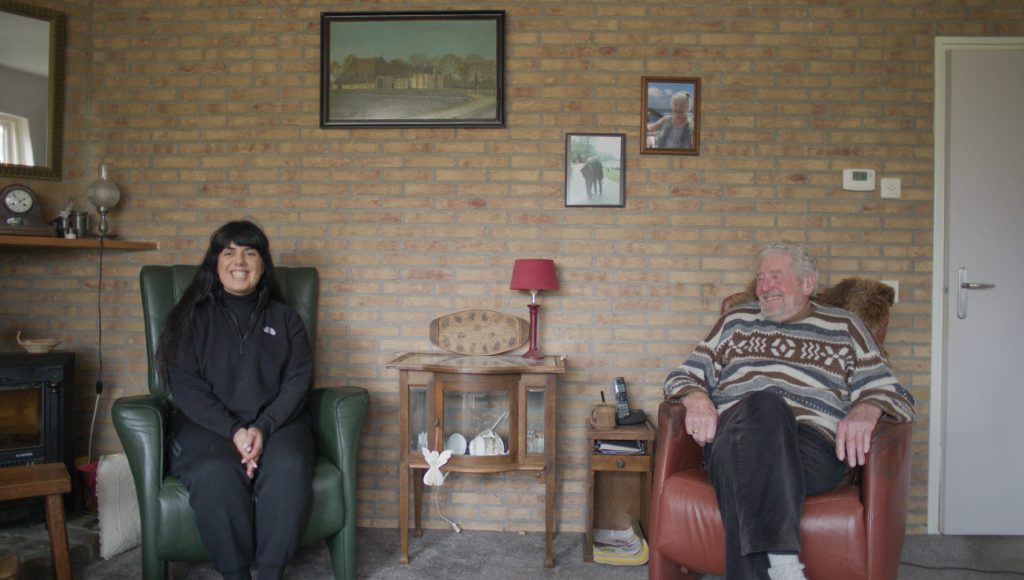
In addition, I am currently working on a three-part documentary series Tina in Sexbierum, which will be broadcast on VPRO / NPO from Thursday 7 May. A few years ago, I moved to a small village in Friesland because I could no longer find affordable housing in Amsterdam. Friends who leave the city often return to where they came from, but I cannot return to my birthplace Tehran. When I arrived in the village I encountered curious looks and prejudices from villagers about ‘outsiders’, but also my own assumptions about the countryside and the closed nature of my own Amsterdam bubble.
In Tina in Sexbierum, the two worlds that come together lead to honest and occasionally confronting encounters. I speak with my fellow villagers, from the mayor to the postman, bicycle repairer and GP. I meet the village brass band Door Samenwerking Groot and learn that cooperation is a skill that must be learned. And a close friendship develops with my 83-year-old fellow villager, former potato farmer Auke, with whom I drink coffee every week. I gradually come to know the small community better and discover what living together and caring for one another truly means. By looking at one another with humour, lightness and affection, both my fellow villagers and I begin to learn from each other despite our differences.
Tina in Sexbierum is a personal and disarming documentary series about displacement, detachment, the longing for a home and at the same time the inability to feel at home in a society that continually rejects you on an existential level. The three-part series forms part of the transmedial project of the same name.
In 2027, Foam Amsterdam will present a survey exhibition bringing together all parts of the project, including video, photography, text, light and sound, in a single presentation.
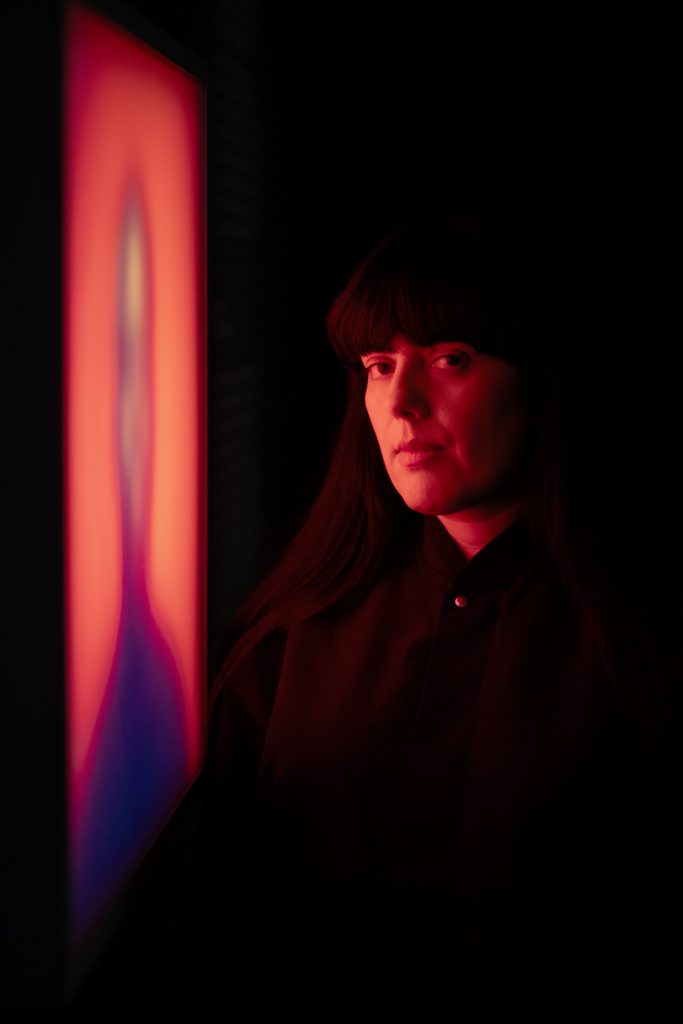
Can you describe how you felt when you heard that you had been nominated for the NN Art Award?
I was very surprised and honoured, and above all incredibly happy. Happy because the nomination gives more people the opportunity to see the work. But also because it creates greater attention and awareness for B.’s story and for the situation many people like B. currently face in the Netherlands. B. and I are grateful that the story reaches a wider audience in this way, so that no one will be able to say: we did not know.
Which project would you immediately take on if you were to win the award?
My dream is to publish the book 'Document Nederland: Asiel' and to launch it in a special way. We want to present it in a location that can be transformed both visually and conceptually, allowing us to immerse the audience in images, stories and connections. It should become a total experience in a physical way, a space in which the story can be felt and that visitors can then take home in the form of the book. For both the production of the book and its launch, we can use all the help and support we can get. Winning this award would be a tremendous step towards realising that dream.
The work of Tina Farifteh has previously been shown at Amsterdam Museum, the Rijksmuseum, the Fries Museum, Monopole - Schiedam Museum, Museum Hilversum, Sexyland, Melkweg Expo, The New Current, BredaPhoto and on NPO VPRO.
The winner of the NN Art Award 2026 will be announced on Friday 27 March at Kunsthal Rotterdam. During this festive evening, all exhibitions, including the NN Art Award exhibition, will be freely accessible to invited guests.
Written by Flor Linckens


