The camera of Sakir Khader: a witness to the present
Sakir Khader’s artistic practice arises from a deeply felt urgency to make injustice visible, without reducing the people he portrays to symbols of suffering. That is precisely where the strength of his images lies: they are harsh and confrontational when necessary, yet remain consistently humane, dignified and intimate. His work as a visual artist, photographer, film director, documentary maker and investigative journalist exists somewhere between art and document. In doing so, Khader underscores something fundamental: that behind every life lost lies an entire world, and that this world deserves to not only to be mourned, but also truly seen.
At Art Rotterdam, his work will be presented in the booth of No Man's Art Gallery, in a duo presentation with Alejandro Galván.
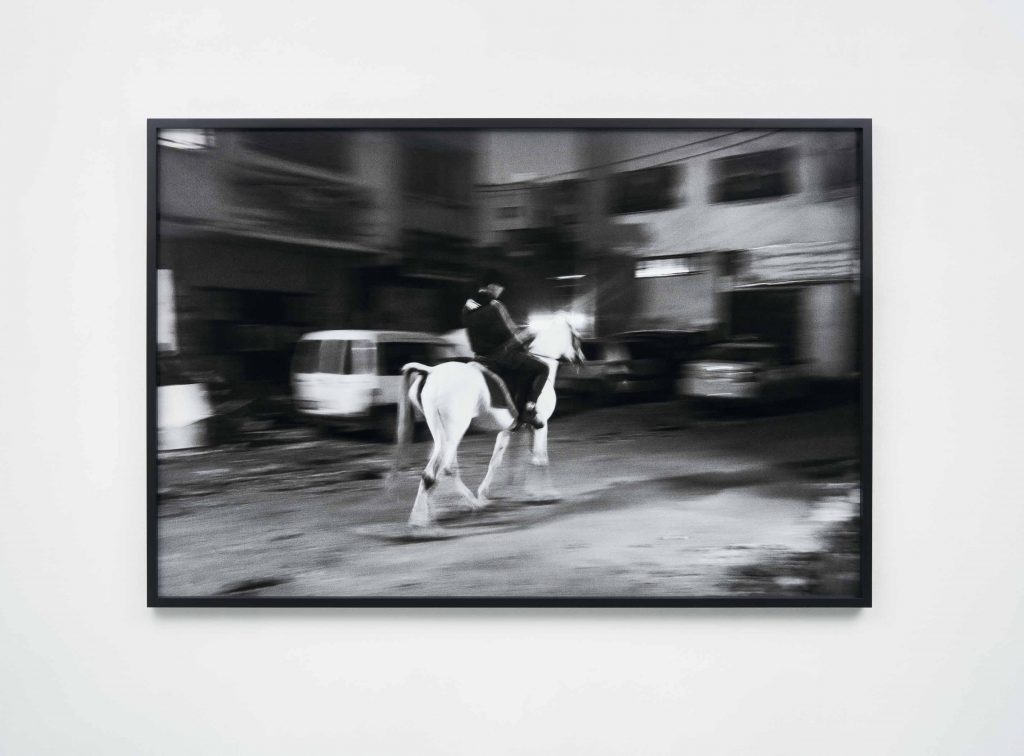
Khader was born in 1990 in Vlaardingen to Palestinian parents, but spent much of his time with family in the West Bank. This bilingual, bicultural background often works to his advantage in his practice. Because he speaks the language, listens attentively and instinctively understands subtle cultural codes, he is able to build long-term relationships and gain access to worlds that usually remain closed to outsiders. This is evident in his images: he does not observe from a distance, but works from within, guided by a strong sense of responsibility. His work departs from journalistic precision and a drive to document, and therefore also carries an archival function. He attempts to preserve something of people and worlds that are systematically erased and dehumanised. As a result, his work operates both as document and indictment. He has portrayed Palestinian fighters in the West Bank before their deaths, as well as the grief of the mothers they leave behind. In this context, the term ‘fighter’ is not limited to those who are armed, but also includes those who resist in other ways.
In 2024, Khader was nominated to join the prestigious photography collective Magnum Photos. He has received, among other honours, a Silver Camera Award and the Amsterdam Prize for the Arts, published several photobooks, presented a solo exhibition at Foam Amsterdam and appeared as a guest on the television programme Zomergasten.
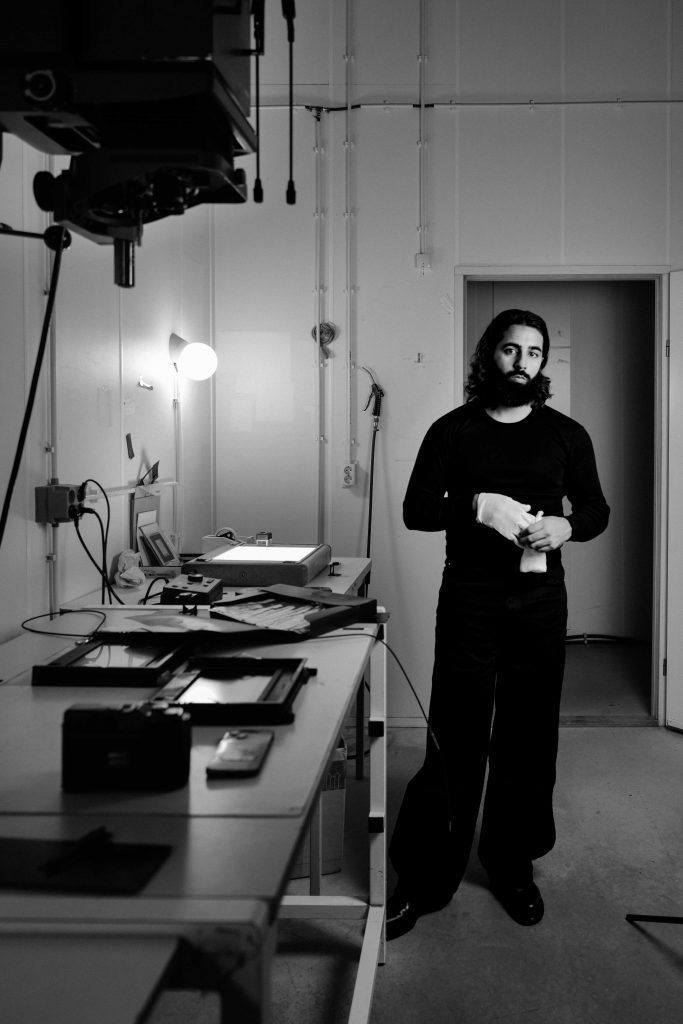
The artist’s practice depicts conflict zones in the Middle East or, more precisely and less Eurocentrically: West Asia. He has travelled to countries including Afghanistan, Syria and Iraq. Yet his work is not solely concerned with war in its most spectacular sense. Rather, it focuses on what war does to everyday life. Threat, structural uncertainty, historical displacement and loss exist alongside tenderness, beauty, humour and a love of life.
At its core, Khader’s oeuvre revolves around the relationship between life and death under occupation, particularly in Palestine. A defining moment was the death of his eleven-year-old cousin Kosay, who was shot by an Israeli soldier in 2002, shortly after Khader, who was around the same age, had spent a summer with him. Since then, the artist has used his camera as a tool to document what happens to Palestinian communities under occupation. His work shows the death and violence that Israel causes, but above all how these realities permeate everyday life: within families, in processes of mourning, in youth, in freedom of movement and in the ability to imagine a future. In doing so, he makes visible that oppression and genocide do not occur only in the moment of an attack or incursion, but also persists in the slow weight of loss, in constant fear and in the systematic disruption of daily life.
Khader employs a raw, emotional and cinematic visual language, often working in black and white with sharp contrasts. He creates his portraits at close range, using different types of cameras. At the same time, he also works with colour, video and documentary elements. Across these forms, he appears to be searching for a way of working that does justice to the complexity of what he records, to the human dimension that underlies political events.
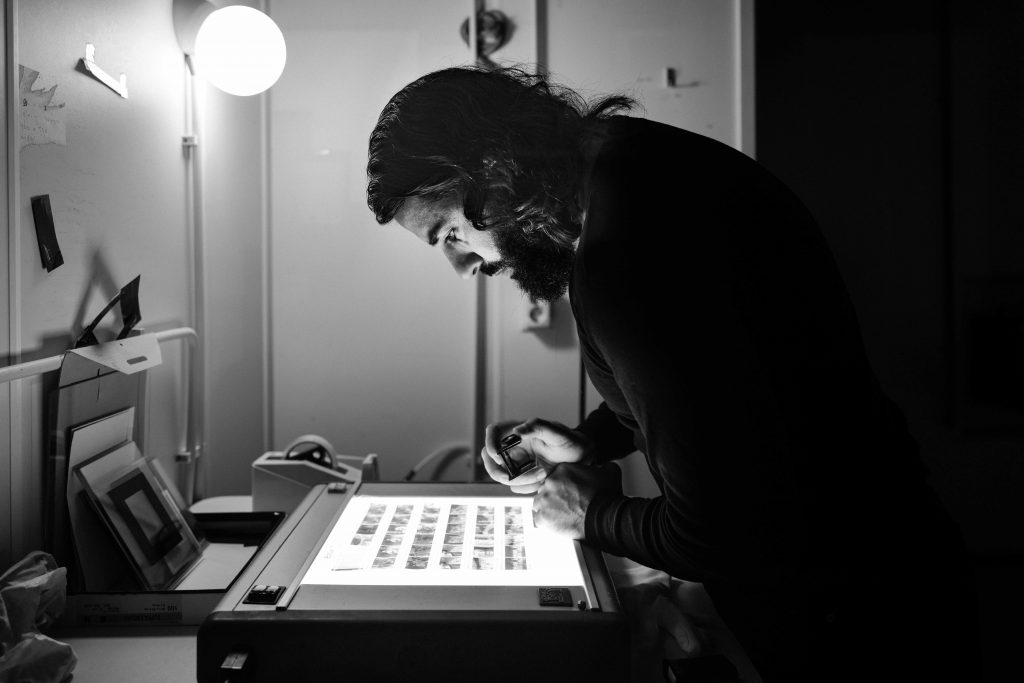
What makes Khader’s work so affecting is that pain and grief are never detached from dignity. He does not portray people as passive victims, but as individuals who, even under unbearable circumstances, strive to remain human. In this way, his work stands in contrast to the often one-sided representations found in Western media, both in language and in imagery. A form of forced resilience plays an important role in his photographs: not a romanticised notion, but the stark awareness that people must carry on, even when grief has not yet been processed and the next loss is already imminent. In Khader’s work, this impossible condition is given a face. He compels the viewer to look beyond Western frameworks of representation, illuminating not only death but also the life that precedes it.
A recurring element is the tension between innocence and its loss. Khader photographs children, mothers, friends, families, fighters, animals and landscapes in a way that reveals how a life under occupation or threat is never defined solely by violence. There is also play, food, work, laughter and waiting. By making these moments visible, he renders palpable what is at stake. His photographs and films emphasise not only the destruction of lives, but also their right to exist. In doing so, he connects personal stories with broader historical and political structures.
Written by FIor Iinckens


