Selected highlights from Art Rotterdam 2026
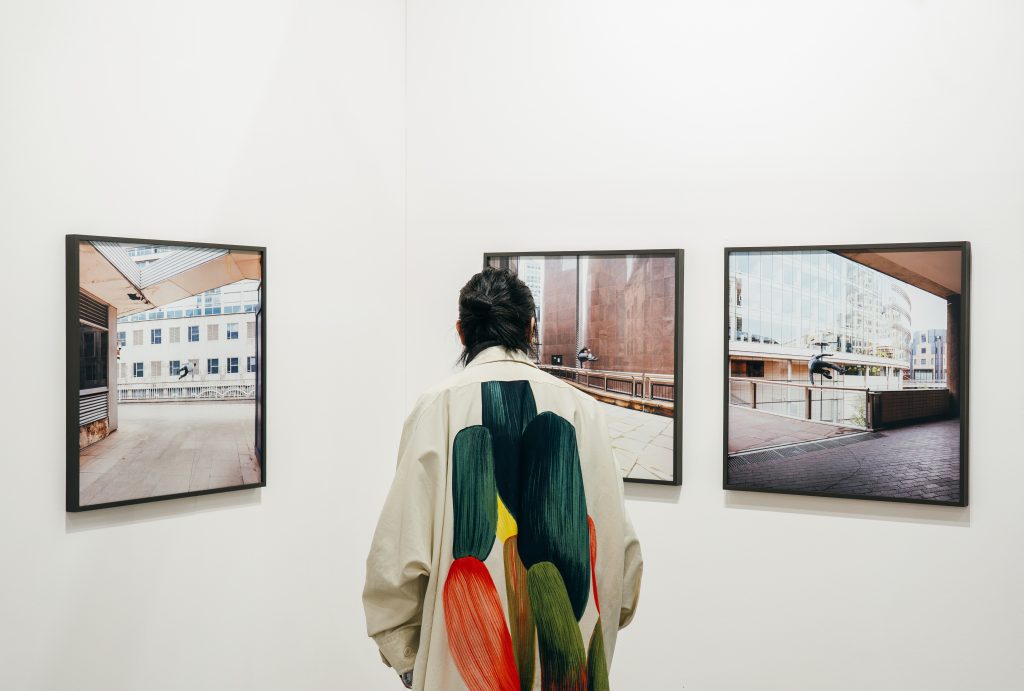
From Friday 27 to Sunday 29 March, Art Rotterdam returns with a sharpened fair format that brings together visual art, photography, video and large-scale installations. The format offers space for both emerging talent and established galleries, while the addition of Unseen Photo introduces a sharply curated and internationally oriented photography programme, fully integrated into the fair. With the return to Rotterdam Ahoy, Art Rotterdam continues the course set in 2025. The venue’s scale and openness, along with its hospitality facilities, contribute to a pleasant visit with room for quiet moments of rest. As a result, visitors spend more time on the fair floor. Last year, Art Rotterdam welcomed 28,000 visitors.
This edition features over 150 galleries from the Netherlands and abroad, including exhibitors from Lisbon, Istanbul, Buenos Aires, Copenhagen, Johannesburg, Bratislava, London, Rome, Paris, Madrid, Vienna and Riga. Art Rotterdam also maintains a strong bond with the city. The Wall Street Journal recently included Rotterdam in their 10 Best Places to Visit in 2026: “The city has reinvented itself as one of Europe’s most experimental urban laboratories, with starchitect-designed towers and cultural districts built on former docklands.” Last year, the city saw the opening of the 15,000 m² migration museum Fenix, and the brand-new eight-storey Nederlands Fotomuseum is set to open its doors soon with a festive launch.
DHB Bank returns as the main sponsor of Art Rotterdam. DHB Bank is a Dutch savings bank where you can save online. Its head office has been based in Rotterdam for over 30 years. Over time, the city became its home base, which is one of the reasons DHB Bank proudly supports Art Rotterdam.
Art Rotterdam is divided into distinct sections that offer a clear and coherent view of today’s contemporary art practice. These sections help visitors to navigate the fair.

Art Rotterdam 2026 sections
In the Main Section, participating galleries present a diverse selection of contemporary art. The Solo/Duo section is integrated within this format, with booths that highlight the work of one or two artists.
The New Art Section is devoted to solo presentations by emerging artists with exciting practices. After a successful first edition, curator Övül Ö. Durmuşoğlu returns for Art Rotterdam 2026. In addition to Unseen booths in the Main and Solo/Duo sections, three specially curated sections form a distinctive photography pavilion: New Photography, Encounters and The Past Present. These sections explore hybrid visual languages, crossovers with other disciplines, and new perspectives on analogue photography and archival material. Alongside this, the Unseen Book Market will take place in the new Nederlands Fotomuseum, where forty publishers present a wide selection of photobooks and publications. Van Lanschot Kempen is the new partner of Unseen Photo.
The Prospects section by the Mondriaan Fund introduces a broad audience to a new generation of artists. This fourteenth edition presents work by 92 emerging artists who received financial support in 2024 to help launch their careers. The exhibition is curated by Johan Gustavsson and Daphne Verberg.
Projections is the fair’s video art section: a darkened space of over 800 square metres with twelve projections on freestanding five-metre-wide screens.
Sculpture Park serves as a meeting point within the fair, offering 280 square metres of sculptures and installations. Designed by Tom Postma Design, the section literally brings air and space into the fair layout.
Highlights
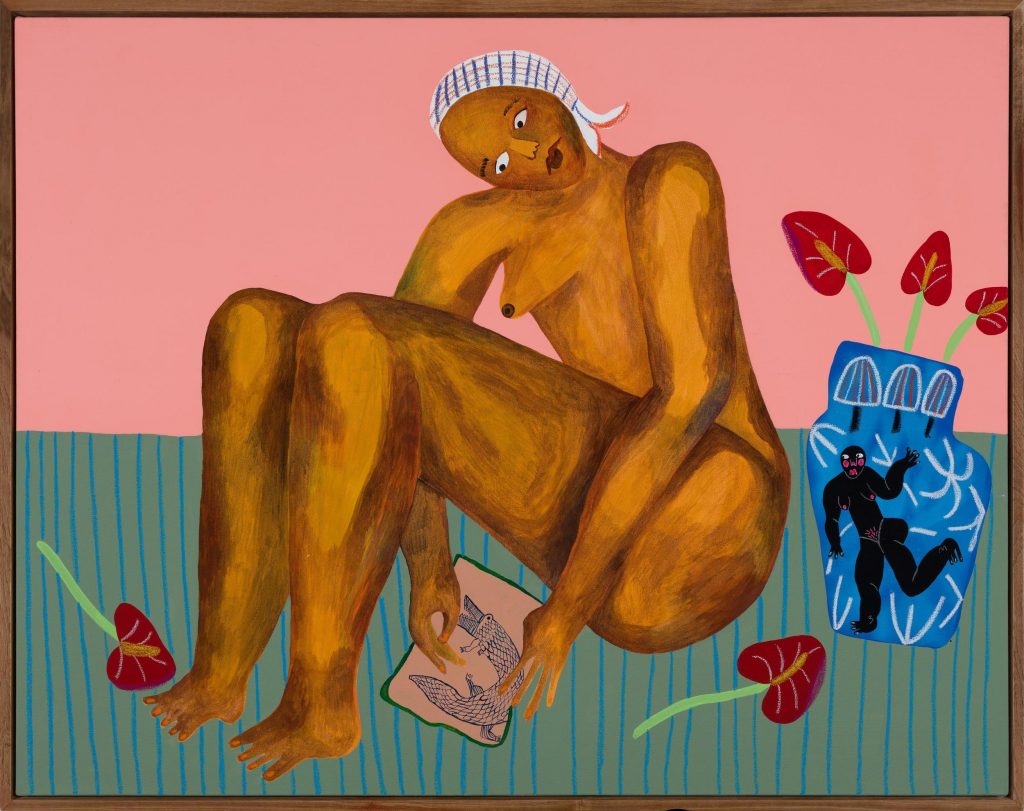
kumalo | turpin from Johannesburg presents work by Boemo Diale in the Main Section. Diale grew up within the complex racial and socio-political structures of post-apartheid South Africa and works from a multidisciplinary practice in which identity, generational trauma and dreams converge. Her visual language is deeply personal, with a strong focus on her maternal lineage, while also addressing the shared cultural heritage of African women. By intertwining fragments from her family archive with colourful, dreamlike settings, she creates friction between reality and imagination, raising questions about her position, origins and the potential of art to effect change.
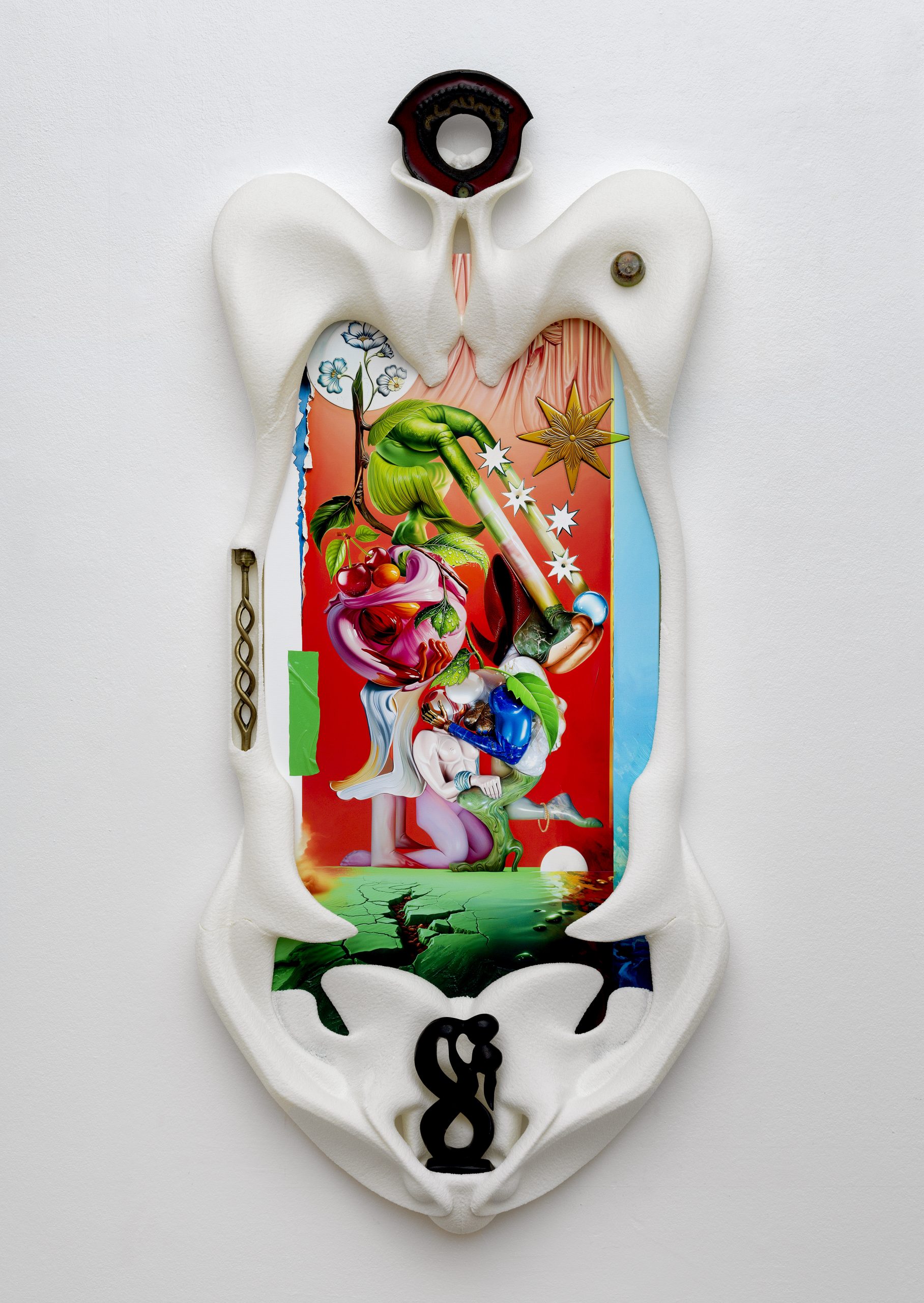
Kévin Bray (Upstream Gallery) works from a multidisciplinary practice where digital and physical realities continuously merge, using video, digital painting, 3D-printed sculptures and sound as equal components. Drawing on his background in graphic design, the French artist unpacks the logic of software, games and interfaces, translating these into hybrid forms that demonstrate how images shape not only our perception, but also our behaviour and reality. In the Main Section, it becomes clear how Bray deliberately equalises fiction and matter, consistently dissolving the boundaries between digital and tactile, imagination and reality. His work was previously shown at Stedelijk Museum Amsterdam, Palais de Tokyo in Paris, Kunstinstituut Melly, Foam Amsterdam, Het Nieuwe Instituut and The Hole in New York, and has been included in the collections of the AkzoNobel Art Foundation, ING and the Dutch Ministry of Foreign Affairs.
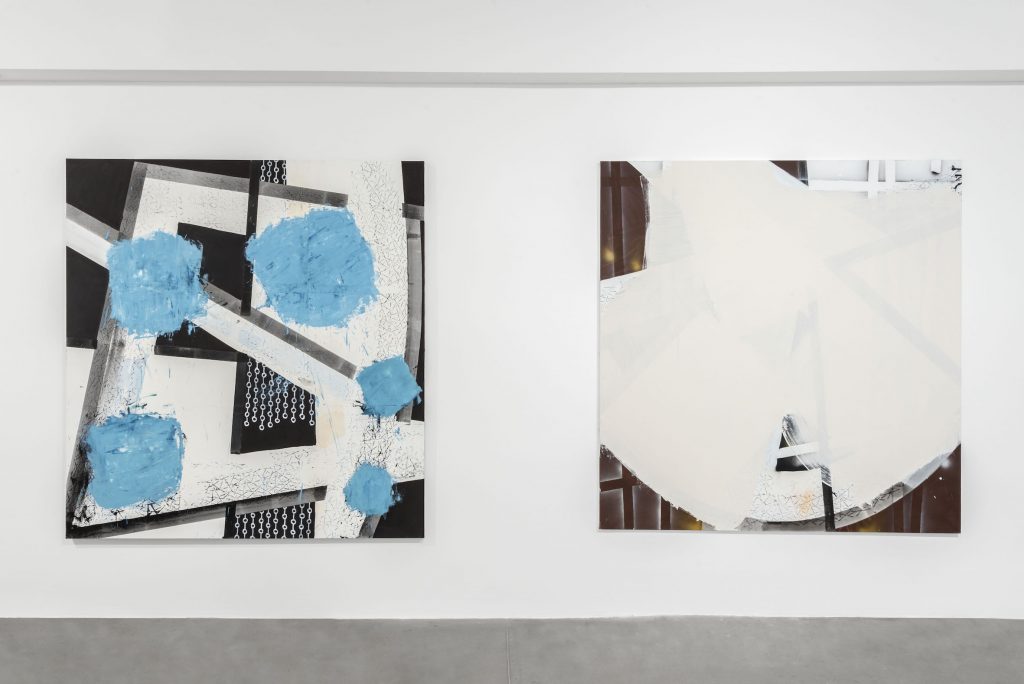
ZAHORIAN & VAN ESPEN from Bratislava (Main Section) presents work by Vladimír Ossif, a painter working within the tradition of geometric abstraction. The Slovak artist spent time in cities such as Paris, Bratislava, Madrid and New York, and his vibrant paintings are therefore infused with motion and change, expressed in dynamic compositions in which forms collide, overlap or balance alongside each other. His works explore what images can communicate when language falls short. His work is included in the collections of Musée d'Art Moderne de Paris, Casa de Velázquez in Madrid and the National Gallery in Prague, and was featured in the 13th Havana Biennial.
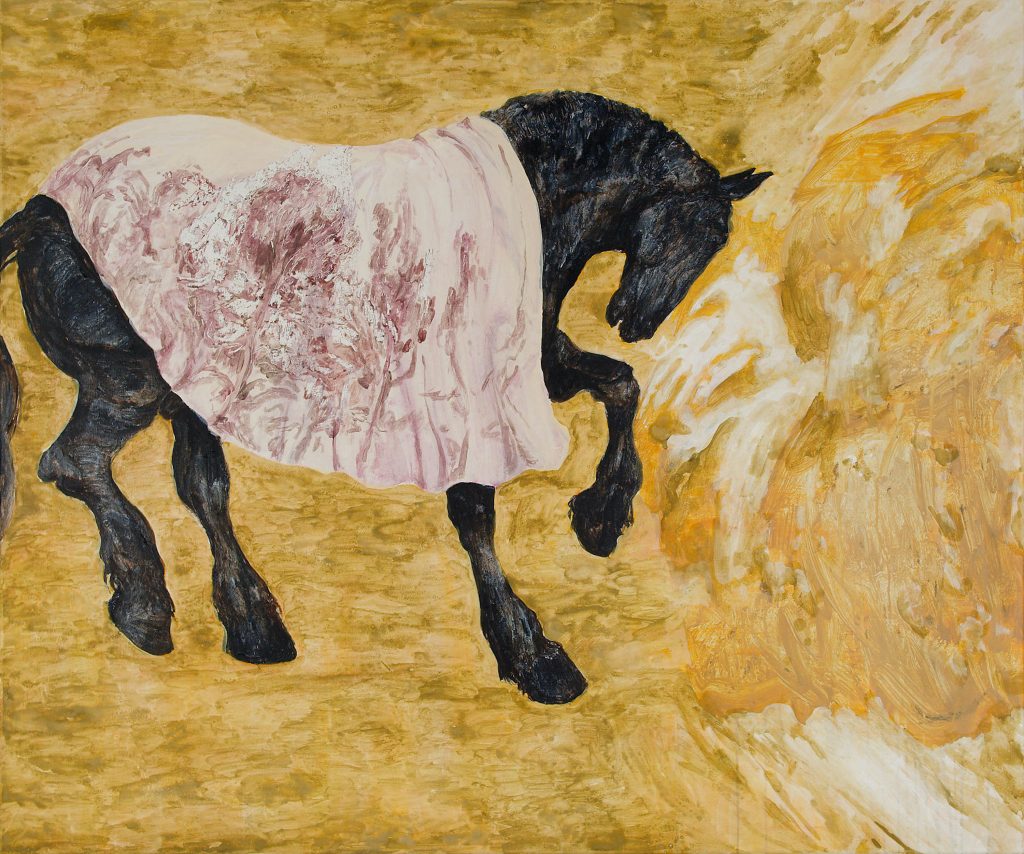
In the Solo/Duo section at Annet Gelink Gallery, works are presented by Helen Verhoeven and Steffani Jemison, two artists who each in their own way explore the tension between individual and collective, delving into themes of the body and representation. Jemison investigates how African-American culture, history, knowledge systems, movement, language and storytelling are transmitted, creating performances, videos, audio works and sculptures that have been shown at MoMA, the Whitney Museum (the Whitney Biennial), the Brooklyn Museum, Stedelijk Museum Amsterdam, Jeu de Paume and MoMA PS1. Verhoeven works with large, layered paintings in which dream, history, religion, mythology and social violence merge. She created a royal portrait for the Dutch Royal Family, and her work has been included in the collections of the Centraal Museum, Stedelijk Museum Amsterdam, the Bonnefanten museum, Saatchi Gallery, The Museum of Contemporary Art in Miami, De Nederlandsche Bank and Rabobank.
In the Main Section, Heejsteck# presents the installation ‘Add to Cart’ by Peer Vink and Tom Putman. The project takes the shopping mall as a starting point, not as a nostalgic backdrop but as an outdated status symbol, comparable to a film set that convinces from a distance but reveals its construction up close. The largely enclosed booth is accessible only through a cave-like portal and leads to an artificial grotto with a waterfall and bar, exposing how artificial nature and fictional worlds are used to drive desire and consumption. The installation is accompanied by new works from both artists.
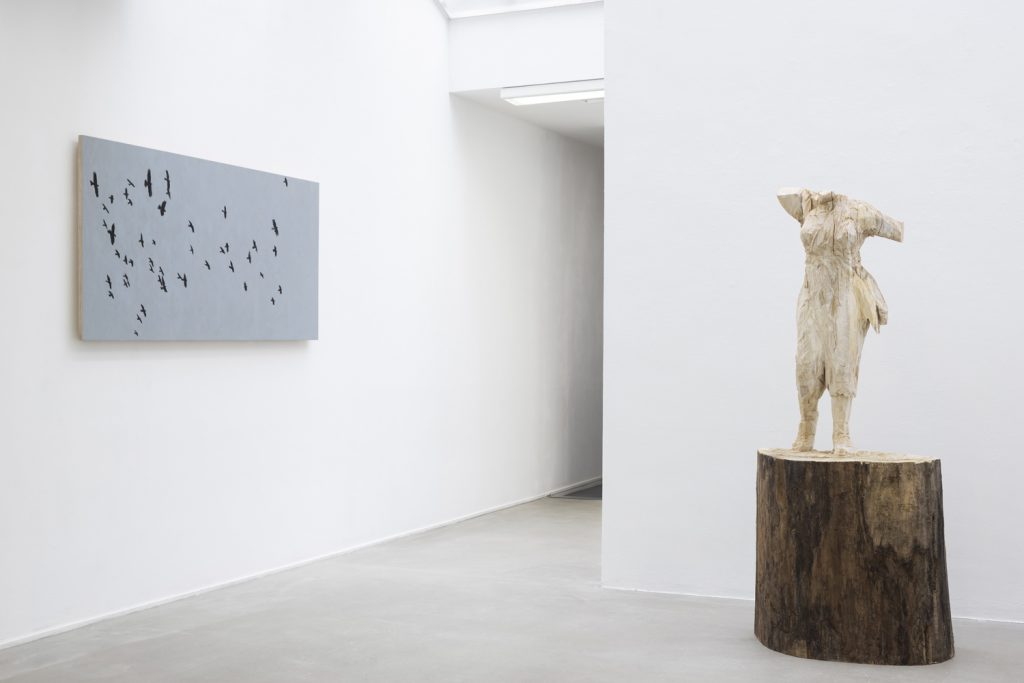
Stephan Balkenhol creates hand-carved wooden sculptures in which the human figure almost always takes centre stage. He typically carves his works from a single block of wood, sometimes even an entire tree trunk, using hammers and chisels with minimal use of machinery, leaving visible splinters, cracks and grooves. Shown by AKINCI in the Main Section, his practice reveals how this sober, artisanal approach results in sculptures that resonate universally. His work is held in the collections of Centre Pompidou, Tate, ARKEN Museum of Modern Art, Museum Voorlinden, Museum of Contemporary Art Tokyo, MoMA, LACMA, the Art Institute of Chicago, Hamburger Bahnhof, the Peggy Guggenheim Collection and Kunstmuseum Den Haag. His work was recently shown in a solo exhibition at Kunsthal Rotterdam.
In the Solo/Duo section, Galerie Fontana presents work by Thijs Segers, including recent paintings and a new installation. Segers explores themes such as decay, transformation and impermanence. His paintings capture both personal memories and universal themes, often inspired by abandoned places, nature and his inner world. His work has previously been shown at the Noordbrabants Museum, Paleis op de Dam, the Vincent van GoghHuis, Museum Villa Mondriaan and Het HEM. In 2021, 2024 and 2025 he was nominated for the Royal Award for Modern Painting.
For tickets and a full list of participants, visit www.artrotterdam.com. The fair catalogue will be published on GalleryViewer.com on 20 March 2026.
Written by Flor Linckens


