Shimon Kamada: Melancholy of My Memory
“My delusional thinking brings sinister light, uncanny shadows, and a dystopian background, evoking the melancholy of my memory onto the canvas.” - Shimon Kamada
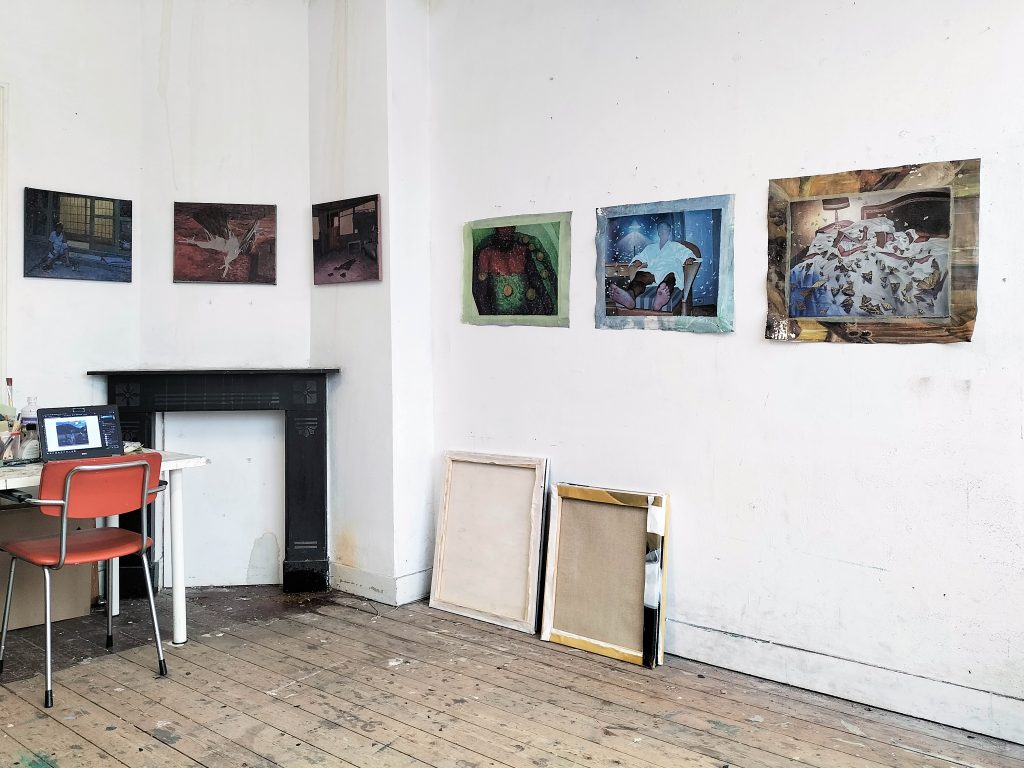
Through the fascinating psyche of artist Shimon Kamada (1997, Japan), we enter a treacherous terrain between abstraction and figuration. Here, a silver lining emerges: the relief that these two are not split ends of a spectrum at all. When reality begins to resemble a dream, and dreams become ever more rooted in reality, the duality itself starts to feel redundant. It is precisely within this intriguing in-between space that Kamada’s paintings take shape.
In the new art section of Art Rotterdam 2026, Diez Gallery presents a solo exhibition with recent works by Shimon Kamada which depict scenes from the artist’s early childhood until the present day. “My work is rooted in personal history and recalls nostalgic scenes from my mind. Having been away from my hometown in Japan for many years, I have had more time to reflect on it, and my recent works are influenced by customs, events, upbringing, and family dynamics. I hope they will evoke sensations of past memories running through the visitors’ minds, just like seeing a flashback.”
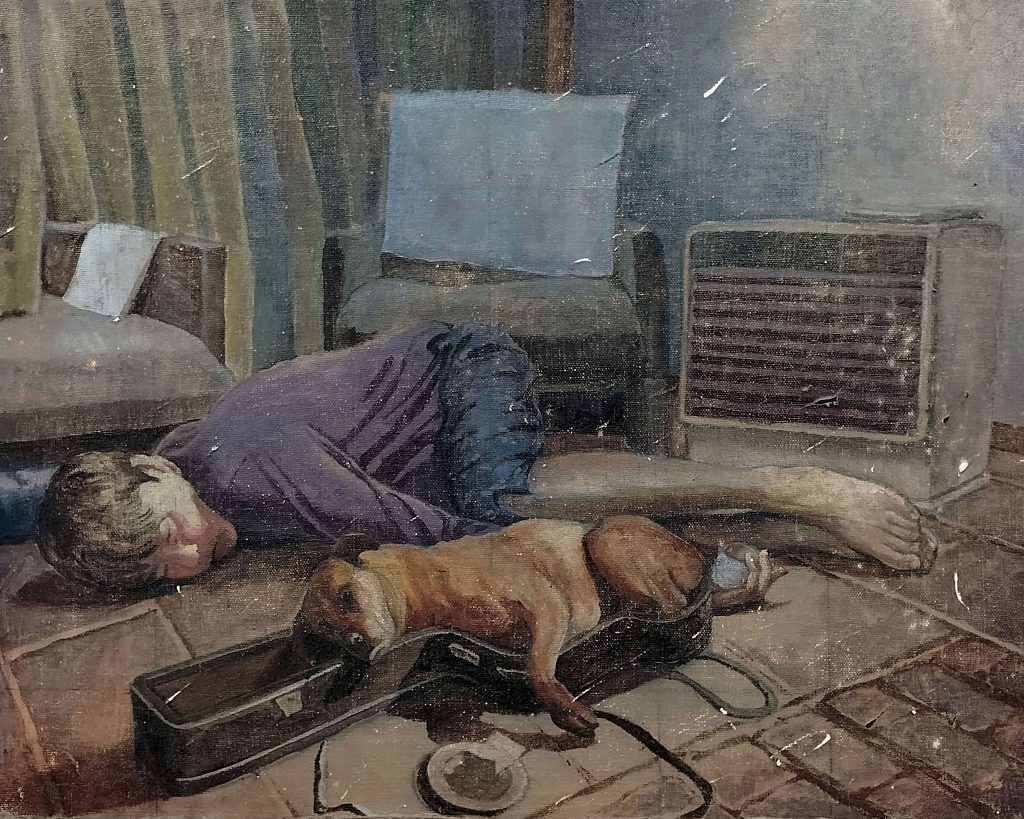
Using memory as his driving force brings with it an elusive, and therefore deceptive, creative energy. However at the same time, it can be strangely soothing and reassuring when our minds start to play tricks on us, as our recollection begins to lose clarity. Fusing seemingly divergent elements of reality, figuration, abstraction and fiction together is one of Kamada’s ways of coping with latent trauma. “There are many moments I want to return to; they are so beautiful that it feels almost pitiful to forget them, yet they are also painful memories I wish I could do over,” Kamada says.
In his latest series of works, Kamada also touches upon the overlapping and intersectional nature of lived experiences and the memories attached to them. He refers to an intimate family situation that became a profound experience for his work: a few years ago, his grandfather asked him to paint his funeral portrait, shortly before being diagnosed with a terminal illness. As different family members responded to his illness from their own positions, Kamada became increasingly aware of the conflicting emotions surrounding that moment. “By depicting our memories and the unique position of each family member, I explore these conflicting emotions to find ways to empathize with one another. It allows every family member to become an important character in my paintings.”
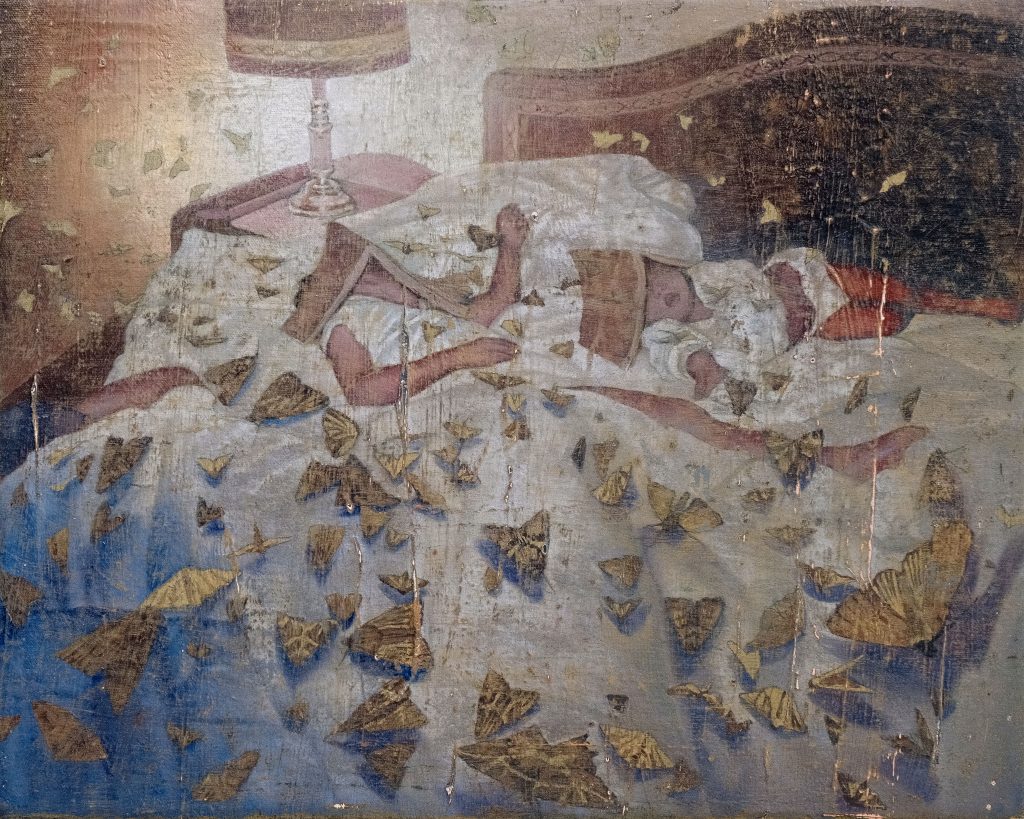
By projecting these different positions and sensations into dreamlike scenes, viewers with different memories may draw different worlds from Kamada’s paintings. An agency of one’s subjectivity is felt throughout the openness that Kamada provides. “My house, for example, is a typical Japanese home, but certain elements escape recognition by Western audiences and evoke unexpected interpretations. I hope viewers imagine the events depicted in my paintings as if they were happening in their own lives, and that a deja vu-like experience will provide opportunities for us to share stories in front of my paintings.”
Also the physical materiality of the paintings overlaps with Kamada’s emotional concept. The artist has already been experimenting with the approach of repainting on used canvases, but more recently he sands the surface as well to reveal fragments of hidden paintings on the underlayer. “I apply acrylic and oil on secondhand paintings and then damage the surface with sandpaper. The layered paint displays the multifaceted reality in everyday life moments. In each painting I depict family members that I extract from photo albums. I think sanding feels like an additional process to reinforce the context of recorrection. The damaged texture and faded colours even evoke the old photo albums, and the layering of new paintings on old paintings represents the process of memory: new pieces of information accumulate and overlay the old ones.”
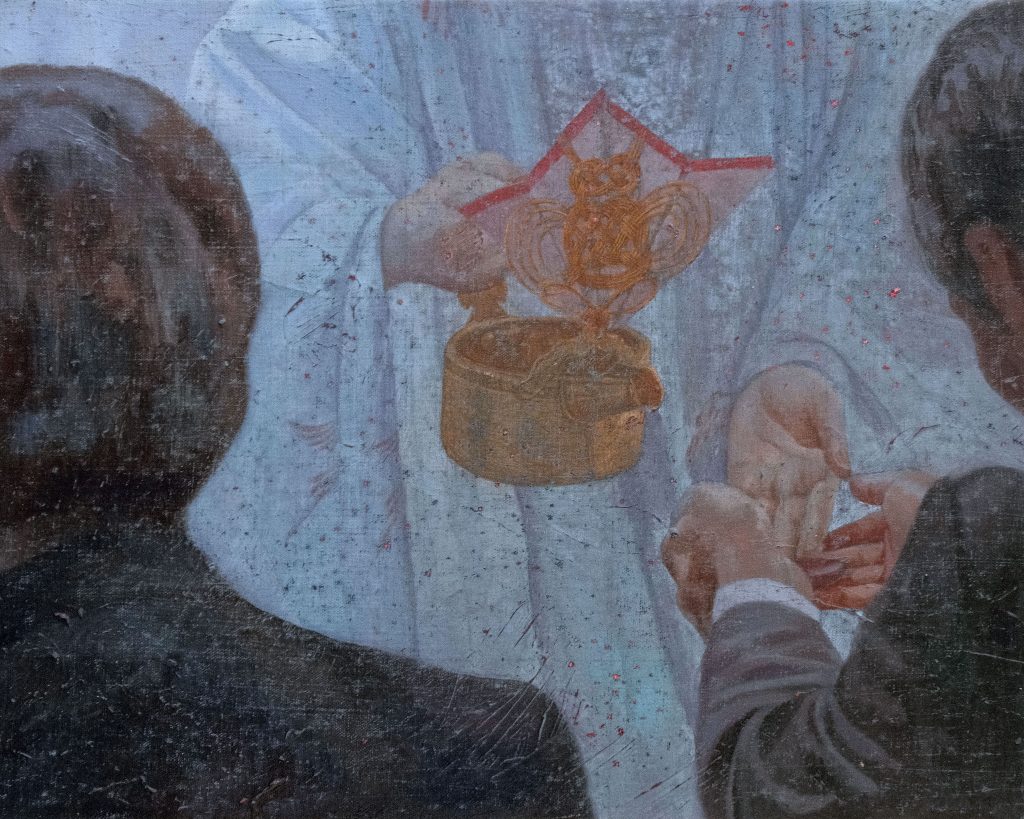
It is as if sanding is Kamada’s way of treating the surface like a wooden dining table that holds dear memories of family meals, coffee stains, love and conflict, gently sanded down over the years, only so it can be lived with again, allowing new memories to settle over the old ones.
And so it becomes clear that beyond what the eye can perceive Kamada’s paintings capture what lies dormant in the subconscious: the vapourness of time, the lingering scents of fading stories, and the nostalgia that comes with reliving memories, whether real, imagined, or somewhere in between.
Bio
Shimon Kamada (1997, Japan, lives and works in The Netherlands) won the Ron Mandos Residency Award (2020) and worked at Brutus Lab in Rotterdam (2021) as an artist-in-residence. He has participated in group exhibitions including Podium Gallery, Hong Kong (2025), Van Nelle Fabriek, Rotterdam (2024), Enari Gallery, Amsterdam (2023), ARWE Gallery, Gouda (2022), Wilford X, Temse (2022), Felix Solo Gallery, Nijmegen (2021), Atelier of AVL Mundo, Rotterdam (2021), Het HEM, Zaandam (2020), among others.
On show at New Art section, Shimon Kamada, diez gallery
Written by Emily van Driessen


