Penthesilea - Daphne van de Velde on her new series of photographs and photo-sculptures
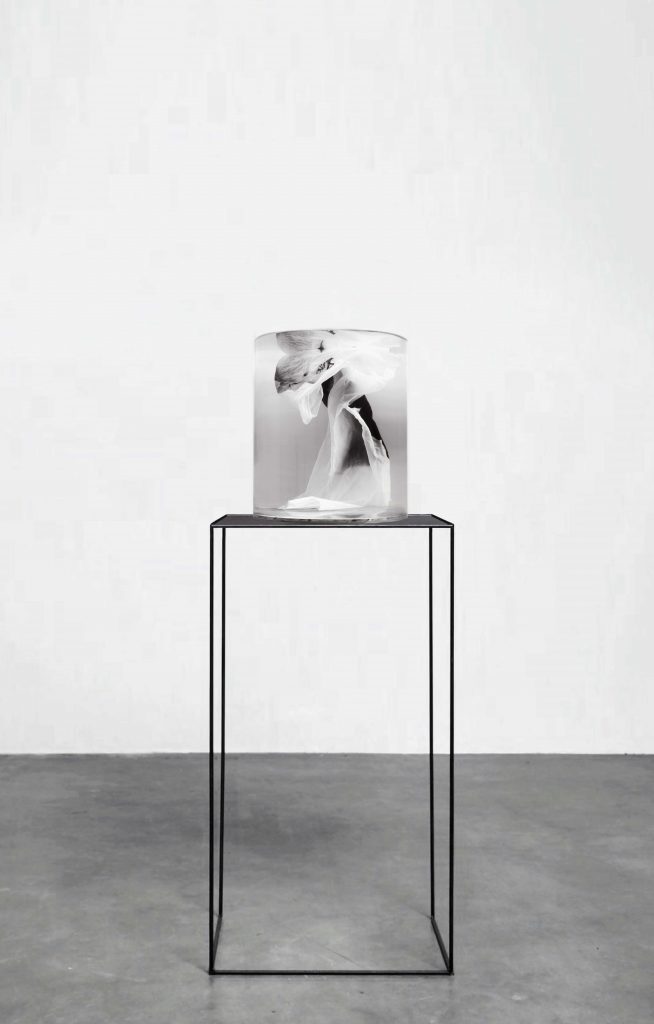
The fact that the work of Daphne van de Velde is being shown at Unseen Photo is not surprising. Her work consists of photographs and sculptures made from photographs. But this simple description does not do justice to the breadth and singularity of Van de Velde’s work. The results are preceded by a performance and video registration. As a result of this procedure, and the associative image manipulation that follows, Van de Velde’s work cannot easily be pinned down or compared with that of others. It stands on its own.
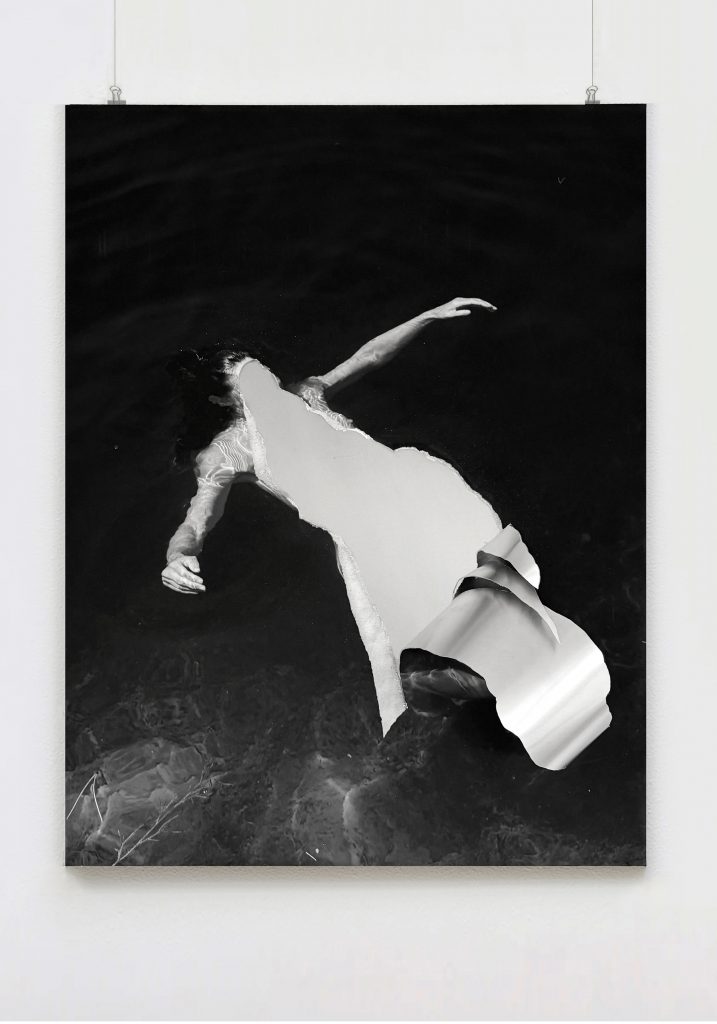
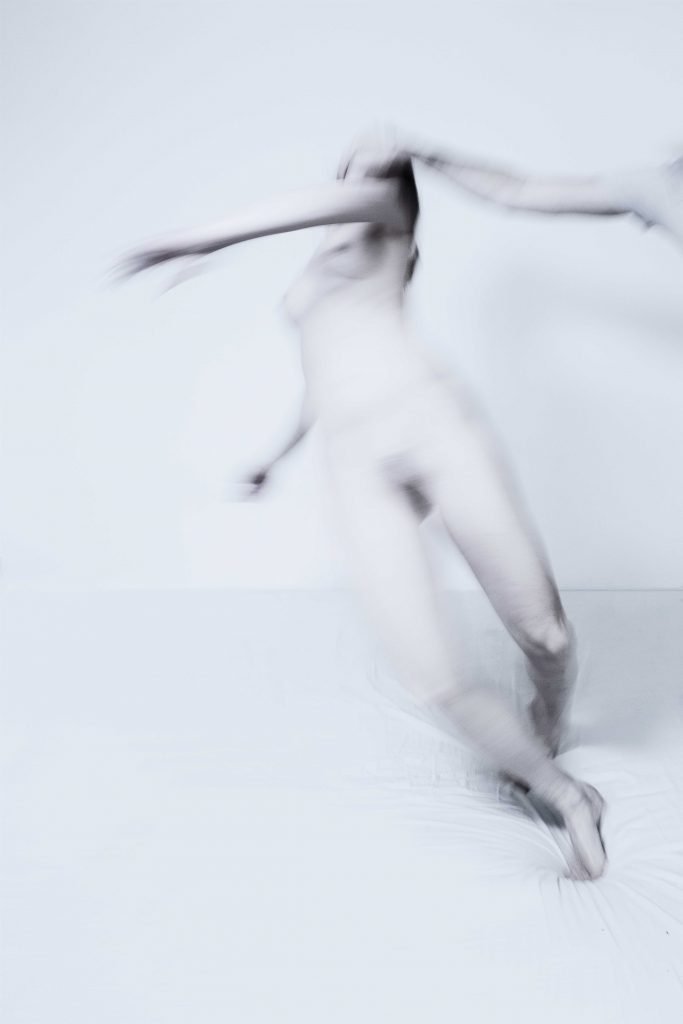
The person in the photographs is Van de Velde herself. The pictures are stills from the recording of a performance. She prints the images and then tears or bends them so that the tension she experienced as a dancer is incorporated into the image.
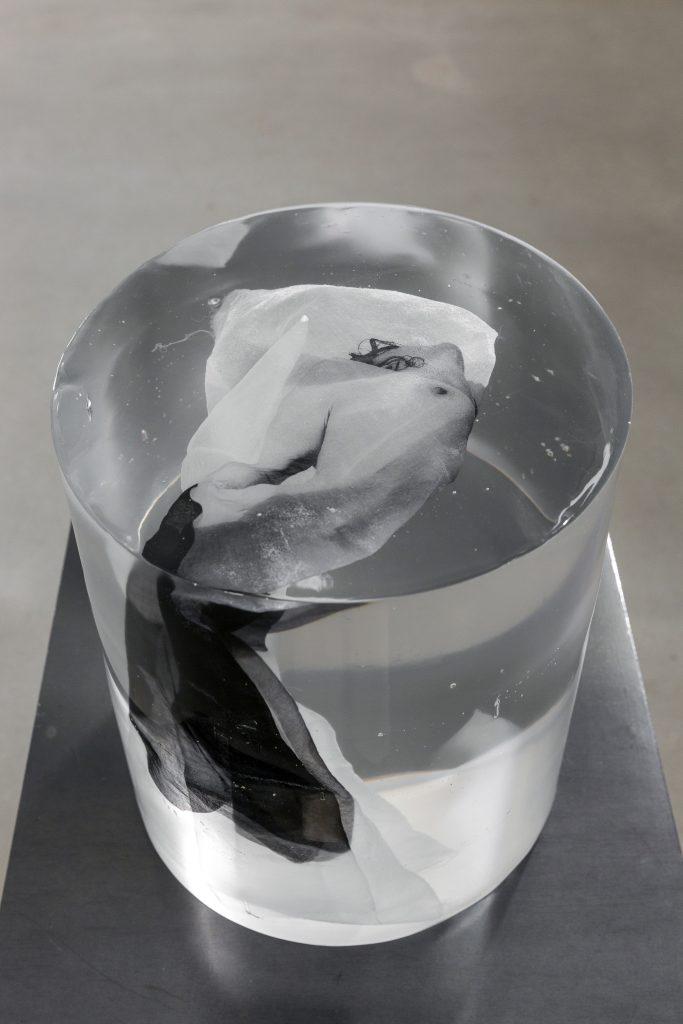
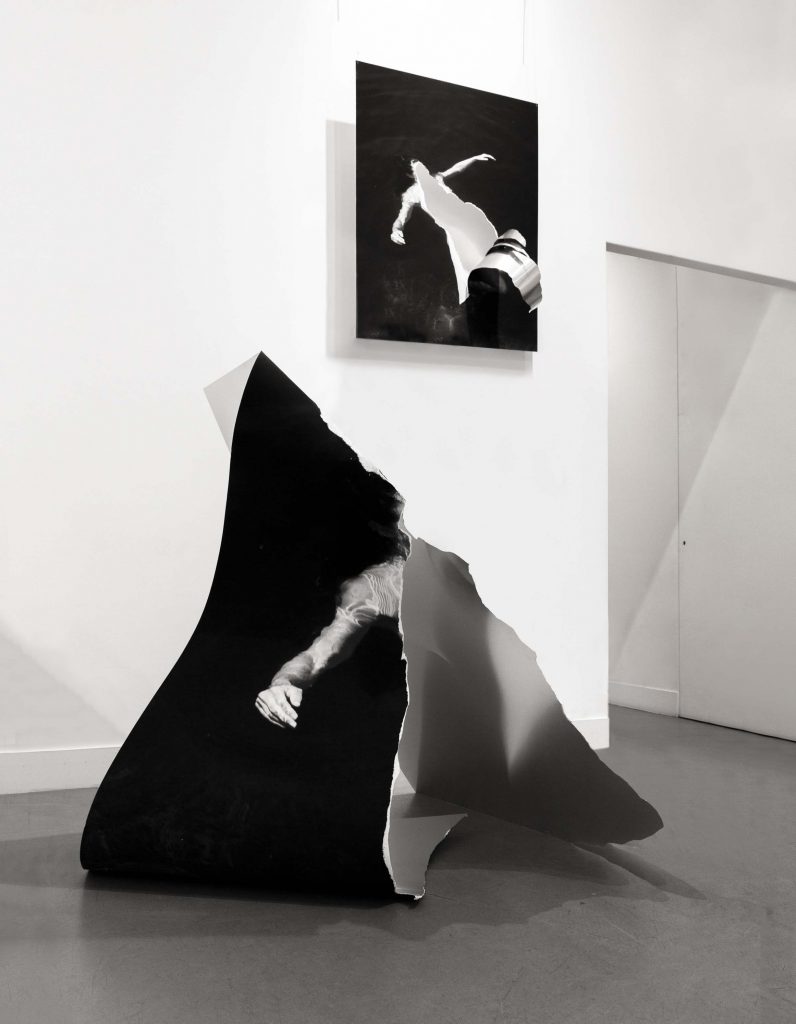
In a photograph from her newest series, Penthesilea, we see her lying in water with her arms spread out, the silhouette of her body visible. The core—her torso and face—has been torn out. That portion of paper curls out from the flat surface. The tension is palpable.
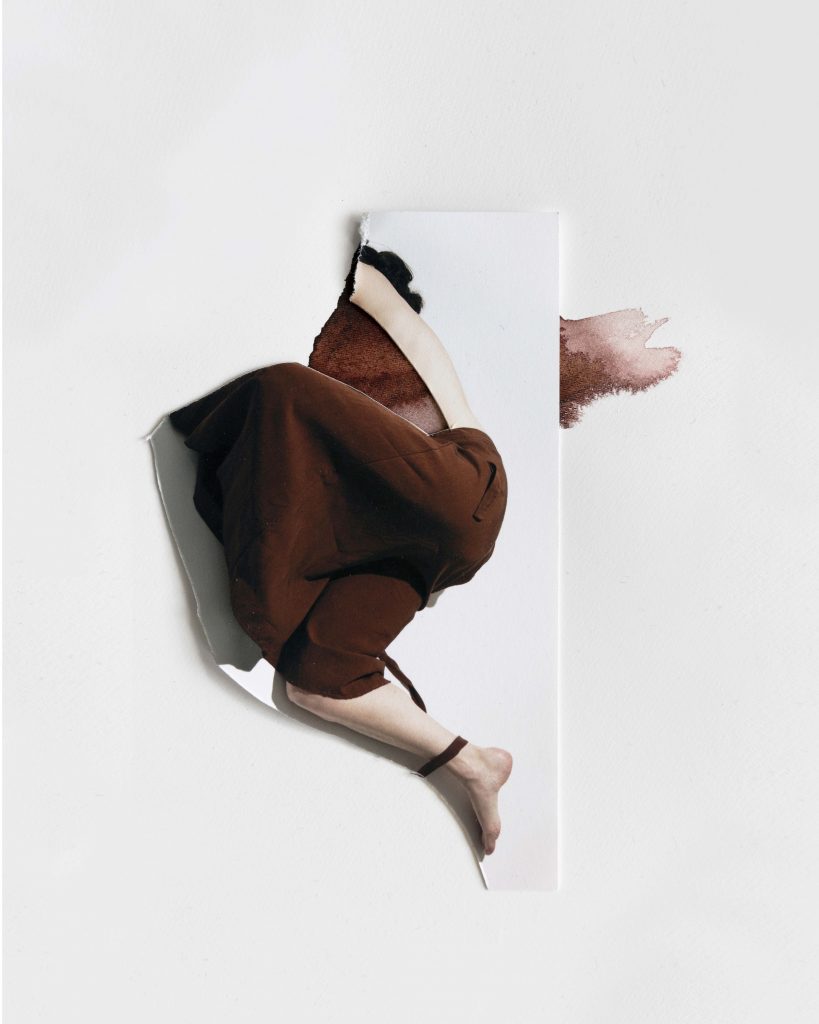
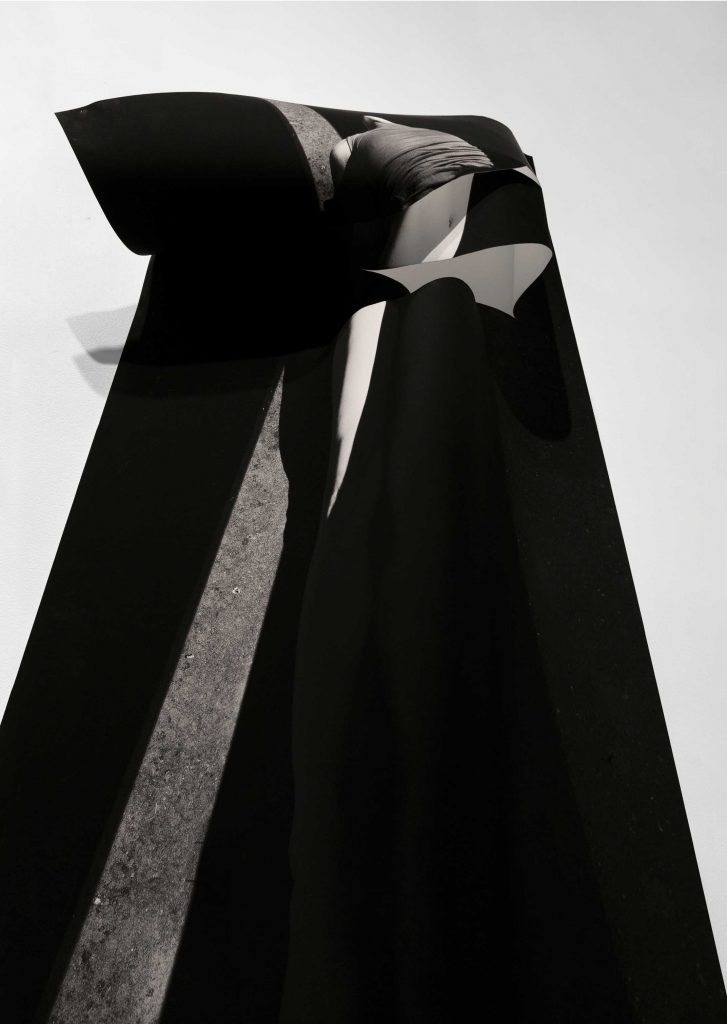
In the sculpture Crossing, the movement of a dancer can be recognised: a raised knee in a brown tunic. Here, too, part of the body is missing—the face this time. Revealing and concealing is a central theme in Van de Velde’s work. In Penthesilea, she links this to the myth of Penthesilea, the Amazon queen who, in a male-dominated world, chose love rather than indifference. We spoke with Van de Velde about her new series and unique approach.
Works from the series Penthesilea by Daphne van de Velde can be seen at Unseen Photo at the Black Swan Gallery stand.
At Art Rotterdam, work from your new series Penthesilea will be shown. Not everyone is familiar with the myth of this Amazon queen. Why were you inspired by this story and why did you decide to use it in your work?
The unusual names in Greek mythology make it seem as if we are speaking about another era, yet they also essentially address our own time: how we relate to ourselves and to one another, and how we position ourselves within the world we inhabit. What appeals to me in these texts is that they are stripped of all irrelevant information that characterises our time.
Penthesilea caught my attention because she clearly positions herself as a woman in a male-dominated world. I admire her courage to cast off her armour, step out of her self-chosen prison and move from indifference towards love. In my newest series of work, I walk alongside her for a while, though at times I also follow my own path.
At the fair, we see the final result of what could be described as a multi-stage process: dance, performance-photography-sculpture. Can you explain your approach?
I do not divide my work that way, but choose a medium that best suits what I want to express in a particular artwork, but I understand what you mean. Because of my background in contemporary dance and degrees in Fine Arts, Architecture and Autonomous Photography, my work is rooted in spatial awareness and bodily movement. I move between photography, performance and sculpture to explore these transitions. My own body functions as subject, instrument, carrier and voice.
What does your work require?
To make art, I need five dimensions: the first three to give a work spatial presence, supplemented by time and place. The notion of time is especially important because my work has a narrative quality. The title of the series, Penthesilea, suggests this.
Can you elaborate on this?
You need time to watch a performance. With a photograph, this is different - you receive all the information at once. A sculpture lies somewhere in between: you need time to observe it from all sides. The reason sculpture stands at the end of this three-stage process is that I create my art for an audience and that audience does not always have access to my performance.
Within my process, I effectively freeze time several times. The moment I take a still from a performance is the first instance. To visualise the bodily tension I experience as a dancer, I transform the two-dimensional plane of the photograph into a three-dimensional one. I do this by pulling or pushing the surface—sometimes until it tears—to allow certain parts of the body to disappear and others to emerge. In some cases, the documentation of the final sculpture can be a third freezing of time, as it enables me to incorporate the direction of light.
You also mentioned the place where your work is shown. Do you determine that on a work-by-work basis?
Location is important. For Art Rotterdam, the sculptural form comes closest to what I want to convey in relation to the audience there. Soon my work will be shown at an exhibition at the EYE Filmmuseum in Amsterdam, where my films function best as the medium. In places where I can meet the audience within the space and where sufficient room is available, performance works well.
During the opening of the PhotoBrussels Festival, I presented a performance in which I encountered the image of my body on a life-size photograph that was 2 1/2 metres high and manipulated it with my body until a sculpture remained. Dance and the deformation of the photograph intertwine, something I can literally demonstrate to the audience.
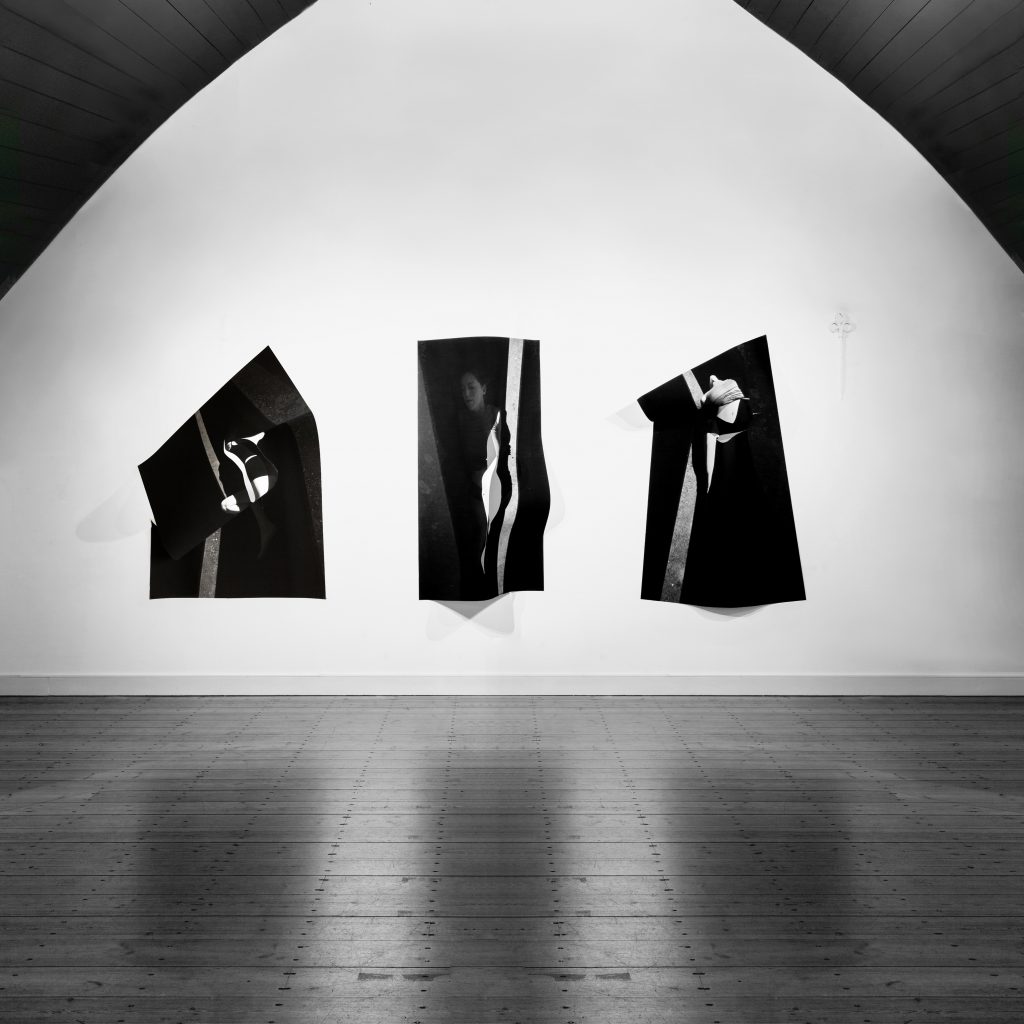
This is also reflected in the presentation of the work within the series Penthesilea. Some sculptures consist of folded photographic paper. Others are torn. In both cases, the images are not entirely visible. My approach is highly associative. At the moment of creation, I choose the form that best suits the artwork.
How would you describe the theme of your work?
Conceptually, my work involves the revealing and concealing of the body, exposure and protection. That is why I never show the body in its entirety, but emphasise certain parts, while allowing others to be omitted by literally removing them or placing them in shadow.
Your gallerist told me you were once a timid person and that dance helped you to develop a sense of presence. That connects with the theme of revealing and concealing the body. When someone moves, you never see everything at once.
Everyone has their own way of communicating. There was a time in my life when I found it very difficult to express myself verbally. Dance became a way for me to speak - and became almost addictive.
My initial form of communication was contemporary dance, followed by photography. In recent years, I have combined both, rooted in a personal narrative. For me, making art remains a means of communication. The artworks reflect my emotions, such as love and the fear of it, but it is not exclusively about me. It involves feelings we all share as human beings.
Your work stands apart in that it does not directly reference other artists. Are there artists with whom you feel an affinity?
I am drawn to artists who want to tell their own story, regardless of form or conceptual consequences. In that sense, I have great admiration for the music of PJ Harvey, who adopts a musical style appropriate to each project. Her work is cumulative and comparable to my art. Each project stands on its own, yet is built on previous ones. I am not interested in repeating the same art or music; once I have done something, it loses its sense of urgency.
Another artist I deeply admire is the prematurely deceased British-Iraqi architect Zaha Hadid. With her well-known statement, “There are 360 degrees, so why stick to one?”, she articulated a vision of architecture in which materials and forms offer infinite possibilities beyond the familiar 90-degree angle. I approach my art in a similar way. I enjoy material research and connections that initially seem impossible. I continue to experiment until I find a solution that makes them possible.
You mentioned earlier that Penthesilea lived as a woman in a male-dominated world and the artists you cited are also women. Is there a feminist critique within your work?
Penthesilea is not an idealised figure according to the male gaze, but a fallible female character. She inspired me to show how the conflict between desire and self-control continues to this very day. Despite women’s emancipation, female desire often remains beneath the surface. Penthesilea embodies the charged moment when an inner boundary is crossed and interior experience breaks outward.
Through my work, I want to advocate female strength, yet it is certainly not intended as anti-male. I believe in a fundamental difference between women and men in how they think, feel and act. Every individual contains, to varying degrees, elements of both femininity and masculinity. To me, there is no such thing as male or female art. What exists is the act of working based on your own strength—and for me that includes the strength I experience through womanhood and the courage to acknowledge both boundaries and desires.
Is there a project you would like to carry out in the future?
I would very much like to create the spatial work shown at Art Rotterdam on a monumental scale. The enlarged dimensions would allow audiences to relate optimally to the artwork.
A grant I received last year from the Province of Gelderland enabled me to develop a technique that makes it possible to produce my photo-sculptures in life-size, while maintaining structural stability.
My greatest dream is to present my sculptures in a monumental museum space where I can combine them with my films and performances to create a comprehensive experience of my work. Yet outdoor settings-squares and parks-are equally compelling, as they allow me to combine the direct nature of my work with the direct nature of public spaces.
Written by Wouter van den Eijkel


