Coming soon
Coming soon
Selecteer type
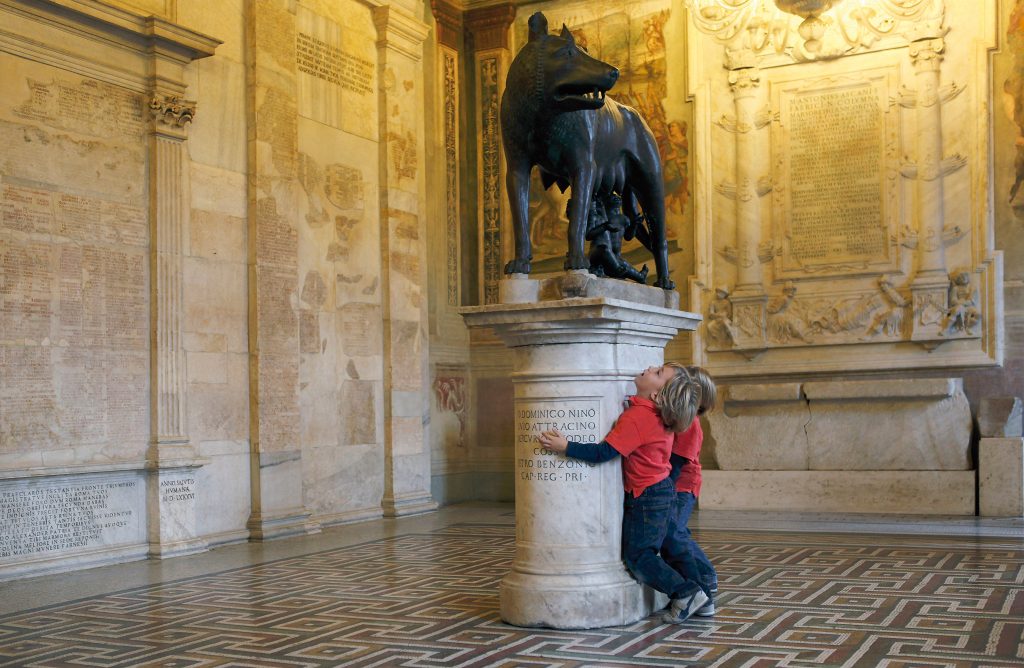
If, as the saying goes, all roads lead to Rome, then the reverse must also be true. Rome is a starting point. This certainly applies to the founding myth of the Eternal City. According to tradition, Rome was founded by Romulus and Remus, twin sons of the Roman god Mars. The boys decided to establish a city on the spot where they had been found by a she-wolf.
The image associated with this myth may be even more famous: the bronze sculpture of a watchful she-wolf with two infants suckling, better known as the Capitoline Wolf. It appears on the Roman city coat of arms and bronze copies of the sculpture can be found all over the world, from Pisa to Tokyo and from Bucharest to Perth.
Romanian video artist Aurelia Mihai created LUPA, a film about the Capitoline Wolf and the copies of the sculpture that are located around the world. It serves as a good introduction to Mihai’s work, in which she regularly features iconic artwork. Her focus is not only on the work itself, but also on the places where it appears and the value we collectively assign to it. That meaning, after all, can differ from place to place and change over time.
LUPA by Aurelia Mihai can be seen in Projections. Aurelia Mihai is represented by Sector 1.
I had a great time watching LUPA, which centres around the copies of the Capitoline Wolf found all around the world. Why did you pick this particular work for Art Rotterdam?
The decision to present LUPA for the first time in the Netherlands at Art Rotterdam was made collectively. LUPA is a complex project that combines several central aspects of my practice: the intertwining of cultural-historical research with current socially relevant topics such as migration, belonging and postcolonialism, as well as the exploration of monuments and myths as forms of collective belonging. The film’s plot spans distances across continents, stretching from historical times to the present day. It also encompasses artistic discourses on originals and replicas and reflects on the medium of art itself.

Lupa narrates the film and at one point, says, “I am always a copy, never a fake.” As a viewer, you immediately sense that this line is the core message. What is the message you are trying to convey?
Here, Lupa refers to her own origins. During restoration work in 2007, it was discovered that the technique used to create the Capitoline Wolf bronze sculpture did not exist during the Etruscan period. Consequently, it was re-dated to the 11th–12th century, rather than the 6th century BC, as previously assumed. Experts believe that the Capitoline Wolf is a replica of a lost Etruscan original. The two children, Romulus and Remus, were added in the 15th century during the Renaissance. The international press then claimed that the Capitoline Wolf was either a ‘medieval fake’ or ‘had fallen from its pedestal’.
Another issue concerns the bronze technique itself. This raises the question of whether bronze itself is a reproduction technique, given that its processes are based on reproduction. In other words, a positive is first created and then destroyed to produce the negative required for bronze casting. Finally, a new positive is cast in bronze within this negative. This is considered the original, but it can also be considered a bronze copy of the original prototype.
The film LUPA examines the historical evolution of this iconic symbol – both a monument and a myth – and follows its journey around the world. In this context, it analyses the reception of this monument after its redating in 2007, but also in the current postcolonial context. Here, it shows that Lupa belongs to everyone and reminds us of its symbolic value.
The Capitoline Wolf is an iconic artwork. As are the Suprematist Black Square in the eponymous video work and Trajan’s Column in your film Centi Piedi. Yet the movies are only partially about these iconic works. They are also very much about the way they are seen and the function society ascribes to them. This is a recurring theme in your work, so when did you first establish this as a theme?
From the very beginning, I was interested in precisely this narrative, based on the process of reflection on the subject over time. And that is why I chose video and film as the medium of expression for the work described above.
I would describe why I was interested in this process in Lupa as follows: monuments and myths are part of our collective consciousness. Monuments belong to the public space, while myths belong to intangible heritage. They serve to evoke history or mythology and contain a narrative, a story from the past that can interweave historical facts with fiction. The history and meaning of monuments can be rewritten over time and is linked to the rewriting of history. They can convey an ideology and be propagandistic in nature. Monuments can be misused, forgotten and rediscovered.
Another important aspect is the fact that the Capitoline Wolf migrates around the world and is assimilated into different societies, in different places and in each context, is given its own meaning, similar or different, and even contradictory.
From the outset, I knew that the work would not only be about the Capitoline Wolf or the Black Square, but also become a contemporary narrative highlighting current socio-cultural and political issues. I construct narrations in multiple layers, with the medium of film itself often being one of them.
You mention the differences in context and the various interpretations of the Capitoline Wolf—what are the differences between Bucharest and Tokyo, for example?
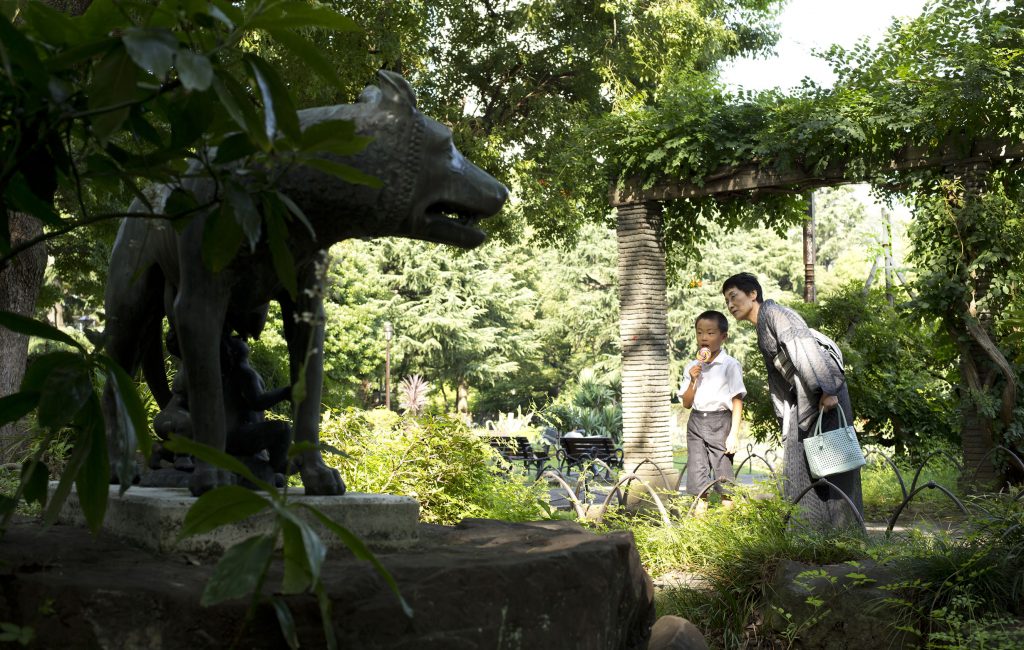
There are three bronze statues of the Roman she-wolf in Tokyo, two of which are located in public places. The first is in a park and was donated by the Italian government in 1938, the second by the city of Rome in 2001 to mark the fifth anniversary of the city partnership between Tokyo and Rome. The third statue was offered to Crown Prince Akihito of Japan during his visit to Rome in July 1953.
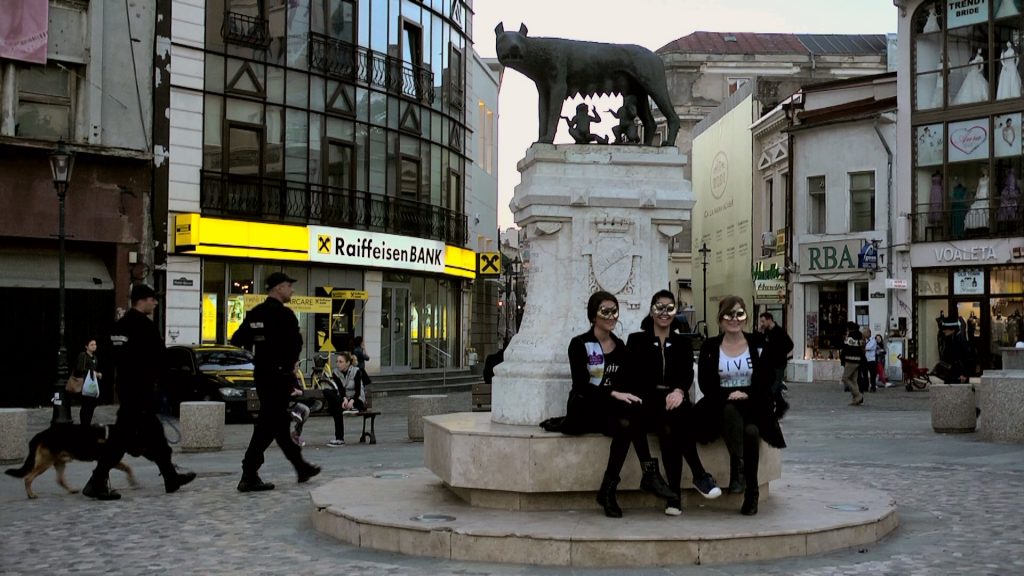
The Municipality of Rome gifted the Lupa statue to Bucharest in 1906 to celebrate the 40th anniversary of King Carol I of Romania’s coronation and the 1,800th anniversary of the Roman conquest of Dacia.

Two scenes in the film highlight the importance of the monuments in the two cities. In Tokyo, a grandmother recounts the legend of Rome’s creation to her grandson. In Bucharest, the she-wolf recounts its own history:
“Since I arrived in Bucharest in 1906, I’ve moved five times, only to ultimately return to this same place. I survived two world wars and the Ceausescu dictatorship unscathed. It was a different story in the Moldovan capital of Chisinau. The Soviet army destroyed me in 1945 as an alleged symbol of fascism. I embodied the Latin-Roman roots of the Moldovan people and the Romanian language. They melted me down to make weapons out of me.”
The film creates its own reality by staging moments of interference with sculptures as if they were a road movie – a journey through time and space.
I can imagine making a short film like LUPA is a long time in the making, involving considerable resources and travelling. What was the most challenging part about this project?
Yes, it was a very complex project that took several years to complete. The research was intensive and obtaining filming permits in museums and different countries, as well as organising travel, was very time-consuming. But I had a very good team and received a lot of support from institutions in Rome, such as the German Academy Villa Massimo.
Written by Wouter van den Eijkel
Als alle wegen naar Rome leiden, zoals het gezegde wil, dan is het omgekeerde ook waar. Dan is Rome ook een startpunt. Dat geldt in ieder geval voor de stichtingsmythe van de eeuwige stad. Volgens de overlevering werd Rome gesticht door Romelus en Remus, de tweelingzonen van de Romeinse god Mars. De jongens besloten een stad te stichten op de plek waar ze werden gevonden door een wolvin.
De beeltenis van deze mythe is misschien nog bekender: de bronzen sculptuur van een waakzame wolvin met twee babies als zuigelingen, beter bekend als de Lupa Capitolina. Ze staat op het Roomse stadswapen en bronzen kopieën van het beeld bevinden zich over de hele wereld: van Pisa tot Tokio en van Bucharest tot Perth.
De Roemeense videokunstenaar Aurelia Mihai maakte LUPA, een film over de Lupa Capitolina, en de kopieën van het beeld die zich overal ter wereld bevinden. Het is een goede introductie tot het werk van Mihai, die in haar werk regelmatig iconische kunstwerken opvoert. Daarbij draait het niet alleen om de werken, maar ook over de plek en de waarde die we er collectief aan toekennen. Die betekenis kan namelijk van plaats tot plaats verschillen en over tijd veranderen.
LUPA van Aurelia Mihai is te zien in Projections. Aurelia Mihai wordt vertegenwoordigd door Sector 1.
Ik heb met veel plezier naar LUPA gekeken. De film draait om de kopieën van de Lupa Capitolina die over de hele wereld te zien zijn. Waarom koos je juist dit werk voor Art Rotterdam?
De beslissing om LUPA voor het eerst in Nederland te tonen tijdens Art Rotterdam werd gezamenlijk genomen. LUPA is een complex project dat verschillende hoofdonderwerpen van mijn praktijk samenbrengt: het verweven van cultuurhistorisch onderzoek met actuele maatschappelijk relevante thema’s zoals migratie, verbondenheid en postkolonialisme, evenals het onderzoeken van monumenten en mythen als vormen van collectieve identiteit.
Het verhaal van de film omspant afstanden over verschillende continenten, van historische tijden tot het heden. Het omvat ook artistieke discoursen over originelen en replica’s en reflecteert op het medium kunst zelf.
Lupa vertelt de film en zegt op een bepaald moment: ‘I am always a copy, never a fake.’ Als kijker voel je meteen dat deze zin de kernboodschap is. Wat is de boodschap die je probeert over te brengen?
Hier verwijst Lupa naar haar eigen oorsprong. Tijdens restauratiewerkzaamheden in 2007 werd ontdekt dat de techniek die werd gebruikt om het bronzen beeld van de Capitolinische Wolvin te maken, niet bestond in de Etruskische periode. Daarom werd het beeld opnieuw gedateerd op de 11e–12e eeuw, in plaats van de 6e eeuw voor Christus, zoals eerder werd aangenomen.
Experts denken dat de Capitolinische Wolvin een replica is van een verloren gegaan Etruskisch origineel. De twee kinderen, Romulus en Remus, werden in de 15e eeuw tijdens de Renaissance toegevoegd. Vervolgens beweerde de internationale pers dat de Lupa een middeleeuwse vervalsing was of van haar voetstuk was gevallen.
De vraag is of dat terecht is, want bronsgieten roept de vraag op of brons niet al een reproductietechniek is, aangezien het proces gebaseerd is op reproductie. Met andere woorden: eerst wordt een positief model gemaakt en vervolgens vernietigd om de negatieve vorm te creëren die nodig is voor het bronsgieten. Uiteindelijk wordt in deze negatieve vorm een nieuw positief in brons gegoten. Dat wordt beschouwd als het origineel, maar het kan ook worden gezien als een bronzen kopie van het oorspronkelijke prototype.
De film LUPA onderzoekt de historische ontwikkeling van dit iconische symbool – dat zowel een monument als een mythe is – en volgt haar reis over de wereld. Door deze bril analyseert de film de ontvangst van dit monument na de herdatering in 2007, maar ook in de huidige postkoloniale context. Daarbij laat de film zien dat Lupa van iedereen is en herinnert ze ons aan haar symbolische waarde.
De Lupa Capitolina is een iconisch kunstwerk. Dat geldt ook voor het suprematistische Zwarte vierkant in de gelijknamige videowerk en voor de Zuil van Trajanus in je film Centi Piedi. Toch gaan de films slechts gedeeltelijk over deze iconische werken. Ze gaan ook sterk over de manier waarop ze worden bekeken en over de functie die wij, als samenleving, eraan toekennen. Dat is een terugkerend thema in je werk. Wanneer besefte je dat dit een onderwerp kon zijn voor je praktijk?
Vanaf het allereerste begin was ik geïnteresseerd in precies dit narratief, gebaseerd op het proces van reflectie op een onderwerp door de tijd heen. Daarom koos ik video en film als expressiemedium voor de hierboven genoemde werken.
En bij LUPA? Bij LUPA interesseerde me de notie dat monumenten en mythen deel uitmaken van ons collectieve bewustzijn. Monumenten behoren tot de openbare ruimte, terwijl mythen tot het immateriële erfgoed behoren. Ze dienen om geschiedenis of mythologie op te roepen en bevatten een narratief, een verhaal uit het verleden waarin historische feiten met fictie kunnen worden verweven. De geschiedenis en betekenis van monumenten kunnen in de loop van de tijd worden herschreven en hangen samen met het herschrijven van geschiedenis. Ze kunnen een ideologie overbrengen en propagandistisch van aard zijn. Monumenten kunnen worden misbruikt, vergeten en opnieuw ontdekt.
Een ander belangrijk aspect is dat de Capitolinische Wolvin over de wereld migreert en wordt opgenomen in verschillende samenlevingen en plaatsen, waarbij zij in elke context haar eigen betekenis krijgt — soms vergelijkbaar, soms verschillend en zelfs tegenstrijdig.
Vanaf het begin wist ik dat het werk niet alleen over de Lupa Capitolina of het Zwarte Vierkant zou gaan, maar ook een hedendaags narratief zou worden dat actuele sociaal-culturele en politieke kwesties belicht. Ik construeer verhalen in meerdere lagen, waarbij het medium film zelf vaak een van die lagen vormt.
Kan je de context en de uiteenlopende interpretaties van de Lupa Capitolina schetsen – wat zijn de verschillen tussen Boekarest en Tokio bijvoorbeeld?
Er staan drie bronzens standbeelden van de Romeinse wolvin in Tokio, waarvan er twee zich op openbare plaatsen bevinden. Het eerste staat in een park en werd in 1938 geschonken door de Italiaanse regering; het tweede werd in 2001 door de stad Rome geschonken ter gelegenheid van de vijfde verjaardag van het stedenpartnerschap tussen Tokio en Rome. Het derde standbeeld werd aangeboden aan kroonprins Akihito van Japan tijdens zijn bezoek aan Rome in juli 1953.
De gemeente Rome schonk het Lupa-standbeeld aan Boekarest in 1906 ter viering van de 40e verjaardag van de kroning van koning Carol I van Roemenië en de 1.800e verjaardag van de Romeinse verovering van Dacië.
Twee scènes in de film benadrukken het belang van de monumenten in de twee steden. In Tokio vertelt een grootmoeder aan haar kleinzoon de legende over het ontstaan van Rome. In Boekarest vertelt de wolvin haar eigen geschiedenis:
“Sinds ik in 1906 in Boekarest aankwam, ben ik vijf keer verplaatst, om uiteindelijk weer naar dezezelfde plek terug te keren. Ik heb twee wereldoorlogen en de dictatuur van Ceaușescu ongedeerd overleefd. In de Moldavische hoofdstad Chișinău liep het anders af. Het Sovjetleger vernietigde mij in 1945 als vermeend symbool van het fascisme. Ik belichaamde de Latijns-Romeinse wortels van het Moldavische volk en de Roemeense taal. Ze smolten mij om om er wapens van te maken.”
De film creëert zijn eigen werkelijkheid door momenten van interactie met de sculpturen in scène te zetten alsof het een roadmovie is – een reis door tijd en ruimte.
Ik kan me voorstellen dat het maken van een korte film als LUPA veel tijd kost. Het vraagt veel middelen en reizen. Wat was het meest uitdagende onderdeel van het realiseren van dit project?
Inderdaad, het was een zeer complex project dat meerdere jaren in beslag nam. Het onderzoek was intensief en het verkrijgen van filmvergunningen in musea en verschillende landen, evenals het organiseren van reizen, was zeer tijdrovend. Ik had echter een heel goed team en kreeg veel steun van instellingen in Rome, zoals de Villa Massimo van de Duitse Academie.
Geschreven door Wouter van den Eijkel
This year, the culinary corner of Art Rotterdam will once again be filled with the rugged French atmosphere of the Rotterdam institution Café Marseille. Since 2020, this restaurant has been defying the equally rugged Kruiskade, with Derk Jan Wooldrik and Kris de Leeuw at the helm. Together they are also known as the Double Trouble Horecagroep and have quite a few successes to their name. The combination of a punk ship’s cook and a club legend [De Leeuw was co-owner of the legendary club Bar] turned out to be a golden one. There is, for instance, the musical neighbourhood pub Bar Alaska, which nowadays sails the Rotterdam Stoofboot along the Maas, and the brewery Eurobrouwers, which recently started serving their beer in their own atmospheric Café de Wilde Mossel. The latter, by the way, is not far from the real gem – Marseille, of course!
Menu Café Marseille
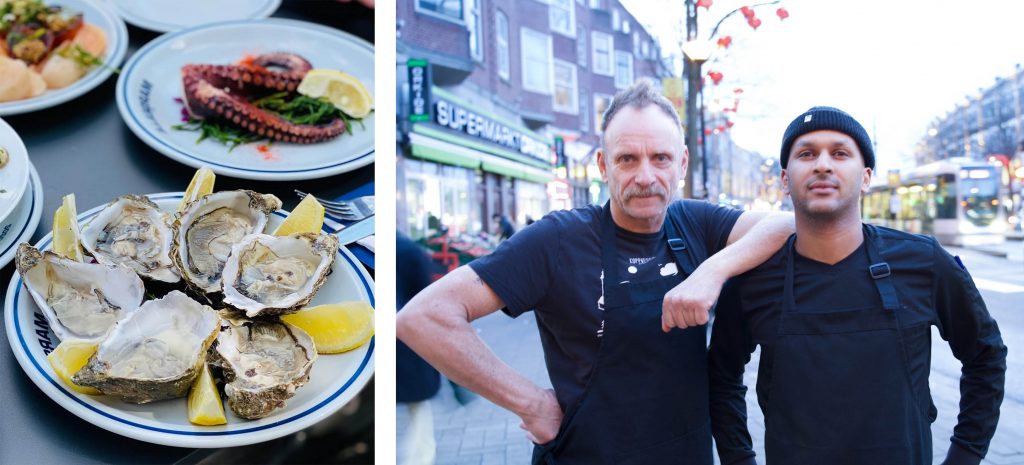
For the menu, Wooldrik and head chef Jona Haile travelled to the city where it all began. For three days, they started their day with a refreshing swim, after which they could search with fresh eyes for the essence of this complex city. This resulted in a highly culturally diverse menu. Think Italian ‘nduja and stracciatella over the Ombrine Carpaccio and the North African flavour of Ras el Hanout in the mussels. Just like the city, the restaurant is a good neighbour and they try to collaborate as much as possible with local entrepreneurs in the area. This style is something Wooldrik is known for – his dishes have always been a blend of his memories as a ship’s cook and the port cities where he came ashore. He has written a cookbook about this, in which he takes you on a cruise along all these magnificent places, complete with the accompanying wild stories. Since their brief trip to the great city, Wooldrik and Haile have developed such a taste for it that they will soon be travelling back to the city, to join forces and write a book together.
The distinctive atmosphere of the restaurant comes into its own in the scale of Ahoy. This is thanks to the work of set builder and set dresser Ben Zuydwijk. He made his mark in the film world and won two Golden Calves, the most recent for Hardcore Never Dies (2023). ‘We had already worked with him before for a Basque pop-up restaurant at Station Bergweg. For that he designed a Basque punk bar, Bar Bilbao. He is someone with an unconventional outlook who thinks on his feet,’ says Wooldrik.
Wooldrik and De Leeuw are delighted to once again welcome the audience of Art Rotterdam / Unseen Photo. Come raise a glass of bubbles, enjoy a quick oyster or a warm lunch – see you there!
Dit jaar zal de culinaire hoek van Art Rotterdam weer gevuld worden met de ruige Franse sferen van het Rotterdamse begrip Café Marseille. Al sinds 2020 trotseert dit restaurant de net zo ruige Kruiskade, met als kapiteinen van het schip Derk Jan Wooldrik en Kris de Leeuw. Samen zijn ze ook wel bekend als de Double Trouble Horecagroep en hebben ze al behoorlijk wat successen op hun naam. De combinatie van een punk scheepskok en een clublegende [De Leeuw was mede-eigenaar van de legendarische club Bar], bleek een gouden te zijn. Zo is er de muzikale buurtkroeg Bar Alaska, die tegenwoordig de Rotterdamse Stoofboot laat rondvaren over de Maas en de bierbrouwerij Eurobrouwers, die sinds kort hun bier serveert in hun eigen sfeervolle Café de Wilde Mossel. Die laatste is trouwens niet ver gelegen van de echte parel, Marseille natuurlijk!
Menu Café Marseille
Voor het menu zijn Wooldrik en chef-kok Jona Haile afgereisd naar de stad waar het allemaal begon. Drie dagen lang zijn ze hun dag begonnen met een frisse duik om vervolgens met een frisse blik te kunnen zoeken naar de essentie van deze gecompliceerde stad. Dit resulteerde in een zeer cultureel diverse kaart. Denk aan Italiaanse ‘nduja en stracciatella over de Ombervis Carpaccio en de Noord-Afrikaanse smaak van Ras el Hanout in de mosselen. Net zoals de stad, is het restaurant een goede buur en proberen ze zoveel mogelijk samen te werken met de ondernemers in de buurt. Deze stijl is iets waar Wooldrik bekend om staat, zijn gerechten zijn altijd al een mengelmoes geweest van zijn herinneringen als scheepskok en de havensteden waar hij aan wal ging. Hier heeft hij een kookboek over geschreven, waar hij je meeneemt op cruise langs al deze pracht plekken, inclusief de bijbehorende, wilde verhalen.
Sinds hun korte uitstapje naar de grote stad hebben Wooldrik en Haile hebben de smaak zo goed te pakken dat ze binnenkort terug zullen reizen naar de grote stad, om hier hun krachten te bundelen en samen een boek te schrijven.
De eigenzinnige sfeer van het restaurant komt goed tot zijn recht in de grootte van Ahoy. Dit dankzij het werk van decorbouwer en setdresser Ben Zuydwijk. Hij verdiende zijn sporen in de filmwereld en won twee keer een Gouden Kalf, de laatste ontving hij voor Hardcore never dies (2023). ‘We werkten al eerder met hem samen voor een Baskisch pop-uprestaurant in Station Bergweg. Daarvoor ontwierp hij een Baskische punk bar, Bar Bilbao. ‘Het is iemand die een eigenzinnige kijk heeft en snel denkt,’ aldus Wooldrik.
Met veel plezier ontvangen Wooldrik en de Leeuw weer het publiek van Art Rotterdam / Unseen Photo. Kom proosten met een glaasje bubbel, een snelle oester of een warme lunch, tot daar!
Ook dit jaar kunnen bezoekers van Art Rotterdam rekenen op een inspirerend en gratis toegankelijk Talks programma. Reflections 2026 omvat een aantal boeiende artist talks, Q&A’s en lezingen over actuele onderwerpen, belicht door kunstenaars, curatoren, museumdirecteuren en andere experts uit het artistieke veld.
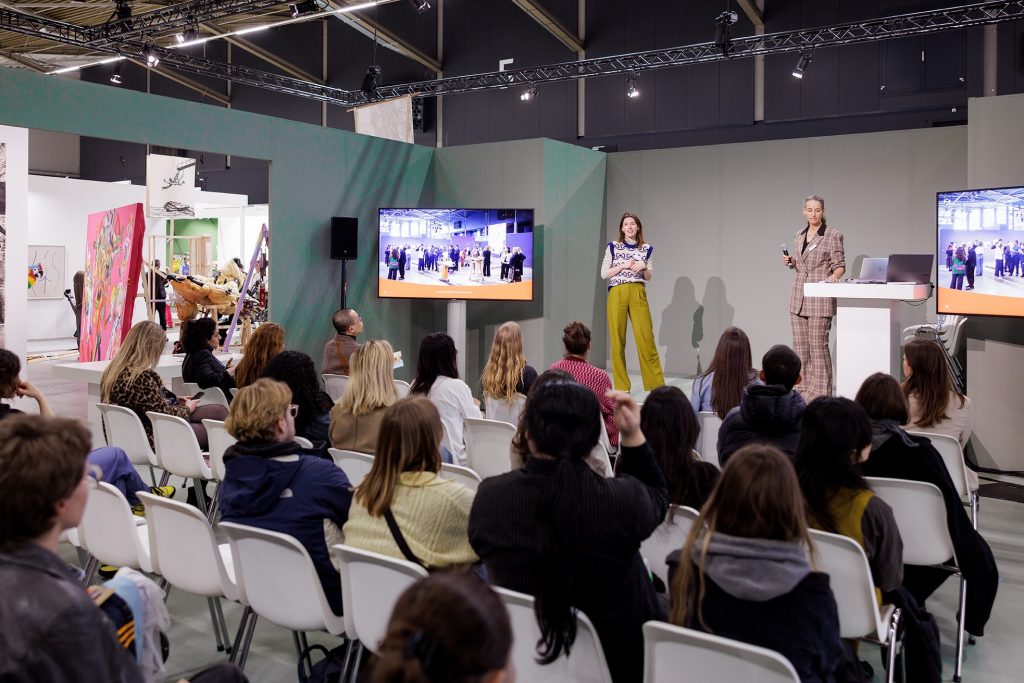
| Vrijdag 11.15 – 12.30 BK Informatie | Het kan ook anders | Artist Talk Een gesprek over kantelpunten in de beroepspraktijk van beeldend kunstenaars Kunsthistoricus Meta Knol gaat in gesprek met podcastmaker en filosoof Esther Didden over de BK-podcast Het kan ook anders, de podcast over kantelpunten in de beroepspraktijk van beeldend kunstenaars. Ook schuiven twee beeldend kunstenaars aan om te praten over kantelpunten in hun carrière, waaronder Prix de Romewinnaar 2025 Kevin Osepa en Linda Molenaar. Waar liepen zij tegen aan en hoe gingen zij daar mee om? Let op: aanmelden & tickets: bkinformatie.nl/aanmelden |
.
| Vrijdag 14.00 – 14.30 Rijksakademie | kunstenaar Guy Woueté en nieuwe directeur Rijksakademie Laurence Rassel in gesprek | *English spoken Kunstenaar Guy Woueté gaat in gesprek met Laurence Rassel, de nieuwe directeur van de Rijksakademie, over het werken binnen hybride instellingen die verschillende disciplines en continenten verbinden. Woueté was resident aan de Rijksakademie (2009–2010) en later advisor. Eerder werkten zij samen bij erg (ecole de recherche graphique) in Brussel, waar Rassel tien jaar directeur was en Woueté momenteel docent is. Een verdiepend gesprek over het belang van artistieke ontwikkeling en internationale uitwisseling. |
.
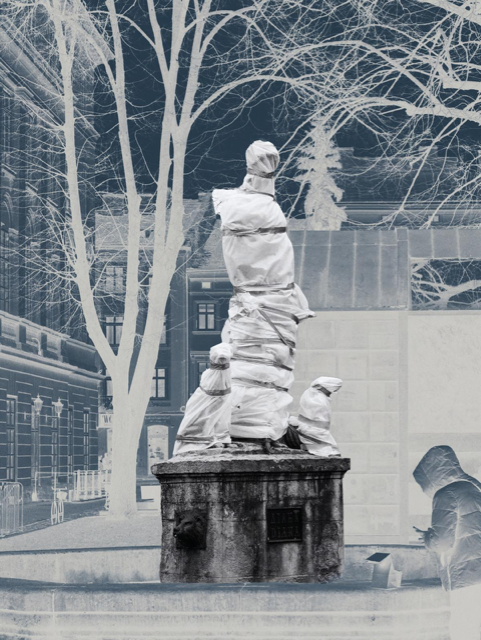
| Vrijdag 15.00 – 15.30 Amidst Cries from the Rubble: Art of Loss and Resilience Lecture Dr Laura Mueller, Deputy Director en curator Museum of International Folk Art, Santa Fe, New Mexico, USA | *English spoken Deze lezing onderzoekt de curatoriële ontwikkeling van Amidst Cries from the Rubble: Art of Loss and Resilience from Ukraine en de totstandkoming van de serie Wrapping Art—Art of Salvation van de Oekraïense fotografe Marta Syrko. Daarbij wordt aandacht besteed aan de manier waarop musea en curatoren tijdens conflicten een kans hebben om samen te werken met hedendaagse kunstenaars en het behoud van cultureel erfgoed te documenteren. Tegelijkertijd verleent de ernst van het onderwerp een diepgaande urgentie aan de kunstwerken, die fungeren als krachtige getuigenissen van veerkracht, culturele continuïteit en overleving. |
.
| Vrijdag 16.00-16.45 Kunstenaar Start – Panelprogramma over een onderzoek naar de effecten van de startsubsidie van het Mondriaan Fonds HKU en HTH Research deden in opdracht van het Mondriaan Fonds onderzoek naar de loopbaanontwikkeling van kunstenaars die een toekenning voor de regeling Kunstenaar Start of een voorganger daarvan hebben gekregen aan het begin van hun kunstenaarscarrière. De onderzoeksresultaten zullen gepresenteerd worden voor een breed publiek, met actieve betrokkenheid van studenten. |
.
| Vrijdag 17.00-18.00 Mondriaan Fonds Get a Grant event – The Prospects Edition Artist Talk en subsidievoorlichting | *English spoken Wanneer kan je subsidie aanvragen en hoe gaat dit in z’n werk? Speciaal voor studenten en startende kunstenaars organiseert het Mondriaan Fonds het Get a Grant event, een informatiebijeenkomst over subsidiemogelijkheden voor beginnende beeldend kunstenaars. Op vrijdag 27 maart (17.00–18.00 uur) licht een fondsmedewerker de Kunstenaar Start-regeling toe en deelt kunstenaar Jochem van den Wijngaard zijn ervaring met het aanvragen. Natuurlijk is er ook ruimte voor vragen en geven we je tips. Aanmelden kan hier. |
.
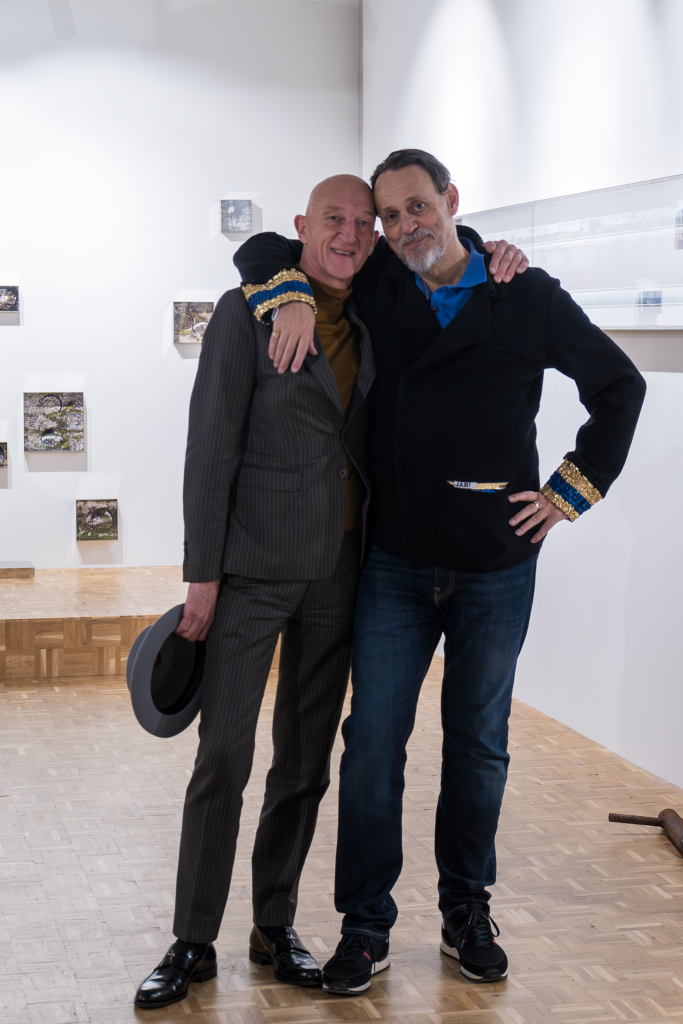
| Zaterdag 12.00 – 12.45 Talkshow Hugo Borst & Wilfried de Jong Te gast o.a.: Wim Pijbes, directeur Droom en Daad Hugo Borst en Wilfried de Jong hebben veel gemeen. Rotterdam, radio & televisie, het schrijverschap, de journalistiek. Ze verschillen ook. Wilfried is acteur, Hugo galeriehouder. Wilfried is de Polaroidman, Hugo verzamelt kunst. Nieuwsgierigheid en humor drijft dit gelegenheidsduo. Speciaal voor Art Rotterdam/Unseen Photo maken zij een bijzondere talkshow. Eén gast is al bekend. Wim Pijbes, flamboyant kunsthistoricus, directeur van Stichting Droom en Daad, een particulier cultuurfonds dat investeert in cultuur in Rotterdam. Wilfried en Hugo zullen ook een bekende fotograaf en een beeldend kunstenaar gaan bevragen. Zorg dat je er (op tijd) bij bent! |
.
| Zaterdag 13.00 – 13.30 Museumtijdschrift presenteert: een live-interview met Fiona Lutjenhuis Een interview met kunstenaar Fiona Lutjenhuis door Jeroen Junte, hoofdredacteur van Museumtijdschrift, het grootste kunstmagazine van Nederland. Lutjenhuis is finalist van de Prix de Rome 2026 en had in 2025 een solotentoonstelling in het Noordbrabants Museum. Tussen 2022 en 2024 was zij resident aan de Rijksakademie van Beeldende Kunsten. Op de beurs is het werk van de kunstenaar te zien bij Galerie Fleur & Wouter, New Art Section en Sculpture Park. |
.
| Zaterdag 14.00 – 14.30 Rijksakademie | Artist Talk / Q&A Kunstenaars Marieke Zwart en Dineke Blom | moderator: Evita de Roode Kunstenaar en Rijksakademie alum Marieke Zwart en kunstenaar Dineke Blom gaan met elkaar in gesprek naar aanleiding van Zwarts nieuwe boek ‘she saw i saw’, over het zichtbaar maken van de geboortezorg in de Bijlmermeer in Amsterdam. Ze spreken over het zoeken naar balans tussen afstand en nabijheid – op papier en daarbuiten. Hoe verhoudt een sociale praktijk zich tot artistieke overwegingen? Het gesprek wordt geleid door Evita de Roode. |
.
.
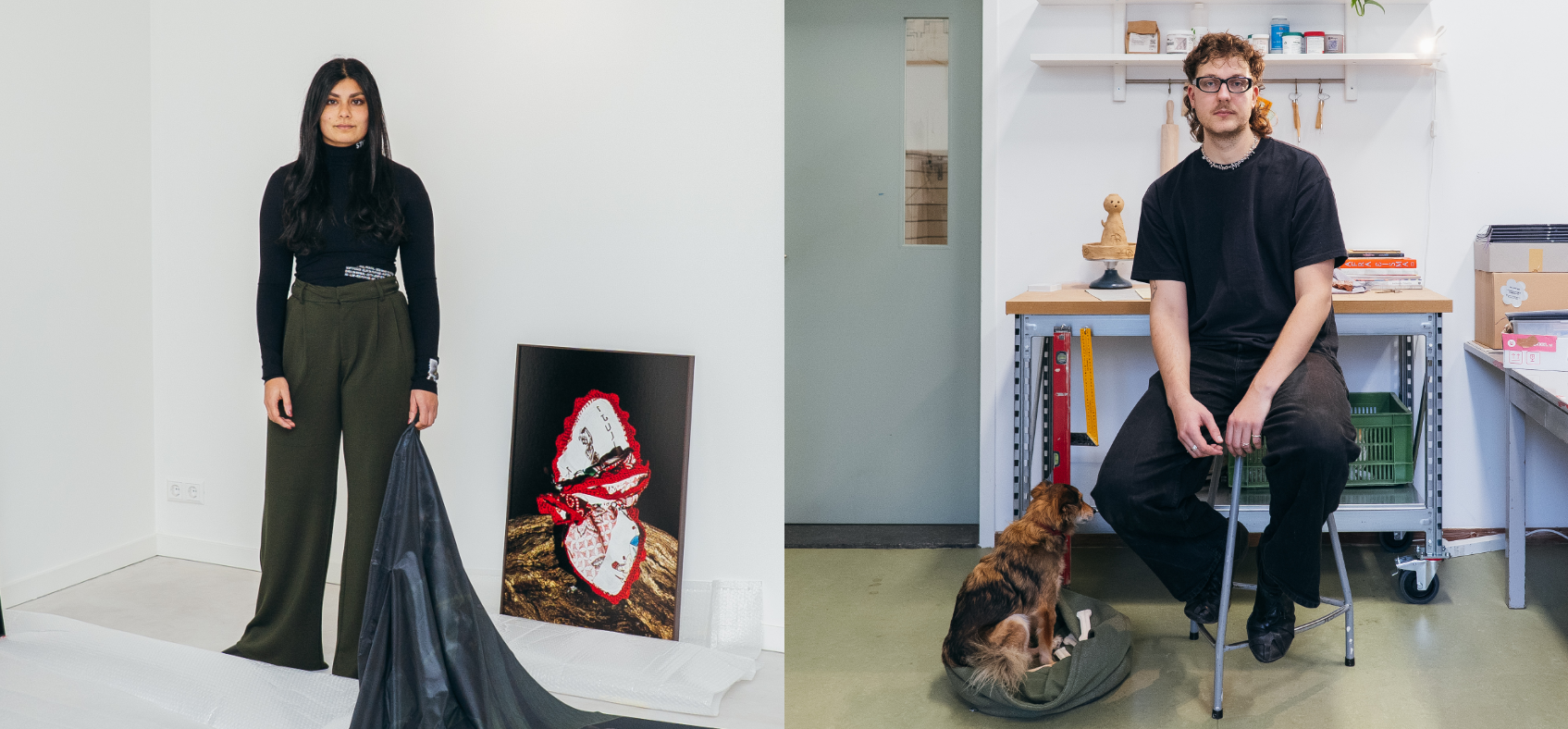
| Zaterdag 15.00 – 15.20 AVROTROS’ MUZE presenteert: De Muzen van Morgen I Michelle Piergoelam Artist Talk / Q&A Curator en kunstjournalist Lieneke Hulsthof gaat in gesprek met een veelbelovende, Nederlandse kunstenaar. In deze editie gaat ze in gesprek met kunstfotograaf Michelle Piergoelam, over hoe ze in haar werk verborgen geschiedenissen en culturele overleveringen in beeld brengt. |
.
| Zaterdag 15.30 – 15.50 AVROTROS’ MUZE presenteert: De Muzen van Morgen II Noa Zuidervaart Artist Talk / Q&A Curator en kunstjournalist Lieneke Hulsthof gaat in gesprek met een veelbelovende Nederlandse kunstenaar. In deze editie spreekt zij met kunstenaar Noa Zuidervaart over hoe hij in zijn werk complexe vraagstukken onderzoekt en vertaalt naar tekeningen, sculpturen en gevonden objecten, die samenkomen in gelaagde installaties. |
.
| Zaterdag 16.30 – 17.00 The Role of Women Artists in the Art World! | Conversation / Q&A Carolina Alfonso, kunstenaar en moderator in gesprek met Alejandra Castro Rioseco, oprichter/Executive Director, MIA ART Collection | *English spoken Het is van fundamenteel belang om het bewustzijn over gendergelijkheid in de kunstwereld te vergroten. Professionele en particuliere instellingen moeten samenwerken om niet alleen tentoonstellingsruimtes te creëren, maar ook reflectieruimtes die de perspectieven van het maatschappelijk middenveld en academische instellingen verenigen met die van kunstenaars, curatoren, verzamelaars en galeries. MIA ART Collection investeert in en vergroot de zichtbaarheid van vrouwelijke kunstenaars in de kunstwereld, door netwerken en kanalen voor ondersteuning en hulp te creëren voor vrouwelijke professionals in de kunst. |
.
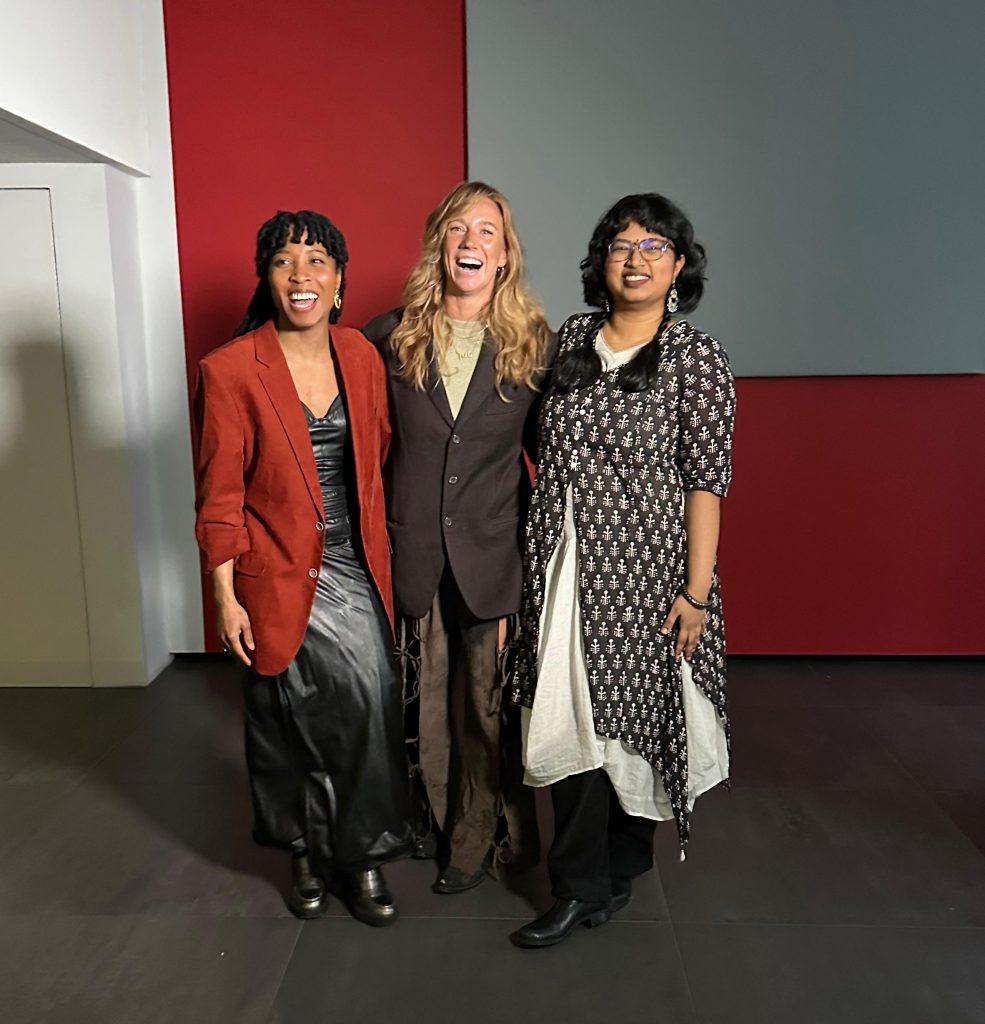
| Zondag 12.00 – 12.30 South Forward – DHB Art Space The City Through Us | Artist Talk / Q&A | *English spoken Sluit aan bij curator Jeanthalou Haynes en de kunstenaars van DHB Art Space – South Forward voor een interactieve artist talk over kunst, buurtkennis en duurzaamheid in Rotterdam-Zuid. In elke stad dragen mensen en lokale initiatieven bij aan de toekomst van hun wijk, vaak buiten het zicht van het grote publiek. Via verhalen en materiaal samples van de kunstwerken nodigen we het publiek uit te ontdekken hoe kunstenaars deze verhalen zichtbaar maken en hoe kunst, geworteld in de stad, kan bijdragen aan een duurzamere toekomst. Presentatie tevens te zien in DHB Art Space booth J 04. |
.
| Zondag 13.00 – 14.00 From Carbon Footprint to Collective Action: Galleries, Fairs, and Artists in a Warming World | Lezing en aansluitend 13.30: Paneldiscussie | *English spoken In tijden van klimaatcrisis heeft de kunstwereld zowel de kans als de verantwoordelijkheid om haar carbon footprint te verkleinen. In deze sessie, georganiseerd door de Nederlandse Galerie Associatie, presenteert de Gallery Climate Coalition haar internationale initiatieven en concrete strategieën voor CO₂-reductie binnen tentoonstellingen, transport, reizen en productie. In het aansluitende panelgesprek 13.30 – 14.00 bespreken een kunstenaar, galeriehouder en kunstbeursvertegenwoordiger hoe collectieve verantwoordelijkheid kan leiden tot meetbare impact en duurzame, structurele verandering binnen de Nederlandse kunstsector. |
.
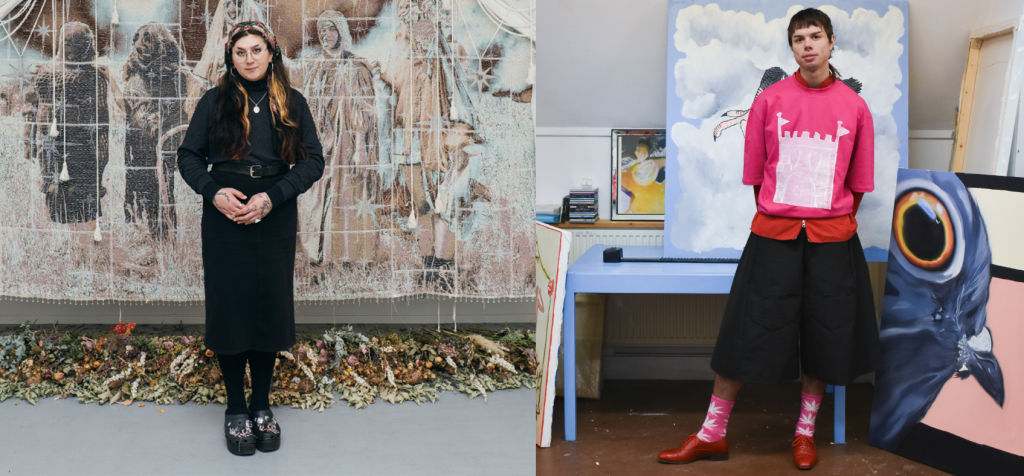
| Zondag 15.00 – 15.20 uur AVROTROS’ MUZE presenteert: De Muzen van Morgen III Dakota Magdalena Mokhammad Artist Talk / Q&A Curator en kunstjournalist Lieneke Hulsthof gaat in gesprek met een veelbelovende Nederlandse kunstenaar. In deze editie spreekt zij met kunstenaar Dakota Magdalena Mokhammad over haar zoektocht naar identiteit, spiritualiteit, lichaam en gender. En hoe deze vorm krijgen in haar wandtapijten en installaties. |
.
| 15.30-15.50 AVROTROS’ MUZE presenteert: De Muzen van Morgen IV Chris Nelck Artist Talk / Q&A Curator en kunstjournalist Lieneke Hulsthof gaat in gesprek met een veelbelovende Nederlandse kunstenaar. In deze editie spreekt zij met kunstenaar Chris Nelck, wiens uiteenlopende praktijk wordt gekenmerkt door humor en intellectuele scherpte en wordt gevoed door een trans- en queerperspectief. |
.
| Zondag 17.00 – 18.00 Kunstinstituut Melly presenteert Suitcase Economy Informal Economy (Barter space) | *Nederland en Engels gesproken Kunstenaar Riet Wijnen brengt Suitcase Economy naar de beurs. Met deze experimentele kantine ontwikkelt ze een methode om alledaagse contexten in onder andere Limburg, Zuid-Korea en Zuid-Afrika te verbinden via geschiedenissen van conservering en fermentatie. Riet nodigt bezoekers uit om in relatie tot deze interesse zelfgemaakte conserven, recepten, ingrediënten voor cultuurspecifieke gerechten, of geld mee te brengen om te ruilen voor Suitcase Economy producten. Door middel van onderhandeling wordt met economische modellen geëxperimenteerd. Meer informatie: kunstinstituutmelly.nl |
Once again, visitors to Art Rotterdam can count on an inspiring and freely accessible Talks programme. Reflections 2026 includes a number of engaging artist talks, Q&As and lectures on current topics, presented by artists, curators, museum directors and other experts from the artistic field.
| Friday 11.15 – 12.30 BK Informatie | ‘Het kan ook anders’ | Artist Talk A conversation about tipping points in the projecessional practice of visual artists | *Dutch spoken Art historian Meta Knol will be in conversation with podcaster and philosopher Esther Didden about our podcast about tipping points in the professional practice of visual artists. Two visual artists will be joining to discuss tipping points in their careers; 2025 Prix de Rome winner Kevin Osepa and Linda Molenaar. What challenges did they face, and how did they cope? What stands out to us in the podcast series? Do we see underlying patterns, or not? What questions does this raise about the state of artistic practice in the Netherlands? And should we perhaps look at it differently ourselves? Please note: subscription & tickets: bkinformatie.nl/register |
.
| Friday 14.00 – 14.30 Rijksakademie | artist Guy Woueté and newly appointed director of the Rijksakademie Laurence Rassel in conversation | *English spoken Artist Guy Woueté engages in conversation with Laurence Rassel, the newly appointed director of the Rijksakademie, about working within hybrid institutions across disciplines and continents. Woueté was a resident at the Rijksakademie (2009–2010) and later an advisor. They previously worked together at erg (école de recherche graphique) in Brussels, where Rassel was director for ten years and Woueté is currently a teacher. A thoughtful exchange on the importance of artistic development and international exchange. |
.
| Friday 15.00 – 15.30 Amidst Cries from the Rubble: Art of Loss and Resilience Lecture by Dr Laura Mueller, Deputy Director and Curator Museum of International Folk Art, Santa Fe, New Mexico, USA | *English spoken This lecture explores the curatorial development of Amidst Cries from the Rubble: Art of Loss and Resilience from Ukraine and the commissioning of Ukrainian photographer Marta Syrko’s series Wrapping Art—Art of Salvation. It considers how museums and curators have an opportunity to collaborate with contemporary artists during conflict to document cultural preservation, while the gravity of the subject matter lends profound depth and urgency to artworks that stand as powerful acts of witness, resilience, and cultural survival. |
.
| Friday 16.00 – 16.45 Artist Start – Panel discussion on a research into the career development of artists who received an Artist Start grant by the Mondriaan Fund | *Dutch spoken HKU and HTH Research conducted research commissioned by the Mondriaan Fund into the career development of artists who received an Artist Start grant, or a predecessor thereof, at the beginning of their artistic careers. The research results will be presented to a broad audience, with active involvement of students. |
.
| Friday 17.00 – 18.00 Mondriaan Fund Get a Grant event – The Prospects Edition Artist Talk and Subsidy information | *English spoken When can you apply for a grant and how does the process work? Especially for students and emerging artists, the Mondriaan Fund is organising the Get a Grant event, an information session on grant opportunities for starting visual artists. On Friday 27 March (5–6 pm), a staff member will explain the Artist Start grant and artist Jochem van den Wijngaard will share his experience with applying. There will also be time for questions and practical tips. You can register here. |
.
| Saturday 12.00 – 12.45 Talkshow Hugo Borst & Wilfried de Jong As a guest a.o.: Wim Pijbes, Director Droom en Daad | *Dutch spoken Hugo Borst and Wilfried de Jong have a lot in common. Rotterdam, radio & television, writing, journalism. They also differ. Wilfried is an actor, Hugo a gallery owner. Wilfried is the Polaroid man, Hugo collects art. Curiosity and humor drive this occasional duo. Especially for Art Rotterdam/Unseen Photo, they compose a special talk show. One guest is already known. Wim Pijbes, flamboyant art historian, director of Stichting Droom en Daad, a private cultural fund that invests in culture in Rotterdam. Wilfried and Hugo will also interview a well-known photographer and a visual artist. Make sure you attent this show on time! |
.
| Saturday 13.00 – 13.30 Museumtijdschrift presents: a live-interview with Fiona Lutjenhuis | *Dutch spoken An interview with artist Fiona Lutjenhuis by Jeroen Junte, editor-in-chief of Museumtijdschrift, the biggest art magazine of the Netherlands. Lutjenhuis is a finalist for the Prix de Rome 2026 and had a solo exhibition at the Noordbrabants Museum in 2025. From 2022 to 2024, she was a resident at the Rijksakademie van Beeldende Kunsten. During Art Rotterdam, the artist is represented by gallery Fleur & Wouter, on show at New Art Section booth K25 and Sculpture Park section. |
.
| Saturday 14.00 – 14.30 Rijksakademie | Artist Talk / Q&A Marieke Zwart and artist Dineke Blom in conversation | *Dutch spoken Artist and Rijksakademie alum Marieke Zwart and artist Dineke Blom engage in conversation about Zwart’s new book ‘she saw i saw’, which explores the visibility of maternity care in the Bijlmermeer neighbourhood of Amsterdam. They discuss the search for balance between distance and proximity – on paper and beyond. How does social practice relate to artistic considerations? The conversation will be moderated by Evita de Roode. |
.

| Saturday 15.00 – 15.20 AVROTROS’ MUZE presents: De Muzen van Morgen I Michelle Piergoelam Artist Talk / Q&A | *Dutch spoken Curator and art journalist Lieneke Hulsthof in converstation with a promising Dutch artist. In this edition, she talks with art photographer Michelle Piergoelam about how she brings hidden histories and cultural traditions to life in her work. |
.
| Saturday 15.30 – 15.50 AVROTROS’ MUZE presents: De Muzen van Morgen II Noa Zuidervaart Artist Talk / Q&A | *Dutch spoken Curator and art journalist Lieneke Hulsthof in converstation with a promising Dutch artist. In this edition, she talks with artist Noa Zuidervaart about how he explores complex issues in his work and translates them into drawings, sculptures, and found objects that come together in layered installations. |
.
| Saturday 16.30 – 17.00 The Role of Women Artists in the Art World! | Conversation / Q&A Carolina Alfonso, Artist and Moderator in conversation with Alejandra Castro Rioseco, Founder/Executive Director, MIA ART Collection | *English spoken The importance of raising awareness about gender equality in art is fundamental. Professional and private institutions must collaborate in creating spaces not only for exhibitions but also for reflection that unite the perspectives of civil society and academic institutions with those of artists, curators, collectors, and galleries. The role of MIA ART Collection is to invest in and create visibility for women artists in the art world, creating networks and channels of support and assistance for women professionals in the arts. |
.
| Sunday 12.00 – 12.30 South Forward – DHB Art Space The City Through Us | Artist Talk / Q&A | *English spoken Join curator Jeanthalou Haynes and the artists of DHB Art Space – South Forward for an interactive artist talk on art, neighbourhood knowledge and sustainability in Rotterdam South. In every city, people and local initiatives contribute to the future of their neighbourhoods, often beyond the view of the wider public. Through stories and shared material samples from the artworks, the audience is invited to discover how artists make these stories visible and how art rooted in the city can contribute to a more sustainable future.Presentation South Forward on view at DHB Art Space booth J 04. |
.
| Sunday 13.00 – 14.00 From Carbon Footprint to Collective Action: Galleries, Fairs, and Artists in a Warming World | Lecture and subsequently 13.30: Panel discussion | *English spoken As the climate crisis intensifies, the art world has both the opportunity and the responsibility to reduce its carbon footprint. In this session, organized by the Dutch Gallery Association, the Gallery Climate Coalition will present its global initiatives, outlining practical strategies for carbon reduction across exhibitions, shipping, travel, and production. Subsequently 13.30 a panel featuring an artist, gallerist, and art fair professional will explore how collective responsibility can drive measurable impact, advancing long-term sustainability and systemic change within the Dutch art world. |
.
| Sunday 15.00 – 15.20 uur AVROTROS’ MUZE presents: De Muzen van Morgen III Dakota Magdalena Mokhammad Artist Talk / Q&A | *Dutch spoken Curator and art journalist Lieneke Hulsthof in converstation with a promising Dutch artist. In this edition, she talks with artist Dakota Magdalena Mokhammad about her search for identity, spirituality, the body, and gender — and how these themes take shape in her tapestries and installations. |
.
| Sunday 15.30 – 15.50 AVROTROS’ MUZE presents: De Muzen van Morgen IV Chris Nelck Artist Talk / Q&A | *Dutch spoken Curator and art journalist Lieneke Hulsthof in conversation with a promising Dutch artist. In this edition, she talks with artist Chris Nelck, whose diverse practice is characterized by humor and intellectual sharpness, and is informed by a trans and queer perspective. |
.
| Sunday 17.00 – 18.00 Kunstinstituut Melly presents Suitcase Economy Informal Economy (Barter space) | *Dutch and English spoken Artist Riet Wijnen brings Suitcase Economy to the fair. By running this experimental canteen, she is developing a method to connect daily contexts in, among others, Limburg (NL), South Korea and South Africa through histories of preservation and fermentation. In relation to this interest, Riet invites visitors to bring homemade preserved goods, ingredients for culturally specific dishes, recipes, or money to exchange for Suitcase Economy staples, experimenting with collapsing economic models through negotiation. More information: kunstinstituutmelly.nl |
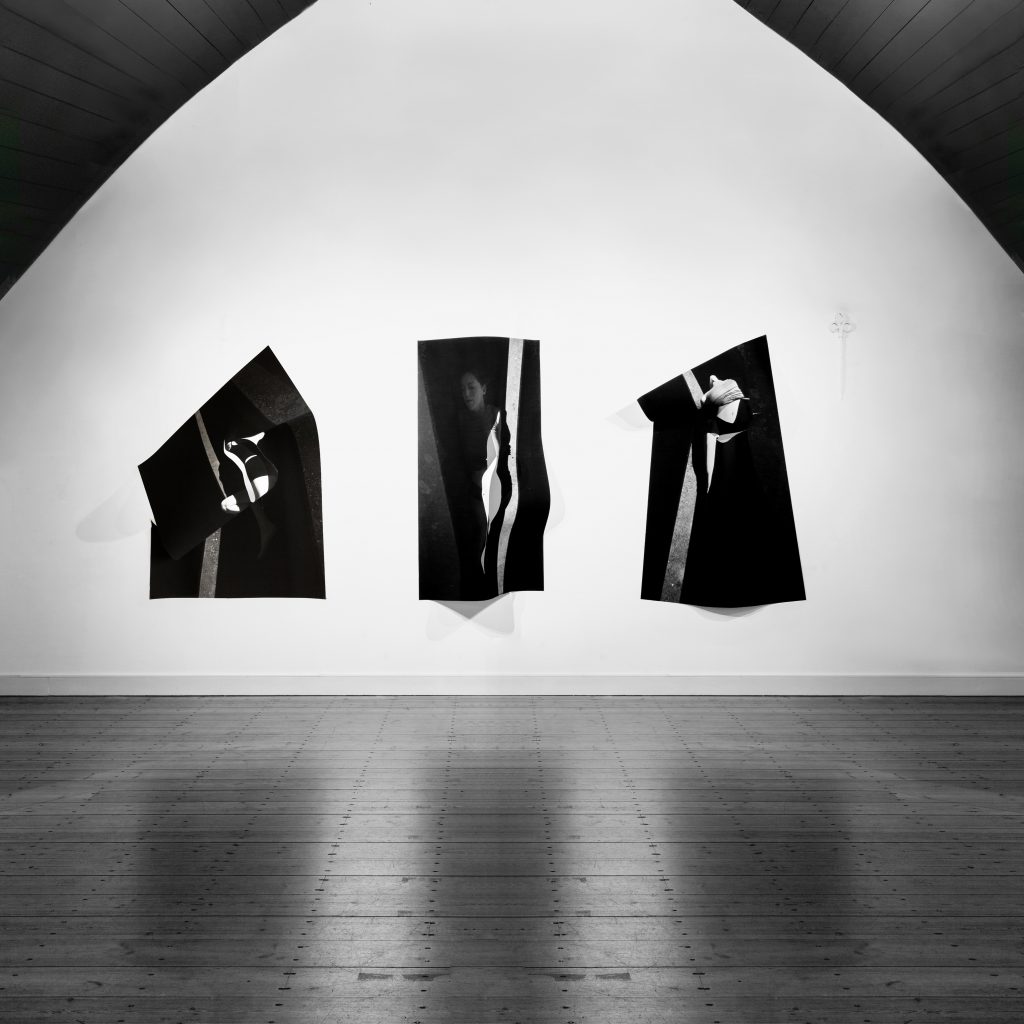
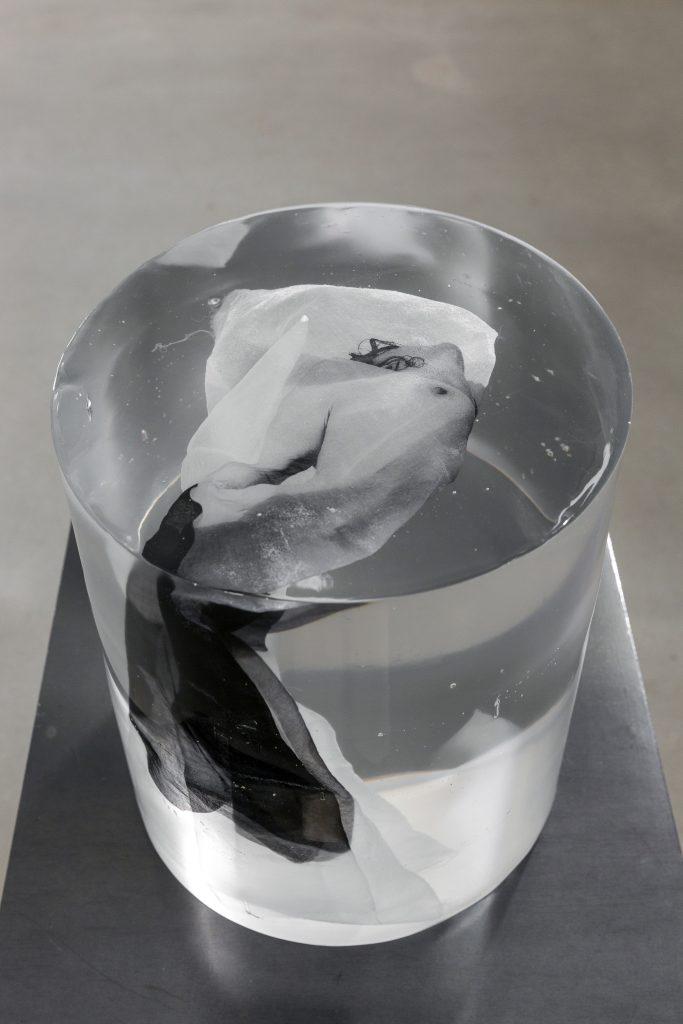
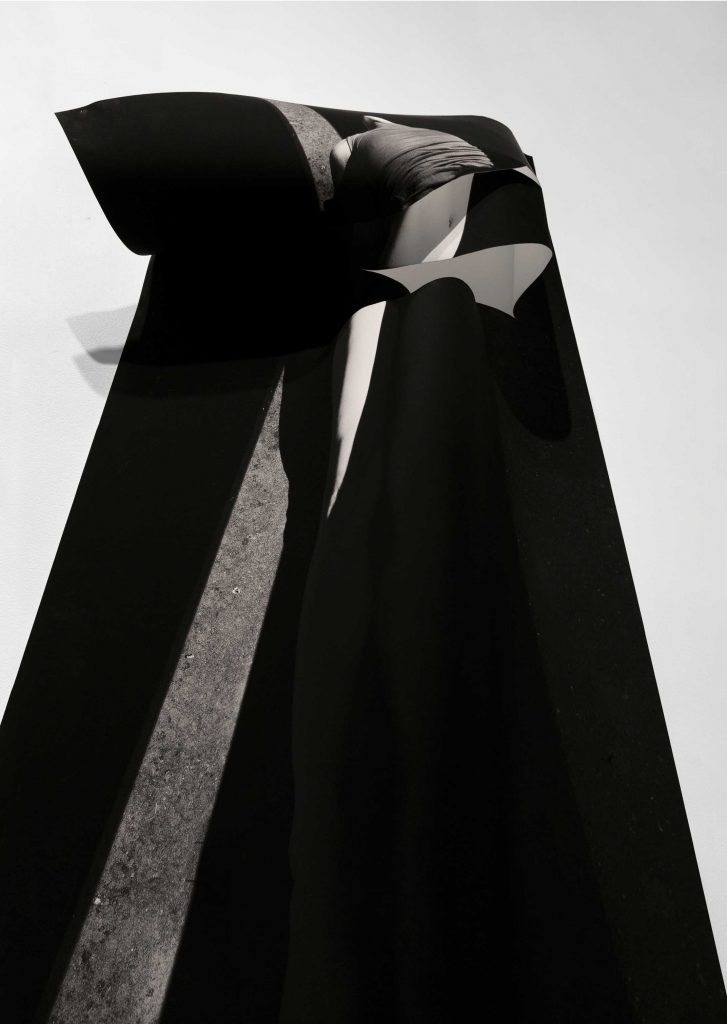
The fact that the work of Daphne van de Velde is being shown at Unseen Photo is not surprising. Her work consists of photographs and sculptures made from photographs. But this simple description does not do justice to the breadth and singularity of Van de Velde’s work. The results are preceded by a performance and video registration. As a result of this procedure, and the associative image manipulation that follows, Van de Velde’s work cannot easily be pinned down or compared with that of others. It stands on its own.
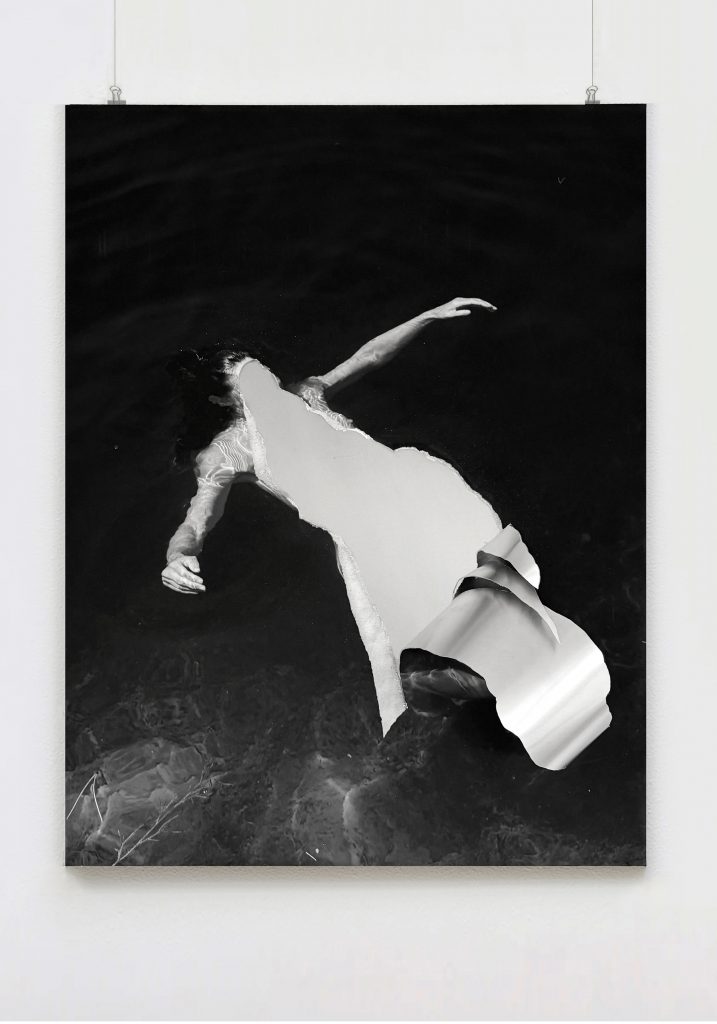
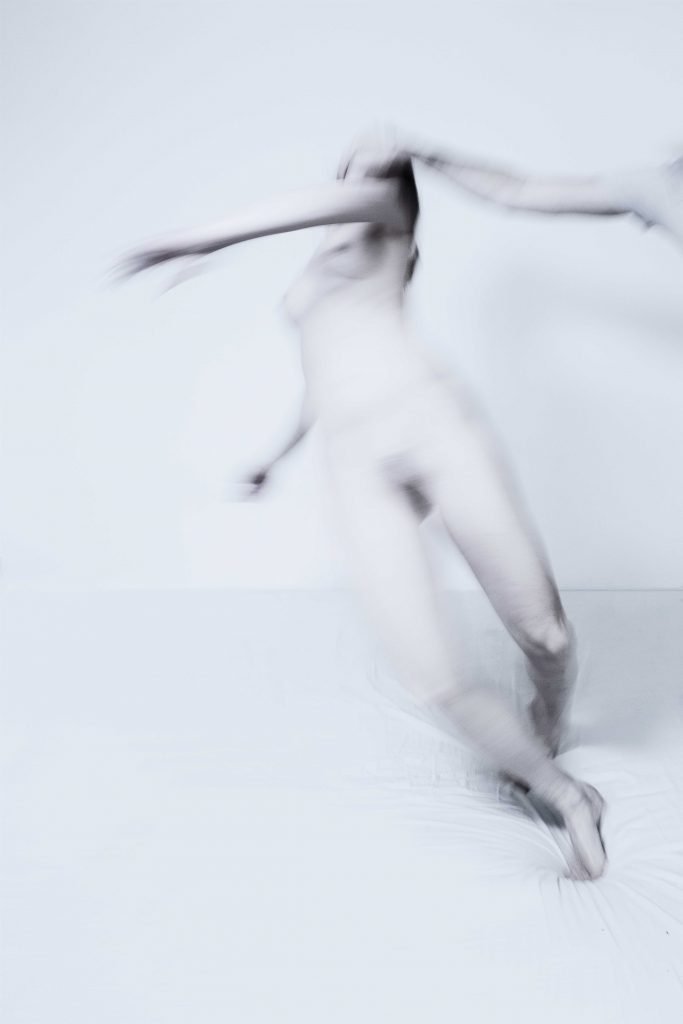
The person in the photographs is Van de Velde herself. The pictures are stills from the recording of a performance. She prints the images and then tears or bends them so that the tension she experienced as a dancer is incorporated into the image.
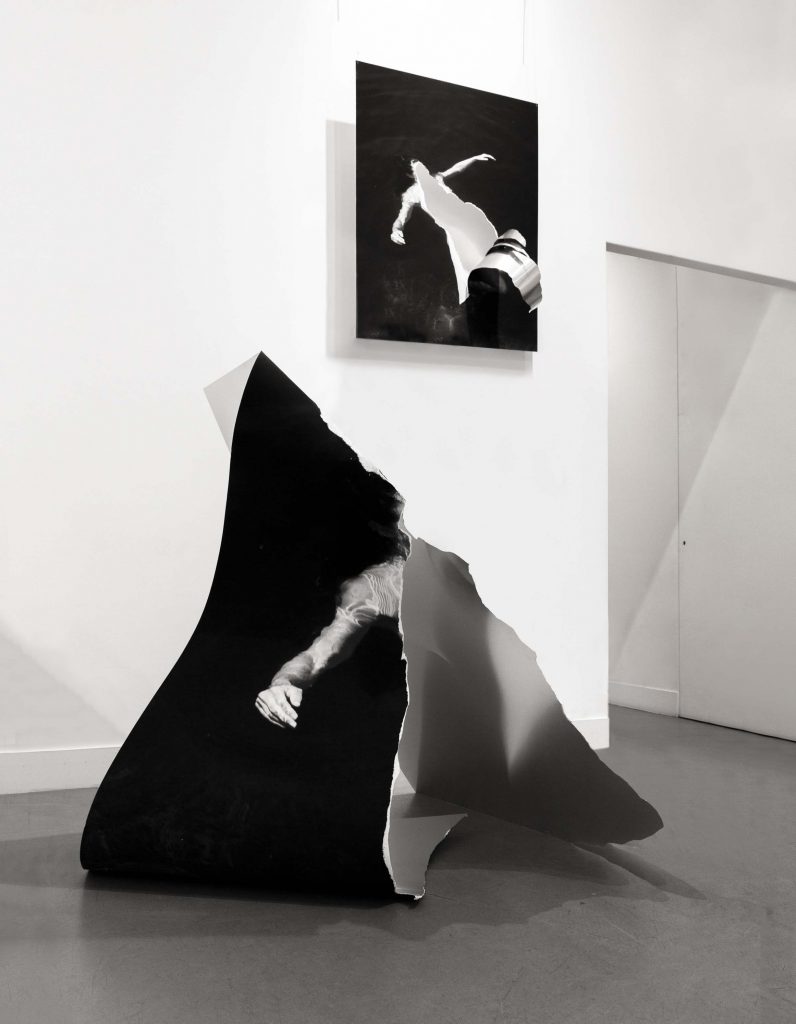
In a photograph from her newest series, Penthesilea, we see her lying in water with her arms spread out, the silhouette of her body visible. The core—her torso and face—has been torn out. That portion of paper curls out from the flat surface. The tension is palpable.
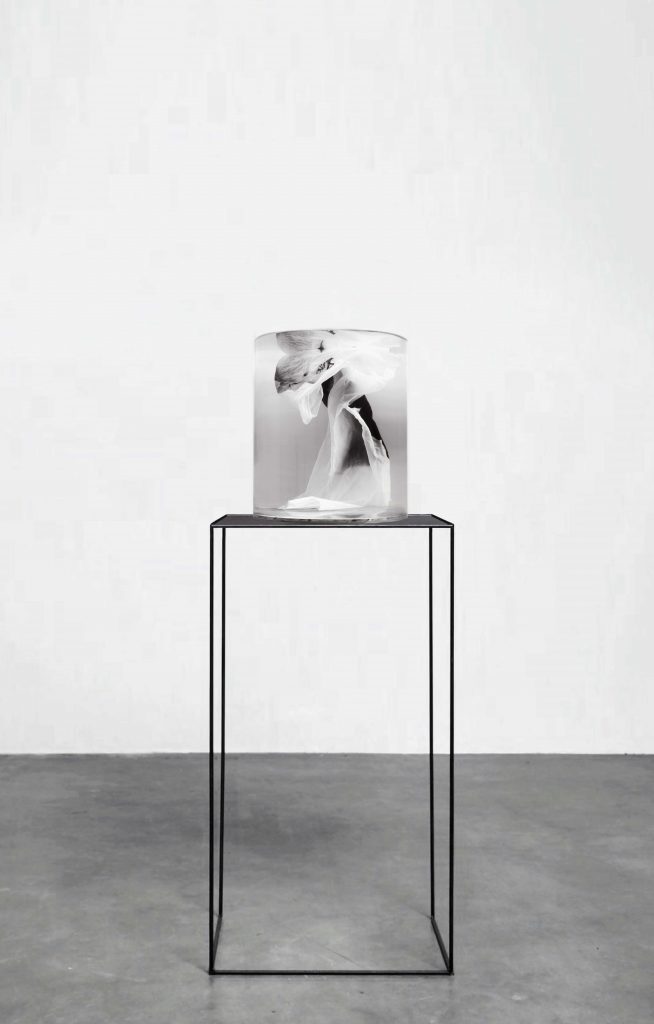
In the sculpture Crossing, the movement of a dancer can be recognised: a raised knee in a brown tunic. Here, too, part of the body is missing—the face this time. Revealing and concealing is a central theme in Van de Velde’s work. In Penthesilea, she links this to the myth of Penthesilea, the Amazon queen who, in a male-dominated world, chose love rather than indifference. We spoke with Van de Velde about her new series and unique approach.
Works from the series Penthesilea by Daphne van de Velde can be seen at Unseen Photo at the Black Swan Gallery stand.
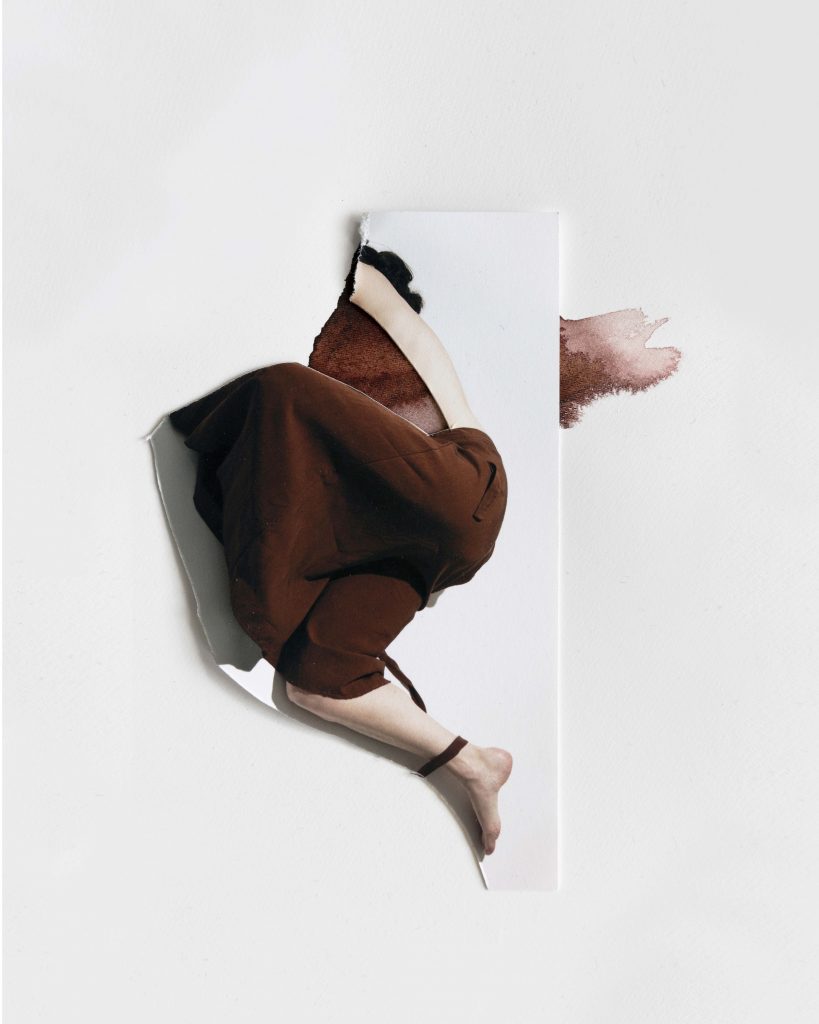
At Art Rotterdam, work from your new series Penthesilea will be shown. Not everyone is familiar with the myth of this Amazon queen. Why were you inspired by this story and why did you decide to use it in your work?
The unusual names in Greek mythology make it seem as if we are speaking about another era, yet they also essentially address our own time: how we relate to ourselves and to one another, and how we position ourselves within the world we inhabit. What appeals to me in these texts is that they are stripped of all irrelevant information that characterises our time.
Penthesilea caught my attention because she clearly positions herself as a woman in a male-dominated world. I admire her courage to cast off her armour, step out of her self-chosen prison and move from indifference towards love. In my newest series of work, I walk alongside her for a while, though at times I also follow my own path.
At the fair, we see the final result of what could be described as a multi-stage process: dance, performance-photography-sculpture. Can you explain your approach?
I do not divide my work that way, but choose a medium that best suits what I want to express in a particular artwork, but I understand what you mean. Because of my background in contemporary dance and degrees in Fine Arts, Architecture and Autonomous Photography, my work is rooted in spatial awareness and bodily movement. I move between photography, performance and sculpture to explore these transitions. My own body functions as subject, instrument, carrier and voice.
What does your work require?
To make art, I need five dimensions: the first three to give a work spatial presence, supplemented by time and place. The notion of time is especially important because my work has a narrative quality. The title of the series, Penthesilea, suggests this.
Can you elaborate on this?
You need time to watch a performance. With a photograph, this is different – you receive all the information at once. A sculpture lies somewhere in between: you need time to observe it from all sides. The reason sculpture stands at the end of this three-stage process is that I create my art for an audience and that audience does not always have access to my performance.
Within my process, I effectively freeze time several times. The moment I take a still from a performance is the first instance. To visualise the bodily tension I experience as a dancer, I transform the two-dimensional plane of the photograph into a three-dimensional one. I do this by pulling or pushing the surface—sometimes until it tears—to allow certain parts of the body to disappear and others to emerge. In some cases, the documentation of the final sculpture can be a third freezing of time, as it enables me to incorporate the direction of light.
You also mentioned the place where your work is shown. Do you determine that on a work-by-work basis?
Location is important. For Art Rotterdam, the sculptural form comes closest to what I want to convey in relation to the audience there. Soon my work will be shown at an exhibition at the EYE Filmmuseum in Amsterdam, where my films function best as the medium. In places where I can meet the audience within the space and where sufficient room is available, performance works well.
During the opening of the PhotoBrussels Festival, I presented a performance in which I encountered the image of my body on a life-size photograph that was 2 1/2 metres high and manipulated it with my body until a sculpture remained. Dance and the deformation of the photograph intertwine, something I can literally demonstrate to the audience.
This is also reflected in the presentation of the work within the series Penthesilea. Some sculptures consist of folded photographic paper. Others are torn. In both cases, the images are not entirely visible. My approach is highly associative. At the moment of creation, I choose the form that best suits the artwork.
How would you describe the theme of your work?
Conceptually, my work involves the revealing and concealing of the body, exposure and protection. That is why I never show the body in its entirety, but emphasise certain parts, while allowing others to be omitted by literally removing them or placing them in shadow.
Your gallerist told me you were once a timid person and that dance helped you to develop a sense of presence. That connects with the theme of revealing and concealing the body. When someone moves, you never see everything at once.
Everyone has their own way of communicating. There was a time in my life when I found it very difficult to express myself verbally. Dance became a way for me to speak – and became almost addictive.
My initial form of communication was contemporary dance, followed by photography. In recent years, I have combined both, rooted in a personal narrative. For me, making art remains a means of communication. The artworks reflect my emotions, such as love and the fear of it, but it is not exclusively about me. It involves feelings we all share as human beings.
Your work stands apart in that it does not directly reference other artists. Are there artists with whom you feel an affinity?
I am drawn to artists who want to tell their own story, regardless of form or conceptual consequences. In that sense, I have great admiration for the music of PJ Harvey, who adopts a musical style appropriate to each project. Her work is cumulative and comparable to my art. Each project stands on its own, yet is built on previous ones. I am not interested in repeating the same art or music; once I have done something, it loses its sense of urgency.
Another artist I deeply admire is the prematurely deceased British-Iraqi architect Zaha Hadid. With her well-known statement, “There are 360 degrees, so why stick to one?”, she articulated a vision of architecture in which materials and forms offer infinite possibilities beyond the familiar 90-degree angle. I approach my art in a similar way. I enjoy material research and connections that initially seem impossible. I continue to experiment until I find a solution that makes them possible.
You mentioned earlier that Penthesilea lived as a woman in a male-dominated world and the artists you cited are also women. Is there a feminist critique within your work?
Penthesilea is not an idealised figure according to the male gaze, but a fallible female character. She inspired me to show how the conflict between desire and self-control continues to this very day. Despite women’s emancipation, female desire often remains beneath the surface. Penthesilea embodies the charged moment when an inner boundary is crossed and interior experience breaks outward.
Through my work, I want to advocate female strength, yet it is certainly not intended as anti-male. I believe in a fundamental difference between women and men in how they think, feel and act. Every individual contains, to varying degrees, elements of both femininity and masculinity. To me, there is no such thing as male or female art. What exists is the act of working based on your own strength—and for me that includes the strength I experience through womanhood and the courage to acknowledge both boundaries and desires.
Is there a project you would like to carry out in the future?
I would very much like to create the spatial work shown at Art Rotterdam on a monumental scale. The enlarged dimensions would allow audiences to relate optimally to the artwork.
A grant I received last year from the Province of Gelderland enabled me to develop a technique that makes it possible to produce my photo-sculptures in life-size, while maintaining structural stability.
My greatest dream is to present my sculptures in a monumental museum space where I can combine them with my films and performances to create a comprehensive experience of my work. Yet outdoor settings-squares and parks-are equally compelling, as they allow me to combine the direct nature of my work with the direct nature of public spaces.
Written by Wouter van den Eijkel
Dat het werk van Daphne van de Velde te zien zijn op Unseen Photo is begrijpelijk. Het resultaat van haar werk zijn foto’s en sculpturen gemaakt van foto’s. Tegelijk doet het geen recht aan de breedte en eigenzinnigheid van Van de Veldes praktijk. Aan de resultaten gaan namelijk een performance en een videoregistratie vooraf. Dit procedé en de associatieve beeldbewerking die daarop volgt, zorgen ervoor dat Van de Veldes werk zich niet laat vastpinnen of vergelijken met dat van anderen. Het staat op zichzelf.
De persoon op de foto’s is Van de Velde zelf. Het zijn stills van de registratie van een performance. Die beelden drukt ze af, vervolgens scheurt of buigt ze die precies op zo’n manier dat de spanning die ze als danser voelde ook terugkeert in het beeld.
Op een foto uit haar nieuwste serie Penthesilea zien we haar in het water liggen met haar armen wijd gespreid en het silhouet van haar lichaam. De inhoud, haar torso en gezicht, scheurde ze eruit. Dat deel van het papier kom als een krul het platte vlak uit. De spanning is voelbaar.
In de sculptuur Crossing herken je de beweging van een danser. Een opgeheven knie in een bruine tunica. Ook hier ontbreekt een deel van het lichaam: het gezicht. Onthullen en verbergen is een centraal thema in het werk van Van de Velde. In Penthesilea koppelt ze dit aan de mythe van deze Amazone-koningin die in een door mannen gedomineerde wereld koos voor liefde in plaats van onverschilligheid. We spraken Daphne van de Velde over haar nieuwe serie en unieke werkwijze.
Werken uit de serie Penthesilea van Daphne van de Velde zijn te zien op Unseen Photo in de stand van Black Swan Gallery.
Op Art Rotterdam is werk te zien uit je nieuwe serie Penthesilea. Ik denk dat niet iedereen de mythe van deze Amazone-koningin meteen paraat heeft. Hoe kwam juist dit verhaal op je pad en waarom besloot je hierover werk te maken?
Door de afwijkende namen in de Griekse mythen lijkt alsof wij over een heel andere tijd praten, maar inhoudelijk gaan ze ook over onze tijd: hoe gaan wij met onszelf en elkaar om, en hoe verhouden wij ons tot de wereld waarin wij leven. Wat mij in de teksten aanspreekt is dat ze zijn ontdaan van alle irrelevante informatie die onze tijd kenmerkt.
Penthesilea was mij opgevallen doordat zij zich manifesteert als vrouw in een door mannen gedomineerde wereld. Ik bewonder haar moed om haar pantser af werpen, uit haar zelfgekozen gevangenis te stappen en van onverschilligheid op liefde over te gaan. In mijn nieuwste serie kunstwerken loop ik een stukje met haar mee, maar neem soms ook een eigen afslag.
Op de beurs krijgen we straks het eindresultaat te zien van een drietrapsraket: dans, performance-fotografie-sculptuur. Kan je uitleggen hoe je te werk gaat?
Zelf deel ik mijn werk niet zo in, ik kies het medium dat het best past bij wat ik met een bepaald kunstwerk wil zeggen, maar ik begrijp wel wat je bedoelt. Door mijn achtergrond in contemporaine dans, en diploma’s in Fine Arts, in Architectuur en in Autonome Fotografie, is mijn werk geworteld in ruimtelijk bewustzijn en lichamelijke beweging. Ik beweeg me tussen fotografie, performance en sculptuur om deze grensovergangen te verkennen. Mijn eigen lichaam fungeert zowel als onderwerp, als instrument, als drager én als stem.
Wat heb je nodig om jouw werk te maken?
Om kunst te maken heb ik vijf dimensies nodig, de eerste drie om een werk ruimtelijk te maken, aangevuld met tijd en plaats. Met name het begrip ‘tijd’ is belangrijk in mijn werk, omdat mijn werk een verhalend karakter heeft. Alleen al door de titel van de serie, Penthesilea.
Kan je dat toelichten?
Je hebt tijd nodig om een performance te bekijken. Dat speelt bij een foto niet, daar krijg je alle informatie in een keer. Een sculptuur zit daar tussenin, je hebt tijd nodig om het van alle kanten te bekijken. Dat het toch aan het eind van die drietrapsraket staat komt doordat ik mijn kunst voor publiek maak, en het publiek heeft natuurlijk niet altijd de beschikking over een performance van mij.
Je noemde ook de plaats waar je werk te zien is. Bepaal je dat van geval tot geval, van locatie tot locatie?
De locatie in ook belangrijk. Voor Art Rotterdam komt de sculptuurvorm het dichtst bij wat in wil zeggen in relatie tot het publiek wat daar rondloopt. Binnenkort is mijn werk te zien op een tentoonstelling in het EYE filmmuseum in Amsterdam, daar komen mijn films als medium het best tot hun recht. Op plekken waar ik het publiek wel in de ruimte kan ontmoeten en er daarvoor genoeg ruimte is, werkt een performance goed.
In mijn proces bevries ik in feite meerdere malen de tijd. Het moment dat ik een still neem uit een performance is het eerste moment. Om de spanning van het lichaam te verbeelden die ik als danser in mijn lichaam voel, vervorm ik het tweedimensionale vlak van de foto tot een driedimensionaal vlak. Dit doe ik door aan het vlak te trekken of te duwen – soms tot het kapot gaat – , waarbij ik op deze manier sommige delen van het lichaam laat verdwijnen en ik andere delen juist naar voren laat komen. De registratie van de uiteindelijke sculptuur is in sommige gevallen nog een derde bevriezing, omdat ik dan de richting van het licht nog mee kan nemen.
Tijdens de opening van het PhotoBrussels Festival (eind. januari, red.) deed ik een performance waarbij ik de beeltenis van mijn lichaam op een levensgrote foto van 2,5 meter hoog ontmoet en bewerk met mijn lichaam totdat er een sculptuur over blijft. Dans en het vervormen van de foto verweef ik en dat kan ik hier letterlijk aan het publiek laten zien.
In de serie Penthesilea zie je dat ook terug in de manier waarop de werken worden gepresenteerd. Een aantal sculpturen bestaat uit gevouwen fotopapier. Andere werken zijn gescheurd. In beide gevallen zijn de afbeeldingen niet in zijn geheel te zien. Mijn werkwijze is in hoge mate associatief. Op het moment dat ik het maak, kies ik de beste vorm voor een kunstwerk.
Hoe zou je het thema van je werk beschrijven?
Inhoudelijk gaat mijn werk gaat over het onthullen en het verbergen van het lichaam, over blootstelling en bescherming. Dat is waarom ik het lichaam nooit in zijn geheel laat zien, maar delen belangrijk maak en delen laat wegvallen door ze letterlijk weg te nemen of ze in de schaduw te plaatsen.
Je galeriehouder vertelde mij dat je ooit een timide persoon was en dat dans je hielp om jezelf een houding te geven. Dat sluit aan bij het thema onthullen en verbergen van het lichaam. Als iemand beweegt, krijg je nooit alles tegelijk te zien.
Iedereen heeft een eigen manier van communiceren. Er is een tijd in mijn leven geweest waarin ik mij heel moeilijk in woord kon uitdrukken. In die tijd werd dans voor mij een manier was om toch iets te kunnen zeggen, een bijna verslavende manier.
Mijn vorm van communicatie was aanvankelijk contemporaine dans en vervolgens fotografie. De laatste jaren combineer ik beide, vanuit een persoonlijk verhaal. Voor mij is het maken van mijn kunst nu nog steeds een manier om te communiceren. De kunstwerken geven weliswaar mijn emoties weer, zoals liefde en de angst daarvoor, maar gaan niet exclusief over mij. Ze gaan over gevoelens die wij als mens allemaal hebben.
Je werk staat op zichzelf in die zin dat het niet verwijst naar andere kunstenaars. Zijn er kunstenaars waarmee je je verwant voelt?
Ik houd van kunstenaars die hun eigen verhaal willen vertellen, ongeacht de vorm of de inhoudelijke consequenties die daaraan verbonden zijn. In die zin heb ik veel waardering voor de muziek van PJ Harvey die bij elk muziekproject een muzieksoort gebruikt die daarbij past. Haar muziek is in die zin cumulatief en vergelijkbaar met mijn kunst. Ieder project staat op zichzelf, maar staat wel op de schouders van eerdere projecten. Steeds dezelfde kunst of muziek maken is voor mij niet interessant. Als ik het al gedaan heb mist het elke urgentie voor mij.
Een andere kunstenaar waarvoor ik veel waardering heb, is de veel te vroeg overleden Brits-Irakese architecte Zaha Hadid. Met haar beroemd geworden uitspraak “There are 360 degrees, so why stick to one?” verwoordde ze haar visie op architectuur waarin de mogelijkheden van materialen en vormen oneindig zijn niet gebonden aan de veel gebruikte rechte hoek van 90 graden. Zo benader ik mijn kunst ook. Ik houd van materiaalonderzoek en verbindingen die in eerste instantie niet mogelijk lijken, dan ga ik net zo lang proberen tot ik een oplossing gevonden heb, waardoor het wel kan.
Je noemde eerder al dat Penthesilea als vrouw in een door mannen gedomineerd wereld leeft, de voorbeelden die je zojuist geeft als verwante kunstenaars zijn allebei vrouw. Zit er een feministische kritiek in jouw werk?
Penthesilea is geen ideaalbeeld volgens de mannelijke blik, maar een feilbaar vrouwelijk personage. Ze inspireerde me te tonen hoe het conflict tussen verlangen en zelfbeheersing nog steeds voortduurt. Ondanks de vrouwenemancipatie schuilt het vrouwelijke verlangen onder de oppervlakte. Penthesilea verbeeldt het geladen moment waarop een innerlijke grens wordt overschreden en het innerlijke naar buiten breekt.
Met mijn werk wil ik inderdaad een lans breken voor de vrouwelijke kracht, maar mijn werk is absoluut niet man-onvriendelijk bedoeld. Wel geloof ik in een fundamenteel verschil tussen vrouwen en mannen: hoe ze denken, voelen en handelen. In elk mens zit in meer of mindere mate een deel vrouwelijkheid en mannelijkheid. Voor mij bestaat er dan ook niet zoiets als mannelijke of vrouwelijke kunst. Wel bestaat er zoiets als uitgaan van jouw eigen kracht, en dat is bij mij mede de kracht die ik ondervind van het vrouw-zijn en het durven uitkomen voor je vrouwelijke grenzen én verlangens.
Is er een project dat je graag in de toekomst zou willen oppakken?
Ik zou heel graag het ruimtelijke werk dat ik op Art Rotterdam laat zien in metershoog formaat uitgevoerd zien. Door de schaal kan het publiek zich dan optimaal tot het kunstwerk verhouden.
Door een subsidie die ik afgelopen jaar van de Provincie Gelderland heb ontvangen, kon ik een techniek ontwikkelen die het mogelijk maakt om mijn fotosculpturen levensgroot te maken en vormvast te houden, zodat dit nu mogelijk gaat zijn.
Mijn grootste droom is om mijn sculpturen in een monumentale museumruimte te tonen waar ik ze kan combineren met mijn films en mijn performances voor een totaalbeleving van mijn werk. Maar buiten op pleinen en in parken werkt ook, want dan kan ik het directe karakter van mijn werken combineren met het directe karakter van publieke ruimtes.
Geschreven door Wouter van den Eijkel
Daily at 12:00 and 16:00 | free, registration at the fair (first come, first served)
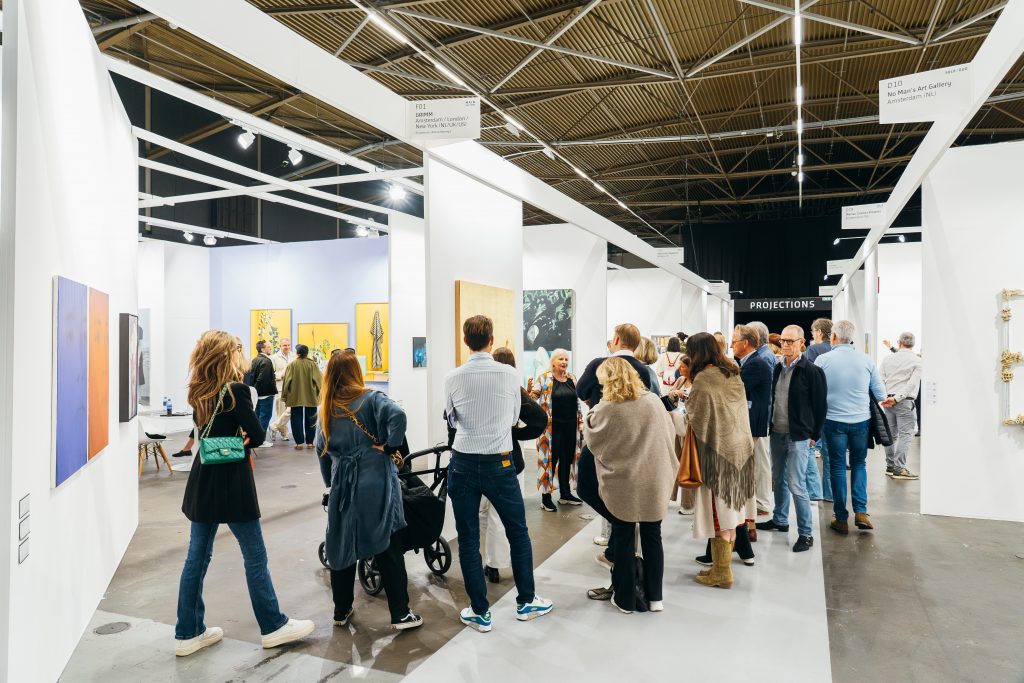
During the upcoming edition, Art Rotterdam will provide daily guided tours for visitors of thefair. These offer both emerging art lovers and experienced art connoisseurs new perspectives and an insight into the diversity and highlights of the fair.
Passionate art professionals will explain, in an accessible way, the remarkable stories behindboth the artwork and the maker.
Dagelijks 12.00 en 16.00 u | gratis, aanmelden op de beurs volgens vol=vol
Tijdens de aankomende editie verzorgt Art Rotterdam dagelijks rondleidingen voor bezoekers van de beurs. Deze bieden zowel beginnende kunstliefhebbers als ervaren kunstkenners nieuwe perspectieven op de diversiteit en hoogtepunten van de beurs. Bevlogen kunstprofessionals maken op toegankelijke wijze inzichtelijk welke bijzondere verhalen schuilgaan achter zowel het kunstwerk als de maker.


