Coming soon
Coming soon
Selecteer type
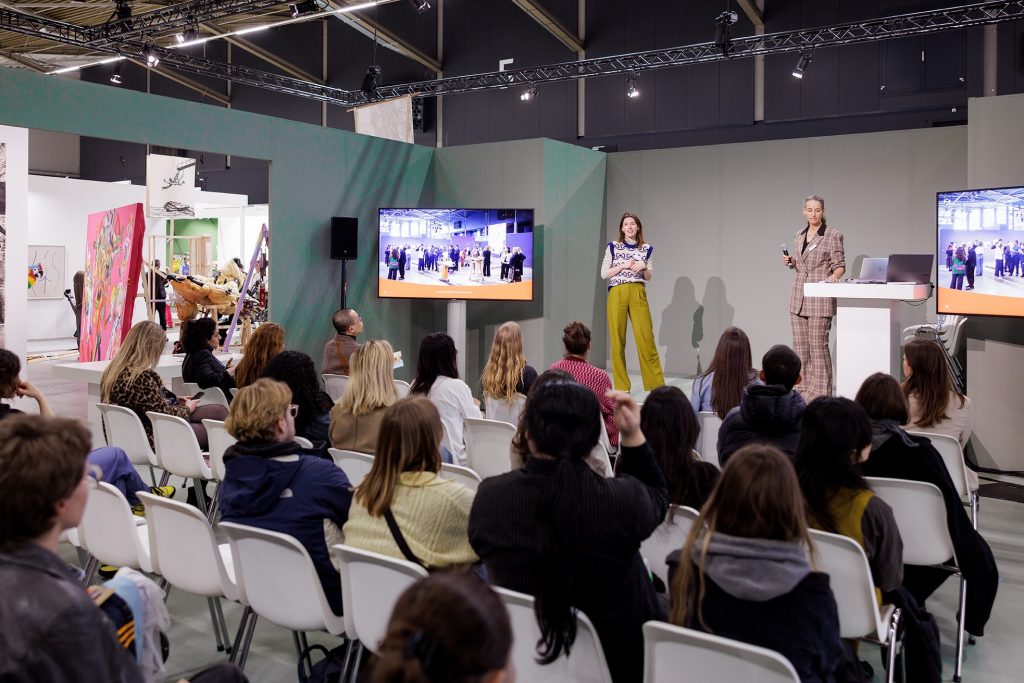
Once again, visitors to Art Rotterdam can count on an inspiring and freely accessible Talks programme. Reflections 2026 includes a number of engaging artist talks, Q&As and lectures on current topics, presented by artists, curators, museum directors and other experts from the artistic field.
| Friday 11.15 – 12.30 BK Informatie | ‘Het kan ook anders’ | Artist Talk A conversation about tipping points in the projecessional practice of visual artists | *Dutch spoken Art historian Meta Knol will be in conversation with podcaster and philosopher Esther Didden about our podcast about tipping points in the professional practice of visual artists. Two visual artists will be joining to discuss tipping points in their careers; 2025 Prix de Rome winner Kevin Osepa and Linda Molenaar. What challenges did they face, and how did they cope? What stands out to us in the podcast series? Do we see underlying patterns, or not? What questions does this raise about the state of artistic practice in the Netherlands? And should we perhaps look at it differently ourselves? Please note: subscription & tickets: bkinformatie.nl/register |
.
| Friday 14.00 – 14.30 Rijksakademie | artist Guy Woueté and newly appointed director of the Rijksakademie Laurence Rassel in conversation | *English spoken Artist Guy Woueté engages in conversation with Laurence Rassel, the newly appointed director of the Rijksakademie, about working within hybrid institutions across disciplines and continents. Woueté was a resident at the Rijksakademie (2009–2010) and later an advisor. They previously worked together at erg (école de recherche graphique) in Brussels, where Rassel was director for ten years and Woueté is currently a teacher. A thoughtful exchange on the importance of artistic development and international exchange. |
.
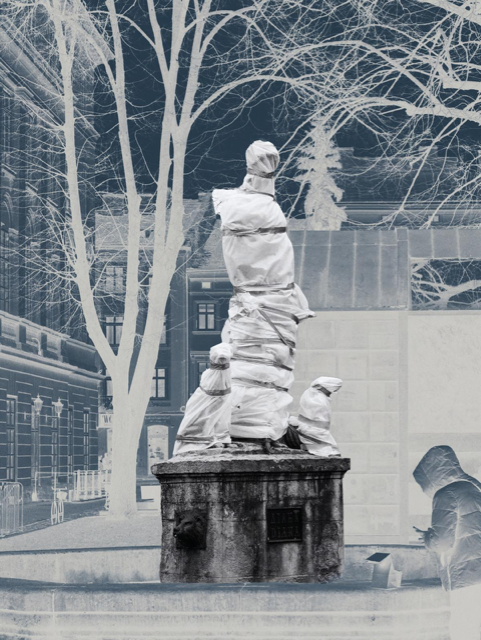
| Friday 15.00 – 15.30 Amidst Cries from the Rubble: Art of Loss and Resilience Lecture by Dr Laura Mueller, Deputy Director and Curator Museum of International Folk Art, Santa Fe, New Mexico, USA | *English spoken This lecture explores the curatorial development of Amidst Cries from the Rubble: Art of Loss and Resilience from Ukraine and the commissioning of Ukrainian photographer Marta Syrko’s series Wrapping Art—Art of Salvation. It considers how museums and curators have an opportunity to collaborate with contemporary artists during conflict to document cultural preservation, while the gravity of the subject matter lends profound depth and urgency to artworks that stand as powerful acts of witness, resilience, and cultural survival. |
.
| Friday 16.00 – 16.45 Artist Start – Panel discussion on a research into the career development of artists who received an Artist Start grant by the Mondriaan Fund | *Dutch spoken HKU and HTH Research conducted research commissioned by the Mondriaan Fund into the career development of artists who received an Artist Start grant, or a predecessor thereof, at the beginning of their artistic careers. The research results will be presented to a broad audience, with active involvement of students. |
.
| Friday 17.00 – 18.00 Mondriaan Fund Get a Grant event – The Prospects Edition Artist Talk and Subsidy information | *English spoken When can you apply for a grant and how does the process work? Especially for students and emerging artists, the Mondriaan Fund is organising the Get a Grant event, an information session on grant opportunities for starting visual artists. On Friday 27 March (5–6 pm), a staff member will explain the Artist Start grant and artist Jochem van den Wijngaard will share his experience with applying. There will also be time for questions and practical tips. You can register here. |
.
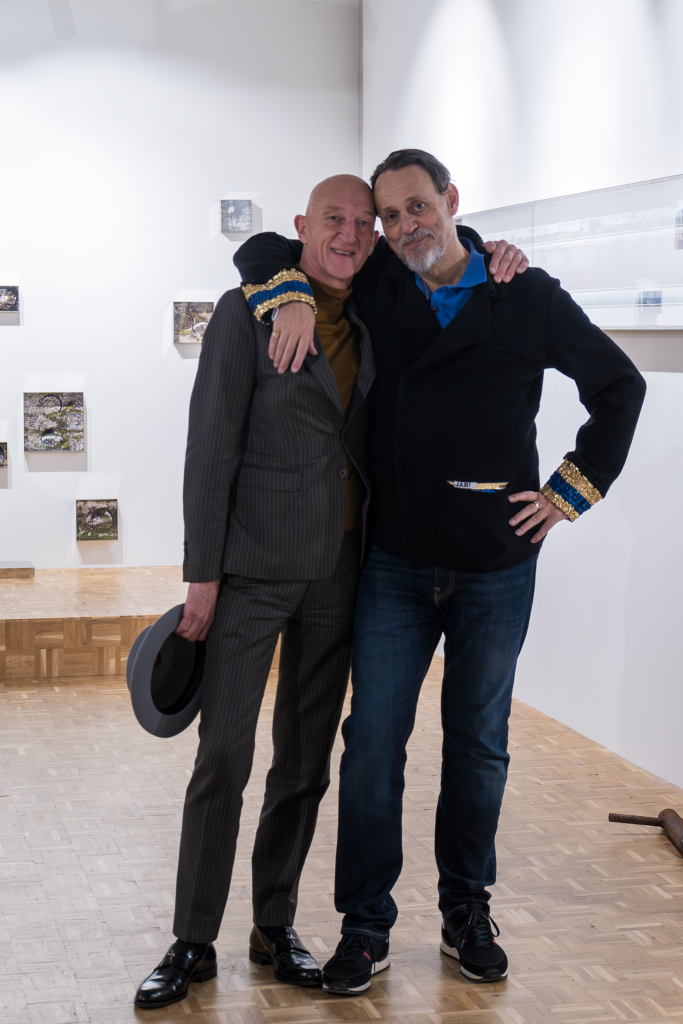
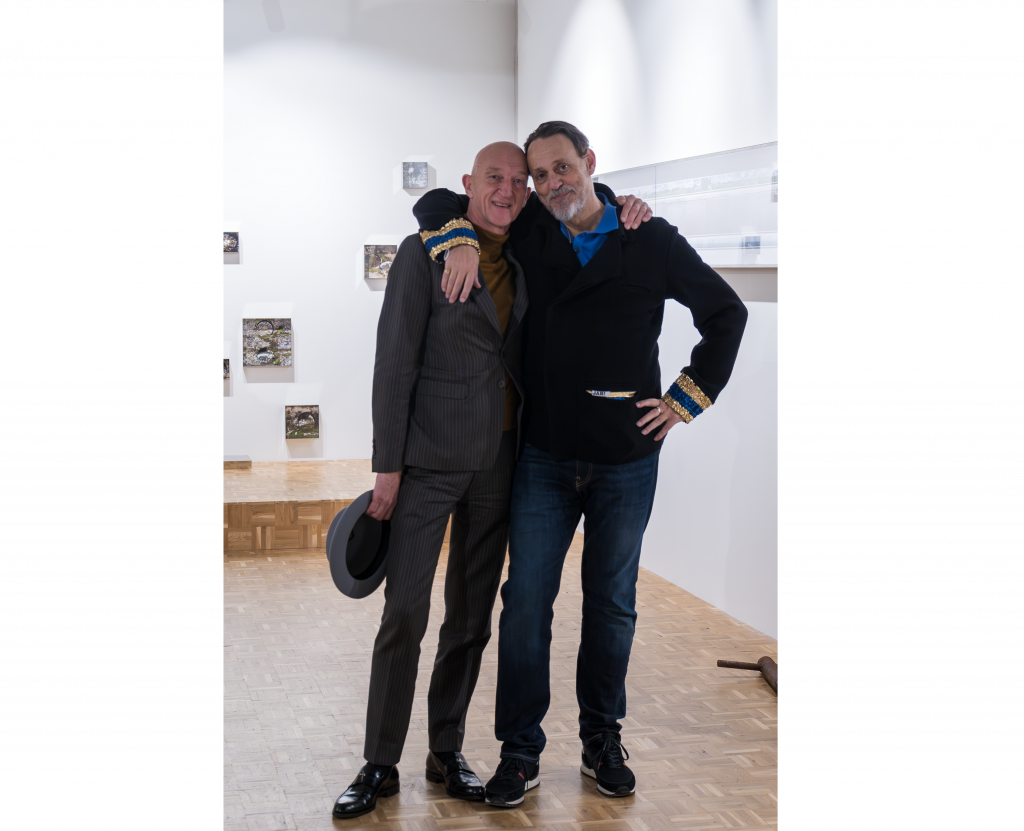
| Saturday 12.00 – 12.45 Talk show Hugo Borst & Wilfried de Jong Guests: Çiğdem Yüksel, Katinka Lampe, Anton Corbijn en Wim Pijbes | *Dutch spoken Hugo Borst and Wilfried de Jong have a lot in common. Rotterdam, radio & television, writing, journalism. They also differ. Wilfried is an actor, Hugo a gallery owner. Wilfried is the Polaroid man, Hugo collects art. Curiosity and humor drive this occasional duo. Especially for Art Rotterdam/Unseen Photo, they compose a special talk show. Guests: Çiğdem Yüksel, visual artist and photographer, Katinka Lampe, visual artist, Anton Corbijn, artist/photographer and film director and Wim Pijbes, art historian, director of Stichting Droom en Daad, a private cultural fund that invests in culture in Rotterdam. |
.
| Saturday 13.00 – 13.30 Museumtijdschrift presents: a live-interview with Fiona Lutjenhuis | *Dutch spoken An interview with artist Fiona Lutjenhuis by Jeroen Junte, editor-in-chief of Museumtijdschrift, the biggest art magazine of the Netherlands. Lutjenhuis is a finalist for the Prix de Rome 2026 and had a solo exhibition at the Noordbrabants Museum in 2025. From 2022 to 2024, she was a resident at the Rijksakademie van Beeldende Kunsten. During Art Rotterdam, the artist is represented by gallery Fleur & Wouter, on show at New Art Section booth K25 and Sculpture Park section. |
.
| Saturday 14.00 – 14.30 Rijksakademie | Artist Talk / Q&A Marieke Zwart and artist Dineke Blom in conversation | *Dutch spoken Artist and Rijksakademie alum Marieke Zwart and artist Dineke Blom engage in conversation about Zwart’s new book ‘she saw i saw’, which explores the visibility of maternity care in the Bijlmermeer neighbourhood of Amsterdam. They discuss the search for balance between distance and proximity – on paper and beyond. How does social practice relate to artistic considerations? The conversation will be moderated by Evita de Roode. |
.

| Saturday 15.00 – 15.20 AVROTROS’ MUZE presents: De Muzen van Morgen I Michelle Piergoelam Artist Talk / Q&A | *Dutch spoken Curator and art journalist Lieneke Hulsthof in converstation with a promising Dutch artist. In this edition, she talks with art photographer Michelle Piergoelam about how she brings hidden histories and cultural traditions to life in her work. |
.
| Saturday 15.30 – 15.50 AVROTROS’ MUZE presents: De Muzen van Morgen II Noa Zuidervaart Artist Talk / Q&A | *Dutch spoken Curator and art journalist Lieneke Hulsthof in converstation with a promising Dutch artist. In this edition, she talks with artist Noa Zuidervaart about how he explores complex issues in his work and translates them into drawings, sculptures, and found objects that come together in layered installations. |
.
| Saturday 16.30 – 17.00 The Role of Women Artists in the Art World! | Conversation / Q&A Carolina Alfonso, Artist and Moderator in conversation with Alejandra Castro Rioseco, Founder/Executive Director, MIA ART Collection | *English spoken The importance of raising awareness about gender equality in art is fundamental. Professional and private institutions must collaborate in creating spaces not only for exhibitions but also for reflection that unite the perspectives of civil society and academic institutions with those of artists, curators, collectors, and galleries. The role of MIA ART Collection is to invest in and create visibility for women artists in the art world, creating networks and channels of support and assistance for women professionals in the arts. |
.
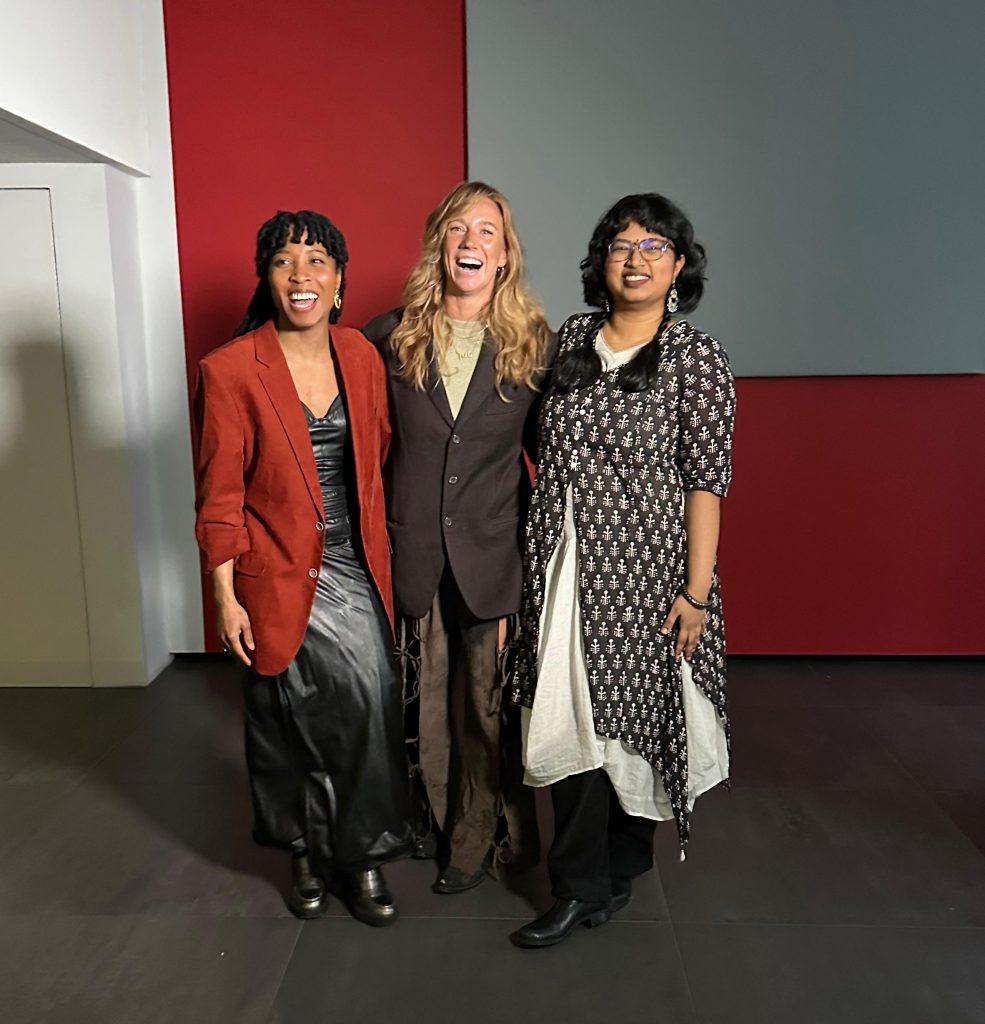
| Sunday 12.00 – 12.30 South Forward – DHB Art Space The City Through Us | Artist Talk / Q&A | *English spoken Join curator Jeanthalou Haynes and the artists of DHB Art Space – South Forward for an interactive artist talk on art, neighbourhood knowledge and sustainability in Rotterdam South. In every city, people and local initiatives contribute to the future of their neighbourhoods, often beyond the view of the wider public. Through stories and shared material samples from the artworks, the audience is invited to discover how artists make these stories visible and how art rooted in the city can contribute to a more sustainable future.Presentation South Forward on view at DHB Art Space booth J 04. |
.
| Sunday 13.00 – 14.00 From Carbon Footprint to Collective Action: Galleries, Fairs, and Artists in a Warming World | Lecture and subsequently 13.30: Panel discussion | *English spoken As the climate crisis intensifies, the art world has both the opportunity and the responsibility to reduce its carbon footprint. In this session, organized by the Dutch Gallery Association, the Gallery Climate Coalition will present its global initiatives, outlining practical strategies for carbon reduction across exhibitions, shipping, travel, and production. In the subsequent panel discussion 13.30 – 14.00, Lula Rappoport, Gallery Climate Coalition, Will Korner, TEFAF, Head of Fairs, artist Erik van Lieshout, gallerist Jaring Dürst Britt, and Geert van der Meulen, Dutch Gallery Association, will discuss how collective responsibility can lead to measurable impact and sustainable, structural change within the Dutch art sector. |
.
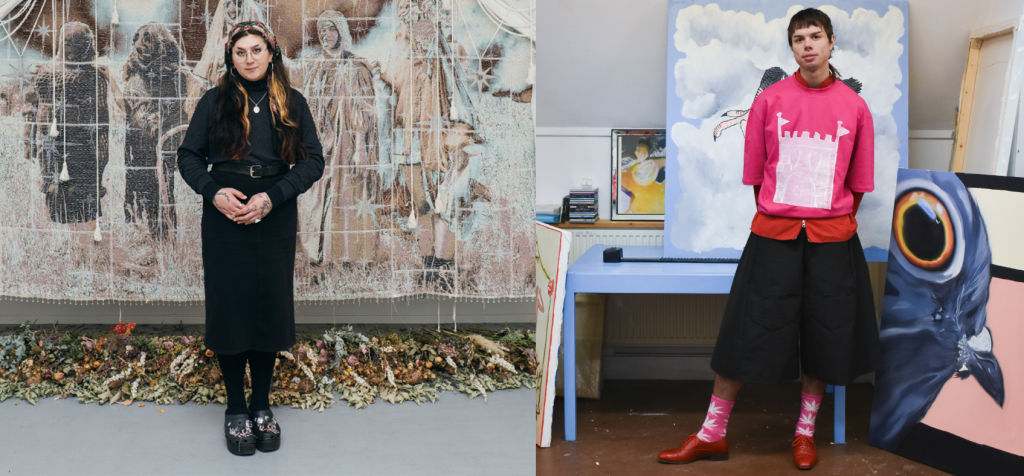
| Sunday 15.00 – 15.20 uur AVROTROS’ MUZE presents: De Muzen van Morgen III Dakota Magdalena Mokhammad Artist Talk / Q&A | *Dutch spoken Curator and art journalist Lieneke Hulsthof in converstation with a promising Dutch artist. In this edition, she talks with artist Dakota Magdalena Mokhammad about her search for identity, spirituality, the body, and gender — and how these themes take shape in her tapestries and installations. |
.
| Sunday 15.30 – 15.50 AVROTROS’ MUZE presents: De Muzen van Morgen IV Chris Nelck Artist Talk / Q&A | *Dutch spoken Curator and art journalist Lieneke Hulsthof in conversation with a promising Dutch artist. In this edition, she talks with artist Chris Nelck, whose diverse practice is characterized by humor and intellectual sharpness, and is informed by a trans and queer perspective. |
.
| Sunday 17.00 – 18.00 Kunstinstituut Melly presents Suitcase Economy Informal Economy (Barter space) | *Dutch and English spoken Artist Riet Wijnen brings Suitcase Economy to the fair. By running this experimental canteen, she is developing a method to connect daily contexts in, among others, Limburg (NL), South Korea and South Africa through histories of preservation and fermentation. In relation to this interest, Riet invites visitors to bring homemade preserved goods, ingredients for culturally specific dishes, recipes, or money to exchange for Suitcase Economy staples, experimenting with collapsing economic models through negotiation. More information: kunstinstituutmelly.nl |
Ook dit jaar kunnen bezoekers van Art Rotterdam rekenen op een inspirerend en gratis toegankelijk Talks programma. Reflections 2026 omvat een aantal boeiende artist talks, Q&A’s en lezingen over actuele onderwerpen, belicht door kunstenaars, curatoren, museumdirecteuren en andere experts uit het artistieke veld.
| Vrijdag 11.15 – 12.30 BK Informatie | Het kan ook anders | Artist Talk Een gesprek over kantelpunten in de beroepspraktijk van beeldend kunstenaars Kunsthistoricus Meta Knol gaat in gesprek met podcastmaker en filosoof Esther Didden over de BK-podcast Het kan ook anders, de podcast over kantelpunten in de beroepspraktijk van beeldend kunstenaars. Ook schuiven twee beeldend kunstenaars aan om te praten over kantelpunten in hun carrière, waaronder Prix de Romewinnaar 2025 Kevin Osepa en Linda Molenaar. Waar liepen zij tegen aan en hoe gingen zij daar mee om? Let op: aanmelden & tickets: bkinformatie.nl/aanmelden |
.
| Vrijdag 14.00 – 14.30 Rijksakademie | kunstenaar Guy Woueté en nieuwe directeur Rijksakademie Laurence Rassel in gesprek | *English spoken Kunstenaar Guy Woueté gaat in gesprek met Laurence Rassel, de nieuwe directeur van de Rijksakademie, over het werken binnen hybride instellingen die verschillende disciplines en continenten verbinden. Woueté was resident aan de Rijksakademie (2009–2010) en later advisor. Eerder werkten zij samen bij erg (ecole de recherche graphique) in Brussel, waar Rassel tien jaar directeur was en Woueté momenteel docent is. Een verdiepend gesprek over het belang van artistieke ontwikkeling en internationale uitwisseling. |
.
| Vrijdag 15.00 – 15.30 Amidst Cries from the Rubble: Art of Loss and Resilience Lecture Dr Laura Mueller, Deputy Director en curator Museum of International Folk Art, Santa Fe, New Mexico, USA | *English spoken Deze lezing onderzoekt de curatoriële ontwikkeling van Amidst Cries from the Rubble: Art of Loss and Resilience from Ukraine en de totstandkoming van de serie Wrapping Art—Art of Salvation van de Oekraïense fotografe Marta Syrko. Daarbij wordt aandacht besteed aan de manier waarop musea en curatoren tijdens conflicten een kans hebben om samen te werken met hedendaagse kunstenaars en het behoud van cultureel erfgoed te documenteren. Tegelijkertijd verleent de ernst van het onderwerp een diepgaande urgentie aan de kunstwerken, die fungeren als krachtige getuigenissen van veerkracht, culturele continuïteit en overleving. |
.
| Vrijdag 16.00-16.45 Kunstenaar Start – Panelprogramma over een onderzoek naar de effecten van de startsubsidie van het Mondriaan Fonds HKU en HTH Research deden in opdracht van het Mondriaan Fonds onderzoek naar de loopbaanontwikkeling van kunstenaars die een toekenning voor de regeling Kunstenaar Start of een voorganger daarvan hebben gekregen aan het begin van hun kunstenaarscarrière. De onderzoeksresultaten zullen gepresenteerd worden voor een breed publiek, met actieve betrokkenheid van studenten. |
.
| Vrijdag 17.00-18.00 Mondriaan Fonds Get a Grant event – The Prospects Edition Artist Talk en subsidievoorlichting | *English spoken Wanneer kan je subsidie aanvragen en hoe gaat dit in z’n werk? Speciaal voor studenten en startende kunstenaars organiseert het Mondriaan Fonds het Get a Grant event, een informatiebijeenkomst over subsidiemogelijkheden voor beginnende beeldend kunstenaars. Op vrijdag 27 maart (17.00–18.00 uur) licht een fondsmedewerker de Kunstenaar Start-regeling toe en deelt kunstenaar Jochem van den Wijngaard zijn ervaring met het aanvragen. Natuurlijk is er ook ruimte voor vragen en geven we je tips. Aanmelden kan hier. |
.
| Zaterdag 12.00 – 12.45 Talk show Hugo Borst & Wilfried de Jong Gasten: Çiğdem Yüksel, Katinka Lampe, Anton Corbijn en Wim Pijbes | *Dutch spoken Hugo Borst en Wilfried de Jong hebben veel gemeen. Rotterdam, radio & televisie, het schrijverschap, de journalistiek. Ze verschillen ook. Wilfried is acteur, Hugo galeriehouder. Wilfried is de Polaroidman, Hugo verzamelt kunst. Nieuwsgierigheid en humor drijft dit gelegenheidsduo. Speciaal voor Art Rotterdam/Unseen Photo maken zij een bijzondere talkshow. Te gast zijn: beeldend kunstenaar en fotograaf Çiğdem Yüksel, beeldend kunstenaar Katinka Lampe, kunstenaar/fotograaf en filmregisseur Anton Corbijn en Wim Pijbes, kunsthistoricus en directeur van Stichting Droom en Daad, een particulier cultuurfonds dat investeert in cultuur in Rotterdam. Zorg dat je er (op tijd) bij bent! |
.
| Zaterdag 13.00 – 13.30 Museumtijdschrift presenteert: een live-interview met Fiona Lutjenhuis Een interview met kunstenaar Fiona Lutjenhuis door Jeroen Junte, hoofdredacteur van Museumtijdschrift, het grootste kunstmagazine van Nederland. Lutjenhuis is finalist van de Prix de Rome 2026 en had in 2025 een solotentoonstelling in het Noordbrabants Museum. Tussen 2022 en 2024 was zij resident aan de Rijksakademie van Beeldende Kunsten. Op de beurs is het werk van de kunstenaar te zien bij Galerie Fleur & Wouter, New Art Section en Sculpture Park. |
.
| Zaterdag 14.00 – 14.30 Rijksakademie | Artist Talk / Q&A Kunstenaars Marieke Zwart en Dineke Blom | moderator: Evita de Roode Kunstenaar en Rijksakademie alum Marieke Zwart en kunstenaar Dineke Blom gaan met elkaar in gesprek naar aanleiding van Zwarts nieuwe boek ‘she saw i saw’, over het zichtbaar maken van de geboortezorg in de Bijlmermeer in Amsterdam. Ze spreken over het zoeken naar balans tussen afstand en nabijheid – op papier en daarbuiten. Hoe verhoudt een sociale praktijk zich tot artistieke overwegingen? Het gesprek wordt geleid door Evita de Roode. |
.
.
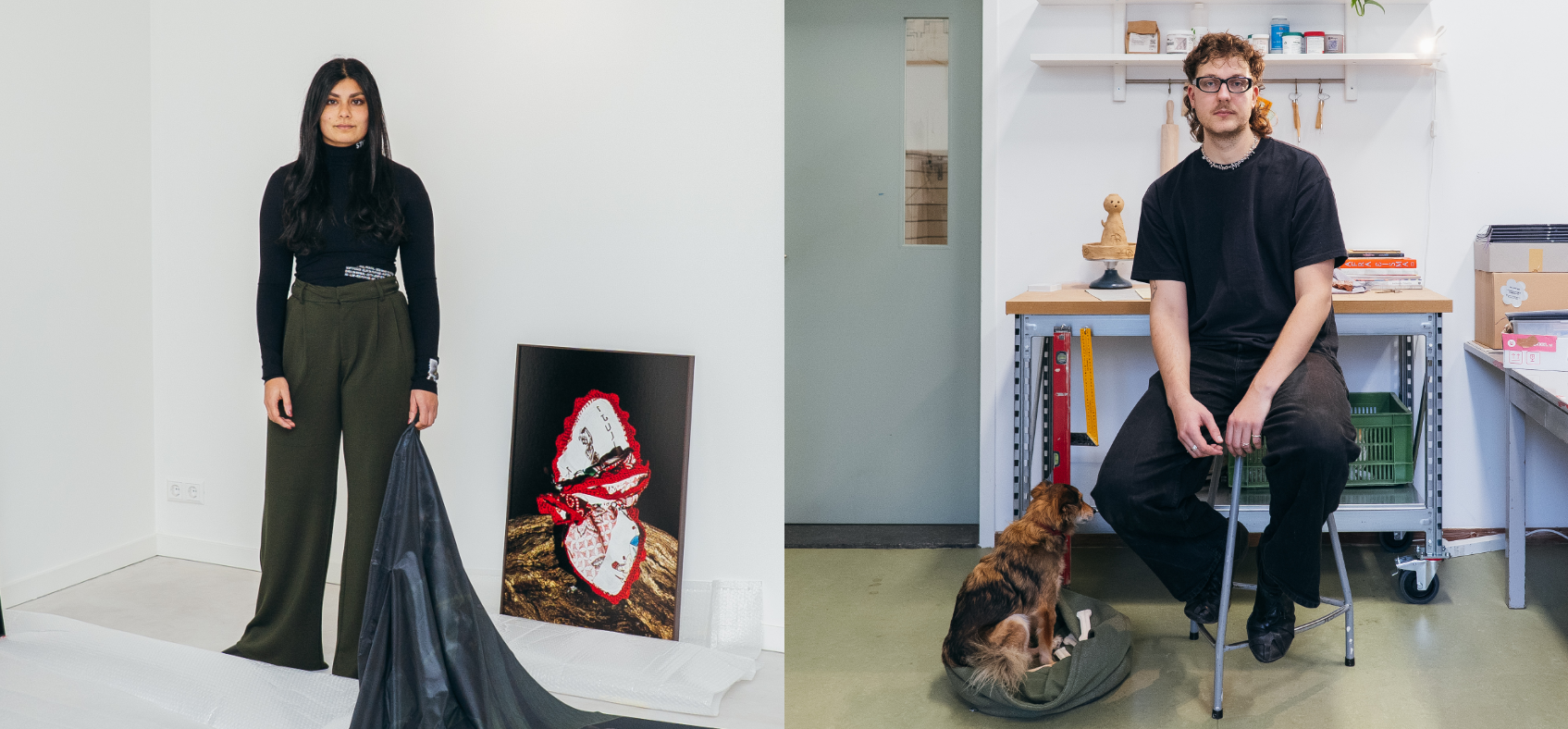
| Zaterdag 15.00 – 15.20 AVROTROS’ MUZE presenteert: De Muzen van Morgen I Michelle Piergoelam Artist Talk / Q&A Curator en kunstjournalist Lieneke Hulsthof gaat in gesprek met een veelbelovende, Nederlandse kunstenaar. In deze editie gaat ze in gesprek met kunstfotograaf Michelle Piergoelam, over hoe ze in haar werk verborgen geschiedenissen en culturele overleveringen in beeld brengt. |
.
| Zaterdag 15.30 – 15.50 AVROTROS’ MUZE presenteert: De Muzen van Morgen II Noa Zuidervaart Artist Talk / Q&A Curator en kunstjournalist Lieneke Hulsthof gaat in gesprek met een veelbelovende Nederlandse kunstenaar. In deze editie spreekt zij met kunstenaar Noa Zuidervaart over hoe hij in zijn werk complexe vraagstukken onderzoekt en vertaalt naar tekeningen, sculpturen en gevonden objecten, die samenkomen in gelaagde installaties. |
.
| Zaterdag 16.30 – 17.00 The Role of Women Artists in the Art World! | Conversation / Q&A Carolina Alfonso, kunstenaar en moderator in gesprek met Alejandra Castro Rioseco, oprichter/Executive Director, MIA ART Collection | *English spoken Het is van fundamenteel belang om het bewustzijn over gendergelijkheid in de kunstwereld te vergroten. Professionele en particuliere instellingen moeten samenwerken om niet alleen tentoonstellingsruimtes te creëren, maar ook reflectieruimtes die de perspectieven van het maatschappelijk middenveld en academische instellingen verenigen met die van kunstenaars, curatoren, verzamelaars en galeries. MIA ART Collection investeert in en vergroot de zichtbaarheid van vrouwelijke kunstenaars in de kunstwereld, door netwerken en kanalen voor ondersteuning en hulp te creëren voor vrouwelijke professionals in de kunst. |
.
| Zondag 12.00 – 12.30 South Forward – DHB Art Space The City Through Us | Artist Talk / Q&A | *English spoken Sluit aan bij curator Jeanthalou Haynes en de kunstenaars van DHB Art Space – South Forward voor een interactieve artist talk over kunst, buurtkennis en duurzaamheid in Rotterdam-Zuid. In elke stad dragen mensen en lokale initiatieven bij aan de toekomst van hun wijk, vaak buiten het zicht van het grote publiek. Via verhalen en materiaal samples van de kunstwerken nodigen we het publiek uit te ontdekken hoe kunstenaars deze verhalen zichtbaar maken en hoe kunst, geworteld in de stad, kan bijdragen aan een duurzamere toekomst. Presentatie tevens te zien in DHB Art Space booth J 04. |
.
| Zondag 13.00 – 14.00 From Carbon Footprint to Collective Action: Galleries, Fairs, and Artists in a Warming World | Lezing en aansluitend 13.30: Paneldiscussie | *English spoken In tijden van klimaatcrisis heeft de kunstwereld zowel de kans als de verantwoordelijkheid om haar carbon footprint te verkleinen. In deze sessie, georganiseerd door de Nederlandse Galerie Associatie, presenteert de Gallery Climate Coalition haar internationale initiatieven en concrete strategieën voor CO₂-reductie binnen tentoonstellingen, transport, reizen en productie. In het aansluitende panelgesprek 13.30 – 14.00 bespreken Lula Rappoport, Gallery Climate Coalition, Will Korner, TEFAF, Hoofd Beurzen, kunstenaar Erik van Lieshout, galeriehouder Jaring Dürst Britt en Geert van der Meulen, Nederlandse Galerie Associatie hoe collectieve verantwoordelijkheid kan leiden tot meetbare impact en duurzame, structurele verandering binnen de Nederlandse kunstsector. |
.
| Zondag 15.00 – 15.20 uur AVROTROS’ MUZE presenteert: De Muzen van Morgen III Dakota Magdalena Mokhammad Artist Talk / Q&A Curator en kunstjournalist Lieneke Hulsthof gaat in gesprek met een veelbelovende Nederlandse kunstenaar. In deze editie spreekt zij met kunstenaar Dakota Magdalena Mokhammad over haar zoektocht naar identiteit, spiritualiteit, lichaam en gender. En hoe deze vorm krijgen in haar wandtapijten en installaties. |
.
| 15.30-15.50 AVROTROS’ MUZE presenteert: De Muzen van Morgen IV Chris Nelck Artist Talk / Q&A Curator en kunstjournalist Lieneke Hulsthof gaat in gesprek met een veelbelovende Nederlandse kunstenaar. In deze editie spreekt zij met kunstenaar Chris Nelck, wiens uiteenlopende praktijk wordt gekenmerkt door humor en intellectuele scherpte en wordt gevoed door een trans- en queerperspectief. |
.
| Zondag 17.00 – 18.00 Kunstinstituut Melly presenteert Suitcase Economy Informal Economy (Barter space) | *Nederland en Engels gesproken Kunstenaar Riet Wijnen brengt Suitcase Economy naar de beurs. Met deze experimentele kantine ontwikkelt ze een methode om alledaagse contexten in onder andere Limburg, Zuid-Korea en Zuid-Afrika te verbinden via geschiedenissen van conservering en fermentatie. Riet nodigt bezoekers uit om in relatie tot deze interesse zelfgemaakte conserven, recepten, ingrediënten voor cultuurspecifieke gerechten, of geld mee te brengen om te ruilen voor Suitcase Economy producten. Door middel van onderhandeling wordt met economische modellen geëxperimenteerd. Meer informatie: kunstinstituutmelly.nl |
Met trots kondigt de beursorganisatie de aanstelling aan van twee nieuwe Head Curators: Övül Ö. Durmuşoğlu voor Art Rotterdam en Domenico de Chirico voor Unseen Photo. Vanaf 1 juli 2026 zullen zij gezamenlijk richting geven aan de artistieke koers van de beurs en hun internationale netwerk inzetten om een nog sterker, diverser en zorgvuldig samengesteld aanbod van galeries te realiseren.
Beiden zijn bekend met de beurs zoals deze in Rotterdam Ahoy de afgelopen twee jaar is neergezet. Övül Ö. Durmuşoğlu was de laatste twee edities verantwoordelijk voor de samenstelling van de New Art Section binnen Art Rotterdam; Domenico de Chirico stelde de Unseen Encounters sectie samen.
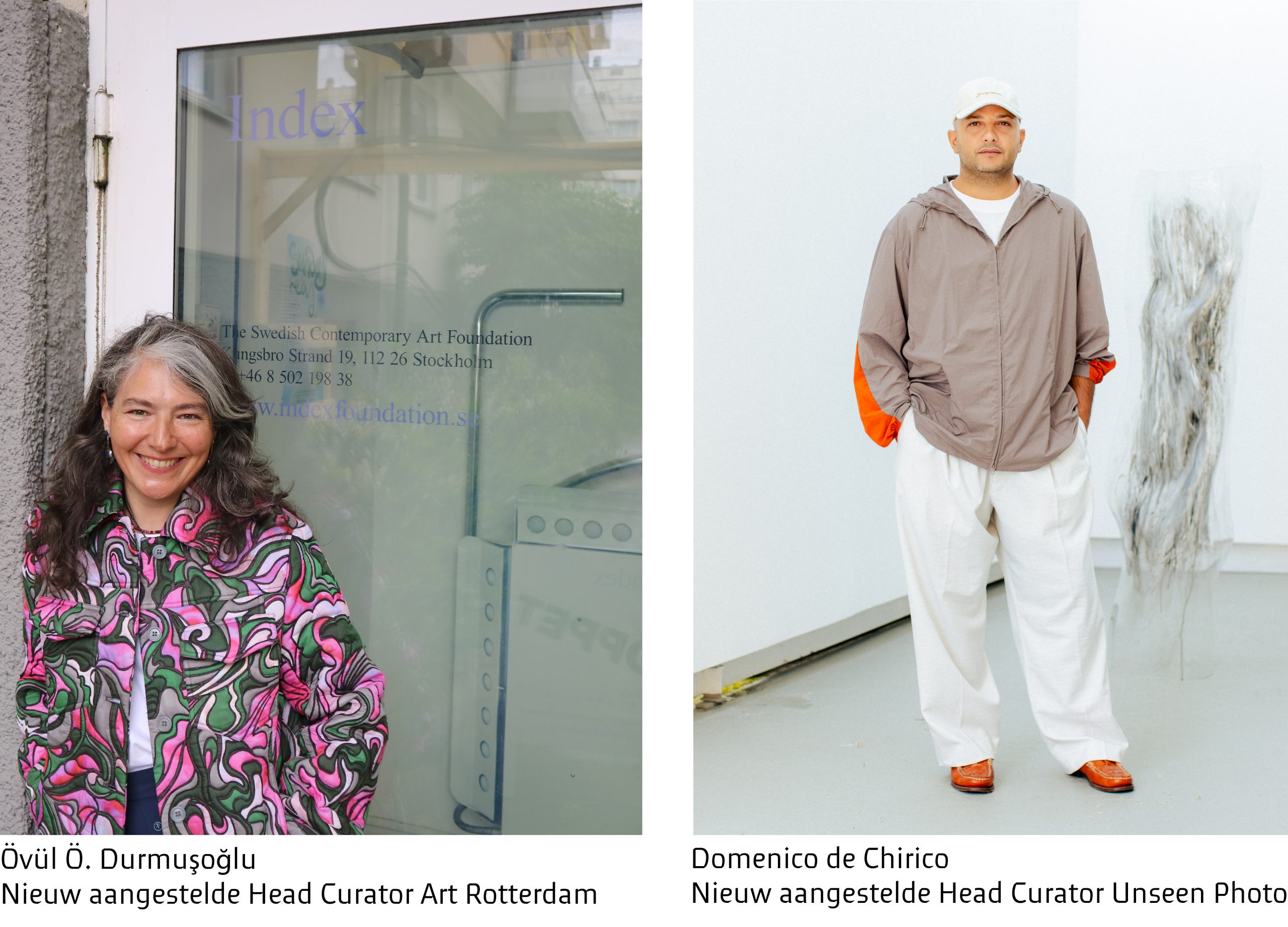
Övül Ö. Durmuşoğlu, nieuw aangestelde Head Curator Art Rotterdam:
“Art Rotterdam is al jarenlang een van de belangrijkste spelers binnen de Nederlandse kunstwereld. Het voelt als een grote eer en een inspirerende uitdaging om als Head Curator mee te bouwen aan de toekomstige koers van de beurs. Ik kijk er enorm naar uit om samen nieuwe stappen te zetten en de toekomst van Art Rotterdam verder vorm te geven.”
Domenico de Chirico, nieuw aangestelde Head Curator Unseen Photo:
“Met een sterke basis in de rijke geschiedenis van de fotografie, tegelijkertijd gericht op vernieuwing en ontwikkeling, is Unseen Photo binnen Art Rotterdam het platform dat toegewijd is aan artistieke ontdekking, kritische dialoog en de voortdurende ontwikkeling van fotografie. Mijn ambitie is om Unseen Photo verder te versterken als internationale ontmoetingsplek waar nieuwe en gevestigde makers samenkomen, conventies uitdagen, nieuwe perspectieven zichtbaar maken en reflecteren op de complexiteit van de hedendaagse visuele cultuur.”
Fons Hof, directeur Art Rotterdam / Unseen Photo:
“Övül en Domenico brengen ieder een unieke visie, een indrukwekkende internationale staat van dienst en een waardevol netwerk van internationale curatoren en verzamelaars met zich mee. Met hun curatoriale expertise en vernieuwende blik zetten we een belangrijke stap in de verdere artistieke ontwikkeling en internationale positionering van Art Rotterdam / Unseen Photo.”
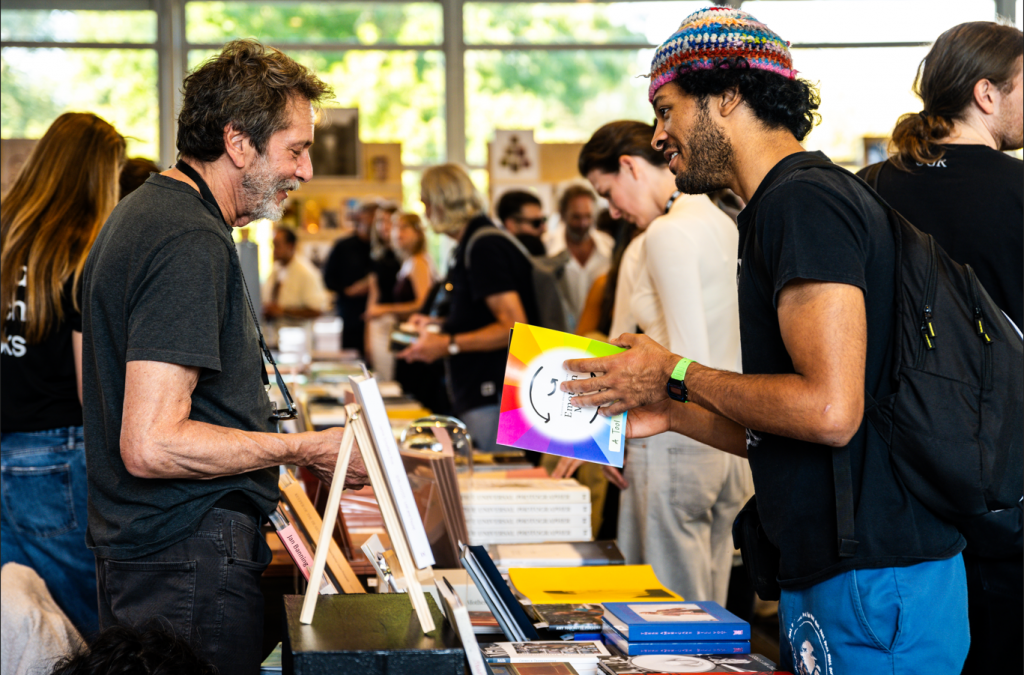
Een van de eerste initiatieven van Head Curator Domenico de Chirico is de terugkeer van Unseen Book Market tijdens de aankomende editie van Unseen Photo. Dit geliefde onderdeel is al jarenlang nauw verbonden met Unseen Photo en versterkt het karakter en de identiteit van de beurs.
Unseen Book Market vond tijdens de vorige editie als pop-up plaats bij het Nederlands Fotomuseum, maar zal vanaf de komende editie voor het eerst een integraal onderdeel vormen van Unseen Photo op de beursvloer in Rotterdam Ahoy. Met ruimte voor 40 internationale uitgevers gespecialiseerd in fotografieboeken wordt de beurs hiermee niet zozeer groter in omvang, wel nog aantrekkelijker, completer en inhoudelijk rijker voor fotografieliefhebbers en professionals uit binnen- en buitenland.
Save the date: de komende editie van Art Rotterdam / Unseen Photo / Unseen Book Market vindt plaats van 18 t/m 21 maart 2027 in Rotterdam Ahoy.
Over Övül Ö. Durmuşoğlu
Övül Ö. Durmuşoğlu (geb. 1978, Turkije) is curator, schrijver en docent. Haar werk beweegt zich rond beschavingskritiek, infrastructurele vraagstukken en samenzijn als esthetische en praktische kwestie. Tot haar recente tentoonstellingen behoren Planetary Peasants (Museum Moritzburg, 2025), STIMMMMMMMMUNG (HBK Braunschweig, 2025), The Story Behind Each Word Must Be Known (Ab-Anbar Londen, 2024), What If A Journey & All Images Will Disappear, One Day (3e en 4e Autostrada Biënnale, 2021–23), Portrait of a Movement (CA2M en Tensta Konsthall, 2022–23) en Katrina Daschner: Burn and Gloom, Glow and Moon (Kunsthalle Wien, 2022). Durmuşoğlu was co-leider van het Art in Discourse-programma aan de Hochschule für Bildende Künste Braunschweig. Ze is onlangs benoemd tot directeur van Index – The Swedish Contemporary Art Foundation in Stockholm, naast de nieuwe verantwoordelijkheden die zij op zich neemt voor de komende editie van Art Rotterdam.
Over Domenico de Chirico
Domenico de Chirico (geb. 1983, Italië) is een onafhankelijk curator gevestigd in Milaan. Hij werkt internationaal samen met kunstenaars, galeries, instellingen, kunstbeurzen, prijzen en publicaties. Hij was artistiek directeur van DAMA Fair, Turijn (2016–2019) en curator van de sectie “Beyond Photography – Dialogue” op MIA Photo Fair BNP Paribas, Milaan (2019–2026), en is sinds 2023 curator van de PRISMA Art Prize. Hij heeft wereldwijd talrijke tentoonstellingen en projecten samengesteld en heeft zitting genomen in internationale jury’s en selectiecommissies op het gebied van hedendaagse kunst. Hij was gastspreker aan Goldsmiths, University of London, en gaf lezingen aan FAMU Praag, UMPRUM Praag, NABA Milaan en ABABO Bologna. Momenteel doceert hij Fenomenologie van de Hedendaagse Kunst aan IED Milaan.
The fair is proud to announce the appointment of two new Head Curators: Övül Ö. Durmuşoğlu for Art Rotterdam and Domenico de Chirico for Unseen Photo. From 1 July 2026, they will jointly shape the artistic direction of the fair and draw on their international networks to realise an even stronger, more diverse, and carefully curated gallery programme at the fair.
Both are well acquainted with the fair as it has taken shape at Rotterdam Ahoy over the past two years. Övül was responsible for the artistic programming of the New Art Section within Art Rotterdam for the past two editions; Domenico de Chirico curated the Unseen Encounters section.
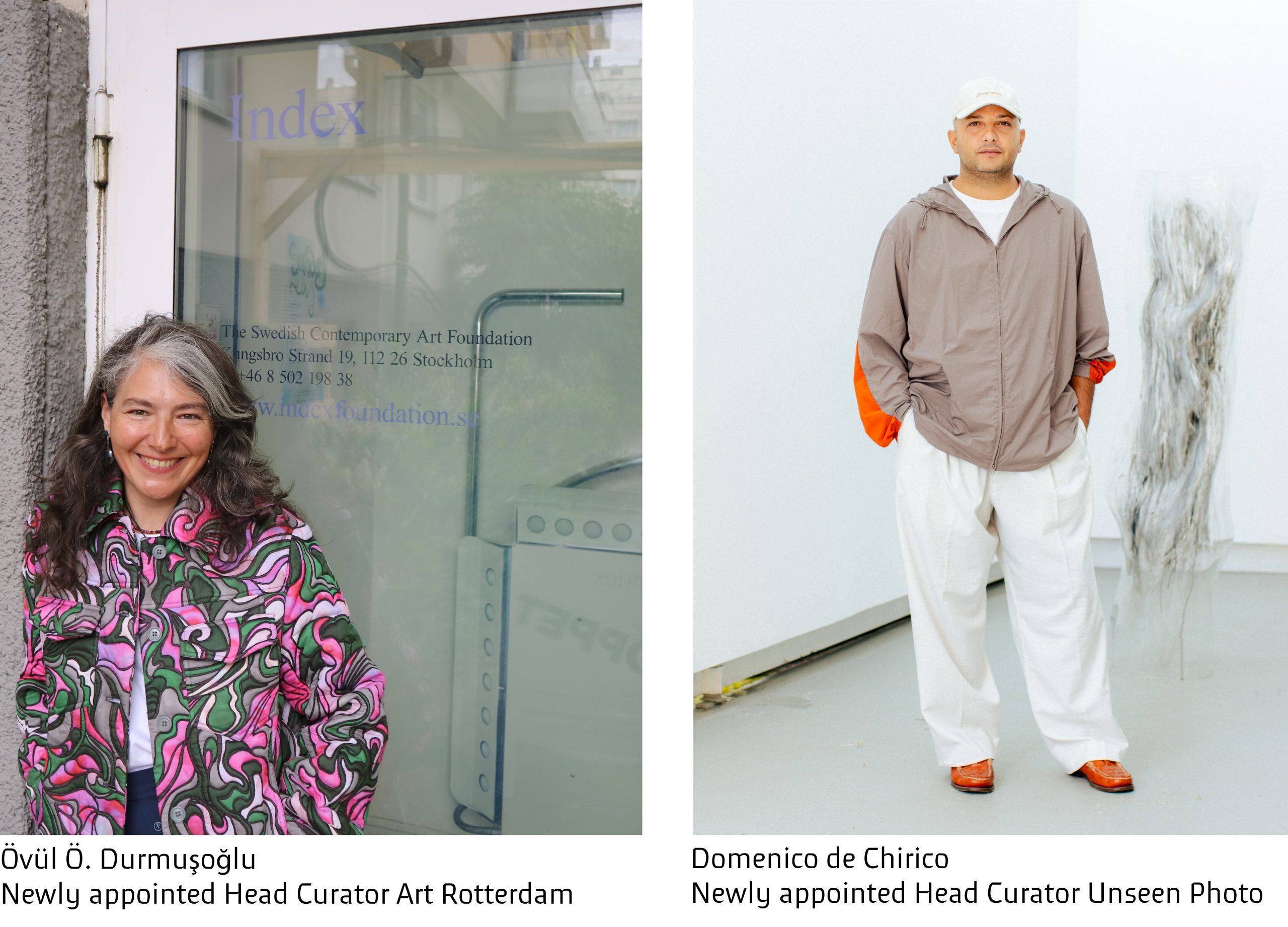
Övül Ö. Durmuşoğlu, newly appointed Head Curator Art Rotterdam: “Art Rotterdam is one of the key organisations that keep the heartbeat of the Dutch speaking art scene. To be entrusted with this overseeing curatorial role in its future steps is very humbling and exciting at the same time. I look forward to how we will shape its new horizons together.”
Domenico de Chirico, newly appointed Head Curator Unseen Photo: “Rooted in photography’s rich history while embracing its continuous transformation, UNSEEN Photo, as part of Art Rotterdam, is a platform dedicated to artistic discovery, critical dialogue, and the evolving language of photography. My vision is to strengthen its role as an international meeting place where emerging and established voices challenge conventions, inspire new perspectives, and reflect the complexities of contemporary visual culture.”
Fons Hof, director Art Rotterdam / Unseen Photo: “Övül and Domenico each bring a unique vision, an impressive international track record, and a valuable network of international curators and collectors. With their curatorial expertise and innovative perspective, we are taking an important step in the further artistic development and international positioning of Art Rotterdam / Unseen Photo.”
One of the first initiatives of Head Curator Domenico de Chirico is the return of the Unseen Book Market at the upcoming edition of Unseen Photo. This much-loved feature has long been closely associated with Unseen Photo and strengthens the character and identity of the fair.
The Unseen Book Market took place as a pop-up at the Nederlands Fotomuseum during the previous edition, but from the upcoming edition onwards it will for the first time form an integral part of Unseen Photo on the fair floor at Rotterdam Ahoy. With space for 40 international publishers specialising in photography books, the fair does not so much grow in scale, but becomes more attractive, complete, and rich in content for photography enthusiasts and professionals from the Netherlands and abroad.
Save the date: the upcoming edition of Art Rotterdam / Unseen Photo / Unseen Book Market takes place from 18 to 21 March 2027 at Rotterdam Ahoy.
About Övül Ö. Durmuşoğlu
Övül Ö. Durmuşoğlu (b. 1978, Turkey) is a curator, writer, and educator working on civilizations critique, infrastructural questions, togetherness as a question of aesthetics and practice. Planetary Peasants (Museum Moritzburg, 2025), STIMMMMMMMMUNG (HBK Braunschweig, 2025), The Story Behind Each Word Must Be Known (Ab-Anbar London, 2024), What If A Journey & All Images Will Disappear, One Day (3rd and 4th Autostrada Biennale, 2021-23), Portrait of a Movement (CA2M and Tensta Konsthall, 2022-23), Katrina Daschner: Burn and Gloom, Glow and Moon (Kunsthalle Wien, 2022) are among the recent exhibitions she curated. Durmuşoğlu has been co-leading the Art in Discourse programme at Braunschweig University of Art. She is just appointed as the director for Index- The Swedish Contemporary Art Foundation in Stockholm alongside the new responsibilities she takes in the coming edition of Art Rotterdam.
About Domenico de Chirico
Domenico de Chirico (b. 1983, Italy) is an independent curator based in Milan. He collaborates internationally with artists, galleries, institutions, art fairs, awards, and publications. Former Artistic Director of DAMA Fair, Turin (2016–2019), and curator of the “Beyond Photography – Dialogue” section at MIA Photo Fair BNP Paribas, Milan (2019–2026), he has been curator of PRISMA Art Prize since 2023. He has curated numerous exhibitions and projects worldwide and served on international juries and selection committees in the field of contemporary art. He has been a visiting speaker at Goldsmiths, University of London, and has delivered lectures at FAMU Prague, UMPRUM Prague, NABA Milan, and ABABO Bologna. He currently teaches Phenomenology of Contemporary Art at IED Milan.
De artistieke praktijk van Sakir Khader komt voort uit een diepgevoelde noodzaak om onrecht zichtbaar te maken, zonder de mensen die hij vastlegt te reduceren tot symbolen van leed. Juist daarin ligt de kracht van zijn beelden: ze zijn hard en confronterend waar nodig, maar blijven altijd menselijk, waardig en intiem. Zijn werk als beeldend kunstenaar, fotograaf, filmregisseur, documentairemaker en onderzoeksjournalist bevindt zich daarmee ergens tussen kunst en document. Khader benadrukt daarbij iets fundamenteels: dat achter ieder verloren leven een wereld schuilgaat, en dat die wereld het verdient om niet alleen betreurd, maar ook echt gezien te worden.
Op Art Rotterdam zal zijn werk te zien zijn in de booth van No Man’s Art Gallery, in een duopresentatie met Alejandro Galván.
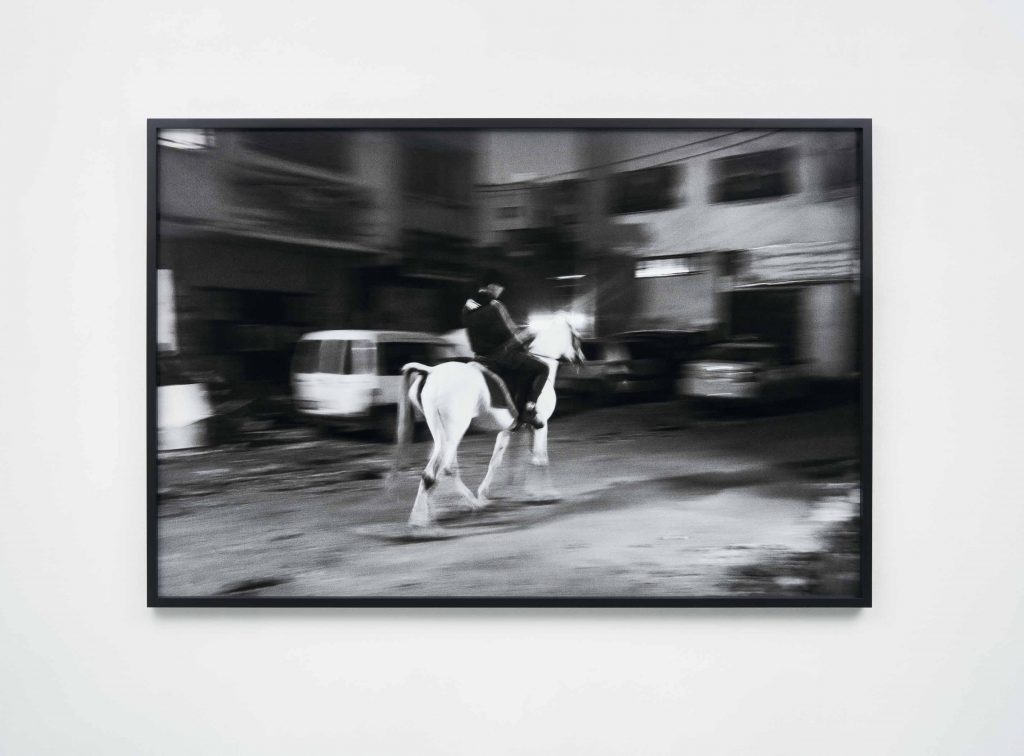
Khader werd in 1990 geboren in Vlaardingen als zoon van Palestijnse ouders, maar bracht veel tijd door bij zijn familie op de Westelijke Jordaanoever. Die tweetalige, bi-culturele achtergrond werkt in de praktijk vaak in zijn voordeel. Omdat hij de taal spreekt, goed luistert en subtiele culturele codes instinctief begrijpt weet hij langdurige relaties op te bouwen en krijgt hij toegang tot werelden die voor buitenstaanders meestal gesloten blijven. Dat merk je aan zijn beelden: hij kijkt niet van een afstand toe, maar werkt van binnenuit, met een sterk gevoel van verantwoordelijkheid. Zijn werk vertrekt vanuit journalistieke nauwkeurigheid en een drang om te documenteren, en heeft daarmee ook een archieffunctie. Hij probeert iets vast te houden van mensen en werelden die systematisch worden uitgewist en ontmenselijkt. Zijn werk is daardoor zowel een document als een aanklacht. Zo portretteerde hij Palestijnse strijders op de Westelijke Jordaanoever voor hun dood, plus het verdriet van hun achterblijvende moeders. Strijders zijn in deze context overigens niet alleen gewapende strijders, maar ook mensen die zich op andere manieren verzetten.
In 2024 werd Khader als nominee toegelaten tot het prestigieuze fotografencollectief Magnum Photos. Hij ontving onder meer een Zilveren Camera en de Amsterdamprijs voor de Kunst, publiceerde verschillende fotoboeken, presenteerde een solotentoonstelling in Foam Amsterdam en was te gast in het televisieprogramma Zomergasten.
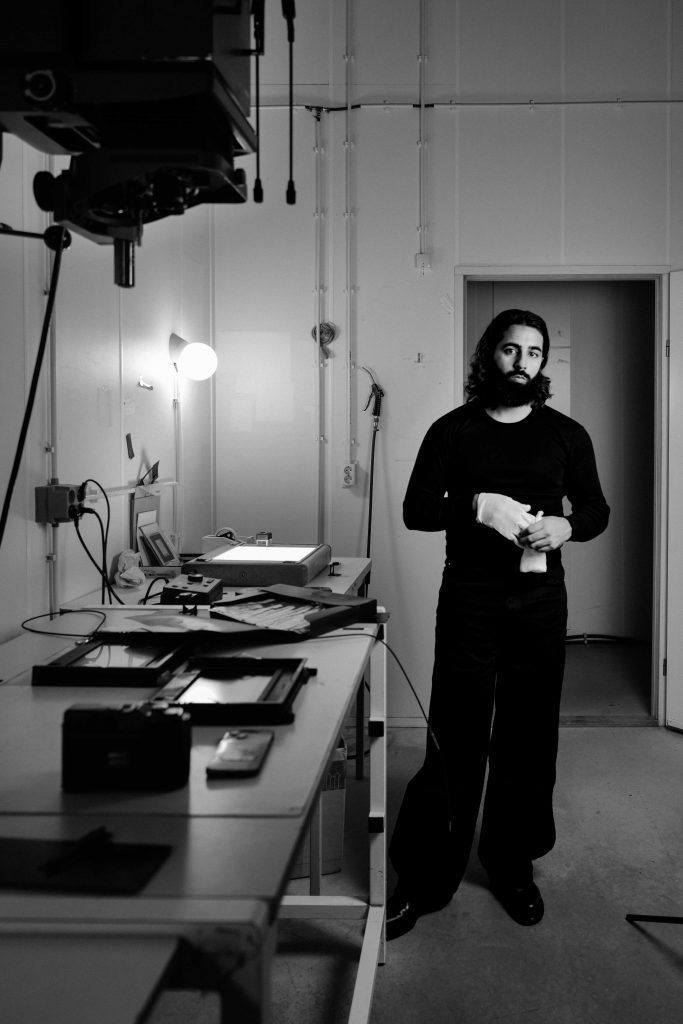
De praktijk van de kunstenaar verbeeldt conflictgebieden in het Midden-Oosten — of geografisch preciezer en minder eurocentrisch: West-Azië. Zo reisde hij onder meer naar Afghanistan, Syrië en Irak. Toch gaat zijn werk niet alleen over oorlog in de spectaculaire zin van het woord. Het gaat juist ook over wat oorlog met het alledaagse doet. Dreiging, structurele onzekerheid, historische ontheemding en verlies bestaan daarbij naast tederheid, schoonheid, humor en liefde voor het leven.
Inhoudelijk draait Khaders oeuvre om de relatie tussen leven en dood onder bezetting, in het bijzonder in Palestina. Bepalend was de dood van zijn elfjarige neefje Kosay, die in 2002 door een Israëlische militair werd doodgeschoten, nadat Khader, die ongeveer even oud was, net een zomer met hem had doorgebracht. Sindsdien gebruikt de kunstenaar zijn camera als een instrument om vast te leggen wat er gebeurt met Palestijnse gemeenschappen onder de bezetting. Zijn werk laat de dood en het geweld zien dat de Israëliërs veroorzaken, en vooral hoe dat doorwerkt in het alledaagse: in families, rouwprocessen, jeugd, bewegingsvrijheid en het vermogen om je een toekomst voor te kunnen stellen. Daarmee maakt hij zichtbaar dat onderdrukking en genocide niet alleen plaatsvinden op het moment van een aanval of inval, maar ook doorwerken in de traagheid van verlies, in constante angst en in het systematisch ontregelen van het dagelijks leven.
Khader heeft een rauwe, emotionele en cinematografische beeldtaal en werkt vaak in zwart-wit met scherpe contrasten. Hij maakt zijn portretten dicht op de huid en werkt daarvoor met verschillende soorten camera’s. Tegelijkertijd gebruikt hij ook kleur, video en documentaire elementen. In al die vormen lijkt hij vooral te zoeken naar een vorm die recht doet aan de complexiteit van wat hij vastlegt, de menselijke dimensie achter politieke gebeurtenissen.
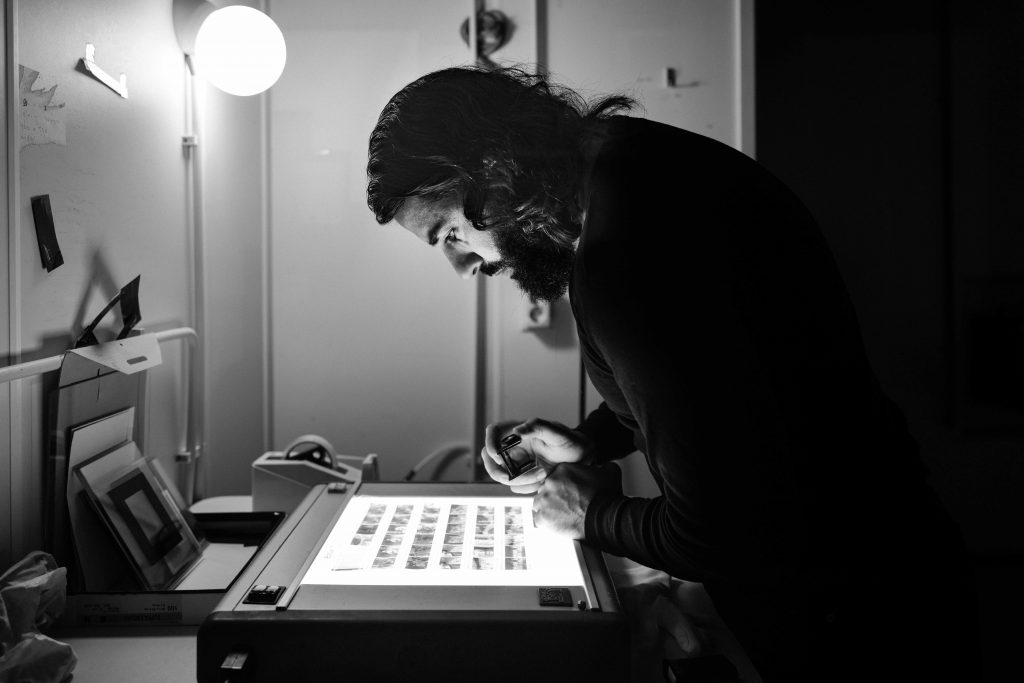
Wat Khaders werk zo indringend maakt, is dat pijn en rouw nooit losstaan van waardigheid. Hij toont mensen niet als passieve slachtoffers, maar als individuen die, zelfs onder ondraaglijke omstandigheden, proberen mens te blijven. Daarmee vormt zijn werk een contrast met de vaak eenzijdige representatie in westerse media, zowel in taal als in beeld. In zijn foto’s speelt een vorm van gedwongen veerkracht een belangrijke rol: geen romantische resilience, maar het harde besef dat mensen wel verder moeten, ook wanneer het verdriet nog niet verwerkt is en het volgende verlies zich alweer aandient. In het werk van Khader krijgt die onmogelijke toestand een gezicht. Hij dwingt de kijker om voorbij de westerse beeldvorming te kijken en belicht niet alleen de dood, maar ook het leven dat eraan voorafgaat.
Een terugkerend element is de spanning tussen onschuld en het verlies daarvan. Khader fotografeert kinderen, moeders, vrienden, families, strijders, dieren en landschappen op een manier die laat zien dat een bezet of bedreigd bestaan nooit uitsluitend uit geweld bestaat. Er wordt ook gespeeld, gegeten, gewerkt, gelachen en gewacht. Juist door die momenten zichtbaar te maken, maakt hij voelbaar wat er op het spel staat. Zijn foto’s en films benadrukken niet alleen de vernietiging van levens, maar ook hun bestaansrecht. Zo verbindt hij persoonlijke verhalen met grotere historische en politieke structuren.
Geschreven door FIor Iinckens
Sakir Khader’s artistic practice arises from a deeply felt urgency to make injustice visible, without reducing the people he portrays to symbols of suffering. That is precisely where the strength of his images lies: they are harsh and confrontational when necessary, yet remain consistently humane, dignified and intimate. His work as a visual artist, photographer, film director, documentary maker and investigative journalist exists somewhere between art and document. In doing so, Khader underscores something fundamental: that behind every life lost lies an entire world, and that this world deserves to not only to be mourned, but also truly seen.
At Art Rotterdam, his work will be presented in the booth of No Man’s Art Gallery, in a duo presentation with Alejandro Galván.
Khader was born in 1990 in Vlaardingen to Palestinian parents, but spent much of his time with family in the West Bank. This bilingual, bicultural background often works to his advantage in his practice. Because he speaks the language, listens attentively and instinctively understands subtle cultural codes, he is able to build long-term relationships and gain access to worlds that usually remain closed to outsiders. This is evident in his images: he does not observe from a distance, but works from within, guided by a strong sense of responsibility. His work departs from journalistic precision and a drive to document, and therefore also carries an archival function. He attempts to preserve something of people and worlds that are systematically erased and dehumanised. As a result, his work operates both as document and indictment. He has portrayed Palestinian fighters in the West Bank before their deaths, as well as the grief of the mothers they leave behind. In this context, the term ‘fighter’ is not limited to those who are armed, but also includes those who resist in other ways.
In 2024, Khader was nominated to join the prestigious photography collective Magnum Photos. He has received, among other honours, a Silver Camera Award and the Amsterdam Prize for the Arts, published several photobooks, presented a solo exhibition at Foam Amsterdam and appeared as a guest on the television programme Zomergasten.
The artist’s practice depicts conflict zones in the Middle East or, more precisely and less Eurocentrically: West Asia. He has travelled to countries including Afghanistan, Syria and Iraq. Yet his work is not solely concerned with war in its most spectacular sense. Rather, it focuses on what war does to everyday life. Threat, structural uncertainty, historical displacement and loss exist alongside tenderness, beauty, humour and a love of life.
At its core, Khader’s oeuvre revolves around the relationship between life and death under occupation, particularly in Palestine. A defining moment was the death of his eleven-year-old cousin Kosay, who was shot by an Israeli soldier in 2002, shortly after Khader, who was around the same age, had spent a summer with him. Since then, the artist has used his camera as a tool to document what happens to Palestinian communities under occupation. His work shows the death and violence that Israel causes, but above all how these realities permeate everyday life: within families, in processes of mourning, in youth, in freedom of movement and in the ability to imagine a future. In doing so, he makes visible that oppression and genocide do not occur only in the moment of an attack or incursion, but also persists in the slow weight of loss, in constant fear and in the systematic disruption of daily life.
Khader employs a raw, emotional and cinematic visual language, often working in black and white with sharp contrasts. He creates his portraits at close range, using different types of cameras. At the same time, he also works with colour, video and documentary elements. Across these forms, he appears to be searching for a way of working that does justice to the complexity of what he records, to the human dimension that underlies political events.
What makes Khader’s work so affecting is that pain and grief are never detached from dignity. He does not portray people as passive victims, but as individuals who, even under unbearable circumstances, strive to remain human. In this way, his work stands in contrast to the often one-sided representations found in Western media, both in language and in imagery. A form of forced resilience plays an important role in his photographs: not a romanticised notion, but the stark awareness that people must carry on, even when grief has not yet been processed and the next loss is already imminent. In Khader’s work, this impossible condition is given a face. He compels the viewer to look beyond Western frameworks of representation, illuminating not only death but also the life that precedes it.
A recurring element is the tension between innocence and its loss. Khader photographs children, mothers, friends, families, fighters, animals and landscapes in a way that reveals how a life under occupation or threat is never defined solely by violence. There is also play, food, work, laughter and waiting. By making these moments visible, he renders palpable what is at stake. His photographs and films emphasise not only the destruction of lives, but also their right to exist. In doing so, he connects personal stories with broader historical and political structures.
Written by FIor Iinckens
Watamula vertelt het verhaal van René, een zwijgzame jongeman die overeind komt uit een rivier met niets meer dan een lange broek en een amulet. We volgen hem op zijn tocht naar de westkant van Curaçao, naar Watamula, een rond gat in een rots die uitsteekt boven de zee. Daaronder beukt de zee op de rotsen. Het is de plek waar Curaçao ademt.
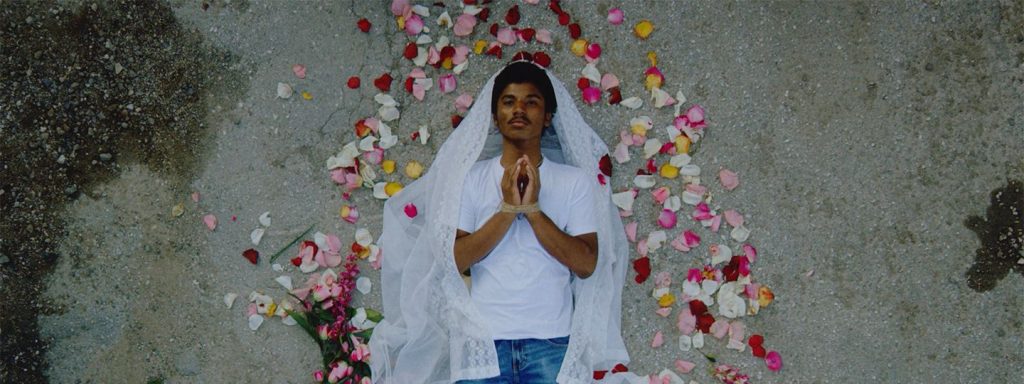
De weg naar Watamula is zowel fysiek als mentaal uitdagend. Onderweg houdt René zich vast aan het amulet dat hij bij zijn geboorte meekreeg. Al snel komt hij een oudere dame tegen in haar mooiste kleren. Ze verzorgt René en waakt over hem. Hij wordt een katholieke kerk uitgegooid en ingewijd in Afro-Caribische rituelen. Ook lijkt er een romance te ontluiken tussen hem en Gabi, de zoon van de vrouw.
Kevin Osepa maakte Renés tocht tot een magisch-realistische odyssee waarin landschap en lotsbestemming, spiritualiteit, sensualiteit en machismo samenkomen.
Watamula van Kevin Osepa is te zien in Projections. Kevin Osepa wordt vertegenwoordigd door Galerie Ron Mandos.
Het werk van Kevin Osepa voert vaak terug op zijn eigen jeugd en ervaringen op Curaçao, maar ook op rituelen, mystiek en de verhalen van oudere generaties van de Nederlandse Antillen. Vaak bouwt hij een idee of verhaal uit tot een gedeelde ervaring, gericht op collectieve genezing en een dieper begrip van zijn eigen identiteit. Zijn werk is daardoor zeer persoonlijk, maar tegelijk ook voor een breder publiek toegankelijk
Lusgarda draait om het ritueel van Ocho Dia: de achtdaagse rouwperiode na een begrafenis op Curaçao. Osepa heeft daarbij niet alleen oog voor het individuele verlies, maar ook voor het collectieve verlies: het langzaam verdwijnen van kennis, rituelen en gebruiken die van generatie op generatie werden doorgegeven. Hij presenteert rouw niet als een afgesloten moment, maar als een proces dat zich blijft herhalen en transformeren.
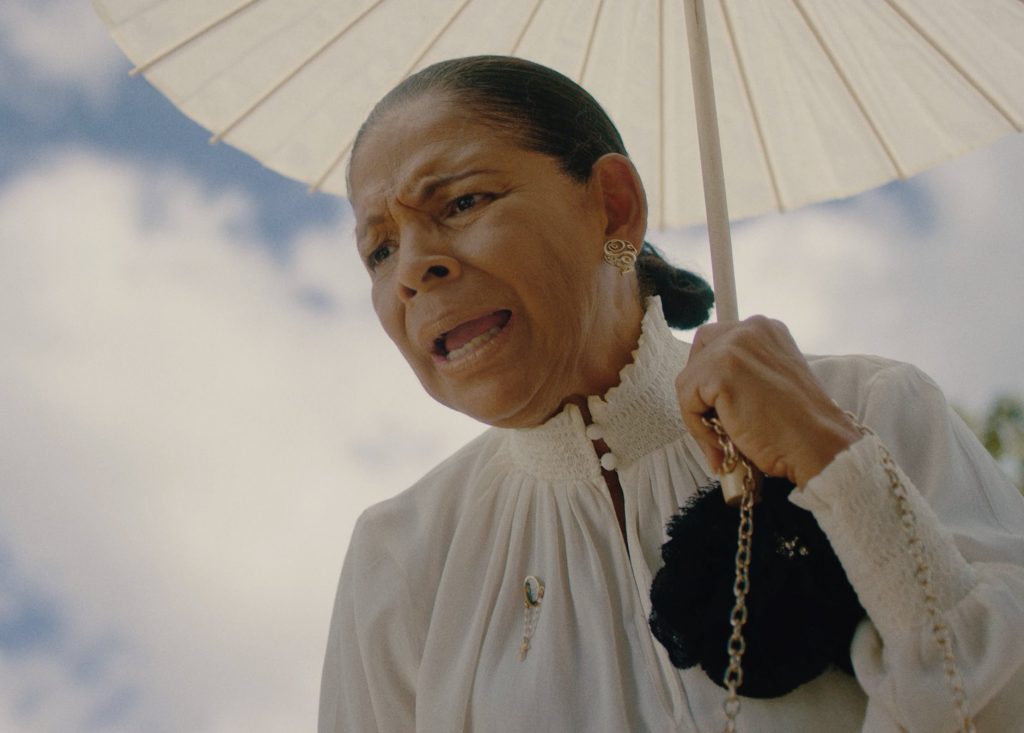
Afgelopen najaar viel Kevin Osepa de prestigieuze Prix de Rome ten deel voor Lusgarda, een installatie die hij speciaal voor deze prijs maakte. Lusgarda is een totaalervaring waarbij film, objecten, textiel en handgemaakte figuren samen een nieuwe werkelijkheid vormen. De installatie nodigt uit tot kijken, voelen en meebewegen, zonder de bezoeker een al te eenduidige lezing op te leggen.
De jury zag ‘een kunstenaar met een hele eigen beeldtaal die in korte tijd in verhaal en uitdrukking gegroeid is en zichzelf steeds weet te overtreffen.’ Zelf is Osepa nog steeds verbaasd over de winst, vertelt hij aan de telefoon. ‘Ik kende de Prix de Rome. Op de academie had ik een docent die genomineerd was, maar je voelt een toch afstand, daar zit je anker niet. Ook omdat mijn werk persoonlijk is – het is een manier om mijn eigen emoties te verwerken – verwacht je het niet. Dat het dan zoveel erkenning krijgt, is een unieke ervaring’.
Osepa’s carrière kan je gerust komeetachtig noemen. Osepa (Willemstad, 1994) kwam op zijn 17e naar Nederland om aan de HKU fotografie te studeren. Watamula (2020) was Osepa’s eerste korte film. Voor zijn tweede film, La Ultima Ascensión (2022), ontving hij een Gouden Kalf voor de beste korte film. In 2023 won hij de Charlotte Köhler Prijs, de jaarlijkse aanmoedigingsprijs voor veelbelovende kunstenaars.
Voor Watamula verruilde Osepa de fotografie voor film, een stap die destijds natuurlijk aanvoelde. ‘Ik was al bezig om uit te zoeken hoe ik mijn werelden verder kon uitdiepen. Ik probeerde om mijn foto’s met elkaar in gesprek te laten gaan. Dat is in feite wat film is. Ook past het medium film beter bij Curaçao, dat geen museumcultuur heeft.’
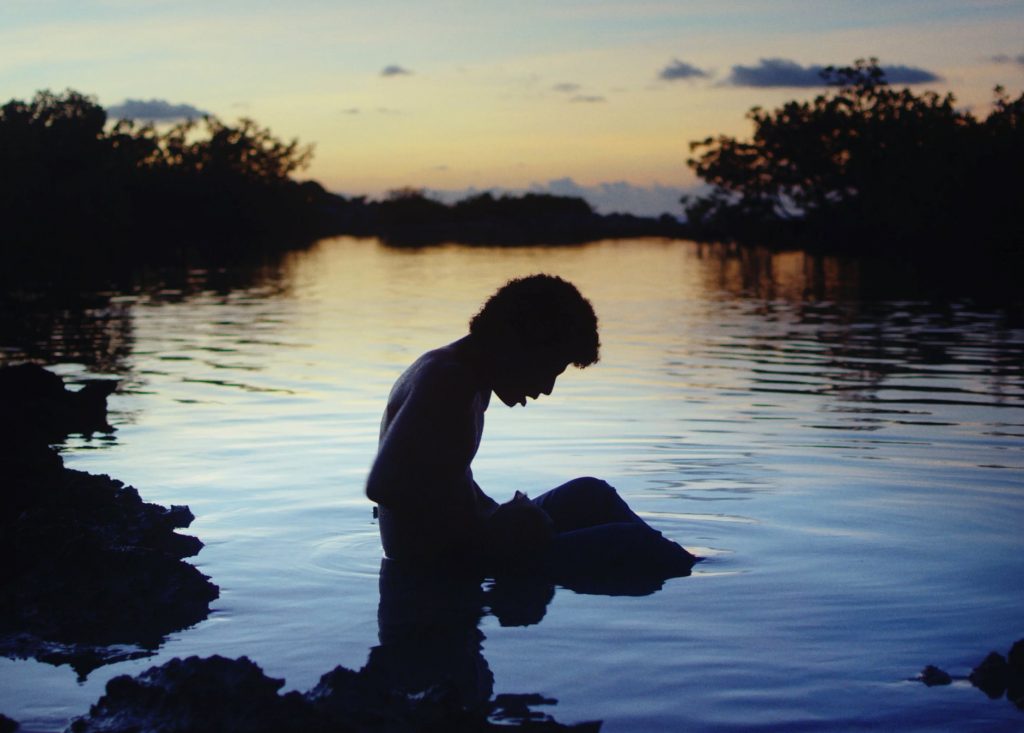
Het medium film gaf Osepa meer vrijheid om verhalend te werk te gaan. Daarbij baseert hij zich zowel op historisch bronmateriaal uit archieven, als op gesprekken met antropologen en oudere Curaçaoënaars. Aanvankelijk dacht Osepa dat deze route hem weinig bruikbaars zou opleveren, maar hij boorde een goudader aan verhalen aan waar nog niks mee gedaan was.
‘Ik verzamel verhalen en maak geen hiërarchisch onderscheid tussen archiefmateriaal en een gesprek. Alle bronnen zijn even waardevol. Het unieke aan oral history is dat de verhalen telkens nieuwe elementen bevatten. They reflect the times. Dat geeft je een zekere vrijheid.Door nieuwe beelden aan een verhaal toe te voegen kan je een nieuwe betekenis toekennen aan een bestaand verhaal. Je kan het transformeren.
Veel thema’s die in Osepa’s latere werk opduiken, zitten al in Watamula. Een goed voorbeeld daarvan is de magisch-realistische verteltrant. De vrouw die over René waakt neemt ook de gedaante aan van een parkiet en een flamingo. ‘Op Curaçao is er maar één werkelijkheid, er is geen tweedeling van wetenschappelijk en bijgeloof, er is maar één spoor.’ In zijn werk probeert Osepa die werkelijkheid recht te doen.
Inhoudelijk draait Watamula om verlangen, zegt Osepa, over ergens thuishoren en afgewezen worden. Deze onderwerpen zijn ingegeven door zijn ervaringen in Nederland, waar hij woont, en Curaçao, waar hij ieder jaar een paar maanden doorbrengt. Door de afwisseling kijkt hij telkens met een frisse blik naar de plekken die voor hem thuis zijn en tegelijkertijd ook niet helemaal. In Nederland is hij zich bijvoorbeeld bewuster van zijn huidskleur, terwijlop Curaçao zijn queeridentiteit binnen een zeer heteronormatieve omgeving naar voren komt.
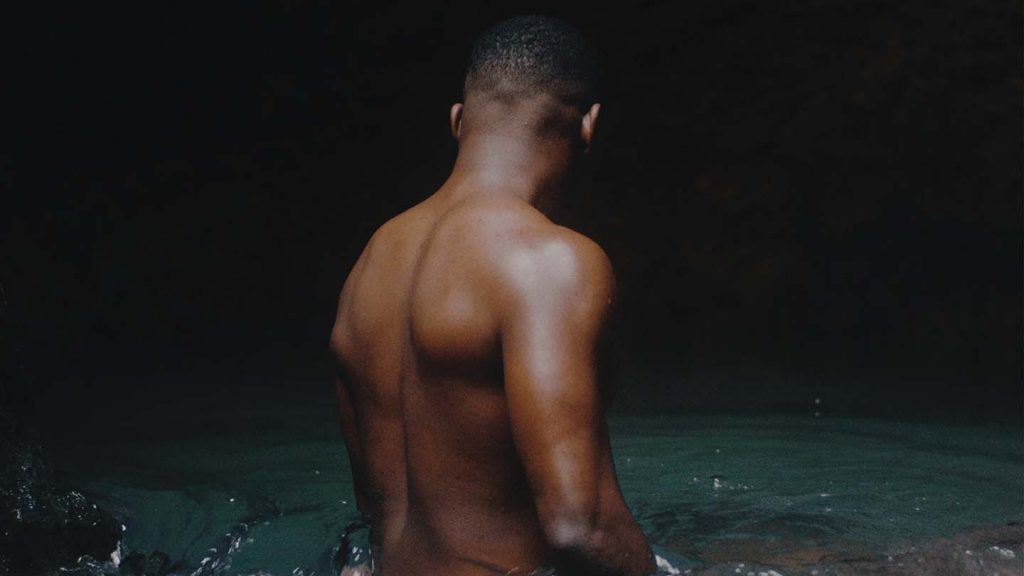
In Watamula wordt dit punt subtiel gemaakt door de tocht naar Watamula te laten afleggen door René, een queer-hoofdpersonage. Hij komt in botsing met het katholieke geloof en halverwege de film wordt hij letterlijk de kerk uit gesmeten. Nog op de grond liggend wordt hij opgepikt door een man die hem inwijdt in Afro-Caraïbische rituelen. Hij wijst René op het lastige pad dat hij moet bewandelen.
Terugblikkend zegt Osepa: ‘Het is makkelijk om te wijzen op het katholicisme, maar je kan niet zeggen dat de Rooms-Katholieke kerk weg moet. Onze tradities zijn er onlosmakelijkmee verbonden. Carnaval eindigt op Curaçao bijvoorbeeld op de dinsdag voor Aswoensdagen de Eerste Communie is helemaal gezet naar onze cultuur met Afro-Caraïbische rituelen. Juist dat spanningsveld maakt het interessant.’
Aan de telefoon vertelt Osepa dat hij bij Lusgarda het gevoel had dat hij maakte wat hij wilde maken: een immersief werk over aanwezigheid en bezieling waarin alle thema’s die hem bezighouden een plek hebben. Spirituele healing is er daar een van: ‘Lusgarda is een actief ritueel dat iets kan losmaken’.
Ook dat element zit al in Watamula. Tegen het einde van de film heeft René een droom waarin hij zijn geboorte bijwoont. Er wordt een babymutsje begraven en hij vindt de steen waarvan zijn amulet een scherf is. Hij plaatst de scherf op de steen om deze weer heel te maken. Daarna ontwaakt hij en is er een laatste ontmoeting tussen René en de vrouw, ze vertelt hem dat ze hem de hele reis heeft gevolgd. Vervolgens graaft ze het babymutsje op en legt het op een brandstapel. De vloek is voorbij. De wond is geheeld. René kan zijn reis naar Watamula voltooien.
Geschreven door Wouter van den Eijkel
Watamula tells the story of René, a taciturn young man who emerges from a river wearing nothing more than a pair of trousers and an amulet. We follow him on his journey to the western side of Curaçao, to Watamula, a round hole in a rock that juts out above the sea. Beneath it, the ocean crashes against the rocks. It is the place where Curaçao breathes.
The road to Watamula is both physically and mentally challenging. Along the way, René clings to the amulet he was given at birth. Soon he encounters an older woman dressed in her finest clothes. She tends to René and watches over him. He is thrown out of a Catholic church and initiated into Afro-Caribbean rituals. There also seems to be a budding romance between him and Gabi, the woman’s son.
Kevin Osepa turns René’s journey into a magical-realist odyssey in which landscape and destiny, spirituality, sensuality and machismo converge.
Watamula by Kevin Osepa is shown in Projections. Kevin Osepa is represented by Galerie Ron Mandos.
Osepa’s work often draws on his own childhood and experiences in Curaçao, as well as on rituals, mysticism and stories of older generations from the Dutch Antilles. He frequently develops an idea or narrative into a shared experience aimed at collective healing and a deeper understanding of his own identity. As a result, his work is highly personal, yet accessible to a wider audience.
Last autumn, Kevin Osepa was awarded the prestigious Prix de Rome for Lusgarda, an installation he created especially for the prize. Lusgarda is a total experience in which film, objects, textiles and handmade figures come together to form a new reality. The installation invites viewers to look, feel and move along with it, without imposing a single, fixed interpretation.
Lusgarda revolves around the ritual of Ocho Dia: the eight-day mourning period following a funeral in Curaçao. Osepa focuses not only on individual loss, but also on collective loss: the gradual disappearance of knowledge, rituals and customs passed down from generation to generation. He presents mourning not as a closed moment, but as a process that continues to repeat and transform.
The jury recognised ‘an artist with a highly distinctive visual language who has grown rapidly in both narrative and expression, continually surpassing himself’. Osepa himself is still surprised by the win, he says over the phone. “I knew the Prix de Rome. At the academy, I had a lecturer who had been nominated, but you still feel a certain distance – you’re not anchored there. Also, since my work is personal – a way to process my own emotions – it was unexpected. For it to receive so much recognition is a unique experience.”
Osepa’s career can easily be described as meteoric. Osepa (Willemstad, 1994) moved to the Netherlands at the age of 17 to study photography at HKU. Watamula (2020) was his first short film. For his second film, La Ultima Ascensión (2022), he received a Golden Calf for Best Short Film. In 2023, he won the Charlotte Köhler Prize, the annual incentive award for promising artists.
For Watamula, Osepa swapped photography for film, a step that felt natural at the time. “I was already exploring how to deepen my worlds. I tried to make my photographs speak to one another. That is essentially what film is. As a medium, film also suits Curaçao better because there is no strong museum culture here.”
The medium of film gave Osepa greater freedom to work narratively. He draws both on historical source material from archives and on conversations with anthropologists and older Curaçaoans. Initially, Osepa thought this approach would yield little of use, but instead he tapped into a rich vein of stories that had never been explored.
“I collect stories and do not make a hierarchical distinction between archival material and conversation. All sources are equally valuable. What is unique about oral history is that the stories constantly contain new elements. They reflect the times. That gives you a certain freedom. By adding new images to a story, you can assign new meaning to an existing narrative. You can transform it.”
Many themes that appear in Osepa’s later work are already present in Watamula. A good example is the magical-realist mode of storytelling. The woman who watches over René also takes the form of a parakeet and a flamingo. “In Curaçao, there is only one reality; there is no division between science and superstition, there is just one continuum.” In his work, Osepa seeks to do justice to that reality.
At its core, Watamula is about longing, Osepa says, about belonging somewhere and being rejected. These themes are shaped by his experiences in both the Netherlands, where he lives, and Curaçao, where he spends several months each year. This alternation allows him to view the places he calls home with a fresh perspective, while also feeling not entirely at home in either. In the Netherlands, for example, he is more aware of his skin colour, while in Curaçao, his queer identity stands out in the strongly heteronormative environment.
In Watamula, this is expressed subtly by making René, a queer protagonist, undertake the journey. He comes into conflict with the Catholic faith and halfway through the film, is literally thrown out of the church. Still lying on the ground, he is picked up by a man who initiates him into Afro-Caribbean rituals and points out the difficult path he must follow.
Looking back, Osepa says, “It’s easy to point to Catholicism, but you cannot simply say the Roman Catholic Church should disappear. Our traditions are inextricably linked to it. For example, Carnival in Curaçao ends on the Tuesday before Ash Wednesday and First Communion has been completely shaped by our culture with Afro-Caribbean rituals. It is precisely that tension that makes it interesting.”
Speaking over the phone, Osepa says that with Lusgarda, he felt he was finally making exactly what he wanted: an immersive work about presence and spirituality in which all the themes that engage him find a place. Spiritual healing is one of these: “Lusgarda is an active ritual that can release something.”
That element is already present in Watamula. Towards the end of the film, René has a dream in which he witnesses his own birth. A baby bonnet is buried and he finds the stone from which his amulet is a shard. He places the shard back onto the stone to make it whole again. Afterwards, he awakens and has one final encounter with the woman, who tells him she has followed him throughout his journey. She then digs up the baby bonnet and places it on a funeral pyre. The curse is lifted. The wound is healed. René can complete his journey to Watamula.
Written by Wouter van den Eijkel
Zaterdag 28 maart | 12.00-12.45 u
Gasten: Çiğdem Yüksel, Katinka Lampe, Anton Corbijn en Wim Pijbes | *Dutch spoken
Hugo Borst en Wilfried de Jong hebben veel gemeen. Rotterdam, radio & televisie, het schrijverschap, de journalistiek. Ze verschillen ook. Wilfried is acteur, Hugo galeriehouder. Wilfried is de Polaroidman, Hugo verzamelt kunst. Nieuwsgierigheid en humor drijft dit gelegenheidsduo. Speciaal voor Art Rotterdam/Unseen Photo maken zij een bijzondere talkshow. Te gast zijn: beeldend kunstenaar en fotograaf Çiğdem Yüksel, beeldend kunstenaar Katinka Lampe, kunstenaar/fotograaf en filmregisseur Anton Corbijn en Wim Pijbes, kunsthistoricus en directeur van Stichting Droom en Daad, een particulier cultuurfonds dat investeert in cultuur in Rotterdam. Zorg dat je er (op tijd) bij bent!
Saturday March 28, 12.00-12.45 u
Guests: Çiğdem Yüksel, Katinka Lampe, Anton Corbijn en Wim Pijbes | *Dutch spoken
Hugo Borst and Wilfried de Jong have a lot in common. Rotterdam, radio & television, writing, journalism. They also differ. Wilfried is an actor, Hugo a gallery owner. Wilfried is the Polaroid man, Hugo collects art. Curiosity and humor drive this occasional duo. Especially for Art Rotterdam/Unseen Photo, they compose a special talk show. Guests: Çiğdem Yüksel, visual artist and photographer, Katinka Lampe, visual artist, Anton Corbijn, artist/photographer and film director and Wim Pijbes, art historian, director of Stichting Droom en Daad, a private cultural fund that invests in culture in Rotterdam. Make sure you attent this show on time!


