Coming soon
Coming soon
Selecteer type
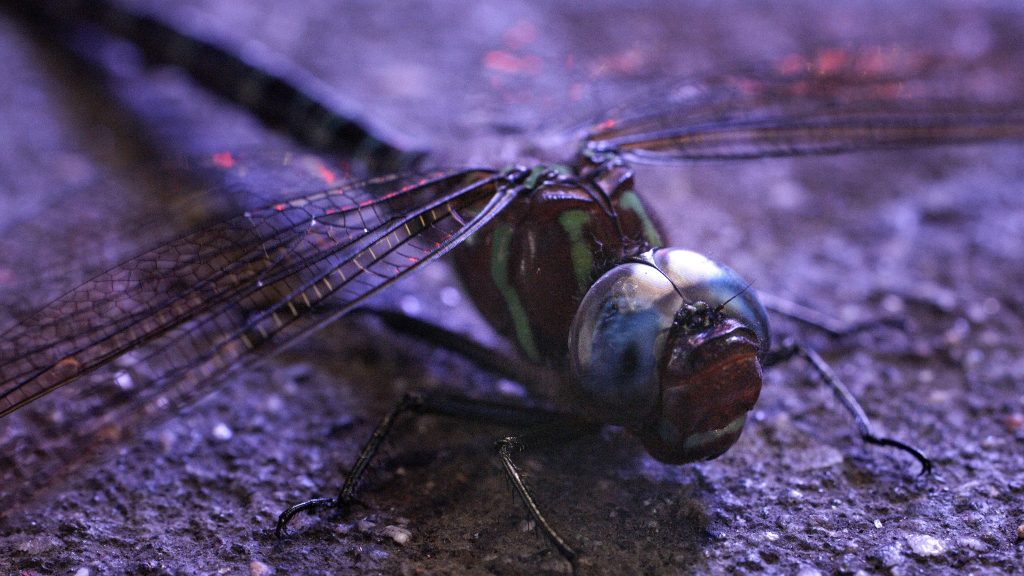
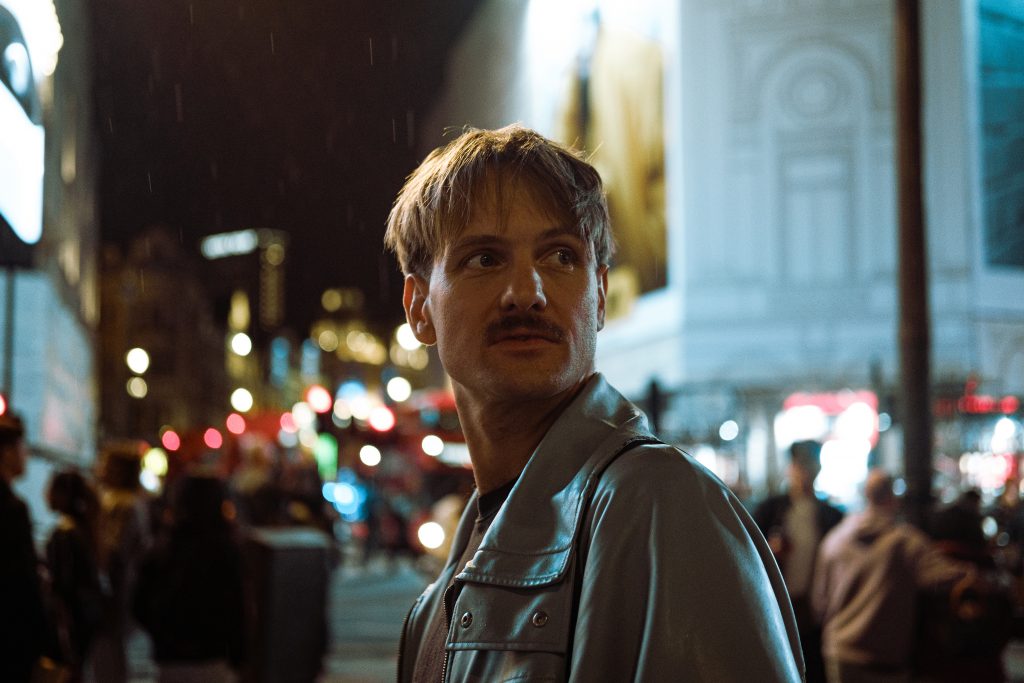
On the way to his apartment one night, Jonas Brinker was walking through Times Square and much to his surprise, saw a dragonfly resting on the sidewalk in one of the busiest places in the world. Brinker had his camera with him and decided to kneel down and film the insect head-on. The dragonfly appears to be looking at us throughout the entire film because it is the only thing we see. But at the same time, we are able to take in much of the surroundings: the constantly changing lights of the LED billboards, sirens, cars and conversations.
“The work is centred on presence rather than meaning,” says Brinker. “The dragonfly is not there to represent anything, but to simply exist as an individual in that moment.” Untitled (25.07.2022, 02:14 AM) fits seamlessly with Brinker’s work, in which elements that have existed for a long time – the dragonfly has been around for around 320 million years – come together in a fleeting manner.
Jonas Brinker (Germany, 1989) is regarded as one of the most prominent video artists of his generation. His work has been exhibited at Marres in Maastricht (2018), Palais de Tokyo in Paris (2018), the Berlin nightclub Berghain (2020), and last year at Piccadilly Circus in London. We spoke with Jonas Brinker shortly before the opening of his first institutional solo exhibition at the Kunstverein Harburger Bahnhof in Hamburg.
Jonas Brinker is presented by Zyrland Zoiropa, Berlin and his Untitled (25.07.2022, 02:14 AM) is on display in the Projections Section.
You mentioned earlier you were working on a major show at Kunstverein Harburger Bahnhof in Hamburg last week. Are you pleased with how it turned out?
Yes, I was preparing my first institutional solo show at Kunstverein Harburger Bahnhof in Hamburg. The exhibition revolves around fireflies in Central Park, translated into an expansive video installation within the historic waiting room of the Kunstverein. Their bioluminescent signals, emitted during their final phase of life for species-specific communication, are set against aerial shots of the New York skyline at night, transforming an attempt to capture their flashes into a melancholic exploration of longing, time and the interwoven worlds of human and non-human beings.
I’m really pleased with how the show turned out and just love the fact that the space is located between the tracks of a railway station, making it an especially compelling setting for time-based works.
The way your time-based works are presented is a key aspect of your work. What presentation did you have in mind/would be ideal for Untitled (25.07.2022, 02:14 AM)?
When I filmed the piece, I envisioned it being shown as a floor-standing projection, so the image extends into the actual space. The projection should be taller than a human, so we look at the insect at eye level or even slightly upward, creating an intimate situation where a small, easily overlooked being takes on a strong presence. The encounter gains weight, becoming something resonant.
At Art Rotterdam, Untitled (25.07.2022, 02:14 AM) will be featured in the Projections Section. It revolves around a dragonfly resting in New York’s Times Square. In it we see a close-up of the dragonfly, with its eyes and wings reflecting the changing lights in the surroundings. How did the idea of a dragonfly in Times Square come about?
Well, there’s an interesting connection here – it was not something I had planned or set out to film. I had been working on the other piece and while walking back to the apartment where I was staying downtown, I crossed Times Square in the middle of the night and spotted the dragonfly on the sidewalk. Since I had my camera with me, equipped with a macro lens, I decided to kneel down on the concrete and spend a moment filming the insect. So, in a way, the work is a direct response to an unlikely encounter, something that happened entirely by chance.
The dragonfly is all we see. You might describe it as a recording of the impressions of a dragonfly while resting in Times Square. Was that deliberate?
The deliberate choice here was to film the insect at eye level, with the camera aimed at it head-on. In turn, the dragonfly seems to be looking back at us. This makes it the subject of the encounter, a wild animal recognised as an individual, one I can see very clearly yet whose essence remains elusive. I was intrigued by the reflections of the city lights and billboards in its wings and eyes, in which the surroundings are both absorbed and refracted.
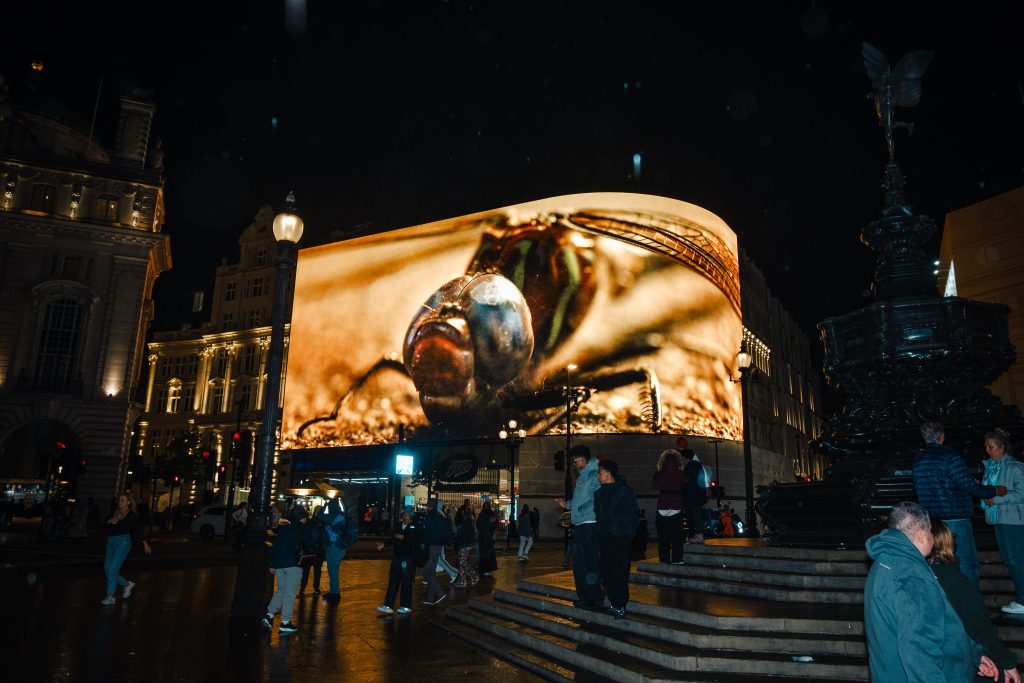
There’s also an element of deep time to it, the ancient insect, largely unchanged for 320 million years, resting on a sidewalk cast from concrete mixed with the glittering remnants of Manhattan’s bedrock, illuminated by the shifting colours of digital screens and advertisements. So, in many ways, I’m interested in what is already there – different elements coming together in a fleeting way.
Of course, we can only speculate on what the insect is observing, but the dragonfly was surely displaced, likely misled by the stark illumination of the square, causing it to get lost. After filming, I brought it to the nearest park.
Throughout history, animals are frequently used metaphorically: lions signify power, wolves represent freedom. The close-up in Untitled (25.07.2022, 02:14 AM) resists metaphorical interpretation. Why do you challenge anthropocentric narratives in your time-based works?
I’m interested in stepping away from the tendency to assign symbolic meaning to non-human animals. The dragonfly is not there to represent anything, but to simply exist as an individual in that moment. The work is centred on presence rather than meaning.
I try to keep that openness in my work, to perceive without imposing, to observe without assuming, to create space for an encounter in which meaning is not fixed but unfolding. By shifting the focus from interpretation to observation, I aim to acknowledge non-human subjectivity without reducing it to a human-assigned role. Even as I try to step away from anthropocentric narratives, I can only ever adopt a human perspective. But by being aware of this limitation, I hope to create a space in which meaning emerges through observation, rather than being imposed.
Written by Wouter van den Eijkel
Op weg naar zijn appartement liep Jonas Brinker ’s nachts over Times Square. Tot zijn verbazing zag hij een libelle uitrusten op het trottoir, midden in een van de drukste plekken ter wereld. Brinker had zijn camera bij zich en besloot op zijn knieën te gaan zitten en het insect frontaal te filmen. De libelle lijkt ons de hele film aan te kijken, waardoor het de hoofdrolspeer wordt van de film. “Een wild dier dat wordt erkend als individu. Een wezen dat je heel duidelijk kan zien, maar waarvan de essentie toch ongrijpbaar blijft.
“Het werk draait meer om aanwezigheid dan om betekenis,” zegt Brinker. “De libelle is er niet om iets te vertegenwoordigen, maar bestaat simpelweg, als individu, in dat moment.” Untitled (25.07.2022, 02:14 AM) sluit naadloos aan bij Brinkers werk, waarin verschillende elementen die al lang bestaan—de libelle bestaat al ongeveer 320 miljoen jaar—op een vluchtige manier samenkomen.
Jonas Brinker (Duitsland, 1989) wordt beschouwd als een van de meest prominente videokunstenaars van zijn generatie. Zijn werk is onder meer geëxposeerd bij Marres in Maastricht (2018), Palais de Tokyo in Parijs (2018), in de legendarische Berlijnse nachtclub Berghain (2020), en vorig jaar op Piccadilly Circus in Londen. We spraken Jonas Brinker kort voor de opening van zijn eerste institutionele solotentoonstelling in de Kunstverein Harburger Bahnhof in Hamburg.
Jonas Brinker wordt gepresenteerd door Zyrland Zoiropa uit Berlijn. Zijn werk Untitled (25.07.2022, 02:14 AM) is te zien in de Projections-sectie.
Je zei eerder dat je druk bezig was met de voorbereidingen voor een grote tentoonstelling in Hamburg. Ben je tevreden over hoe het is geworden?
Ja, ik was bezig met mijn eerste institutionele solotentoonstelling in Kunstverein Harburger Bahnhof in Hamburg. De tentoonstelling draait om vuurvliegjes in Central Park, vertaald naar een grootschalige videoinstallatie in de historische wachthal van de Kunstverein. Hun bioluminescente signalen, uitgezonden in hun laatste levensfase als soort-specifieke communicatie, worden gecombineerd met luchtbeelden van de skyline van New York ’s nachts. De poging om hun lichtflitsen vast te leggen, verandert zo in een melancholische verkenning van verlangen, tijd en de verweven werelden van mensen en niet-menselijke wezens.
Ik ben erg blij met hoe de tentoonstelling is geworden en ik ben helemaal verliefd op het feit dat de ruimte zich tussen de sporen van een treinstation bevindt, waardoor het een bijzonder geschikte locatie is voor werken die zich in de tijd ontvouwen.
De wijze waarop je jouw werken presenteert, is een cruciaal onderdeel van je werk. Wat voor presentatie had je in gedachten voor Untitled (25.07.2022, 02:14 AM)?
Toen ik de film maakte, stelde ik me een vrijstaande wandprojectie voor, zodat het beeld zich uitstrekt in de daadwerkelijke ruimte. De projectie moet hoger zijn dan een mens, zodat we het insect op ooghoogte bekijken of zelfs iets omhoog moeten kijken. Dit creëert een intieme situatie waarin een klein wezen dat we gemakkelijk over het hoofd zien een krachtige aanwezigheid krijgt. Zo krijgt de ontmoeting krijgt betekenis en resoneert daardoor.
Untitled (25.07.2022, 02:14 AM) draait om een libelle die uitrust op Times Square in New York. We zien een close-up van de libelle, waarvan de ogen en vleugels het veranderende licht van de omgeving reflecteren. Hoe ontstond het idee van een libelle op Times Square?
Hier zit een interessante connectie: het was niet iets dat ik had gepland of bewust van tevoren had bedacht. Ik was bezig met mijn andere werk en terwijl ik ’s nachts terugliep naar het appartement waar ik verbleef, kwam ik door Times Square. Daar, midden op de stoep, zag ik ineens die libelle. Omdat ik mijn camera bij me had, uitgerust met een macrolens, besloot ik op de grond te gaan liggen en een moment de tijd te nemen om het insect te filmen. Op die manier is het werk een directe reactie op een onverwachte ontmoeting, iets dat volledig toevallig gebeurde.
De libelle is het enige dat we te zien krijgen. Je zou het kunnen beschrijven als een opname van de indrukken die een libelle heeft terwijl hij rust op Times Square. Was dat een bewuste keuze?
De bewuste keuze was om het insect op ooghoogte te filmen, met de camera recht op hem gericht. Hierdoor lijkt de libelle ons terug aan te kijken. Zo wordt het de hoofdrolspeler van de ontmoeting: een wild dier dat wordt erkend als individu, een wezen dat je heel duidelijk kan zien, maar waarvan de essentie toch ongrijpbaar blijft.
Ik was gefascineerd door de reflecties van de stadslichten en billboards in zijn vleugels en ogen, waarin de omgeving zowel wordt geabsorbeerd als weerkaatst. Er zit ook een element van diepe tijd in: dit oeroude insect, dat in 320 miljoen jaar nauwelijks is veranderd, rust op een stoep van beton vermengd met de glinsterende resten van de oeroude rotsen van Manhattan, verlicht door de verschuivende kleuren van digitale schermen en advertenties.
Dus op veel manieren ben ik geïnteresseerd in wat er al is—verschillende elementen die op een vluchtige manier samenkomen. Natuurlijk kunnen we alleen maar speculeren over wat het insect waarneemt, maar de libelle was waarschijnlijk gedesoriënteerd, waarschijnlijk misleid door de felle verlichting van het plein, waardoor hij verdwaald raakte. Na het filmen heb ik hem naar het dichtstbijzijnde park gebracht.
Door de geschiedenis heen zijn dieren vaak gebruikt als metaforen: leeuwen staan voor kracht, wolven voor vrijheid, enzovoort. De close-up in Untitled (25.07.2022, 02:14 AM) verzet zich tegen deze metaforische interpretatie. Waarom daag je antropocentrische narratieven uit met je werk?
Ik ben geïnteresseerd in het loslaten van de neiging om symbolische betekenissen toe te kennen aan niet-menselijke dieren. De libelle is er niet om iets te vertegenwoordigen; hij bestaat simpelweg, als individu, in dat moment. Untitled (25.07.2022, 02:14 AM) draait om aanwezigheid in plaats van betekenis.
Ik probeer die openheid in mijn werk te bewaren: waarnemen zonder op te leggen, observeren zonder te veronderstellen, ruimte creëren voor een ontmoeting waarvan de betekenis niet vaststaat, maar zich ontvouwt. Door de focus te verschuiven van interpretatie naar observatie, wil ik niet-menselijke subjectiviteit erkennen zonder deze te reduceren tot een door mensen toegewezen rol.
Zelfs als ik probeer af te stappen van antropocentrische narratieven, kan ik natuurlijk nooit ontsnappen aan mijn menselijke perspectief. Maar door me bewust te zijn van deze beperking, hoop ik een ruimte te creëren waarin betekenis ontstaat door observatie, in plaats van deze op te leggen.
Geschreven door Wouter van den Eijkel
Artist Tanea Hynes grew up in Labrador City, a remote town in Newfoundland and Labrador, Canada, centred around one thing: iron ore mining. In her work, Hynes reflects on the impact of this industry on the people, nature and identity of the region. Through photography, drawings and installations, she explores how labour, nature and capitalism are intertwined.
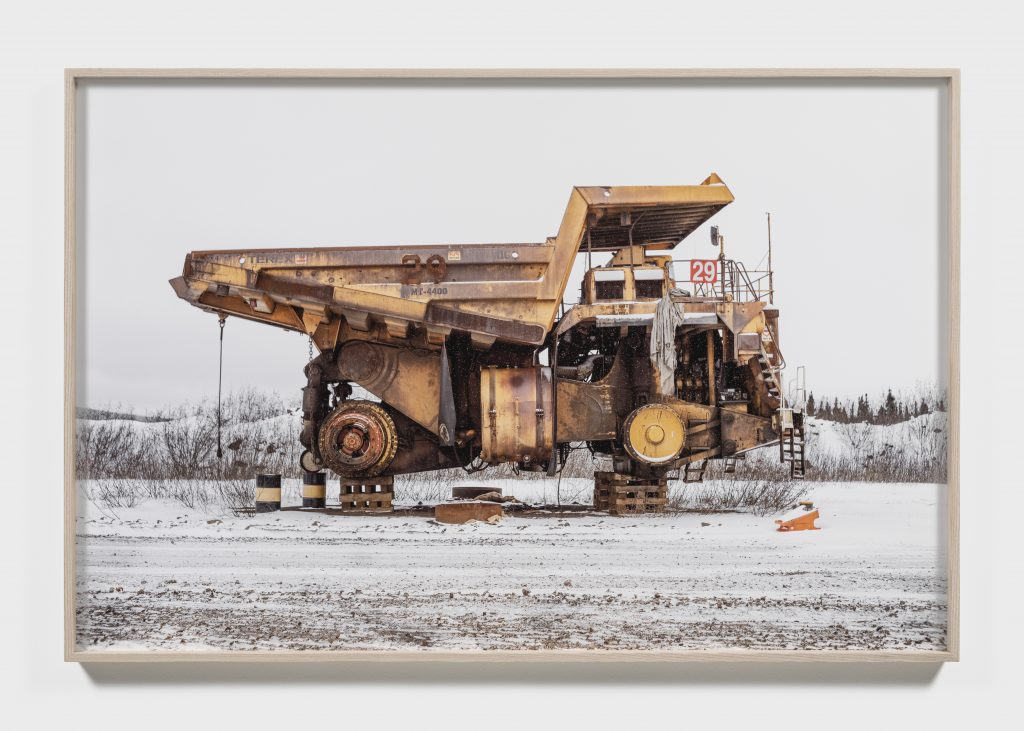
Tanea Hynes’ work can be seen at the KIN booth in the New Art section.
A city built on iron
The name might be somewhat misleading, as Labrador City is not a city in the usual sense of the word. It is not a regional trade hub, it lacks a rich cultural life and young people do not move there for education. In Labrador City, everything revolves around mining, the starting point of a global production chain.
The town emerged in the 1960s after the discovery of a large iron ore deposit in the region. It was built according to the utopian ideals of the late 19th-century Garden City movement, intended to create a community where miners and their families could live well. For some time, those expectations were met. In its early years, the Iron Ore Company of Canada invested in modern facilities and social programmes, but after acquisitions by multinationals like Rio Tinto and Mitsubishi, these amenities disappeared.
These social programmes were not a luxury, given that the surrounding area consists of nothing but forest and wilderness. If someone were to go missing in the woods, finding them would be like searching for a needle in a haystack, Hynes notes in her graduation project. The nearest major city, Montreal, is 1,250 km away as the crow flies—roughly the distance from Rotterdam to northern Spain. The population currently fluctuates around 7,500. At its peak in the mid-1970s, the town had 12,000 residents.
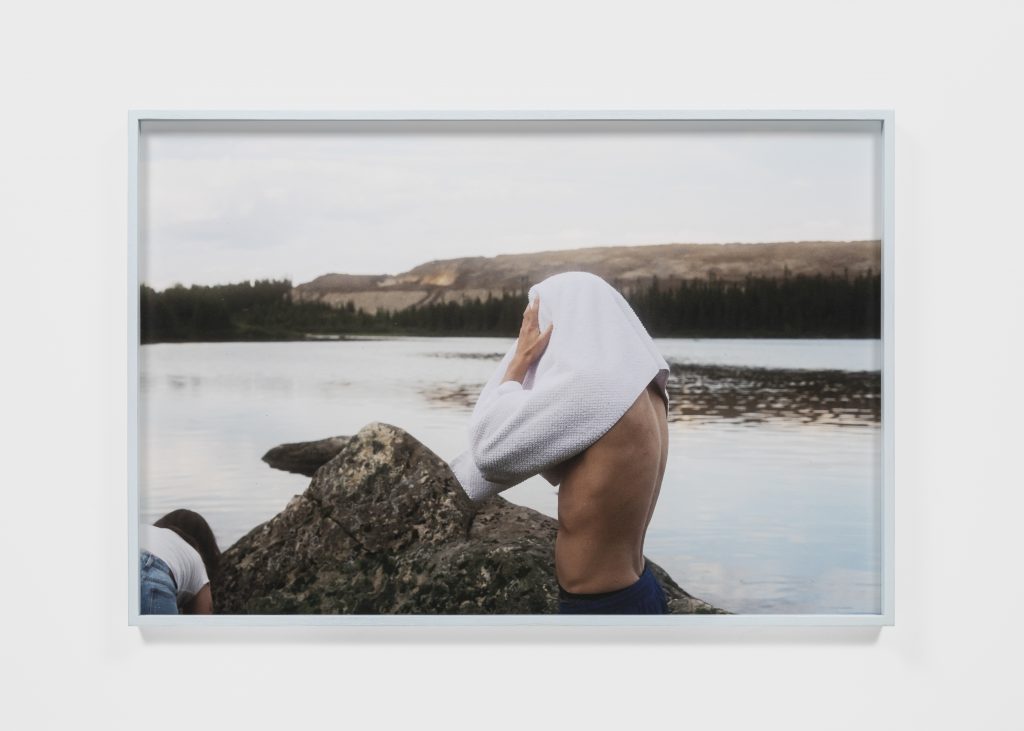
These population fluctuations are linked to the global demand for iron ore. Born in 1996, Tanea Hynes has witnessed multiple boom-and-bust cycles over the past decades. Periods of economic prosperity have alternated with deep recessions, during which people lost their jobs, mortgages went unpaid and houses became unsellable. These cycles leave not only an economic imprint, but also shape the social fabric of the town. Labrador City has its own class system of miners and management, each with its own interests, often clashing over labour conditions and wages.
The mine as lifeline and curse
Hynes’ own life is inextricably linked to mining. To finance her studies, she spent five summers working as a truck driver in an open-pit mine. She experienced firsthand the physical and mental toll of the work and relentless pressure to increase production. The mines operate 24/7, 365 days a year, and work only stops in the event of serious accidents.
Reflecting on this experience, Hynes writes:
“This experience helped to shape my perspective on global economics, natural resource extraction, human impact on ecological systems, labor politics, and the world at large. I hold an understanding of the unforgiving demands of the mining industry and the place of myself, my family, and my closest friends within that system. I have experienced many close calls and felt the pressures of the endless push for faster production. Furthermore, I have felt my own body resist in ways that I cannot put into words. These experiences fuel my desire to create urgent works of art and photographs, attempts to materialize what can only be felt in one’s gut.”
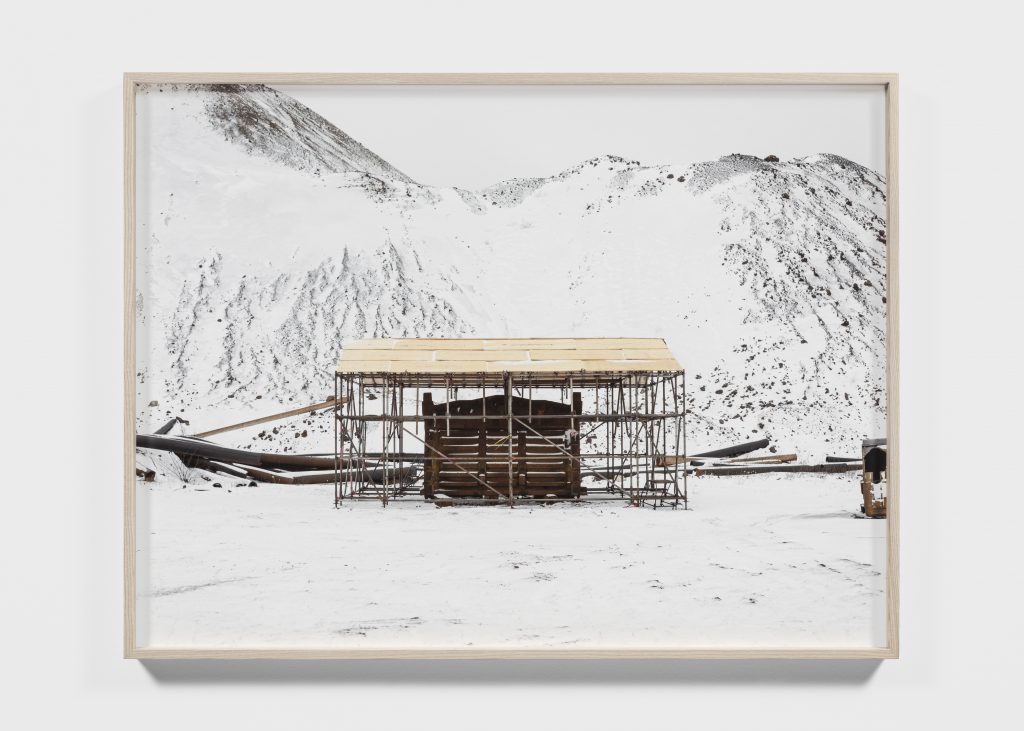
This relentless pace impacts not only the workers, but also the landscape. Hynes’ work focuses on both. In theoretical discussions, mining is often—and rightly—equated with environmental destruction. But for those embedded in such a community, like Hynes, mining is more than just devastation. Alongside boredom, addiction and physical pain, there is also hope, solidarity and resilience. She highlights people who care about the natural world and rely on it for physical and mental well-being, relaxation and joy. Her images capture miners spending their free time in nature, seeking peace in the same ecosystem they extract resources from during the week. The relationship between miners, the mine and nature is therefore highly complex.
Testimony and protest
Hynes’ work is often compared to the documentary tradition of Newfoundland and Labrador. In the 1950s–1970s, documentaries played a key role in exposing social inequality and the consequences of large-scale mining. Since then, the mining industry has preferred to stay out of the media, keeping its gates closed to outsiders.
In the fall of 2023, a childhood friend—now in a management position—invited Hynes to photograph a mine. She was surprised at how casually the offer was made. Her upbringing in Labrador City and her connection to the community likely played a role, making her an insider. It may also relate to her less overtly activist approach compared to past documentary filmmakers. Hynes acknowledges the paradox of mining: it is destructive, yet it provides her community’s livelihood.
This paradox is evident in her description of the images she captured in the mine: “While this industry provides vital metals to the ever-expanding world at large, these scenes represent the epicenter of so much chaos, of pain, addiction, sadness, and bleak degradation.” She recognises the importance of mining, yet the cost is undeniably high.
Remediated
In her series Remediated, Hynes juxtaposes images of the mine with pictures of abandoned landscapes where nature is attempting to recover. Sites that were once bustling workplaces are now scars on the land. She poses a crucial question: What remains when the resources are depleted and the mines are abandoned?
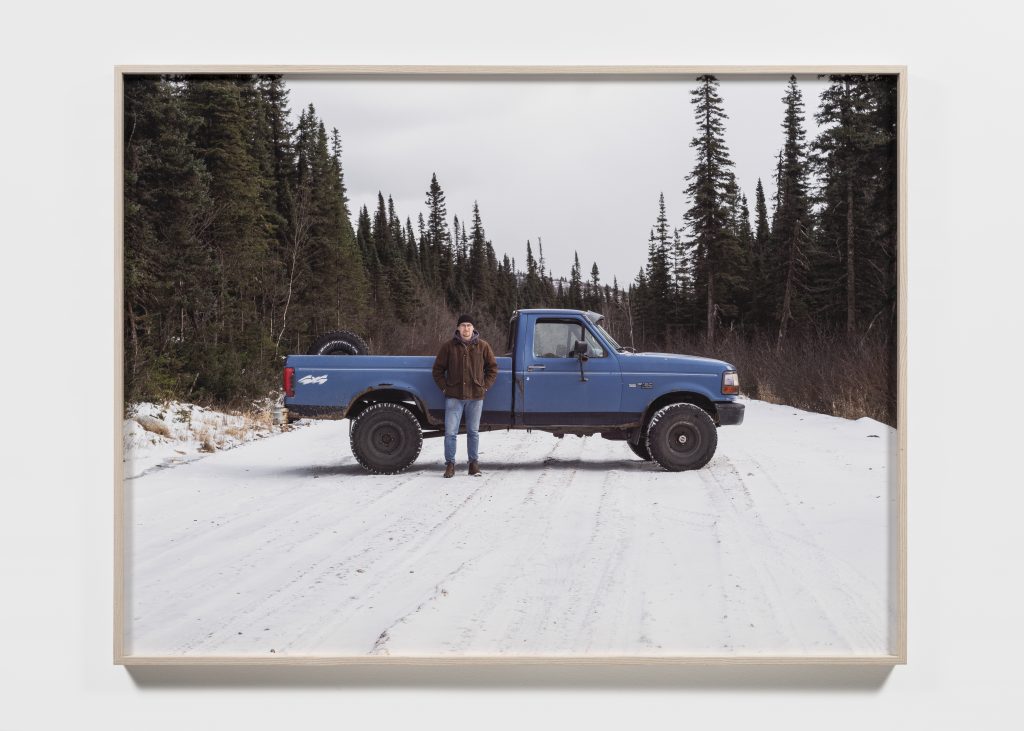
Long-term damage from mining is often shifted onto local communities like Labrador City. This series is not on display at Art Rotterdam, but does it gives us an idea why Hynes remains hopeful: “Remediated, along with the portraits in my exhibition, communicate that there is a path forward, and that we are already on that path. The way forward is not only through physical remediation of the land, but in meaningful, mutually beneficial communion with both the land and with each other.”
The road ahead
For Hynes, the way forward lies in an Indigenous, anti-colonial perspective—one that does not consider the earth a collection of extractable commodities, but as an extension of ourselves. In this view, the earth nurtures us and embodies languages, stories and histories.
The broader theme underlying Hynes’ work is humanity’s relationship with the land. Mining occurs worldwide—Labrador City is only one example. The scale surpasses the individual and likely even our imagination. Millions of tons of rock are moved, rivers rerouted and mountains erased. The miners of Labrador City are merely one link in a vast system. They never see the end products of their labour, as the extracted materials are processed elsewhere.
Hynes’ work is both a stark reminder that every industry carries a human and ecological cost and a plea for a new way of thinking about land use. Rather than viewing the earth as an endless source of economic gain, we should see it as an extension of ourselves, a place that deserves care and respect.
Written by Wouter van den Eijkel
No Man’s Art Gallery presenteert op Art Rotterdam (28-30 maart in Rotterdam Ahoy) een duopresentatie met werk van Benjamin Francis en Tobias Thaens. Voor Francis markeert dit het begin van zijn samenwerking met de galerie, die wordt voortgezet in zijn solotentoonstelling ‘A foot between the door’, die van 22 maart t/m 20 april 2025 te zien is in de galerie in Amsterdam.
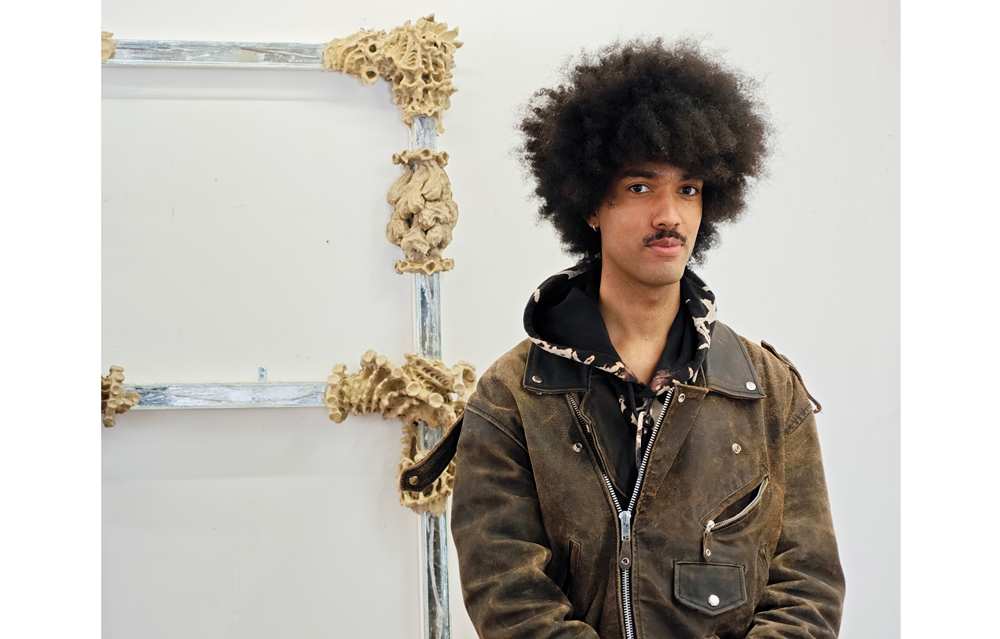
Francis onderzoekt in zijn multidisciplinaire praktijk de verborgen mechanismen van macht, controle en correctie die onze perceptie van goed en fout vormgeven. Met installaties, video’s, sculpturen, teksten en performances legt hij de onderliggende structuren bloot die het individu vormen. Met zijn werk nodigt hij de kijker uit om even stil te staan bij wie de regels bepaalt, en wat gebeurt er als we ze herschrijven? Waarom streven we naar controle over onze omgeving – zowel levende lichamen als niet-levende objecten – en hoe leidt dat tot een dwingende normativiteit en conformiteit?
Geïnspireerd door het medium dans en de spanning tussen gehoorzamen en weigeren verkent Francis hoe subtiele vormen van correctie – via taal, lichaamstaal of architectuur – sociale structuren en de menselijke ervaring vormgeven. In een op efficiëntie gerichte maatschappij, waar afwijken van de norm als ongewenst geldt en imperfecties zorgvuldig worden weggepoetst, biedt zijn werk ruimte aan twijfel, ongemak en het onvolmaakte. Francis kijkt naar de manieren waarop fouten en afwijkingen gecorrigeerd of uitgesloten worden binnen maatschappelijke en pedagogische structuren en kennissystemen. Het is een thema dat persoonlijk resoneert: als iemand met dyslexie zag hij hoe spelfouten als ongewenst werden beschouwd en dat hij voortdurend werd gecorrigeerd. Zijn werk stelt de vraag wie bepaalt wat ‘juist’ is en welke dogma’s en machtsdynamieken daar achter schuilen. Bestaat zo’n strikte tweedeling, zo’n binaire benadering tussen goed en fout überhaupt? Francis beschouwt zijn kunst als een manier om fouten en verval niet te verbergen, maar juist te onderzoeken: zowel in taal als in materie.
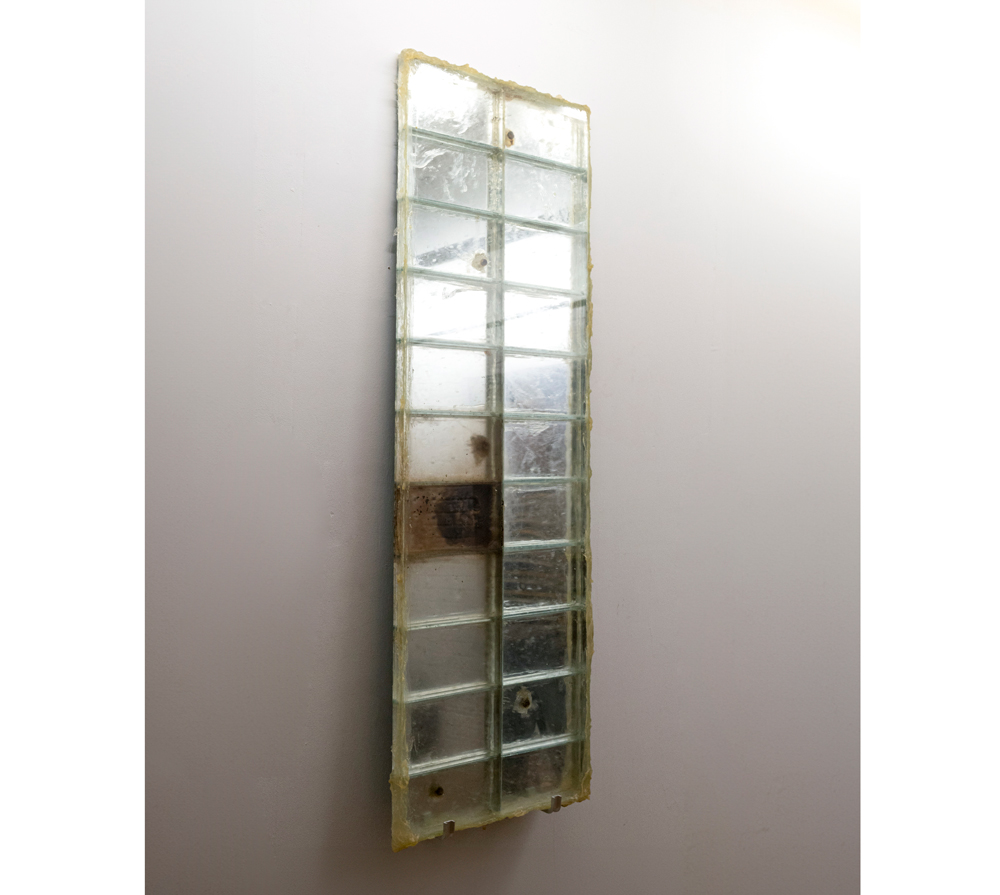
Taal speelt een centrale rol in zijn onderzoek en zijn werk beweegt zich tussen object-gebaseerde werken en participatieve performances, waarbij hij het publiek in onverwachte situaties plaatst en regelmatig uitnodigt om deel te worden van de installatie. Voor een eerdere performance in Hotel Maria Kapel, waar de kunstenaar een residentieprogramma afrondde, maakte de kunstenaar bijvoorbeeld gebruik van teksten die meerdere malen door vertaalmachines waren gehaald, waardoor fouten en misinterpretaties zichtbaar werden. Deelnemers aan de performance werden gevraagd om deze teksten voor te lezen en zich er toe te verhouden. Dit ondermijnt de veronderstelde objectiviteit en neutraliteit van taal en laat zien hoe taal, macht en en hiërarchie onlosmakelijk verbonden zijn. In deze performances wordt de kijker niet enkel observator, maar medespeler in een systeem dat constant verschuift en zich aanpast. In ‘A Claim for Your Own Good’, opgevoerd in het Luther Museum, liet Francis een fictief schoonmaakbedrijf rituelen uitvoeren die subtiel machtsdynamieken blootlegden.
Ook de relatie tussen lichaam en herinnering speelt een rol. Ons lichaam maakt fouten die ons bewustzijn beïnvloeden: we voelen dingen of worden ergens door geraakt zonder het direct te beseffen. Herinneringen worden opgeslagen in ons lichaam, zonder dat we ons daarvan altijd bewust zijn.
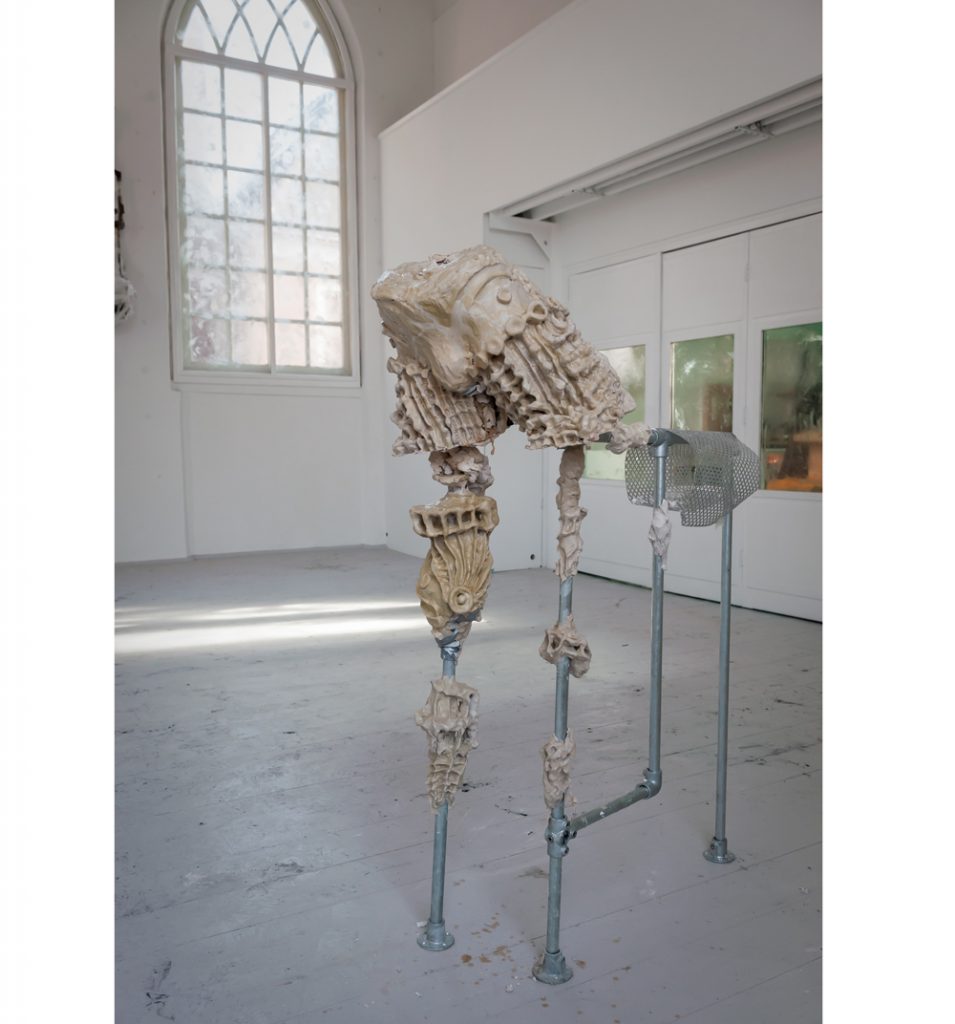
Een terugkerend motief in zijn werk is de wisselwerking tussen vuil en reiniging. Want teveel reiniging laat sporen achter. Wat rest is een werkelijkheid die telkens opnieuw is bijgeschaafd, geboend, gecorrigeerd en gezuiverd. Wat doet dat met een lichaam dat zich hier voortdurend aan moet onderwerpen, als een archief van discipline? En hoe wissen we de sporen van jarenlang opgelegde correctie, die zich diep in onze huid en ons brein heeft vastgezet? En wat als schoonmaken niet langer slechts een fysieke handeling is, maar een instrument van controle? Wanneer reiniging wordt vermomd als zorg — een zorg die je wordt opgelegd omdat je, om welke reden dan ook, minder macht hebt binnen het heersende systeem? Francis confronteert de kijker met deze paradoxale dynamiek, waarin systemen van macht, correctie en normativiteit verweven zijn met onze dagelijkse handelingen.
De installaties van Francis veranderen omgevingen in performatieve ruimtes, waarin bezoekers zich onvermijdelijk bewust worden van hun eigen positie binnen systemen van discipline en normativiteit. Een badkamer, een klaslokaal, een mortuarium, een balletstudio — functionele ruimtes die hij verstoort met subtiele ingrepen, waardoor ze niet langer kloppen. Hun oorspronkelijke functie verschuift, raakt ontwricht, en maakt plaats voor spanning en nieuwe betekenissen. In eerdere installaties, zoals ‘The Removal of the Eye’ in P/////AKT werd het publiek uitgedaagd om over breekbare witte tegels te lopen. Elke stap liet sporen achter: een directe confrontatie met de spanning tussen zuiverheid en verval, controle en loslaten. Deze spanningsvelden spelen een belangrijke rol binnen zijn praktijk.
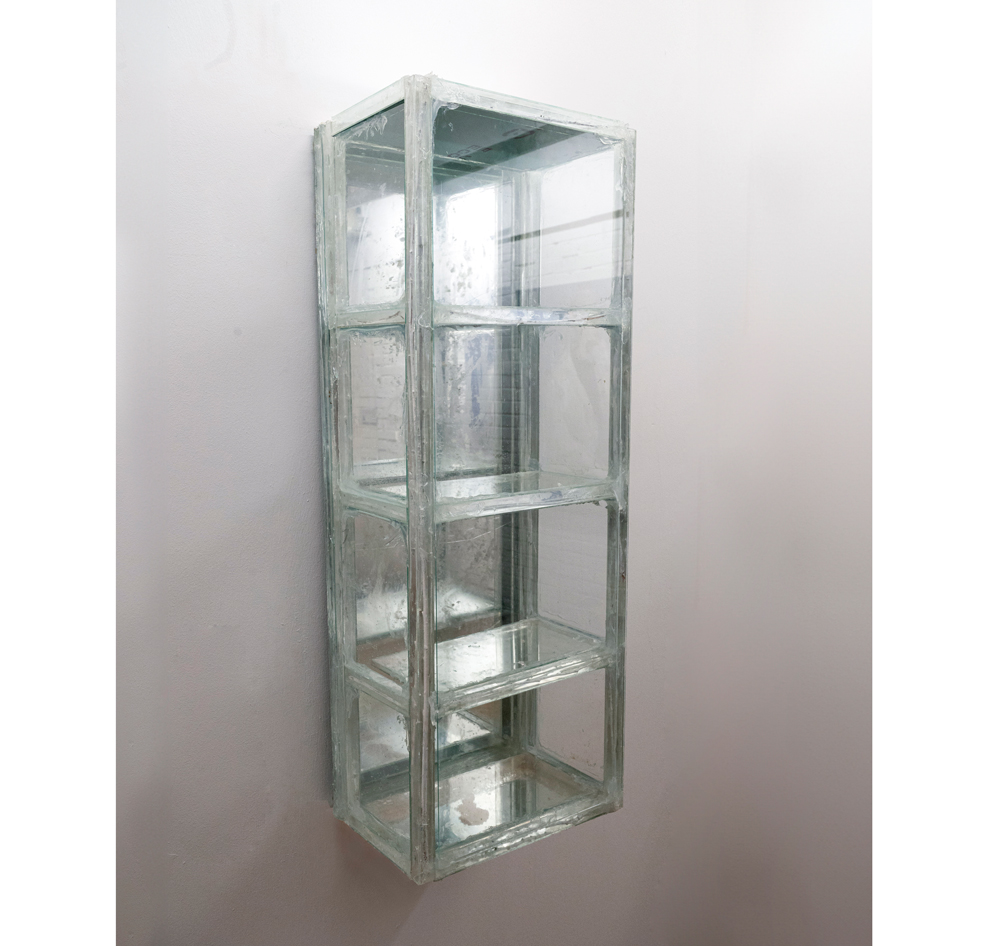
Francis keert steeds terug naar het uitgangspunt van ‘de ander’: zij die afwijken van de norm. Het is een positie waarmee de kunstenaar zich ook zelf identificeert als queer persoon van kleur met dyslexie. Mensen die niet passen binnen de maatschappelijke kaders, bijvoorbeeld door hun sociale, maatschappelijke of financiële positie, worden zwaarder onderworpen aan controlemechanismen. Door ‘de ander’ juist als de norm te gebruiken (het tegenovergestelde van ‘othering’) kun je de norm effectief zichtbaar maken, analyseren en bekritiseren. Hij keert het perspectief om: niet zij, maar de norm zelf wordt bevraagd. Dit proces stelt hem in staat om te analyseren en bekritiseren hoe deze systemen functioneren en door wie ze worden gehandhaafd. Autoriteit en normativiteit zijn geen vaststaande begrippen, maar worden constant herschreven door de structuren die ze in stand houden.
Op Art Rotterdam en in zijn solotentoonstelling in No Man’s Art Gallery onderzoekt Francis hoe ruimte en lichaam op elkaar inwerken.
Benjamin Francis (1996) studeerde in 2020 af aan de afdeling Fine Arts van ArtEZ BEAR in Arnhem, met een focus op Experiment, Kunst en Onderzoek. Zijn werk werd eerder getoond bij No Man’s Art Gallery (NL), Christine König Galerie (OOS), Art Antwerp (BE), Luther Museum (NL), PuntWG (NL), Ballroom Project #6 (BE), Hotel Maria Kapel (NL), If I Can’t Dance, Kunsthuis Syb, Het HEM, P/////AKT (NL), MÉLANGE (DE), Rencontres Internationales (DE), SECONDroom (BE) en Mutter (NL).
Tijdens Art Rotterdam presenteert Benjamin Francis zijn werk in de booth van No Man’s Art Gallery. Van 22 maart t/m 20 april 2025 is zijn solotentoonstelling te zien in de galerie in Amsterdam.
Geschreven door Flor Linckens
Atelier Van Lieshout (AVL) staat bekend om monumentale sculpturen waarin kunst, architectuur en maatschappelijk onderzoek samenkomen, met een speelse maar confronterende ondertoon. Het werk onderzoekt macht, autonomie en de rol van de kunstenaar binnen een samenleving waarin zichtbaarheid en erkenning niet vanzelfsprekend zijn. Sinds 1995 werkt Joep van Lieshout onder de naam Atelier Van Lieshout, een bewuste keuze om de klassieke mythe van de individuele kunstenaar te bevragen. Op Art Rotterdam 2025 toont AVL, in samenwerking met Galerie Ron Mandos, het Graf van de Onbekende Kunstenaar (2024) in Sculpture Park. Het is een eerbetoon aan de talloze kunstenaars die in de schaduw van de kunstgeschiedenis bleven.
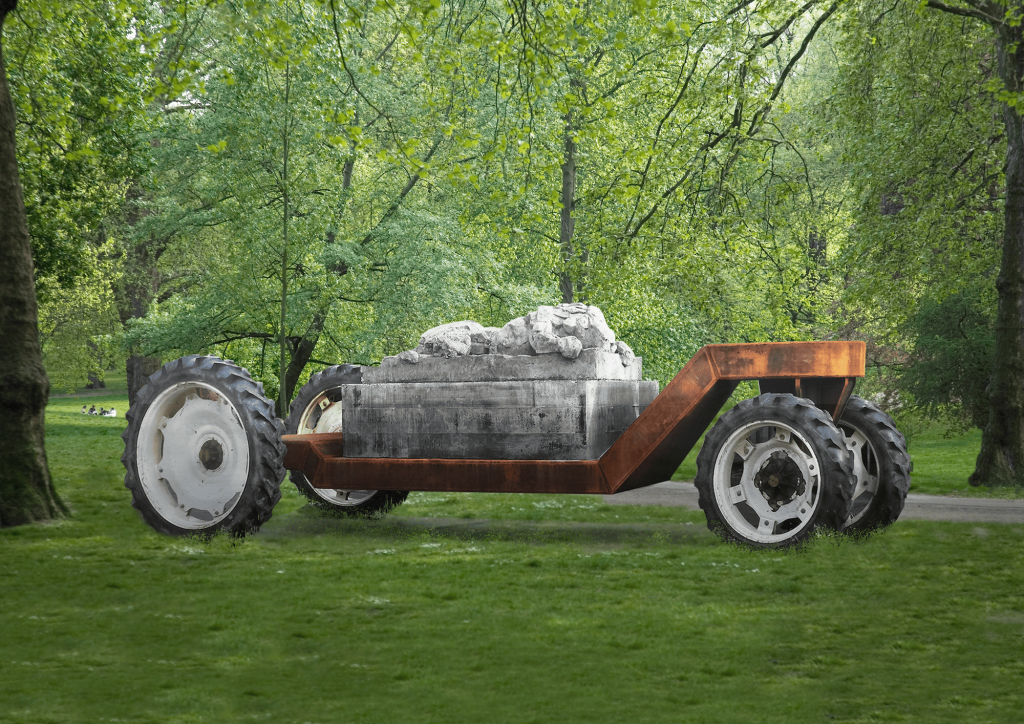
Graf van de Onbekende Kunstenaar: Een tragedie van de miskende liefde
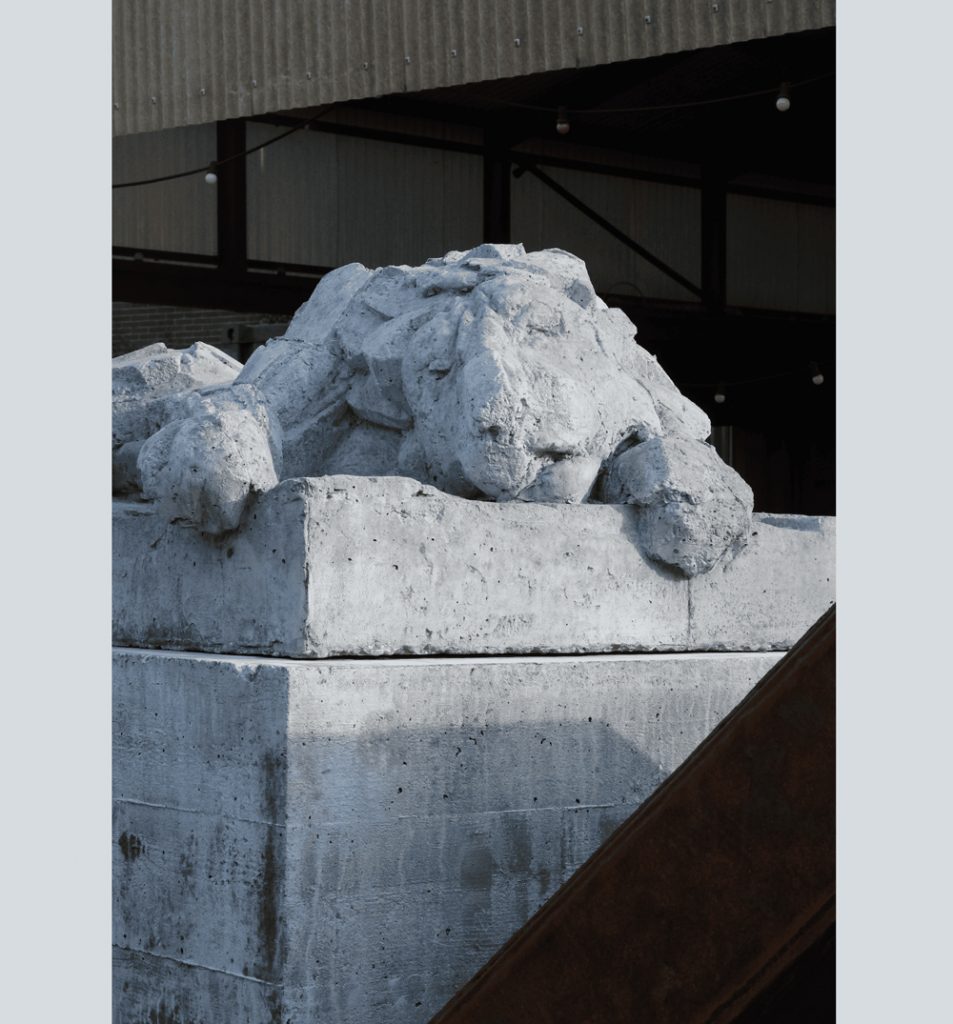
Een betonnen tombe rust op een affuit, een onderstel van een kanon dat traditioneel werd gebruikt om de kisten van generaals, keizers en staatshoofden naar hun laatste rustplaats te vervoeren. Ooit een symbool van staatsmacht en heroïek, kreeg het affuit in staatsbegrafenissen een ceremoniële functie om grootschalige nationale rouw te markeren. In veel tradities is het affuit geen permanente rustplaats, slechts een tijdelijk transportmiddel naar een begraafplaats of mausoleum. Hier draagt het affuit niet langer een staatsman, maar een monument voor de vergeten kunstenaar. Een symbolische overgang van leven naar dood en van vergetelheid naar blijvende herinnering.
Bovenop de tombe ligt een bronzen leeuw, stil, misschien slapend, misschien levenloos. “Die leeuw is een teken van kracht en doorzettingsvermogen,” zegt Joep van Lieshout. “De koning van het dierenrijk slaapt, of sterft, maar kan ook weer wakker worden om verder te trekken.”
Het werk is zowel een monument als een commentaar op de grilligheid van erkenning. “Kunstenaars hebben vaak een keihard leven,” zegt Van Lieshout. “Ik ken zóveel mensen die hun hele leven werken, prachtige dingen maken, maar op het verkeerde moment op de verkeerde plek zijn.” Soms worden ze later opgepikt, soms verdwijnen ze voorgoed. Hij noemt het een “tragedie van de miskende liefde.” Het werk heeft een ludieke ondertoon, maar is tegelijk bloedserieus. “Door humor glijden serieuze boodschappen gemakkelijker binnen,” voegt de kunstenaar er lachend aan toe.
Aan de zijkant van de sculptuur bevindt zich een opening, een niche die doet denken aan een ossuarium, een plek waar menselijke overblijfselen worden verzameld. “We hebben gekeken naar ossuaria als inspiratiebron voor het monument,”zegt Van Lieshout. “Het is een sculptuur die zich opent voor wat nog komt.” Hier kunnen, in de toekomst, de botten en as van onbekende kunstenaars worden toegevoegd. Het werk is geen gesloten monument, maar een plek die zich letterlijk kan vullen met de stoffelijke resten van zij die nooit erkenning kregen.
Beschermd, vergeten, almachtig?
Naast het Graf van de Onbekende Kunstenaar presenteert Atelier Van Lieshout drie andere sculpturen op Art Rotterdam, die elk op hun manier de spanning tussen bescherming, macht en vergetelheid belichten.
Tree of Life (2016), een boom met sokkel van ruim 3 meter, draagt mensvormige vruchten in verschillende stadia van rijpheid. “Het kan een beeld zijn van leven en vruchtbaarheid, maar net zo goed van geweld en verdwijnen,” zegt Van Lieshout.
Maria’s Cloak (2023) roept de vraag op wie bescherming geniet en wie erbuiten valt. De mantel van Maria biedt geen vanzelfsprekende veiligheid.
Omnipotent (2023) speelt met gezag en overgave. “Omnipotent is een ander woord voor de almachtige,” zegt Van Lieshout. De sculptuur toont een hand die afhankelijk van de plaatsing verschillende betekenissen krijgt. “Je kan hem rechtop zetten en dan is het een stopgebaar, je kan hem draaien met de handpalm naar boven, en dan wordt die ineens de bedelende hand van een kunstenaar.”
Bloemlegging bij het monument
Op 27 maart 2025 om 19:00 uur vindt bij Graf van de Onbekende Kunstenaar (2024) een symbolische bloemlegging plaats. Bezoekers worden uitgenodigd om bloemen mee te brengen en bij het monument neer te leggen, een laatste eerbetoon aan de kunstenaars die bij leven onzichtbaar bleven. Joep van Lieshout zal een korte toespraak geven over het werk en de bredere context binnen Art Rotterdam.
Is het een komisch of tragisch gebaar? Het lijkt dezelfde dubbelzinnigheid te dragen als de leeuw op de tombe zelf.
Geschreven door Emily Van Driessen
In de DHB Art Space, mogelijk gemaakt door de nieuwe main partner DHB Bank, presenteert het Rotterdamse collectief Unity in Diversity Rotterdam (UID) een interactief geluidskunstwerk van mediakunstenaar Pedro Gil Farias (ontwikkeld in samenwerking met geluidskunstenaar Marcin Sky). Dit kunstwerk, Echoes of Us, staat in het teken van een gedroomde toekomst voor de bewoners van Zuid en de gebiedsontwikkeling rond Zuidplein en Rotterdam Ahoy. Na een ‘open call’ selecteerde UID de Rotterdamse mediakunstenaar Pedro Gil Farias uit tientallen inzendingen. Echoes of Us geeft een stem aan de dromen van kunstenaars en bewoners uit de buurt, en nodigt bezoekers van Art Rotterdam uit om ook hun eigen droom te delen. Als interactief instrument bouwt het kunstwerk aan een collectieve droom voor een leefbare en duurzame toekomst van Rotterdam-Zuid.
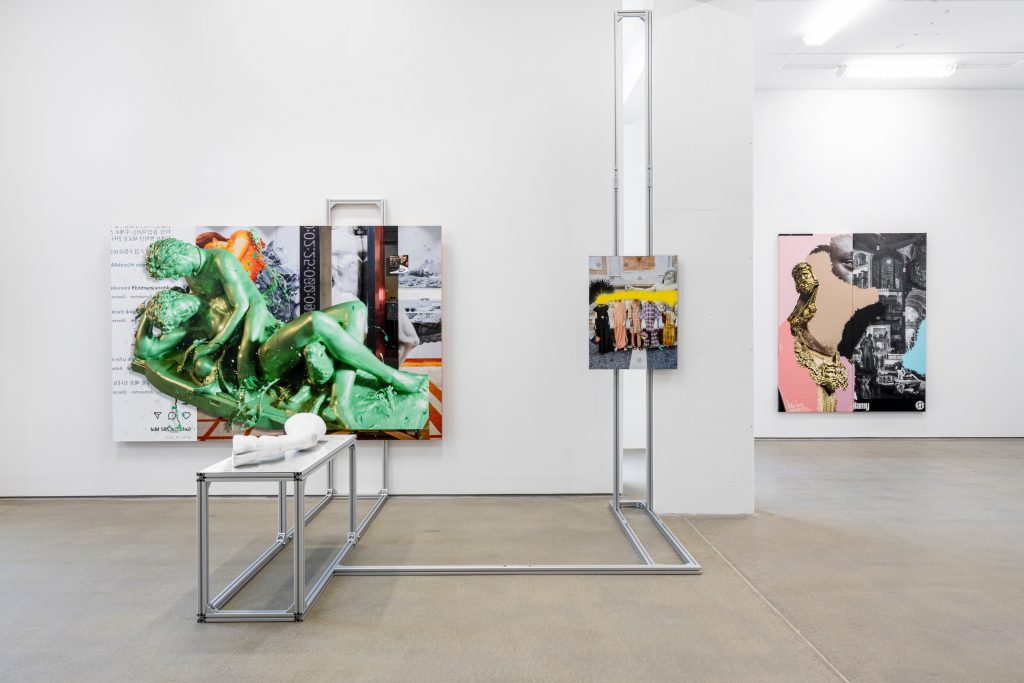
Christian Holze’s work (b. 1988, Germany) exists in a space where painting, sculpture, and digital media merge into one another. Represented by Reiter Gallery, he presents Nothing New (2024) at Art Rotterdam’s Sculpture Park, a sculptural intervention that digs into the mechanics of copying, ownership, and authenticity, questioning what it really means to “own” an image or an artwork.
Christian is interested in the spaces between things, between art and commerce, between original and copy, between the seen and the unseen.
Appropriating the Appropriators
Christian systematically collects images from luxury brand campaigns. Gucci draping models in a room full of Roman statues? Louis Vuitton staging a campaign in the Louvre? He saves them, studies them, and then feeds them back into his own work, effectively reversing the cycle. “Companies use art to ennoble their products, making them appear more valuable. I reverse this process by bringing corporate visuals back into an artistic context.”
This extends beyond imagery. His previous exhibition Souvenir from Rome borrows its title from a Gucci campaign, mirroring how brands co-opt cultural heritage. “The advertising becomes a painting again. The product becomes an artwork again. I like that shift.”
The Illusion of Ownership
Holze exposes a contradiction in visual culture: an image watermark signals restriction until you pay to remove it, while a luxury brand logo increases desirability. One marks something as incomplete, the other as exclusive. “When you have the bag, the logo makes it more valuable. But with Getty Images, you just want the watermark gone even though the artwork was never theirs to begin with.”
Christian translates this tension into his own work. His paintings feature a faint, almost imperceptible pattern, his own “watermark.” It’s a subtle but deliberate gesture: a reminder that even in art, ownership is never as simple as it seems.

Provenance as a Living Process
Christian’s fascination with how artworks move through history is embedded in his practice. He studies pieces that have been endlessly copied and reinterpreted, like the Borghese Gladiator, one of the most duplicated sculptures in art history. “I wanted to go as far back as I could while staying within the ‘cliché’ of art history. The Borghese Gladiator became my starting point, it had already been copied and reshaped for centuries.”
This recursive chain continues with Bernini’s David, which was inspired by the same Gladiator. Christian taps into this long lineage of appropriation, questioning at what point an artwork stops being a copy and becomes something new.
Merging, Morphing, Multiplying
Christian Holze’s installation at Art Rotterdam is a living archive where historical references, digital manipulation, and material transformation converge. Set within a modular aluminum structure reminiscent of museum storage racks, his works actively expose the fluid nature of art history. “Seeing the back of an artwork often tells you as much as the front. It’s about history, context, and the journey of an object.”
At the core of the installation is a 3D-fused sculpture of two versions of Dionysus, one attributed to Michelangelo, the other by an unknown artist. By merging them into a single entity, Christian forces the copy to encounter itself, dissolving the boundaries between original and reproduction. “The copy is confronted with its own copy. They blend into each other, and suddenly, authorship becomes unclear.”
Another work draws from Jens Adolf Jerichau’s 19th-century sculpture Panther Hunter, a piece that mimics the idealised forms of Greek antiquity. Holze worked with an existing 3D model of the sculpture, compressing and reshaping it into a painting, reversing the usual process of sculptural replication. Even its title shifts: “I flipped the title, it’s now Hunter Panther. A small shift, but enough to create a new context.”
The final piece stems from Holze’s series The Most Boring Artist I Know, a nod to Cy Twombly’s obsession with Raphael’s School of Athens. After years of reinterpreting the fresco, Twombly ultimately dismissed Raphael as “boring.” Holze, however, sees something else. “I liked that, the idea that boredom can only come from deep engagement. It’s not ignorance, it’s the exhaustion of fascination.”
These works do not stand in isolation. They interlock like fragments of a shifting timeline, questioning how meaning is shaped through repetition, reinterpretation, and the constant movement of images across centuries.

The Work That Reflects Its Space
Even the rooms his works are created in play a role in their final form. Christian stages his sculptures in digital 3D spaces before translating them into the physical world. The catch? The rooms themselves disappear, only their reflections remain on the sculptures.
“The surrounding space creates the image. The reflections on the surface capture the environment, but once printed, the room itself disappears, only its echoes remain.”
This is a perfect metaphor for his entire practice. His work doesn’t provide fixed answers. Instead, it holds up a mirror to the systems we take for granted and lets us reconsider what we think we know. At Art Rotterdam, that mirror is right in front of us.
Written by Emily Van Driessen
The New Art Section at Art Rotterdam 2025, curated by Övül Ö. Durmuşoğlu, brings together a selection of international galleries, each presenting a solo exhibition of an artist exploring innovative formal and material expressions. Among them, GALERIST (Istanbul) hosts a solo booth by Yeşim Akdeniz (b. 1978, Turkey) whose practice seamlessly fits within this framework.
Yeşim Akdeniz investigates how objects carry narratives and challenges the assumption that objects are neutral. By assembling industrial remnants, mass-produced items, and hand-crafted elements, she reveals the hidden social histories embedded in materials. Yeşim plays with the tension between the unique and the serial, the handmade and the mass-produced, the personal and the political.
“Materials contain information,” she explains. “I work with mass-produced goods and industrial remnants, but within those objects are hidden stories about labour, supply chains, and migration. They are silent witnesses of larger systems.”
Nothing in her work is straightforward: a carpet is not a carpet, a lamp is not just a lamp, and a self-portrait is not a self-portrait.
Self-Portrait as an Orientalist Carpet: A Tapestry of Meanings
In her ongoing series Self-Portrait as an Orientalist Carpet, Yeşim uses textiles to question the shifting power dynamics between East and West. The works resemble traditional Anatolian blankets, a craft passed down through generations but increasingly displaced by industrial production.
” The traditional blankets are handmade, labour-intensive, and expensive. With the rise of mass-produced alternatives, this has become a disappearing tradition,” Yeşim explains.
Despite their familiar appearance, her pieces are not conventional carpets: they integrate industrial details such as zips, buckles, and chains, creating an unexpected tension between couture and domesticity. “I call them carpets, but they are not carpets. They are supposed to be self-portraits, but they are not self-portraits,” she says. ” I am interested in the area between categories. What we think we recognise shifts the moment we look closer.”
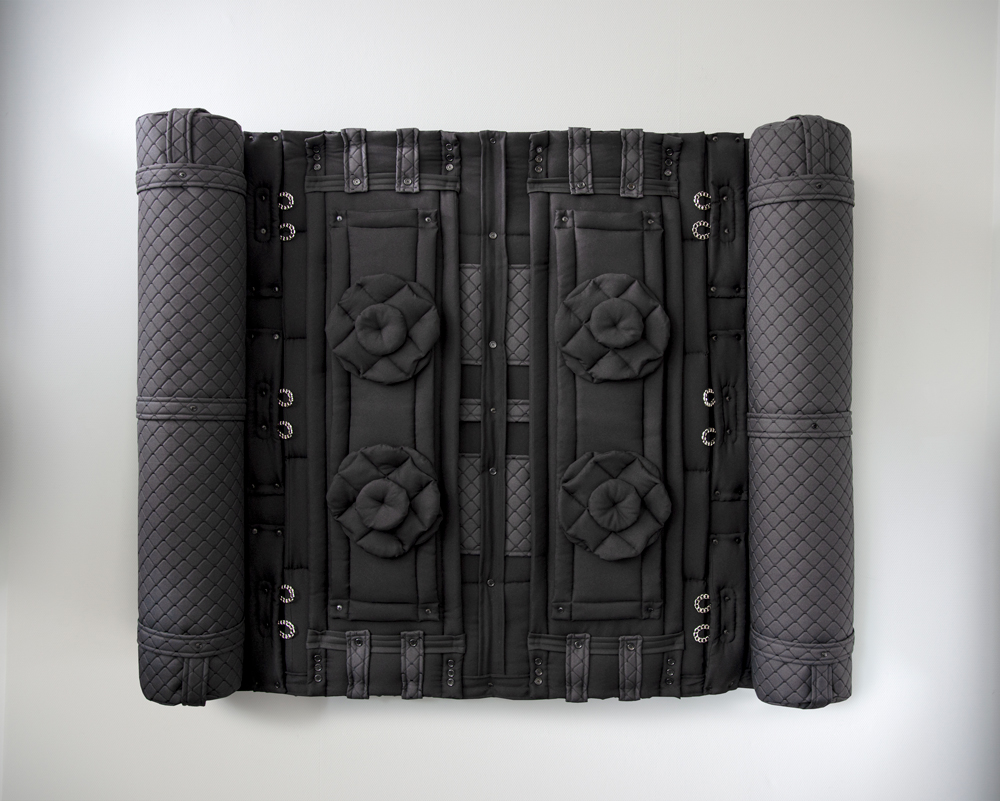
The series directly engages with Orientalism, a concept articulated by Edward Said, describing how the West has historically romanticised and oversimplified ‘Eastern’ cultures. Yeşim’s work reflects, distorts, and questions these portrayals.
“There is this idea that the East is one single entity, just ‘the Orient’. Obviously, the East is not a single entity; it consists of many different cultures, belief systems, and layers. This kind of oversimplification is what creates many stereotypes,” she notes. Her textile works embrace these contradictions, challenging fixed definitions of culture, identity, and authenticity.
New Faces in Town: Lamps as a Reflection of Migration and Mass Industry
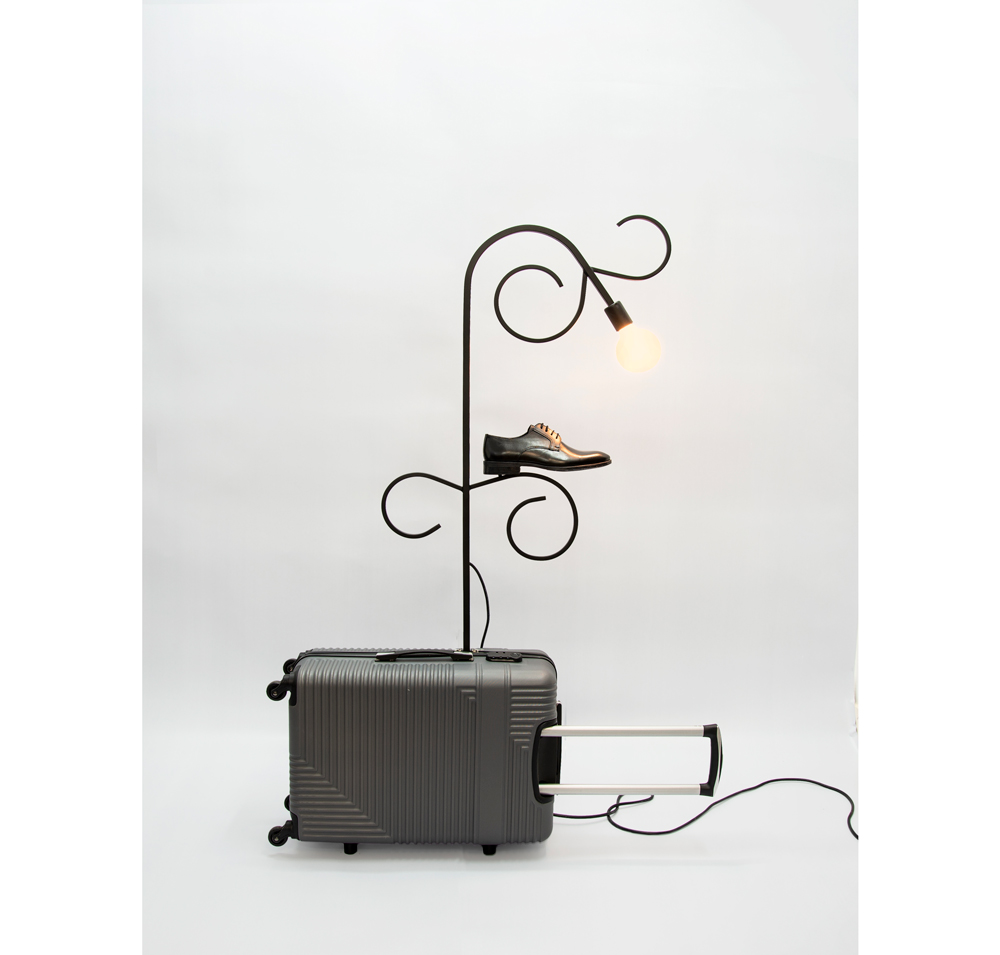
Alongside her textile works, Yeşim presents a series of lamps, where mass production and mobility converge. These sculptural objects combine factory-made shoes with an iron structure, while their base consists of a suitcase. The result is a hybrid piece: a lamp that is equally an image of migration, production, and displacement.
“I wanted to create a mix of serial production and craftsmanship,” she says. “These lamps are exactly that. They contain shoes that are mass-produced in Istanbul, but the metal parts are welded by hand. They exist at the intersection of functionality and absurdity.”
By using a suitcase as the base, Yeşim makes a direct reference to movement, both in a literal and symbolic sense. “It was important to me that these objects have an invisible presence. As if the shoes have just been left behind by someone who moved on, as if the object itself have been travelling.”
Like her textile pieces, the lamps blur the lines between the serial and the handmade, between design and sculpture. They evoke themes of labour migration, economic survival, and the silent presence of workers whose stories often remain untold.

What Does “New” Mean in a Time of Change?
The New Art Section at Art Rotterdam 2025 poses the question: What does ‘new’ mean in a time of significant social and cultural transformation? Yeşim’s work offers a powerful response:
“What I do is not necessarily new in the sense of creating something completely ‘original’,” she says. “I look at what already exists, what moves, what disappears. The new lies in how you look at it again.”
In a world where labour, production, and migration shape both people and objects, Yeşim Akdeniz’s work exposes the instability of what we call ‘new’ as she repurposes, reconfigures, and reveals.
Written by Emily Van Driessen
De New Art Section van Art Rotterdam 2025, gecureerd door Övül Ö. Durmuşoğlu, brengt een selectie van internationale galeries samen, die elk een solotentoonstelling presenteren van een kunstenaar die experimenteert met vernieuwende vormen en materialen. GALERIST (Istanbul) vertegenwoordigt Yeşim Akdeniz (1978, Turkije) met een solopresentatie die naadloos aansluit bij dit thema.
Yeşim Akdeniz onderzoekt hoe objecten verhalen dragen en daagt het idee uit dat ze neutraal zouden zijn. Door industriële restmaterialen, massaproductiegoederen en ambachtelijke elementen samen te brengen, onthult ze de verborgen sociale geschiedenissen die in materialen verscholen zitten. In haar werk speelt ze met de spanning tussen het unieke en het seriële, het handgemaakte en het industrieel vervaardigde, het persoonlijke en het politieke.
“Materialen dragen verhalen in zich,” zegt ze. In massaproductiegoederen en industriële restmaterialen zitten verborgen verhalen over arbeid, productie en migratie. Ze zijn stille getuigen van grotere systemen.”
Niets in haar werk is eenduidig: een tapijt is geen tapijt, een lamp is niet zomaar een lamp, en een zelfportret is geen zelfportret.
Self-portrait as an Orientalist Carpet: Een spel met perceptie
In haar doorlopende serie Self-Portrait as an Orientalist Carpet gebruikt Yeşim textiel om de veranderende machtsverhoudingen tussen Oost en West te bevragen. De werken doen denken aan traditionele Anatolische dekens, een ambacht dat generaties lang werd doorgegeven, maar dat steeds meer onder druk staat door industriële productie.
“Deze dekens zijn handgemaakt, arbeidsintensief en kostbaar. Met de opkomst van massaproductie is dit een traditie die langzaam verdwijnt,” zegt Yeşim.
Hoewel haar werken visueel aansluiten bij klassieke tapijten, zijn het geen traditionele kleden. Yeşim verwerkt industriële elementen zoals ritsen, gespen en kettingen, wat een onverwachte spanning creëert tussen couture en huiselijkheid.
“Ik noem ze tapijten, maar het zijn geen tapijten. Ze zouden zelfportretten moeten zijn, maar dat zijn ze niet,” zegt ze. “Ik ben geïnteresseerd in het grensgebied tussen categorieën. Wat we denken te herkennen, verandert zodra we beter kijken.”
Met deze serie verwijst Yeşim direct naar het concept Oriëntalisme, zoals gedefinieerd door Edward Said. Hij beschreef hoe het Westen ‘Oosterse’ culturen heeft geromantiseerd en tot een cliché heeft gereduceerd. Yeşim reflecteert op deze constructies, speelt ermee en stelt ze ter discussie.
“Er bestaat een idee dat het Oosten één enkele, homogene wereld is—gewoon ‘de Oriënt’. Maar natuurlijk is het Oosten geen vastomlijnd geheel; het omvat talloze culturen, geloofssystemen en lagen. Dit soort simplificatie ligt aan de basis van veel stereotypen,” merkt ze op.
Haar textielwerken omarmen deze tegenstellingen en dagen de traditionele definities van cultuur, identiteit en authenticiteit uit.
New Faces in Town: Licht op migratie en massaproductie
Naast haar textielwerken presenteert Yeşim een serie lampen, waarin massaproductie en mobiliteit samenkomen. Deze sculpturale objecten combineren fabrieksmatig geproduceerde schoenen met een ijzeren structuur, terwijl een koffer als basis dient. Het resultaat is een hybride object: een lamp die net zo goed symbool staat voor migratie, productie en verplaatsing.
“Ik wilde een balans vinden tussen seriële productie en ambacht,” zegt ze. “Deze lampen belichamen precies die spanning. De schoenen zijn in Istanbul op grote schaal geproduceerd, maar de metalen onderdelen zijn met de hand gelast. Ze bevinden zich op het snijvlak van functionaliteit en absurditeit.”
Door een koffer als fundament te gebruiken, verwijst Yeşim direct naar het thema verplaatsing, zowel in letterlijke als symbolische zin. “Het was voor mij belangrijk dat deze objecten een onzichtbare aanwezigheid hebben. Alsof de schoenen net zijn achtergelaten door iemand die verder is gereisd, alsof het object zelf onderweg is geweest.”
Net als haar textielwerken vervagen de lampen de grenzen tussen massaproductie en handwerk, tussen design en sculptuur. Ze werpen een licht op arbeidsmigratie, economisch overleven en de arbeiders van wie de verhalen vaak onopgemerkt blijven.
Wat betekent ‘nieuw’ in een tijd van verandering?
De New Art Section van Art Rotterdam 2025 stelt de vraag: Wat betekent ‘nieuw’ in een tijd van ingrijpende sociale en culturele transformatie? Het werk van Yeşim biedt een krachtig antwoord: “Wat ik doe is niet per se nieuw in de zin van iets compleet ‘origineels’ creëren,” zegt ze. “Ik kijk naar wat al bestaat, wat beweegt, wat verdwijnt. Het nieuwe ligt in hoe je er opnieuw naar kijkt.”
In een wereld waar arbeid, productie en migratie zowel mensen als objecten vormgeven, laat Yeşim Akdeniz zien hoe instabiel ons begrip van ‘nieuw’ eigenlijk is, terwijl ze elementen hergebruikt, herconfigureert, en herdefinieert.
Geschreven door Emily Van Driessen
Het werk van Christian Holze (1988, Duitsland) beweegt zich op het snijvlak van schilderkunst, sculptuur en digitale media. Vertegenwoordigd door Reiter Gallery, presenteert hij op Art Rotterdam’s Sculpture Park Nothing New (2024), een sculpturale ingreep die de mechanismen van kopiëren, eigenaarschap en authenticiteit bevraagt. Wat betekent het eigenlijk om een beeld of kunstwerk écht te bezitten?
Christian zoekt naar wat zich tussen werelden bevindt: tussen kunst en commercie, tussen origineel en kopie, tussen het zichtbare en het onzichtbare.
Wie neemt van wie?
Beelden reizen. Christian verzamelt ze, analyseert ze en voert ze terug in zijn werk. Luxemerken gebruiken kunst om hun producten te veredelen; Gucci dat modellen tussen Romeinse sculpturen zet, Louis Vuitton dat het Louvre als decor claimt. Wat als de kunstenaar dit proces omdraait? “Bedrijven gebruiken kunst om hun producten exclusiever te laten lijken. Ik doe het omgekeerde: ik breng commerciële beelden terug in een artistieke context.”
Die toe-eigening beperkt zich niet tot visuele elementen. Zijn tentoonstelling Souvenir from Rome leende haar titel van een Gucci-campagne, een subtiele spiegeling van hoe merken cultureel erfgoed inzetten als branding. “Reclame wordt opnieuw een schilderij. Het product wordt opnieuw een kunstwerk. Die verschuiving fascineert me.”
De illusie van eigenaarschap
Wat betekent eigendom als een beeld vrij beschikbaar is, maar pas echt van jou wordt zodra je ervoor betaalt? Christian wijst op een paradox: een watermerk op een afbeelding beperkt het gebruik, tot je betaalt om het te laten verwijderen. Een luxelogo doet net het omgekeerde, het verhoogt de status en maakt het object begeerlijk. “Als je een tas koopt, verhoogt het logo de waarde. Maar bij Getty Images wil je net dat het watermerk verdwijnt, ook al was het kunstwerk nooit van hen om mee te beginnen.”
Christian vertaalt deze spanning in zijn werk. Zijn schilderijen bevatten een subtiele, haast onzichtbare patroonlaag, zijn eigen ‘watermerk’. Geen restrictie, geen branding, maar een knipoog naar hoe eigenaarschap en waarde in kunst worden geconstrueerd.
De geschiedenis van de kopie
Christian verdiept zich in de manier waarop kunstwerken door de tijd heen circuleren, worden gekopieerd en opnieuw geïnterpreteerd. Hij onderzoekt sculpturen die talloze herwerkingen hebben ondergaan, zoals de Borghese Gladiator, een van de meest gereproduceerde beelden uit de kunstgeschiedenis. “Ik wilde zo ver mogelijk teruggaan binnen het ‘cliché’ van de kunstgeschiedenis. De Borghese Gladiator was perfect. Het beeld wordt al eeuwenlang gekopieerd.”
Zijn interesse in deze eindeloze keten van kopieën brengt hem ook bij werken zoals Bernini’s David, dat zelf gebaseerd is op dezelfde Gladiator. In plaats van een strikte grens te trekken tussen origineel en reproductie, bestudeert Christian hoe kunst zich voortdurend herschrijft en evolueert door herhaling.
De constructie van het archief
Christians installatie op Art Rotterdam functioneert als een levend archief. Zijn werken worden gepresenteerd binnen een modulaire aluminium structuur, die doet denken aan de rekken in museumdepots. Hier wordt kunst niet geïsoleerd getoond, maar in verband gebracht met haar oorsprong en reproductiegeschiedenis. “De achterkant van een kunstwerk vertelt vaak evenveel als de voorkant. Het gaat over geschiedenis, context en de reis van een object.”
Centraal in de installatie staat een 3D-gecombineerde sculptuur van twee versies van Dionysus, één toegeschreven aan Michelangelo, de andere aan een onbekende kunstenaar. Door ze te versmelten tot één figuur, dwingt Christian de kopie om zichzelf onder ogen te komen. “De kopie wordt geconfronteerd met zijn eigen kopie. Ze vloeien in elkaar over en plots wordt auteurschap vaag.”
Een ander werk baseert zich op Jens Adolf Jerichau’s 19e-eeuwse sculptuur Panther Hunter, een neoklassiek beeld dat teruggrijpt naar de idealen van de oudheid. Christian gebruikte een bestaande 3D-scan van de sculptuur en transformeerde het in een schilderij, waardoor hij het klassieke proces van sculpturale replicatie omkeert. Zelfs de titel verschuift: “Ik draaide de titel om, het is nu Hunter Panther. Een kleine ingreep, maar genoeg om een nieuwe context te scheppen.”
Het laatste werk in de installatie komt uit Christians serie The Most Boring Artist I Know, een knipoog naar Cy Twombly’s obsessie met Rafaëls School van Athene. Twombly schilderde jarenlang variaties op Rafaëls fresco, om uiteindelijk te besluiten dat hij het “saai” vond. “Ik hou van het idee dat verveling enkel kan ontstaan door diepe betrokkenheid. Het is geen onverschilligheid, maar de uitputting van fascinatie.”
Deze werken staan niet los van elkaar. Ze vormen een constellatie waarin geschiedenis en reproductie, origineel en kopie met elkaar versmelten.
Een werk dat zijn ruimte reflecteert
Zelfs de ruimte waarin Christian zijn werken creëert, laat sporen na. Zijn sculpturen ontstaan eerst in digitale 3D-omgevingen en worden pas daarna vertaald naar de fysieke wereld. Maar de ruimtes waarin ze worden gecreëerd? Die verdwijnen. “De reflecties op het oppervlak van het werk tonen de ruimte waarin het is gecreëerd. Maar eens het werk wordt geprint, verdwijnt die context. Alleen de sporen blijven zichtbaar.”
Het is een perfecte metafoor voor zijn hele praktijk. Christian stelt geen rechtlijnige vragen over kopie en origineel, maar toont hoe fluïde die begrippen zijn. Op Art Rotterdam laat hij ons een spiegel zien, de vraag is wat we erin herkennen.
Geschreven door Emily Van Driessen


