Coming soon
Coming soon
Selecteer type
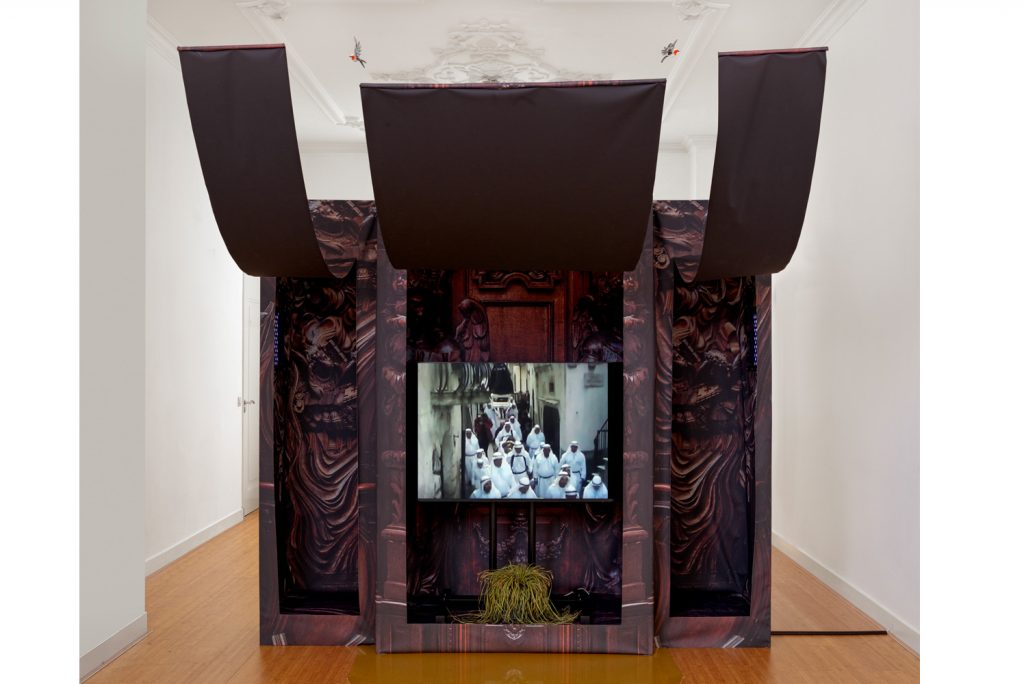
At Intersections during Art Rotterdam, Ellen de Bruijne PROJECTS presents Le Lente Passioni (2023) by Pauline Curnier Jardin (b. 1980, France). It’s a theatrical and immersive installation that dissects the spectacle of belief. Part confessional, part campsite, part domestic space, the work explores how Catholic rituals persist, evolve, and adapt – particularly when displaced into digital space.
For over 15 years, Pauline Curnier Jardin has built a practice shaped by theatricality, excess, and transformation, moving fluidly between film, performance, and installation. “It’s always been about what is staged and who is the spectator of that spectacle,” notes Sergi Rusca, gallery curator at Ellen de Bruijne PROJECTS. Born in Southern France and having lived in Italy for many years, her work is infused with the ritualistic intensity of Catholicism, the theatricality of devotion, and the ways in which faith is both deeply personal and inherently performative.
For Le Lente Passioni, Pauline assembled video footage from ethnomusicologists’ archives, capturing Easter processions across Catholic Europe. These rituals were forced onto screens during the first Italian lockdown. Worshippers, unable to gather, adapted: kneeling before televisions, singing alone in their homes, sharing recordings online. These images of faith, fragmented yet enduring, show how devotion is mediated through technology, while still demanding bodily endurance and presence.
Women in Rituals
Curnier Jardin has long been drawn to female archetypes, particularly those at the intersection of power, devotion, and marginalisation: the nun, the virgin, the witch. These figures, deeply embedded in pagan mythology and Christian iconography, have been both revered and feared, often as a means of controlling the female body.
“You see this synchronism of references in her work,” says Rusca. “Pagan elements merge with Christian icons, creating these out-of-this-world characters that sit between the divine and the profane.” Her work revisits these figures, the saint, the martyr, the accused witch, to see how their narratives can be retold, and how they can break out of the roles assigned to them.
This interest in the female body’s suffering and devotion is particularly visible in Fat to Ashes (2019), an earlier work in which Pauline intertwined three ritualistic events: a Catholic festival honouring Saint Agatha, the slaughter of a pig, and Cologne’s Carnival. “Saints are venerated through their pain, Saint Lucia, whose eyes were removed; Saint Agatha, whose breasts were cut off.” In Sicily, Agatha is still remembered through the ritual consumption of breast-shaped pastries.
These acts – sacrifice, transformation, and excess – connect bodily endurance, ritualistic repetition, and the boundaries between the sacred and the grotesque. Le Lente Passioni continues this inquiry, shifting the focus from physical rites to their fragmented digital afterlives, where devotion persists even when bodies are absent.
Flesh and Faith
“Christian imagery constantly returns to the aching body, the wounded flesh,” Rusca explains. Catholicism is a faith of the body, where martyrdom and devotion trough pain are integral to its rituals. This is not just theological but theatrical; the blood, the wounds, the endurance of the flesh are spectacles in themselves.
In Le Lente Passioni, these elements manifest in bodies crawling on their knees, rhythmic chanting, and the visceral presence of suffering. “Even in digital form, these rituals still involve endurance, still demand something of the body,” notes Rusca.
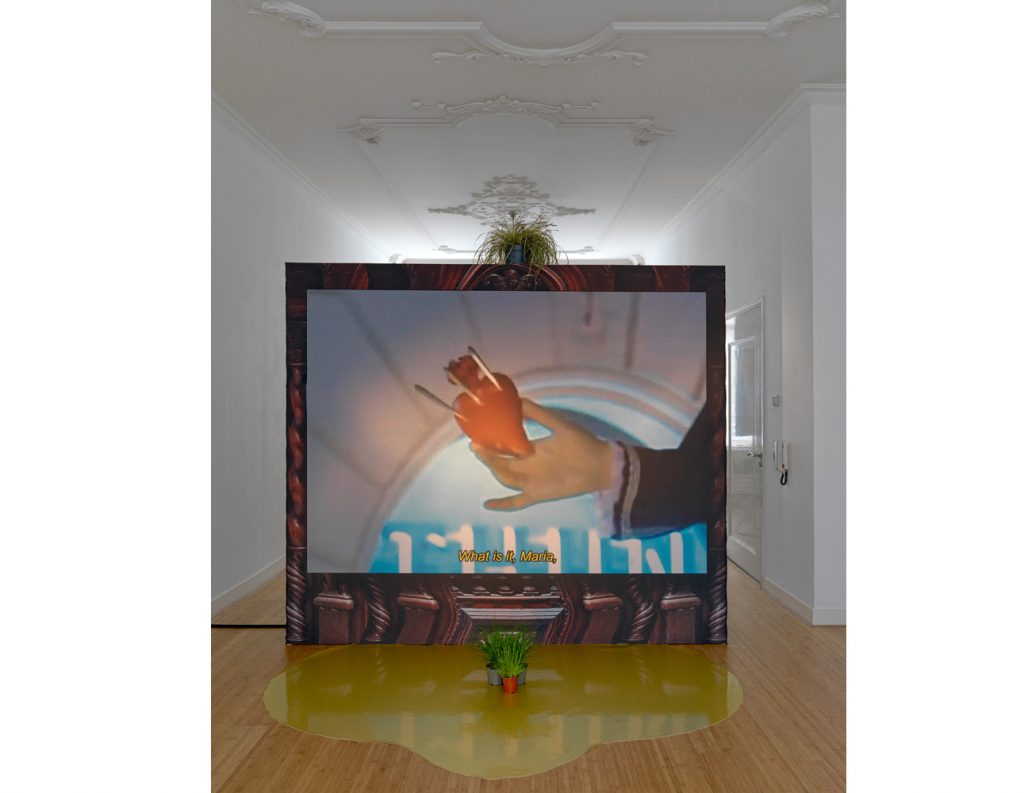
The installation itself echoes this tension between intimacy and spectacle. The pierced heart-shaped confessional window disrupts the traditional division between priest and believer, observer and participant. The heart at the centre of the installation reinforces the tripartite and is a direct reference to Christ’s crucifixion.
Triptych Structure: Confessional, Campsite, Domestic Space
Le Lente Passioni’s tripartite structure reflects Christian numerology. “The number three is crucial in Christianity,” says Rusca. “The Holy Trinity, the three days between death and resurrection, even the medieval belief in three nails used to crucify Christ.”
In Le Lente Passioni, this sacred structure is reinterpreted. At the front, the installation resembles a campsite, a space where absurdity collides with the weight of the religious imagery inside. Moving inward, a confessional window with a baroque altar print opens onto a television screen, where devotion plays out on-screen. At its core, a glowing TV replaces the altar, reflecting the replacement of physical rituals with digital participation.
Within the film itself, this layering continues. “Inside the video, it’s a TV within a TV,” Rusca notes, referring to believers watching mass online, their faith refracted through screens. The installation asks: what happens when faith is displaced? How does it endure when stripped of its collective, embodied experience?
The wounded heart, a site of devotion and suffering, endures, even as the rituals around it shift.
Written by Emily Van Driessen
Voor het negende jaar op rij wordt de NN Art Award in 2025 uitgereikt aan een veelbelovende kunstenaar die werk toont tijdens Art Rotterdam. De genomineerde kunstenaars zijn Diana Scherer (andriesse eyck galerie), Marcos Kueh (Prospects sectie van het Mondriaan Fonds, courtesy Galerie Ron Mandos), Pris Roos (Mini Galerie) en Bodil Ouédraogo (Prospects sectie van het Mondriaan Fonds). Het werk van de vier genomineerden wordt van 15 maart tot en met 11 mei gepresenteerd in Kunsthal Rotterdam.
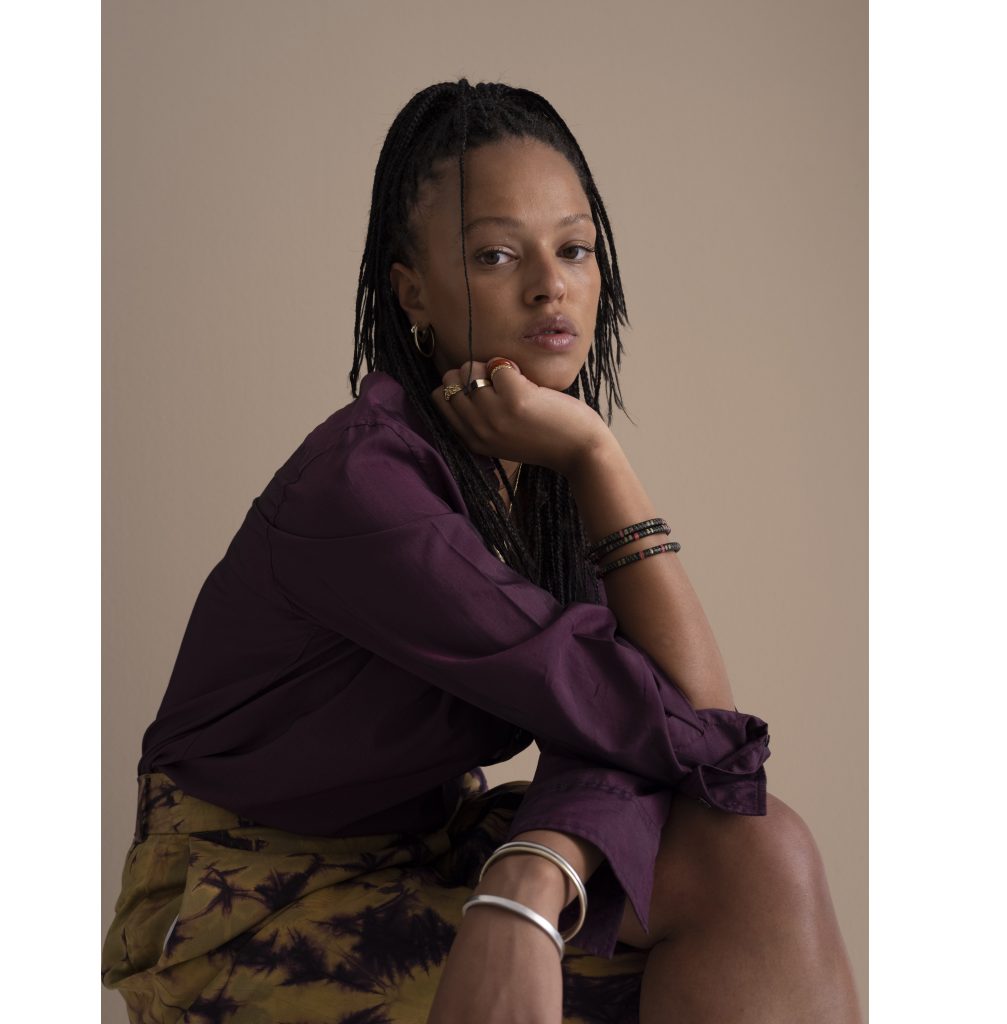
Bodil Ouédraogo (1995) is een interdisciplinaire beeldend kunstenaar met een focus op the art of dressing up. In haar gelaagde werk onderzoekt ze hoe we waarde en status toekennen aan objecten en mensen. Ze bestudeert verschillende ‘culturele instrumenten’ die die waarde of legitimiteit bepalen, zoals framing, conservering en afstand nemen. Door deze mechanismen te ontleden en opnieuw in te zetten, creëert ze beweging in onze beleving van vastgeroeste ideeën over mensen en objecten. Voor Ouédraogo is the art of dressing up veel meer dan alleen kleding – het is een culturele context, een taal waarin historische en sociale betekenissen samenkomen. Vanuit haar biculturele achtergrond, met wortels in Nederland en Burkina Faso, verweeft ze materialen, technieken en culturele referenties uit West-Afrika en Europa tot sculpturale objecten en installaties die niet alleen bedoeld zijn om te worden bekeken, maar ook om te worden ervaren. Ze verdiept zich daarbij telkens in andere aspecten, uitgewerkt in aparte artistieke hoofdstukken, en combineert culturele elementen die op het eerste gezicht soms ver uit elkaar lijken te liggen.
Een rode draad in haar werk is de manier waarop we onszelf presenteren in verschillende ruimtes, waarbij kleding fungeert als een archief van erfgoed en identiteit. Ouédraogo zoekt naar manieren om alle facetten van het zelf te eren, met een bijzondere belangstelling voor degenen die ons zijn voorgegaan. Haar installaties en performances, waarin textiel, dans, video, fotografie, geluid en sculptuur samenkomen, resulteren in nieuwe narratieven. Ze ontwikkelen zich tot innovatieve, hybride vormen waarin mode verwordt tot een conceptueel en kritisch medium.
Ouédraogo ziet identiteit niet als een verzameling van losse elementen, maar als een netwerk van verbonden verhalen die samen een geheel vormen en actief naar verbinding zoeken. In haar werk maakt ze deze gelaagdheid zichtbaar, terwijl ze vergeten of over het hoofd geziene aspecten van identiteit herontdekt. Daarbij onderzoekt ze de wisselwerking tussen verschillende aspecten binnen de Zwarte cultuur en de Europese Afro-diaspora. Haar multidisciplinaire praktijk leidt tot een rijke, gelaagde materialiteit waarin the art of dressing up tot leven komt. Wanneer het werk onderdeel wordt van een gedeelde realiteit dan ontstaat er bovendien een collectieve ervaring.
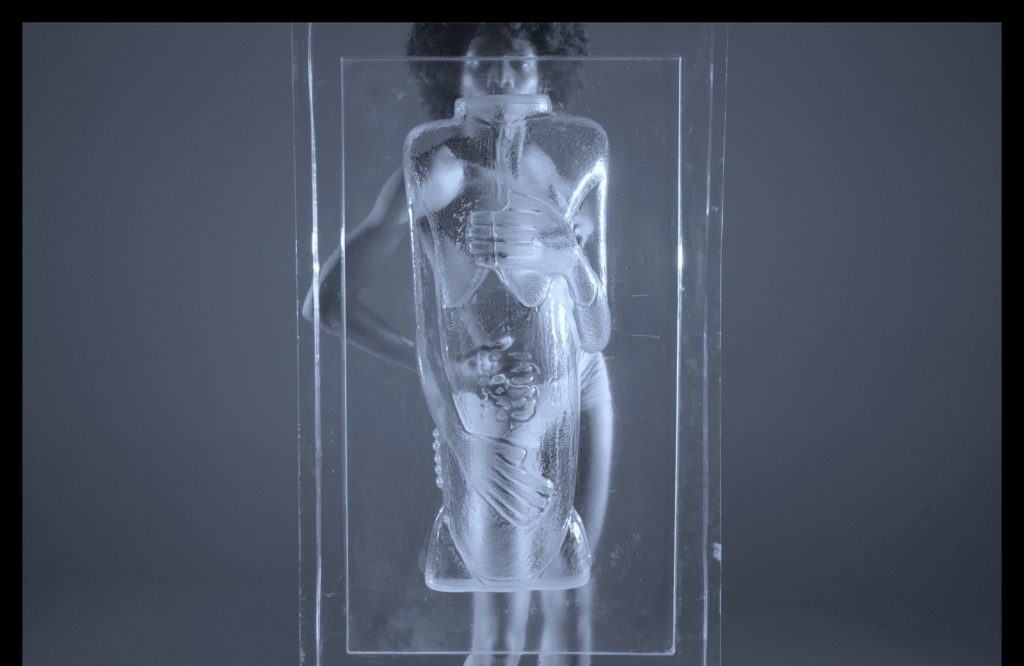
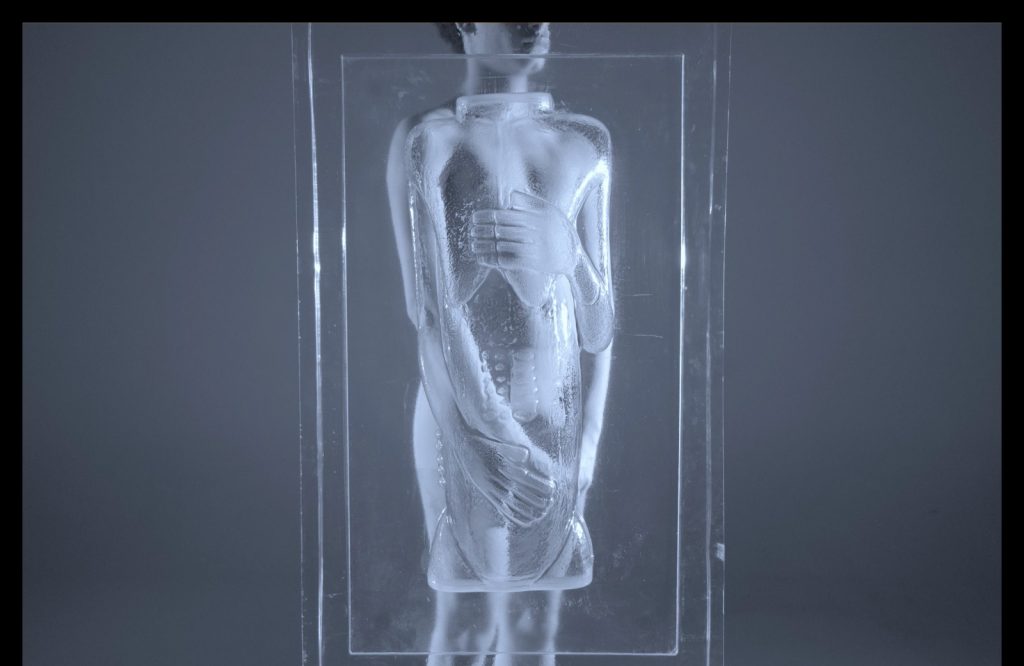
Tijdens haar recente onderzoek raakte Ouédraogo gefascineerd door traditionele West-Afrikaanse sculpturen en de houdingen, dragers en posities van het lichaam die daarin tot uiting komen. Veel van deze kunstwerken werden als roofkunst naar Europa gebracht en bevatten details die haar inspireren. Op Art Rotterdam presenteert Ouédraogo 3D-geprinte sculpturen in PLA (een biologisch afbreekbare kunststof), gegoten aluminium en gekleurd glas, in samenwerking met professionele ateliers als Audrey Large, Studio Lemarez en Van Tetterode Glas Studio. Deze objecten verkennen hoe lichamen zich tot elkaar verhouden en hoe materialiteit kan bijdragen aan een diepere verbinding met degenen die ons zijn voorgegaan. Voor deze serie vertaalt Ouédraogo traditionele West-Afrikaanse houten sculpturen uit de privécollectie van haar vader, Mamadou Ouédraogo, naar een hedendaagse context, waarbij ze de grens tussen mens en sculptuur verder verkent.
In haar installaties speelt beweging ook een cruciale rol. Tijdens Amsterdam Fashion Week en in het Stedelijk Museum presenteerde Ouédraogo performances waarin dansers oversized, halftransparante grand-boubous en driedelige pakken droegen, waarop projecties werden geënsceneerd. Het lichaam vormt hier een levend archief, waarin stof, lichaam en beweging een dialoog aangaan. Mode wordt zo een dynamisch medium dat steeds opnieuw betekenissen krijgt.
Ouédraogo’s praktijk wordt gevoed door intensief onderzoek naar de geschiedenis van het zelf en de manieren waarop we ons presenteren. Ze laat zich inspireren door onderzoek naar the art of dressing up binnen de Afro-diaspora en in West-Afrika, waar ze familiebezoeken combineert met onderzoek in Burkina Faso, maar ook in Mali, Ghana en Nigeria. Deze kennis vertaalt ze naar een visuele taal die zowel persoonlijk als universeel is.
Tijdens Art Rotterdam is haar werk te zien in de 13e editie van Prospects, een initiatief van het Mondriaan Fonds. In deze tentoonstelling wordt het werk gepresenteerd van 116 kunstenaars die in 2023 een financiële bijdrage ontvingen om een start te maken met hun carrière. De sectie wordt samengesteld door Johan Gustavsson en Louise Bjeldbak Henriksen. Bekijk hier alle Prospects kunstenaars.
Kun je ons wat meer vertellen over het werk dat je presenteert op Art Rotterdam en in de Kunsthal?
In mijn werk zoek ik naar verbindingen tussen verschillende culturele manieren van ‘zelfpresentatie’. Ik onderzoek de ‘culturele instrumenten’ die waarde of legitimiteit toekennen aan objecten of mensen. Door deze instrumenten te ontleden en opnieuw toe te passen, probeer ik beweging te brengen in de manier waarop we vaste ideeën over mensen of objecten ervaren. Ik herschik de omgeving door een alternatief te presenteren dat een nieuw perspectief mogelijk maakt. Daarmee toon ik een andere hiërarchie dan de gebruikelijke, door stijlen te combineren die elkaar zowel versterken als bevragen. Samen geven ze me een bredere en meer verankerde visie op hoe ik me kan wortelen.
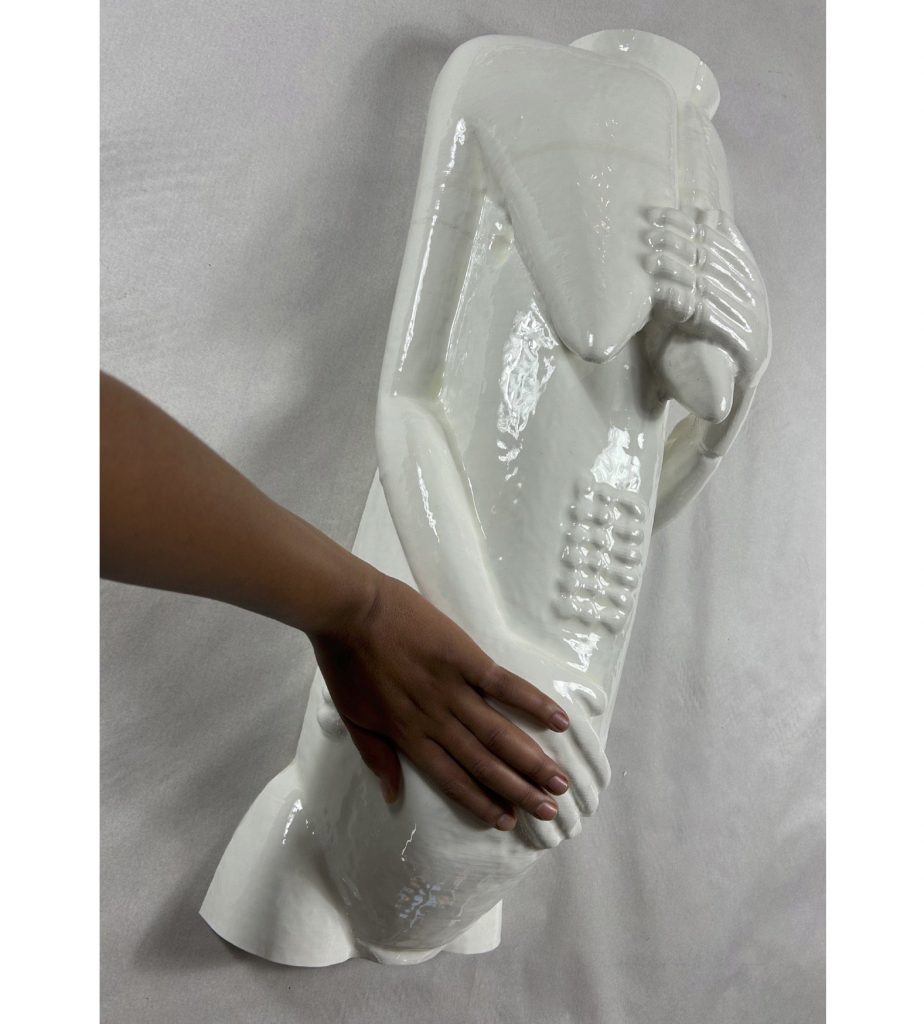
Voor de werken die ik presenteer in de Kunsthal en op Art Rotterdam geef ik vorm aan Afrikaanse houten sculpturen uit de persoonlijke collectie van mijn vader, Mamadou Ouédraogo. In deze erfstukken weerspiegelt zich hoe de generaties voor ons lichamen tot uitdrukking brachten in sculpturen. Wat kan ik leren van de manier waarop deze lichamen poseren? Hoe kunnen we ons verhouden tot degenen die ons voorgingen? En hoe geven we vorm aan een verbeelding waarin al deze lagen transparant en met elkaar verweven zijn? Ik geloof dat het tonen van al deze facetten van het zelf, en het belichten van vergeten of verwaarloosde delen, vraagt om radicale verbeeldingskracht. Het innemen van ruimte door een alternatief te presenteren waarin verbondenheid centraal staat.
Mijn werk onderzoekt hoe we poseren, hoe we onszelf dragen en positioneren. Een verlangen naar degenen die ons voorgingen, naar het uitdrukken van saamhorigheid via materiële erfstukken. Ik probeer daarbij de menselijke intimiteit van de West-Afrikaanse houten sculptuurtraditie vast te leggen. Door verschillende intieme poses op menselijke schaal te vergroten geef ik uitdrukking aan de verbinding tussen generaties — en ik stel voor om hen ruimte te geven in het heden.
Wat zijn je plannen voor 2025?
Ik wil dieper ingaan op de grens tussen mens en sculptuur – hoe kan ik deze sculpturen eenzelfde gevoel van waardigheid geven? Ik kijk ernaar uit om nieuwe technieken te ontwikkelen en mezelf uit te dagen in de werkplaats. Mijn doel is een visuele ervaring te creëren waarin ik een alternatieve realiteit verbeeld, iets wat zich niet in een bestaande categorie laat plaatsen. Een vervreemdende, bijna sciencefictionachtige wereld. In oktober is mijn werk te zien in een solotentoonstelling bij Melkweg Expo in Amsterdam.
Kun je beschrijven hoe je je voelde toen je hoorde dat je was genomineerd voor de NN Art Award?
Het is bijzonder om te ervaren dat mensen zien wat je doet en erin geloven. Ik voel me bevoorrecht om dit vertrouwen te mogen ontvangen. Mijn dank gaat uit naar NN en Art Rotterdam voor deze waardevolle kans. Dat we ons werk ook in Kunsthal Rotterdam mogen tonen maakt het extra bijzonder.
Welk project zou je onmiddellijk oppakken als je de award zou winnen?
Ik zou graag de mogelijkheden van glas- en aluminiumgieten onderzoeken en verder ontwikkelen, aangezien dit kostbare materialen zijn. Het winnen van de prijs zou me de vrijheid geven om mijn ideeën volledig uit te werken.
Bodil Ouédraogo studeerde Mode aan ArtEZ en aan de Gerrit Rietveld Academie in Amsterdam, waar ze woont en werkt. In 2019 won ze de Dutch Design Award in de categorie Young Designer en in 2022 ontving ze de Amsterdamprijs voor de Kunst. Haar werk ‘My Hair, a Border’ maakt deel uit van de collectie van het Stedelijk Museum, waar het op dit moment te zien is in de vaste collectieopstelling ‘NOW – 1980’. Haar werk werd bovendien gepresenteerd op de Gwangju Biënnale 2024 en Dutch Design Week, in het Textielmuseum, het Nieuwe Instituut en Framer Framed. Daarnaast ontwierp Ouédraogo een collectie voor modehuis Patta. In 2023 werd ze door Het Financieele Dagblad uitgeroepen tot een van de vijftig FD Talents van het jaar.
De winnaar van de NN Art Award 2025 wordt bekendgemaakt op vrijdag 28 maart om 20.00 uur in Kunsthal Rotterdam. Tijdens deze feestelijke avond zijn alle tentoonstellingen, inclusief de NN Art Award tentoonstelling, vrij toegankelijk te bezichtigen voor de aanwezige gasten.
Geschreven door Flor Linckens
For the ninth consecutive year, the NN Art Award will be presented in 2025 to a promising artist showcasing their work at Art Rotterdam. This year’s nominees are Diana Scherer (andriesse eyck galerie), Marcos Kueh (Prospects section of the Mondriaan Fund, courtesy of Galerie Ron Mandos), Pris Roos (Mini Galerie) and Bodil Ouédraogo (Prospects section of the Mondriaan Fund). The work of the four nominees will be on view at Kunsthal Rotterdam from 15 March until 11 May 2025.
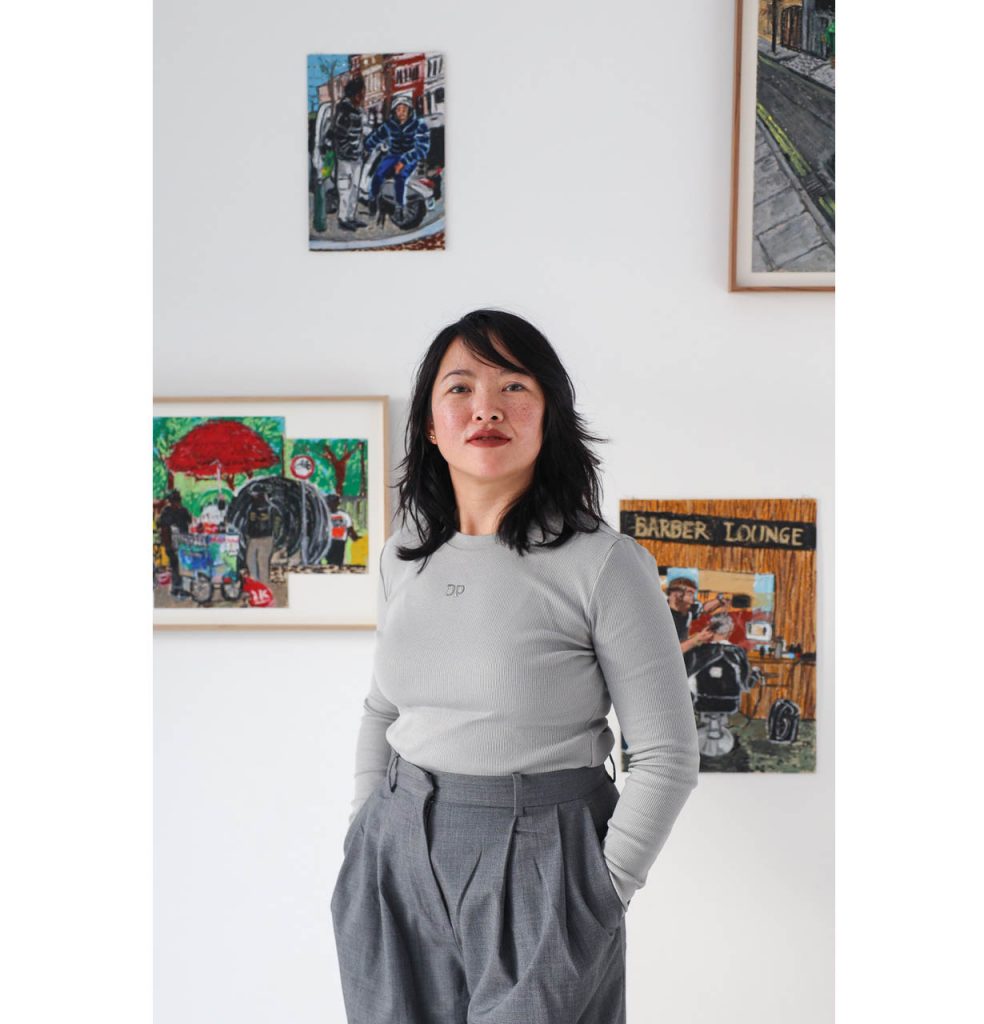
Pris Roos (1984) is a multidisciplinary artist, researcher and storyteller. Her practice moves between painting, spoken word, video, performance and installation. She explores themes like identity — including her own lived experience as a queer woman with a bicultural background — migration, (chosen) family and memory. Weaving together personal narratives with those of others, she amplifies voices of people who, like herself, navigate multiple cultures and identities. In doing so, her work forms a bridge between individual histories and a shared collective memory.
A key source of inspiration is her childhood spent in her family’s toko, a small Indonesian grocery store run by her relatives who emigrated from Indonesia to the Netherlands. For Roos, the toko is more than just a store; it is a piece of Indonesian heritage, a meeting place where different cultures converge, and where scents and colours blend. To this day, she regularly helps out in the store, both to support her parents and to remain connected to these communities. This notion of shared stories and social networks is a recurring theme in her work, where close observation and deep listening skills become essential tools. Roos works with remarkable intimacy, which is particularly striking given that she finds it more difficult to have these kinds of conversations with her own parents, who rarely speak about their family history.
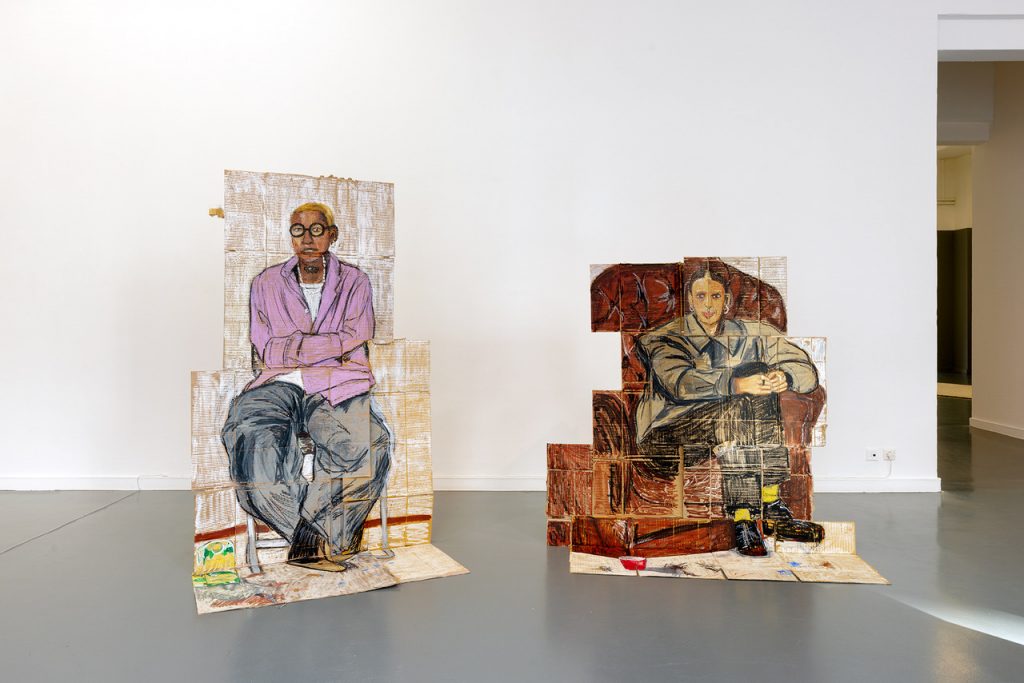
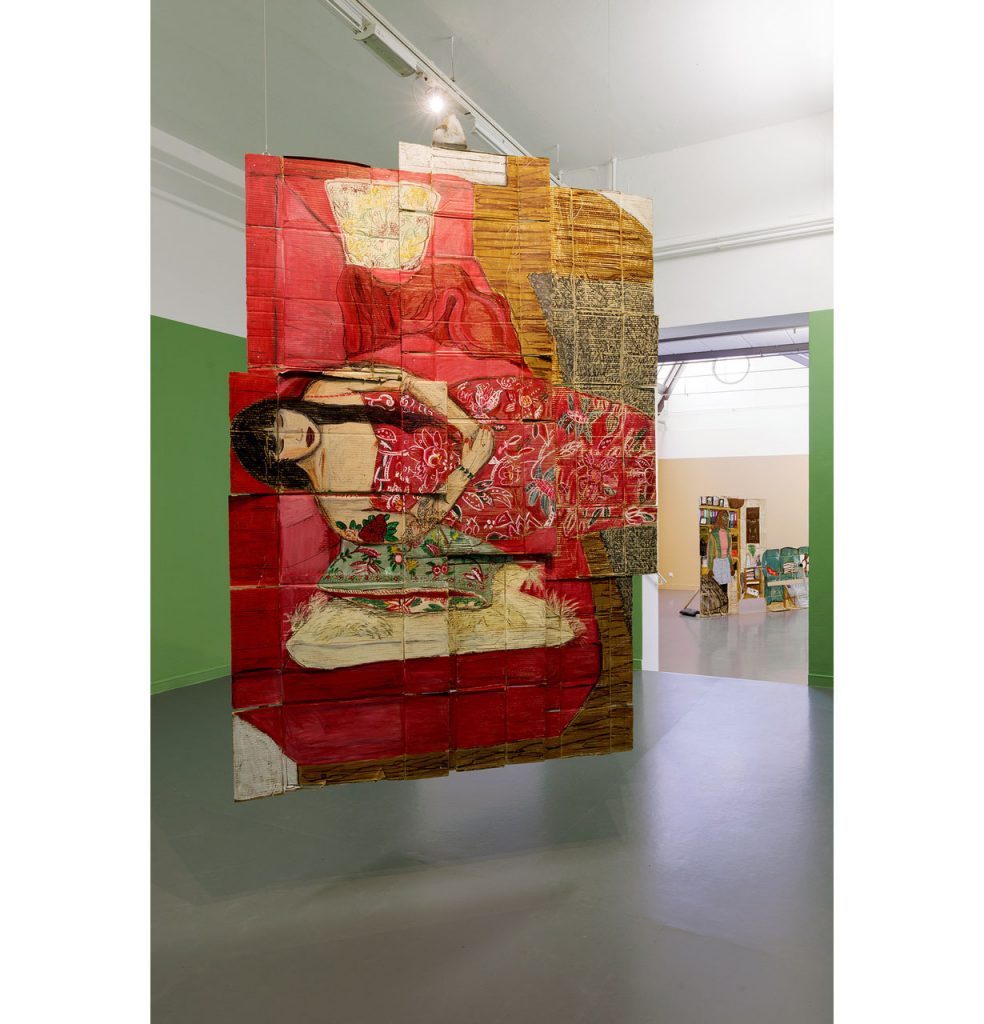
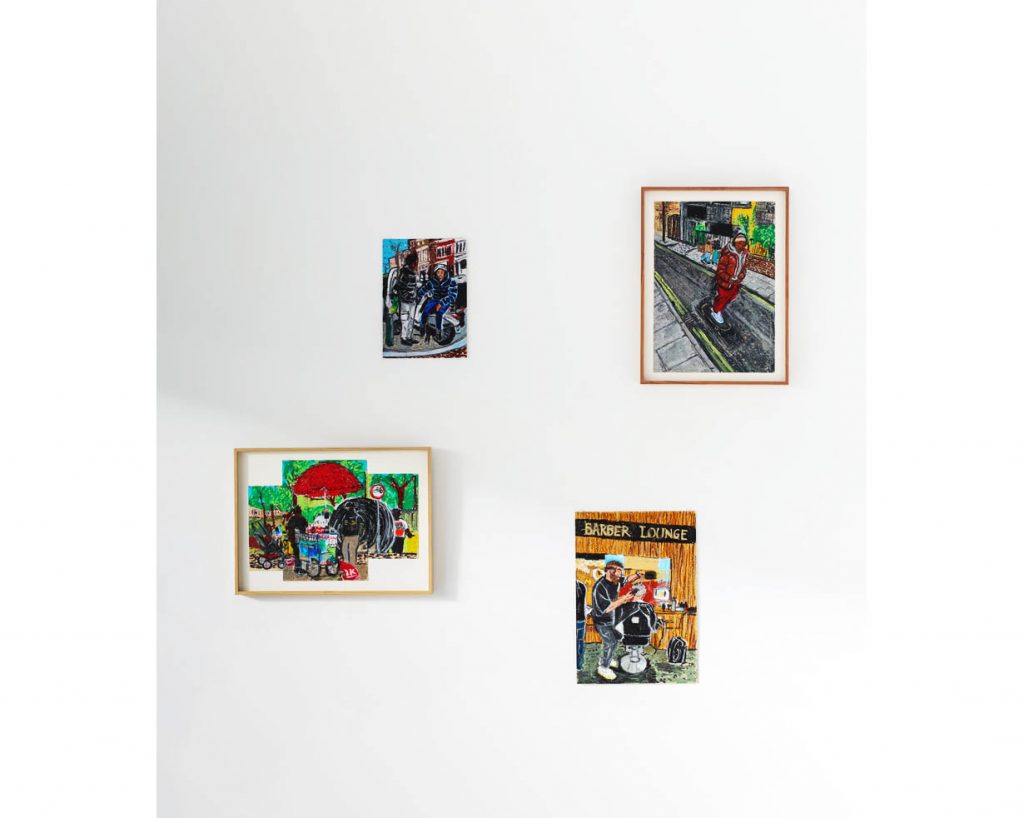
Roos’ work is deeply social and narrative-driven. Her portraits and installations are not distant or detached; they are intimate reflections of the people she encounters. She frequently works with everyday materials such as cardboard, brown canvas and kraft paper, layering them in ways that lend her work a raw, textured quality, echoing the dynamic nature of the stories she tells. She combines traditional techniques with elements of street culture, pop culture and activism. Spoken word and sound also play a role in her installations, which brings them alive in a vivid way.
Can you tell us more about the work you are presenting at Art Rotterdam and Kunsthal?
The works I am presenting at Art Rotterdam and Kunsthal explore representation, gathering and everyday life. At Kunsthal, I will showcase large-scale cardboard installations depicting people in their own living spaces — individuals the audience may not know but whom I have come to know intimately through conversations and regular meetings. Together, we spoke about family, identity and key moments in their lives. To me, they are role models, the unsung heroes of the world. At Art Rotterdam, in Mini Galerie’s booth, I will present smaller works featuring various street scenes. The street has always felt like home to me — a space where so many different people come together. It reflects the everyday. In that sense, my work is quite direct and straightforward.
What are your plans for 2025?
In 2025, I plan to create my own picture book about my parents’ toko. [This year, Roos’ first children’s book PRIS – De Toko will be published by Uitgeverij de Harmonie, ed]. The story follows my mother, who suddenly disappears from the toko, prompting a search for her through a fantasy world in which the shop is transformed. The illustrations depict products from the store, such as yardlong beans, turmeric and bami soup. My work is often rooted in portraiture and my surroundings, but this time I am embracing imagination and constructing my own worlds, which feels both exciting and challenging. I also want to create life-sized installations based on these illustrations and develop an accompanying exhibition. Additionally, I have exhibitions planned in Zaandam and Paris, a visit to the Liverpool Biennial, and I will also take some time to rest.
How did you feel when you heard you were nominated for the NN Art Award?
I was surprised and honoured to be nominated alongside such incredible artists.
If you won the award, what project would you pursue immediately?
With the prize money, I would further explore my family history. Like many children of immigrants, I am deeply interested in my family’s background and stories, but these are rarely spoken about. This would be an opportunity to delve deeper into that history and discover it, along with father. I would travel across Java, observing people and street scenes, engaging in conversations, and creating portraits — in the country that carries the history of my ancestors.
Pris Roos earned her Bachelor of Fine Arts from the Royal Academy of Art in The Hague, including an exchange programme in Bremen, and completed her Master’s degree at the Hochschule für bildende Künste in Hamburg. In 2020, she was appointed City Illustrator of Rotterdam. Her work is part of the collections of Stedelijk Museum Schiedam, the Dutch Government, and the Rotterdam City Archives. From 21 February until 11 May, her work will be featured in the exhibition ‘Collective Joy – Learning Flamboyance!’ at the prestigious Palais de Tokyo in Paris. Previously, she has exhibited at institutions such as Kunsthal Rotterdam, the Van Abbemuseum, TENT Rotterdam, Framer Framed, MAMA Rotterdam and the Amsterdam Museum.
Beyond her artistic practice, Roos is also active as a curator, activist and educator. She initiates art projects that connect communities and engages young people in her work, encouraging them to reflect on their own position and identity. Together with Hannah Jacques, she founded a travelling children’s library that has been stationed at various locations in Rotterdam and The Hague. This library is filled with books and graphic novels that allow children to see themselves reflected in stories. This book collection features works on topics such as identity, gender, sexuality and climate — offering an important alternative to the predominantly white and heteronormative perspectives children are often exposed to. This not only provides them with more choice but also fosters greater awareness of themselves and the world around them.
The winner of the NN Art Award 2025 will be announced on Friday 28 March at 20:00 in Kunsthal Rotterdam. During this celebratory evening, all exhibitions, including the NN Art Award exhibition, will be freely accessible to attending guests.
Written by Flor Linckens
For the ninth consecutive year, the NN Art Award will be presented in 2025 to a promising artist showcasing their work at Art Rotterdam. This year’s nominees are Diana Scherer (andriesse eyck galerie), Marcos Kueh (Prospects section of the Mondriaan Fund, courtesy of Galerie Ron Mandos), Pris Roos (Mini Galerie) and Bodil Ouédraogo (Prospects section of the Mondriaan Fund). The work of the four nominees will be on view at Kunsthal Rotterdam from 15 March until 11 May 2025.
Bodil Ouédraogo (1995) is an interdisciplinary visual artist with a focus on the art of dressing up. Her layered work explores how we assign value and status to objects or people. She examines different ‘cultural tools’ that assign value or legitimacy to objects or people such as framing, preserving, distancing. She tries to dissect these tools, and reuse them to create movement in how we experience fixed ideas about people or objects. For Ouédraogo, the art of dressing up is far more than just clothing — it is a cultural context, a language that intertwines historical and social meanings. Drawing from her bicultural background, with roots in both the Netherlands and Burkina Faso, she weaves together materials, techniques and cultural references from West Africa and Europe into sculptural objects and installation created not only to be seen but also to be experienced. She approaches her practice in distinct artistic chapters, each investigating different aspects, while often combining cultural elements that may initially seem worlds apart.
A recurring thread in her work is the way we present ourselves in spaces, with clothing serving as an archive of heritage and identity. Ouédraogo seeks ways to honour all parts of the self, with a particular interest in those who came before us. Her installations and performances — where textiles, dance, photography, video, sound and sculpture come together — give rise to new narratives. They become innovative, hybrid forms, in which fashion operates as a conceptual and critical medium.
Ouédraogo does not view identity as a collection of isolated elements, but rather as a network of interconnected stories that form a whole, effectively seeking connections. Through her work, she seeks to render this complexity visible, while rediscovering aspects of identity that have been forgotten or overlooked. She examines the interplay between various cultural aspects within Black culture and the European Afro-diaspora. Her multidisciplinary practice generates a rich, layered materiality in which the art of dressing up comes to life. Moreover, when her work becomes part of a shared reality, it creates a collective experience.
In her latest research she is fascinated by traditional West-African sculptures and ways of posing, bearing and positioning the self. Many of these artworks were taken to Europe as looted art and contain details that inspire her. At Art Rotterdam, Ouédraogo will present 3D-printed sculptures in PLA (a biodegradable plastic), cast aluminium and coloured glass, in collaboration with professional studios such as Audrey Large, Studio Lemarez, and Van Tetterode Glass Studio. These objects explore the relationships between bodies and show how materiality can contribute to a new meaningful connections with who went before us. For these pieces, Ouédraogo translates West African traditional wooden sculptures from the private collection of her father Mamadou Ouédraogo into a contemporary context, where she delves deeper into the boundary between human and sculpture.
Movement plays a crucial role in her installations. During Amsterdam Fashion Week and at the Stedelijk Museum, she presented performances in which dancers wore semi transparent grand-boubou, a three piece suit onto which projections were staged. Here, the body acts as a living archive, engaging in dialogue with fabric, movement and form. Fashion thus becomes a dynamic medium, continually taking on new meanings.
Ouédraogo’s practice is rooted in intensive research into the history of the self, and ways of self presenting. She is informed by research about the art of dressing up in the Afro diaspora as well as in West Africa, where she combines family visits with research on the art of dressing up in Burkina Faso, as well as in Mali, Ghana and Nigeria. She translates this knowledge into a visual language that is both deeply personal and universally resonant.
At Art Rotterdam, her work will be on view in the 13th edition of Prospects, an initiative by the Mondriaan Fund. This exhibition presents work by 116 artists who received financial support in 2023 to aid them in the start of their careers. The section is curated by Johan Gustavsson and Louise Bjeldbak Henriksen. Explore all Prospects artists here.
Can you tell us more about the work you are presenting at Art Rotterdam and Kunsthal?
In my work, I aim to find connections in different cultural ways of ‘self presenting’. I examine different ‘cultural tools’ that assign value or legitimacy to objects or people. I try to dissect these tools, and reuse them to create movement in how we experience fixed ideas about people or objects. I try to shuffle the environment by presenting an alternative that allows another perspective. I try to show an alternative hierarchy than the one usually presented. I’m doing this by combining styles that uplift and question each other. Together they give me a broader, more grounded vision on how to be rooted.
For the works that I’ll show at Kunsthal and Art Rotterdam, I do that by embodying African wooden art from the personal collection of my father, Mamadou Ouédraogo. In these pieces, parts of our heritage, you see how the people who went before us used to present bodiesthroughsculptures. What can I learn from the way these bodies pose? How can we stand in line with those who went before us? How do you visualise an imagination where all these parts are layered and transparent? I think that trying to portray all these parts of the self and giving light to forgotten or neglected parts of the self, asks for radical imagination. It’s a matter of taking up space, by presenting an alternative where you show that you are overly connected.
My work is an exploration of posing, bearing and positioning yourself. A longing for those who lived before us. Longing to express togetherness through material heirlooms. I try to capture the human intimacy of West African traditional sculptural wooden art. Expressing the generational connection by enlarging different intimate poses to human size. I propose to give them space in the present.
What are your plans for 2025?
I would like to delve deeper into the boundary between human and sculpture, how can I bestow these sculptures with an equal sense of dignity? I look forward to developing new techniques and challenging myself in the workshop. My aim is to create a visual experience where I can portray an alternative reality. To create something that cannot be placed in a particular category. An unfamiliar, science fiction reality. In October, my work will be shown in a solo exhibition at Melkweg Expo in Amsterdam.
How did you feel when you heard you were nominated for the NN Art Award?
It is special to experience that people see what you do and believe in it. I feel blessed to be able to achieve this trust. I would like to thank the NN Art Award for the special opportunity. The fact that we will also exhibit our work in Kunsthal Rotterdam is wonderful.
If you won the award, what project would you pursue immediately?
I would love to explore and develop glass and aluminum casting techniques, as these are valuable materials. Winning would grant me the freedom to fully develop my ideas.
Bodil Ouédraogo studied Fashion at ArtEZ and the Gerrit Rietveld Academie in Amsterdam, where she still lives and works. In 2019, she won the Dutch Design Award in the Young Designer category, and in 2022, she received the Amsterdam Prize for the Arts. Her work “My Hair, a Border” is part of the collection of the Stedelijk Museum, where it is currently on view in the permanent collection display ‘NOW – 1980’. Her work has also been presented at the Gwangju Biennale 2024, Dutch Design Week, the TextielMuseum, Het Nieuwe Instituut and Framer Framed. Additionally, Ouédraogo designed a collection for fashion house Patta. In 2023, she was named one of the fifty FD Talents of the Year by Het Financieele Dagblad.
The winner of the NN Art Award 2025 will be announced on Friday 28 March at 20:00 in Kunsthal Rotterdam. During this celebratory evening, all exhibitions, including the NN Art Award exhibition, will be freely accessible to attending guests.
Geschreven door Flor Linckens
Ivan Gallery from Bucharest will present the work of Shahin Sharafaldin at Art Rotterdam (28-30 March 2025). His work will be shown in the New Art Section, which was curated by Övül Ö. Durmuşoğlu. In his paintings, Sharafaldin explores representations of masculinity and queer identity, deliberately challenging overly homogeneous and simplistic depictions. His figurative practice navigates the space between intimacy and monumentality, with a focus on the physical and the imaginary.
Sharafaldin’s sensitive and layered work delves into themes of friendship, homosexuality, connection, desire and utopian ideals, while also offering a critical reflection on the ways in which identity is shaped and perceived. His approach to queerness is distinctly intersectional: he is fascinated by its nuances, depth and complexity, viewing it through the lens of class, race, gender and nationality. This perspective also compels him to examine broader societal structures, such as heteronormativity and patriarchal power dynamics.
Sharafaldin’s vivid oil paintings are composed with a carefully calibrated palette, creating a sensuous tension that balances strength and vulnerability. His figurative canvases depict both idealised and everyday scenes: a dreamlike figure reclining on a rock, an unguarded moment in a bedroom, or an explicitly erotic encounter between two bodies.
The setting often plays a crucial role in his work. Sharafaldin deliberately pushes the boundaries between private and public spheres, sometimes allowing the background to take centre stage. In some paintings, the viewer is offered a still, intimate glimpse into shadow-filled rooms. Melancholic, sometimes even oppressive interiors, where absence becomes a palpable presence. Tattered curtains rippling in soft light, beds that seem to carry the weight of memory — these are recurring motifs in his paintings.
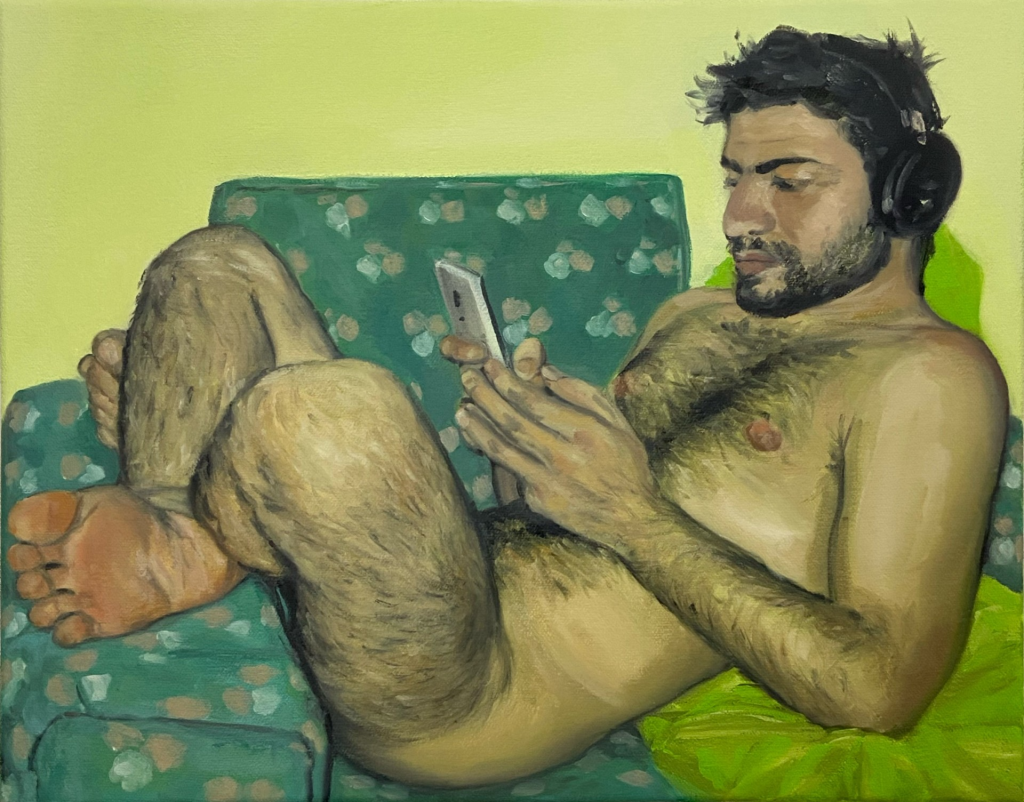
Sharafaldin also portrays homosexual bodies that simply exist. In “Heatwave” (2023), a work that will be exhibited at Art Rotterdam, he presents a nude figure that isn’t posing for the gaze of another but is just existing in a moment of repose — a subtle yet resonant expression of queer representation. The composition shows a nude male figure reclining in a lounge chair, immersed in complete relaxation. The scene exudes an air of nonchalance and self-contentment, with the figure entirely turned inward. The way Sharafaldin renders the body — hairy, at ease, in an unselfconscious pose — stands in stark contrast to traditional representations of masculinity in art history. This is not a heroic or idealised nude but rather a candid moment of contemporary life.
Sharafaldin’s painterly technique accentuates the interplay between realism and expressivity. Loose, visible brushstrokes add texture to skin and fabric, while the contours of the body are rendered with meticulous precision. The surrounding green tones in the background and upholstery envelop the figure, creating a sense of unity with the space. The smartphone in his hands and the headphones on his head anchor the work firmly in the present, reinforcing a sense of introspection and isolation.
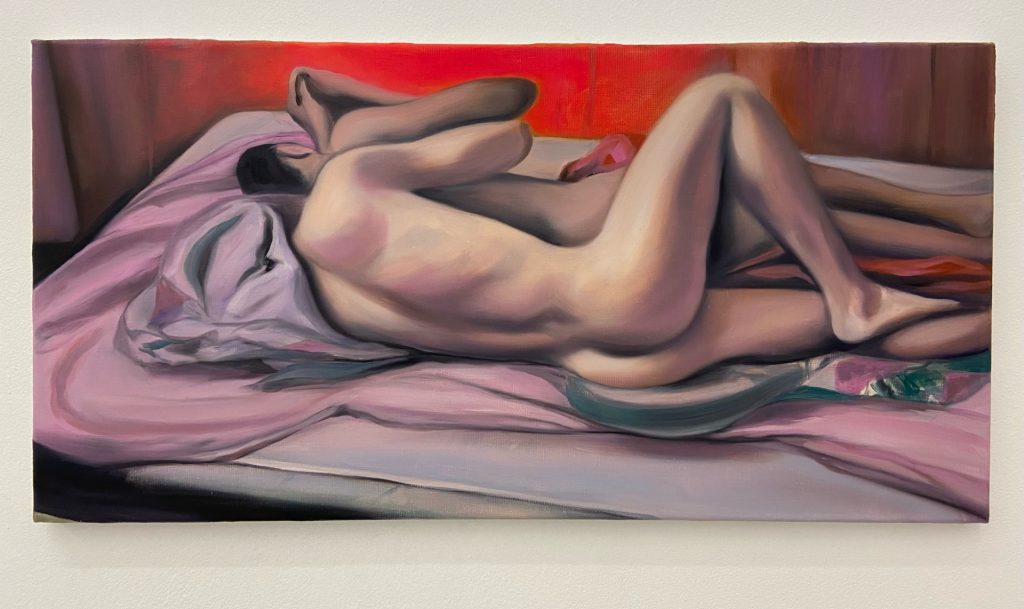
At times, Sharafaldin’s work evokes echoes of classical painting traditions — baroque chiaroscuro, symbolist undertones, a vitalist energy — while simultaneously integrating contemporary queer perspectives. Through this layered approach, he challenges both the conventions of art history and the norms of queer representation.
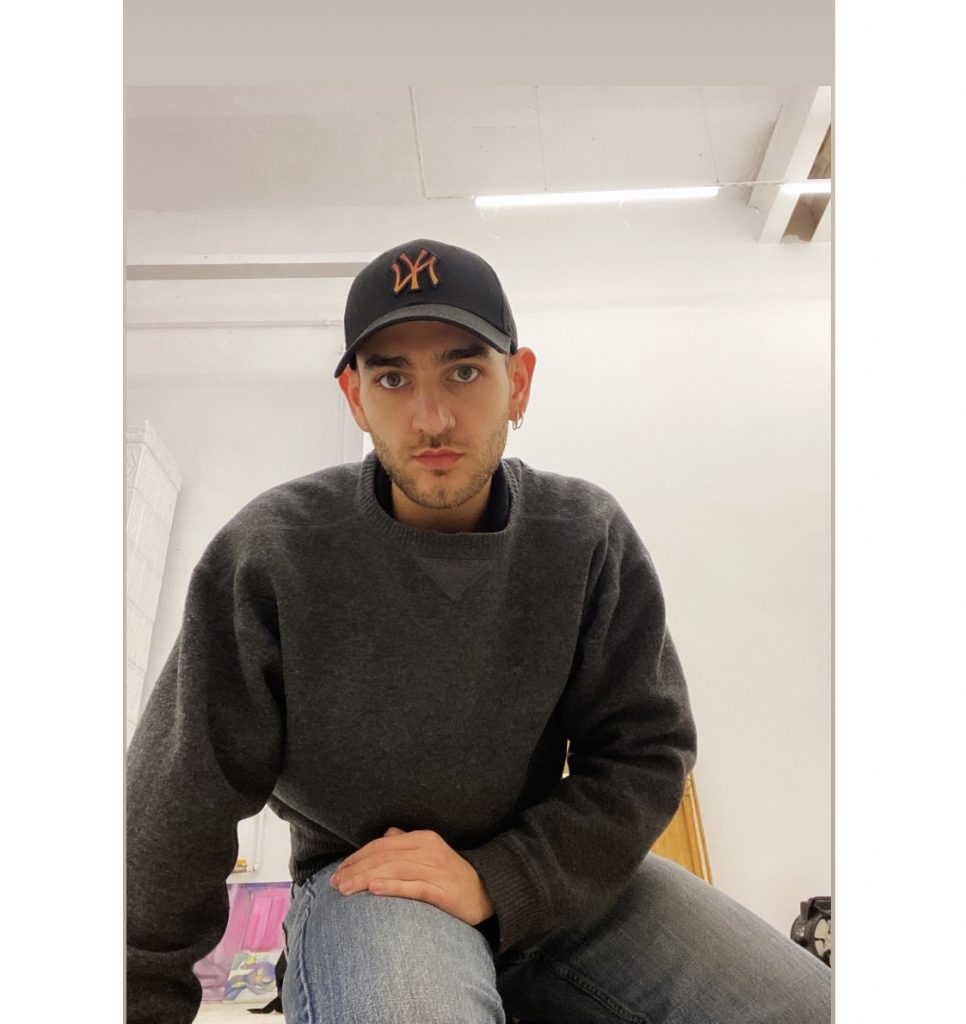
Shahin Sharafaldin was born in Vancouver in 1995. He lived in Montreal until recently: he relocated to London last summer. He studied Fine Arts and Curatorial Practice at Emily Carr University of Art + Design in Vancouver and in 2016, he spent a period at the Willem de Kooning Academy in Rotterdam. His work has been exhibited in Canada and the United States, and in 2021 he completed a residency at Céline Bureau in Montreal. With his participation in Art Rotterdam, he makes his debut in the Netherlands, placing his work within a broader European context.
Shahin Sharafaldin’s work will be presented by Ivan Gallery in the New Art Section at Art Rotterdam.
Written by Flor Linckens
Voor het negende jaar op rij wordt de NN Art Award in 2025 uitgereikt aan een veelbelovende kunstenaar die werk toont tijdens Art Rotterdam. De genomineerde kunstenaars zijn Diana Scherer (andriesse eyck galerie), Marcos Kueh (Prospects sectie van het Mondriaan Fonds, courtesy Galerie Ron Mandos), Pris Roos (Mini Galerie) en Bodil Ouédraogo (Prospects sectie van het Mondriaan Fonds). Het werk van de vier genomineerden wordt van 15 maart tot en met 11 mei gepresenteerd in Kunsthal Rotterdam.
Pris Roos (1984) is een multidisciplinaire kunstenaar, onderzoeker en verhalenverteller. Haar praktijk beweegt zich tussen schilderkunst, spoken word, video, performance en installaties. In haar werk onderzoekt ze thema’s als identiteit — waaronder haar eigen geleefde ervaring als queer vrouw met een biculturele achtergrond — migratie, (gekozen) familie en herinnering. Ze verweeft persoonlijke verhalen met die van anderen en geeft zo een stem aan mensen die, net als zij, tussen verschillende culturen en identiteiten bewegen. Haar praktijk vormt op die manier een brug tussen persoonlijke geschiedenissen en een gedeeld collectieve geheugen.
Haar jeugd in de toko van haar familie, die vanuit Indonesië naar Nederland emigreerde, vormt daarbij een belangrijke inspiratiebron. Voor Roos is de toko meer dan een winkel; het is een stukje Indonesisch erfgoed, een ontmoetingsplek waar verschillende culturen samenkomen en waar geuren en kleuren vermengen. Nog steeds helpt ze regelmatig mee in de winkel, om haar ouders te ondersteunen en deelgenoot te blijven van deze gemeenschappen. Dit idee van gedeelde verhalen en sociale netwerken komt steeds terug in haar kunst, waarbij Roos goed kijken en luisteren inzet als effectief instrument. Ze werkt daarbij opvallend dicht op de huid. Dat is interessant omdat ze dit soort gesprekken juist minder makkelijk aangaat met haar eigen ouders, die niet graag praten over hun familieverleden.
Roos’ werk is sterk sociaal en narratief van aard. Haar portretten en installaties zijn niet afstandelijk: het zijn intieme reflecties op de mensen die ze ontmoet. Ze werkt vaak met alledaagse materialen zoals karton, bruin canvas en bruinpapier, die elkaar soms overlappen. Op die manier krijgen haar werken een gelaagde, ruwe kwaliteit die past bij de dynamiek van de verhalen die ze vertelt. Ze combineert traditionele technieken met elementen uit de straatcultuur, popcultuur en activisme. Ook spoken word en geluid spelen een rol in haar installaties, die op die manier echt tot leven komen.
Kun je ons wat meer vertellen over het werk dat je presenteert op Art Rotterdam en in de Kunsthal?
Het werk dat ik presenteer op Art Rotterdam en in de Kunsthal gaat over representatie, samenkomen en het alledaagse leven. In de Kunsthal zijn voornamelijk mijn levensgrote installaties van karton te zien, waarin mensen worden getoond in hun eigen leefruimte. Dit zijn personen die de kijker nog niet kent, maar die ik beter heb leren kennen door middel van gesprekken en regelmatige ontmoetingen. We hebben daarbij gesproken over familie, identiteit en de belangrijke momenten in hun leven. Voor mij zijn dit voorbeelden, helden van de wereld. Op Art Rotterdam, in de stand van Mini Galerie, toon ik vooral kleinere werken met verschillende straatbeelden. De straat is een plek waar ik me altijd thuis heb gevoeld, waar zoveel verschillende mensen bij elkaar komen. Het laat het alledaagse zien. Mijn werk is in die zin vrij direct en simpel.
Wat zijn je plannen voor 2025?
Mijn plannen voor 2025 zijn het maken van mijn eigen prentenboek over de toko van mijn ouders. [Dit jaar verschijnt Roos’ eerste kinderboek ‘PRIS – De Toko’ bij Uitgeverij de Harmonie, red]. Het verhaal gaat over mijn moeder, die op een dag verdwijnt uit de toko, waarna we haar zoeken in de fantasiewereld waarin de toko is getransformeerd. De tekeningen representeren producten uit de winkel, zoals kousenband, kurkuma en bamisoep. Mijn werken zijn vaak portretten van mijn omgeving, maar dit keer gebruik ik echt mijn fantasie en creëer ik eigen werelden en dat vind ik heel spannend. Daarnaast wil ik graag levensgrote installaties maken van de tekeningen en hier een tentoonstelling aan koppelen. Verder staan er tentoonstellingen gepland in Zaandam en Parijs, een bezoek aan de Liverpool Biënnale, en neem ik ook even de tijd om tot rust te komen.
Kun je beschrijven hoe je je voelde toen je hoorde dat je was genomineerd voor de NN Art Award?
Verrast en vereerd om naast zulke geweldige kunstenaars genomineerd te zijn.
Welk project zou je onmiddellijk oppakken als je de award zou winnen?
Met het prijzengeld zou ik mijn onderzoek naar mijn familiegeschiedenis verder uitdiepen. Ik ben, zoals veel kinderen van immigranten, geïnteresseerd in de achtergrond en verhalen van mijn familie, maar mijn familie is daar erg gesloten over. Dit is een kans om die geschiedenis verder te onderzoeken en die samen met mijn vader te ontdekken. Ik zou Java verkennen, mensen en straatbeelden observeren, gesprekken voeren en portretten maken – in het land dat de geschiedenis van mijn (voor)ouders draagt.
Pris Roos behaalde haar Bachelor in Beeldende Kunst aan de Koninklijke Academie van Beeldende Kunsten in Den Haag — met een uitwisselingsprogramma in Bremen — en haar Master aan de Hochschule für bildende Künste in Hamburg. In 2020 werd ze verkozen tot stadstekenaar van Rotterdam. Haar werk is opgenomen in de collecties van het Stedelijk Museum Schiedam, de Rijksoverheid en het Stadsarchief Rotterdam. Van 21 februari t/m 11 mei is haar werk ook te zien in de expositie ‘Collective Joy – Learning Flamboyance!’ in het prestigieuze Palais de Tokyo in Parijs. Eerder exposeerde ze onder meer in Kunsthal Rotterdam, het Van Abbemuseum, TENT Rotterdam, Framer Framed, MAMA Rotterdam en het Amsterdam Museum.
Naast haar artistieke praktijk is Roos actief als curator, activist en educator. Ze initieert kunstprojecten die gemeenschappen met elkaar verbinden en betrekt ook jongeren bij haar werk, waardoor ze worden gestimuleerd om na te denken over hun eigen positie en identiteit. Samen met Hannah Jacques richtte ze een rondreizend kinderbibliotheek op die op verschillende locaties in Rotterdam en Den Haag hebben gestaan. Deze bibliotheek is gevuld met boeken en graphic novels waarin kinderen zichzelf kunnen herkennen. In dit boekencollectief vind je boeken over onderwerpen als identiteit, gender, seksualiteit en het klimaat — een belangrijke aanvulling op het (veelal witte en heteronormatieve) perspectief waar kinderen mee in aanraking komen. Op die manier hebben ze niet alleen meer keuze, maar worden ze ook bewuster van zichzelf en de wereld om hen heen.
De winnaar van de NN Art Award 2025 wordt bekendgemaakt op vrijdag 28 maart om 20.00 uur in Kunsthal Rotterdam. Tijdens deze feestelijke avond zijn alle tentoonstellingen, inclusief de NN Art Award tentoonstelling, vrij toegankelijk te bezichtigen voor de aanwezige gasten.
Geschreven door Flor Linckens
Ivan Gallery uit Boekarest presenteert op Art Rotterdam (28-30 maart 2025) het werk van Shahin Sharafaldin in de New Art Section, die werd gecureerd door Övül Ö. Durmuşoğlu. In zijn schilderijen onderzoekt Sharafaldin representaties van mannelijkheid en queer identiteit, waarbij hij zich bewust afzet tegen te homogene en simplistische beelden. Zijn figuratieve oeuvre beweegt zich ergens tussen het intieme en het monumentale, met een focus op het lichamelijke en het imaginaire.
Het gevoelige werk van de kunstenaar gaat dieper in op thema’s als vriendschap, homoseksualiteit, verbinding, verlangen en utopische idealen, en biedt bovendien een kritische blik op de manieren waarop identiteit wordt gevormd en waargenomen. Sharafaldins benadering van queerness is bijvoorbeeld uitgesproken intersectioneel: hij is gefascineerd door de nuances, gelaagdheid en complexiteit ervan, bekeken door de lens van klasse, ras, gender en nationaliteit. Dit perspectief dwingt hem om ook te kijken naar bredere maatschappelijke structuren, zoals heteronormativiteit en patriarchale machtsdynamieken.
Sharafaldins levendige olieverfschilderijen worden opgebouwd uit een zorgvuldig afgestemd kleurenpalet. Hij brengt daarbij een sensuele spanning aan die balanceert tussen kracht en kwetsbaarheid. Zijn figuratieve doeken tonen zowel geïdealiseerde als alledaagse taferelen: een dromerig figuur liggend op een rots, een onbespied moment in een slaapkamer of een expliciet erotisch moment tussen twee lichamen.
De omgeving speelt daarin een belangrijke rol. Sharafaldin lijkt daarbij bewust de grenzen op te zoeken tussen private en publieke sferen. Soms speelt de achtergrond juist de hoofdrol en krijgt de kijker een verstilde blik aangeboden in een met schaduwen gevulde kamer — melancholische of zelfs beklemmende interieurs waarin afwezigheid een tastbare aanwezigheid wordt. Kapotte gordijnen die ruisen in zacht licht, bedden die herinneringen lijken te dragen, het zijn terugkerende motieven in zijn schilderijen.
Sharafaldin verbeeldt ook homoseksuele lichamen die simpelweg bestaan. In ‘Heatwave’ (2023), een werk dat te zien zal zijn op Art Rotterdam, toont hij bijvoorbeeld een naakt lichaam dat niet poseert voor de blik van een ander, maar zich in een moment van rust bevindt – een subtiele, maar krachtige uiting van queer representatie.
We zien een naakte mannelijke figuur op een luie stoel, in een staat van volledige ontspanning. De scène ademt een sfeer van nonchalance en zelfgenoegzaamheid, waarbij de figuur volledig in zichzelf gekeerd lijkt. De manier waarop Sharafaldin het lichaam afbeeldt – behaard, ontspannen, in een ongedwongen pose – staat in contrast met traditionele verbeeldingen van mannelijkheid in de kunstgeschiedenis. Dit is geen heroïsch of geïdealiseerd naakt, maar een momentopname.
Sharafaldins schildertechniek benadrukt dit spel tussen realisme en expressiviteit. Losse, zichtbare penseelstreken geven textuur aan huid en stoffering, terwijl de contouren van het lichaam met precisie zijn uitgewerkt. De omringende groentinten op de achtergrond en in de bekleding van de bank vormen een zacht omhulsel, waardoor de figuur lijkt samen te smelten met zijn omgeving. De telefoon in zijn handen en de koptelefoon op zijn hoofd plaatsen het werk nadrukkelijk in het heden en benadrukken een mate van introspectie en isolatie. Soms roept zijn werk een echo op van klassieke schildertradities – barokke clair-obscur, symbolistische ondertonen, het vitalisme – terwijl hij tegelijkertijd hedendaagse queer perspectieven inbrengt.
Shahin Sharafaldin werd in 1995 geboren in Vancouver en woonde tot voor kort in Montreal. Afgelopen zomer verhuisde hij naar Londen. Hij studeerde Beeldende Kunst en Curatorial Practice aan de Emily Carr University of Art + Design in Vancouver en bracht in 2016 ook een periode door aan de Willem de Kooning Academie in Rotterdam. Het werk van de kunstenaar werd onder meer tentoongesteld in Canada en de VS en in 2021 nam hij deel aan een residentieprogramma bij Céline Bureau in Montreal. Met zijn deelname aan Art Rotterdam maakt hij zijn debuut in Nederland binnen een bredere Europese context.
Het werk van Shahin Sharafaldin zal tijdens Art Rotterdam gepresenteerd worden door Ivan Gallery in de New Art Section.
Geschreven door Flor Linckens
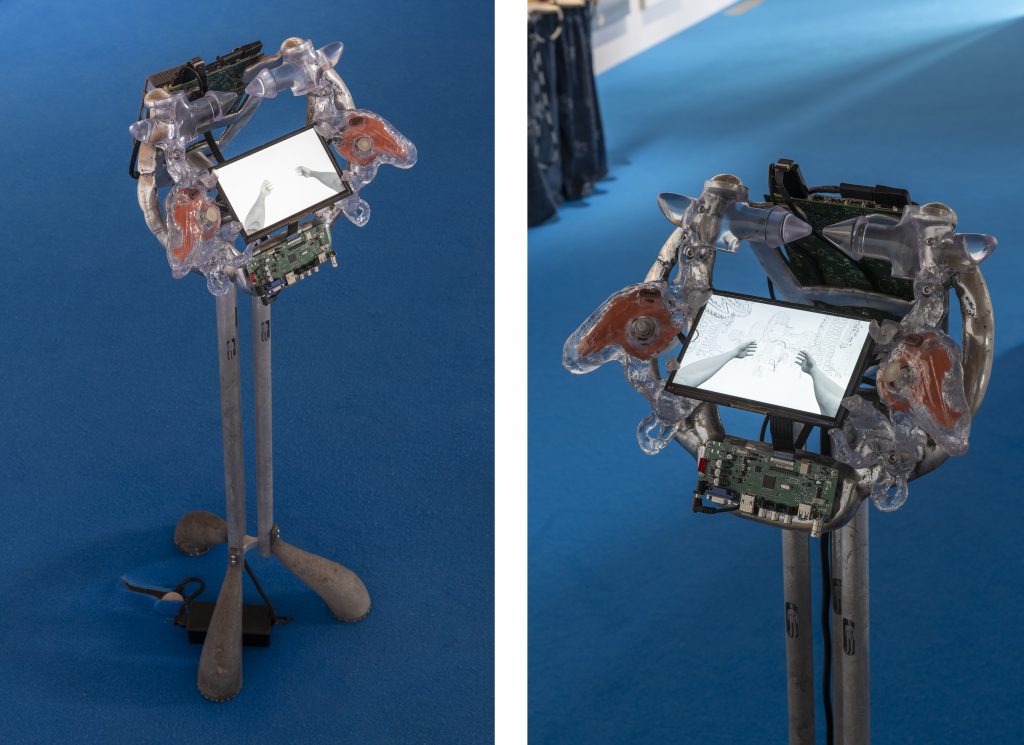
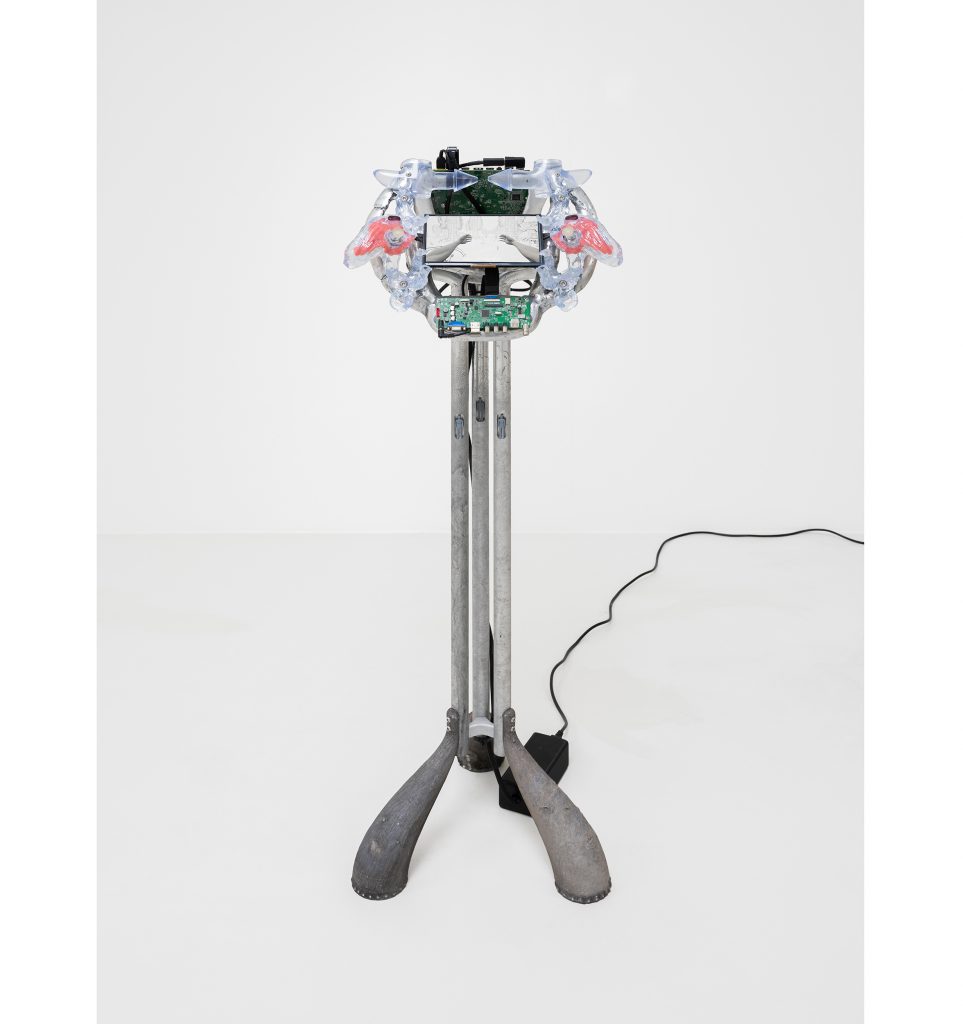
Through his work, artist Janne Schimmel (b. 1993, The Netherlands) bridges the digital and physical worlds, exploring gaming and technology from a fresh perspective. This year, he is presenting Between Modder and Mud (2024) in the Prospects section of Art Rotterdam, a gaming sculpture featuring a self-designed game that invites interaction and reflection.
What is the common thread in your work?
“Gaming has always played a role in my work,” Janne explains. “What fascinates me is the contrast between how game worlds are designed and how gamers shape their physical spaces. Take World of Warcraft, for example: a richly detailed, magical world filled with crystals and spiritual elements. Yet, the typical gamer’s room is often minimalist and sleek, with LED lighting, streamlined furniture, and cold, industrial consoles. These two worlds are in stark contrast, and in my work, I aim to bring them together.”
His sculptures expose this tension and challenge the conventional design of gaming hardware. “The devices we rely on to connect with the digital world are often designed to convey power and speed, while softer, more emotional qualities are rarely considered. I want to change that narrative.”
Why is gaming hardware and design often so limited aesthetically?
“I think it stems from our performance culture,” says Janne. “In the 1990s, during LAN parties—gatherings for computer enthusiasts—gamers would come together to showcase the fastest and most powerful computers. They would open the side panels of their cases to proudly display the hardware inside. This led to an aesthetic centred around components that exude strength and speed.”
In his sculptures, he literally exposes these components—motherboards, processors, and graphics cards—but contrasts them with materials such as crystals, jewellery, and stones. “By placing these opposing elements side by side, I want to highlight how narrow the aesthetics of gaming hardware have become and create space for something softer, something less rational.”
He also sees the influence of patriarchal structures in this. “The idea that hardware must be powerful and masculine leaves little room for emotions and softer aesthetics. A lot of these traditional ideas are still deeply ingrained.
Gaming is often seen as a solitary activity, but in your work, you highlight the power of gaming communities and user-generated content. Can you elaborate?
“Gaming is much more than an individual experience,” Janne emphasises. “The strength of communities lies in the sharing of knowledge and creativity. A great example is the modding community, where gamers modify existing games. This started in 1993 when the developers of Doom made their code public, allowing players to make their own modifications. That moment changed the industry forever.”
Janne also speaks highly of the homebrew community, where people create entirely new games for old consoles like the Game Boy or Nintendo DS. “What I find so inspiring about this is how the community reactivates outdated technology and challenges the commercial gaming industry. But perhaps even more importantly, they create space for their own stories. The mainstream gaming industry is still dominated by white men, who tend to tell a very singular type of narrative. Homebrew creators break through that. In doing so, they rewrite and repair the stories that are being told.”
These communities are a direct source of inspiration for Janne. He also incorporates their shared techniques and code into his own games. On his sculptural consoles, visitors can not only play his self-made games but also games created by others in these communities, such as LesbiAnts, Toni Catino, a game about lesbian ants. “Just the title alone is genius,” he laughs. “It’s the perfect example of a story that would never emerge from the mainstream industry. These kinds of games show why these communities are so important.”
How has the Mondriaan Fonds grant influenced your work?
“The grant gave me the freedom to explore my creative processes in greater depth,” says Janne. A significant part of the funding was used to invest in a CNC machine, which allows him to cut digital designs with organic shapes into wood and other robust materials with extreme precision. But what fascinates him most is that the process does not end with the physical form.
“I first turn my digital designs into physical 3D objects. Then, I scan those objects back into a digital model and share them with the community. They can integrate these models into their own designs or 3D print them, bringing them back into the physical world. This creates a continuous exchange between the digital and the physical.”
This principle of reuse is also reflected in his design pieces. “One of my sculptures started with an IKEA chair I’ve had since I was 11 years old. When the armrest broke, I repaired it by casting a new one in aluminium. That repair later inspired the sculptural forms of my design chairs and benches.”
What will you be showing at Art Rotterdam?
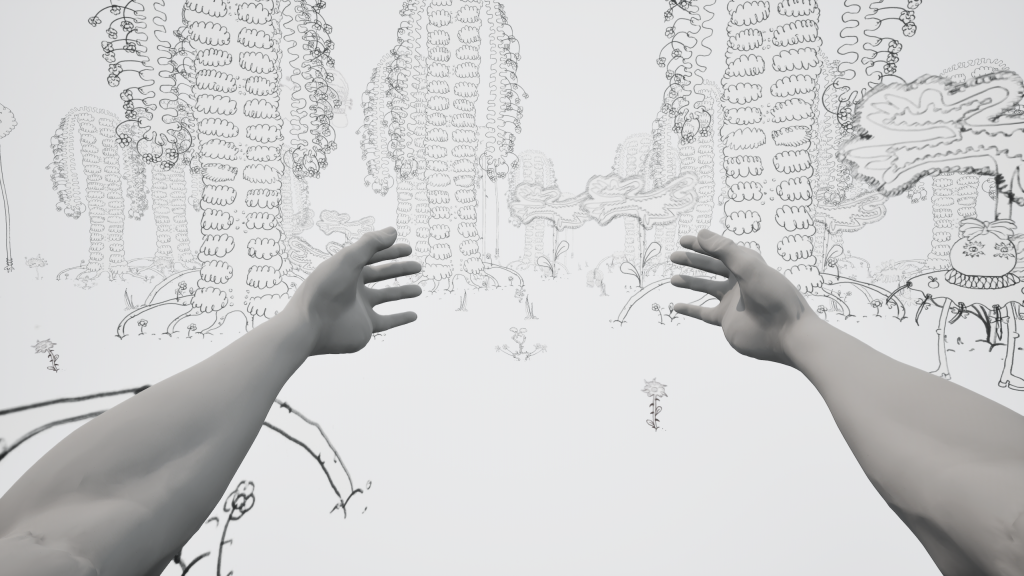
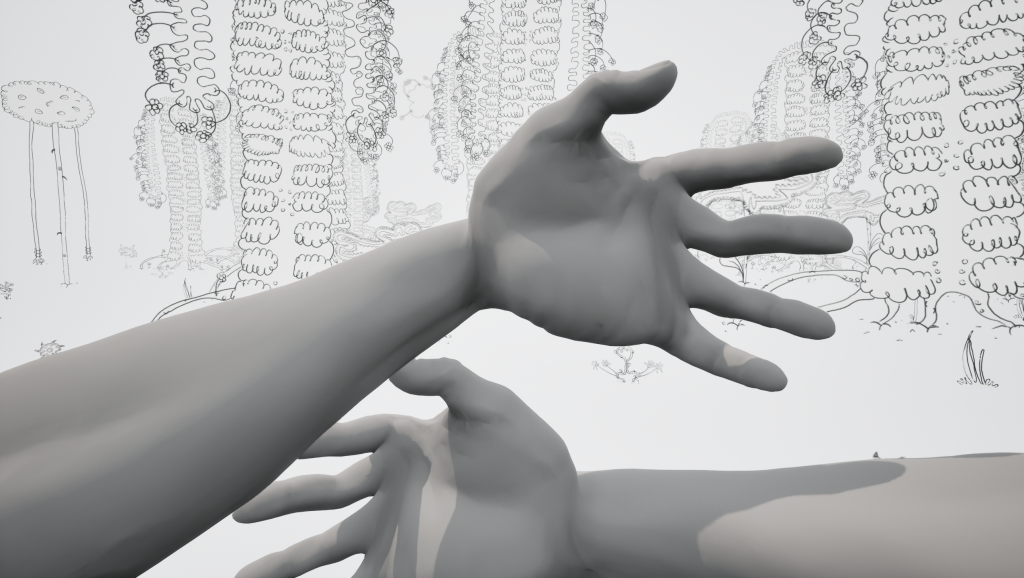
At the Prospects section of Art Rotterdam, Janne is presenting Between Modder and Mud (2024), a gaming sculpture where visitors can play his self-developed game First Person Hugger (2024).
“I wanted to create a game where compassion takes centre stage. In many commercial games, violence is a central element, and I don’t think that’s necessarily a bad thing,” Janne says. “I grew up with it too, but if I were to create the same thing now, it wouldn’t add anything new. In First Person Hugger, you don’t see the world through the barrel of a gun, as in a traditional first-person shooter, but through open arms. Instead of shooting, the player’s main interactions are hugging and talking.”
This idea was sparked by a moment that has always stayed with him. “I was gaming as a teenager when my mother walked in. She saw a bouquet of flowers in the game and said, ‘Give those flowers to a woman.’ But the only thing I could do was use them as a weapon. That made me realise how limited in-game interactions often are. I want to create something that offers a completely different perspective.”
Written by Emily Van Driessen
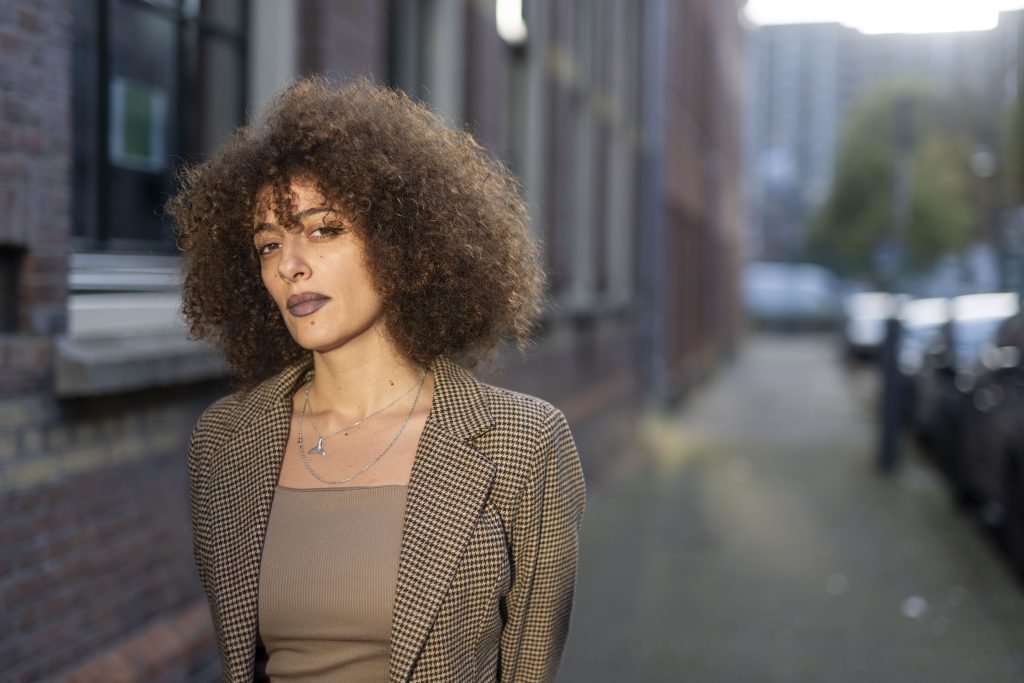
The work of Diana Al-Halabi (1990, Lebanon) is deeply personal and political. She speaks about hunger, war, and dehumanisation with clarity and urgency, her voice unwavering. Her latest works at Art Rotterdam Prospects, Clean Cut (2024) and Blow Up (2025), confront themes of power, oppression, and the ways in which violence is sanitised and dismissed.
Throughout the interview, a small, fluffy green parakeet called Bubu flutters around her, chirping, pressing tiny, tender kisses to her lips – bringing a fleeting lightness to the conversation.
What is the common thread in your work?
“My practice is interdisciplinary; I can’t call myself only a filmmaker or only a painter,” Diana explains. The medium she chooses is always dictated by the urgency of the subject matter. “If I’m speaking about something that is happening right now, I have to respond differently than when I’m dealing with something from the past.”
Diana’s work critically examines power structures rooted in verticality; systems where power is imposed from above. “I work against anything that comes top-down. That means oppressed versus oppressor, colonised versus coloniser,” she says. This tension is central to her practice, where she usually moves from the deeply personal to the larger political framework in which these dynamics play out.
But in her film The Battle of Empty Stomachs, the process was reversed. “I had been researching this project since 2021, trying to juxtapose two types of political hunger,” she explains. “Famine is a top-down mechanism, it comes from the government, imposed on the people. Hunger strikes, on the other hand, move in the opposite direction, from the individual prisoner up, as an act of resistance.”
But as she worked on the film, reality caught up with her. “I asked myself, what do I actually know about hunger? Nothing, right? The biggest thing I knew was fasting. That’s it.” Then, starvation in Gaza escalated. “Witnessing a genocide with political starvation while making a film about hunger was overwhelming. It was happening in real time.”
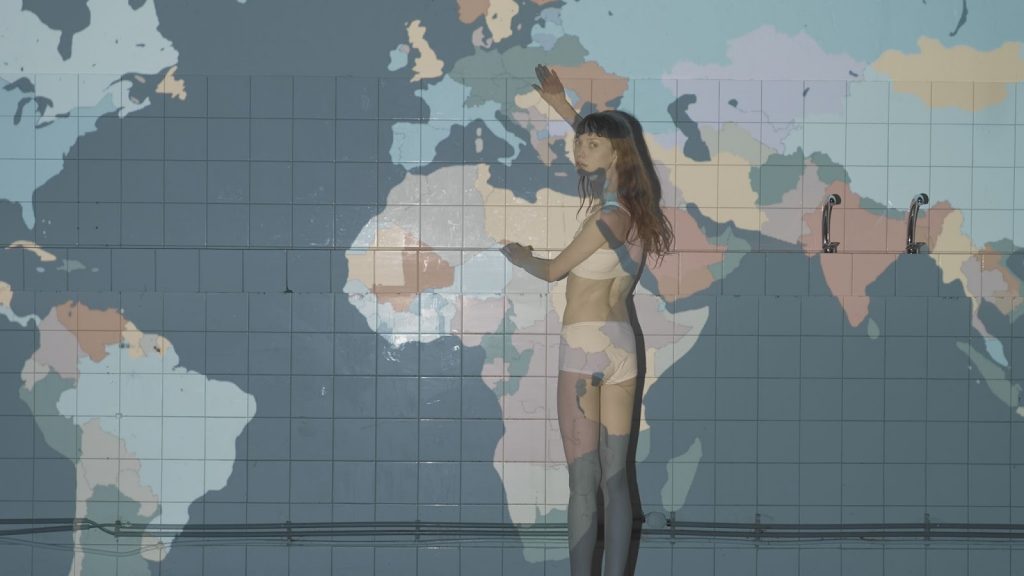
The grant by Mondrian Fund supported the creation of that film, right?
“Yes, The Battle of Empty Stomachs was supported by both Mondrian Fund and the IFFR RTM Pitch Award. The award money was strictly for production costs, so Mondrian Fund personally helped me during the creation process,” Diana notes.
Her research spanned two years, while the film itself took about six to seven months to make. But after its completion, she found herself needing to shift mediums. “I write everything in my films, even the poetic texts. But at some point, language started to feel too constrained. Words were too small, too narrow for what I was witnessing.”
This return to painting resulted in Clean Cut, 2024, a work that she will show at Art Rotterdam Prospects.
What influenced the creation of Clean Cut?
“As I was reading Bertolt Brecht’s 1935 essay Writing the Truth, Five Difficulties, there was a passage that captivated me about people wanting to critique fascism but not capitalism,” Diana says. “Brecht compares it to wanting to eat veal without seeing the calf being butchered, and being satisfied as long as the butcher washes his hands. That struck me deeply.”
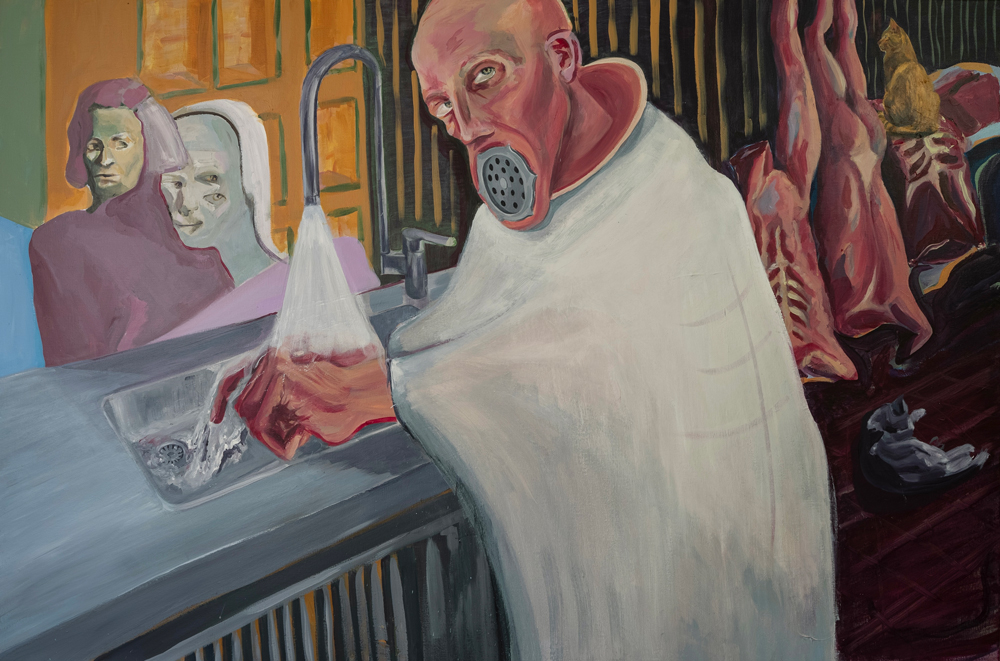
This idea is at the core of Clean Cut, 2024. In the painting, a butcher is depicted washing his hands, while a meat grinder emerges from his mouth. Two women look on with suspicion. “Having lived in the West for five years, I experience these double standards firsthand. People scrutinize others with suspicion, yet there’s an implicit hierarchy in who is allowed to critique violence. When someone says, ‘Oh no, those poor Israelis,’ they refuse to acknowledge the root of the problem and that’s exactly what Brecht wrote back then. People are willing to critique fascism, but not capitalism. The same pattern repeats today: they condemn violence but won’t critique Zionism. Or they denounce Nazi fascism but refuse to question Zionism. It’s guilt-washing, just like the butcher washing his hands of the blood.”
The title Clean Cut references how modern warfare sanitizes violence. “Israel bombs Gaza in a ‘clean’ way. It’s vertical violence – detached, almost invisible. A missile drops from the sky and erases the act of killing. But a knife moves horizontally, close and direct. One is considered clean, the other dirty”.
The bodies in the painting are not animals; they are humans. “This is also a direct response to Zionist rhetoric that calls Palestinians and Lebanese ‘human animals.’ But historically, Jewish victims of the Holocaust were called the same by Nazis. It’s a cycle of dehumanisation.”
Why does the medium of painting resonate so strongly with your work right now?
“I think no medium can amount to the disastrous reality,” she says, reflecting on the overwhelming violence and suffering that images of the war in Gaza attempt to capture. Yet, what troubles her just as much is how quickly these images vanish. “Nowadays, images disappear so fast, lost in the abyss of the internet. I think we must not allow scroll amnesia to erase the vastness of what we have witnessed. Before the internet, images documenting war remained in people’s eyes. Look at the Vietnam War, some images remain iconic for the resistance and suffering they hold.”
Painting is a way to hold onto images that have unsettled her. “I saw a picture of a pile of brutally butchered Palestinian bodies, with cats sitting on top of them and I kept wondering: Are the cats starving and looking for food? Are they grieving? Or are they warming up the bodies because they feel the coldness of their deaths?”
She also recalls seeing photos of children and celebrities writing messages on missiles, missiles that would later be dropped on Palestinians. They directly influenced Blow Up, the triptych she is currently painting and will be revealed at Art Rotterdam Prospects. “This act of genocide is framed as something patriotic, but it’s a form of brainwashing, indoctrinating people into horrific violence when they don’t even understand what they are part of.”
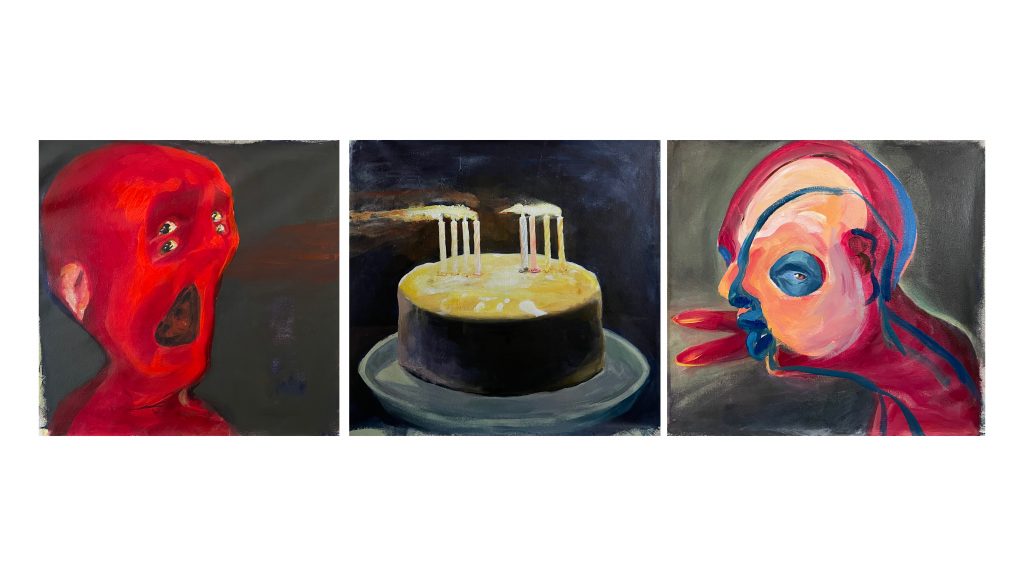
The weight of such imagery demands permanence. She turns to painting precisely because it resists this cycle. “I felt the ethical responsibility not to reproduce those images but to at least find a way to talk about them through art. Painting is about ensuring that such moments are not just a scroll, but they are here to stay – because forgetting is too easy, and denial even easier.”
With firm persistence, Bubu breaks through the heaviness of the conversation, pressing soft kisses to Diana’s lips – as if trying to comfort her. She kisses him back and whispers softly, “Habibi Bubu, I love you too.”
It’s an interruption so absurd that Bertolt Brecht himself might have written it, a moment of tenderness breaking through the weight of war, pulling us, if only for an instant, out of the frame.
Written by Emily Van Driessen
For the ninth consecutive year, the NN Art Award will be presented in 2025 to a promising artist showcasing their work at Art Rotterdam. This year’s nominees are Diana Scherer (andriesse eyck galerie), Marcos Kueh (Prospects section of the Mondriaan Fund, courtesy of Galerie Ron Mandos), Pris Roos (Mini Galerie) and Bodil Ouédraogo (Prospects section of the Mondriaan Fund). The work of the four nominees will be on view at Kunsthal Rotterdam from 15 March until 11 May 2025.
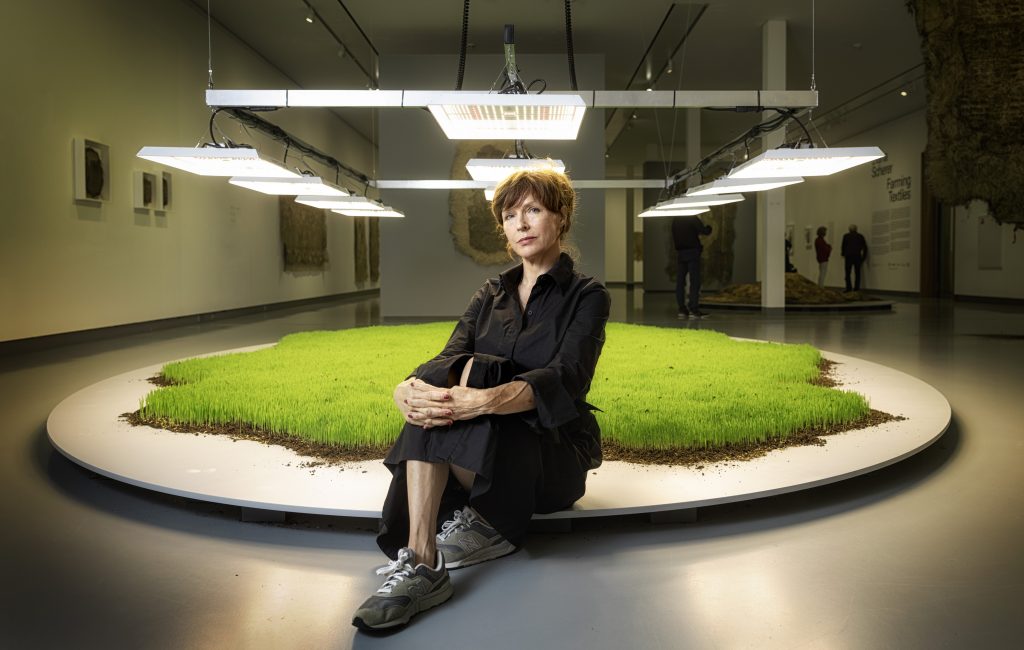
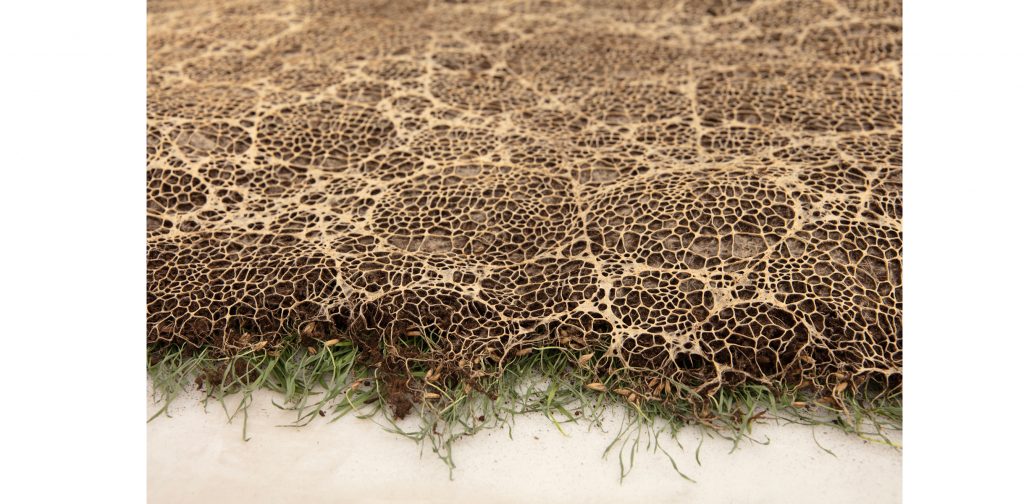
Diana Scherer is a pioneer in biotechnological art. Her work is a unique blend of botany, material research, textiles and sculpture, and is essentially a poetic exploration of the relationship between humans and nature — and the human desire to control the natural world. The balance between control and letting go plays a crucial role in her practice. Scherer is renowned for her innovative manipulation of intelligent root networks. In her studio, she creates artificial biotopes where roots are guided underground using templates. The delicate root structures that emerge from this process contain both natural patterns and human-designed motifs. By directing the growth of roots with light, soil and seeds, Scherer creates complex, textile-like structures that she uses for sculptures, installations, textile works and photography. The resulting works highlight the plant’s inherent dynamism and demonstrates how nature often finds its own unpredictable path, despite human intervention.
What sets Scherer’s work apart is her meticulous research process and the intensive collaborations she had in the past with scientists and biologists from institutions such as TU Delft and Radboud University. Her multidisciplinary approach, characterised by elements of science, nature, art, and design, enables her to render the hidden world of roots visible. This has resulted in groundbreaking techniques through which she transforms roots into ‘grown textiles’. Scherer analyses these roots at a microscopic level and she experimented with hundreds of plant species before selecting her favourites: oats, grass, wheat and maize. She likened the structure of grass roots to silk and compared the root system of daisies to wool. The artist is also fascinated by the artisanal nature of textiles and draws inspiration from traditional weaving techniques used by communities that are deeply connected to nature. Sustainability and idealism play a central role in her work.
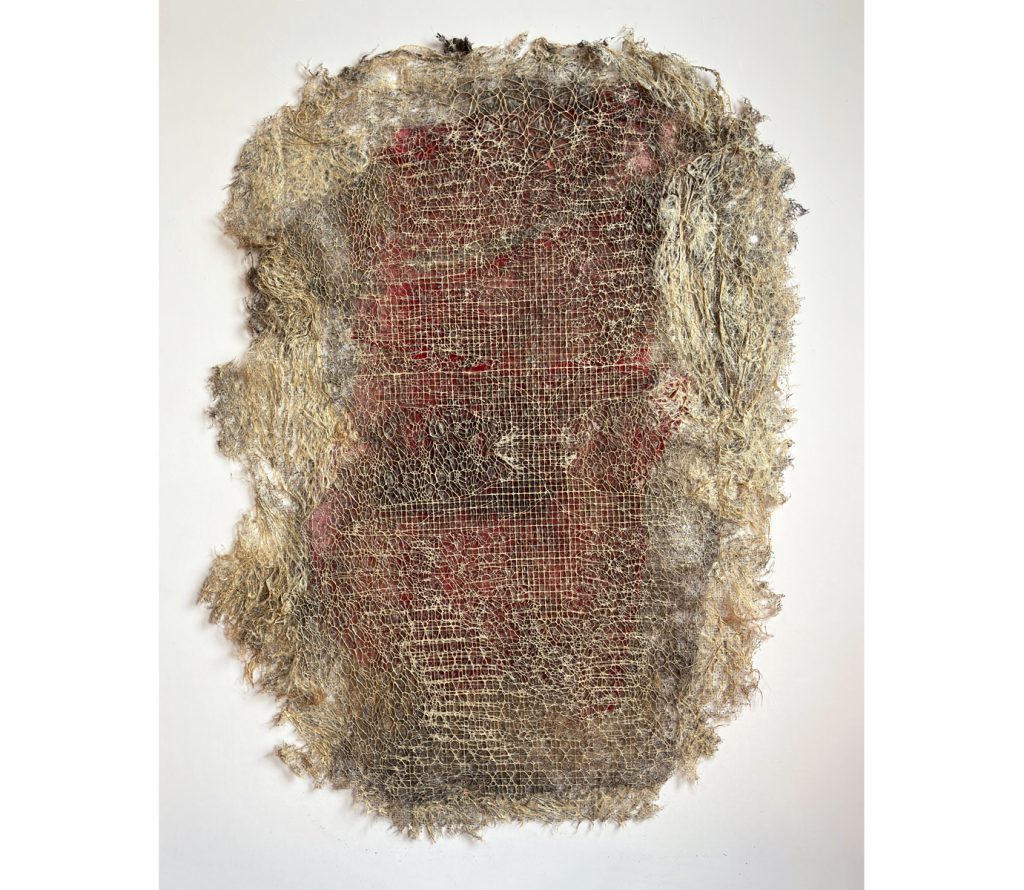
Scherer’s practice reflects a deep fascination with what neurobiologists regard as the ‘intelligence center’ or the brain of plants. She explores ways to guide these natural growth processes, for instance by studying xylem vessels, the tissue responsible for water transport within plants. Her work reflects a fascination with hidden processes and hybrid forms, where microscopic botanical structures merge with human-made patterns — ranging from geometric principles found in nature to the imprints of bubble wrap and tire tracks. Scherer also integrates the impact of climate change on cellular tissues, incorporating elements such as burnt wood and mutated plant structures.
Scherer’s work embodies the human urge to control nature, while simultaneously raising questions about the ethical and ecological implications (and limits) of that control. In doing so, she invites us to reconsider what ‘natural’ truly means in the age of the Anthropocene.
Diana, could you tell us more about the work you are presenting at Art Rotterdam and in Kunsthal Rotterdam?
At Art Rotterdam, I am showcasing works from my ongoing project ‘Interwoven (Exercises in Root System Domestication)’ (2015–present). In the Intersection section of the fair, a monumental piece measuring 7 by 2.5 meters will be on display, suspended from the ceiling. This work, cultivated from seeds, grass and roots, was originally commissioned by Museum Kranenburgh for my solo exhibition ‘Farming Textiles’, which was presented there last year. Additionally, andriesse eyck galerie will exhibit a selection of my works at the fair.
For Kunsthal Rotterdam, I am preparing a more extensive exhibition featuring around ten larger and smaller works, some of which are intertwined with synthetic fabrics and nets, merging organic growth with human-made materials.
What are your plans for 2025?
In 2025, I will start a collaboration with the TextielLab of the TextielMuseum in Tilburg. Together, we will develop large-scale knitted fabrics and delicate, lace-like coloured nets, which I will then integrate with my root-woven textiles. While I have previously experimented with coloured fabrics, the limited availability of suitable materials has led me to produce them myself. This allows me to determine the colour, size and knitting patterns, while ensuring control over the sourcing of yarn, with the aim of working as sustainably as possible.
I will also be presenting my work in several exhibitions throughout the year. From 11 July, I will take part in ‘More than Human’ at the Design Museum in London. The SeMoCA (Seoul Museum of Craft Art) in South Korea has invited me to participate in ‘Matter Matters: Four Attitudes in the Digital Age’, an exhibition that explores how contemporary craft artists engage with materiality and technology in the digital age. My work will also be featured at the Hangzhou Triennale Fiber Art 2025 in China, while a selection will be on view in Mettingen as part of the Draaiflessen Collection. Finally, my work will be presented at the Fellbach Triennale in Germany.
How did you feel when you heard you were nominated for the NN Art Award?
I was truly surprised — it was completely unexpected. And, of course, absolutely delighted!
If you were to win the award, what project would you pursue immediately?
Winning the award would give me the freedom to focus more on research and experimentation. The further development of my current project requires both time and concentration. Additionally, I would expand my collaboration with the TextielLab of the TextielMuseum, as there are still so many possibilities to explore in combining these two forms of textiles. This year, colour research will also play a significant role in my practice.
Diana Scherer was born in 1971 in Lauingen, Bavaria (Germany) but has lived in the Netherlands for over 25 years. She initially studied fashion design in London but continued her studies at the Gerrit Rietveld Academie in Amsterdam. She has won several awards, including the prestigious New Material Award (Fellow) from Het Nieuwe Instituut in Rotterdam. Scherer’s work has been exhibited at the Frankfurter Kunstverein, the TextielMuseum, Foam Amsterdam, Manifesta, Museum Kranenburgh, the MIT Museum in Boston, the Himalayas Museum in Shanghai, the Victoria & Albert Museum, the Stedelijk Museum, and at the Biennale of Sydney. Currently, her work is on view at the Cobra Museum in Amstelveen and Somerset House in London.
The winner of the NN Art Award 2025 will be announced on Friday 28 March at 20:00 in Kunsthal Rotterdam. During this celebratory evening, all exhibitions, including the NN Art Award exhibition, will be freely accessible to attending guests.
Written by Flor Linckens


