Coming soon
Coming soon
Selecteer type
For the eighth year in a row, the NN Art Award will be awarded to a promising artist who completed their studies at an art academy in the Netherlands and is exhibiting at Art Rotterdam. This year, for the first time, the nominees will exhibit their work in the prestigious Kunsthal Rotterdam, from 1 February to 14 April 2024. The nominated artists for the NN Art Award 2024 are Maaike Kramer (Art Gallery O-68), Mónica Mays (Prospects section of the Mondriaan Fund), Jan van der Pol (CREMAN & DE ROOIJ) and Peim van der Sloot (Brinkman & Bergsma).
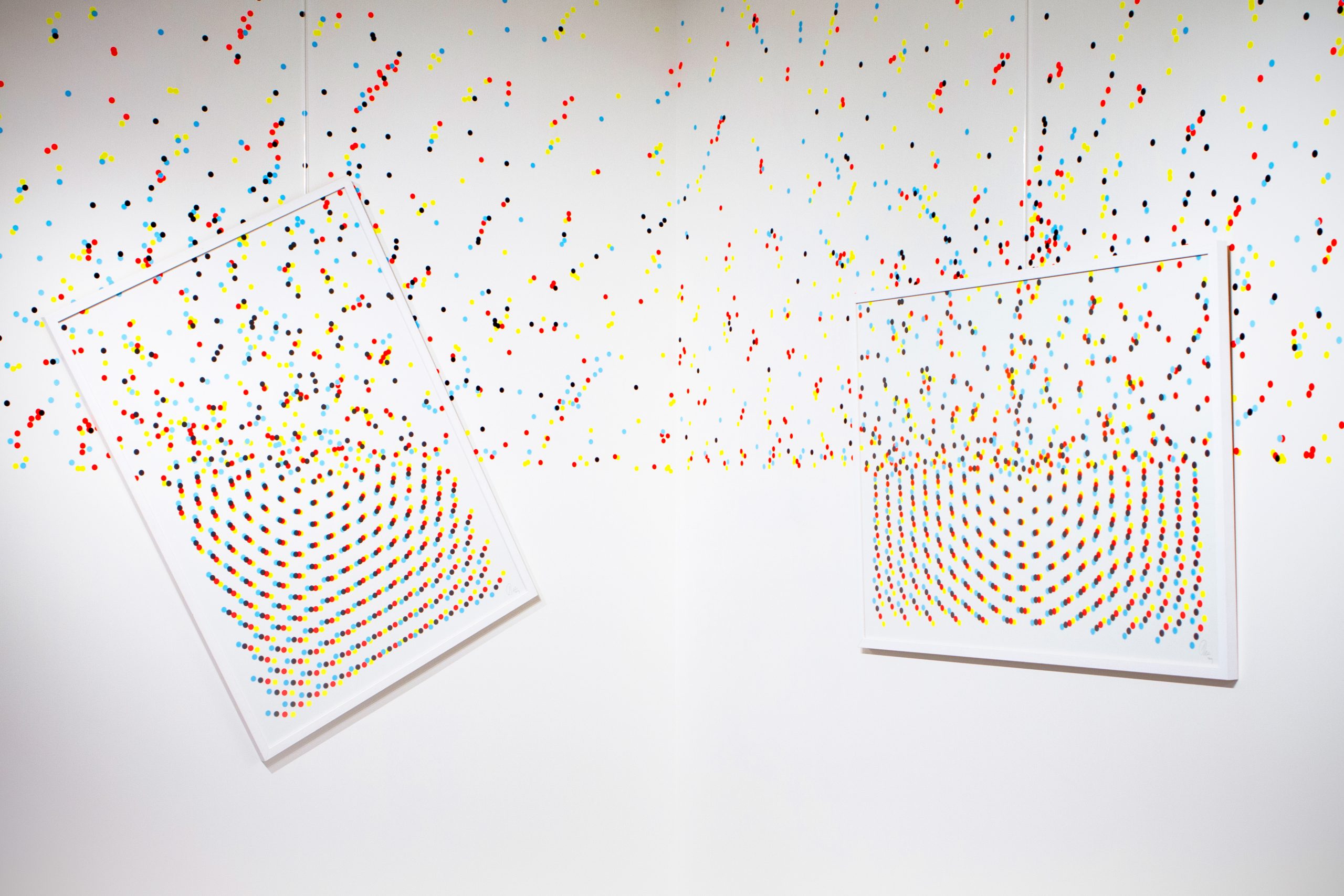
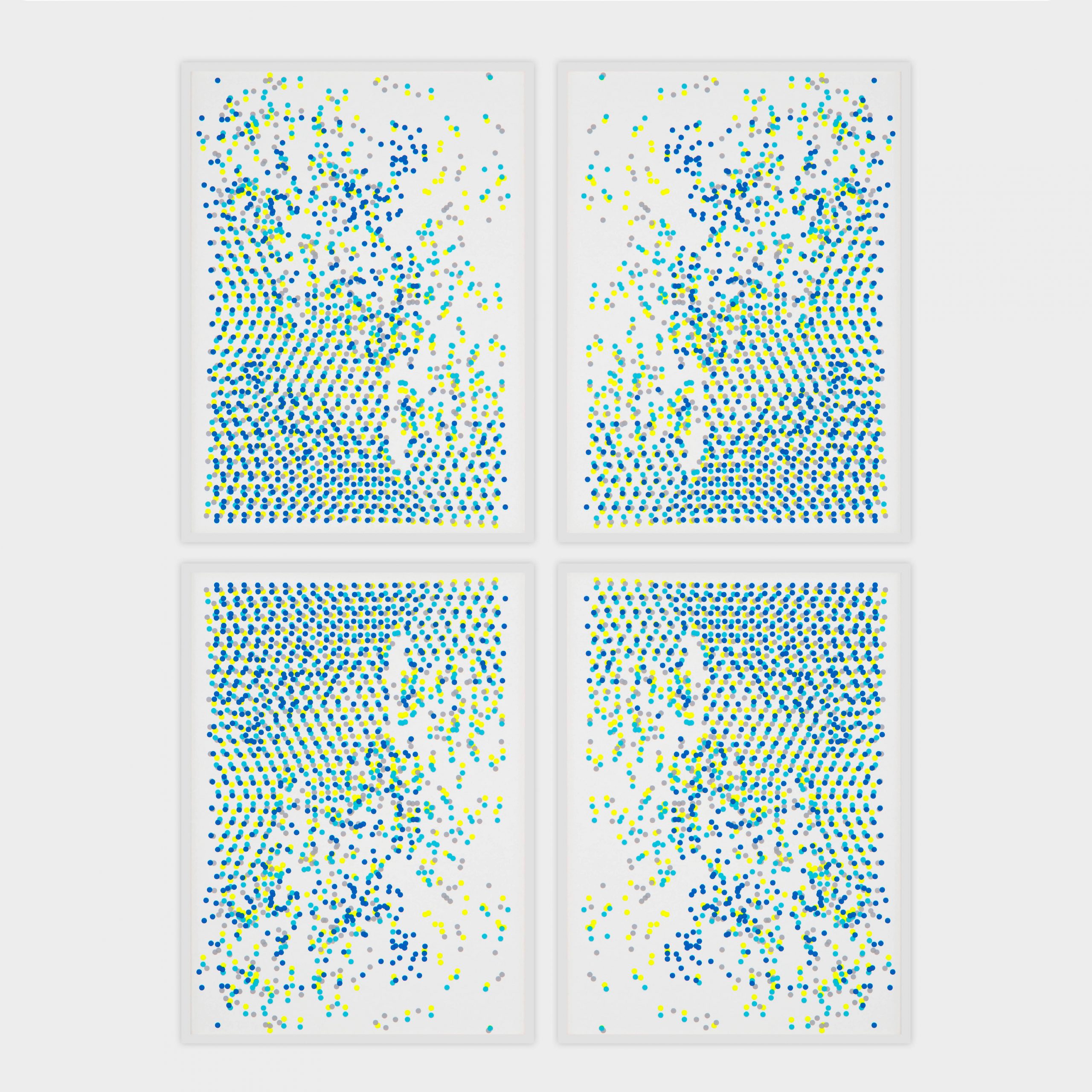
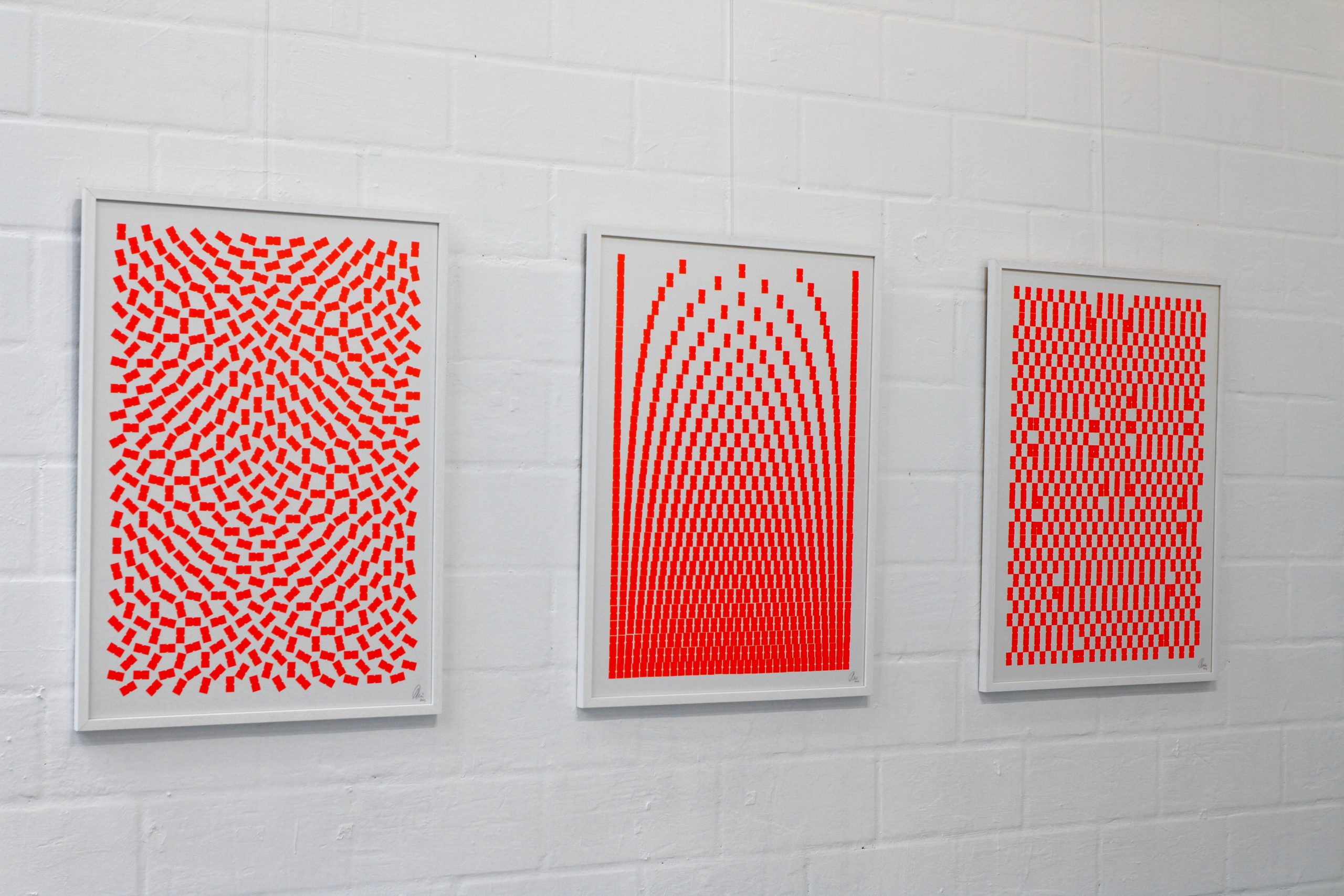
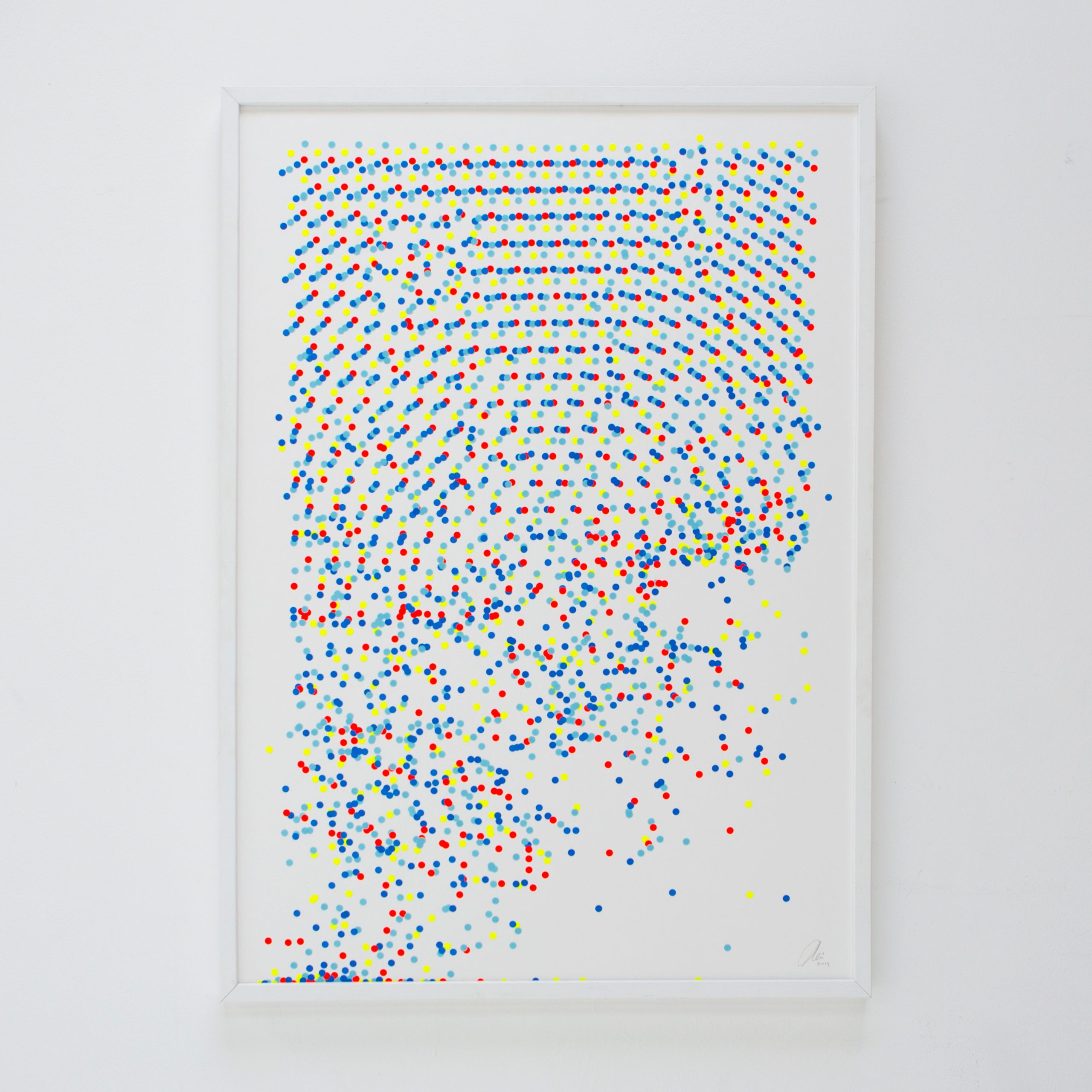
Peim van der Sloot’s abstract work is immediately captivating for its use of familiar round stickers: a familiar sight at art fairs, where they signify whether an artwork has been reserved or sold. In his practice, Van der Sloot critically examines economic systems. He questions concepts of value, scarcity and ownership, reflecting on the complex relationship between capitalism and the art world. The artist introduces alternative pricing systems and experiments with seriality, challenging conventional economic norms and assumptions, and inviting viewers to do the same. This questioning of the established order is also evident in his visual style, characterized by optical illusions, playful and dynamic compositions, vibrant colours, and a hint of chaos and anarchy. Van der Sloot grew up in Argentina and studied at HKU (University of the Arts Utrecht). His works are included in the collections of the LAM and the KPMG Art Collection and in 2021, he received the LAM Art Entrepreneur Award.
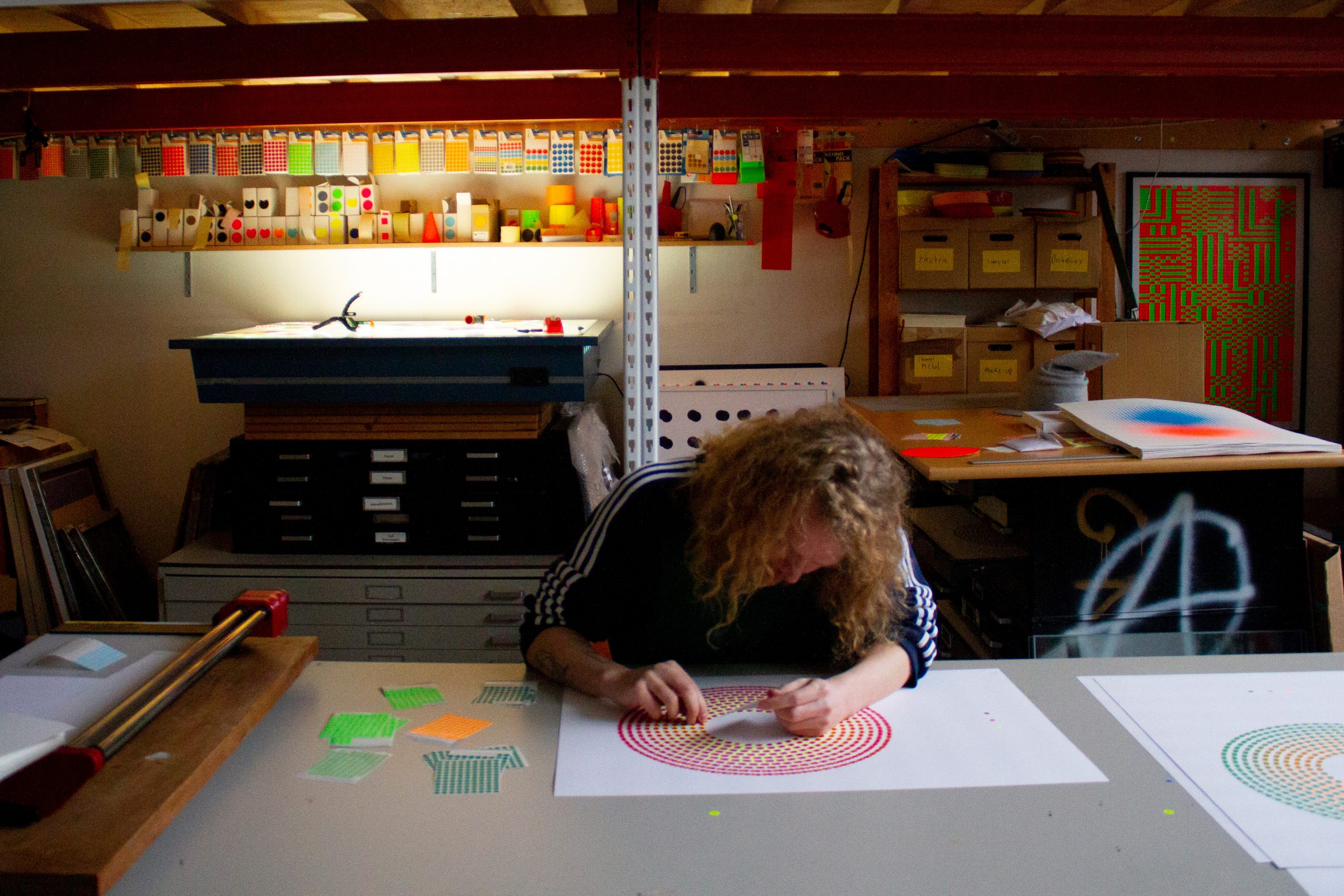
Can you tell us more about the work you are presenting at Art Rotterdam and in the Kunsthal?
“At Art Rotterdam, I will offer a diverse overview of my body of work to date. Starting with the conceptual approach to art sales, all the way to the latest works that are poised like magical incantations, ready to enchant the viewer. Some of the most prominent pieces I will display during the fair include ‘It Has To Start Somewhere’, a series consisting of 3479 pieces, each gradually missing a sticker that the buyer receives to stick next to the artwork on the wall, and ‘The Most Expensive Piece’, which will be the most expensive artwork for sale at Art Rotterdam 2024.
For the exhibition in the Kunsthal, I am creating a site-specific installation, in which I treat the museum walls as a canvas. In the work ‘Peim was here’, the red sold sticker will, of course, have a prominent place as well.”
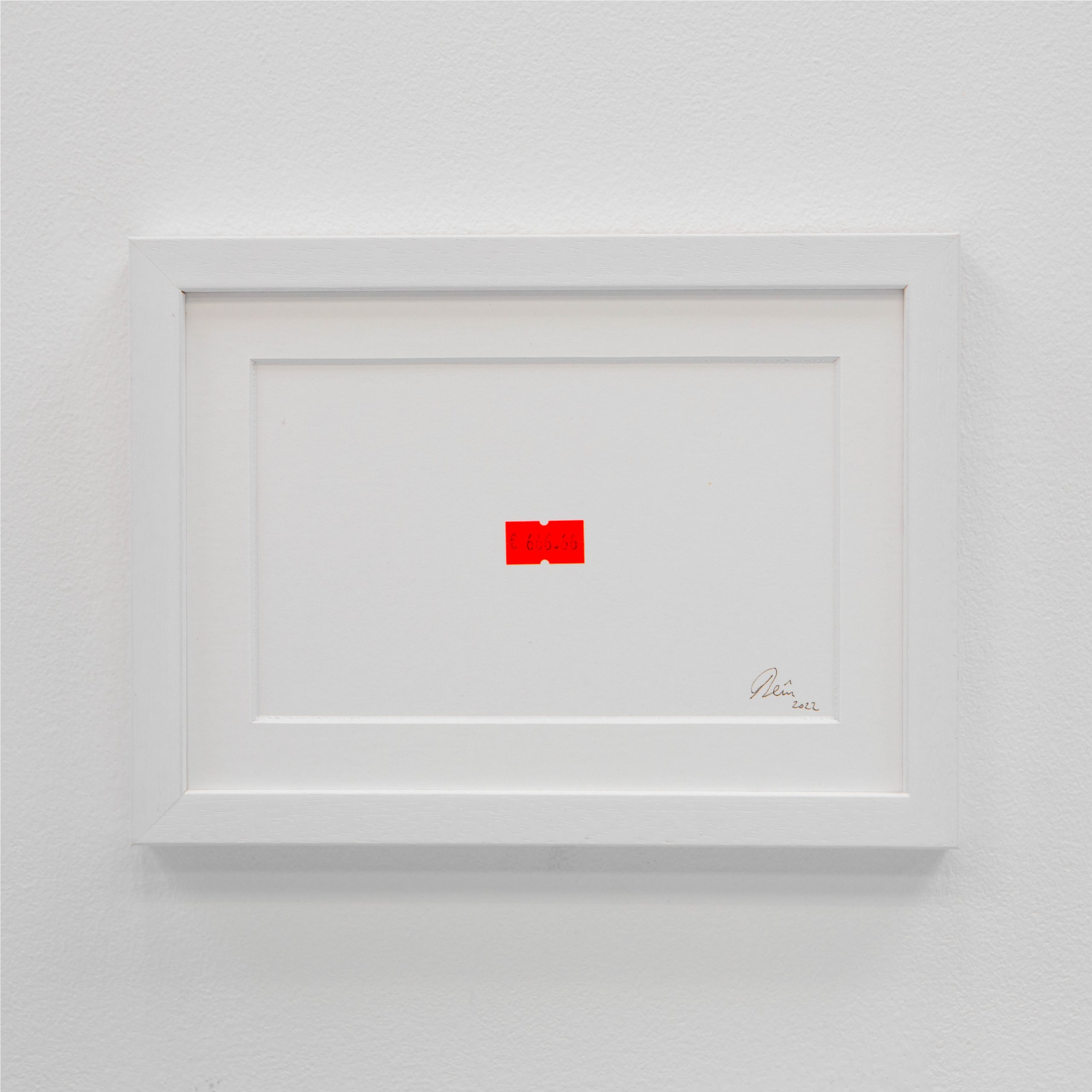
What are your plans for 2024?
“Besides ensuring that my work ‘Works I Have Sold In My Life So Far’ continues to grow, 2024 is going to be a year for experimenting with new materials and techniques. For instance, I want to dedicate time to explore the animation of my artworks in film format. I am also currently working on a collection of ‘digital artifacts’, artworks engraved on Bitcoin coins. It’s a bit of a technical story, but you can see it as putting digital graffiti on crypto currency. As long as two computers on earth are connected, these works will exist for eternity.”
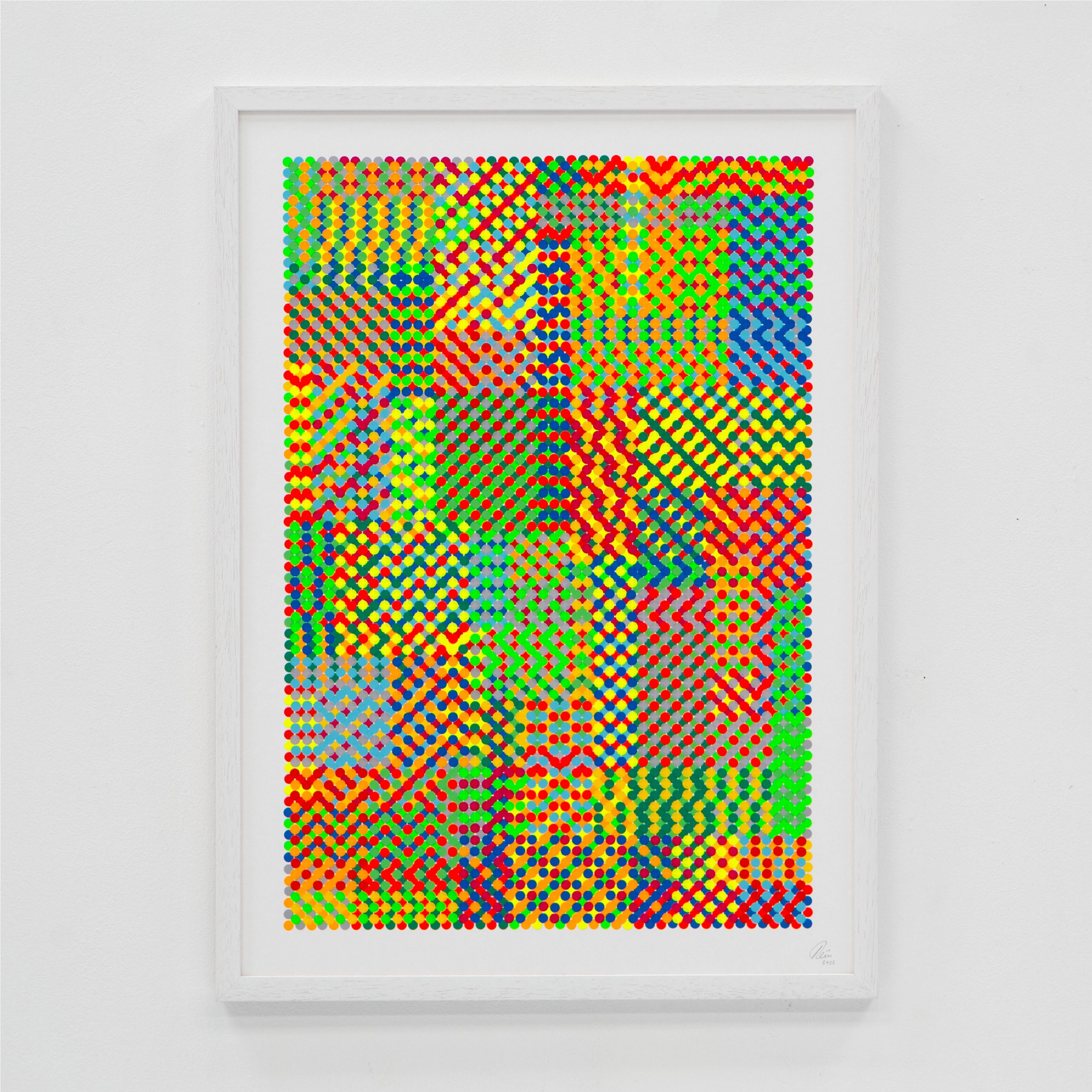
Could you describe how you felt when you heard that you were nominated for the NN Art Award? What project would you start if you were to win the award?
“It was a very special feeling. I remember thinking: ‘the circle is complete’. In 2015, I won the ‘Keith Haring art-challenge’ at the Kunsthal, and subsequently made an artwork at Lowlands with the festival visitors. This was the start of my art practice. The opportunity to exhibit my work in the museum now, after all these years, holds added significance for me. I would also like to publish my own book, so perhaps I can realize that dream this year.”
How do you view the role of economic systems in the contemporary art world? How do you try to find your own place in it?
“Art is often sold as an exclusive luxury product. The art market is full of written and unwritten rules. But what a work costs and what it’s actually worth are two different things for me. In my work, I engage with these rules in various ways — sometimes by disregarding them, at other times by adopting and then subverting them, or by approaching them with a sense of playful skepticism. In doing so, I aim to actively involve the buyer in contemplating these underlying questions. Money has become an abstract concept, while ideally, the sale of art is about human contact. Fortunately, I see more and more artists engaging with this, and I am very grateful that at my gallery Brinkman & Bergsma, I get the space to experiment with this.”
What is the best advice you’ve ever received?
“‘Do it yourself’ was the guiding principle when a group of friends and I formed a collective during our time at the art academy. We took the initiative to organize movie nights, create protest stickers, and set up exhibitions and festivals. With the collective power of a community, you can make anything possible. It also liberates us from reliance on established institutions and organizations. This led Marnix Postma and me to establish De Bouwput, an inclusive art space in Amsterdam that everyone can use. We embrace a non-selective, non-curatorial approach, pre-approving all proposals, embodying the concept of ‘Anarchy in a white cube’.”
The winner of the NN Art Award will be announced in the Kunsthal Rotterdam on Thursday 1 February at 20:00 CET. The work of the nominees will be on display there until 14 April 2024. During Art Rotterdam, the work of Peim van der Sloot will also be shown in the booth of Brinkman & Bergsma.
By Flor Linckens
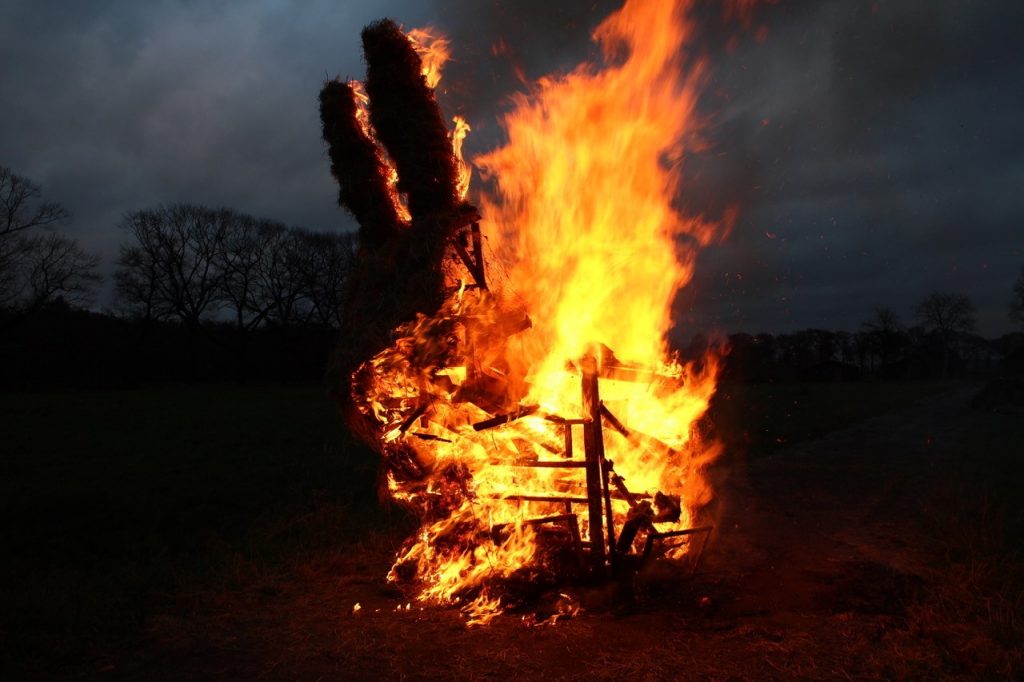
Het wordt ongetwijfeld een van de meest opvallende stands van Art Rotterdam, die van Annet Gelink Gallery. Niemand zal zomaar voorbijlopen aan een 3,5 meter hoog konijn van hooi. Voor zijn nieuwe project, met als werktitel De Gloeiige, verruilde Erik van Lieshout woon- en werkplaats Rotterdam tijdelijk voor zijn geboortedorp Deurne, een agrarisch dorp aan de Brabantse kant van de Peel dat de afgelopen jaren uitgroeide tot een brandpunt in het verzet tegen het stikstofbeleid. Van Lieshout bracht er een jaar door, maakte er opnames voor een nieuwe film, sculpturen van eieren en het konijn van hooi. Daarnaast zijn er handgemaakte t-shirts te koop die Van Lieshout zelf maakte in samenwerking met de Rotterdamse modeontwerper Jeroen van Tuyl.
“Heb je weleens in een stal met 1000 varkens gestaan?”, vraagt Erik van Lieshout ergens halverwege ons gesprek. Er volgt een korte stilte. “Kijk, dat is het punt, de stad en het platteland zijn twee werelden die niet mixen.” Dat is precies wat Van Lieshout wil doen met zijn project, de twee werelden met elkaar in contact brengen, en dat mag een beetje schuren.
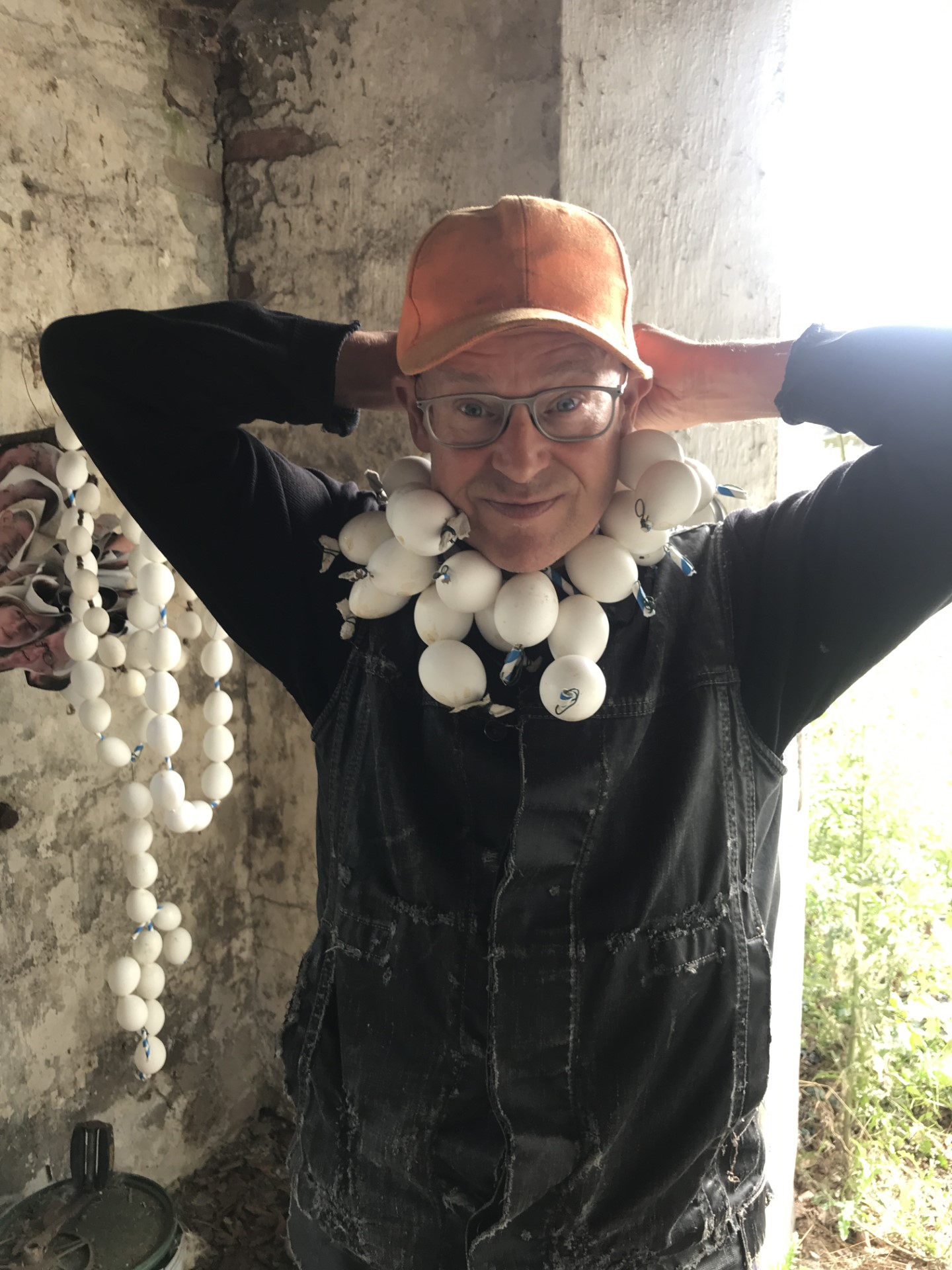
De Gloeiige
Erik van Lieshouts nieuwste project ontleent zijn werktitel aan de regionale mythe van een geestverschijning die ‘s nachts werd waargenomen in moerassen en drassige heidevelden. In een versie van de sage is de geest een boer die gefraudeerd had met grenspalen. Na hun dood dolen de geesten rond en proberen ze in het reine te komen om daarna rust te vinden.
Met De Gloeiige zit Van Lieshout weliswaar dicht op de politieke actualiteit, maar hij maakte al eerder werk over boerenprotesten. Zo was de uit de hand gelopen demonstratie voor het Friese provinciehuis in 2019 al eens het onderwerp van een grote collage van gekleurd vinyl, net als tractorprotesten in Den Haag het jaar daarna.
Protest en ingaan tegen de status quo is een rode draad in Van Lieshouts werk. Dat is deels te herleiden tot zijn jeugd in Deurne waar de dorpspolitiek van oudsher wordt gedomineerd door de belangen van de varkens- en kippenboeren. Van Lieshouts ouders waren geen boer, waardoor hij een outsider bleef en een haat-liefdeverhouding bleef houden met de lokale boeren.
Zeer positief
“Het is echt een hardcore industrie en de boeren weten dat er iets moet veranderen”, vat Van Lieshout de situatie samen, “want de stront loopt je hier werkelijk de oren uit.” Met de film, die hij op dit moment aan het monteren is, hoopt hij de regio duurzaam te veranderen. Buiten boerenbedrijven is er namelijk weinig te doen in de Peel, vertelt Van Lieshout: “Er zijn geen fietspaden, mooie wandelroutes, espressobarretjes, en afgezien van de Wieger geen musea in de omgeving. Ik wil het gebied veranderen en activeren tot iets leuks”. Om die reden noemt Van Lieshout zijn project dan ook ‘zeer positief voor de boeren’.
Vanzelf ging het niet, want echt open voor een uitwisseling met een kunstenaar stonden de boeren niet. “Boeren zijn van nature al gesloten, maar ze zijn tegenwoordig extra op hun hoede voor media en dierenrechtenactivisten”. Voor De Gloeiige was het dus handig dat hij uit Deurne kwam en de taal spreekt. Van Lieshout speelde open kaart – “ze weten dat ik links en activistisch ben” – en won zo hun vertrouwen. Gaandeweg kreeg hij medewerking en mocht hij overal filmen.
Wat ook hielp is dat de regio volgens Van Lieshout veel humor kent. Iets dat, ondanks de serieuze boodschap, niet ontbreekt in Van Lieshouts werk en in deze film. Bij de feestelijke afsluiting van het project daags na de Tweede Kamerverkiezingen – onder het genot van een kom erwtensoep en bier zou een van de hooien konijnen worden verbrand – kwam tot Van Lieshouts verbazing iedereen uit de buurt opdagen die aan het project had meegewerkt.
Dat het af en toe schuurt is logisch, maar dat komt de film ten goede. Zo krijgt Van Lieshout verzamelaars en delegaties van musea op bezoek; hij brengt ze in contact met de boeren. Een ongemakkelijk samenzijn, al was het maar omdat een deel van de stedelingen vegetariër is. Zo onderstreept Van Lieshout zijn punt dat de stedeling en de boer elkaar nauwelijks tegenkomen of kennen.
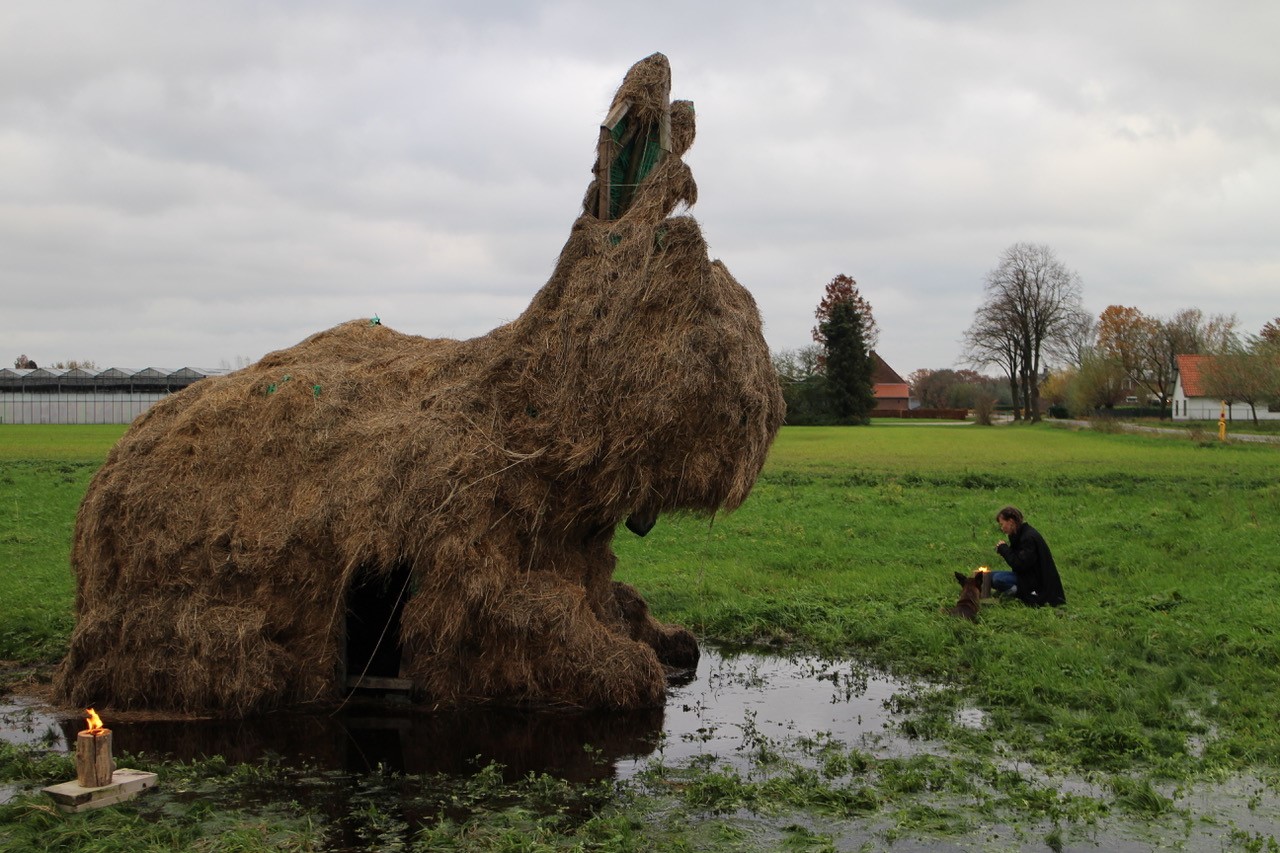
Een metershoog konijn
Van Lieshout kaart niet alleen de gescheiden werelden van de stad en platteland aan, maar stelt ook de vraag: van wie is het land en wat mag je ermee doen? Hij kreeg de beschikking over een ruïne van een boerderij, eigendom van een veearts die net als Van Lieshout de streek verliet voor zijn studie. De veearts wil nu terugkeren om een laboratorium beginnen dat een serum voor slangenbeten ontwikkelt. Daarvoor zouden letterlijk proefkonijnen worden gebruikt. Het plan stuit op veel weerstand, niet alleen van activisten maar ook van de lokale boeren.
In reactie daarop besloot Van Lieshout een metershoog konijn van sloophout bedekt met hooi te bouwen op het land van de veearts. Een provocerende reactie op de bouwwerken van hooi die boeren langs de weg zetten uit protest tegen het stikstofbeleid.
Een andere plek die in de film een prominente rol speelt, is het gebied dat achter de ruïne ligt: een braakliggend terrein van 250 hectare. Ooit bedoeld om ontwikkeld te worden tot glastuinbouwgebied, maar daar kwam door de financiële crisis van 2008-2013 weinig van terecht. Wat er met het gebied moet gebeuren houdt de gemoederen in de gemeente dan ook bezig. Een deel van de bewoners wil dat er niks mee wordt gedaan, terwijl boeren in de omgeving er het liefst een mestvergistingsfabriek zien komen, zodat verder alles bij het oude kan blijven.
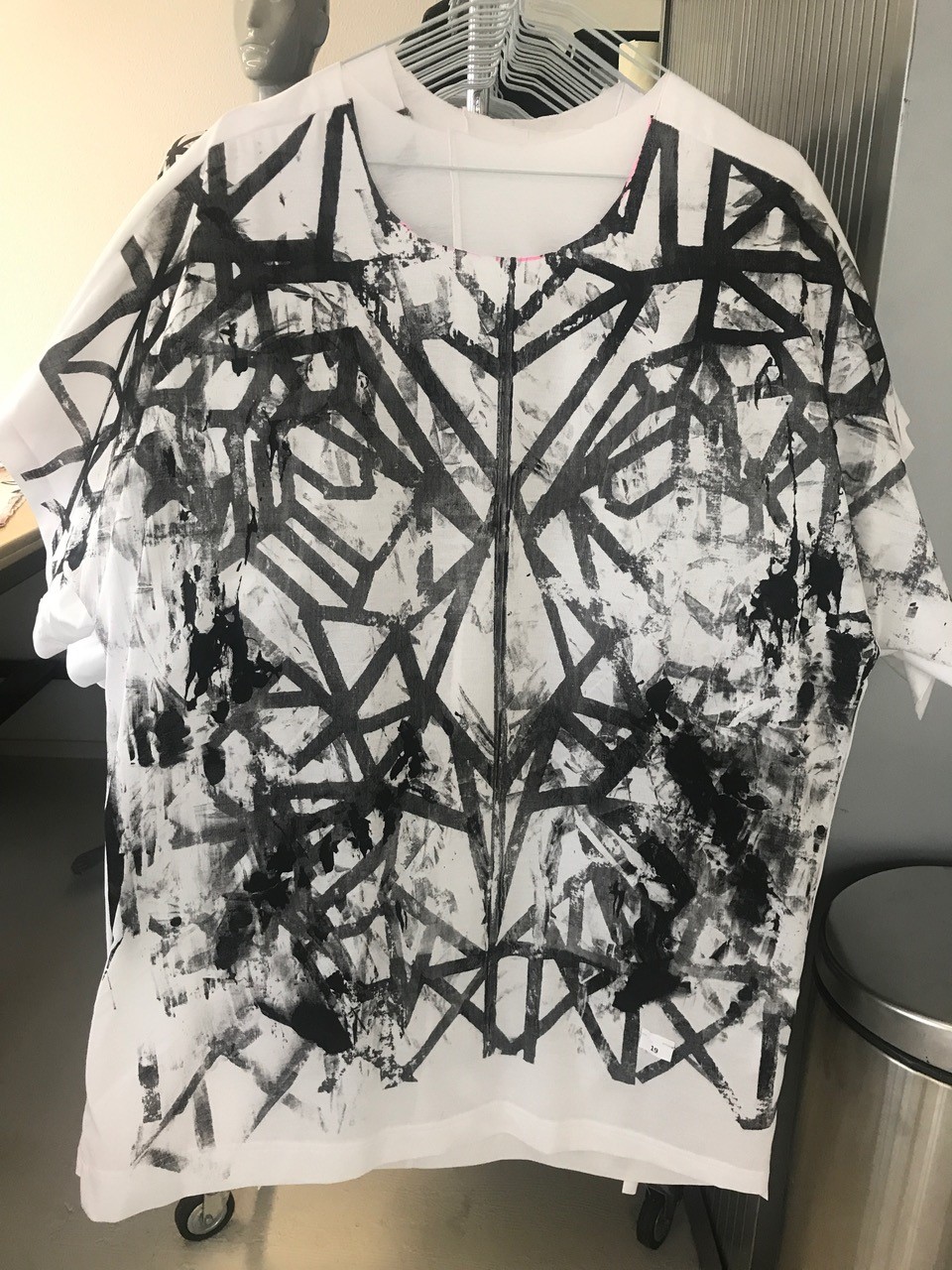
Boerenkunst en t-shirts
Van de veearts mocht Van Lieshout alles wat hij in de ruïne aantrof gebruiken voor zijn werk. Planken, riemen, hooivorken en spades: hij verwerkte het allemaal in sculpturen. Het hoofdbestanddeel zijn echter de witte eierenschalen. De eieren kocht hij bij een lokale boer. Met een naald prikte Van Lieshout een gaatje en blies het struif eruit. De lege eieren verwerkte hij in een serie sculpturen die je volgens hem boerenkunst zou kunnen noemen. De beeldtaal verwijst in ieder geval naar het boerenbestaan en het katholicisme – de vergelijking met een rozenkrans is snel gemaakt bij een ketting van eierenschalen – twee pijlers die het bestaan in de regio richting gaven en geven. Een aantal van deze sculpturen is op Art Rotterdam te zien in de stand van Annet Gelink Gallery.
Daarnaast is een zelfgemaakt t-shirt te koop, in een oplage van 50, dat voorkomt uit Van Lieshouts samenwerking met de Rotterdamse modeontwerper Jeroen van Tuyl.
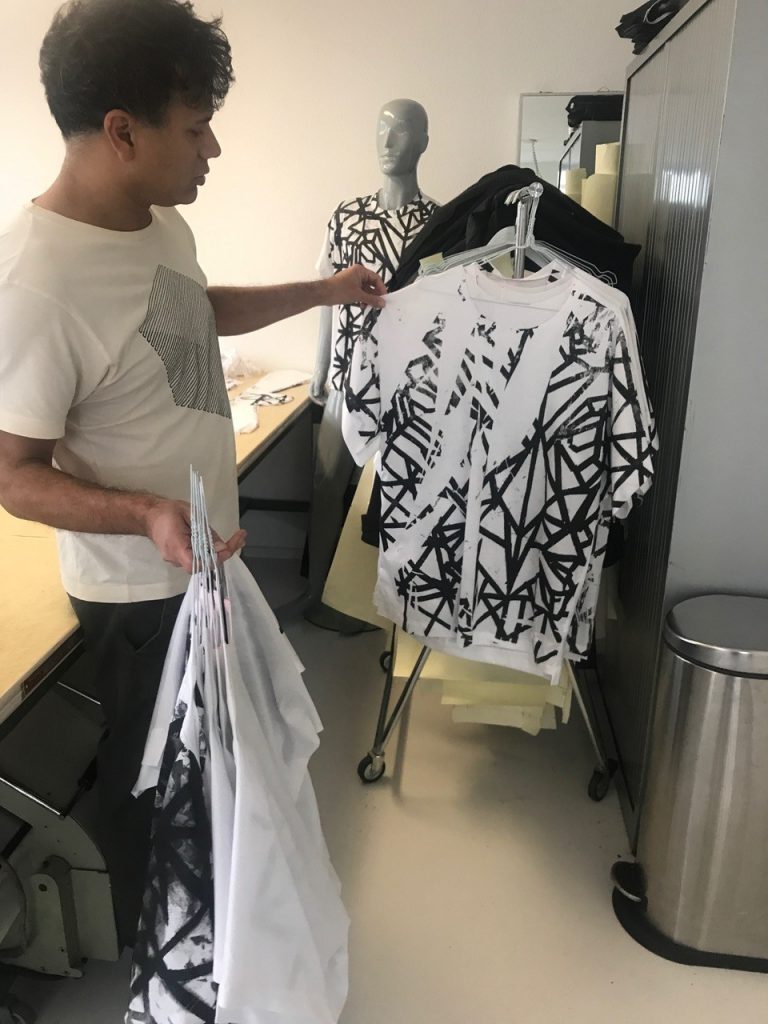
Van Lieshout nam het logo van Van Tuyl, een soort masker, als uitgangspunt voor een tekening. Het werd een Mondriaan-achtige tekening met strakke lijnen van vinyl. Een uitvergrote versie daarvan zeefdrukte Van Lieshout samen met Van Tuyl op wit katoen. Elk shirt heeft zijn eigen -vaak dubbele- druk in typische rauwe Van Lieshout-stijl. Van Tuyl tekende voor het ontwerp. “Het in elkaar zetten is een heel precies werk, de hele familie is er voor ingezet en we zijn daar nog steeds mee bezig”, zegt Van Lieshout die hoopt de 50 shirts klaar te hebben voor Art Rotterdam.
De uiteindelijke film met als werktitel ‘De Gloeïige’ wordt mede mogelijk gemaakt door Het Noordbrabants Museum en door het Mondriaan Fonds
Geschreven door Wouter van den Eijkel
Voor het achtste jaar op rij gaat de NN Art Award in 2024 naar een veelbelovende kunstenaar die hun werk toont tijdens Art Rotterdam. Nieuw, dit jaar, is de presentatie van het werk van de genomineerden. Zij exposeren niet in een stand op Art Rotterdam maar in de toonaangevende Kunsthal Rotterdam, van 1 februari tot en met 14 april 2024. De genomineerde kunstenaars voor de NN Art Award 2024 zijn Maaike Kramer (Art Gallery O-68), Mónica Mays (Prospects sectie van het Mondriaan Fonds), Jan van der Pol (CREMAN & DE ROOIJ) en Peim van der Sloot (Brinkman & Bergsma).
Het abstracte werk van Peim van der Sloot valt direct op door zijn gebruik van bekende ronde stickertjes, die op kunstbeurzen bijvoorbeeld gebruikt worden om aan te geven dat een kunstwerk gereserveerd of verkocht is. Van der Sloot werpt in zijn praktijk een kritische blik op economische systemen. Hij bevraagt concepten van waarde, schaarste en eigendom en reflecteert daarbij op de complexe relatie tussen kapitalisme en de kunstwereld. De kunstenaar introduceert bijvoorbeeld alternatieve prijssystemen en speelt met serialiteit. Daarmee daagt hij gangbare economische normen en aannames uit en nodigt hij kijkers uit om hetzelfde te doen. Dat bevragen van de gevestigde orde komt ook tot uiting in zijn visuele stijl, die gekenmerkt wordt door optische illusies, speelse en dynamische composities, levendige kleuren en een vleugje chaos en anarchie. Van der Sloot groeide op in Argentinië en studeerde aan de HKU (Hogeschool voor de Kunsten Utrecht). Zijn werken zijn onder meer opgenomen in de collectie van het LAM en de KPMG Kunstcollectie en in 2021 sleepte hij de Art Entrepreneur Award van het LAM in de wacht.
Zou je iets meer kunnen vertellen over het werk dat je presenteert op Art Rotterdam en in de Kunsthal?
“Op Art Rotterdam zal ik een divers overzicht bieden van mijn opgebouwde oeuvre tot nu toe. Beginnend bij de conceptuele benadering van kunstverkoop tot aan de nieuwste werken die als magische spreuken klaar staan om de kijker te betoveren. Enkele van de meest prominente stukken die ik laat zien tijdens de beurs zijn ‘It Has To Start Somewhere’, een serie die bestaat uit 3479 stuks, waarbij telkens geleidelijk een sticker ontbreekt die de koper ontvangt om naast het kunstwerk aan de muur te plakken, en ‘The Most Expensive Piece’, dit wordt het duurste kunstwerk dat op Art Rotterdam 2024 te koop zal zijn.
Voor de tentoonstelling in de Kunsthal ga ik een site-specifieke installatie maken, waarbij ik de muren van het museum als canvas benader. In het werk ‘Peim was here’ krijgt de rode verkocht-sticker uiteraard een prominente plek.”
Wat zijn je plannen voor 2024?
“Naast dat ik er voor wil zorgen dat mijn werk ‘Works I Have Sold In My Life So Far’ blijft groeien is 2024 een jaar waarbij ik wil experimenteren met nieuwe materialen en technieken. Het animeren van mijn werk in film is iets waar ik bijvoorbeeld de tijd voor wil nemen. Ook werk ik op dit moment aan een collectie ‘digitale artefacten’, kunstwerken die op Bitcoin munten gegraveerd worden. Het is een beetje een technisch verhaal, maar je kunt het zien als het zetten van digitale graffiti op cryptogeld. Zo lang er twee computers op aarde met elkaar verbonden zijn, zullen deze werken voor de eeuwigheid blijven bestaan.”
Kun je beschrijven hoe het voelde toen je hoorde dat je genomineerd was voor de NN Art Award? Welk project zou je meteen oppakken als je de award in de wacht zou slepen?
“Dat was een heel speciaal gevoel. Ik dacht ‘de cirkel is rond’. In 2015 won ik namelijk de ‘Keith Haring art-challenge’ van de Kunsthal, en maakte ik een kunstwerk op Lowlands met de bezoekers van het festival. Dit was het begin van mijn kunstpraktijk. Dat ik nu, jaren later, mijn werk mag exposeren in het museum heeft dan ook extra veel betekenis. Ik wil graag een eigen boek publiceren, dus wellicht kan ik die droom verwezenlijken dit jaar.”
Hoe zie je de rol van economische systemen in de hedendaagse kunstwereld? Hoe probeer je daar je eigen plek in te vinden?
“Kunst wordt vaak verkocht als een exclusief luxeproduct. De kunstmarkt zit vol met geschreven en ongeschreven regels. Maar wat een werk kost en wat het eigenlijk waard is, zijn voor mij twee verschillende dingen. Door al deze regels in mijn werk te negeren of juist wél in te zetten, ze om te draaien of ze met een korreltje zout te nemen, probeer ik ook de koper te betrekken bij deze vraagstukken. Geld is een abstract begrip geworden terwijl de verkoop van kunst idealiter draait om het menselijk contact. Gelukkig zie ik steeds meer kunstenaars die zich hiermee bezighouden, en ik ben zeer dankbaar dat ik bij mijn galerie Brinkman & Bergsma de ruimte heb om hiermee te experimenteren.”
Wat is het beste advies dat je ooit hebt gekregen?
“‘Gewoon zelf doen’ is het motto waarmee een groep vrienden en ik een collectief begonnen tijdens het studeren aan de kunstacademie. We organiseerden filmavonden, protest stickers, tentoonstellingen en festivals. Met de gebundelde kracht van een community is alles mogelijk en ben je niet afhankelijk van instituten of bestaande organisaties. Je maakt het gewoon zelf. Op die manier hebben Marnix Postma en ik bijvoorbeeld De Bouwput opgericht, een kunstruimte in Amsterdam waar iedereen gebruik van kan maken. Wij maken geen selectie en cureren niets, alle voorstellen zijn bij voorbaat goedgekeurd: ‘Anarchy in a white cube’.”
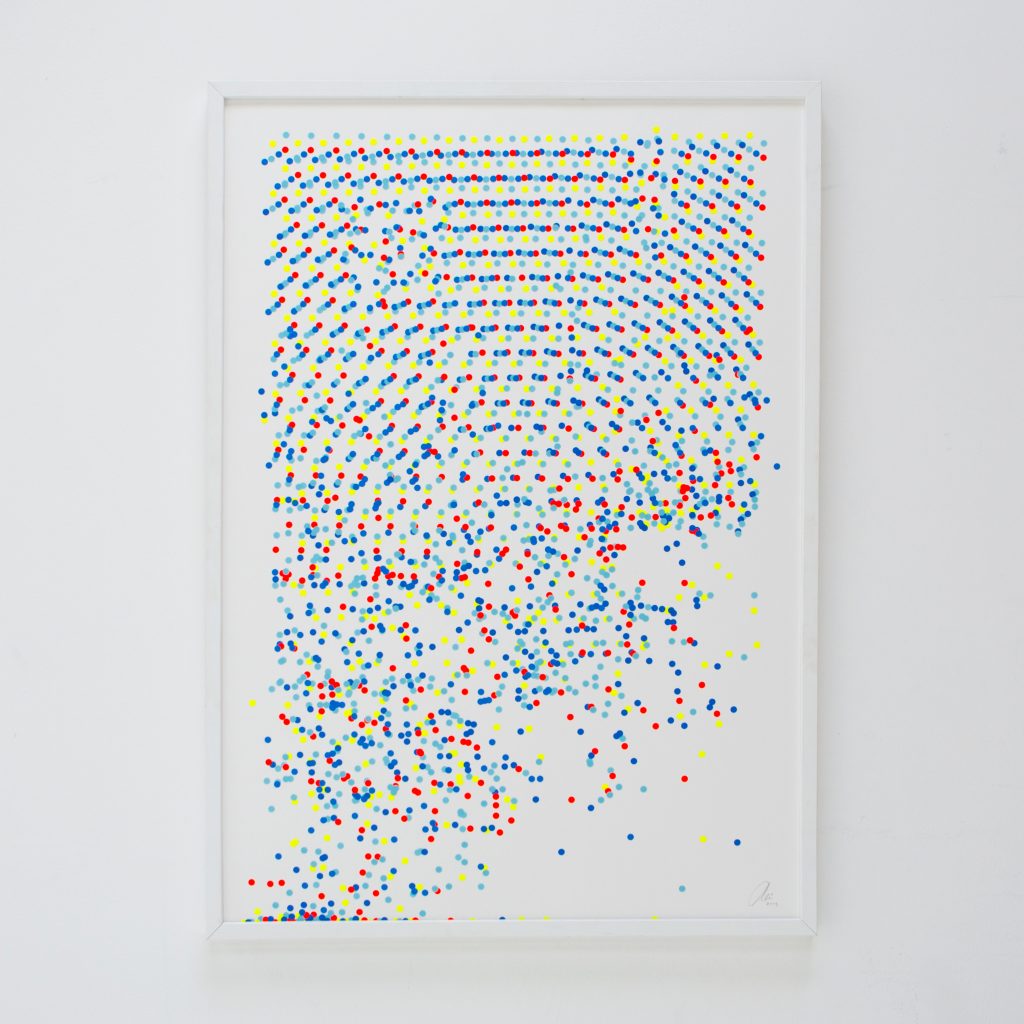
De uiteindelijke winnaar van de NN Art Award 2024 wordt op donderdag 1 februari om 20.00 uur bekendgemaakt in Kunsthal Rotterdam. Het werk van de genomineerden is daar nog te zien tot en met 14 april 2024. Tijdens Art Rotterdam is het werk van Peim van der Sloot ook te zien in de stand van Brinkman & Bergsma.
Door Flor Linckens
For the eighth year in a row, the NN Art Award will be awarded to a promising artist who completed their studies at an art academy in the Netherlands and is exhibiting at Art Rotterdam. This year, for the first time, the nominees will exhibit their work in the leading Kunsthal Rotterdam, from 1 February to 14 April 2024. The nominated artists for the NN Art Award 2024 are Maaike Kramer (Art Gallery O-68), Mónica Mays (Prospects section of the Mondriaan Fund), Jan van der Pol (CREMAN & DE ROOIJ) and Peim van der Sloot (Brinkman & Bergsma).
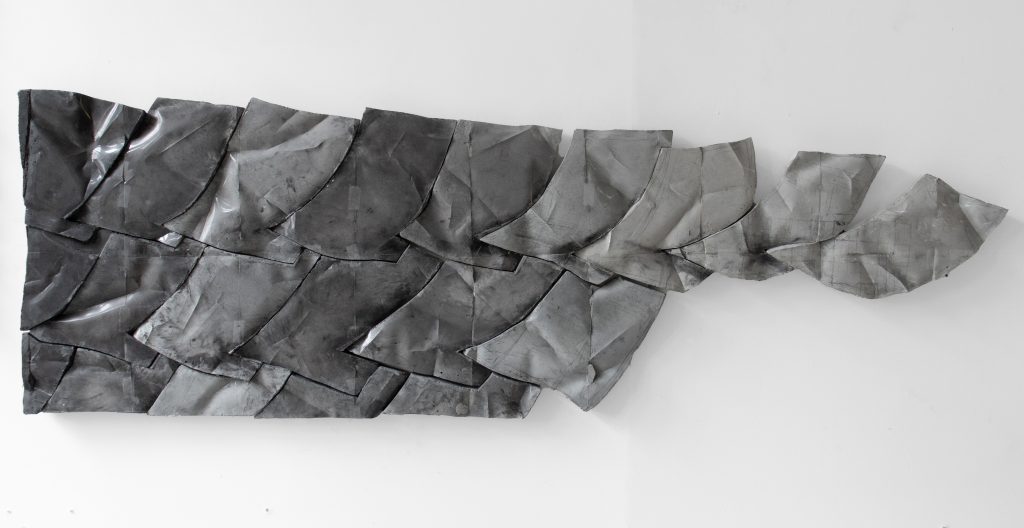
Maaike Kramer’s oeuvre stands out because of her diverse use of materials, including concrete, metal, graphite, paper, stone and wood. In her practice, Kramer combines robust, architectural elements with more sketch-like materials. This results in works that are often heavy, massive, and monumental, but also light, fragile and unstable. Sometimes these works also exhibit trompe-l’oeil effects. Kramer explores the dynamic interaction between these diverse and, at first glance, contradictory materials: can they learn from or borrow from each other? And what relationships do the works enter into with the spaces in which they are shown?
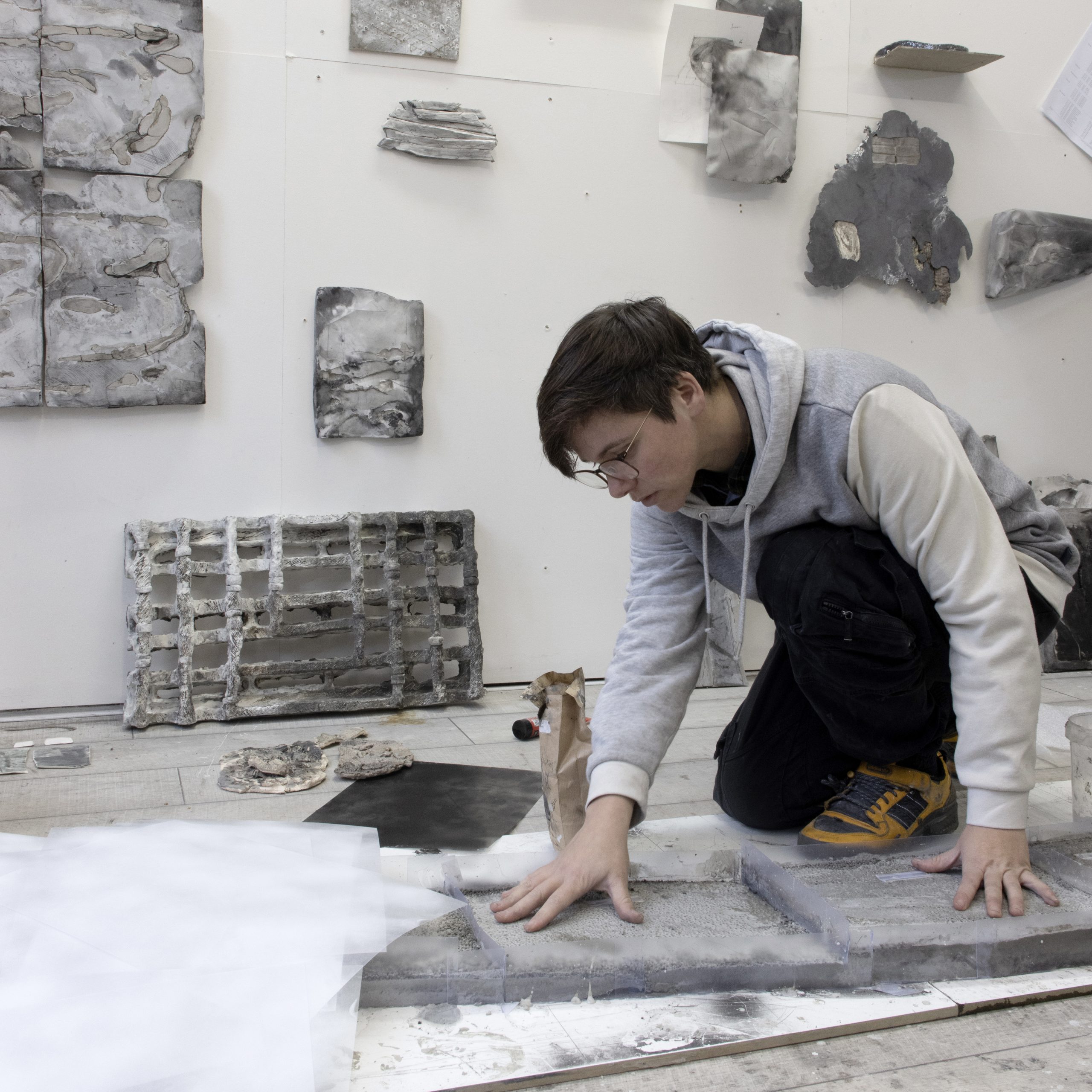
Kramer’s art tells stories about the creative process and reflects on the spaces we create and inhabit. They invite contemplation on the nature of construction, the role of humans in shaping their environment, and the contrast between the transience of ideas and the durability of materials. Kramer emphasizes this: “Ideas are not as durable as the material in which they are captured.” In some cases, this line of thinking is reflected in her practice, for example when sketches are literally integrated into the work. Kramer: “I incorporate different stages of the creating process into my work; from the monumentality of the final work, to the materials and methods that lead up to it. Examples include sketches, documentary photography, and scale models in combination with concrete, steel, and scaling up. During the creating process, the work goes through various phase transitions, dictated by the materials and the methods. Sketches are given a sculptural translation, are photographed, printed, enlarged, cast and copied.”
Could you tell us a bit more about the work you are presenting at Art Rotterdam and in the Kunsthal? What led you to focus on ceramics in your newer works?
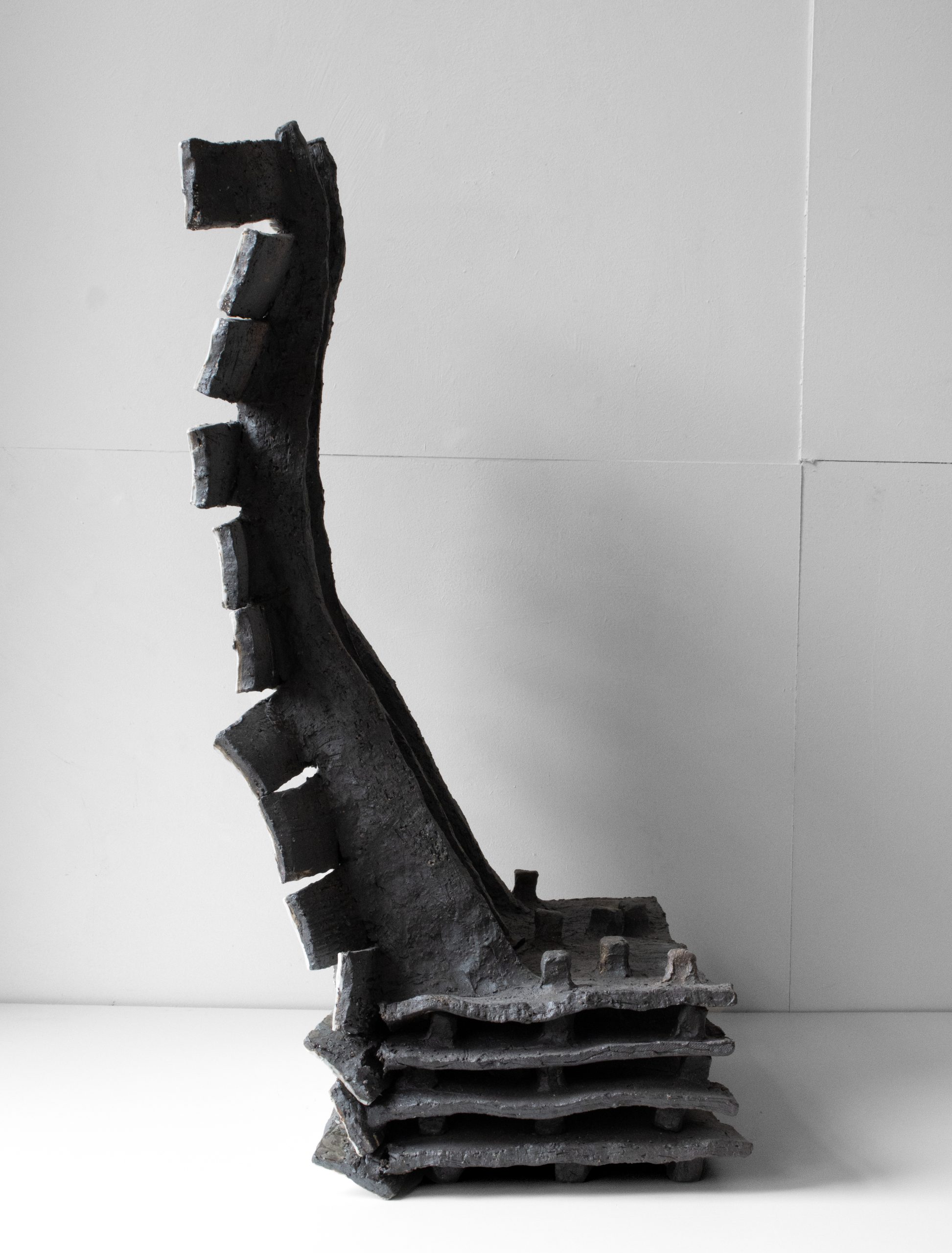
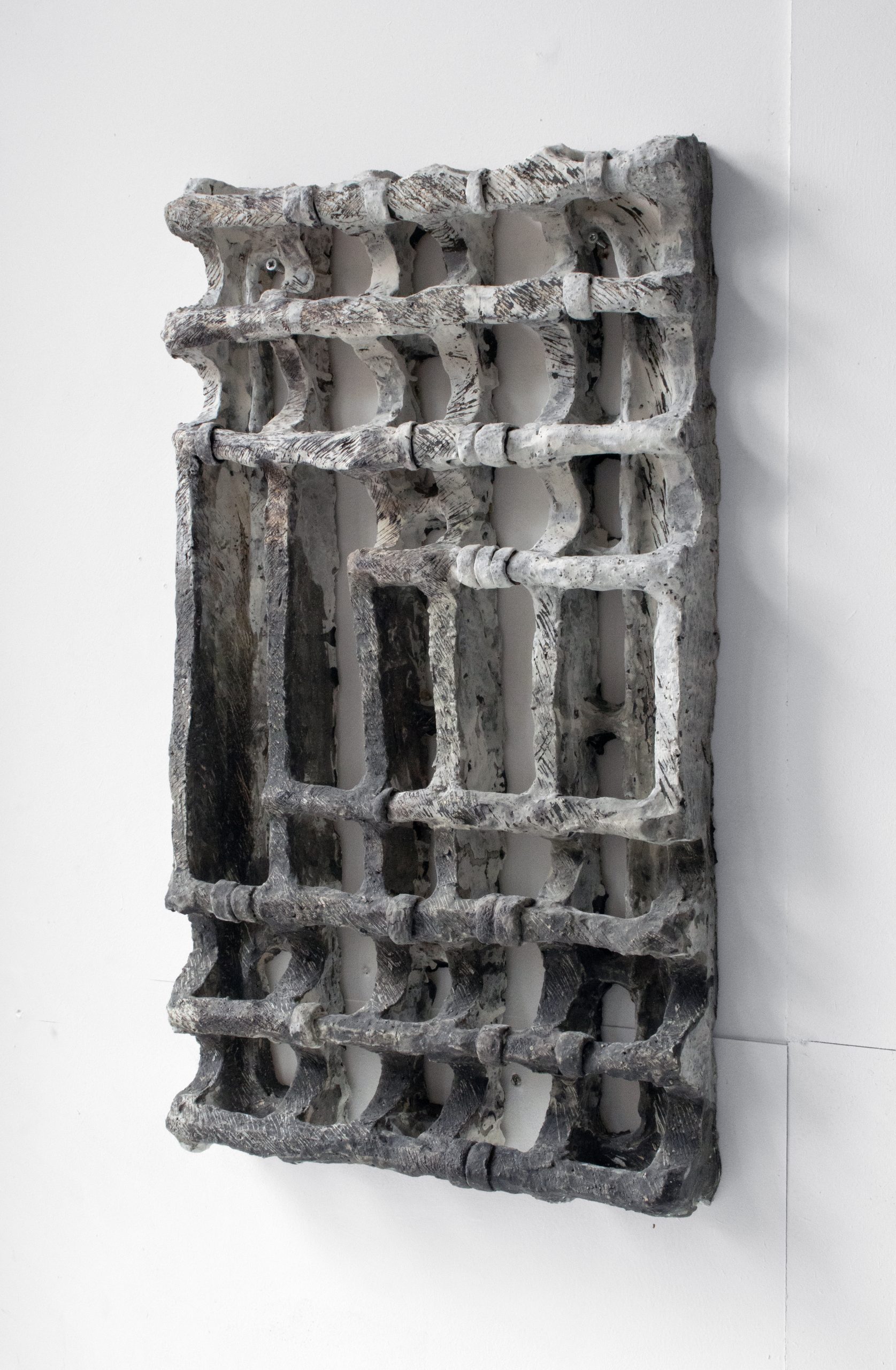
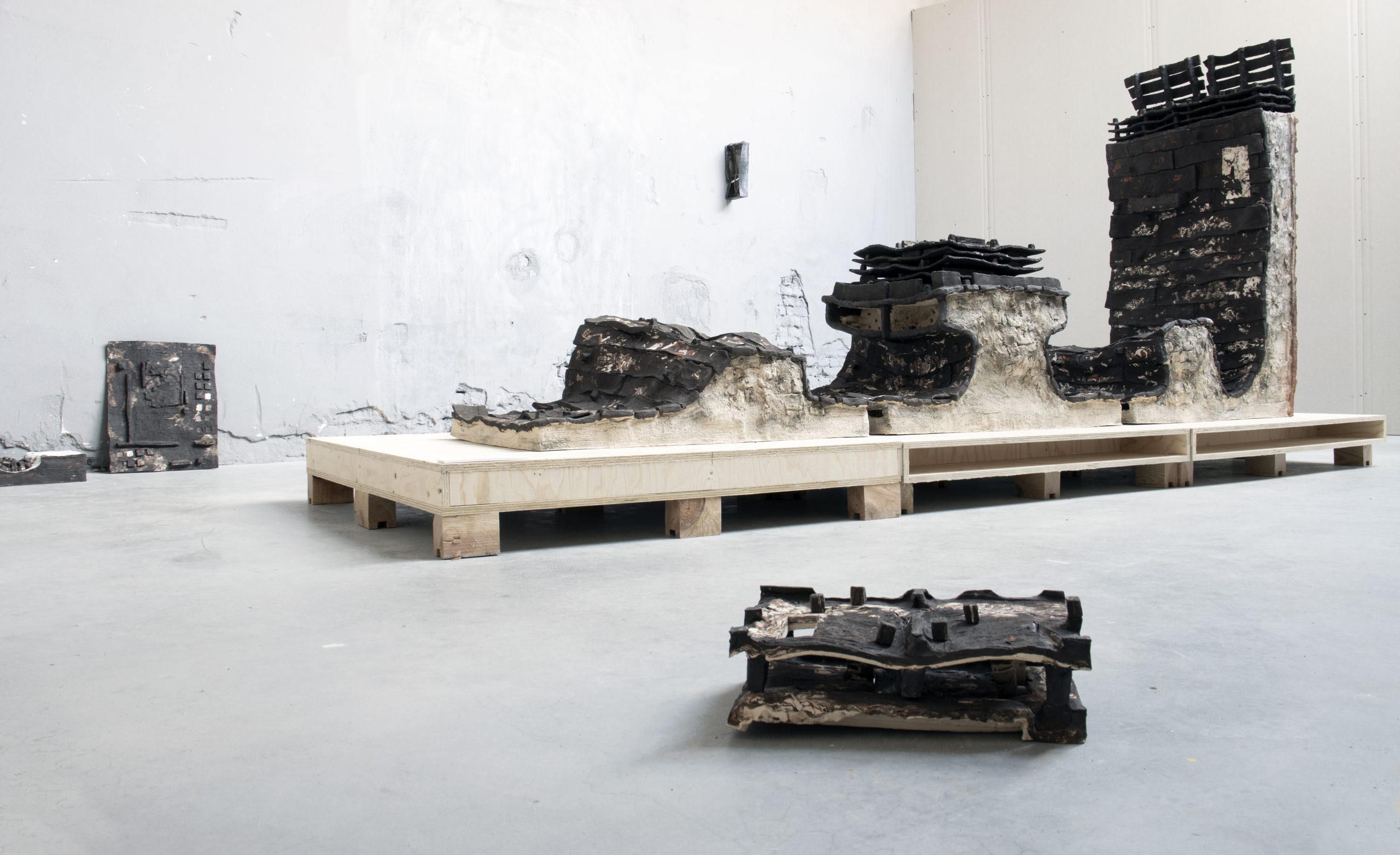
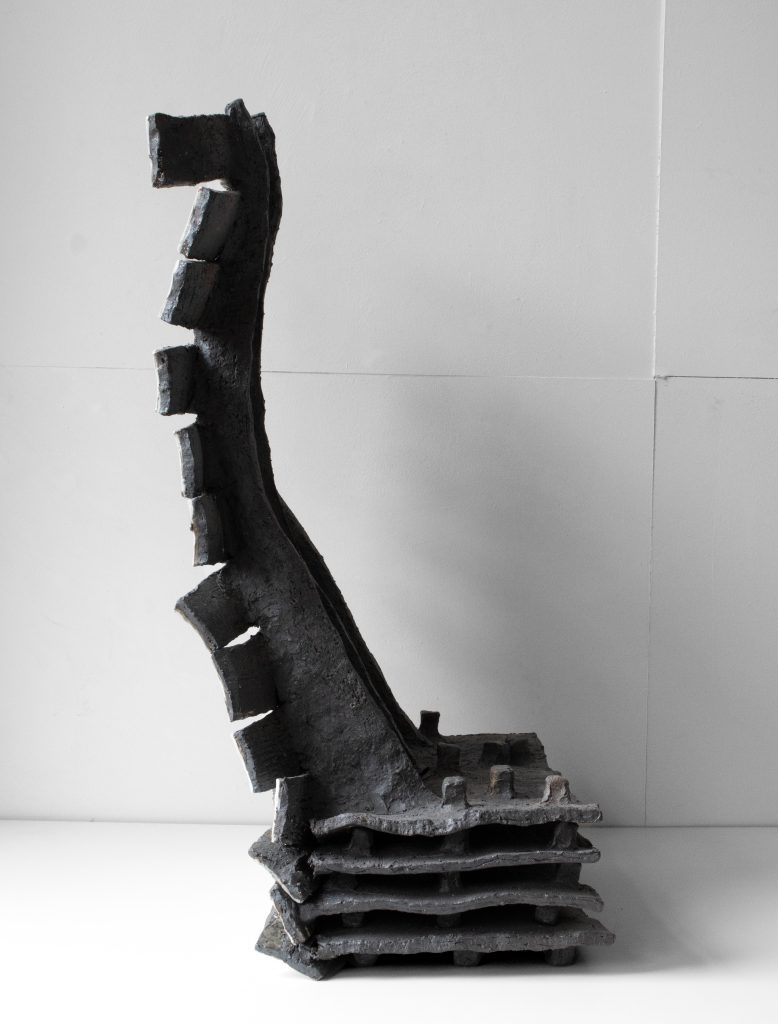
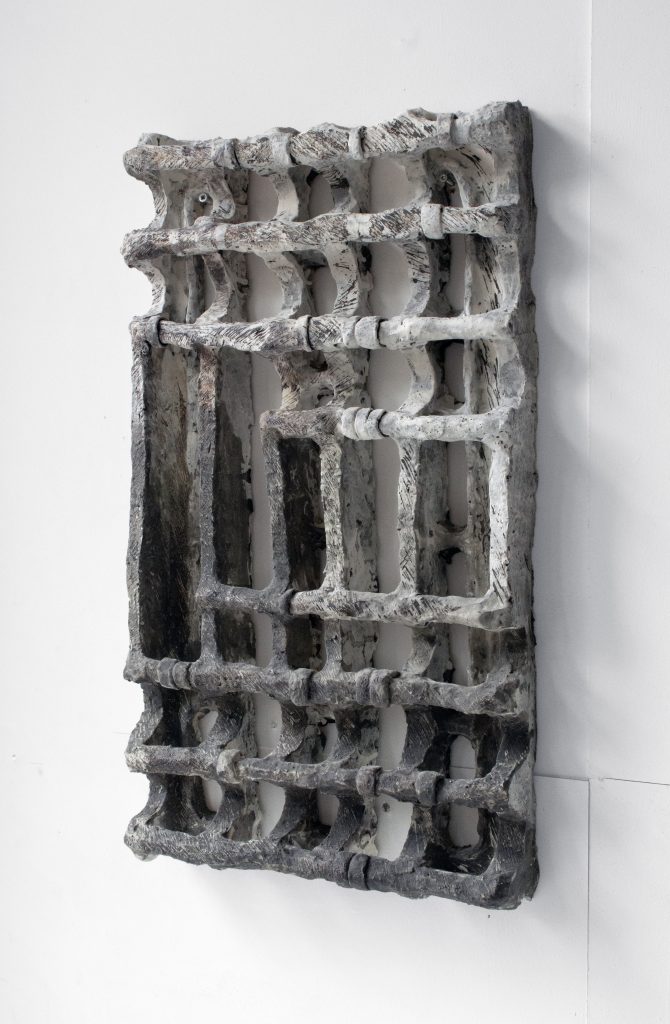
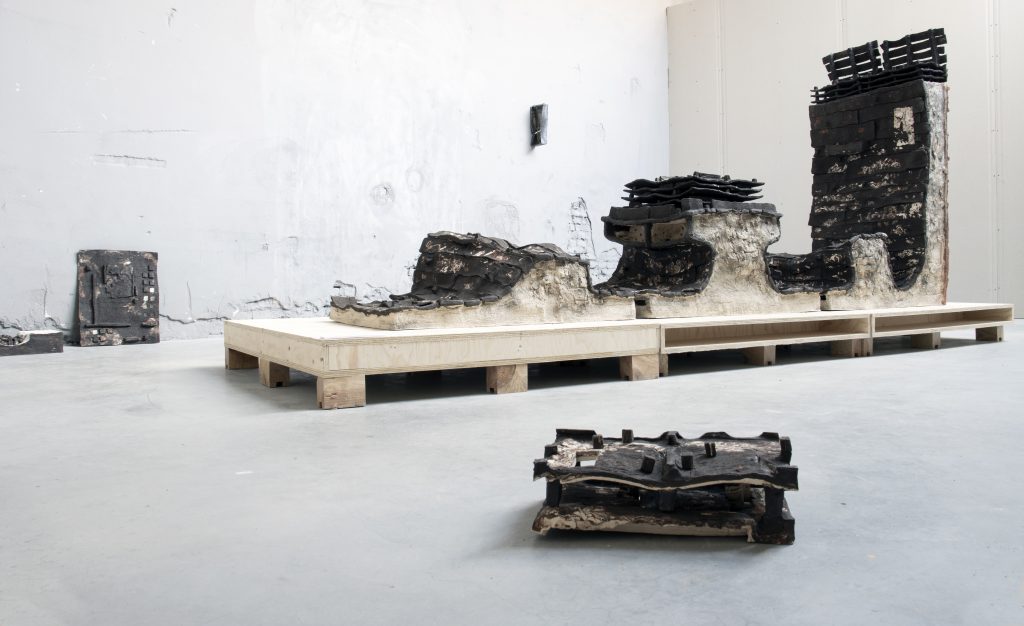
My work is about spaces, about architectural spaces as a metaphor for spaces in one’s mind. I also wanted to explore the space we inhabit more and felt that this required a new material. For this reason, I applied to the EKWC [European Ceramic Work Centre], where I completed a three-month residency program last year. There, I worked with ceramics for the first time and built spaces by hand, seeking ways in which form and material could give new meaning to space. For me, material is an active part of my story. It undergoes a transformation that allows a story to be told. At the EKWC, I ended up working with different types of clay with different levels of shrinkage, causing deformations and cracks during the process of drying and in the kiln. These works reflect on the space indoors. Some works are about the separation between the indoor and the outdoor. These are works I call ‘luxaflex’. I will show some of these luxaflex sculptures at Art Rotterdam. Here, porcelain is connected to coarse black clay. This creates a side that faces outward, made of porcelain with a celadon glaze, and a side that faces inward. These parts influence each other. The coarse inner part causes the smooth porcelain outer part to deform. In the Kunsthal, I will present a large sculpture, made at the EKWC. This sculpture also represents a space, actually a ‘slice’ of a space. It’s a place in which room has been created for a game of sorts. I searched for a space in my own house that felt the most free and experimental, and ended up choosing my shed. In this fictional shed, game boards are stacked where strategies can be thought out, to possibly place them outdoors, in the world. However, the space is also very isolated. So will these ideas actually come out, and if so: how?
What are your plans for 2024? What are you currently working on?
I’m not done exploring ceramics and the various meanings that clay carries. I am also working on making combination works, in which different materials come together. The step to work spatially is still relatively new to me. Until recently I made primarily flat reliefs, folded sheets or flat stacked works. For my exhibition ‘The Unbalancing Act’ at Drawing Centre Diepenheim in 2022, I started making sculptures with a front, side, and back side for the first time.
Could you describe how you felt when you heard that you were nominated for the NN Art Award? What project would you immediately tackle if you were to win the award?
I was incredibly happy and surprised. This is actually the first time my work is being shown at Art Rotterdam — as well as the Kunsthal. If I were to actually win the award, I would invest in my studio. At this moment, my studio is not quite on par with my practice, which is progressively shifting towards sculpture. This requires more space, but also materials and tools. I would really love to have a ceramic kiln, for example.
What is the best advice you have ever received?
Maybe not advice per se, but rather something I have experienced myself. That making visual work is not about tomorrow’s success or that one particular exhibition. But that you must feel that you need to make the work, for whatever reason. For many years I made work that no one saw. My work was first exhibited around 2017, when I had already been working for a few years. But that in fact gives me strength now, knowing that my inner creative engine will keep running.
What is the most remarkable compliment you have ever received about your work?
That it touches people without them being able to put their finger on why exactly. My work is not always immediately graspable or understandable in a single glance, but there is a kind of gut feeling to it, I hope. It feels like a great compliment when that happens.
The winner of the NN Art Award will be announced in the Kunsthal Rotterdam on Thursday 1 February at 20:00 CET. The work of the nominees will be on display there until 14 April 2024. At Art Rotterdam, Maaike Kramer’s work will also be on display in the booth of Art Gallery O-68.
Written by Flor Linckens
During Art Rotterdam, NN group will present the NN Art Award for the eighth time: to a contemporary art talent with an authentic visual language and an innovative approach. NN Group has been a partner of Art Rotterdam since 2017 and has been awarding an incentive award every year since then. An annually changing jury of art professionals makes a selection of four promising talents, from which a winner is ultimately chosen. The conditions are clear: it concerns artists who have been trained in the Netherlands and who show their work during Art Rotterdam. NN Group will purchase one or more works from the nominees for its corporate collection. Last year, the NN Art Award (worth €10,000) was awarded to Monali Meher, who is represented by Lumen Travo Gallery. Art Rotterdam interviewed her to find out what winning the prize has meant to her and what her best advice is for young artists. Read more about here work here.
How did it feel to win the NN Art Award? Are there any particular things you were able to achieve thanks to the prize money?
“In December 2022, I had just arrived in Pune, India, visiting my mother and the family when I heard about the nomination. Marianne, my gallerist from Lumen Travo Gallery, called and gave me this fantastic news that I was one of the nominated artists for the NN Art Award. I was really happily surprised to hear the news amongst my family. It was a double joy! In the two following months, I settled with this news within me and felt very grateful and grounded. The actual announcement of winning the award at Art Rotterdam 2023 brought tears, not only to my eyes but to many who were present there. The tears of joy, wisdom, acknowledgment and freedom. I felt great honor, enthusiasm and gratitude. Since winning the award, I have been experimenting with new materials and processes. And I published my first book, ‘Unknown Landscape’ in October 2023. Of course, big thanks to the sponsors but also the prize money of the NN Art Award. It’s been greatly appreciated. You can find more information about the book on my social media.”
How did the works that you showed during Art Rotterdam come about? Do you follow a specific process? Has that process changed in any way since?
“The selected mixed media works (intricate drawings with black Japan ink and threads on digital photos) were from the time of pandemic, in the intense and unprecedented sequence of lockdowns the world has recently experienced. Through a new series of mixed media drawings and assemblages, I reflected on the pandemic period just gone by, highlighting the relentless cycle of ‘multiple beginnings’ we, as humans, are enduring in the hope to find a renewed and positive perspective for the world.
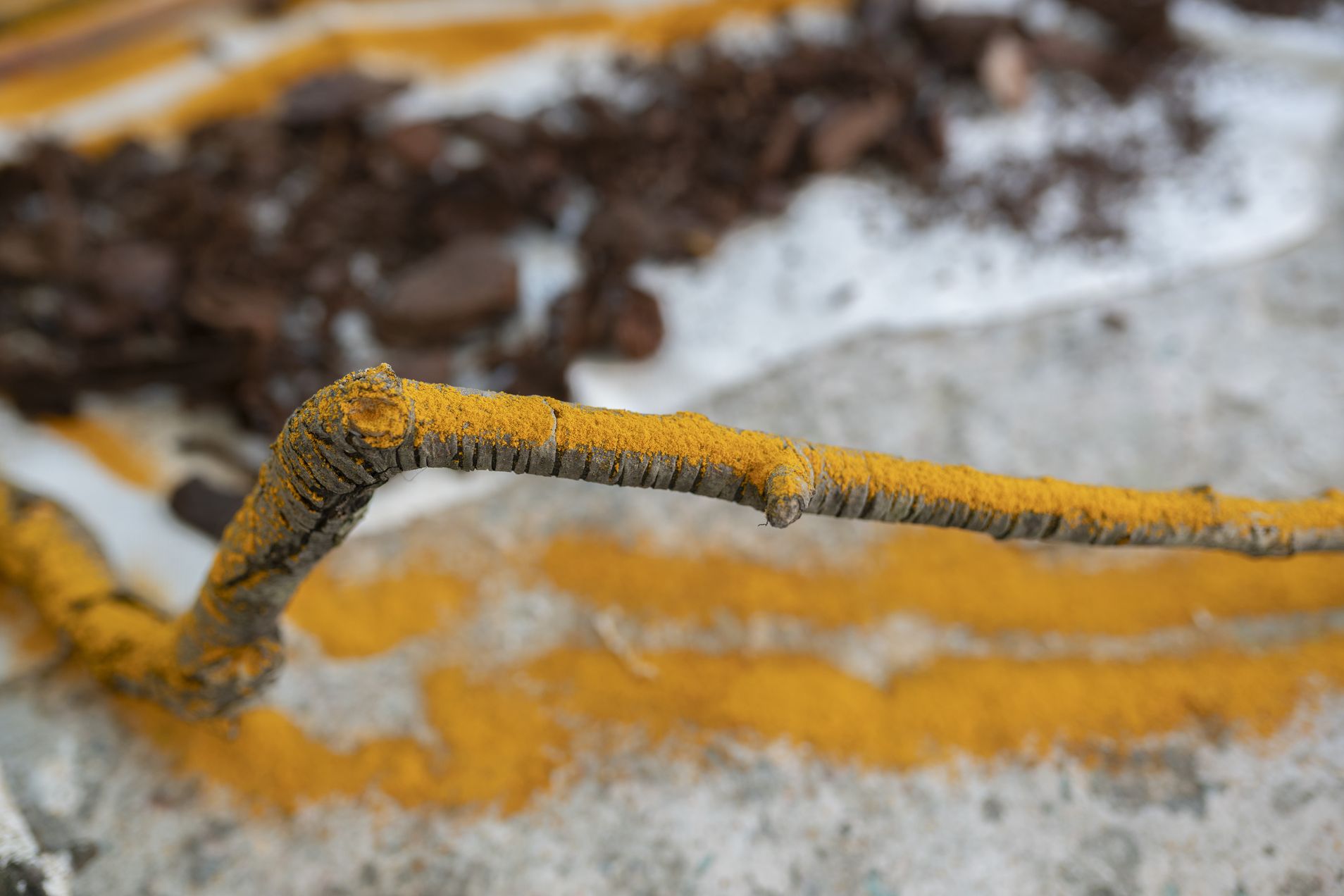
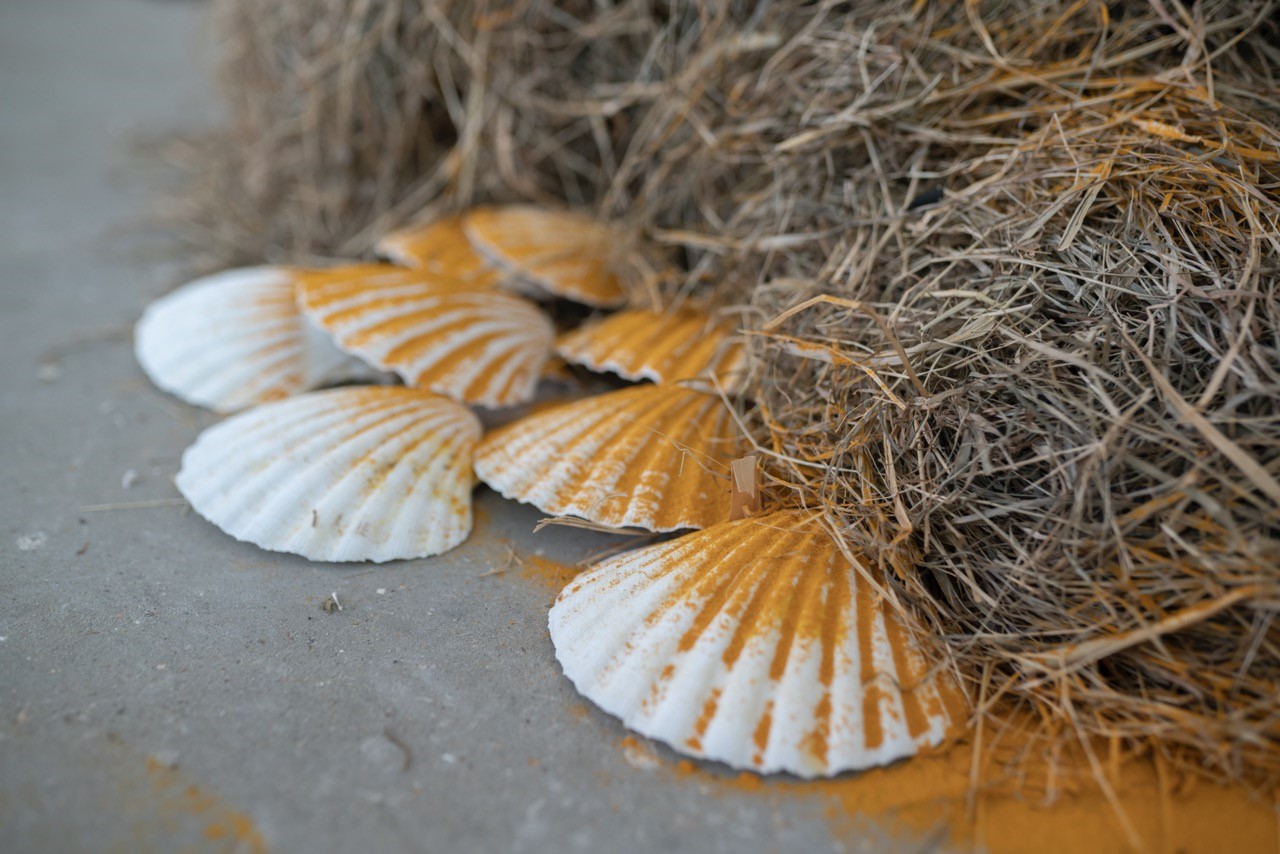
The other glass assemblages and recent new body of site-specific installation with soil, sand, hay, bark, coal, shells, dry plants, branches, turmeric, food colors, natural pigments, copper and glass has been developed since my residency at ‘Gent-Glas’, Ghent, Belgium in 2018/19 where I first time experimented with glass. But I could only create this site-specific installation, ’Unknown Landscape’ after the pandemic in 2022 in ‘Het Atelier’ residency in Brugge. Since then it has been continuously evolving. Then in a group show at Lumen Travo gallery, followed by Art Rotterdam 2023 and soon this site-specific installation will be viewed in the group show ‘NICC x 25’, at museum SMAK in Ghent. This exhibition was on view until 28 December 2023.”
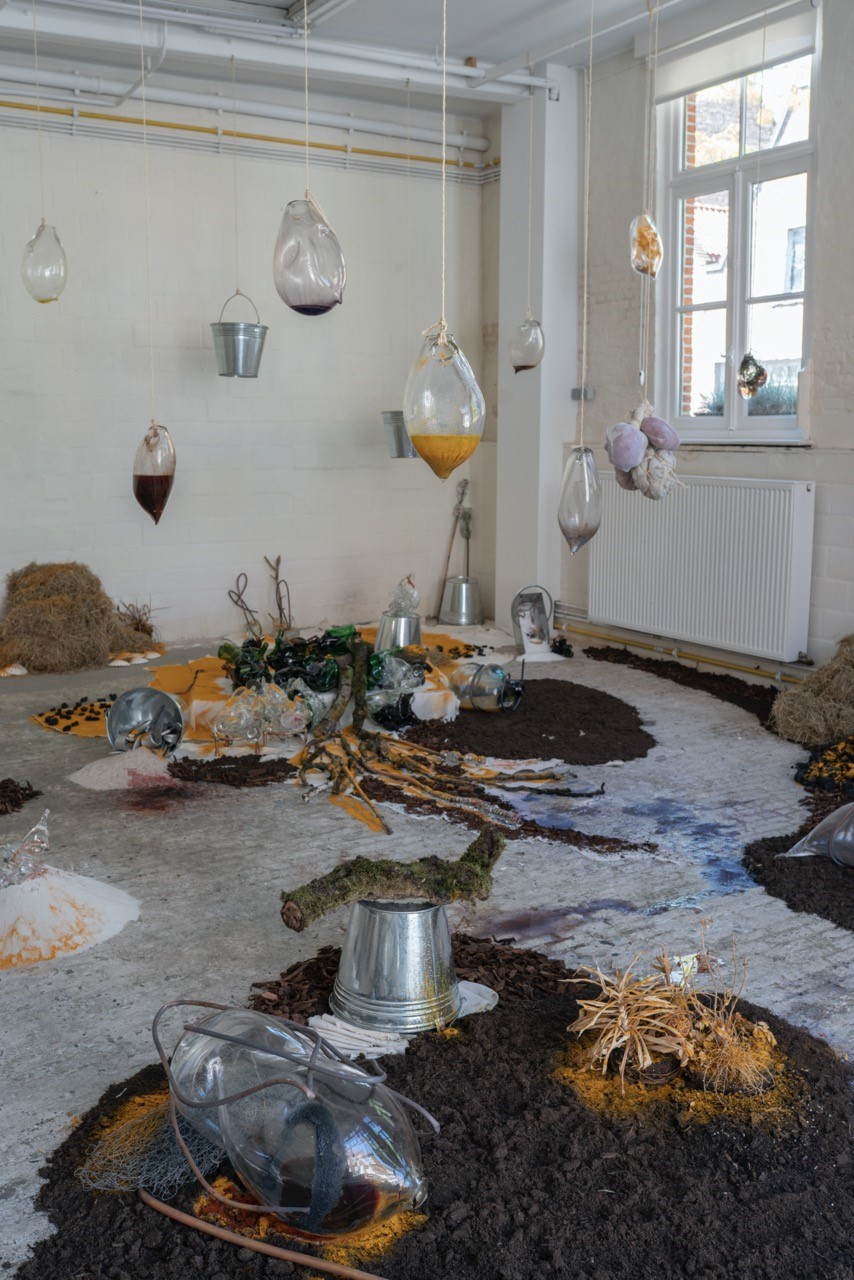
“My ongoing research-oriented installation ‘Unknown Landscape’ (2019-2023) contains several natural elements. They are combined together with the glass works created during the artist’s residency at Gent-Glas. The result is colorful & dynamic assemblage which is laid on the floor. Like the natural landscape, this installation is alive, evolving silently but persistently. The materiality of the soil, pigmented fluids and other unique textural properties of the landscape emerge in each aspect of the installation. This hybrid installation is a sort of spread out terrain of various combined components and blended elements. I juxtapose the materials from my earlier body of works with new recycled glass objects, to create a new/ transformed identity by re-shaping, re-arranging, re-cycling, re- assembling various materials, that keep the process of transition growing in the space. This diversified, surreal installation of solid, fluid, cracked, repaired, fragile structures of melted glass forms, that serve as a multi-layered ambiguous landscape, an immersive, extended, breathing field to interact, to observe and to explore the changes it went through. This hypnogogic installation explores the geological observation of nature’s traces, its ruins, mutating landscapes and the survival of holding onto what’s left to protect.
‘Unknown Landscape’ stimulates questions about sustainability, identity, migration, boarders, barriers, loss, and the endless cycle of exploitation of natural resources. At the same time, paradoxically, this installation takes us through organic, peaceful and healing trail that is interventive & interactive where people can walk through to approach different areas of the installation closely and observe details. The smell of natural materials as well as the aroma of strong yellow turmeric spice punctuates the exhibition space.”
Do you have any specific rituals or routines that you follow to stay creative?
“I think ‘creativity’ or ‘being creative’ lies in every aspect of our life, our surroundings and daily life rituals and its nature. For example, when cooking I don’t follow a standard recipe but my own way of mixing a combination of spices. There is no such thing as ‘the best creative routine’. It is a journey of self-discovery, following your instinct, taking risks and being open to changes. It is necessary to have a specific rhythm, balance and discipline in life, forming our own routine or ritual. We are human beings and we all lose it once in a while but to bring back that balance is being creative too.”
As the winner of the previous edition, you get to join the jury for this year’s edition. What is it like as an artist to ‘judge’ the work of other artists?
“Every process is an interesting and learning journey. I would say it is more like ‘reviewing’ the works of artists than ‘judging’. It is about carefully seeing, discussing and observing with other juries who are part of this process. To experience the ‘other side’ or ‘back stage’ is important in life.”
What is your ultimate piece of advice for young artists?
“Follow your heart, keep the balance! Stay focused, curious, true to yourself and to your creativity. Persistence and discipline are important. There is no beginning or end to this creative journey. It’s about life and death and everything in between.”
By Flor Linckens
Voor het achtste jaar op rij gaat de NN Art Award in 2024 naar een veelbelovende kunstenaar die hun werk toont tijdens Art Rotterdam. Nieuw, dit jaar, is de presentatie van het werk van de genomineerden. Zij exposeren niet in een stand op Art Rotterdam maar in de toonaangevende Kunsthal Rotterdam, van 1 februari tot en met 14 april 2024. De genomineerde kunstenaars voor de NN Art Award 2024 zijn Maaike Kramer (Art Gallery O-68), Mónica Mays (Prospects sectie van het Mondriaan Fonds), Jan van der Pol (CREMAN & DE ROOIJ) en Peim van der Sloot (Brinkman & Bergsma).
Het oeuvre van Maaike Kramer valt op door haar diverse materiaalgebruik, waaronder beton, metaal, grafiet, papier, steen en hout. Kramer combineert in haar praktijk robuuste, architecturale elementen met meer schetsmatige materialen. Dat resulteert in werken die vaak zwaar, massief en monumentaal zijn, maar ook licht, fragiel en onstabiel. Soms vertonen deze werken ook trompe-l’oeil effecten. Kramer verdiept zich in de dynamische interactie tussen deze diverse en op het eerste gezicht tegenstrijdige materialen: kunnen zij van elkaar leren of lenen? En welke relatie gaan de werken aan met de ruimtes waarin ze getoond worden?
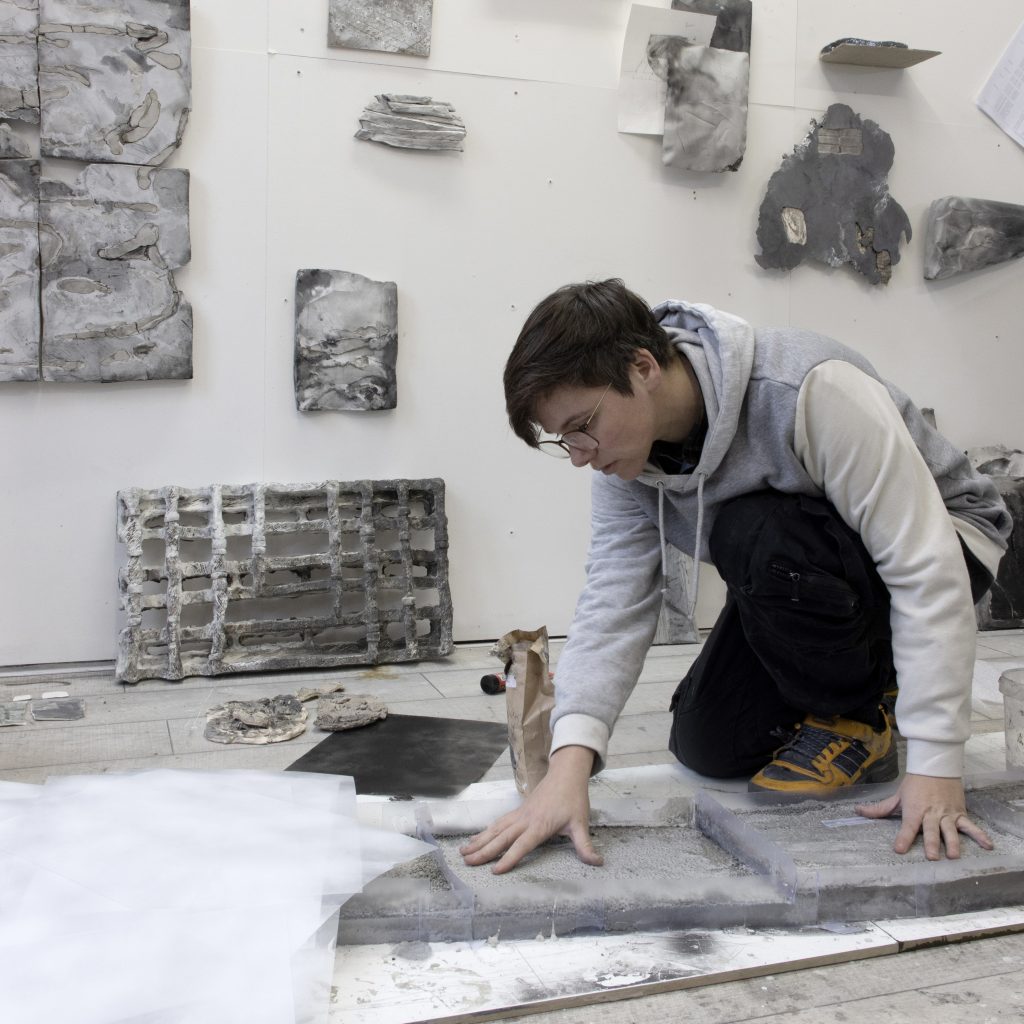
De kunstwerken van Kramer vertellen verhalen over het maakproces en reflecteren op de ruimtes die we creëren en bewonen. Ze nodigen uit om na te denken over de aard van constructie, over de rol van de mens in het vormgeven van onze omgeving en het contrast tussen de vergankelijkheid van ideeën en de duurzaamheid van materialen. Kramer benadrukt dit: “Ideeën zijn lang niet zo houdbaar als het materiaal waarin ze vastgelegd zijn.” Deze gedachte wordt soms weerspiegeld in haar praktijk, bijvoorbeeld wanneer schetsen letterlijk zijn geïntegreerd in het werk. Kramer: “Ik incorporeer verschillende stadia van het proces in mijn werk. Van het monumentale eindwerk tot het materiaal en werkwijzen die aan het maken voorafgaan. Denk aan schetsen, documentairefotografie, maquettes in combinatie met beton, staal en schaalvergroting. Tijdens het maken ontstaan er verschillende faseovergangen tussen de materialen en werkwijzen. Schetsen krijgen een sculpturale vertaling, worden gefotografeerd, geprint, vergroot, ingegoten en gekopieerd.”
Zou je meer kunnen vertellen over het werk dat je presenteert op Art Rotterdam en in de Kunsthal? Wat heeft je ertoe gebracht om je te richten op keramiek in je nieuwere werk?
Mijn werk gaat over ruimtes, over architecturale ruimtes als metafoor voor ruimtes in je hoofd. Ik wilde ook de ruimte die we bewonen meer onderzoeken en had het gevoel dat dit een nieuw materiaal vereiste. Om deze reden heb ik me aangemeld voor het EKWC [European Ceramic Work Centre], waar ik afgelopen jaar een residentieprogramma van drie maanden heb gevolgd. Hier heb ik voor het eerst met keramiek gewerkt en ruimtes met de hand opgebouwd, zoekend naar manieren waarop vorm en materiaal samen een nieuwe betekenis aan de ruimte konden geven. Voor mij is materiaal namelijk een actief onderdeel van mijn verhaal; het materiaal maakt een transformatie door waardoor een verhaal verteld kan worden. Ik ben op het EKWC uiteindelijk gaan werken met verschillende kleisoorten met verschillende krimpfactoren, waardoor er tijdens de droging en in de oven vervormingen en scheuren ontstaan. Deze werken reflecteren op de ruimte achter de voordeur, een aantal werken gaan over de scheiding tussen binnen en buiten. Dit zijn werken die ik ‘luxaflex’ noem. Ik zal een aantal van deze luxaflex-sculpturen laten zien in de stand op Art Rotterdam. Hierbij wordt porselein verbonden aan grove zwarte klei. Daardoor ontstaat er een kant die naar buiten gericht is, porselein met een celadonglazuur, en een kant die naar binnen gericht is. Deze delen hebben invloed op elkaar. De grove binnenruimte zorgt ervoor dat de strakke porseleinen buitenkant vervormt. In de Kunsthal presenteer ik een grote sculptuur, gemaakt in het EKWC. Deze sculptuur verbeeldt ook een ruimte, eigenlijk een ‘slice’ uit een ruimte, waarin er een plek voor een spel is gecreëerd. Ik heb gekeken in welke ruimte in mijn eigen huis het gevoel van vrijheid en experiment het grootst is en kwam uit bij mijn schuurtje. In deze fictieve schuur zijn spelborden opgestapeld waarin strategieën kunnen worden uitgedacht, om deze mogelijkerwijs weer buiten de voordeur in de wereld te plaatsen. De ruimte is echter ook heel geïsoleerd, dus komen deze ideeën ook wel echt naar buiten, en zo ja: hoe?
Wat zijn je plannen voor 2024? Waar werk je op dit moment aan?
Ik ben nog niet klaar met het verkennen van keramiek en de betekenissen die klei in zich draagt. Ik ben daarnaast ook bezig met het maken van combinatiewerken, waarin verschillende materialen samenkomen. De stap om ruimtelijk te werken is nog relatief nieuw voor mij, tot voor kort maakte ik vooral platte reliëfs, gevouwen platen of platte gestapelde werken. Voor mijn tentoonstelling ‘The Unbalancing Act’ bij Drawing Centre Diepenheim in 2022 ben ik voor het eerst echte sculpturen gaan maken met een voor-, zij- en achterkant.
Kun je beschrijven hoe je je voelde toen je hoorde dat je genomineerd was voor de NN Art Award? Welk project zou je meteen oppakken als je de award in de wacht zou slepen?
Ik was ontzettend blij en verrast. Dit is namelijk de eerste keer dat mijn werk te zien is op Art Rotterdam — en dan ook meteen in de Kunsthal. Als ik de prijs daadwerkelijk zou winnen dan zou ik een investering doen in mijn atelier. Mijn atelier loopt op dit moment namelijk nog wat achter op mijn praktijk, die steeds meer sculpturaal wordt. Hiervoor is ruimte nodig, maar ook materiaal en gereedschap. Ik zou ontzettend graag een keramiekoven willen bijvoorbeeld.
Wat is het beste advies dat je ooit gekregen hebt?
Misschien niet direct een advies, maar meer iets wat ik zelf ondervonden heb. Dat het maken van beeldend werk niet gaat over het succes van morgen, of die ene tentoonstelling. Maar dat je moet voelen dat je het werk moet maken, waarvoor dan ook. Ik heb ook veel jaren werk gemaakt dat niemand zag. Mijn werk werd voor het eerst tentoongesteld rond 2017, toen ik al een paar jaar werkzaam was. Maar dat geeft mij nu juist kracht, dat ik weet dat mijn innerlijke maakmotor wel blijft draaien.
Wat is het meest bijzondere compliment dat je ooit kreeg over je werk?
Dat het mensen raakt zonder dat ze er precies een vinger op kunnen leggen. Mijn werk is niet altijd direct in één blik te vangen of te begrijpen, maar er zit een soort onderbuikgevoel in, hoop ik. Het is een groot compliment als dat gebeurt.
De uiteindelijke winnaar van de NN Art Award 2024 wordt op donderdag 1 februari om 20.00 uur bekendgemaakt in Kunsthal Rotterdam. Het werk van de genomineerden is daar nog te zien tot en met 14 april 2024. Tijdens Art Rotterdam is het werk van Maaike Kramer ook te zien in de stand van Art Gallery O-68.
Geschreven door Flor Linckens
Tijdens Art Rotterdam reikt NN Group voor de achtste keer de NN Art Award uit aan een hedendaags kunsttalent met een authentieke beeldtaal en een innovatieve invalshoek. NN Group is sinds 2017 partner van Art Rotterdam en reikt sindsdien ieder jaar een stimuleringsprijs uit. Een jaarlijks wisselende jury van kunstprofessionals maakt daarbij een selectie van vier veelbelovende talenten, waaruit uiteindelijk een winnaar wordt gekozen. De voorwaarden zijn helder: het gaat om kunstenaars die in Nederland zijn opgeleid en hun werk tonen tijdens Art Rotterdam. NN Group koopt daarbij één, of meerdere, werken van de genomineerden aan voor haar bedrijfscollectie. Vorig jaar werd de NN Art Award (t.w.v. €10.000) uitgereikt aan Monali Meher, die vertegenwoordigd wordt door Lumen Travo Gallery. Art Rotterdam interviewde haar om te ontdekken wat het winnen van de prijs voor haar heeft betekend en wat haar beste advies is voor jonge kunstenaars.
Hoe voelde het om de NN Art Award te winnen? Zijn er specifieke dingen die je dankzij het prijzengeld hebt kunnen bereiken?
“In december 2022, tijdens een bezoek aan mijn moeder en familie in Pune, India, ontving ik het nieuws over mijn nominatie. Marianne, mijn galeriehouder bij Lumen Travo Gallery, belde me op en deelde het fantastische nieuws dat ik één van de genomineerde kunstenaars was voor de NN Art Award. Ik was echt blij verrast om het nieuws te horen te midden van mijn familie. Dat voelde dubbel zo fijn! In de twee volgende maanden heb ik het nieuws laten bezinken en voelde ik me vooral erg dankbaar en geaard. De daadwerkelijke bekendmaking van de winnaar op Art Rotterdam 2023 bracht tranen: niet alleen in mijn ogen, maar ook bij velen die daar aanwezig waren. Tranen van vreugde, wijsheid, erkenning en vrijheid. Ik voelde me vereerd, vol enthousiasme en dankbaarheid. Sinds het winnen van de prijs ben ik aan het experimenteren met nieuwe materialen en processen. En ik heb mijn eerste boek ‘Unknown Landscape’ in oktober 2023 gepubliceerd. Daarvoor gaat veel dank uit naar de sponsors, maar zeker ook het prijzengeld van de NN Art Award. Dat wordt echt op prijs gesteld. Meer informatie over het boek vind je op mijn sociale media.”
Hoe kwamen de werken die je tijdens Art Rotterdam liet zien tot stand? Volg je een specifiek proces? Is dat proces nog veranderd sindsdien?
“De geselecteerde mixed media werken (verfijnde tekeningen met zwarte Japanse inkt en draden op digitale foto’s) heb ik gemaakt tijdens de pandemie, in de intense en ongekende reeks lockdowns die de wereld toen heeft ervaren. Middels een nieuwe reeks mixed media tekeningen en assemblages reflecteerde ik daarna op de pandemieperiode, waarbij ik de onverbiddelijke cyclus van ‘meerdere startpunten’ belicht die wij, als mensen, doorstaan in de hoop een vernieuwd en positief perspectief voor de wereld te vinden.
De glasassemblages ontwikkelde ik tijdens en sinds mijn residentie bij ‘Gent-Glas’ in België (2018/19), toen ik voor het eerst experimenteerde met glas. In recent nieuw werk maak ik gebruik van glas in een site-specific installatie met aarde, zand, hooi, schors, kolen, schelpen, droge planten, takken, kurkuma, voedingskleurstoffen, natuurlijke pigmenten en koper. Maar pas na de pandemie in 2022 kon ik de site-specific installatie ‘Unknown Landscape’ creëren, tijdens het residentieprogramma ‘Het Atelier’ in Brugge. Sindsdien is mijn proces continu in ontwikkeling. Daarna was mijn werk te zien in een groepstentoonstelling bij Lumen Travo gallery, gevolgd door Art Rotterdam 2023 en onlangs was deze installatie te zien in de groepstentoonstelling ‘NICC x 25’, in museum SMAK in Gent (tot en met 28 december 2023).”
“Ook mijn lopende installatie en onderzoeksproject ‘Unknown Landscape’ (2019-2023) bevat ook weer verschillende natuurlijke elementen. Deze combineer ik met de glaswerken die ik bij Gent-Glas maakte. Het resultaat is een kleurrijke en dynamische verzameling op de vloer. Zoals het natuurlijke landschap, is deze installatie levend, evoluerend in stilte maar aanhoudend. De materialiteit van de aarde, gepigmenteerde vloeistoffen en andere unieke textuureigenschappen van het landschap komen in elk aspect van de installatie naar voren. Deze hybride installatie is een soort uitgespreid terrein van verschillende gecombineerde componenten en gemengde elementen. Ik plaats de materialen uit mijn eerdere werk naast nieuwe gerecyclede glasobjecten om daarmee een nieuwe/getransformeerde identiteit te creëren. Door verschillende materialen opnieuw te vormen, te rangschikken, te recyclen en samen te stellen. Samen houden zij het proces van overgang in de ruimte in stand. Deze gevarieerde en surrealistische installatie, bestaande uit vaste, vloeibare, gebarsten, herstelde en fragiele structuren van gesmolten glas, vormt een gelaagd en dubbelzinnig landschap. Het is een boeiend en uitgestrekt, levend veld dat uitnodigt tot interactie, observatie en het verkennen van de ondergane veranderingen. Deze hypnotische installatie verkent de geologische observatie van natuurlijke sporen, haar ruïnes, veranderende landschappen en de strijd om dat wat overgebleven is te behouden en beschermen.
‘Unknown Landscape’ roept vragen op over duurzaamheid, identiteit, migratie, grenzen, barrières, verlies en de eindeloze cyclus van exploitatie van natuurlijke hulpbronnen. Tegelijkertijd, paradoxaal genoeg, neemt deze installatie ons mee door een organisch, vredig en helend pad dat interventief en interactief is, waar mensen doorheen kunnen lopen om verschillende delen van de installatie van dichtbij te bekijken. De geuren van de natuurlijke materialen en het kenmerkende aroma van kurkuma doordringen daarbij de tentoonstellingsruimte.”
Heb je specifieke rituelen of routines die je volgt om creatief te blijven?
“Ik geloof dat ‘creativiteit’ of ‘creatief zijn’ verweven is met elk aspect van ons leven, met onze omgeving en de natuur van onze dagelijkse rituelen. Neem bijvoorbeeld koken: ik hanteer geen standaardrecept, maar experimenteer met mijn eigen combinatie van specerijen. Er is niet één ‘beste creatieve routine’; het gaat om een reis van zelfontdekking, het volgen van je instinct, het nemen van risico’s en openstaan voor verandering. Het is essentieel om een bepaald ritme, evenwicht en discipline in ons leven te hanteren en onze eigen routines of rituelen te ontwikkelen. We zijn tenslotte menselijk en verliezen soms het overzicht, maar juist in het herstellen van die balans ligt ware creativiteit.”
Als winnaar van de vorige editie van de NN Art Award mag je dit jaar deel uitmaken van de jury. Hoe is het als kunstenaar om het werk van andere kunstenaars te ‘beoordelen’?
“Elk proces is een boeiende en leerrijke ervaring. Het is eerder een kwestie van ‘evalueren’ dan van ‘oordelen’ over het werk van andere kunstenaars. Het gaat om aandachtig kijken, bespreken en observeren, samen met de andere juryleden die betrokken zijn bij dit proces. Het beleven van ‘de andere kant’, of het gedeelte ‘achter de schermen’ is belangrijk in het leven.”
Wat is jouw ultieme advies voor jonge kunstenaars?
“Blijf trouw aan je hart en zoek naar evenwicht. Houd je focus, blijf nieuwsgierig, en wees oprecht naar jezelf en je creatieve zelf. Volharding en discipline zijn cruciaal. Deze creatieve reis kent geen start- of eindpunt; het omvat het leven, de dood en alles daartussenin.”
Door Flor Linckens
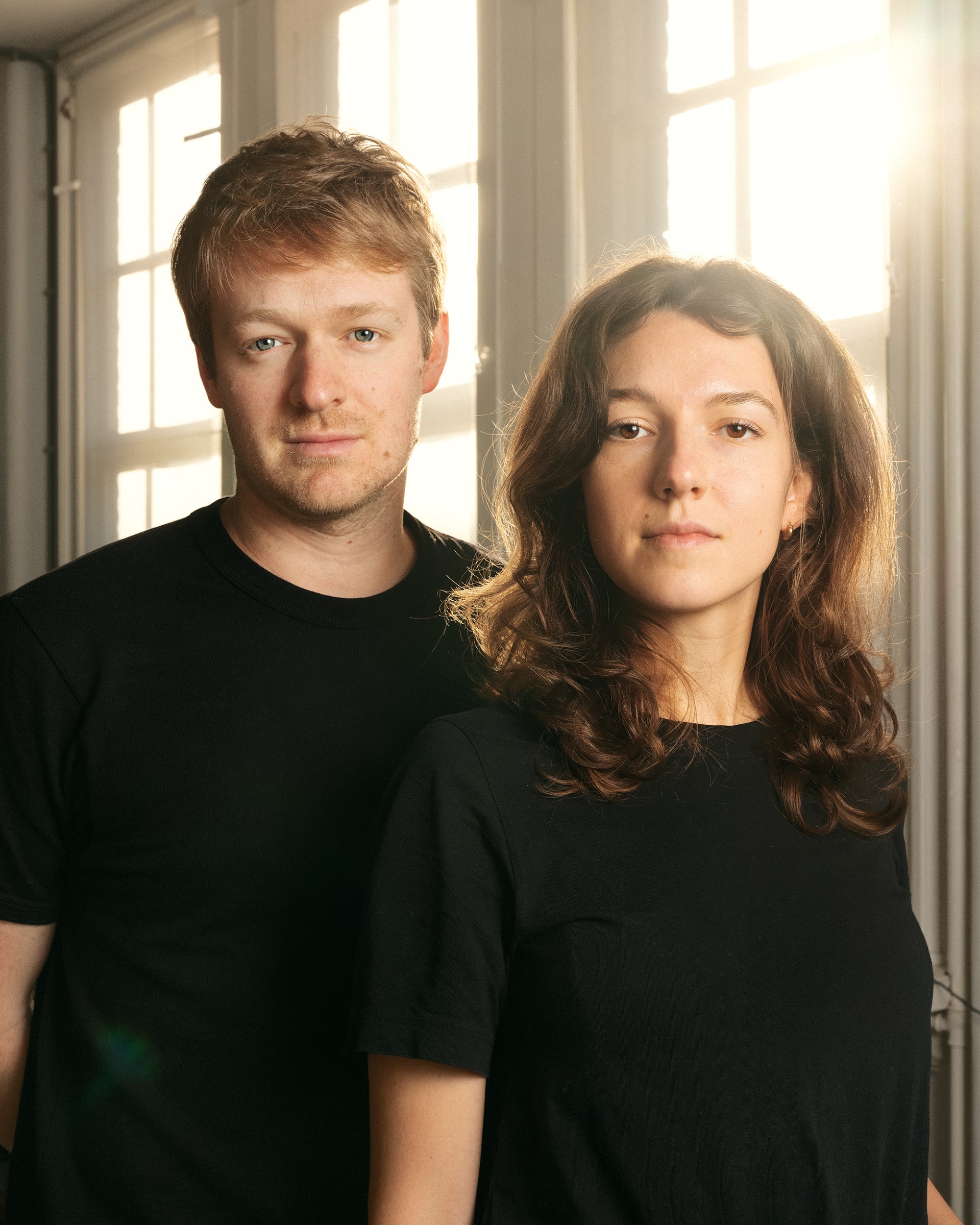
Ana Zibelnik en Jakob Ganslmeier richten zich met hun langlopende project ‘Fault Line’ op de sociale gevolgen van de klimaatcrisis. Het project, dat in 2023 gelanceerd werd, is een verkenning van de diepgaande impact die klimaatverandering heeft op individuele levens in Europa, van klimaatangst en activisme tot populistische ontkenning van het probleem. Door het vastleggen van portretten van individuen geven de fotografen een menselijk gezicht aan een probleem dat vaak wat abstract aanvoelt. In het eerste deel van het project richten de kunstenaars zich specifiek op het psychologische fenomeen van klimaatangst, dat vooral veel voorkomt bij jongeren die zichzelf geconfronteerd zien met een onzekere toekomst. Het project is op dit moment te zien in Fotomuseum Den Haag (tot en met 31 maart 2024).
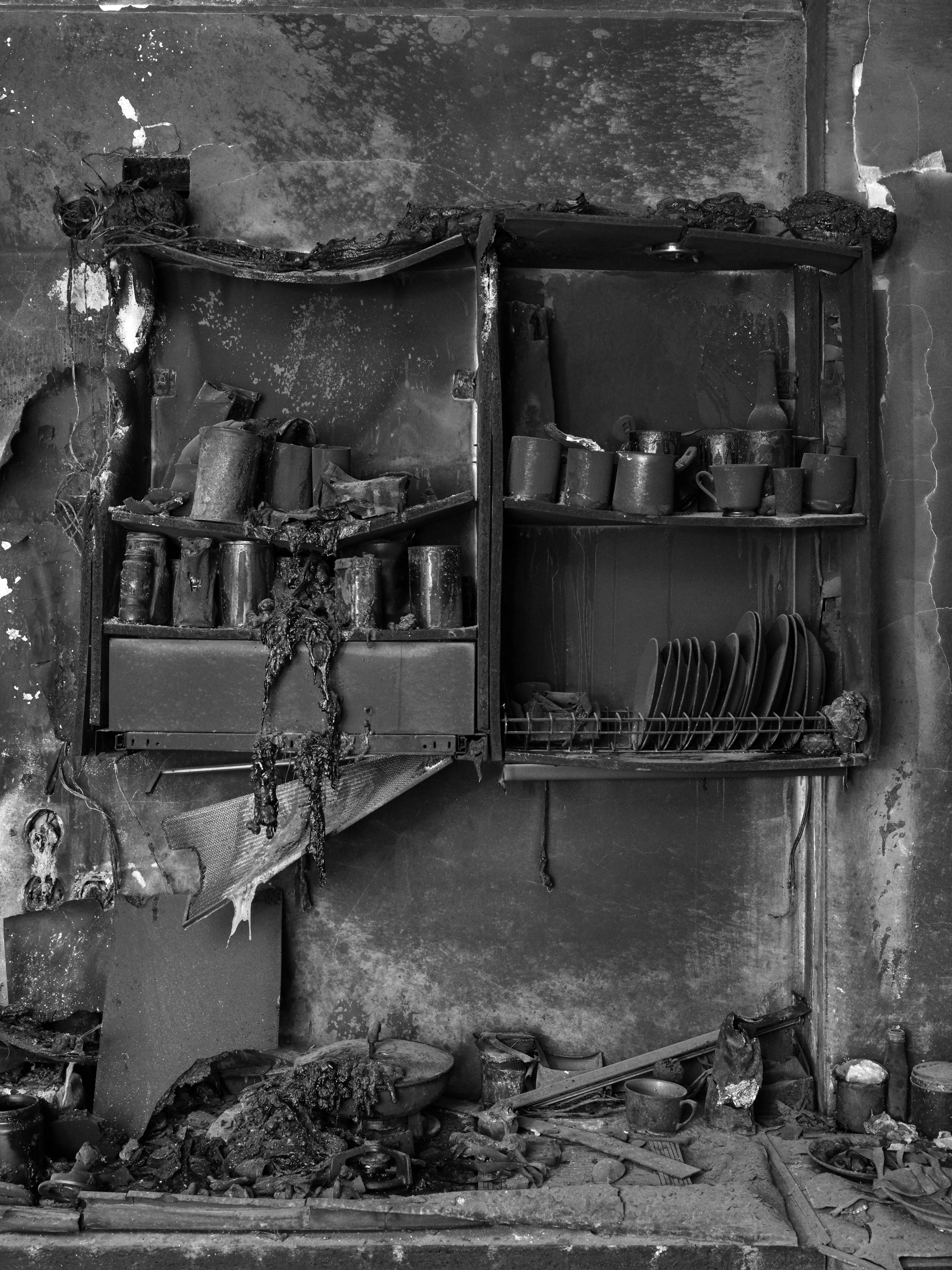
Ana Zibelnik en Jakob Ganslmeier presenteren ‘Fault Line’ ook op Prospects: een initiatief van het Mondriaan Fonds, waarbij het werk van 86 kunstenaars wordt getoond die in 2022 een financiële bijdrage kregen om een start te maken met hun carrière. Het aanbod varieert van fotografie tot textielwerken, van video tot schilderijen, en van performances tot sculpturen. Samensteller van de tentoonstelling is curator Johan Gustavsson, in samenwerking met curator Louise Bjeldbak Henriksen.
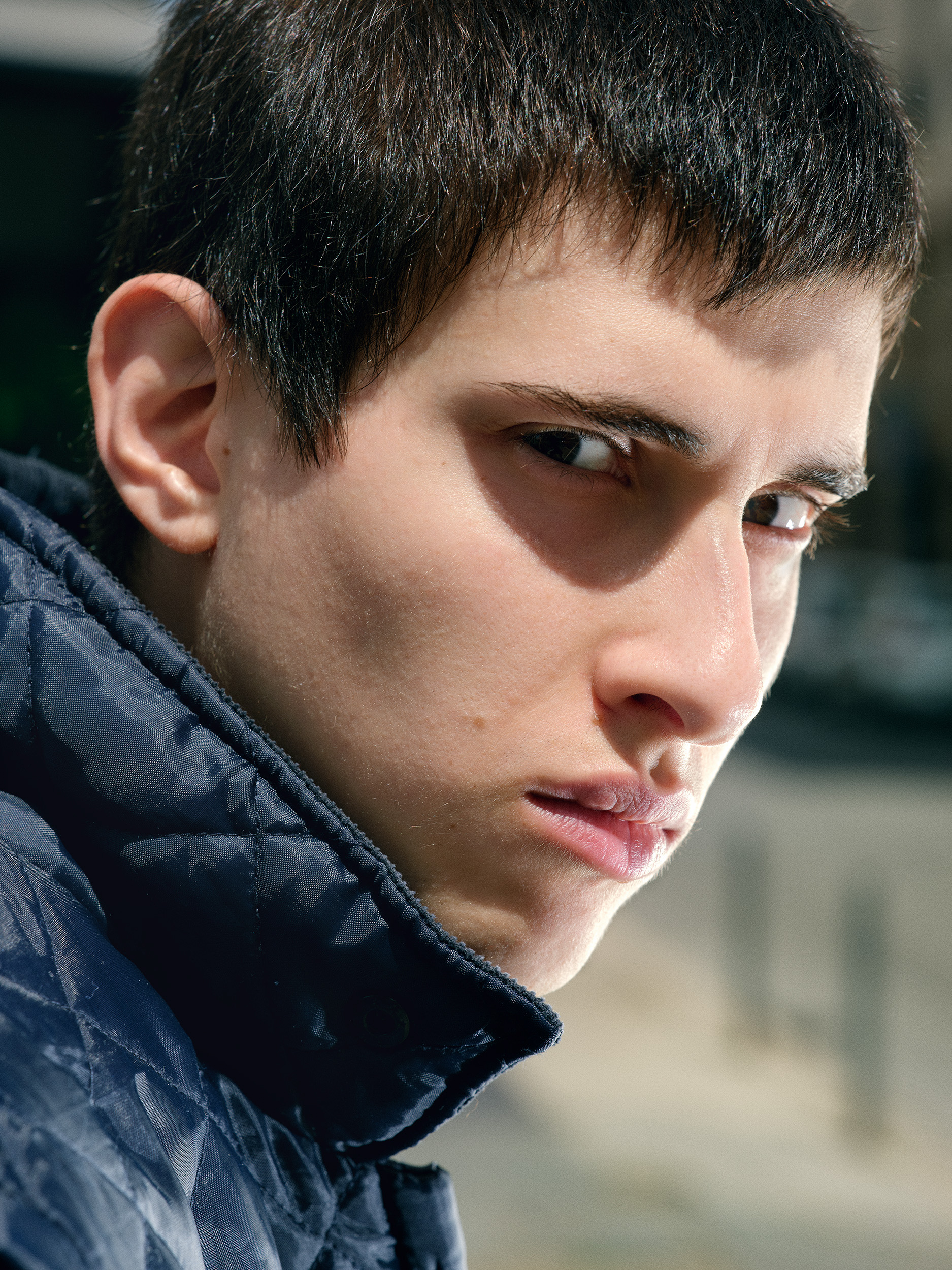
Wanneer we nadenken over klimaatverandering dan vallen we vaak in één van twee extremen: ofwel zijn we te optimistisch, in de veronderstelling dat technologie ons wel zal redden, ofwel te pessimistisch, geobsedeerd door het idee dat elk stukje plastic dat we ooit gebruikt hebben nog ergens rondzwerft. In het laatste geval raken we verlamd en distantiëren we ons van het probleem, omdat we denken dat we er toch niets aan kunnen veranderen. Velen van ons zijn ontevreden over het minimale effect van onze individuele acties (zoals recyclen of geen auto gebruiken) op het grote geheel, over de onwil van machtige politici om betekenisvolle veranderingen door te voeren, en een politieke verschuiving naar rechts in veel landen. Het probleem voelt te groot, te abstract. Maar kunstenaars hebben het vermogen om onze verbeelding te vormen, te beïnvloeden en concreet te maken.
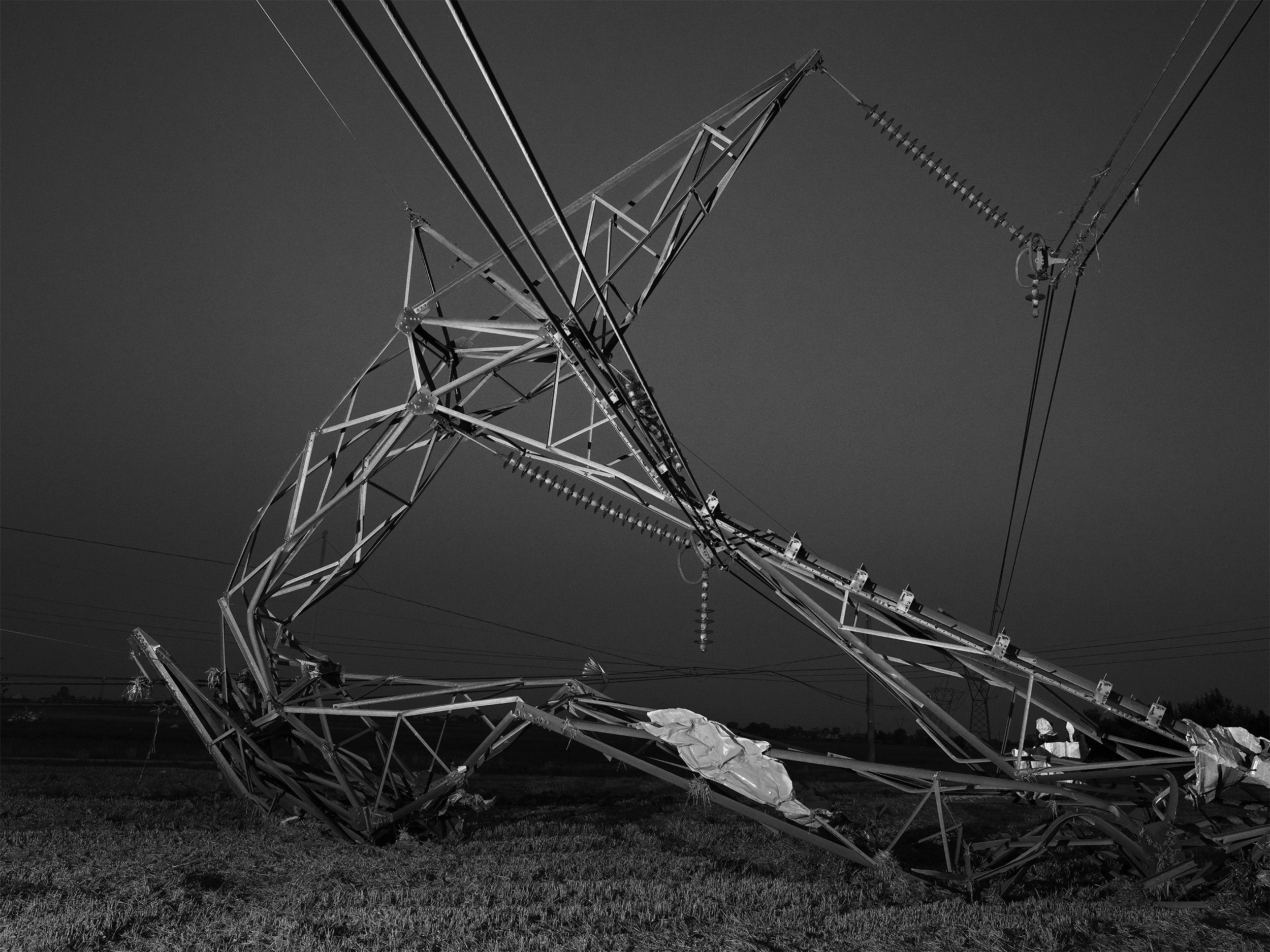
De kunstenaars Ana Zibelnik en Jakob Ganslmeier zeggen daarover: ”Beelden beïnvloeden de manier waarop mensen denken over maatschappelijke kwesties. Ze hebben een emotionele impact en kunnen ons stimuleren om meningen te vormen en tot actie over te gaan. Beelden van hevige milieuschade worden vaak van een afstand genomen — met drones of gericht op de algehele omvang van natuurlijke en infrastructurele schade. Wat ons interesseert, is een diepgaander onderzoek naar dergelijke situaties — hoe beïnvloeden extreme klimaatgebeurtenissen mensen op individueel niveau? Hoe draagt de angst die uit dergelijke situaties voortkomt bij aan het ontstaan van haatdragende ideologieën?”
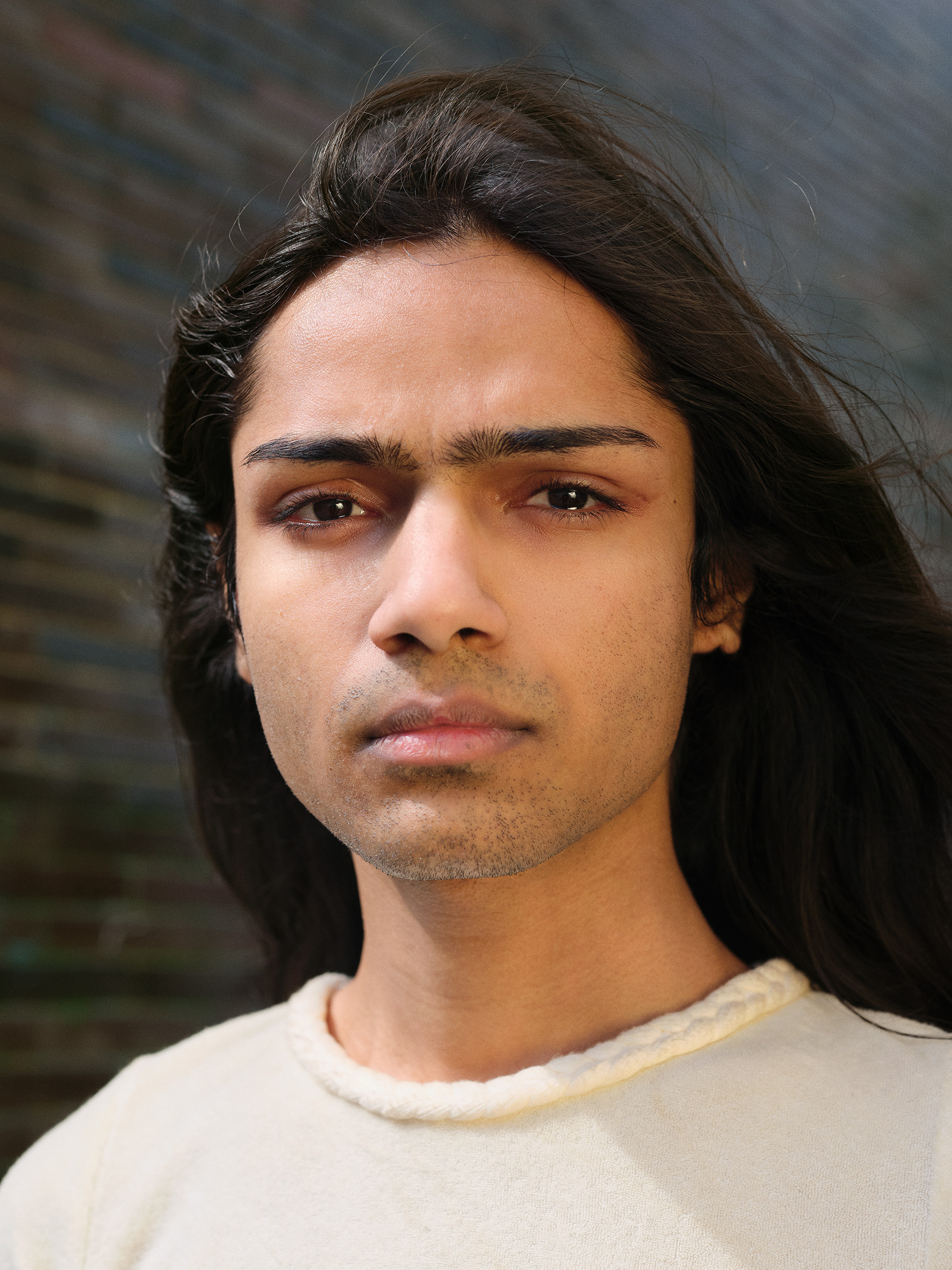
In ‘Fault Line’ belichten de kunstenaars hoe klimaatangst verlammend kan werken, maar ook een prikkel kan zijn om tot actie over te gaan. Hun werk omvat onder meer samenwerkingen met jonge klimaatactivisten in Italië en confrontaties met Italiaanse beleidsmakers die klimaatverandering ontkennen. Tijdens hun reizen door Italië documenteerden ze de gevolgen van hevige regenval en overstromingen, maar ook de zware bosbranden bij de Griekse grens met Turkije, de grootste bosbrand die Europa ooit gekend heeft. Daarnaast spraken ze onder meer met klimaatvluchtelingen en met David Yambio, mensenrechtenactivist en oprichter van Refugees in Libya.
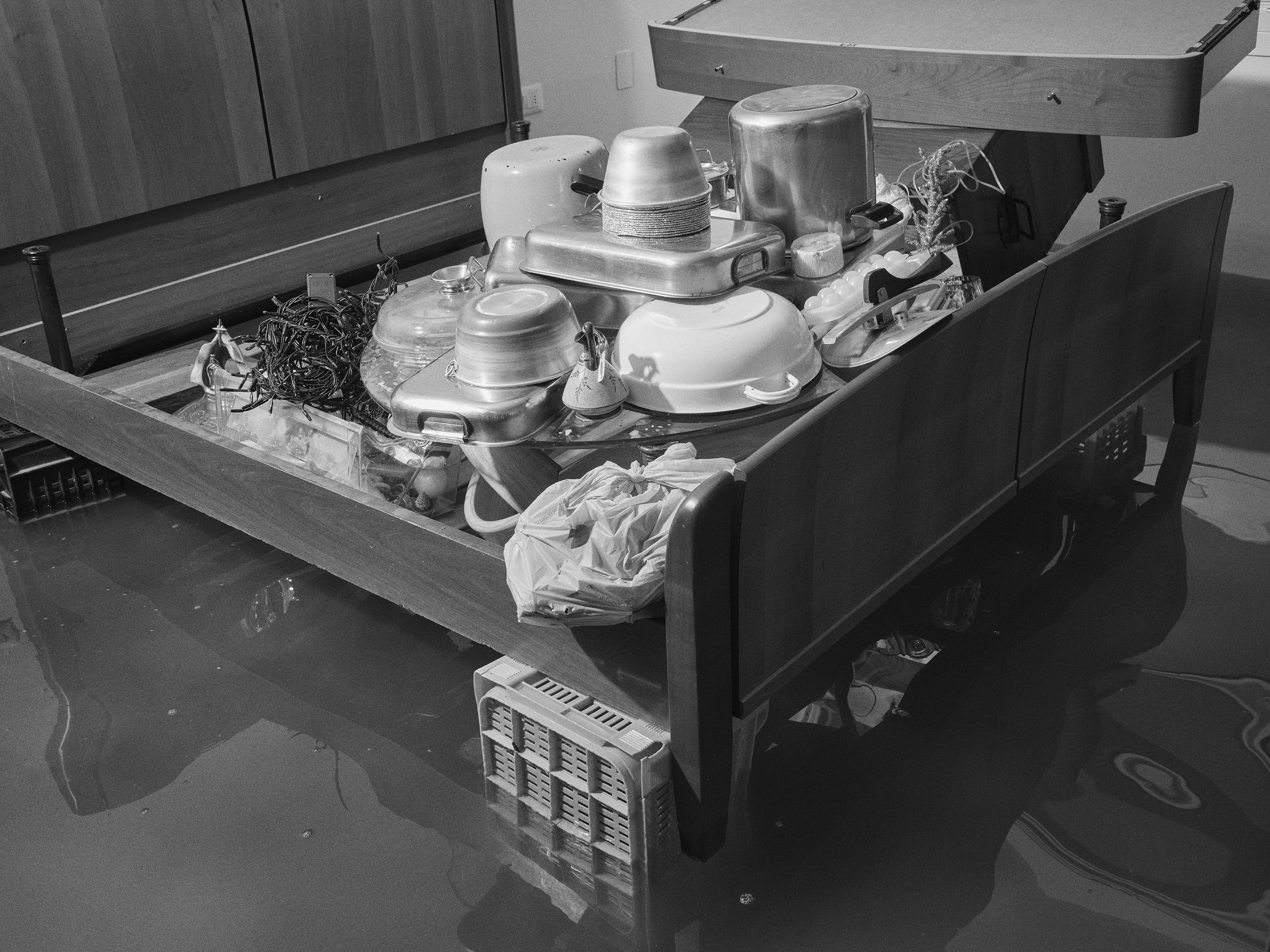
‘Fault Line’ biedt een diepgaande verkenning van de klimaatcrisis en haar sociale impact. Het is niet alleen een artistiek project, maar ook een maatschappelijk statement. Het benadrukt de noodzaak van actie en bewustwording in een tijd waarin de gevolgen van de klimaatcrisis steeds tastbaarder worden. Zibelnik en Ganslmeier stellen kritische vragen over hoe de klimaatcrisis — en de versnellende reeks rampen — individuele levens beïnvloedt en hoe dit bijdraagt aan de verergering van sociale en politieke polarisatie.
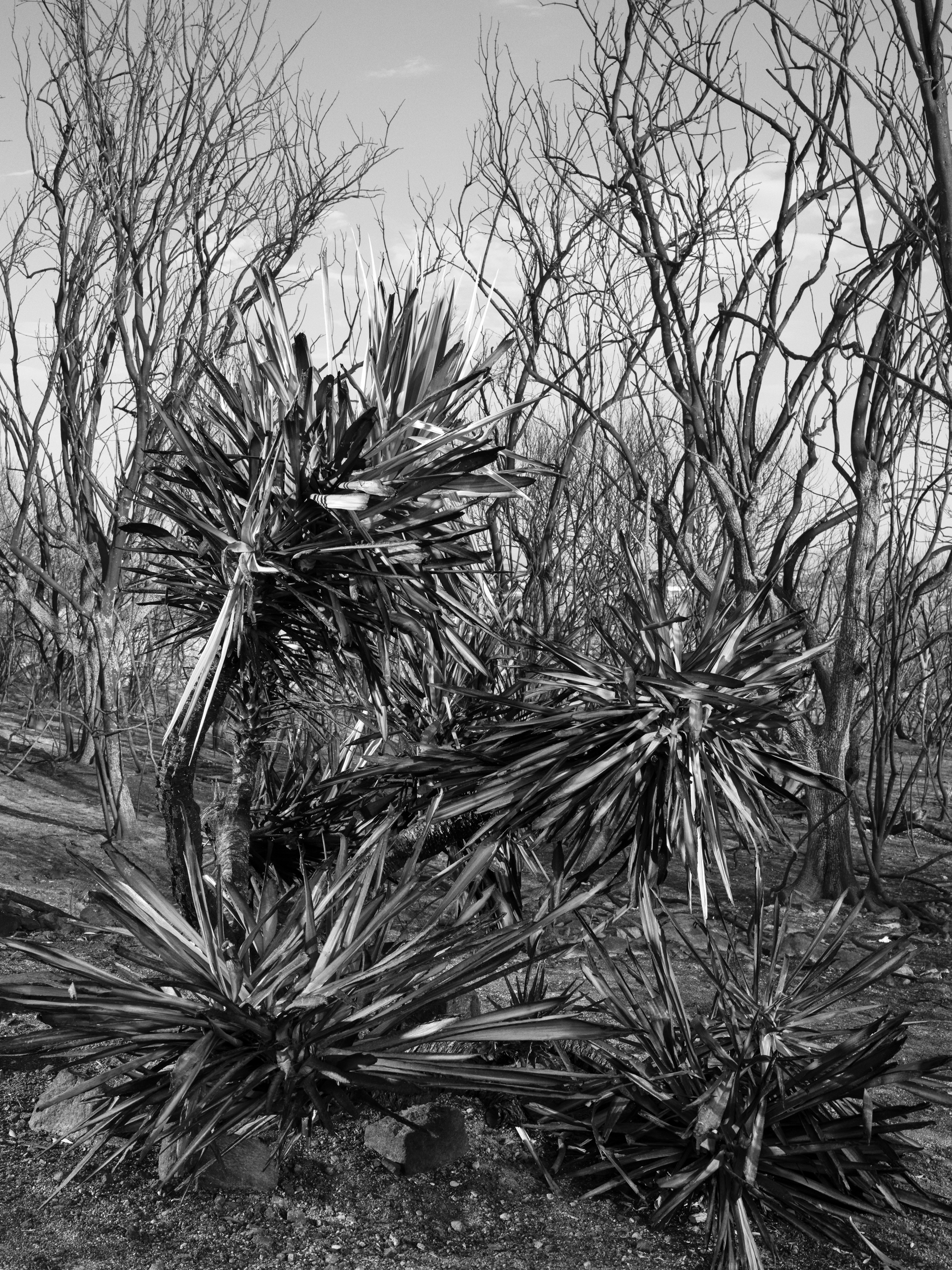
Ana Zibelnik werd in 1995 geboren in Ljubljana in Slovenië en concentreert zich in haar werk op thema’s als klimaatopwarming, klimaatangst en de sociale implicaties daarvan. En welke rol speelt witte suprematie in de klimaatcrisis? De Duitse kunstenaar Jakob Ganslmeier (1990) is geïnteresseerd in de visualisering van radicale ideologieën en de manieren waarop beeldende kunst een middel kan zijn om radicale ideeen tegen te gaan en gesprekken te starten over maatschappelijke kwesties met conflicterende perspectieven.
‘Fault Line’ van Ana Zibelnik en Jakob Ganslmeier is tijdens Art Rotterdam te zien in de Prospects sectie.
Geschreven door Flor Linckens
For the eighth year in a row, the NN Art Award will be awarded to a promising artist who completed their studies at an art academy in the Netherlands and is exhibiting at Art Rotterdam. This year, for the first time, the nominees will exhibit their work in the prestigious Kunsthal Rotterdam, from 1 February to 14 April 2024. The nominated artists for the NN Art Award 2024 are Maaike Kramer (Art Gallery O-68), Mónica Mays (Prospects section of the Mondriaan Fund), Jan van der Pol (CREMAN & DE ROOIJ) and Peim van der Sloot (Brinkman & Bergsma).
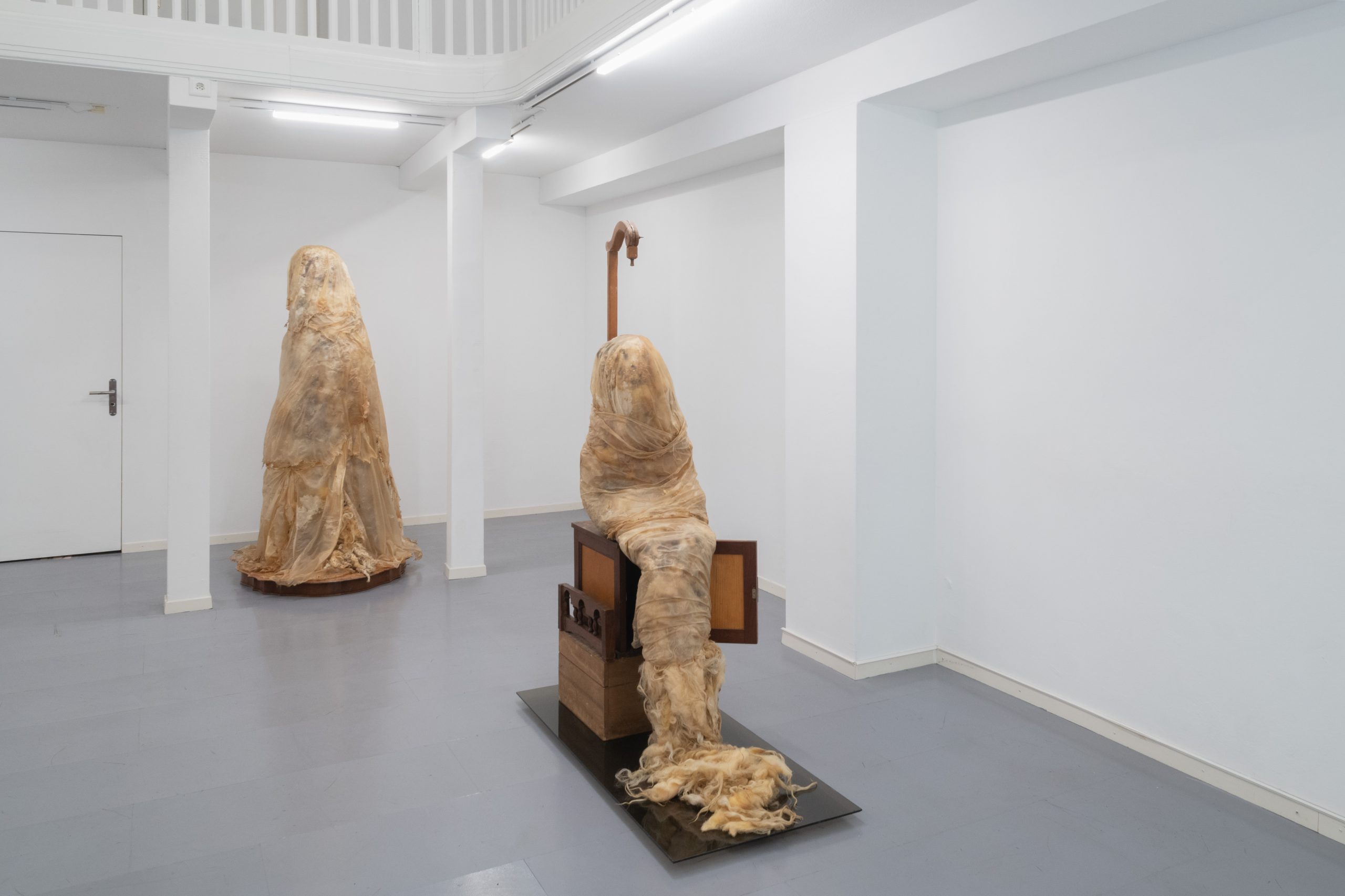
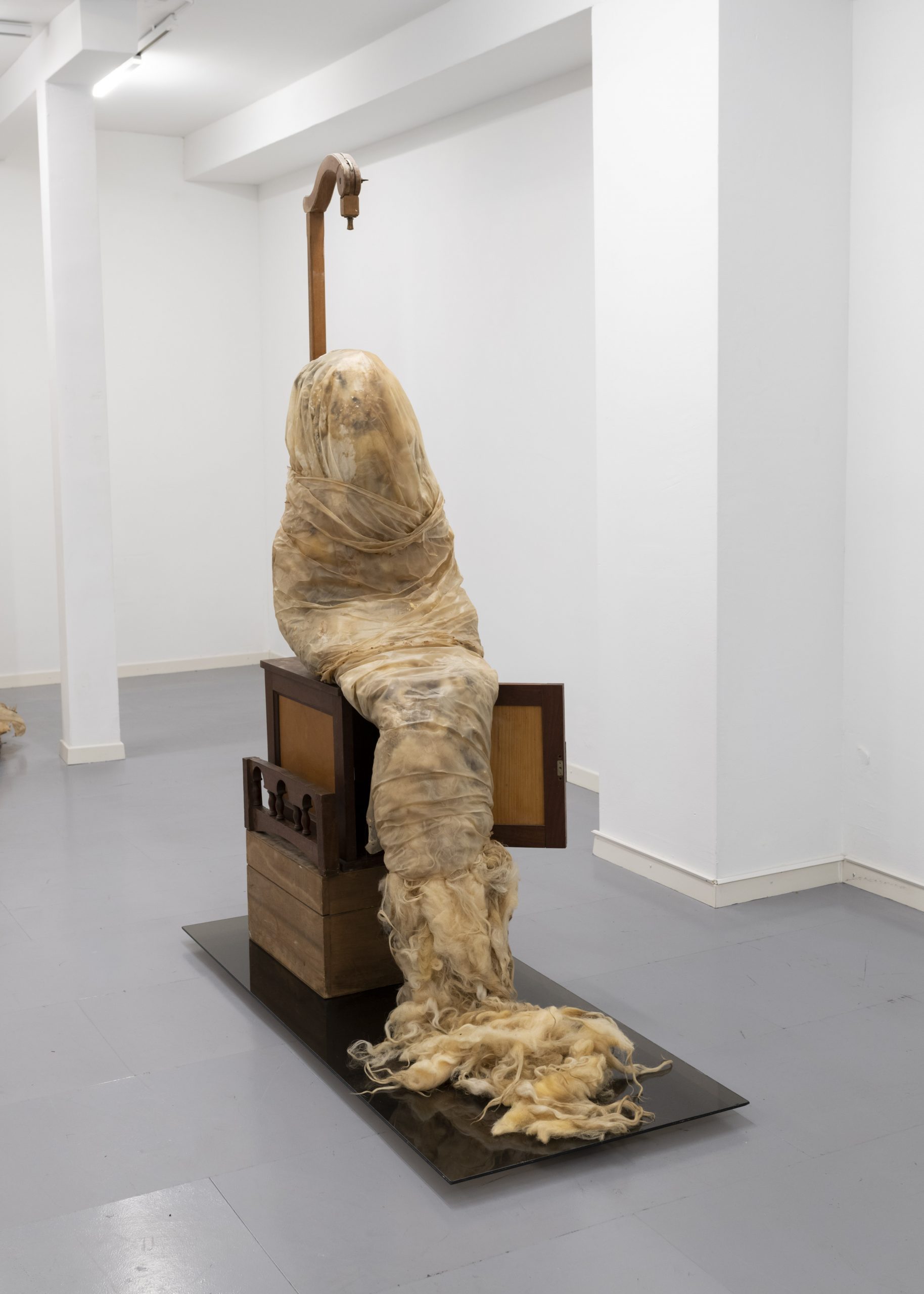
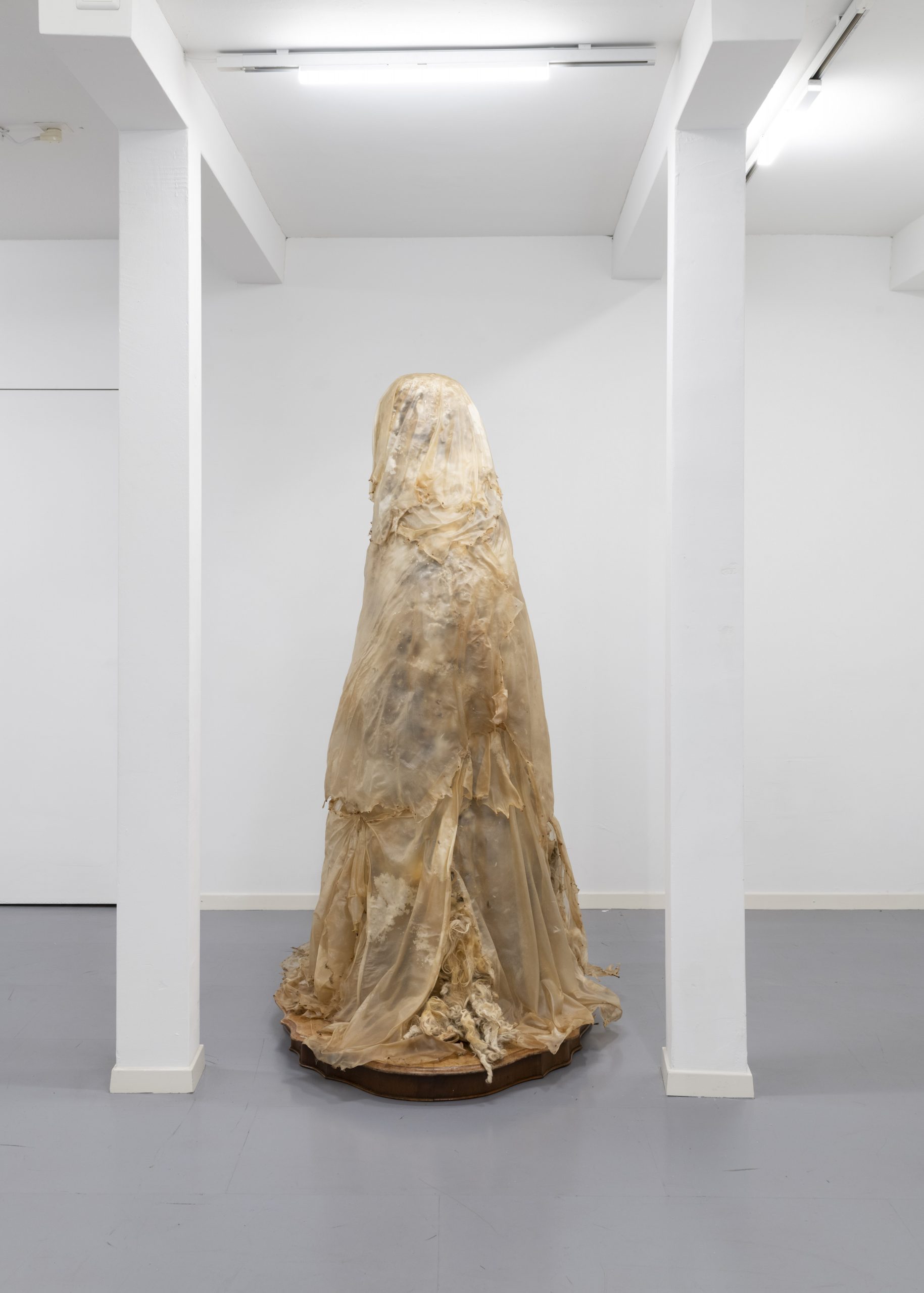
Mays’ sculptural practice combines autobiography, material process and historical archive. Her pieces are composed of assemblages taking the shape of animated domestic objects that are spilling over, distorted or in a process of transmutation. Drawing from catholic body horror and baroque iconography she has been working with excess, ornamentation and exuberance. From the depiction of maladie and magical thinking in female figurines, to colonial representations of nature, dominance, desire and control, the baroque is deployed by Mays to create works that exist in a tension of fragility and violence.
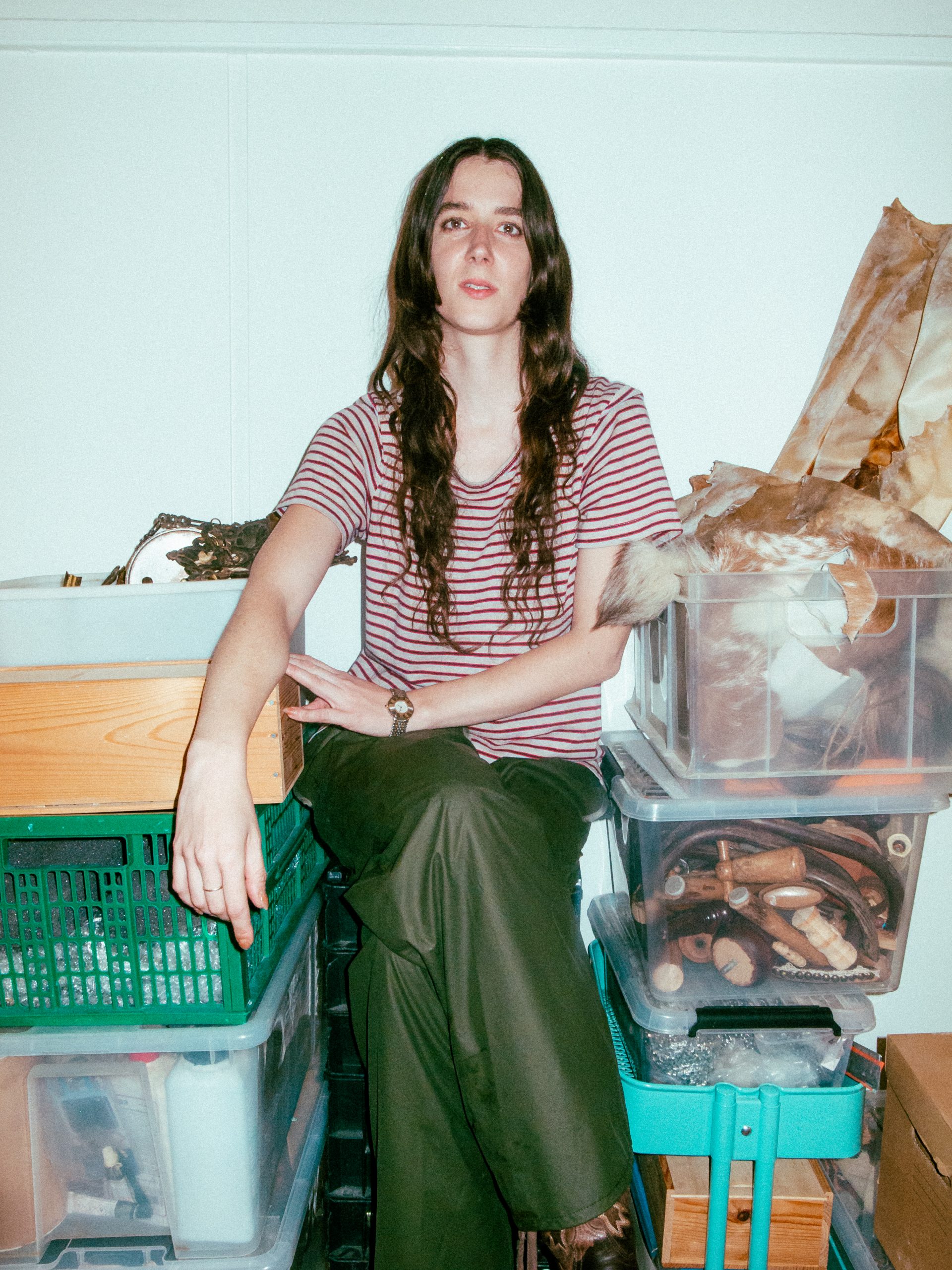
After having studied Cultural Anthropology at the University of New Orleans, she graduated from the École Supérieure des Arts Décoratifs in Strasbourg in 2015 and received an MA from the Sandberg Instituut in Amsterdam in 2017. She has developed projects in artistic residencies such as Rupert (Vilnius, Lithuania), Fundación Bilbao Arte (Bilbao, Spain), Matadero (Madrid, Spain) and Cemeti Institut for Art and Society (Yogyakarta, Indonesia). Mays’ works have been exhibited in spaces including the Frascati Theater (Amsterdam), Tallinn Art Hall (Tallinn), Punt WG (Amsterdam), Blue Velvet Projects (Zurich), Centro Centro (Madrid), KUBUS (Hannover), La Casa Encendida (Madrid), Industra (Brno) and Atelier Chiffonier (Dijon). She has been awarded the 3PD prize bestowed by the Amsterdam Fund for the Arts 2022, the Mondriaan Fund Young Artist Stipendium 2023 and the Generation 2022 prize from the Montemadrid Foundation.
Could you tell us a bit more about the work you are presenting at Art Rotterdam and in the Kunsthal?
“I present a series of sculptures and boxes that I’ve been working on over the past two years. With these pieces, I aimed to cultivate and explore forms of reproduction that might sit outside of patriarchal structures, industrial means of production, efficiency and futurity, and the violence that these logics impose on different bodies. I’ve been exploring these ideas through a close engagement with the life cycle of the bombyx mori silk moth — an organic reproductive process that has been irrevocably altered by human intervention, domestication and industrialisation. In order to fully extract a silk thread for use in textiles, silk moth cocoons must be steamed to kill the grub inside before it can hatch and break through the single line of silk it used to create its cocoon. Those moths that are allowed to hatch do so only to breed and die shortly after; thousands of years of production-oriented domestication have rendered the moth blind, albino and flightless, with a vestigial mouth that cannot feed. The silk moth cocoon, for me, contains a multitude of semiotic and biological meanings — both those of extractive violence, biopower and heteropessimism, but also the potential for the breaking of linear logics, the refusal of reproduction, and the embracing of mutation.
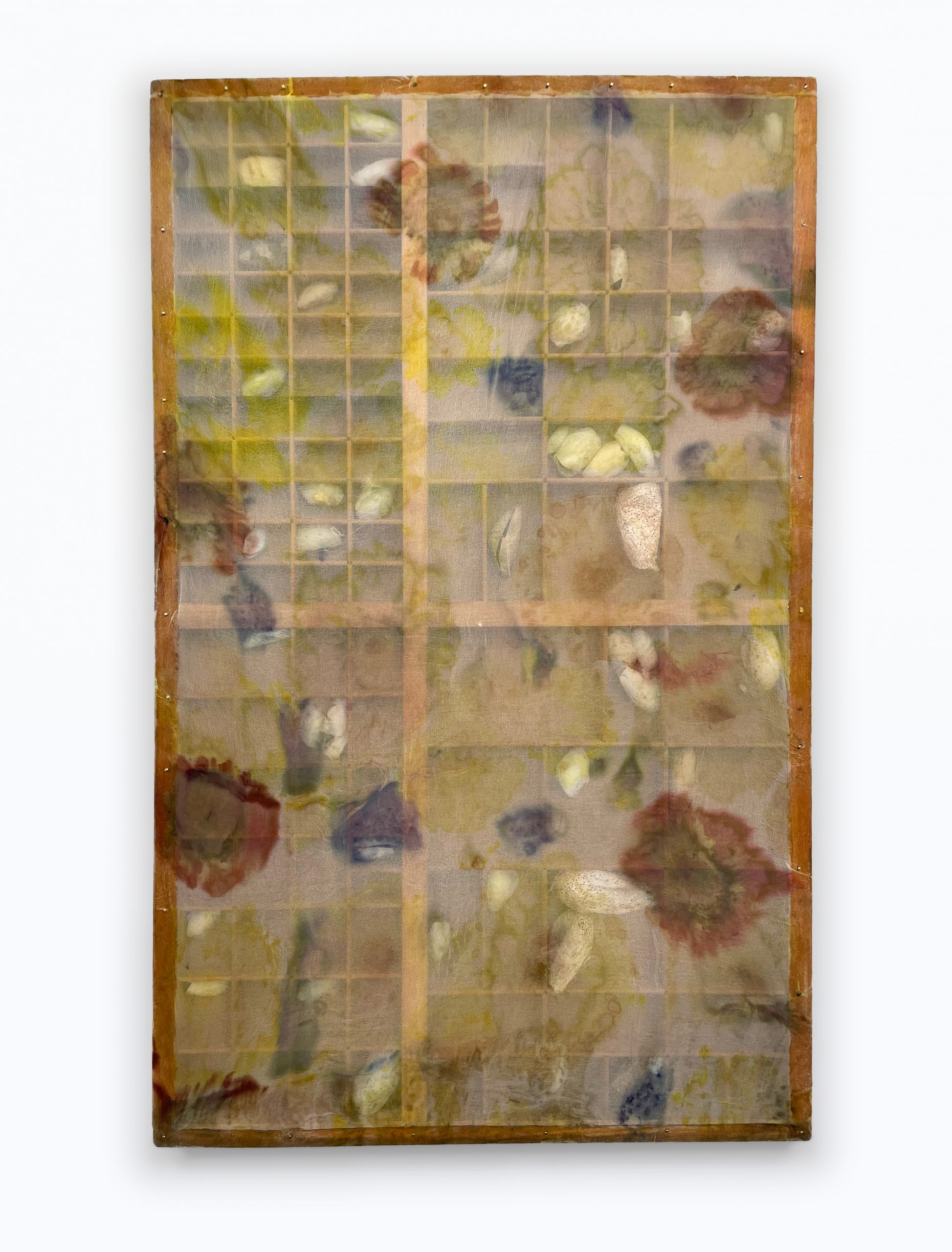
Last year I cultivated the bombyx mori, accompanying them through them their reproductive cycle, allowing them to all hatch, and working with them and their products towards a series of assemblages, collages and sculptures. These assemblages are composed of a combination of found anachronistic domestic objects that are interrupted by the excess of other bodies: wool, feathers, vellum, cocoons come together to make a body out of bodies. In addition I present “Shadow Boxes”, wooden gridded objects that are employed for scientific categorization, division and taxonomical separation in the drawers of archives and museums. Discarded ones are often used by individuals for collecting small memorabilia, appropriating the grid as a subjective and personal mechanism. In a similar way, I have been collaborating with the bombix mori and their products to parasite the boxes, preserving their cocoons intact by covering the boxes with silk and botanical imprints that interfere with the grid’s structure.”
What are your plans for 2024?
“In March, I will be going on a three month residency at the Cemeti Institute for Art and Society in Yogyakarta with the support of the Mondriaan Fund, where I will be continuing a project I recently started at the Mediterranean coast of Spain. Throughout my projects I lean on certain examples as containers of both violence and fragility. In this case, I have been looking at the iconography and symbolism of the palm plant through its paradisiac, biblical and industrial imaginaries. The project began by looking at the ornamental function of the plant to gentrify coastlines in Southern Europe in contrast with its exploitation in other regions, Indonesia being one of the largest producers of this plant for the fabrication of palm oil. I am considering palm oil as an ubiquitous material, present in almost all of our bodies through our consumables, and drawing a parallelism with the religious concept of omnipresence often used in biblical depictions of palm plants. So far this has materialized through a series of clay pieces fired with the combustion of palm leaves and creating assemblages with found factory objects. I don’t really know how this will continue to materialize as I feel quite in the middle of the process, but throughout the year I will be presenting some of the pieces in Art Basel, in Arco Madrid and in several galleries in New York, Basque Country and Bucharest for example.”
Could you describe how you felt when you heard that you were nominated for the NN Art Award?
“I was very happy of course. It is a really nice feeling when the work comes across and is recognized amongst so many of the beautiful projects that a lot of my colleagues and peers are presenting at Prospects. I have been living in Amsterdam for eight years, making work in all sorts of studios throughout the city, but it has always been quite hard to present the work locally, partially because of the lack of spaces, but also because of a lack of visibility. I have mostly had invitations to present work abroad so for me, this is a really nice opportunity to share my work with the context that has helped me incubate most of my works.”
What project would you immediately tackle if you were to win the award?
“There are always more projects to work on. If I was to receive the award I would like to make a work that is no longer at the scale of my own body, that is not so conditioned by practicality. When I talk about my pieces, I often say that they are animated domestic objects because I imagine them moving, opening, closing, extending their arms, but in the end their forms are static. I think I would use the opportunity to engage with the necessary engineering requirements to make them performative. Maybe, but it feels very uncertain, I would finally make the film about a specific crying statue that I have been talking about for five years now.”
How would you explain your work to someone who might not be as well-versed in the art world? What should their most important take-away be?
“It is my hope that the pieces I make don’t need a very eloquent verbal explanation and that they can narratively or affectively communicate themselves. Most of the work is process, materials and forms coming together in the studio, which is actually the hardest part to talk about. I can always tell stories, give analogies, introduce some of my chaotic referential framework, but ultimately, I would like them to not need a well-versed explanation and to speak autonomously through eroticism, tactility and tension.”
What is the most rewarding compliment you have ever received about your work?
“That it moves somebody.”
The winner of the NN Art Award will be announced in the Kunsthal Rotterdam on Thursday 1 February at 20:00 CET. The work of the nominees will be on display there until 14 April 2024. During Art Rotterdam, Mónica Mays’ work will also be exhibited at the Prospects section of the Mondriaan Fund.
Written by Flor Linckens
In their long-term project “Fault Line”, Ana Zibelnik and Jakob Ganslmeier focus on the social consequences of the climate crisis. Launched in 2023, the project explores the profound impact of climate change on individual lives in Europe, ranging from climate anxiety and activism to populist denial of the issue. By capturing portraits of individuals, the photographers give a human face to a problem that often feels quite abstract. In the first part of the project, the artists specifically address the psychological phenomenon of climate anxiety, which is particularly prevalent among young people as they are confronted with an uncertain future. “Fault Line” is currently on display at the Fotomuseum Den Haag (until 31 March 2024).
Ana Zibelnik and Jakob Ganslmeier will also present the project at Prospects: an initiative of the Mondriaan Fund that showcases work by 86 artists who received financial support in 2022 to launch their careers. The work on display ranges from photography to textile works, video to paintings and performances to sculptures. The exhibition is curated by Johan Gustavsson in collaboration with curator Louise Bjeldbak Henriksen.
When we think about climate change, we often fall into one of two extremes: either being too optimistic, assuming that technology will save us in the end, or too pessimistic, pained by the idea that every piece of plastic we’ve ever used is still out there somewhere. In the latter case, we become paralysed and distance ourselves from the problem, thinking that we’re unable to bring about change. Many of us are dissatisfied with the minimal effect of our individual actions (such as recycling or not using a car) on the bigger picture, as well as the reluctance of powerful politicians to implement meaningful changes and a political shift to the right in many countries. The problem feels too big, too abstract. But artists have the ability to shape and influence our imagination and offer us something concrete.
The artists Ana Zibelnik and Jakob Ganslmeier state that, “Images affect the way people think about societal issues. They have an emotional impact and can prompt us to form opinions and take action. Images of environmental devastation, in particular, are often captured from a distance — by drones or focused on the overall scope of natural and infrastructural damage. What interests us is a closer examination of such situations — how do extreme climate events impact individuals? How does the fear arising from such situations contribute to the emergence of hateful ideologies?”
In “Fault Line”, the artists highlight how climate anxiety can be paralysing, but also a stimulus to take action. Their work includes collaborations with young climate activists in Italy and confrontations with Italian policymakers who deny climate change. During their travels through Italy, they documented the consequences of heavy rainfall and flooding, as well as the severe wildfires at the Greek border with Turkey, the largest wildfire Europe has ever known so far. They also spoke with climate refugees and with David Yambio, a human rights activist and founder of Refugees in Libya.
“Fault Line” offers an in-depth exploration of the climate crisis and its social impact. It’s an artistic project, but also a statement. It emphasises the need for action and awareness in a time when the consequences of the climate crisis are becoming increasingly tangible. Zibelnik and Ganslmeier ask critical questions about how the climate crisis — and the accelerating series of disasters — affects individual lives and how this contributes to the exacerbation of social and political polarization.
Ana Zibelnik, born in 1995 in Ljubljana, Slovenia, focuses in her work on themes such as global warming, climate anxiety, and its social implications. And what role does white supremacy play in the climate crisis? German artist Jakob Ganslmeier (1990) is interested in the visualisation of radical ideologies and the ways in which visual arts can be a means to counteract radical ideas and start conversations about societal issues with conflicting perspectives.
“Fault Line” by Ana Zibelnik and Jakob Ganslmeier will be on display in the Prospects section during Art Rotterdam.
Written by Flor Linckens


