Coming soon
Coming soon
Selecteer type
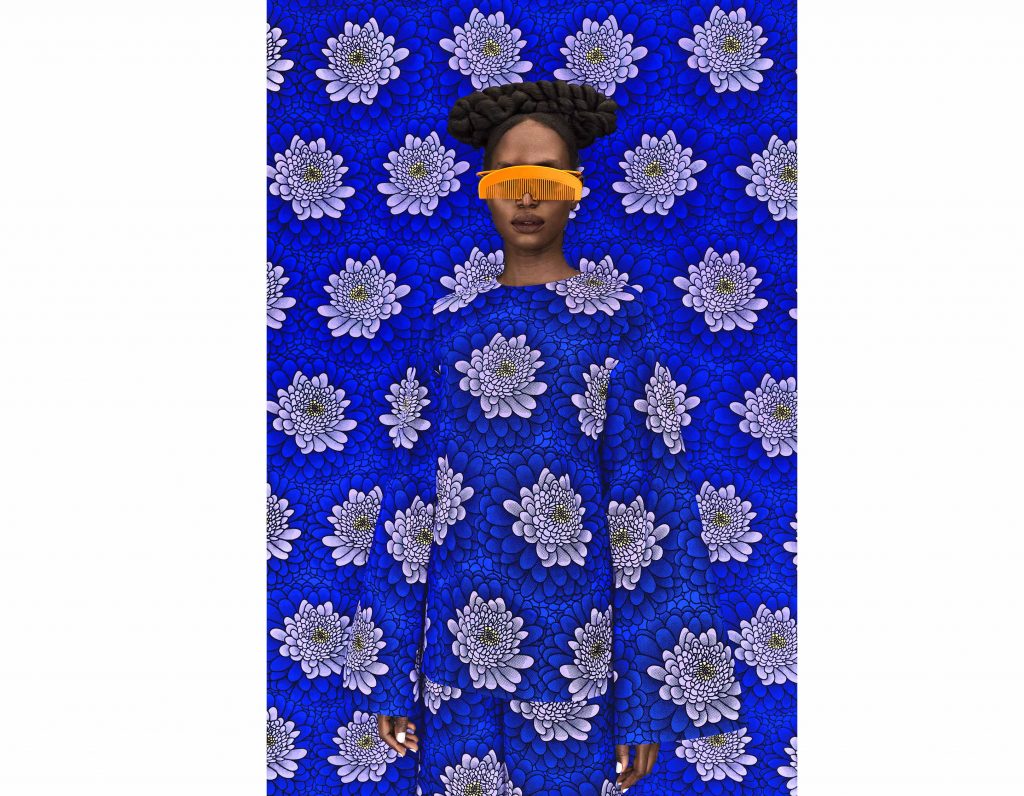
193 Gallery (Paris | Saint-Tropez | Venice) will present a solo installation by Thandiwe Muriu at Art Rotterdam. In her vivid “Camo” series, the Kenyan artist employs the renowned wax textile to make her subjects a canvas for reflection on identity, representation, and female empowerment.
Produced since 1876 in the Netherlands by the historic textile house, Vlisco, wax has been worn, shared, reinterpreted, and emotionally invested in by many generations across the African continent. Through everyday life – celebrations, rituals, family moments – it has become deeply embedded in social norms and practices, making it a widely accepted symbol of ‘Africanness’ despite its controversial history. For Muriu, the fabric emphasises the various ways in which the past continues to shape the present as she considers how women today can thrive – not in spite of their cultural legacies, but through them.
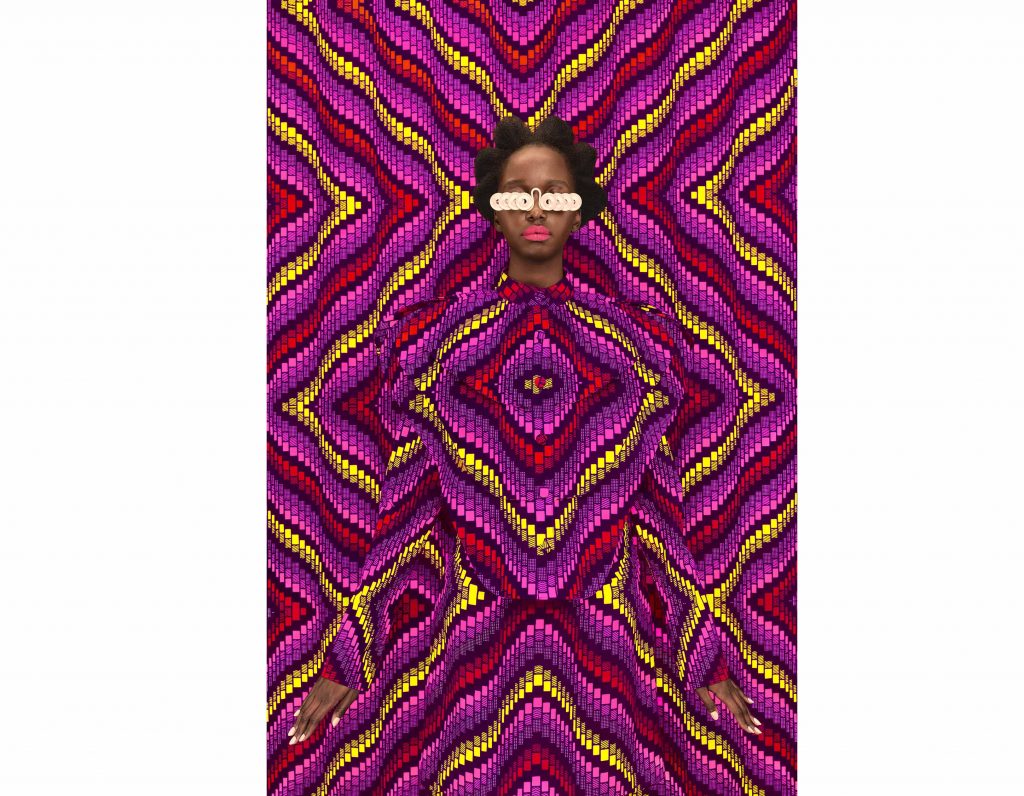
Vlisco developed its production by adapting colouring techniques from Javanese batik makers in the former Dutch East Indies. The prints were detached from their original symbolism and industrially produced in the Netherlands using a modified banknote printing machine, known as ‘La Javanaise’. African countries became the primary market for these fabrics. For the fair, 193 Gallery will incorporate original Vlisco textiles into the booth display bringing Muriu’s work into direct relation with the local and global histories embedded in the material, while anchoring the installation within Rotterdam’s role as an international trading city.
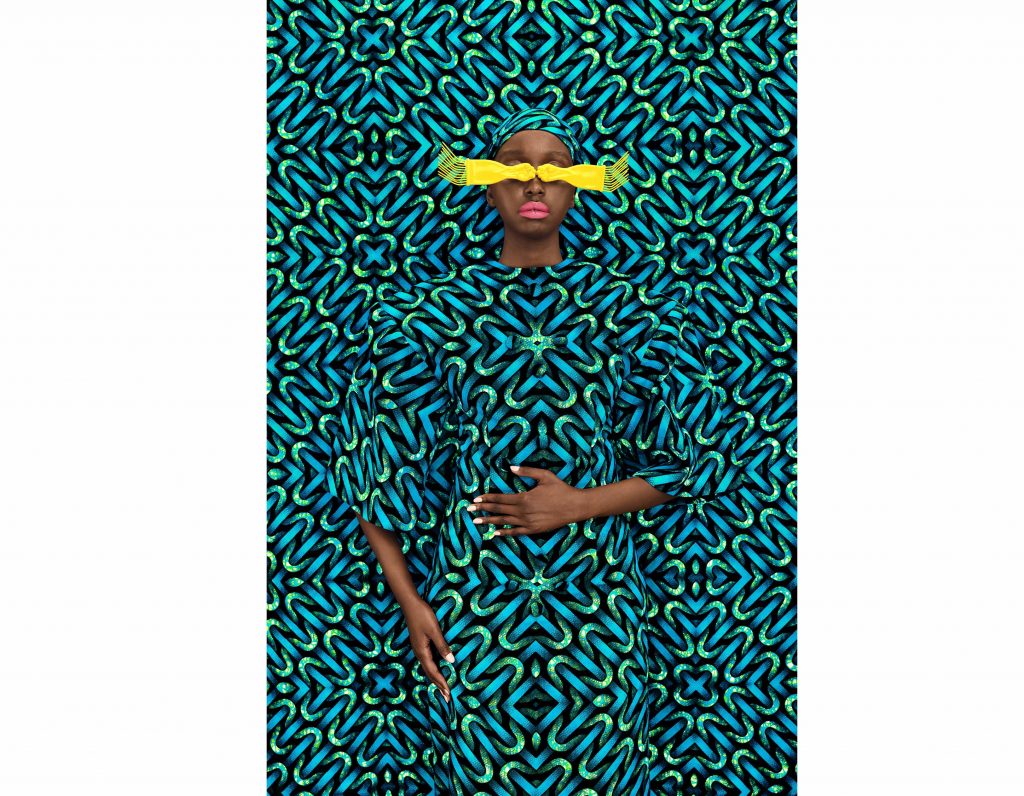
In 2024, 193 Gallery presented Muriu’s work in ‘Passengers in Transit’, a Collateral Event of the 60th Venice Biennale. This was followed by presentations at Museum Folkwang, Biennale della Fotografia Femminile, Musée de l’Homme, Museo Nacional de la Fotografía and a group exhibition curated by Pharrell Williams at Perrotin in Paris. This year, Muriu was selected for the KYOTOGRAPHIE International Photography Festival African Artist Residency Program.
193 Gallery (Parijs | Saint-Tropez | Venetië) presenteert op Art Rotterdam een solo-installatie van Thandiwe Muriu. In haar kleurrijke ‘Camo’ serie gebruikt de Keniaanse kunstenaar het beroemde waxtextiel om haar modellen te transformeren tot een drager van reflectie op identiteit, representatie en vrouwelijke empowerment.
Vlisco waxprints worden sinds 1876 in Nederland geproduceerd door het historische textielhuis Vlisco en wordt al generaties lang gedragen, gedeeld, opnieuw geïnterpreteerd en emotioneel geladen in vele delen van het Afrikaanse continent. In het dagelijks leven — tijdens vieringen, rituelen en familiebijeenkomsten — heeft de stof zich diep verankerd in sociale gebruiken en gewoonten. Daardoor is wax uitgegroeid tot een breed geaccepteerd symbool van ‘Afrikaansheid’, ondanks de complexe en omstreden geschiedenis ervan. Voor Muriu onderstreept de stof de vele manieren waarop het verleden nog altijd doorwerkt in het heden. Tegelijk onderzoekt ze hoe vrouwen vandaag de dag kunnen floreren, niet ondanks, maar dankzij die culturele erfenis.
Vlisco ontwikkelde zijn productieproces door kleurtechnieken over te nemen van Javaanse batikmakers uit het voormalige Nederlands-Indië. Die patronen werden zo losgemaakt van hun oorspronkelijke symboliek en werden vervolgens industrieel geproduceerd in Nederland, met behulp van een aangepaste bankdrukpers, bekend als ‘La Javanaise’. Afrikaanse landen groeiden uit tot de belangrijkste afzetmarkt voor deze stoffen. Voor de beurs verwerkt 193 Gallery originele Vlisco-stoffen in de presentatie van de stand, waardoor Muriu’s werk direct in verband wordt gebracht met de lokale en mondiale geschiedenissen die in het materiaal besloten liggen. Tegelijk wordt de installatie verankerd in de rol van Rotterdam als internationale handelsstad.
In 2024 presenteerde 193 Gallery werk van Muriu in ‘Passengers in Transit’, een Collateral Event van de 60e Biënnale van Venetië. Daarna volgden presentaties bij Museum Folkwang, de Biennale della Fotografia Femminile, Musée de l’Homme, Museo Nacional de la Fotografía en een groepstentoonstelling bij Perrotin in Parijs, samengesteld door Pharrell Williams. Dit jaar werd Muriu geselecteerd voor het African Artist Residency Program van het KYOTOGRAPHIE International Photography Festival.
Geschreven door Flor Linckens
This year, the culinary corner of Art Rotterdam will once again be filled with the rugged French atmosphere of the Rotterdam institution Café Marseille. Since 2020, this restaurant has been defying the equally rugged Kruiskade, with Derk Jan Wooldrik and Kris de Leeuw at the helm. Together they are also known as the Double Trouble Horecagroep and have quite a few successes to their name. The combination of a punk ship’s cook and a club legend [De Leeuw was co-owner of the legendary club Bar] turned out to be a golden one. There is, for instance, the musical neighbourhood pub Bar Alaska, which nowadays sails the Rotterdam Stoofboot along the Maas, and the brewery Eurobrouwers, which recently started serving their beer in their own atmospheric Café de Wilde Mossel. The latter, by the way, is not far from the real gem – Marseille, of course!
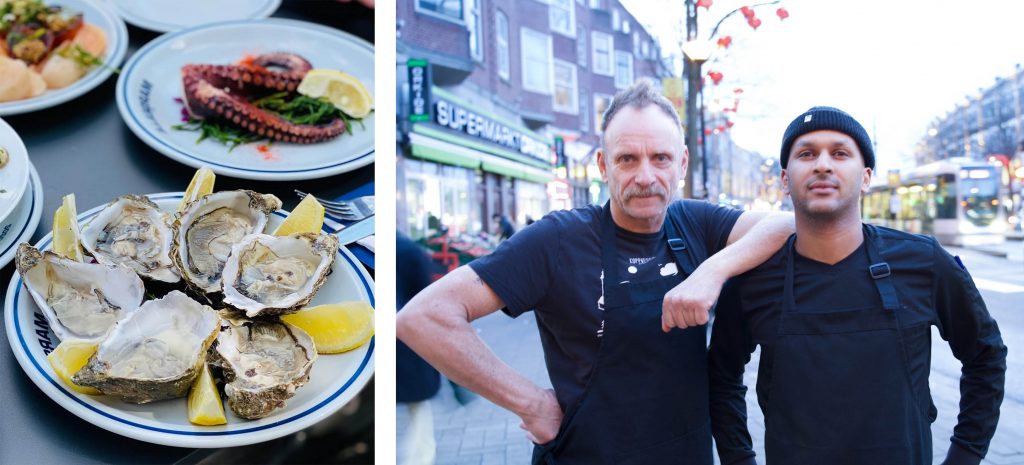
Menu Café Marseille
For the menu, Wooldrik and head chef Jona Haile travelled to the city where it all began. For three days, they started their day with a refreshing swim, after which they could search with fresh eyes for the essence of this complex city. This resulted in a highly culturally diverse menu. Think Italian ‘nduja and stracciatella over the Ombrine Carpaccio and the North African flavour of Ras el Hanout in the mussels. Just like the city, the restaurant is a good neighbour and they try to collaborate as much as possible with local entrepreneurs in the area. This style is something Wooldrik is known for – his dishes have always been a blend of his memories as a ship’s cook and the port cities where he came ashore. He has written a cookbook about this, in which he takes you on a cruise along all these magnificent places, complete with the accompanying wild stories. Since their brief trip to the great city, Wooldrik and Haile have developed such a taste for it that they will soon be travelling back to the city, to join forces and write a book together.
The distinctive atmosphere of the restaurant comes into its own in the scale of Ahoy. This is thanks to the work of set builder and set dresser Ben Zuydwijk. He made his mark in the film world and won two Golden Calves, the most recent for Hardcore Never Dies (2023). ‘We had already worked with him before for a Basque pop-up restaurant at Station Bergweg. For that he designed a Basque punk bar, Bar Bilbao. He is someone with an unconventional outlook who thinks on his feet,’ says Wooldrik.
Wooldrik and De Leeuw are delighted to once again welcome the audience of Art Rotterdam / Unseen Photo. Come raise a glass of bubbles, enjoy a quick oyster or a warm lunch – see you there!
Dit jaar zal de culinaire hoek van Art Rotterdam weer gevuld worden met de ruige Franse sferen van het Rotterdamse begrip Café Marseille. Al sinds 2020 trotseert dit restaurant de net zo ruige Kruiskade, met als kapiteinen van het schip Derk Jan Wooldrik en Kris de Leeuw. Samen zijn ze ook wel bekend als de Double Trouble Horecagroep en hebben ze al behoorlijk wat successen op hun naam. De combinatie van een punk scheepskok en een clublegende [De Leeuw was mede-eigenaar van de legendarische club Bar], bleek een gouden te zijn. Zo is er de muzikale buurtkroeg Bar Alaska, die tegenwoordig de Rotterdamse Stoofboot laat rondvaren over de Maas en de bierbrouwerij Eurobrouwers, die sinds kort hun bier serveert in hun eigen sfeervolle Café de Wilde Mossel. Die laatste is trouwens niet ver gelegen van de echte parel, Marseille natuurlijk!
Menu Café Marseille
Voor het menu zijn Wooldrik en chef-kok Jona Haile afgereisd naar de stad waar het allemaal begon. Drie dagen lang zijn ze hun dag begonnen met een frisse duik om vervolgens met een frisse blik te kunnen zoeken naar de essentie van deze gecompliceerde stad. Dit resulteerde in een zeer cultureel diverse kaart. Denk aan Italiaanse ‘nduja en stracciatella over de Ombervis Carpaccio en de Noord-Afrikaanse smaak van Ras el Hanout in de mosselen. Net zoals de stad, is het restaurant een goede buur en proberen ze zoveel mogelijk samen te werken met de ondernemers in de buurt. Deze stijl is iets waar Wooldrik bekend om staat, zijn gerechten zijn altijd al een mengelmoes geweest van zijn herinneringen als scheepskok en de havensteden waar hij aan wal ging. Hier heeft hij een kookboek over geschreven, waar hij je meeneemt op cruise langs al deze pracht plekken, inclusief de bijbehorende, wilde verhalen.
Sinds hun korte uitstapje naar de grote stad hebben Wooldrik en Haile hebben de smaak zo goed te pakken dat ze binnenkort terug zullen reizen naar de grote stad, om hier hun krachten te bundelen en samen een boek te schrijven.
De eigenzinnige sfeer van het restaurant komt goed tot zijn recht in de grootte van Ahoy. Dit dankzij het werk van decorbouwer en setdresser Ben Zuydwijk. Hij verdiende zijn sporen in de filmwereld en won twee keer een Gouden Kalf, de laatste ontving hij voor Hardcore never dies (2023). ‘We werkten al eerder met hem samen voor een Baskisch pop-uprestaurant in Station Bergweg. Daarvoor ontwierp hij een Baskische punk bar, Bar Bilbao. ‘Het is iemand die een eigenzinnige kijk heeft en snel denkt,’ aldus Wooldrik.
Met veel plezier ontvangen Wooldrik en de Leeuw weer het publiek van Art Rotterdam / Unseen Photo. Kom proosten met een glaasje bubbel, een snelle oester of een warme lunch, tot daar!
This year marks the tenth edition of the NN Art Award. The annual incentive prize of €10,000 is awarded to a talented artist who completed their education in the Netherlands and presents work at Art Rotterdam (27–29 March at Rotterdam Ahoy). The professional jury nominated four artists: Fiona Lutjenhuis (Galerie Fleur & Wouter), Tina Farifteh (Gallery Vriend van Bavink), Mandy Franca (Night Café Gallery) and Kyra Nijskens (Prospects / Mondriaan Fonds). From 14 March to 25 May 2026, work by all nominees will be on view at Kunsthal Rotterdam.
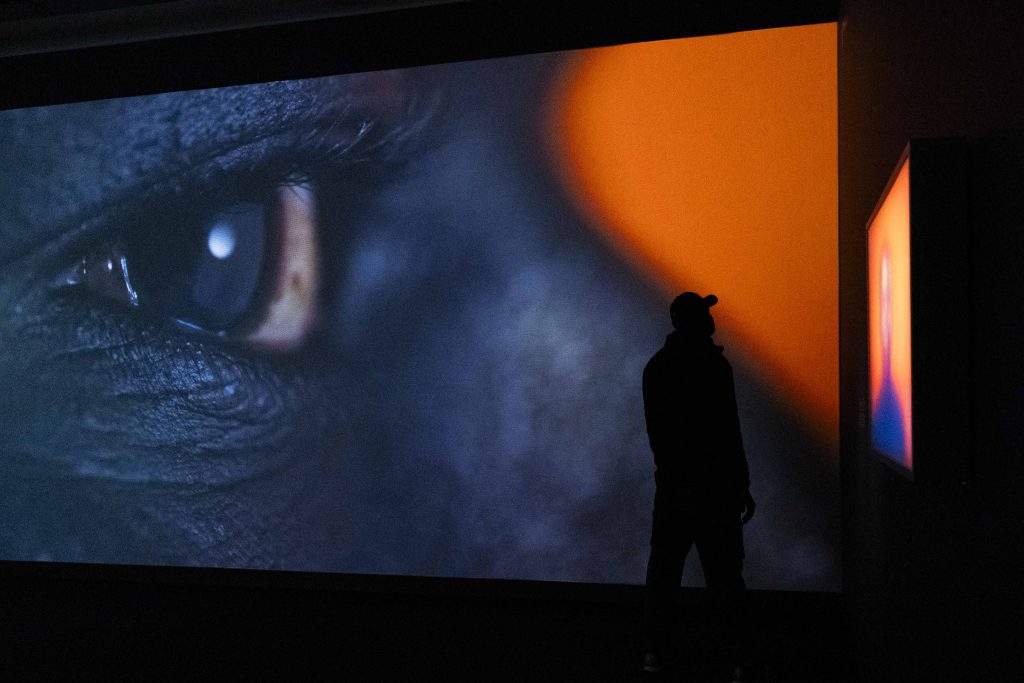
The multidisciplinary practice of Tina Farifteh examines the ways in which power structures shape the everyday lives of ordinary people, and how the images and words we hear and see influence our thinking, our actions and our emotions. As a photographer, filmmaker and visual artist she does not seek ready-made answers, but rather images that compel viewers to confront complex and uncomfortable truths. In doing so, she primarily appeals to our shared humanity. Through her installations, films and photographic projects, Farifteh attempts to narrow the gap between abstract political debates and human experience. Her work addresses feelings of home and belonging, migration and identity, empathy and exclusion, as well as policy, discourse and image-making.
Farifteh was born in Tehran in 1982 and moved to the Netherlands at the age of thirteen. She studied Photography at the Royal Academy of Art in The Hague and completed a master’s degree at Erasmus University Rotterdam. Her graduation project “The Flood” (2021) immediately attracted wide attention. In this audiovisual installation, visitors are surrounded by three enormous projections of a churning sea while a synthetic voice reads out the names, locations and statistics of missing and drowned refugees. Fragments of political rhetoric about migration can also be heard. The work reveals how refugees are often discussed in political discourse: in suspicious, criminalising and dehumanising terms, frequently through metaphors of waves, streams or tsunamis, words that are far from innocent because they shape our perception.
In the short documentary “Kitten or refugee?” (2023), Farifteh took a further step in her investigation into empathy. Test subjects were shown images and were asked to decide whom they would rescue in an emergency situation. But who deserves our help and why? The choices proved, unsurprisingly, to be strongly shaped by prejudice and reveal how quickly people attempt to rationalise their decisions. “Kitten or refugee?” was selected for the Debut Competition of the Netherlands Film Festival and received first prize in the Storytelling category of De Zilveren Camera.
In her installation “Toen ik de zon en de maan tegelijk zag” [“When I saw the sun and the moon simultaneously”], which was acquired by the Fries Museum, Farifteh poses a different, but related question. If society seems unable to offer a place to those who wish to feel at home somewhere, might the landscape provide space instead? With its openness and its apparent distance from political structures, the landscape here becomes a possible place of refuge. At the same time, the artist invites visitors to reflect on their own ideas about home, identity and exclusion, and not least on their own role.
Earlier this year, her most recent work was shown at the Rijksmuseum, which also acquired it for its collection. The museum invited her to visualise the theme ‘Asylum’ for the fiftieth edition of the annual photography commission Document Nederland. In this project, Farifteh reverses the perspective: instead of speaking about refugees, she allows them to speak themselves, showing us through their eyes who ‘we’ have become. Her practice is strongly rooted in research and for Document Nederland she spoke, often on location, not only with asylum seekers but also with specialists from across the field, from lawyers and staff members of COA and IND to journalists and people working for non-governmental organisations. This work also earned her a Zilveren Camera in the Storytelling category.
Can you tell us more about the work you present at Art Rotterdam and in Kunsthal Rotterdam?
For Document Nederland, the Rijksmuseum’s annual photography commission, I photographed and filmed the Dutch asylum system. The central figure is B., who after more than four months in immigration detention at Schiphol and a stay in Ter Apel is now in the middle of an asylum procedure. By presenting B. as a guide and narrator, I reverse the gaze: instead of speaking about asylum seekers, I allow the audience, quite literally, to listen to one of them. In doing so I hold up a mirror to the Netherlands. This exhibition is not about them but about us.
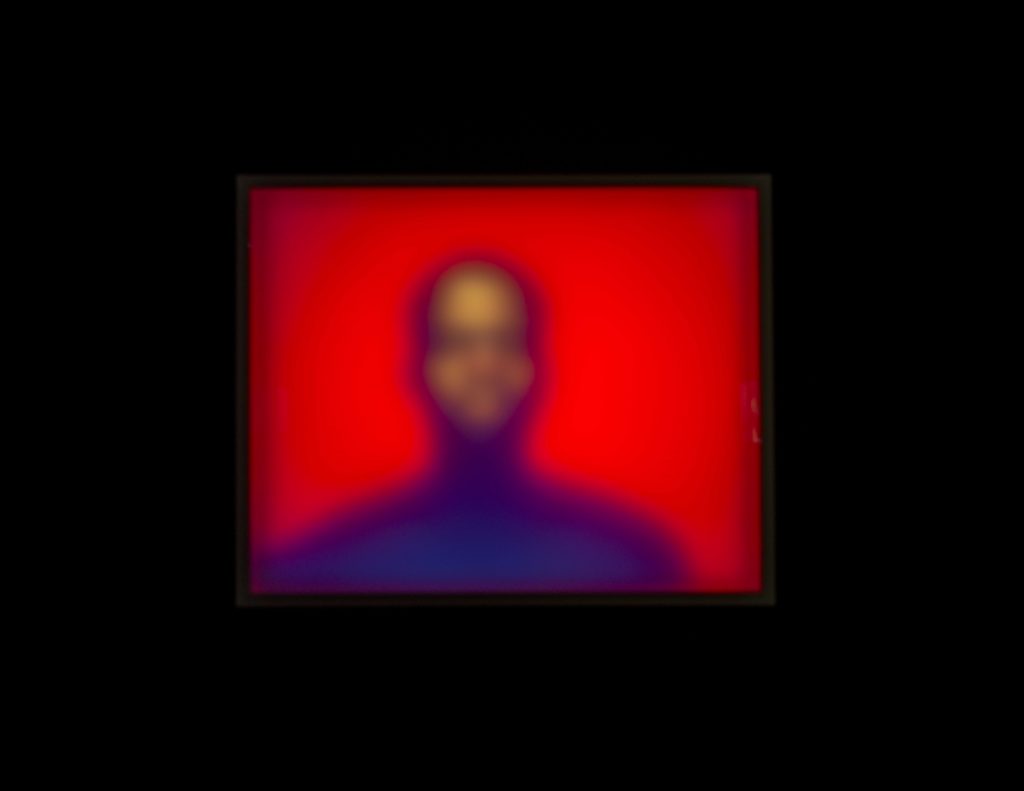
At Art Rotterdam and in Kunsthal Rotterdam I present several elements from this exhibition. One of the key works is titled “Naturalisatie van het portret van B” [“Naturalisation of the portrait of B”]. B. spent more than four months detained at the Schiphol detention centre. He does not feel protected by our laws: he asked for help and ended up in a cell. Yet he wants to share his story because he believes society should know what happens behind these walls, even though he fears the consequences. As an artist, I hold no political power, but I can create images and tell stories. Museums, cultural institutions and collectors can preserve those images for the future.
The final step in the asylum procedure is naturalisation, officially becoming Dutch. This is only possible after five years of legal residence. B. is still far from that point. So I wondered whether I could already ‘naturalise’ B.’s portrait. B., the Rijksmuseum and I agreed that his portrait will be included in the collection, but as long as B. feels unsafe his portrait will remain unrecognisable and visible only behind frosted glass. These agreements also apply to acquisitions at the fair or the display of the work in Kunsthal Rotterdam. Only when he feels safe, or when he feels he has nothing left to lose, will his face and identity become visible. In this way we record not only his story but also the time in which he felt unprotected.

What are your plans for 2026?
An exhibition is a powerful medium. It allows a public to be immersed in a story, to create an experience that resonates and lingers. But exhibitions are often temporary. That is why I want to make a book, a lasting form in which not only the story of B. takes centre stage but above all: the story of the Netherlands and how we deal with people who ask us for protection.
‘Asiel’ is a layered visual essay in book form in which I connect the past and the present through four pillars of Dutch identity: culture, religion, the rule of law and the economy. I combine my own images with works from the collection of the Rijksmuseum, supplemented by material from news media and social media. Three storylines intertwine: the story of B., who has just arrived in the Netherlands, my personal journey through crucial locations within the asylum process, and an investigation into how ‘the asylum seeker’ has been represented historically and in the present.
‘Asiel’ questions our norms, values and freedoms and reveals how a system once rooted in empathy could harden into something distant and indifferent. By showing not only what happens but also what this says about us, the book opens a critical perspective on how the Netherlands deals with people seeking protection. The work breaks through distance and abstraction and invites reflection on our history, our identity and our responsibility in the present. For this book I am collaborating with design studio LMNOP for the design and with publisher The Eriskay Connection.
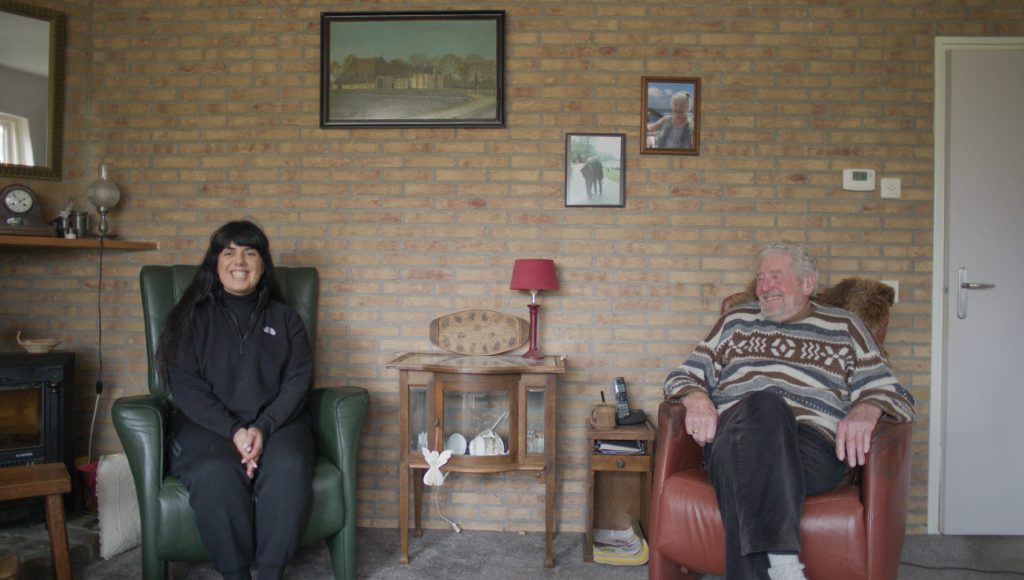
In addition, I am currently working on a three-part documentary series Tina in Sexbierum, which will be broadcast on VPRO / NPO from Thursday 7 May. A few years ago, I moved to a small village in Friesland because I could no longer find affordable housing in Amsterdam. Friends who leave the city often return to where they came from, but I cannot return to my birthplace Tehran. When I arrived in the village I encountered curious looks and prejudices from villagers about ‘outsiders’, but also my own assumptions about the countryside and the closed nature of my own Amsterdam bubble.
In Tina in Sexbierum, the two worlds that come together lead to honest and occasionally confronting encounters. I speak with my fellow villagers, from the mayor to the postman, bicycle repairer and GP. I meet the village brass band Door Samenwerking Groot and learn that cooperation is a skill that must be learned. And a close friendship develops with my 83-year-old fellow villager, former potato farmer Auke, with whom I drink coffee every week. I gradually come to know the small community better and discover what living together and caring for one another truly means. By looking at one another with humour, lightness and affection, both my fellow villagers and I begin to learn from each other despite our differences.
Tina in Sexbierum is a personal and disarming documentary series about displacement, detachment, the longing for a home and at the same time the inability to feel at home in a society that continually rejects you on an existential level. The three-part series forms part of the transmedial project of the same name.
In 2027, Foam Amsterdam will present a survey exhibition bringing together all parts of the project, including video, photography, text, light and sound, in a single presentation.
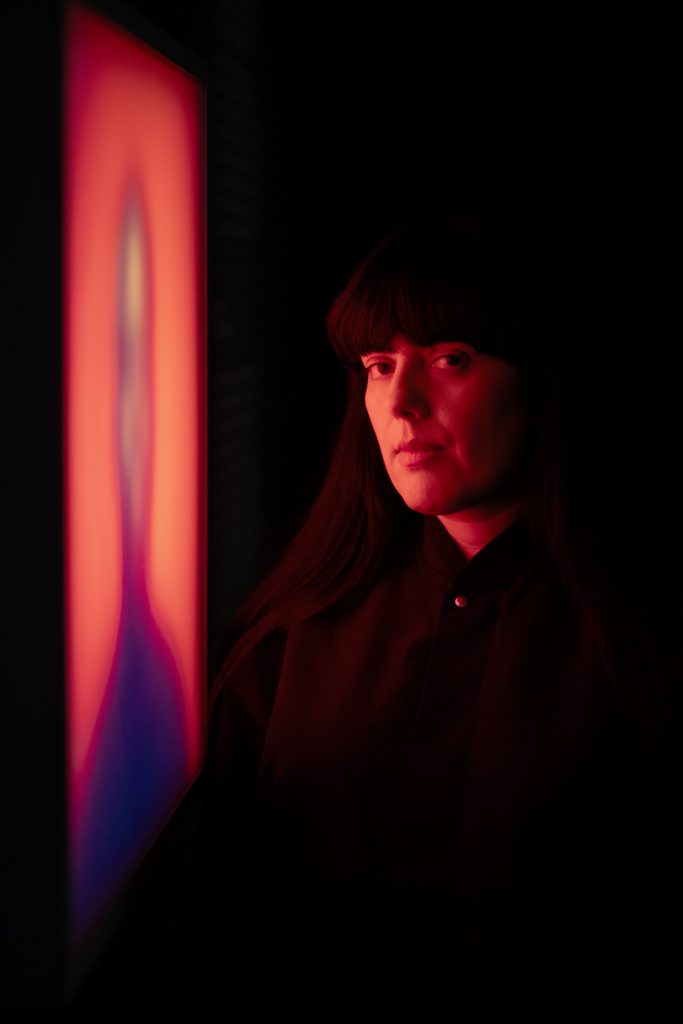
Can you describe how you felt when you heard that you had been nominated for the NN Art Award?
I was very surprised and honoured, and above all incredibly happy. Happy because the nomination gives more people the opportunity to see the work. But also because it creates greater attention and awareness for B.’s story and for the situation many people like B. currently face in the Netherlands. B. and I are grateful that the story reaches a wider audience in this way, so that no one will be able to say: we did not know.
Which project would you immediately take on if you were to win the award?
My dream is to publish the book ‘Document Nederland: Asiel’ and to launch it in a special way. We want to present it in a location that can be transformed both visually and conceptually, allowing us to immerse the audience in images, stories and connections. It should become a total experience in a physical way, a space in which the story can be felt and that visitors can then take home in the form of the book. For both the production of the book and its launch, we can use all the help and support we can get. Winning this award would be a tremendous step towards realising that dream.
The work of Tina Farifteh has previously been shown at Amsterdam Museum, the Rijksmuseum, the Fries Museum, Monopole – Schiedam Museum, Museum Hilversum, Sexyland, Melkweg Expo, The New Current, BredaPhoto and on NPO VPRO.
The winner of the NN Art Award 2026 will be announced on Friday 27 March at Kunsthal Rotterdam. During this festive evening, all exhibitions, including the NN Art Award exhibition, will be freely accessible to invited guests.
Written by Flor Linckens
Dit jaar viert de NN Art Award haar tiende editie. De jaarlijkse stimuleringsprijs van €10.000 gaat naar een getalenteerd kunstenaar die een opleiding in Nederland afrondde en werk presenteert op Art Rotterdam (27-29 maart in Rotterdam Ahoy). De vakjury nomineerde vier kunstenaars: Fiona Lutjenhuis (Galerie Fleur & Wouter), Tina Farifteh (Gallery Vriend van Bavink), Mandy Franca (Night Café Gallery) en Kyra Nijskens (Prospects / Mondriaan Fonds). Van 14 maart tot en met 25 mei 2026 is het werk van alle genomineerden te zien in Kunsthal Rotterdam.
De multidisciplinaire praktijk van Tina Farifteh gaat over de manieren waarop machtsstructuren doorwerken in het dagelijks leven van gewone mensen, en over hoe de beelden en woorden die we horen en zien samen ons denken, ons handelen en onze emoties vormen. Als fotograaf, filmmaker en beeldend kunstenaar zoekt ze niet naar kant-en-klare antwoorden, maar naar beelden die je als kijker dwingen om je te verhouden tot complexe en ongemakkelijke waarheden. Daarbij spreekt ze vooral onze (mede)menselijkheid aan. Met haar installaties, films en fotografische projecten probeert Farifteh de afstand tussen abstracte politieke discussies en menselijke ervaringen te verkleinen. Haar werk gaat over thuisvoelen en thuishoren, over migratie en identiteit, over empathie en uitsluiting, en ook over beleid, discours en beeldvorming.
Farifteh werd in 1982 geboren in Teheran en verhuisde op haar dertiende naar Nederland. Ze studeerde Fotografie aan de Koninklijke Academie van Beeldende Kunsten in Den Haag en rondde een master af aan de Erasmus Universiteit Rotterdam. Haar afstudeerproject ‘The Flood’ (2021) kreeg meteen brede aandacht. In die audiovisuele installatie word je als bezoeker omringd door drie enorme projecties van een kolkende zee, terwijl een synthetische stem namen, locaties en statistieken van vermiste en verdronken vluchtelingen opleest.Je hoort ook fragmenten uit politieke retoriek over migratie. Het werk laat zien hoe er in het politieke discours vaak over vluchtelingen wordt gesproken: in wantrouwende, criminaliserende en dehumaniserende termen, vaak via metaforen van golven, stromen of tsunami’s: woorden die allesbehalve onschuldig zijn omdat ze onze beeldvorming sturen.
In de korte documentaire ‘Kitten of vluchteling?’ (2023) zette Farifteh een volgende stap in haar onderzoek naar empathie. Proefpersonen kregen beelden voorgelegd en moesten kiezen wie ze zouden redden uit een noodsituatie. Maar wie verdient onze hulp en waarom? De keuzes bleken, vanzelfsprekend, sterk bepaald door vooroordelen en laten zien hoe snel mensen hun keuzes proberen te rationaliseren. ‘Kitten of vluchteling?’ werd geselecteerd voor de Debuutcompetitie van het Nederlands Film Festival en bekroond met de eerste prijs in de categorie Storytelling bij De Zilveren Camera.
In haar installatie ‘Toen ik de zon en de maan tegelijk zag’, die werd aangekocht door het Fries Museum, stelt Farifteh een andere, maar verwante vraag. Als de samenleving geen plek lijkt te bieden aan mensen die zich ergens thuis willen voelen, kan het landschap dan misschien wel ruimte bieden? Met zijn openheid en ogenschijnlijke afstand tot politieke structuren wordt het landschap hier een mogelijke plek van toevlucht. Tegelijkertijd nodigt de kunstenaar bezoekers uit om na te denken over hun eigen ideeën over thuis, identiteit en uitsluiting, en niet onbelangrijk: over hun eigen rol.
Eerder dit jaar was haar meest recente werk nog te zien in het Rijksmuseum, dat het eveneens in zijn collectie opnam. Het museum vroeg haar om voor de vijftigste editie van de jaarlijkse foto-opdracht Document Nederland het thema ‘Asiel’ in beeld te brengen. In dit project draait Farifteh het perspectief om: in plaats van óver vluchtelingen te praten, laat ze hen zelf aan het woord, en ze laat ons daarmee door zijn ogen zien wie ‘wij’ zijn geworden. Haar praktijk is sterk geworteld in onderzoek en voor Document Nederland sprak ze, vaak op locatie, niet alleen met asielzoekers, maar ook met specialisten uit de sector, van advocaten, COA- en IND-medewerkers tot journalisten en mensen die voor niet-gouvernementele organisaties werken. Ook met dit werk sleepte ze een Zilveren Camera in de wacht in de categorie Storystelling
Kun je ons wat meer vertellen over het werk dat je presenteert op Art Rotterdam en in Kunsthal Rotterdam?
Voor Document Nederland, de jaarlijkse foto-opdracht van het Rijksmuseum, fotografeerde en filmde ik het Nederlandse asielsysteem. Hoofdpersoon is B. die na ruim vier maanden vreemdelingendetentie op Schiphol en een verblijf in Ter Apel in een asielprocedure zit. Door B. als gids/verteller op te voeren draai ik de blik om: in plaats van te praten óver asielzoekers, laat ik het publiek, letterlijk, naar een van hen luisteren. Daardoor hou ik Nederland een spiegel voor, deze tentoonstelling gaat niet over hen maar over ons.
Op Art Rotterdam en in Kunsthal Rotterdam presenteer ik een aantal elementen uit deze tentoonstelling. Een van de belangrijke elementen is een werk genaamd: ‘Naturalisatie van het portret van B’. B. zat ruim vier maanden vast in detentiecentrum Schiphol. Hij voelt zich niet beschermd door onze wetten: hij vroeg om hulp en belandde in de cel. Toch wil hij zijn verhaal delen omdat hij vindt dat de samenleving moet weten wat er achter deze muren speelt, al vreest hij de gevolgen. Als kunstenaar heb ik geen politieke macht, maar ik kan beelden maken en verhalen vertellen. Musea, culturele instellingen en verzamelaars kunnen die beelden voor de toekomst bewaren.
De laatste stap in de asielprocedure is naturalisatie – officieel Nederlander worden. Dat kan pas na vijf jaar legaal verblijf. B. is daar nog lang niet. Dus ik vroeg me af: kan ik alvast B.’s portret ‘naturaliseren’? B., het Rijksmuseum en ik kwamen overeen dat zijn portret wordt opgenomen in de collectie maar zolang B. zich onveilig voelt, blijft zijn portret onherkenbaar en alleen te zien achter melkglas. Deze afspraken gelden ook voor aankopen op de beurs of het tonen van het werk in Kunsthal Rotterdam. Pas wanneer hij zich veilig voelt óf het gevoel heeft dat hij niets meer te verliezen heeft zullen zijn gezicht en identiteit zichtbaar worden. Zo leggen we niet alleen zijn verhaal vast, maar ook de tijd waarin hij zich onbeschermd voelde.
Wat zijn je plannen voor 2026?
Een expositie is een krachtig medium. Het biedt de mogelijkheid om een publiek onder te dompelen in een verhaal, om een ervaring te creëren die raakt en blijft hangen. Maar tentoonstellingen zijn vaak tijdelijk. Daarom wil ik een boek maken, een blijvende vorm waarin niet alleen het verhaal van B. centraal staat, maar vooral ook het verhaal van Nederland en hoe wij omgaan met mensen die ons om bescherming vragen.
‘Asiel’ is een gelaagd, visueel-essayistisch boek waarin ik aan de hand van vier pijlers van de Nederlandse identiteit — cultuur, religie, rechtsstaat en economie — heden en verleden met elkaar verbind. Ik combineer eigen beelden met werk uit de collectie van het Rijksmuseum, aangevuld met materiaal uit nieuwsmedia en sociale media. Drie verhaallijnen lopen door elkaar heen: het verhaal van B., die net in Nederland is aangekomen; mijn persoonlijke reis langs cruciale locaties binnen het asielproces; en een onderzoek naar hoe ‘de asielzoeker’ historisch én hedendaags wordt verbeeld.
‘Asiel’ bevraagt onze normen, waarden en vrijheden, en laat zien hoe een systeem dat ooit was gebaseerd op empathie, kon verharden tot iets afstandelijks en onverschilligs. Door niet alleen te tonen wat er gebeurt, maar ook wat dit over ons zegt, opent het boek een kritisch perspectief op hoe Nederland omgaat met mensen die bescherming zoeken. Het werk doorbreekt afstand en abstractie en nodigt uit tot reflectie op onze geschiedenis, onze identiteit en onze verantwoordelijkheid in het heden. Voor dit boek werk ik samen met ontwerpbureau LMNOP voor het design en met uitgever The Eriskay Connection.
Daarnaast werk ik momenteel aan een driedelige documentaireserie Tina in Sexbierum die vanaf donderdag 7 mei op VPRO / NPO te zien zal zijn. Ik verhuisde een paar jaar geleden naar een klein dorpje in Friesland omdat ik in Amsterdam geen betaalbare woning meer kon vinden. Mijn vrienden die uit de stad vertrekken, gaan vaak naar waar ze vandaan komen, maar ik kan niet terug naar mijn geboortestad Teheran. Bij aankomst in het dorp werd ik geconfronteerd met vreemde blikken en vooroordelen van de dorpsgenoten over ‘import’, maar ook met mijn eigen aannames over het platteland en met hoe gesloten mijn eigen Amsterdamse bubbel is.
In Tina in Sexbierum leiden de twee werelden die bij elkaar komentot eerlijke en soms confronterende ontmoetingen. Ik ga in gesprek met mijn dorpsgenoten, van de burgemeester tot de postbode, fietsenmaker en huisarts. Ik spreek metdorpsfanfare Door Samenwerking Groot en leer dat samenwerken een vaardigheid is die je moet leren. En er ontstaat een hechte vriendschap met mijn 83-jarige dorpsgenoot, oud-aardappelboer Auke, met wie ik wekelijks koffie drink. Ik leer de kleine gemeenschap steeds beter kennen en ontdek wat samenleven en voor elkaar zorgen betekent. Juist door met humor, lichtheid en liefde naar elkaar te kijken, beginnen ik én mijn dorpsgenoten van elkaar te leren, ondanks de verschillen.
Tina in Sexbierum is een persoonlijke en ontwapenende documentaireserie over ontheemding, onthechting, het verlangen naar een thuis en tegelijkertijd het onvermogen om je thuis te voelen in een maatschappij die je continu existentieel afwijst. De driedelige serie is onderdeel van het gelijknamige transmediale project.
In 2027 komt in Foam Amsterdam een overzichtstentoonstelling waarin alle delen van het project (video, fotografie, tekst, licht en geluid) worden samengebracht in één presentatie.
Kun je beschrijven hoe je je voelde toen je hoorde dat je was genomineerd voor de NN Art Award?
Ik was heel erg verrast en vereerd, en vooral ontzettend blij. Blij omdat de nominatie ervoor zorgt dat nog meer mensen de kans krijgen het werk te zien. Maar ook omdat er extra aandacht en bewustzijn ontstaat voor het verhaal van B. en voor de situatie waarin veel mensen zoals B. zich op dit moment in Nederland bevinden. B. en ik zijn dankbaar dat het verhaal op deze manier een groter publiek bereikt — zodat niemand kan zeggen: we wisten het niet.
Welk project zou je onmiddellijk oppakken als je de award zou winnen?
Mijn droom is om het boek ‘Document Nederland: Asiel’ uit te brengen en het op een bijzondere manier te lanceren. We willen het presenteren op een locatie die zich zowel visueel als inhoudelijk laat transformeren, zodat we het publiek kunnen onderdompelen in beelden, verhalen en onderlinge verbanden. Het moet een fysieke totaalervaring worden — een ruimte waarin het verhaal voelbaar wordt — en die je vervolgens in de vorm van het boek mee naar huis neemt. Voor zowel de realisatie van het boek als de lancering kunnen we alle hulp en steun goed gebruiken. Het winnen van deze award zou een enorme stap zijn in de verwezenlijking van die droom.
Het werk van Tina Farifteh was eerder onder meer te zien in het Amsterdam Museum, het Rijksmuseum, het Fries Museum, Monopole – Schiedam Museum, Museum Hilversum, Sexyland, Melkweg Expo, The New Current, BredaPhoto en op NPO VPRO.
De winnaar van de NN Art Award 2026 wordt bekendgemaakt op vrijdag 27 maart in Kunsthal Rotterdam. Tijdens deze feestelijke avond zijn alle tentoonstellingen, inclusief de NN Art Award tentoonstelling, vrij toegankelijk voor genodigden.
Geschreven door Flor Linckens
Artists and Rotterdam residents shaping a sustainable city together
DHB Bank is once again the main sponsor of Art Rotterdam. This year, DHB Art Space presents South Forward, a continuation of the 2025 presentation Echoes of Us.
The project starts from a simple but powerful idea. Rotterdam South holds a wealth of knowledge, creativity and imagination that actively contributes to shaping the city’s future.
DHB Art Space functions as a place where art allows for other ways of seeing. Not by offering explanations or solutions, but by creating space for stories, imagination and everyday realities. It is within this space that dialogue can emerge. Encounters and exchanges that do not happen naturally, yet are essential for understanding one another, are made possible here.
Jeanthalou Haynes, curator at Unity in Diversity Rotterdam, reflects:
“Through our work at Unity in Diversity, we see Rotterdam South as a living source of stories. In many ways, it is the garden of Art Rotterdam: the neighbourhood surrounding Ahoy, where people work every day on coexistence, care and thinking ahead. With South Forward, we invite visitors to engage with the stories of the place they are in, and with the people who shape it.”
South Forward is developed in close collaboration with residents, artists and local initiatives from Rotterdam South. The project explores themes such as sustainability, community strength and everyday life, drawing from stories and practices that exist within the neighbourhoods themselves. This way of working together forms the core of the project.
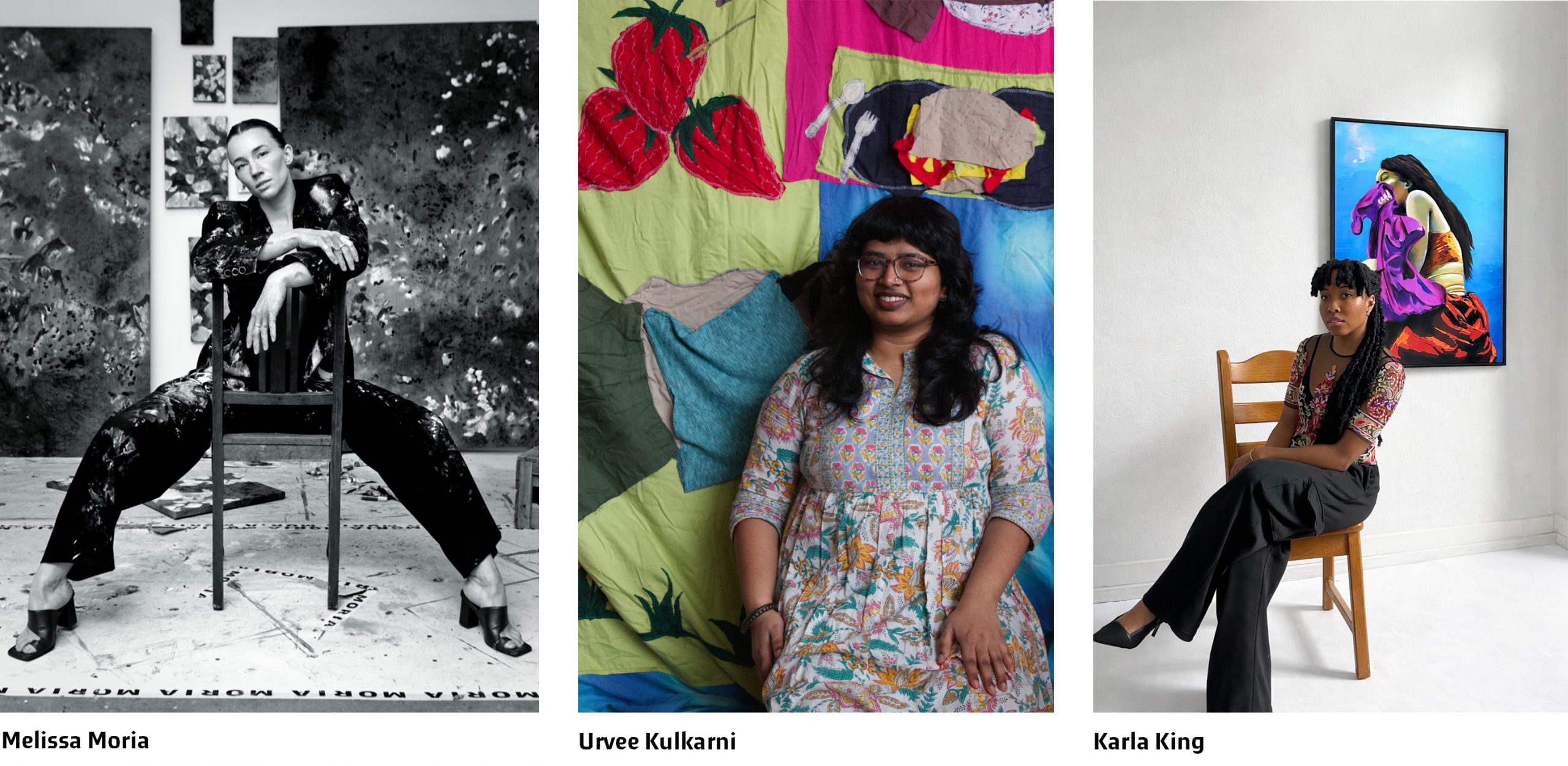
During Art Rotterdam 2026, DHB Art Space presents newly developed work by Karla King, Melissa Moria and Urvee Kulkarni. Each artist works from their own artistic practice, connecting artistic research, sustainable materials and local narratives. Their work opens up ways of imagining how care, community and living together can take form, now and in the future.
South Forward invites visitors not only to look, but to listen, to reflect and to enter into conversation with the stories that continue to shape life in Rotterdam South.
kunstenaars en Rotterdammers samen voor een duurzame stad
DHB Bank is opnieuw de trotse hoofdsponsor van Art Rotterdam. In de DHB Art Space is dit jaar het project South Forward te zien, een vervolg op de de presentatie van 2025 Echoes of Us
Het vertrekpunt is helder: Rotterdam Zuid bezit kennis, creativiteit en verbeeldingskracht die de toekomst mede vormgeven.
DHB Art Space is opgezet als een plek waar kunst ruimte maakt voor andere manieren van kijken. Niet door uitleg of oplossingen, maar door verhalen, verbeelding en geleefde ervaring. Binnen deze ruimte ontstaat ook ruimte voor gesprek: ontmoetingen en uitwisselingen die niet vanzelf plaatsvinden, maar die nodig zijn om elkaar beter te begrijpen.
Jeanthalou Haynes, curator Unity in Diversity Rotterdam: “Vanuit ons werk bij Unity in Diversity zien wij Rotterdam Zuid als een levende bron van verhalen. Als de spreekwoordelijke tuin van Art Rotterdam: de wijk rondom Ahoy waar dagelijks wordt gewerkt aan samenleven, zorg dragen en vooruitdenken. Met South Forward nemen we bezoekers mee naar die verhalen van de plek waar zij zich bevinden, naar de mensen die haar dragen.”
South Forward wordt ontwikkeld in nauwe samenwerking met bewoners, makers en lokale initiatieven uit Rotterdam Zuid. Het project richt zich op thema’s als duurzaamheid, gemeenschapskracht en het dagelijks leven, en is geworteld in echte verhalen uit de wijken zelf. Deze co-creatieve manier van werken vormt het hart van het project.
Tijdens Art Rotterdam 2026 presenteert DHB Art Space nieuw ontwikkeld werk van Karla King, Melissa Moria en Urvee Kulkarni. Elk van hen werkt vanuit een eigen artistieke praktijk en verbindt artistiek onderzoek, duurzame materialen en lokale verhalen tot werken die uitnodigen om te verbeelden hoe samenleven, zorg en gemeenschap vorm kunnen krijgen. Nu en in de toekomst.
South Forward nodigt bezoekers uit om niet alleen te kijken, maar ook te luisteren, in gesprek te gaan en zich te verhouden tot de verhalen die in Rotterdam Zuid leven.
On Saturday 28 March (16:30–17:00), as part of the Reflections programme, an English-language talk will take place in which Carolina Alfonso, artist and moderator, will enter into conversation with Alejandra Castro Rioseco, founder and Executive Director of the MIA ART Collection.
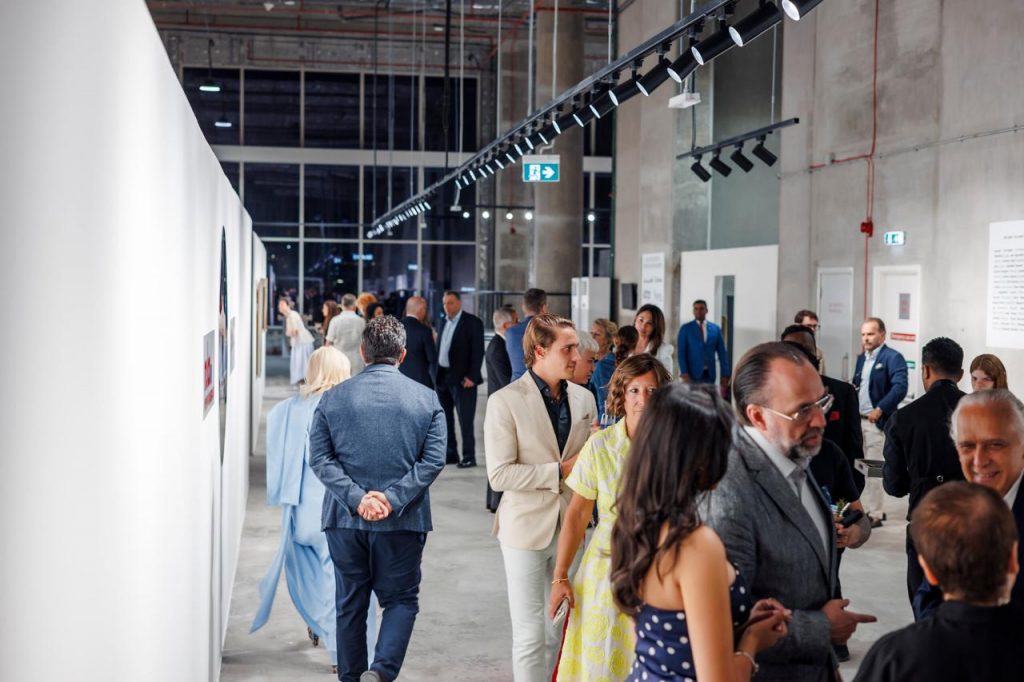
The role of MIA ART Collection is to invest in and create visibility for women artists in the art world, creating networks and channels of support and assistance for women professionals in the arts.
The importance of raising awareness about gender equality in art is fundamental. Professional and private institutions must collaborate in creating spaces, not only for exhibitions but also for reflection that unite the perspectives of civil society and academic institutions with those of artists, curators, collectors, and galleries.
Art Rotterdam asked Alejandra Castro Rioseco a few questions ahead of the talk.
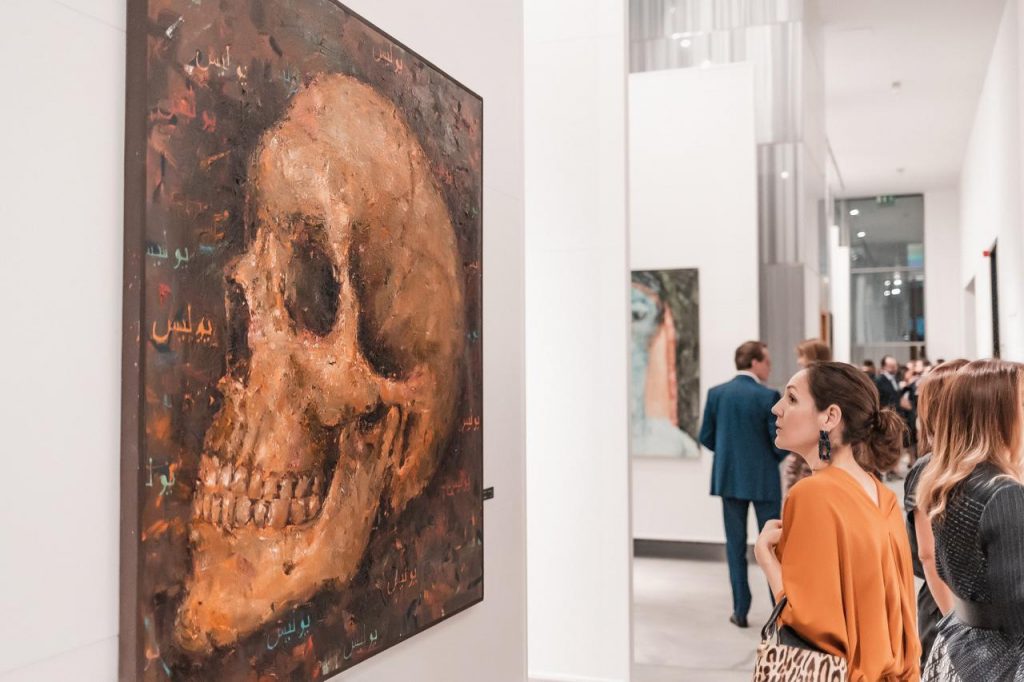
When did you establish the MIA Art Collection, and what is the mission of the organisation?
The Collection began to take shape almost 17 years ago, and then, when the pandemic hit, we decided to create the collection’s not-for-profit foundation, dedicated entirely to supporting women artists across the world.
We create and curate exhibitions that include emerging young women artists and pair them with
established names. We organize talks and presentations in collaboration with various art fairs and biennales around the world to bring the inequality of women in the world of art to the forefront. We have a scholarship that we award each year to support an artist with her studies.
We recently created a Residency Program in Antwerp, Belgium where we host three artists per year so they can study and document the history of women artists during the 1800s.
At its annual Gala & Awards, the MIA Art Collection presents Awards to ten distinguished individuals who contribute to and support women’s work in the art world.
The MIA mission, in short, is to support women artists to achieve greater visibility and recognition.
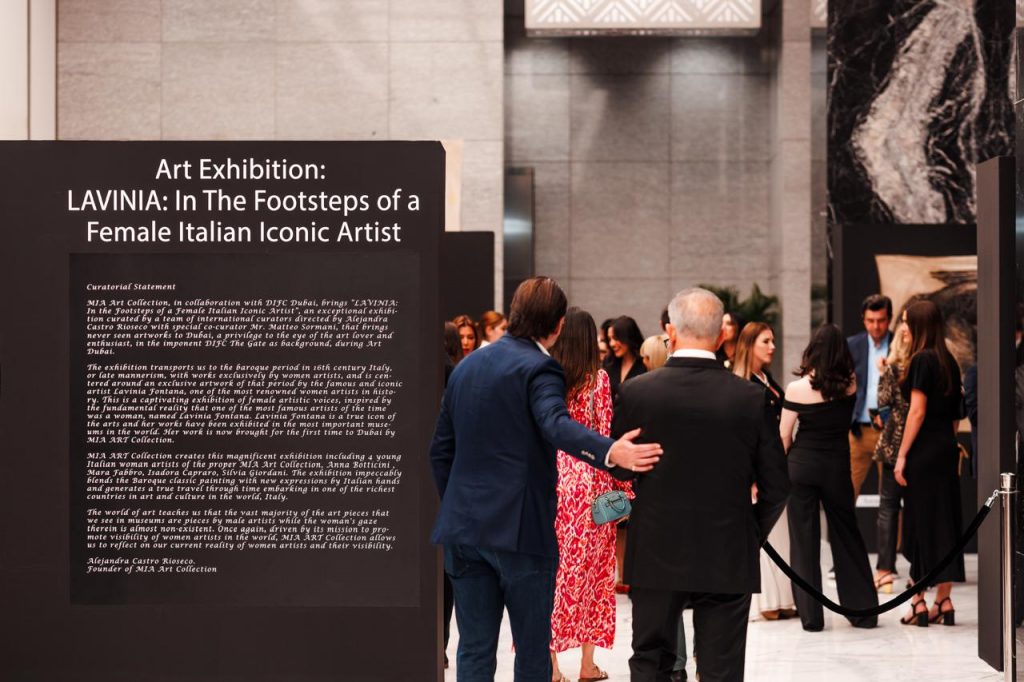
What is your vision for the future of female artists?
I would like to think that we have had a positive impact, that we are on the right track, that we have added to triggering an increasing awareness of the importance to achieve equality and its importance for a more balanced world. But still a long way to go. Women make an important contribution to the way we see and experience art. For years we have looked at the world through men’s eyes. It is time to see the world through women’s eyes.
What advice would you offer to women artists seeking to establish themselves in the art world?
There are many things I’d like to tell them, but the most important is not to lose hope, to be positive, that it is crucial to seek good advice, read and study the markets, study art history, in particular the history of women in the arts, their evolution and how they have overcome continued difficulties and forged their own paths in a world dominated by men!
Today, art schools and education programs are full of women studying art. This should be a sign that the market and world needs to change, and consequently, so do the conditions for and reality of women artists as a critical step forward for all!
Op zaterdag 28 maart (16.30 – 17.00 uur) vindt, als onderdeel van het Reflections programma, een Engelstalige talk plaats waarin Carolina Alfonso, kunstenaar en moderator, in gesprek gaat met Alejandra Castro Rioseco, oprichter/Executive Director van de MIA ART Collection.
De MIA ART Collection investeert in en vergroot de zichtbaarheid van vrouwelijke kunstenaars in de kunstwereld, door netwerken en kanalen voor ondersteuning en hulp te creëren voor vrouwelijke professionals in de kunst.
Het is namelijk van fundamenteel belang om het bewustzijn over gendergelijkheid in de kunstwereld te vergroten. Professionele en particuliere instellingen moeten samenwerken om niet alleen tentoonstellingsruimtes te creëren, maar ook reflectieruimtes die de perspectieven van het maatschappelijk middenveld en academische instellingen verenigen met die van kunstenaars, curatoren, verzamelaars en galeries.
Art Rotterdam stelde Alejandra Castro Rioseco al een paar vragen voorafgaand aan de talk.
Wanneer werd de MIA Art Collection opgericht en wat is de missie van de organisatie?
De collectie kreeg bijna zeventien jaar geleden vorm. Toen de pandemie uitbrak, besloten we een non-profitstichting op te richten die zich volledig toelegt op het ondersteunen van vrouwelijke kunstenaars over de hele wereld.
We initiëren en cureren tentoonstellingen waarin jonge, opkomende vrouwelijke kunstenaars worden samengebracht met gevestigde namen. Daarnaast organiseren we lezingen en presentaties in samenwerking met verschillende kunstbeurzen en biënnales wereldwijd, om op die manier de ongelijkheid van vrouwen in de kunstwereld onder de aandacht te brengen. Jaarlijks reiken we een studiebeurs uit ter ondersteuning van een kunstenaar tijdens haar opleiding.
Onlangs hebben we een residencyprogramma opgezet in Antwerpen, waar jaarlijks drie kunstenaars verblijven om de geschiedenis van vrouwelijke kunstenaars uit de negentiende eeuw te bestuderen en te documenteren.
Tijdens het jaarlijkse Gala & Awards reikt de MIA Art Collection prijzen uit aan tien vooraanstaande personen die zich inzetten voor en bijdragen aan het werk van vrouwen in de kunstwereld.
De missie van MIA is, kort gezegd, het ondersteunen van vrouwelijke kunstenaars, zodat zij meer zichtbaarheid en erkenning krijgen.
Wat is uw visie op de toekomst van vrouwelijke kunstenaars?
Ik denk dat we mogen zeggen dat we een positieve bijdrage hebben geleverd, dat we op de goede weg zijn en dat we hebben bijgedragen aan een groeiend bewustzijn van het belang van gelijkheid en van het belang daarvan voor een evenwichtigere wereld. Tegelijkertijd is er nog een lange weg te gaan.
Vrouwen leveren een belangrijke bijdrage aan de manier waarop we kunst zien en ervaren. Jarenlang hebben we de wereld vooral door de ogen van mannen bekeken. Het is tijd om de wereld ook door de ogen van vrouwen te zien.
Welk advies zou u vrouwelijke kunstenaars geven die een plek proberen te vinden in de kunstwereld?
Er zijn veel dingen die ik hen zou willen meegeven, maar het belangrijkste is dat ze de hoop niet verliezen en positief blijven. Het is cruciaal om goed advies te zoeken, de markt te leren kennen en te bestuderen, de kunstgeschiedenis te bestuderen, en in het bijzonder de geschiedenis van vrouwen in de kunst: hun ontwikkeling, de moeilijkheden die zij steeds opnieuw hebben moeten overwinnen, en de manieren waarop zij in een door mannen gedomineerde wereld hun eigen weg hebben gevonden.
Tegenwoordig zitten kunstacademies en opleidingsprogramma’s vol met vrouwen die kunst studeren. Dat zou een duidelijk teken moeten zijn dat de markt en de kunstwereld moeten veranderen, en daarmee ook de omstandigheden en de realiteit voor vrouwelijke kunstenaars, als een noodzakelijke stap vooruit voor iedereen.


