
Coming soon
Coming soon
Selecteer type
Tijdens Art Rotterdam, van 27 tot en met 29 maart, voor de tweede keer in Rotterdam Ahoy wordt de nieuwe editie Prospects van het Mondriaan Fonds gepresenteerd. De tentoonstelling, inmiddels voor de 14e keer te zien tijdens Art Rotterdam, laat het werk zien van 92 startende kunstenaars. Alle kunstenaars ontvingen in 2024 een financiële bijdrage binnen de regeling Kunstenaar Start van het Mondriaan Fonds.
De 14e editie Prospects wordt samengesteld door curator Johan Gustavsson in samenwerking met curator Daphne Verberg.
Gustavsson is mededirecteur bij 1646 en docent aan de KABK. Verberg is freelance curator en projectmanager. Ze werkt momenteel aan een reeks solopresentaties in het Paleis van Justitie in Den Haag en was afgelopen twee jaar mededirecteur van het resort.
Gustavsson en Verberg over de tentoonstelling:
“Prospects 2026 presenteert een nieuwe generatie kunstenaars die met verbeeldingskracht, zorgvuldigheid en enorme energie een veranderende wereld tegemoet treden. In deze 14e editie van Prospects buigen de deelnemers zich over urgente vraagstukken, variërend van het opnieuw vormgeven van het collectieve geheugen tot het onderzoeken van nieuwe verhoudingen tussen technologie, ecologie en het menselijk lichaam. Hun werken laten zien dat experimenteren en zorgzaamheid hand in hand kunnen gaan en bieden een blik op alternatieve toekomsten die zowel uitdagend als vol mogelijkheden zijn. We zijn vereerd om deze diverse groep talenten te mogen introduceren, wiens praktijken de rijkdom en dynamiek van de hedendaagse kunst in Nederland weerspiegelen.”
Het Mondriaan Fonds organiseert de tentoonstelling Prospects jaarlijks tijdens Art Rotterdam om de zichtbaarheid van startende kunstenaars een extra impuls te geven. Door de nabijheid van Art Rotterdam kunnen kunstprofessionals en verzamelaars, maar ook een brede groep geïnteresseerden kennismaken met het werk van deze veelbelovende kunstenaars.
During Art Rotterdam, taking place at Rotterdam Ahoy from March 27 to 29, the Mondriaan Fund will present the new edition of Prospects. The exhibition, now in its 14th year at Art Rotterdam, showcases the work of 92 emerging artists. All artists received a financial contribution in 2024 within the Artist Start grant of the Mondriaan Fund to kickstart their career.
The 14th edition of Prospects is being curated by Johan Gustavsson and Daphne Verberg.
Gustavsson is co-director of 1646 and a lecturer at the KABK. Verberg is a freelance curator and project manager. She is currently working on a series of solo presentations at the Palace of Justice in The Hague and for the past two years, she has been co-director of the resort.
Gustavsson and Verberg on the exhibition:
“Prospects 2026 highlights a new wave of artists who address today’s changing world with imagination, rigour, and great energy. This 14th edition of Prospects, participants take on urgent questions from reshaping collective memory to examining new relationships between technology, ecology and the human body. Their works show that experimentation and care can go hand in hand, offering glimpses of alternative futures that are both challenging and full of possibilities. We are honoured to introduce this diverse group of talents, whose practices reflect the richness and momentum of contemporary art in the Netherlands.”
The Mondriaan Fund organises the ‘Prospects’ exhibition each year to give the visibility of starting artists an extra boost. The proximity of Art Rotterdam gives art professionals and collectors, but also a broad group of interested parties, the opportunity to become acquainted with the work of these promising artists.
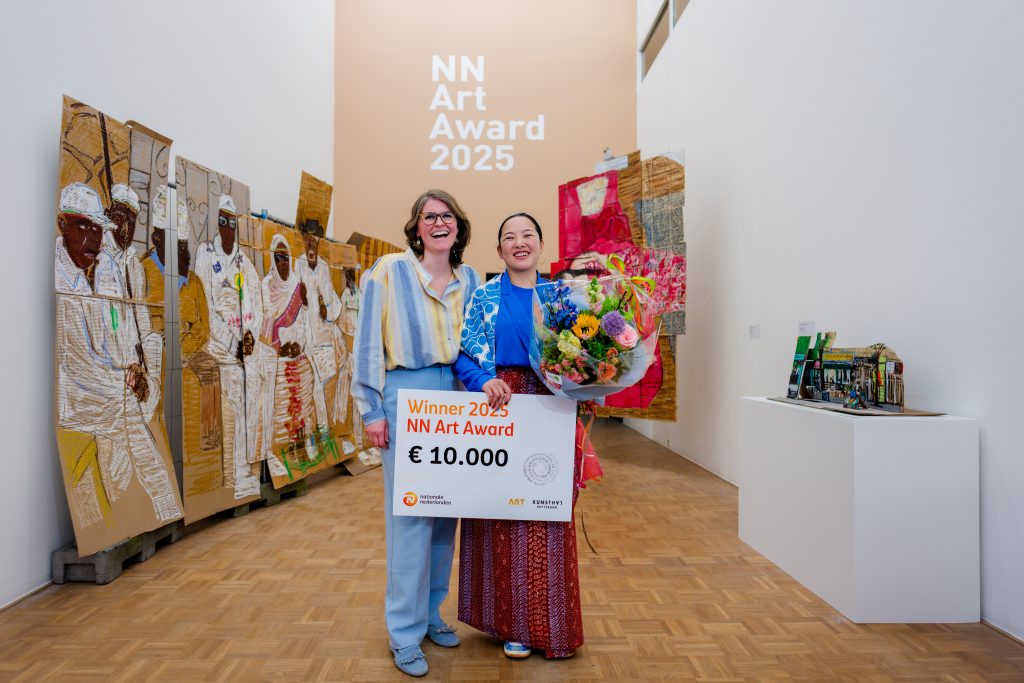
During Art Rotterdam 2026, the NN Art Award will be presented for the tenth time, marking a special jubilee edition. The award is presented annually to talented artists who have completed a programme at a Dutch art institute and are showing work at Art Rotterdam. For ten years, the award has offered artists an important springboard. Prize winners have gone on to find their way into museums and collections both in the Netherlands and abroad. The NN Art Award represents a consistent and content-driven investment in the visibility and development of artistic talent. The winner will be announced during a festive evening at Kunsthal Rotterdam on Friday 27 March. Work by the four nominees will be on view there from 14 March until 25 May 2026 in a dedicated exhibition.
A sustainable partnership
Nationale-Nederlanden, part of NN Group, has been a partner of Art Rotterdam since 2017. In this capacity, they award an annual incentive prize to outstanding contemporary artistic talent. The focus is on artists with a distinct and innovative visual language. Their work often engages with social themes or stands out through a striking technical approach. The award is intended both for emerging talent and for artists who have already taken further steps in their careers. Thanks to multidisciplinary selection criteria, all media are eligible.
Room for development and visibility
The winner receives a cash prize of €10,000, intended to further develop their practice and reach a wider audience. The nominees are once again given the opportunity to present their work at Kunsthal Rotterdam. The exhibition runs from 14 March until 25 May and attracted more than 24.000 visitors last year. In addition, all four nominees are featured in an article on GalleryViewer.com. Nationale-Nederlanden also acquires work by one or more of the nominees for the NN Art Collection.
The quality of Dutch art education
The NN Art Award draws attention to the high level of art education in the Netherlands. Artists from all over the world consciously seek out leading institutes such as the Rijksakademie van Beeldende Kunsten, De Ateliers, the Jan van Eyck Academie and the Piet Zwart Institute.
Looking back at 2025
At the previous edition, Pris Roos received the award. She is represented by Mini Galerie. Roos: “Winning the NN Art Award gave me the opportunity and the means to sharpen my goals and set up a second studio in Bogor, Indonesia, where my family originally comes from. Spending time in a city with a rich natural environment, frequent rainfall, a deeply rooted colonial history and diverse communities prompted deeper reflection. I want to approach my practice from different sensory and historical perspectives. I am already learning a great deal there from local residents, for example about the innovative ways in which they use plastic and paper in their daily routines, such as making a fan from plastic bottles. In Indonesia, I engage in conversations, observe and strengthen connections with local partners, both residents and institutions. Reflections from this period are already visible in my upcoming exhibitions at CODA Apeldoorn and Museum Limburg, in collaboration with Riboet Verhalenkunst. In addition, my first children’s book, ‘Toko van mijn ouders’, will be published this year. Thank you Nationale-Nederlanden, Art Rotterdam, Kunsthal and the jury members. It truly means so much for an artist to be able to tell your story.”
The jury
The selection is entrusted to a jury of art professionals that changes annually. The jury nominates four artists and subsequently selects the winner of the NN Art Award. The jury is interdisciplinary and brings together perspectives from different fields, including art journalists, curators, museum directors, artists, art collectors and the curator of the NN Art Collection. This year, the jury consists of:
Galleries participating in Art Rotterdam can nominate artists for the NN Art Award. In addition, the curator of the Prospects section of the Mondriaan Fund will once again put forward 5 artists this year, presenting a selection of the most promising talents in the exhibition.
The four nominees for the NN Art Award 2026 will be announced in early February.
Festive award ceremony at Kunsthal Rotterdam
The winner of the NN Art Award 2026 will be announced during a festive evening at Kunsthal Rotterdam on Friday 27 March. Following the ceremony, all exhibitions at the Kunsthal, including the NN Art Award presentation, will be freely accessible to attending guests.
About Nationale-Nederlanden
Nationale-Nederlanden (part of NN Group) is an international financial services provider with a long-standing tradition of supporting art and culture. NN is the main partner of Kunsthal Rotterdam and a partner of Art Rotterdam.
Written by Flor Linckens
Tijdens Art Rotterdam 2026 wordt voor de tiende keer de NN Art Award uitgereikt, een speciale jubileumeditie. De prijs wordt jaarlijks toegekend aan getalenteerde kunstenaars die een opleiding hebben afgerond aan een Nederlands instituut en werk tonen op Art Rotterdam. Al tien jaar lang biedt de prijs een belangrijke springplank voor kunstenaars. Prijswinnaars vonden hun weg naar musea en collecties in binnen- en buitenland. De NN Art Award is daarmee een consistente en inhoudelijke investering in de zichtbaarheid en ontwikkeling van artistiek talent. De winnaar wordt op vrijdag 27 maart bekendgemaakt tijdens een feestelijke avond in Kunsthal Rotterdam. Werk van de vier genomineerden is daar van 14 maart tot en met 25 mei 2026 te zien.
Een duurzaam partnerschap
Nationale-Nederlanden (onderdeel van NN Group) is sinds 2017 partner van Art Rotterdam en reikt in die hoedanigheid jaarlijks een stimuleringsprijs uit aan uitzonderlijk hedendaags kunsttalent. De focus ligt op kunstenaars met een eigen en vernieuwende beeldtaal. Deze kunstenaars verhouden zich vaak tot maatschappelijke thema’s of vallen juist op door hun bijzondere technische benadering. De award is er zowel voor nieuw talent als voor kunstenaars die al een volgende stap in hun carrière hebben gezet. Dankzij multidisciplinaire selectiecriteria komen alle media in aanmerking.
Ruimte voor ontwikkeling en zichtbaarheid
De winnaar ontvangt een geldbedrag van €10.000, bedoeld om diens werk verder te ontwikkelen en een breder publiek te bereiken. Dit jaar krijgen de genomineerden wederom de unieke kans om hun werk te tonen in Kunsthal Rotterdam. De tentoonstelling loopt dit jaar van 14 maart tot en met 25 mei en trok vorig jaar meer dan 24.000 bezoekers. Daarnaast worden alle vier de genomineerden uitgelicht in een artikel op GalleryViewer.com. Ook verwerft Nationale-Nederlanden werk van één of meerdere genomineerden voor de NN Kunstcollectie.
De kracht van Nederlandse kunstopleidingen
De NN Art Award vestigt de aandacht op het hoge niveau van kunstonderwijs in Nederland. Kunstenaars van over de hele wereld kiezen bewust voor toonaangevende instituten als de Rijksakademie van Beeldende Kunsten, De Ateliers, de Jan van Eyck Academie en het Piet Zwart Instituut.
Terugblik op 2025
Tijdens de vorige editie mocht Pris Roos de prijs in ontvangst nemen. Zij wordt vertegenwoordigd door Mini Galerie. Roos: “Door het winnen van de NN Art Award kreeg ik de mogelijkheid en de middelen om mijn doelen aan te scherpen om een tweede atelier op te zetten in Bogor, Indonesië, waar mijn familie oorspronkelijk vandaan komt. Het doorbrengen van tijd in een stad met een rijke natuurlijke omgeving, veel regenval, een diepgewortelde koloniale geschiedenis en uiteenlopende gemeenschappen heeft mij dieper laten nadenken. Ik wil mijn praktijk meer benaderen vanuit verschillende zintuiglijke en historische perspectieven. Ik leer daar veel van bewoners, bijvoorbeeld over de innovatieve manieren waarop zij plastic en papier gebruiken in hun dagelijkse routine, zoals het maken van een ventilator van plastic flessen. In Indonesië ga ik in gesprek, observeer ik en versterk ik contacten met lokale partners, zowel bewoners als instituten. Reflecties uit deze periode zijn dit jaar al terug te zien in mijn aankomende tentoonstellingen bij CODA Apeldoorn en Museum Limburg, in samenwerking met Riboet Verhalenkunst. Daarnaast verschijnt dit jaar mijn eerste kinderboek, ‘Toko van mijn ouders’. Dank je wel Nationale-Nederlanden, Art Rotterdam, Kunsthal, juryleden. Het betekent echt zoveel voor een kunstenaar om je verhaal te mogen vertellen.”
De jury
De selectie ligt in handen van een jaarlijks wisselende jury van professionals uit het kunstveld. Zij nomineren vier kunstenaars en bepalen gezamenlijk de winnaar van de NN Art Award. De jury is interdisciplinair samengesteld en brengt perspectieven samen van onder meer kunstjournalisten, conservatoren, museumdirecteuren, kunstenaars, kunstverzamelaars en de conservator van de NN Kunstcollectie. Dit jaar bestaat de jury uit:
Galeries die deelnemen aan Art Rotterdam kunnen kunstenaars voordragen voor de NN Art Award. Daarnaast levert de curator van de Prospects-sectie van het Mondriaan Fonds ook dit jaar weer 5 kunstenaars aan: een selectie van de meest veelbelovende talenten in de tentoonstelling.
De vier genomineerden voor de NN Art Award 2026 worden begin februari bekendgemaakt.
Feestelijke uitreiking in Kunsthal Rotterdam
De bekendmaking van de winnaar van de NN Art Award vindt plaats tijdens een feestelijke avond in Kunsthal Rotterdam op vrijdag 27 maart. Aansluitend zijn alle tentoonstellingen in de Kunsthal, waaronder de expositie rond de NN Art Award, vrij te bezoeken voor de aanwezige gasten.
Over Nationale-Nederlanden
Nationale-Nederlanden (onderdeel van NN Group) is een internationale financiële dienstverlener met een rijke traditie in het ondersteunen van kunst en cultuur. NN is hoofdpartner van Kunsthal Rotterdam en partner van Art Rotterdam.
Geschreven door Flor Linckens
In the section The Past Present at Unseen, THIS IS NOT A WHITE CUBE (Lisbon) will presents the series “BLOOM: Reclaiming Presence Through Botanical and Photographic Memory” by Dagmar van Weeghel. With this body of work, the Dutch photographer returns to the nineteenth century to question the very foundations of the photographic archive. Who was recorded at the time, who remained outside the frame, and what does that mean for the ways in which we look today?
Van Weeghel studied at the Dutch Film Academy in Amsterdam and lived and worked for some ten years in several African countries as a filmmaker, including Zimbabwe, Tanzania, Botswana, Uganda and South Africa. Those years shaped her gaze. Since 2015, photography has been her primary medium, through which she shares stories unfolding between continents, generations and histories. Her practice operates at the intersection of image and archive.
A decisive turning point came with her return to the Netherlands. She witnessed firsthand how persistent prejudices about Africa and African people can be. Her husband, whom she had met in Botswana, was often cast as ‘the other’, and her two children, growing up with a dual identity, also encountered racism. Van Weeghel immersed herself in history in order to understand how such patterns take root. She read, among other works, Edward Said’s seminal ‘Orientalism’, which systematically demonstrated how the Western gaze is not neutral but shaped by power structures and colonial systems of knowledge. That gaze exoticises, categorises and marginalises whatever is defined as ‘other’, presenting it as self-evident and objective reality. What her husband and children experienced was not an exception but a pattern, deeply embedded in Western thought.
Said is regarded as one of the founders of postcolonialism, an academic field that examines how colonial structures, modes of thinking and representations persist after the formal end of colonial rule. Decolonial thinking takes this further by actively seeking to dismantle those structures and develop alternative perspectives and systems of knowledge, often originating in the Global South. Think of theorists such as Frantz Fanon. Within these frameworks, Van Weeghel finds her own position. Between 2016 and 2022 she created the series “Diaspora”, for which she portrayed African immigrants in Europe, often people from her own network. In it, she explored how dignity, strength and complexity can be rendered visible within a visual culture that has long been dominated by a Western perspective.
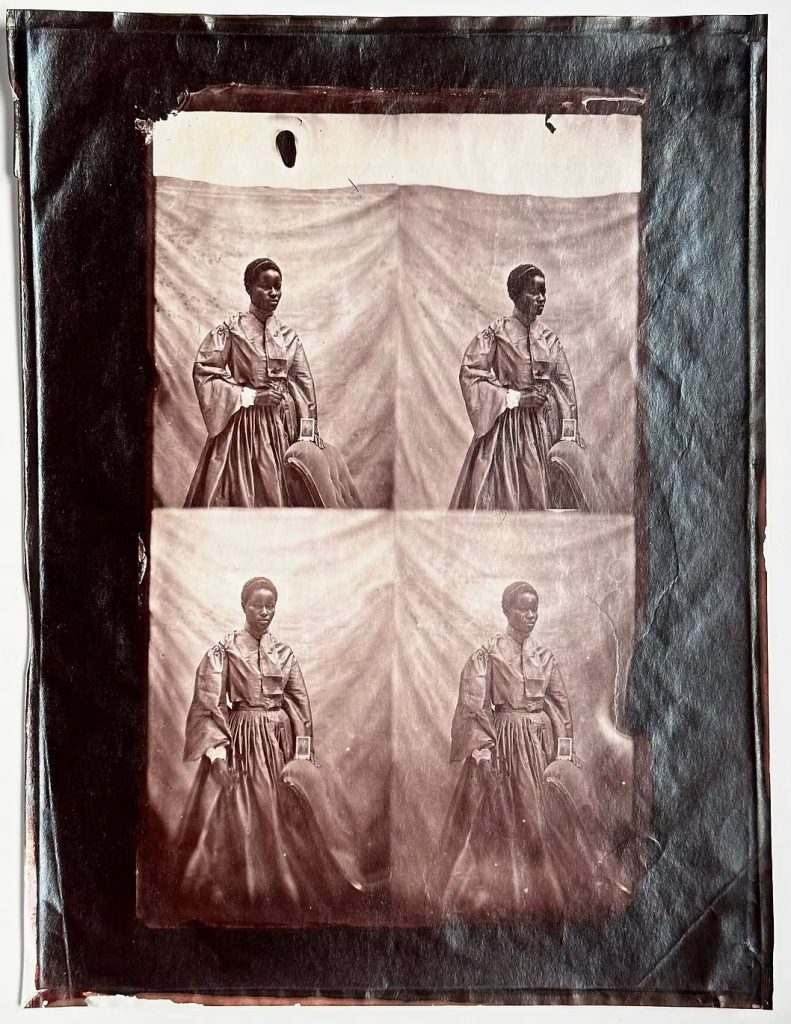
Gradually her attention shifted to nineteenth-century photography and the structural absence of Black Europeans within it. During that period, photography developed into a mass medium and was deployed as an instrument of registration and classification. Between roughly 1839 and 1900, portraits of people of colour in European archives are rare, anonymous or entirely absent, especially when it comes to women. This scarcity is no coincidence but the symptom of a selective gaze. What did not fit the dominant frame was scarcely recorded, if at all. That lacuna lies at the heart of “BLOOM”. Rather than merely citing the archive, Van Weeghel constructs an alternative visual memory. Earlier research had already led her to historical figures such as Sarah Forbes Bonetta, a West African woman who unwillingly became a protégée of Queen Victoria, yet in “BLOOM” the emphasis shifts decisively to the present.
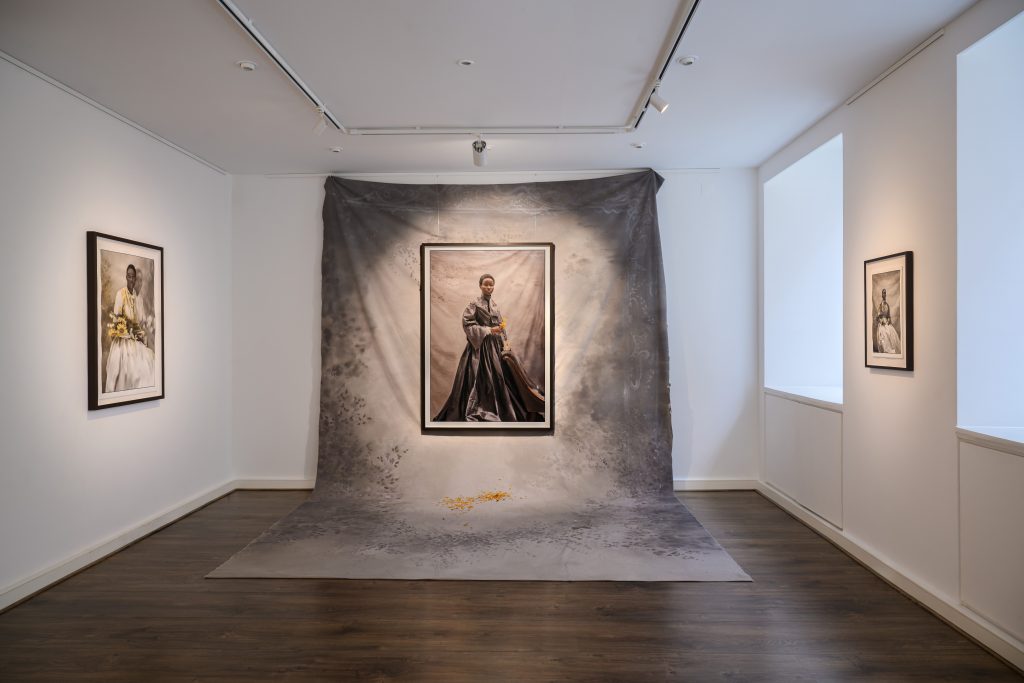
For “BLOOM”, a project developed over four years, Van Weeghel employs historical techniques. Yet contemporary women step into a nineteenth-century frame here. Not as curiosities but as protagonists. Using a rare carte de visite camera from 1860, the artist creates portraits of women of African descent who live in Europe today.

Van Weeghel: “Only five of these original cameras still exist, four of which are held in museum collections. One of the remaining cameras is part of the collection of the collector Frédéric Hoch in Strasbourg. He granted me permission to use this wet plate camera. Quite remarkable! In the early nineteenth century, this camera predominantly captured white subjects. We were given five hours, and the camera had likely not been used for 150 years, so it squeaked and creaked, but the process was truly extraordinary.”
The women in the photographs wear carefully crafted garments in nineteenth-century style, with every detail thoughtfully considered. Each photograph is printed on authentic nineteenth-century albumen paper and presented as a carte de visite, the small portrait card mounted on cardboard that was widely exchanged and collected in the nineteenth century.
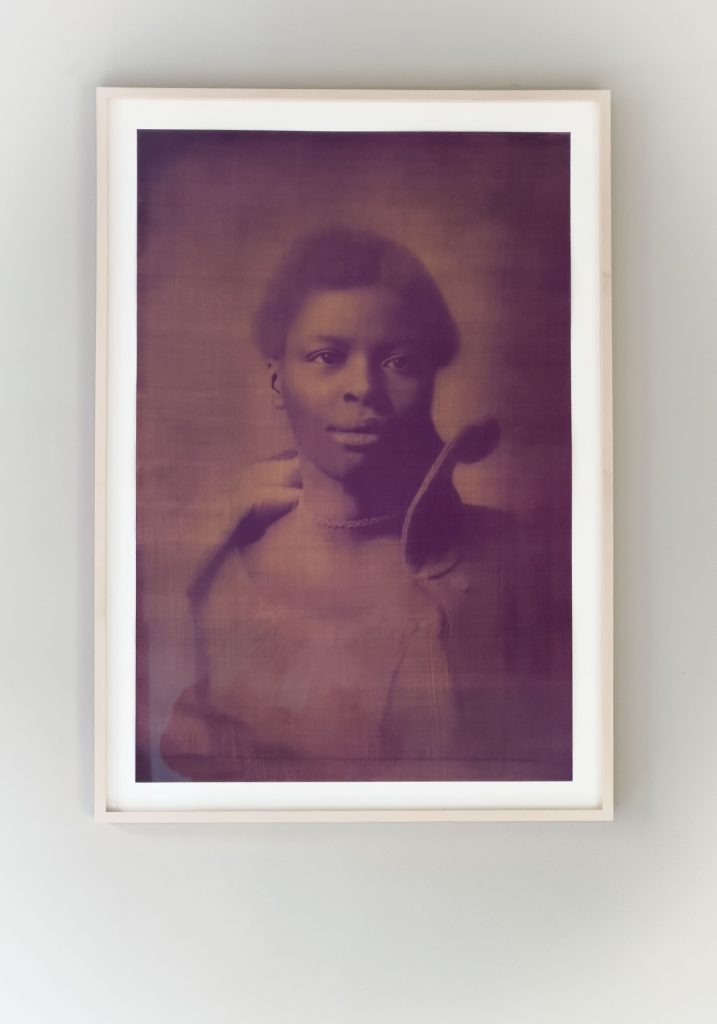
Within the series, Van Weeghel also produces large-scale anthotypes, prints created by exposing pigments (made from self-grown and foraged wildflowers) to sunlight. These pigments gradually fade, serving as a metaphor for memory, loss and the fragility of the archive. At the same time, the artist invokes Victorian floriography, the coded language of flowers through which emotions and social conventions were communicated and which also carried colonial and racial meanings. For these anthotypes the artist reprints anonymous Black women from nineteenth-century archives. The ephemerality of the technique mirrors the ways in which these women have disappeared from historical narratives. For the pigments she collected flower petals in the Netherlands, France and the United Kingdom, countries with charged colonial histories. She often did so together with her daughter, as a shared act. Van Weeghel also gathered flowers from the private gardens of Queen Victoria and Queen Elizabeth in Scotland. These will also be on view at Unseen. In addition, Van Weeghel hand-coloured a number of black-and-white portraits as an act of remembrance, using self-made flower pigments. The flowers she employs here also carry specific meanings and messages.
All the portraits in the series continuously seek a dialogue with the viewer through the language of floriography and botanical history. Through gestures, specific flowers held by the sitters or hand-painted fabrics, each image conveys a distinct message.
Van Weeghel also works with platinum-palladium prints, a technique she selected for its durability and rich tonal range, and thus for its archival permanence. That way, these women are granted a lasting place within the visual archive. Works from the series have entered collections including the Ministry of Foreign Affairs and Fondation Blachère. A selection from “BLOOM” will be on view at Unseen during Art Rotterdam in the section The Past Present. Works from the series are simultaneously presented at THIS IS NOT A WHITE CUBE in Lisbon.
These portraits do not reconstruct the past but anchor new forms of presence within the visual vocabulary of European history. With this series, Van Weeghel consciously enters a charged visual domain, fully aware of the structures that have shaped our field of vision. She adopts the form but not the power relations embedded within them. She places other bodies, stories and perspectives at the centre of the image and grants the portrayed women agency over their representation. Van Weeghel does not speak on their behalf but examines the visual frameworks that have long constrained their visibility and creates space and context for a layered presence. These women are not passive objects of a western gaze but rather co-authors. By reactivating and repositioning historical techniques, Van Weeghel expands the archive and, with it, our way of seeing. She underscores that the archive is not a neutral repository but a construct shaped by selection, exclusion and power, revealing how deeply visibility depends on who looks and who preserves.
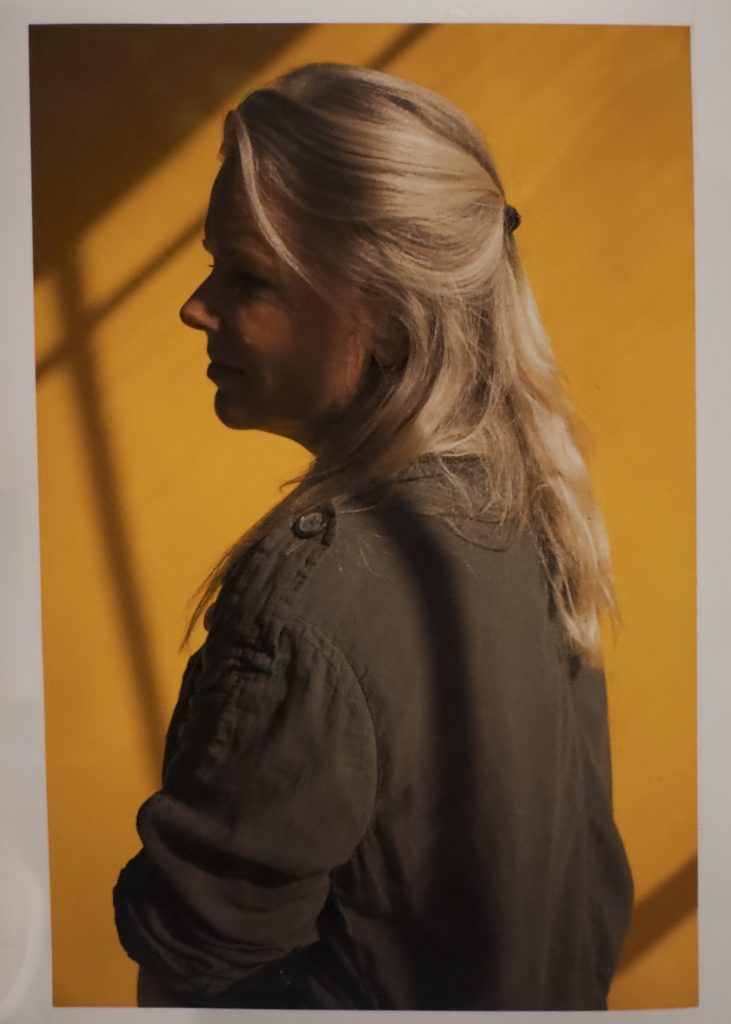
About the section The Past Present at Unseen during Art Rotterdam (27–29 March at Rotterdam Ahoy) In The Past Present, photo historian, curator and author Hedy van Erp offers a contemporary perspective on analogue photography up to the year 2000, with particular attention to lost archives and found images. She brings togethWer artists who use existing photographic material and techniques in new ways, to restore weight and meaning to the past.
Written by Flor Linckens
In de sectie The Past Present op Unseen presenteert THIS IS NOT A WHITE CUBE (Lissabon) de serie ‘BLOOM: Reclaiming Presence Through Botanical and Photographic Memory’ van Dagmar van Weeghel. Met deze reeks keert de Nederlandse fotograaf terug naar de negentiende eeuw om de fundamenten van het fotografische archief te bevragen. Wie werd er destijds vastgelegd, wie bleef er buiten beeld, en wat betekent dat voor de manieren waarop wij vandaag kijken?
Van Weeghel studeerde aan de Nederlandse Filmacademie in Amsterdam en woonde en werkte zo’n tien jaar in verschillende Afrikaanse landen als filmmaker, onder meer in Zimbabwe, Tanzania, Botswana, Uganda en Zuid-Afrika. Die jaren vormden haar blik. Sinds 2015 is fotografie haar voornaamste medium, waarmee ze verhalen deelt die zich afspelen tussen continenten, generaties en geschiedenissen. Haar praktijk beweegt zich daarbij op het snijvlak van beeld en archief.
Een belangrijk keerpunt was haar terugkeer naar Nederland. Ze zag van dichtbij hoe hardnekkig vooroordelen over Afrika en Afrikaanse mensen zijn. Haar man, die ze in Botswana had ontmoet, werd hier regelmatig weggezet als ‘de ander’. Ook haar twee kinderen, die opgroeien met een dubbele identiteit, kregen te maken met racisme. Van Weeghel dook de geschiedenis in en wilde begrijpen hoe zulke patronen ontstaan. Ze las onder meer het beroemde werk ‘Oriëntalisme’ van Edward Said, die als eerste systematisch beschreef hoe de westerse blik niet neutraal is, maar gevormd wordt door machtsstructuren en koloniale kennissystemen. Die blik exotiseert, categoriseert en marginaliseert alles wat als ‘anders’ gedefinieerd wordt, en presenteert dat vervolgens als vanzelfsprekende, objectieve werkelijkheid. Wat haar man en kinderen meemaakten was geen uitzondering maar een patroon, diep geworteld in het westerse denken.
Said geldt als een van de grondleggers van het postkolonialisme, een academische stroming die onderzoekt hoe koloniale structuren, denkpatronen en representaties doorwerken nadat het formele kolonialisme is geëindigd. Dekolonialisme gaat een stap verder en is actiever: dat gaat over het actief ontmantelen van die structuren en het ontwikkelen van andere perspectieven en kennissystemen, vaak vanuit het Global South zelf. Denk bijvoorbeeld aan denkers als Frantz Fanon. Van Weeghel zoekt binnen die kaders haar eigen invalshoek. Tussen 2016 en 2022 maakte ze de serie ‘Diaspora’, portretten van Afrikaanse immigranten in Europa, vaak mensen uit haar eigen netwerk. Daarin onderzocht ze hoe waardigheid, kracht en complexiteit zichtbaar kunnen worden gemaakt binnen een visuele cultuur die vooral vanuit een westers perspectief heeft gekeken.
Gaandeweg verschoof haar interesse naar negentiende-eeuwse fotografie, en de structurele afwezigheid van Zwarte Europeanen daarin. In die periode ontwikkelde fotografie zich tot massamedium en werd het ingezet als instrument van registratie én classificatie. Tussen circa 1839 en 1900 zijn portretten van mensen van kleur in Europese archieven schaars, anoniem of volledig afwezig, zeker wanneer het vrouwen betreft. De schaarste is geen toeval, maar een symptoom van een selectieve blik. Wat niet binnen het dominante kader paste, werd niet of nauwelijks vastgelegd. Die lacune staat centraal in ‘BLOOM’. In plaats van het archief te citeren, construeert Van Weeghel een alternatief visueel geheugen. Eerder onderzoek had haar al naar historische figuren als Sarah Forbes Bonetta geleid, een West-Afrikaanse vrouw die onvrijwillig protegée werd van koningin Victoria, maar in ‘BLOOM’ verschuift de nadruk nadrukkelijk naar het heden.
Voor ‘BLOOM’, waaraan ze vier jaar werkte, maakt Van Weeghel gebruik van historische technieken. Maar hedendaagse vrouwen stappen hier het negentiende-eeuwse kader binnen. Niet als curiositeit maar als protagonist. Met een zeldzame carte-de-visitecamera uit 1860 maakt de kunstenaar portretten van vrouwen van Afrikaanse afkomst die vandaag in Europa leven.
Van Weeghel: “Er bestaan nog maar vijf van deze originele cameras, waarvan er vier in museumcollecties zijn opgenomen. Één van de resterende camera’s zit in de collectie van verzamelaar Frédéric Hoch in Strasbourg. Van hem kreeg ik toestemming om deze natte plaatcamera te gebruiken. Heel bijzonder! Deze camera heeft in in de vroege negentiende eeuw voornamelijk witte mensen vastgelegd. We kregen vijf uur de tijd en de camera was waarschijnlijk al 150 jaar niet meer gebruikt, dus hij piepte en kraakte, maar het proces was heel speciaal.”
De vrouwen op deze foto’s dragen zorgvuldig vervaardigde kleding in negentiende-eeuwse stijl, waarin ieder detail is uitgedacht. Elke foto wordt afgedrukt op authentiek negentiende-eeuws albuminepapier en gepresenteerd als een carte de visite: het kleine, op karton gemonteerde portretkaartje dat in de negentiende eeuw massaal werd uitgewisseld en verzameld.
Binnen de reeks realiseert Van Weeghel ook grootschalige anthotypieën: afdrukken waarbij pigmenten uit zelfgekweekte en verzamelde wilde bloemen worden blootgesteld aan zonlicht. Die pigmenten vervagen in de loop der tijd, een metafoor voor geheugen, verlies en de fragiliteit van het archief. Tegelijkertijd verwijst de kunstenaar hiermee naar de Victoriaanse floriografie, de gecodeerde bloementaal waarin gevoelens en sociale codes werden overgebracht en waarin ook koloniale en raciale denkbeelden besloten lagen. Voor deze anthotypieën herdrukt zij anonieme Zwarte vrouwen uit negentiende-eeuwse archieven. De vergankelijkheid van de techniek weerspiegelt hoe deze vrouwen uit de geschiedschrijving zijn verdwenen. Voor de pigmenten verzamelde ze onder meer bloemblaadjes in Nederland, Frankrijk en het Verenigd Koninkrijk, landen met een beladen koloniale geschiedenis. Dat deed ze veelal met haar dochter, als gezamenlijke daad. Van Weeghel nam ook bloemen mee uit de persoonlijke tuinen van koningin Victoria en koningin Elizabeth in Schotland. Die zullen ook te zien zien op Unseen. Daarnaast kleurt Van Weeghel ook een aantal zwart-witportretten met de hand, als een daad van herdenking, met zelfgemaakte bloempigmenten.De bloemen die ze daarvoor gebruikt dragen ook hier specifieke betekenissen en boodschappen met zich mee.
Alle portretten in de serie zoeken steeds de dialoog met de kijker op aan de hand van floriografie en botanische geschiedenis. Door middel van gestes, bepaalde bloemen in de hand van de portretteerden of met de hand geschilderde doeken brengt ieder beeld een bepaalde boodschap over.
Daarnaast werkt Van Weeghel met platina-palladiumprints, een techniek die ze koos vanwege de duurzaamheid en de rijke tonaliteit, en daarmee: de archivale bestendigheid. Zo krijgen deze vrouwen een blijvende plek in het beeldarchief. Werk uit de serie werd onder meer opgenomen in collecties van het Ministerie van Buitenlandse Zaken en de Fondation Blachère. Een selectie uit ‘BLOOM’ is te zien op Unseen tijdens Art Rotterdam in de sectie The Past Present. Werk uit deze reeks is gelijktijdig ook te zien in THIS IS NOT A WHITE CUBE in Lissabon.
Deze portretten zijn geen reconstructies van het verleden, maar verankeren nieuwe vormen van aanwezigheid in het visuele vocabulaire van de Europese geschiedenis.Van Weeghel betreedt met deze serie bewust een beladen visuele domein, bewust van de structuren die ons blikveld hebben gevormd. Ze kopieert daarbij de vorm, maar niet de machtsverhouding. Ze plaatst andere lichamen, verhalen en perspectieven in het centrum van het beeld en geeft de geportretteerden regie over hun representatie. Van Weeghel spreekt niet namens hen, maar onderzoekt de beeldkaders die hun zichtbaarheid lange tijd hebben ingeperkt en creëert ruimte en context voor een gelaagde aanwezigheid. Deze vrouwen zijn geen passieve objecten van een westerse blik, maar co-auteurs. Door historische technieken te heractiveren en te herpositioneren verruimt Van Weeghel het archief, en daarmee ook onze blik. Ze benadrukt daarmee dat het archief geen neutrale opslagplaats is, maar een constructie, gevormd door selectie, uitsluiting en macht, en laat zien hoezeer zichtbaarheid afhankelijk blijft van wie er kijkt en bewaart.
Over de sectie The Past Present op Unseen tijdens Art Rotterdam (27-29 maart in Rotterdam Ahoy)
Fotografiehistoricus, curator en auteur Hedy van Erp werpt in The Past/Present een eigentijdse blik op analoge fotografie tot het jaar 2000, met bijzondere aandacht voor verloren archieven en gevonden beelden. Van Erp brengt daarbij kunstenaars samen die op eigentijdse wijze gebruikmaken van bestaande fotografische beelden en technieken om het verleden zo opnieuw gewicht en betekenis te geven.
Geschreven door Flor Linckens
“And yet a strange beauty remains,
a memory of that moment
in which everything stopped, paused,
to begin anew,
like a heart faltering
but still determined to live.
I’ve always remember the wires of the laundry hanging
outside in the countryside,
so many worlds have passed
through those folds,
suspended,
the smell of the soap,
the warmth of the sun,
If death is a state of being
what would become of memories?
Do they linger in the air?
or do they dissolve in the tide?” – Silvia Gatti
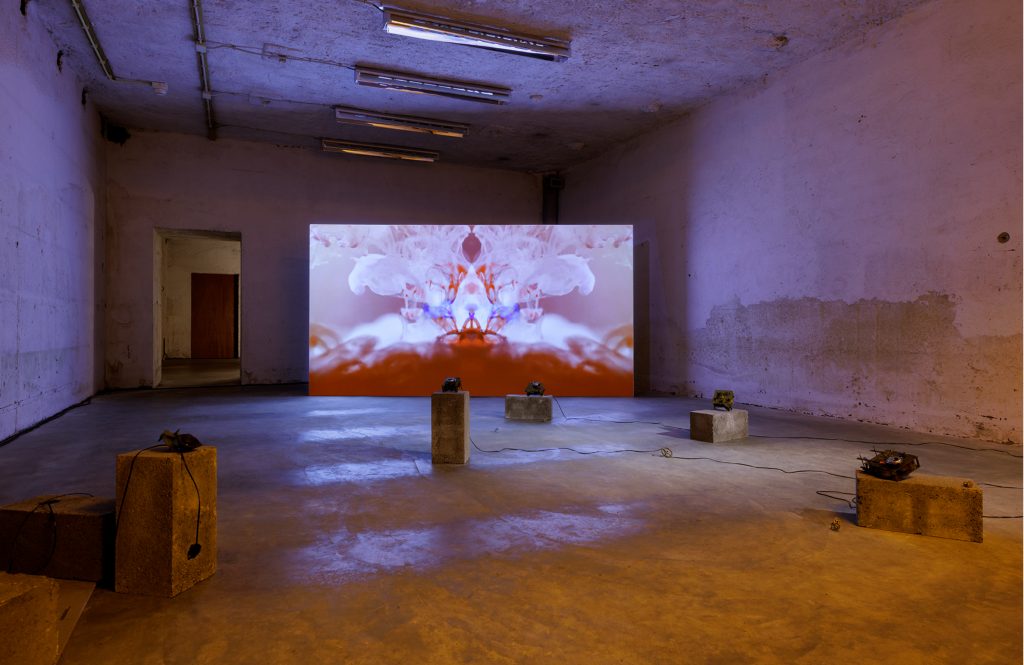
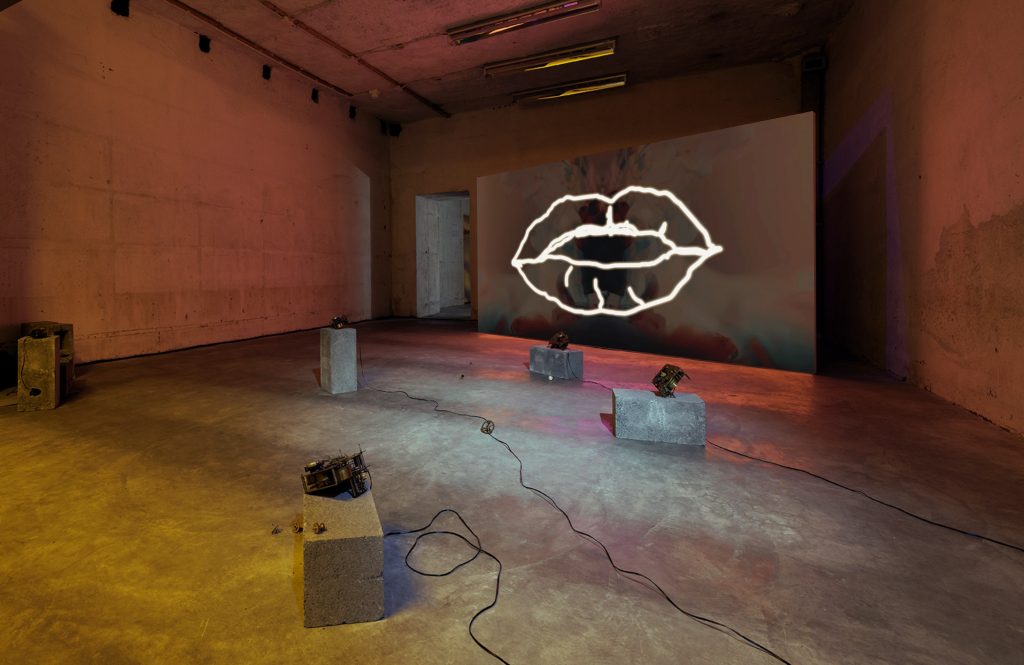
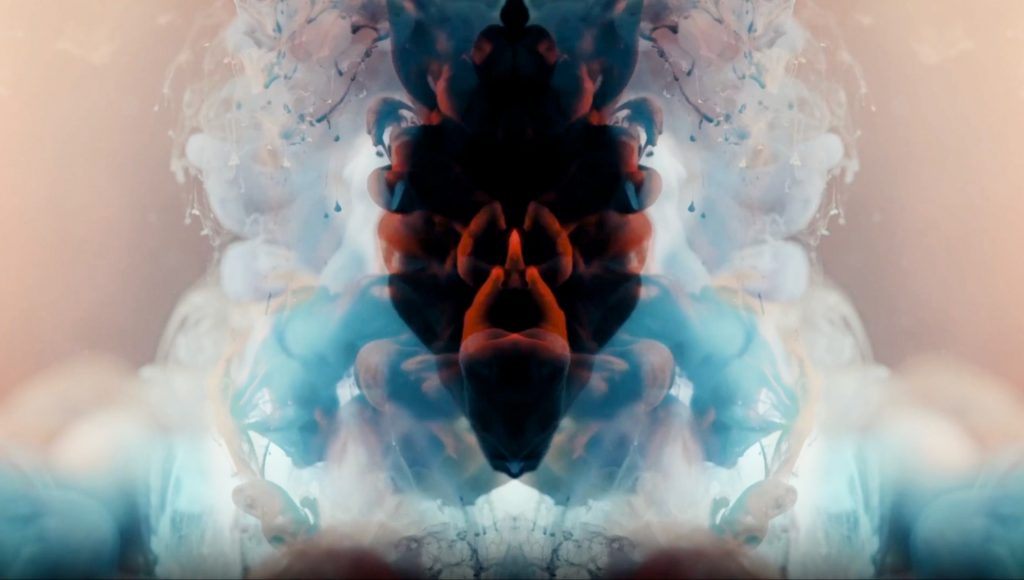
Evaporative poetic words light up the screen in the multichannel sound installation Chiaro di Luna, 2025 (Moonlight) by visual artist Silvia Gatti. The videowork is presented in the Projections section at Art Rotterdam, on the proposal of andriesse-eyck gallery. Its visual language consists of fragmented footage of nature (recorded in National Park De Hoge Veluwe), computer-generated imagery, encrypted codes, and an experimental poetic framework.
Silvia Gatti (1983, Italy; lives and works in Amsterdam) creates video and sound installations, writes poetry, develops computer programs, and makes conceptual sculptural works. Her practice is multidisciplinary and research-based and regards working with language and storytelling as a form of ‘concrete philosophy’: “I have always been drawn to fundamental questions either scientific, philosophical, or metaphysical,” says Gatti. “They allow me to reflect on what knowledge is, what human intelligence means today, and how we perceive the world around us. I use art as a way to concretely approach these questions to fragment them and to move closer to their essence.
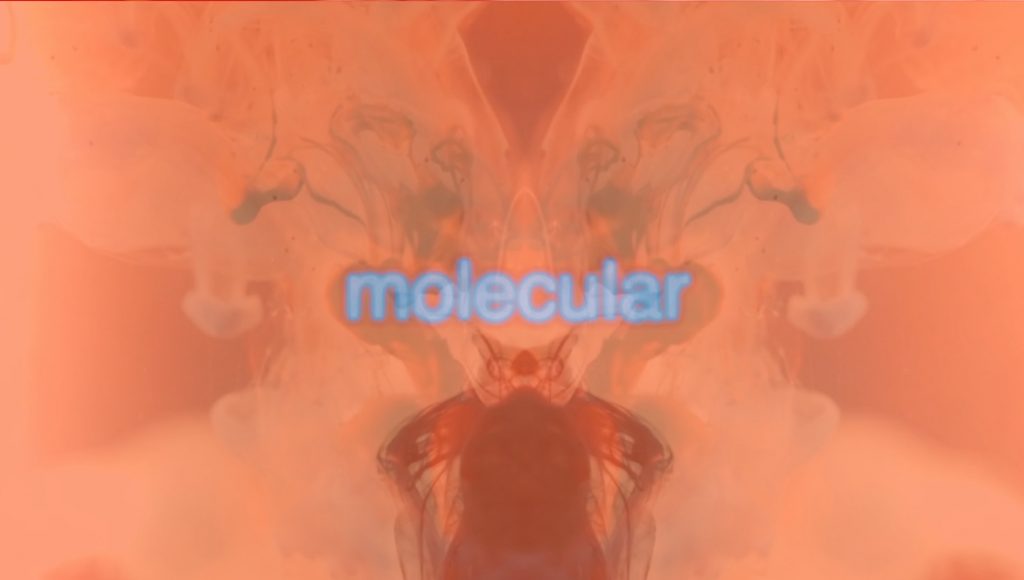
Storytelling connects me to the nature of memory and to the construction of possible futures. It is a tool I use to make abstract concepts tangible and experientially accessible, whether through remembrance or future projection, so they can be engaged with not only intellectually, but also socially and existentially.”
In Chiaro di Luna, 2025, Gatti imagines decoding nature from inside a bunker that is completely absorbed into the architecture of the surrounding landscape. The bunker, a massive and imposing architectural construction that serves as a structure of protection in times of war, also functioned as a hidden site for communication. In the very bunker where Gatti recorded the videowork, an Enigma machine was once installed: an encryption device resembling a small typewriter in a wooden case, used to encode and decode military messages. It became most famous for its use by Nazi Germany during World War II.
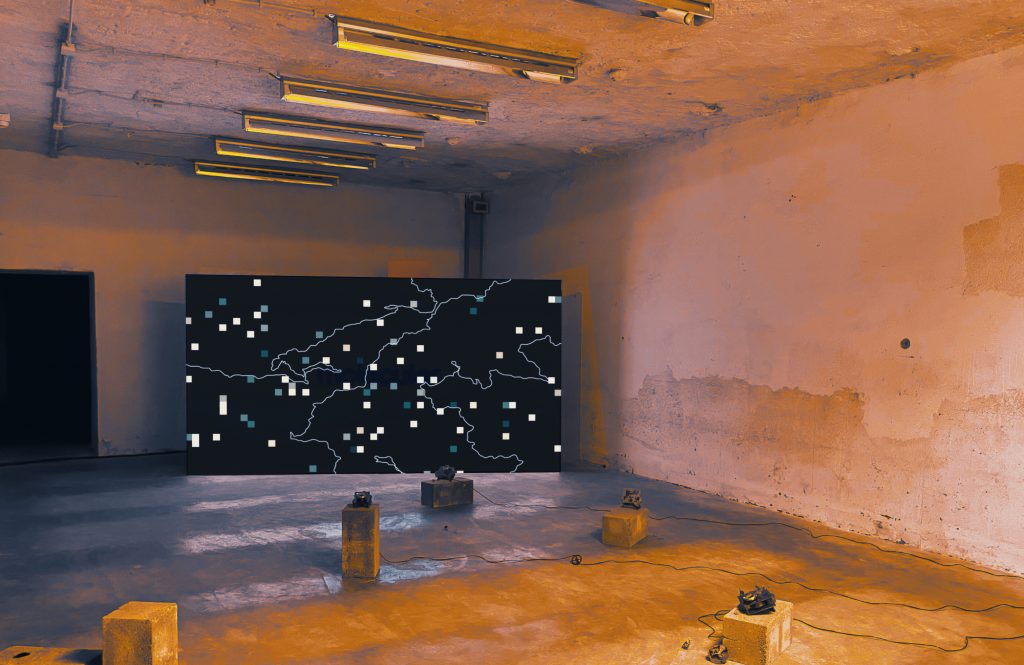
However, even from within the safety of its thick concrete walls, signals still had to be able to pass through: “The Enigma machine was still receiving information from the sky within the structure of the bunker. It had to be open and exposed in some way to receive these messages from the outside world in order for the machine to be able to decode and translate them.” This concept intrigued Gatti immensely and became the conceptual point of departure for Chiaro di Luna.
“I asked myself: what does it mean to be protected? What does it mean to be exposed? And how do we connect with others and with the world surrounding us?” Gatti explains. “Also the network and logic of the Enigma machine that breaks information down into something understandable really intrigued me in relation to my practice working with programming and poetry.”
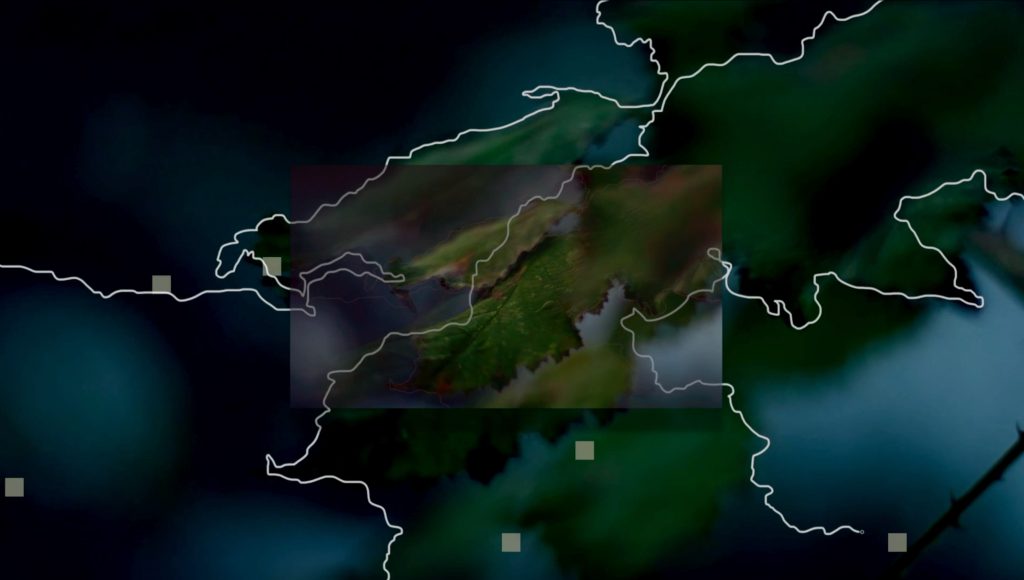
In the videowork, nature becomes mechanised, and the program tirelessly decodes what is embedded within it. “I wrote a poetic text, and the program breaks the language into signals, basically revealing what nature is trying to tell us. I wanted to blur the boundaries between nature and the interior of the bunker itself, as if breaking down the walls in order to work directly with nature and move within it.”
Next to the video installation, there is also a sculpture made from discarded old clocks. “I opened them up so that you can see the exposed moving gears and hear the ticking of time. The sound of their rotors also reminded me of the sounds Enigma machines make when breaking codes.”
Explore the immersive electronic and visual experience Chiaro di Luna, 2025 in the section of Projections at Art Rotterdam.
Bio
Silvia Gatti (b. 1983, Alessandria, Italy; lives and works in Amsterdam) is a contemporary artist whose practice draws on various disciplines, ranging from architecture to video and sound installation, poetry, sculpture, programming, and conceptual works on paper, exploring the intersections of language, technology and nature.
Before graduating cum laude from the Gerrit Rietveld Academie in Amsterdam in 2021, Gatti obtained her MA in Architecture, Design and Urban Planning from the University of Architecture in Genoa, Italy. From 2023 to 2025, Gatti was a resident artist at the Rijksakademie van beeldende kunsten in Amsterdam.
She has been shown both in The Netherlands and internationally (Italy) and her recent highlights include the group exhibition at the Diogenes Bunker in Arnhem (2025) and her selection and participation for Art Directions exhibition at the International Film Festival Rotterdam 2026, reflecting her engagement with experimental, immersive, and interdisciplinary media installation.
In 2019, Silvia Gatti won First Prize in the Lassnigbeme Contest, organised by the Stedelijk Museum Amsterdam, with her series of drawings titled ON PLACEBO EFFECT.
Written by Emily van Driessen
“And yet a strange beauty remains,
a memory of that moment
in which everything stopped, paused,
to begin anew,
like a heart faltering
but still determined to live.
I’ve always remember the wires of the laundry hanging
outside in the countryside,
so many worlds have passed
through those folds,
suspended,
the smell of the soap,
the warmth of the sun,
If death is a state of being
what would become of memories?
Do they linger in the air?
or do they dissolve in the tide?” – Silvia Gatti
Verdampende poëtische woorden lichten het scherm op in de multichannel geluidsinstallatie Chiaro di Luna, 2025 (Maanlicht) van beeldend kunstenaar Silvia Gatti. Het videowerk wordt gepresenteerd in de sectie Projections op Art Rotterdam, op voorstel van andriesse-eyck gallery. De beeldtaal bestaat uit gefragmenteerde natuurbeelden (opgenomen in Nationaal Park De Hoge Veluwe), computergegenereerde beelden, versleutelde codes en een experimenteel poëtisch kader.
Silvia Gatti (1983, Italië; woont en werkt in Amsterdam) maakt video- en geluidsinstallaties, schrijft poëzie, ontwikkelt computerprogramma’s en creëert conceptuele sculpturale werken. Haar praktijk is multidisciplinair en onderzoeksgericht. Ze beschouwt het werken met taal en storytelling als een vorm van ‘concrete filosofie’: “Ik ben altijd aangetrokken geweest tot fundamentele vragen, of ze nu wetenschappelijk, filosofisch of metafysisch zijn,” zegt Gatti. “Ze laten me nadenken over wat kennis is, wat menselijke intelligentie vandaag betekent en hoe we de wereld om ons heen waarnemen.”
“Ik gebruik kunst om deze vragen concreet te benaderen, ze uiteen te rafelen en dichter bij hun essentie te komen. Storytelling verbindt me met de aard van het geheugen en met de constructie van mogelijke toekomsten. Het is een instrument waarmee ik abstracte concepten tastbaar en ervaarbaar maak, via herinnering of via projectie naar de toekomst, zodat ze niet alleen intellectueel, maar ook sociaal en existentieel beleefd kunnen worden.”
In Chiaro di Luna, 2025 verbeeldt Gatti hoe de natuur wordt ontcijferd vanuit een bunker die volledig opgaat in de architectuur van het omringende landschap. De bunker, een massieve, imposante constructie die in oorlogstijd bescherming biedt, fungeerde ook als verborgen communicatiesite. In dezelfde bunker waar Gatti het videowerk opnam, stond ooit een Enigma-machine opgesteld: een versleutelingsapparaat dat leek op een kleine typemachine in een houten koffer, gebruikt om militaire berichten te coderen en te decoderen. Het werd vooral bekend door het gebruik ervan door nazi-Duitsland tijdens de Tweede Wereldoorlog.
Maar zelfs binnen de veiligheid van dikke betonnen muren moesten signalen kunnen doordringen: “De Enigma-machine ontving binnen de bunker nog steeds informatie uit de lucht,” vertelt Gatti. “Ze moest op een bepaalde manier open en blootgesteld zijn om berichten van buitenaf te kunnen ontvangen, zodat de machine ze kon ontcijferen en vertalen.” Dit gegeven fascineerde de artiest en werd het conceptuele vertrekpunt voor Chiaro di Luna.
“Ik vroeg me af: wat betekent het om beschermd te zijn? Wat betekent het om blootgesteld te zijn? En hoe verbinden we ons met anderen en met de wereld om ons heen?” legt Gatti uit. “Ook het netwerk en de logica van de Enigma-machine, die informatie uiteenrafelt tot iets begrijpelijk, intrigeerden me in relatie tot mijn praktijk rond programmeren en poëzie.”
In het videowerk wordt de natuur gemechaniseerd en decodeert het programma onvermoeibaar wat erin besloten ligt. “Ik schreef een poëtische tekst, en het programma breekt de taal op in signalen en onthult zo wat de natuur ons probeert te vertellen. Ik wilde de grenzen tussen de natuur en het interieur van de bunker laten vervagen, alsof de muren worden opengebroken om rechtstreeks met de natuur te werken en erdoorheen te bewegen.”
Naast de videoinstallatie is er ook een sculptuur van afgedankte oude klokken. “Ik heb ze geopend zodat je de blootliggende tandwielen ziet bewegen en het tikken van de tijd hoort. Het geluid van hun rotoren deed me ook denken aan het mechanische geluid van Enigma-machines wanneer ze codes kraken.”
Ontdek de immersieve elektronische en visuele ervaring Chiaro di Luna, 2025 in de sectie Projections op Art Rotterdam.
Bio
Silvia Gatti (1983, Alessandria, Italië; woont en werkt in Amsterdam) is een hedendaagse kunstenaar wiens praktijk verschillende disciplines omvat, van architectuur tot video- en geluidsinstallatie, poëzie, sculptuur, programmeren en conceptuele werken op papier. Ze onderzoekt de kruispunten van taal, technologie en natuur.
Voor ze in 2021 cum laude afstudeerde aan de Gerrit Rietveld Academie in Amsterdam, behaalde Gatti een master in Architectuur, Design en Stedenbouw aan de Universiteit voor Architectuur in Genua, Italië. Van 2023 tot 2025 was ze resident kunstenaar aan de Rijksakademie van beeldende kunsten in Amsterdam.
Haar werk werd zowel in Nederland als internationaal (Italië) getoond. Recente hoogtepunten zijn onder meer de groepstentoonstelling in de Diogenes Bunker in Arnhem (2025) en haar selectie voor en deelname aan de tentoonstelling Art Directions tijdens het International Film Festival Rotterdam 2026, wat haar betrokkenheid bij experimentele, immersieve en interdisciplinaire mediainstallaties onderstreept.
In 2019 won Silvia Gatti de Eerste Prijs van de Lassnigbeme Contest, georganiseerd door het Stedelijk Museum Amsterdam, met haar reeks tekeningen getiteld ON PLACEBO EFFECT
Geschreven door Emily van Driessen
Entering the world of Argentine visual artist Hernán Soriano (1978) feels close to stepping into an archival study lined with cabinets of curiosities. The muted scent of old books creaks in silence, dim amber candlelight washes over brown-tinged paper, and a large coloured world map lies half-unrolled across a solid oak desk.
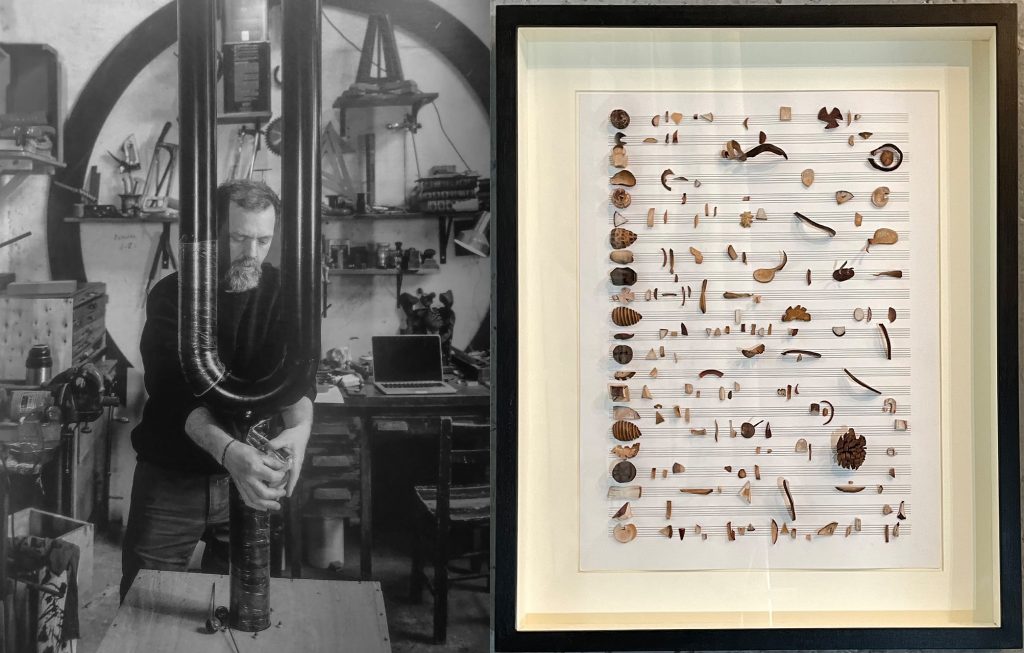
In the New Art Section at the booth of Quimera Galería (based in Buenos Aires) Hernán Soriano presents a selection of works from different periods in his practice. He describes his artistic method as ‘thinking with his hands’, as he folds, cuts, assembles, rips, traces and reimagines what elements of the past might become in the present. He links his craftsmanship directly to the studio, a place to ponder before setting things in motion. The works on view at the fair form part of what he considers an ‘organised system’, one to which he repeatedly returns, reactivating familiar motifs and introducing them into new constellations.
His delicate and precise practice, often consisting of cut-outs from archival paper materials, evokes elements of a revenant ancient world in which art and science were more seamlessly intertwined, and colonial expeditions were undertaken with the use and refinement of cartography. Through his artistic interventions, a multitude of contemporary readings emerges, not least in his subtle play with materials and his nuanced engagement with language.
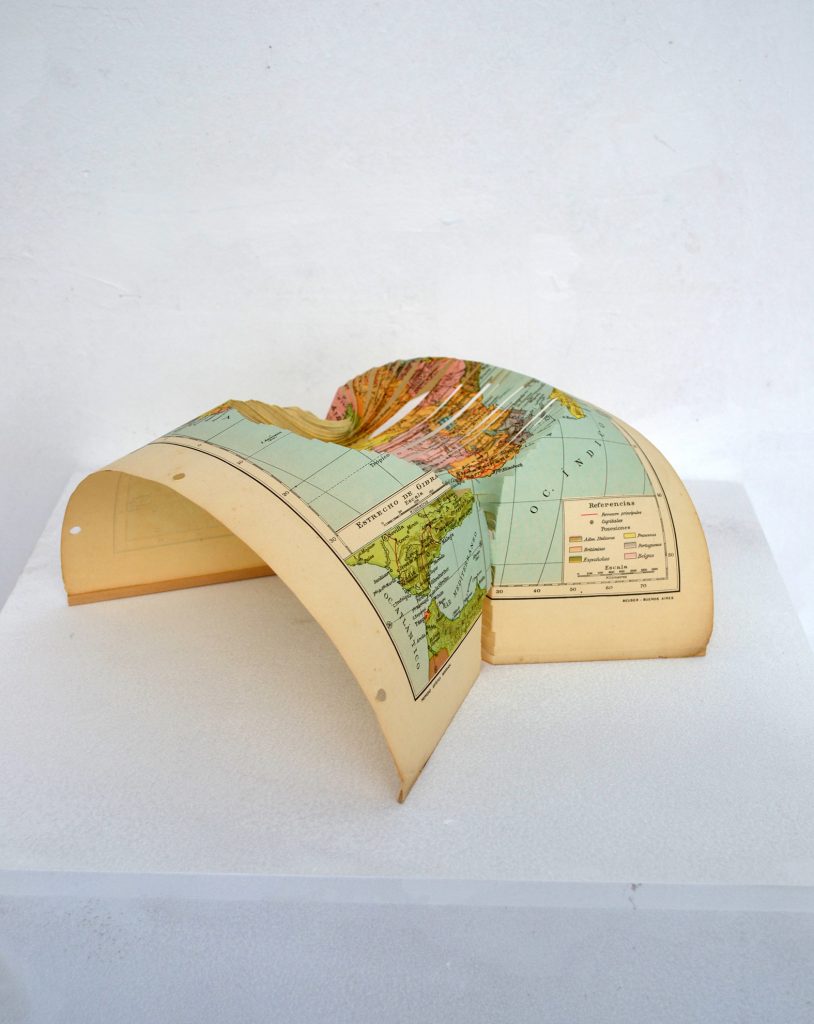
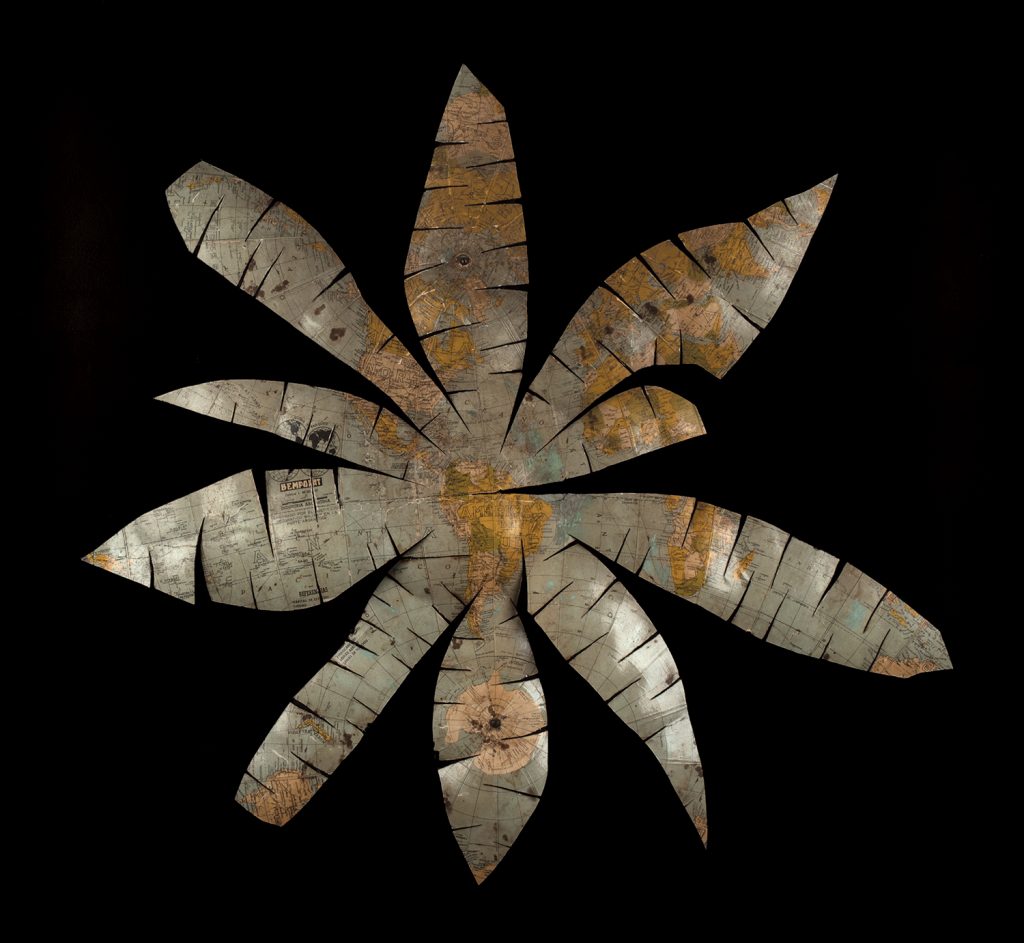
In Nuestra Flor (2021), a globe is split open into a flourishing flower. La flor (flower in English) resonates almost instinctively with the feminine genesis of life, a meaning subtly embedded in the word itself, which can also, in veiled form, allude to the vulva. In La Laguna (2017), a map, a flat surface, but also a lagoon, a shallow body of water, is folded into three dimensions, acquiring a bodily presence. At the same time, Soriano cuts the form out of the map itself. The title equally evokes the Spanish expression una laguna mental, a temporary lapse of memory, while materially inscribing that very missing fragment into the surface of the map.
The artist notes that living in Argentina, a South American country marked by strong European cultural influences, has shaped much of his perspective, as well as his relationship to materials and the way he approaches their exploration.
In this respect, his artworks incorporating avocado pits are particularly compelling. He carves into the pit, the heart of the fruit, shaping it into innumerable organic forms until it becomes almost unrecognisable. The avocado pit is an element we often overlook, yet it possesses remarkable aesthetic qualities: a warm amber-brown hue and a wood-like texture. In a distinctly material way, it links the ephemeral, that which decays, to the passage of history.
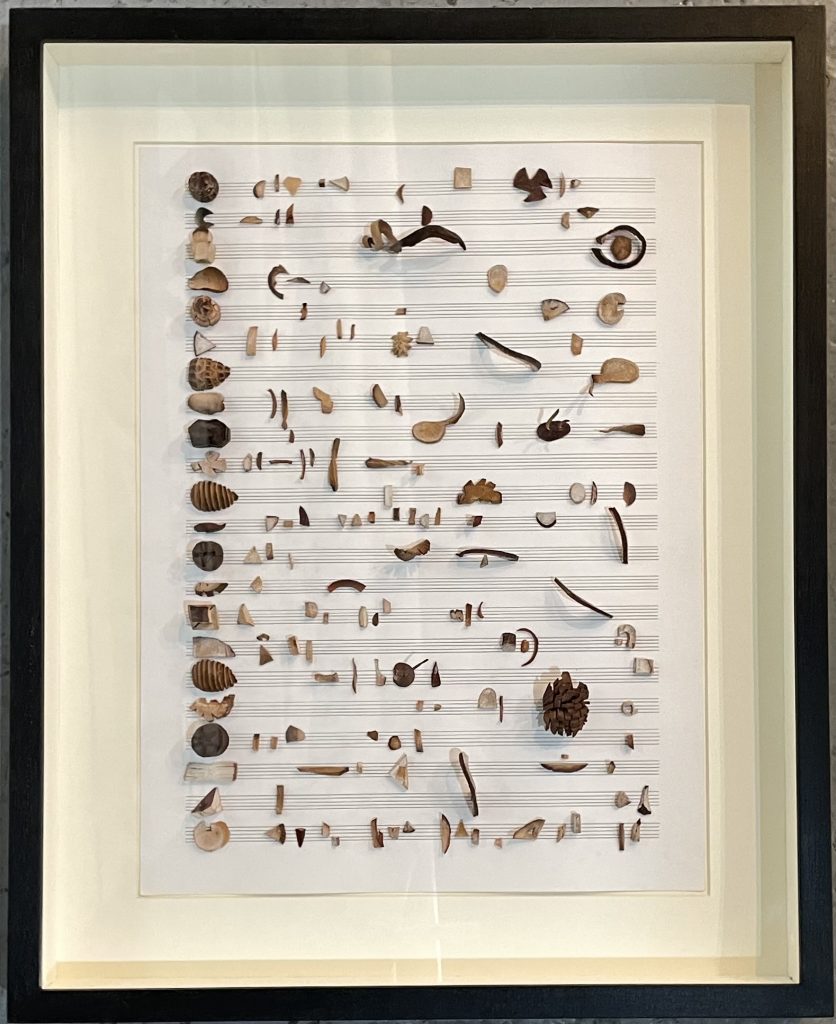
In El Comienzo de la Alborada (2025), organically rounded cut-outs of the avocado pit twirl across sheet music like musical notes. La alborada means dawn in Spanish; it is as if the artist composes a melody of morning glory, where nature becomes musically illustrated.
At the same time, the avocado is an important indigenous product of Latin America and the word “avocado” itself carries multiple layers of indigenous regional identity. There was an avocado tree in his family home where he grew up, making the fruit an element closely tied to his personal and emotional history.
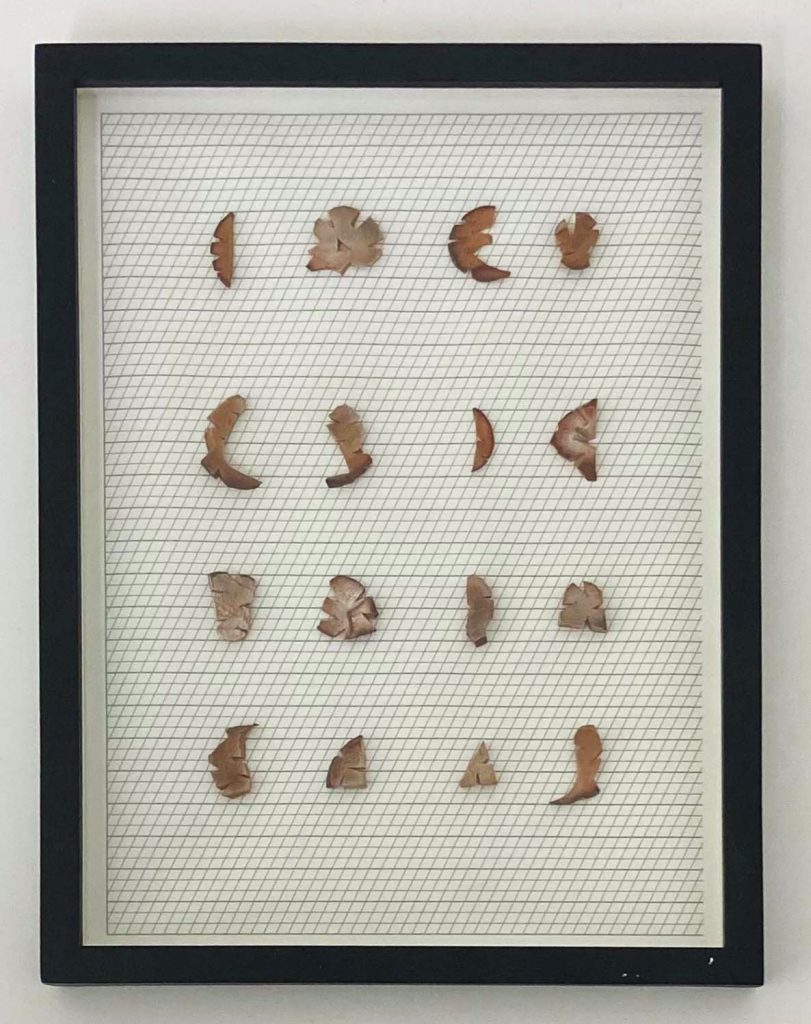
In the titles of several artworks in which Soriano carves elements from avocado pits, he introduces the neologism páltico (with the feminine form páltica), a term he has coined himself, derived from palta (avocado). Just as herbalists, botanists and naturalists once had to invent or adapt new words from other languages to classify flowers, plants or animals, Soriano similarly forges a new term within the Spanish language. It is as if he creates his own taxonomy within his artistic register.
Step into Soriano’s layered world at Art Rotterdam 2026, on view with Quimera Galería in The New Art Section.
Bio
Hernán Soriano (1978, Buenos Aires, Argentine) is a visual artist whose work moves between drawing, sculpture, and the construction of artifacts using accumulated materials and obsolete technologies. One of the most significant milestones in his career was the solo exhibition Formar mentalmente una máquina at the Museo de Arte Moderno de Buenos Aires (October 26, 2016 – February 19, 2017), where he intervened antique books and lithographs as landscapes of memory and poetic repetition.
In 2022, he received the Premio Azcuy de Arte Contemporáneo for the project Sonos, a permanent sound-sculpture installation located in the Donna Magna building, selected from more than 200 national proposals. His work has been recognized for integrating sound, materiality, and active audience participation, and he has taken part in important group exhibitions such as the 23rd Stuttgarter Filmwinter Festival (Germany) and Museo de los mundos imaginarios at Museo MAR.
Written by Emily van Driessen
De wereld van de Argentijnse beeldend kunstenaar Hernán Soriano (1978) binnengaan voelt als het betreden van een archiefkamer vol curiositeitenkasten. De doffe geur van oude boeken kraakt in de stilte, schemerig warm amberkleurig kaarslicht strijkt over bruin getint papier, een grote gekleurde wereldkaart ligt half uitgerold op een massief eiken bureau.
In de New Art Section, op de stand van Quimera Galería (Buenos Aires), toont Soriano een selectie werken uit verschillende periodes van zijn praktijk. Hij omschrijft zijn methode als ‘denken met zijn handen’: hij vouwt, snijdt, assembleert, scheurt, traceert en herdenkt wat elementen uit het verleden in het heden zouden kunnen worden. Zijn ambacht verbindt hij rechtstreeks met het atelier, een plek om te mijmeren alvorens iets in beweging te zetten. De werken die hier samenkomen maken deel uit van wat hij zelf een ‘georganiseerd systeem’ noemt, een geheel waarnaar hij steeds terugkeert, vertrouwde motieven heractiveert en in nieuwe constellaties laat opduiken.
Zijn delicate en precieze praktijk, vaak opgebouwd uit uitsnijdingen in archiefpapier, roept iets op van een oude wereld die blijft terugkeren, waarin kunst en wetenschap vanzelfsprekender in elkaar overvloeiden, en waarin overzeese koloniale reizen werden ondernomen met behulp van en verfijning van cartografie. Via zijn ingrepen openen zich verschillende hedendaagse lezingen, niet in het minst in zijn subtiele omgang met materiaal en zijn verfijnde spel met taal.
In Nuestra Flor (2021) splijt hij een wereldbol open tot een bloeiende bloem. La flor (de bloem) resoneert haast instinctief met het vrouwelijke ontstaan van leven, een betekenis die in het woord zelf verscholen zit en die, verhuld, ook naar de vulva kan verwijzen. In La Laguna (2017) geeft hij een kaart, een vlak oppervlak, en een lagune, een ondiep wateroppervlak, een driedimensionaal lichaam. Tegelijkertijd snijdt hij de vorm uit de kaart zelf. De titel verwijst ook naar de Spaanse uitdrukking una laguna mental, een blinde vlek in het geheugen, terwijl hij die leegte materieel in het oppervlak van de kaart uitsnijdt.
Soriano merkt op dat het leven in Argentinië, een Zuid-Amerikaans land getekend door sterke Europese invloeden, zijn blik als kunstenaar en zijn relationele verhouding tot materiaal heeft gevormd.
In dat opzicht zijn de kunstwerken met avocadopitten bijzonder intrigerend. Hij kerft in de pit, het hart van de vrucht, en vormt haar om tot ontelbare organische gedaanten tot ze haast onherkenbaar wordt. De avocadopit is een element dat we vaak over het hoofd zien, maar ze bezit uitgesproken esthetische kwaliteiten: een warme amberbruine gloed, een houtachtige structuur. Op uitgesproken materiële wijze verbindt de pit het efemere, dat wat afsterft, met het verloop van de geschiedenis.
In El Comienzo de la Alborada (2025) dwarrelen organisch afgeronde uitsnijdingen van de avocadopit over partituurpapier als muzieknoten. La alborada betekent dageraad; het is alsof Soriano een melodie van ochtendglorie componeert waarin de natuur muzikaal wordt verbeeld.
Tegelijkertijd is de avocado een belangrijk inheems product van Latijns-Amerika en draagt het woord “avocado” meerdere lagen van regionale identiteit in zich. In het huis waar hij opgroeide stond een avocadoboom, waardoor de vrucht ook nauw verweven raakte met zijn persoonlijke en emotionele geschiedenis.
In verschillende titels waarin Soriano elementen uit avocadopitten kerft, introduceert hij het neologisme páltico (met de vrouwelijke vorm páltica), een woord dat hij zelf verzon, afgeleid van palta (avocado). Net zoals herboristen, botanici en natuuronderzoekers ooit nieuwe woorden moesten uitvinden of ontlenen om bloemen, planten en dieren te classificeren, zo verzint Soriano een nieuw begrip binnen de Spaanse taal. Het is alsof hij een eigen taxonomie installeert binnen zijn artistieke register.
Stap binnen in Soriano’s gelaagde wereld op Art Rotterdam 2026, te zien bij Quimera Galería in de New Art Section.
Bio
Hernán Soriano (1978, Buenos Aires, Argentinië) is een beeldend kunstenaar wiens werk zich beweegt tussen tekening, sculptuur en het bouwen van objecten met verzamelde materialen en verouderde technologieën. Een belangrijk moment in zijn carrière was de solotentoonstelling Formar mentalmente una máquina in het Museo de Arte Moderno de Buenos Aires (26 oktober 2016 – 19 februari 2017), waar hij oude boeken en lithografieën bewerkte tot landschappen van herinnering met poëtische herhalingen.
In 2022 ontving hij de Premio Azcuy de Arte Contemporáneo voor het project Sonos, een permanente geluidsinstallatie in het Donna Magna-gebouw, gekozen uit meer dan 200 nationale inzendingen. Zijn werk wordt gewaardeerd om de manier waarop hij geluid, materiaal en actieve deelname van het publiek samenbrengt. Daarnaast nam hij deel aan belangrijke groepstentoonstellingen, zoals het 23e Stuttgarter Filmwinter Festival (Duitsland) en Museo de los mundos imaginarios in Museo MAR.
Geschreven door Emily van Driessen


