
Coming soon
Coming soon
Selecteer type
This year marks the tenth edition of the NN Art Award. The annual incentive prize of €10,000 is awarded to a talented artist who completed their education in the Netherlands and presents work at Art Rotterdam (27–29 March at Rotterdam Ahoy). The professional jury nominated four artists: Fiona Lutjenhuis (Galerie Fleur & Wouter), Tina Farifteh (Gallery Vriend van Bavink), Mandy Franca (Night Café Gallery) and Kyra Nijskens (Prospects / Mondriaan Fonds). From 14 March to 25 May 2026, work by all nominees will be on view at Kunsthal Rotterdam.
In the recent work of Kyra Nijskens, biofouling forms an important thread: the process by which marine organisms such as oysters, mussels and algae attach themselves to artificial surfaces like ship hulls and underwater pipelines. These organisms travel unnoticed along global trade routes and settle in ecosystems that are not designed to accommodate them. Conversely, the artificial infrastructures themselves, ships, containers and subsea constructions, were never intended to become habitats for such life forms. The language used to describe this is striking. Within capitalist frameworks, these species are quickly labelled colonisers or invasive, while in their original environments, they carry names such as ‘lucky clam’ or ‘golden clam’. What the logistics industry defines as a technical problem, Nijskens reads as a form of resistance. In her sculptures and installations, she examines the friction between industrial systems and the organisms that force themselves into them. Human systems disrupt and reshape ecological processes, which in turn adapt, transform and survive. Nijskens turns this dynamic into a compelling metaphor, shifting the perspective so that the organism, rather than the system, takes centre stage.
By highlighting biofouling, Nijskens shows how natural processes embed themselves in the margins of human-designed systems. At the same time, more than a thousand sea containers disappear into the ocean each year. Plastic products from lost cargo washing ashore are visible symptoms of an unsustainable system. Two parallel movements converge here: the biological and the economic, meeting on the surface of the sea. Her installations suggest a world in which human control proves relative and in which life, even within tightly organised systems, remains resilient and ultimately finds its own course.

Nijskens’ practice operates at the intersection of sculpture, installation and conceptual research. As she explains: “In my practice, I’m less interested in representing nature and more interested in working alongside it— finding moments where its patterns can challenge or disrupt the narratives we have told ourselves about what is ours and what is not. My approach is a mix of poetic reflection and critical exploration, focusing on how human activity reshapes ecological and cultural landscapes.”
During her residency at PADA Studios in late 2024 in Barreiro, Portugal, a historic departure point for early colonial expeditions, she developed the series “The Thief of Tides”. From this context she traced the routes of organisms that travelled aboard ships and wrote texts from their perspective. Shells found on the nearby beach were brought together into what she describes as hybrid technofossils, fossils of a future era that feel both biological and industrial.
Material plays a key role in her work. Nijskens combines found and new materials such as mother-of-pearl, resin, rust, textiles, plexiglass, rope, powdered blood, metal and both real and artificial pearls. She experiments with bio-resin and investigates how natural structures can be bent, combined or transformed into new forms. For her earlier installation “Rusted Mouths, Hollow Veins”, she chemically bent mother-of-pearl shells into a substance that approaches natural fibreglass.

Kyra, could you tell us more about the work you are presenting at Art Rotterdam and at Kunsthal Rotterdam?
Both at Kunsthal Rotterdam and in the Prospects section at Art Rotterdam, I will present work from “The Thief of Tides”, a project I started in 2024 during my residency in Portugal, close to the sea and an abandoned industrial area. I took long walks there and encountered industrial surfaces overgrown with shellfish. That is when I became fascinated by biofouling. Biofouling literally means biological contamination, a term I find somewhat paradoxical because somehow, biological carries a negative connotation here. It is often seen as a problem or inefficiency, yet I consider it poetic how life continues to manifest in places designed to exclude it. For me, biofouling is about bodies that do not fit, yet still persist. It is about presence as a form of queer resistance, visible in the frayed edges of global systems.
I follow these journeys and try to imagine what they look like from the perspective of the organisms themselves. In poetic texts written from their point of view, I give them a voice and describe how they cling and disrupt. From this research, the “Clogged Pipe” sculptures emerged, in which I imagine what becomes visible when a pipeline is cut open and these organisms appear inside. From that same line of thought, I began exploring other leaks within global logistics systems. Each year, thousands of sea containers are lost in the ocean, often with absurd and almost mythical consequences. Sometimes their contents resurface years later: beaches covered in Crocs, yellow rubber ducks carried along ocean currents, some frozen for years in Arctic ice. This forms the basis for new work. For this series, I use a backpack as a miniature container, an apparently sunken human object filled with sea organisms and remnants of lost cargo. Cut into segments, the backpack becomes a hybrid technofossil, an object in which economy and ecology, decay and survival converge. Work from these two most recent series will also be shown in the Prospects section of the Mondriaan Fund at Art Rotterdam.

What are your plans for 2026?
In 2026, I will take up a residency in Ebeltoft, a small historic town on the Danish coast. It is a place where the sea is close by and where centuries of trade, shipping and interventions in the landscape remain tangible. I intend to conduct extensive field research there, gather materials, study underwater structures, develop new sculptural forms and above all: respond to what I encounter.
At the same time, I hope to make a film there: an experimental, alternative narrative about hybrid bodies, sea voices and mermaids who lose their voices by conforming to the norm. I see this film as an intuitive and complementary addition to my sculptural work, an exploration of voice, silence and what is lost when one attempts to fit in. It would be wonderful to use my sculptures within this context and create a world of my own.
How did you feel when you heard you had been nominated for the NN Art Award?
I was genuinely surprised and above all: very happy. I have followed this award for years and many artists I admire were previously nominated. I also consider this year’s nominees incredibly strong. Being nominated myself makes me feel that my work is being seen and appreciated, which is of course a great compliment. It is especially meaningful to present my work at Kunsthal Rotterdam. I have lived in Rotterdam for many years and the harbour has become part of the way I work and think. Showing my work here feels really fitting.

Which project would you immediately pursue if you were to win the award?
If I were to win the award, I would immediately begin the experimental short film I have been thinking about for some time. Film is new to me, which makes it exciting. I am always searching for new media and ways to experiment, and this project would allow me to apply my knowledge of materials in an entirely different way, within the framework of film. I usually work alone, but film requires collaboration, and that seems both exciting and instructive. The award would above all give me the space to fully explore this experiment and bring it to life.
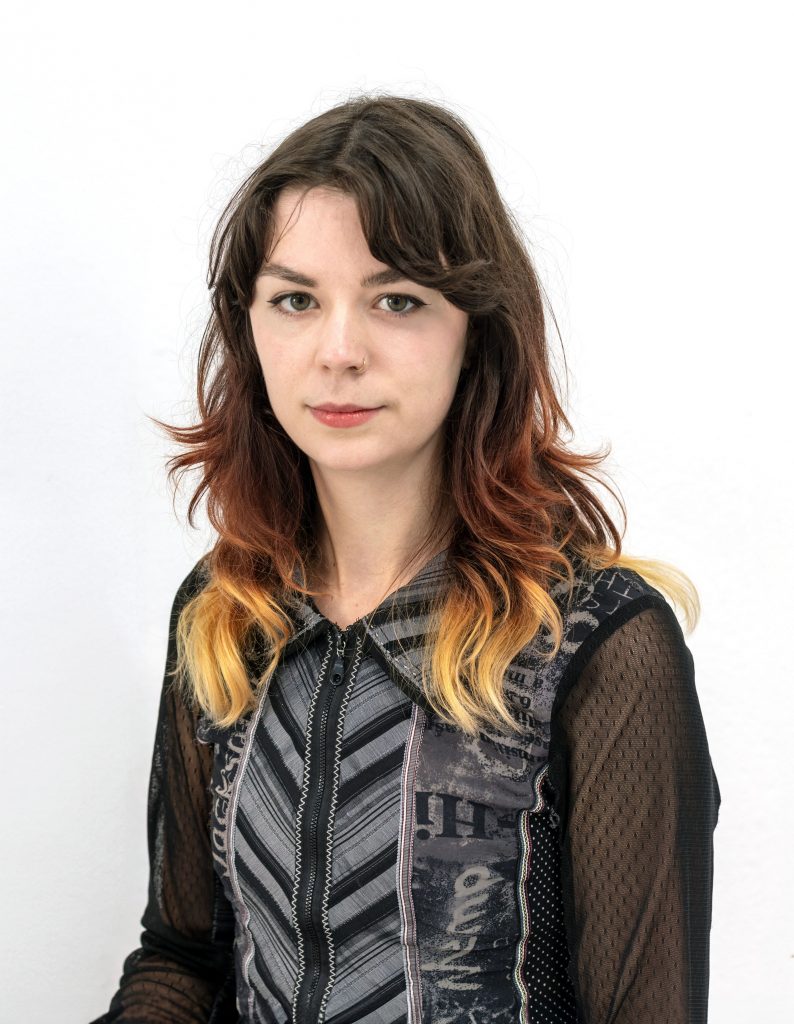
Kyra Nijskens was born in 1997 in Ulestraten. She studied Fine Art at HKU and completed her Master’s degree at the Piet Zwart Institute in Rotterdam. Her work was previously shown at Marres, MaMA, Het HEM and Museum Villa Mondriaan.
During Art Rotterdam, Nijskens’ work will be presented in the Prospects section of the Mondriaan Fund, where the public can encounter a new generation of artists. In this fourteenth edition, the exhibition presents work by 92 emerging artists who received financial support in 2024 through the Artist Start grant scheme, to support the beginning of their careers. The exhibition is curated by Johan Gustavsson and Daphne Verberg.
The winner of the NN Art Award 2026 will be announced on Friday 27 March at Kunsthal Rotterdam. During this festive evening, all exhibitions, including the NN Art Award exhibition, will be freely accessible to invited guests.
Written by Flor Linckens
Dit jaar viert de NN Art Award haar tiende editie. De jaarlijkse stimuleringsprijs van €10.000 gaat naar een getalenteerd kunstenaar die een opleiding in Nederland afrondde en werk presenteert op Art Rotterdam (27-29 maart in Rotterdam Ahoy). De vakjury nomineerde vier kunstenaars: Fiona Lutjenhuis (Galerie Fleur & Wouter), Tina Farifteh (Gallery Vriend van Bavink), Mandy Franca (Night Café Gallery) en Kyra Nijskens (Prospects / Mondriaan Fonds). Van 14 maart tot en met 25 mei 2026 is het werk van alle genomineerden te zien in Kunsthal Rotterdam.
In het recente werk van Kyra Nijskens vormt biofouling een belangrijke rode draad: het proces waarbij mariene organismen als oesters, mosselen en algen zich hechten aan kunstmatige oppervlakken als scheepsrompen en onderzeese pijpleidingen. Deze organismen liften ongemerkt mee op mondiale handelsroutes en nestelen zich in ecosystemen die daar niet op zijn ingericht. Andersom zijn de kunstmatige (infra)structuren zelf (de schepen, containers en onderzeese infrastructuur) niet ontworpen om leefgebied te worden voor deze organismen. Opvallend is de taal die daarbij wordt gebruikt: binnen kapitalistische kaders worden zulke soorten al snel bestempeld als kolonisten of invasieve soorten, terwijl ze in hun oorspronkelijke leefomgeving namen dragen als ‘lucky clam’ of ‘golden clam’. Wat de logistieke industrie een technisch probleem noemt, leest Nijskens als een vorm van verzet. In haar sculpturen en installaties onderzoekt ze de frictie tussen industriële systemen en de organismen die zich daarin wringen. Menselijke systemen verstoren en vervormen ecologische processen, die zich op hun beurt aanpassen, transformeren en overleven. Nijskens maakt van die dynamiek een spannende metafoor en verschuift het perspectief: niet het systeem, maar het organisme krijgt de hoofdrol.
Door het fenomeen biofouling te belichten, toont Nijskens hoe natuurlijke processen zich nestelen in de marges van door mensen ontworpen systemen. Tegelijkertijd verdwijnen jaarlijks meer dan duizend zeecontainers in de oceaan. Aangespoelde plastic producten uit verloren ladingen zijn de zichtbare symptomen van een onhoudbaar systeem. Eigenlijk komen hier twee parallelle bewegingen samen: de biologische en de economische, die elkaar ontmoeten op de oceaan. Haar installaties suggereren een wereld waarin menselijke controle relatief blijkt en waarin leven, zelfs binnen de meest strak georganiseerde systemen, veerkrachtig is en uiteindelijk zijn eigen weg vindt.
Nijskens’ praktijk beweegt zich op het grensvlak van sculptuur, installatie en conceptueel onderzoek. Zelf zegt ze daarover: “In mijn praktijk gaat het me minder om het verbeelden van de natuur, en meer om het werken in dialoog ermee. Ik zoek naar momenten waarop haar patronen de verhalen die wij onszelf vertellen (over wat van ons is en wat niet) kunnen bevragen of ontregelen. Mijn benadering beweegt zich tussen poëtische reflectie en kritische analyse, en richt zich op de manieren waarop menselijke activiteit ecologische en culturele landschappen hervormt.”
Tijdens haar residentie bij PADA Studios eind 2024 in Barreiro (Portugal), een historisch vertrekpunt van vroege koloniale expedities, ontwikkelde ze de serie ‘The Thief of Tides’. Vanuit die context traceerde ze de routes van organismen die meereisden op schepen en schreef ze teksten vanuit hun perspectief. Gevonden schelpen van het nabijgelegen strand kwamen daarbij samen tot wat ze zelf omschrijft als hybride technofossielen, als fossielen van een toekomstig tijdperk die tegelijk biologisch en industrieel aanvoelen.
Materiaal speelt daarbij een belangrijke rol. Nijskens werkt met gevonden en nieuwe materialen als parelmoer, hars, roest, textiel, plexiglas, touw, bloed in poedervorm, metaal en zowel echte als kunstmatige parels. Ze experimenteert met biohars en onderzoekt hoe natuurlijke structuren kunnen worden gebogen, gecombineerd of getransformeerd tot nieuwe vormen. Voor haar eerdere installatie ‘Rusted Mouths, Hollow Veins’ boog ze moederparelschelpen bijvoorbeeld chemisch om tot iets dat natuurlijk glasvezel benadert.
Kyra, kun je ons wat meer vertellen over het werk dat je presenteert op Art Rotterdam en in Kunsthal Rotterdam?
Zowel in Kunsthal Rotterdam als in de Prospects sectie op Art Rotterdam toon ik werk uit ‘The Thief of Tides’: een project dat ik in 2024 ben begonnen tijdens die residentie in Portugal, dicht bij de zee en een verlaten industriegebied. Ik maakte daar lange wandelingen en kwam uit bij met schelpdieren overgroeide industriële oppervlakken. Zo raakte ik gefascineerd door het fenomeen biofouling. Biofouling betekent ‘biologische vervuiling’, een term die ik een beetje paradoxaal vind, omdat ‘biologisch’ hier een negatieve lading krijgt. Vaak wordt het gezien als een probleem of inefficiëntie, maar ik vind het poëtisch hoe het leven zich blijft manifesteren op plekken die zijn ontworpen om het uit te sluiten. Voor mij gaat biofouling over lichamen die niet passen, maar toch blijven. Over aanwezigheid als een vorm van queer verzet, zichtbaar in de rafelranden van mondiale systemen.
Ik volg deze reizen en probeer me voor te stellen hoe ze eruitzien vanuit het perspectief van die organismen zelf. In poëtische teksten, geschreven vanuit hun perspectief, geef ik ze een stem en beschrijf ik hoe ze zich vastklampen en ontregelen. Vanuit dit onderzoek is ook de serie ‘Clogged Pipe’ sculpturen ontstaan, waarin ik me voorstel wat je ziet wanneer je een leiding doormidden snijdt en deze organismen zichtbaar worden. Vanuit datzelfde denken ben ik ook andere lekken in globale logistieke systemen gaan onderzoeken. Elk jaar verdwijnen duizenden zeecontainers in de oceaan, met vaak absurde en mythische gevolgen. Soms duikt hun inhoud jaren later weer op: stranden vol Crocs, gele badeendjes die een eigen leven zijn gaan leiden in oceaanstromen, sommige zelfs jarenlang ingevroren in Arctisch ijs. Dit gegeven vormt de basis voor nieuw werk. In deze serie gebruik ik een rugzak als mini-container: een ogenschijnlijk gezonken menselijk object, gevuld met zeeorganismen en resten van verloren lading. In segmenten gesneden wordt de rugzak een hybride technofossiel: een object waarin economie en ecologie, verval en overleving samenkomen. Werk uit die laatste twee series zal ik ook laten zien in de Prospects sectie van het Mondriaan Fonds op Art Rotterdam.
Wat zijn je plannen voor 2026?
In 2026 ga ik op residentie naar Ebeltoft, een klein historisch stadje aan de Deense kust. Het is een plek waar de zee dichtbij is, en waar eeuwen van handel, scheepvaart en ingrepen in het landschap voelbaar zijn. Ik wil daar veel veldonderzoek gaan doen, materiaal verzamelen, onderwaterstructuren bestuderen, nieuwe sculpturale vormen ontwikkelen en bovenal reageren op wat ik tegenkom.
Tegelijkertijd heb ik de wens om daar een film te maken: een experimentele, alternatieve vertelling over hybride lichamen, zeestemmen en zeemeerminnen die hun stem verliezen door zich te conformeren aan de norm. Die film zie ik als een intuïtieve aanvulling op mijn sculpturale werk: een onderzoek naar stem, stilte en wat er verloren gaat wanneer je probeert te passen. Het lijkt me geweldig om mijn sculpturen binnen deze context te gebruiken en zo een eigen wereld te creëren.
Kun je beschrijven hoe je je voelde toen je hoorde dat je was genomineerd voor de NN Art Award?
Ik was oprecht verrast, en vooral heel blij. Ik volg deze prijs al jaren en veel kunstenaars die ik bewonder, waren eerder genomineerd. Ook de kunstenaars die dit jaar meedoen, vind ik ontzettend sterk. Dat ik nu zelf genomineerd ben geeft me het gevoel dat mijn werk wordt gezien en gewaardeerd, en dat is natuurlijk een groot compliment! Het is extra speciaal om mijn werk in Kunsthal Rotterdam te tonen. Ik woon al jaren in Rotterdam en de haven is op allerlei manieren onderdeel geworden van hoe ik werk en denk. Dat ik mijn werk hier mag laten zien voelt heel passend.
Welk project zou je onmiddellijk oppakken als je de award zou winnen?
Als ik de award zou winnen, zou ik meteen beginnen aan de experimentele kortfilm waar ik al langere tijd over nadenk. Film is nieuw voor mij en daarom voelt het spannend. Ik ben altijd op zoek naar nieuwe media en manieren om te experimenteren, en dit project geeft me de kans om mijn materiaalkennis op een hele andere manier te gebruiken, binnen film. Normaal werk ik vooral alleen, maar film dwingt me samen te werken met anderen, en dat lijkt me ontzettend leuk en leerzaam. De award zou me vooral de ruimte geven om dit experiment echt helemaal te onderzoeken en tot leven te brengen.
Kyra Nijskens werd in 1997 geboren in Ulestraten. Ze studeerde Beeldende Kunst aan de HKU en behaalde haar Master aan het Piet Zwart Institute in Rotterdam. Haar werk was eerder te zien bij onder meer Marres, MaMA, Het HEM en Museum Villa Mondriaan.
Het werk van Nijskens is tijdens Art Rotterdam te zien in de Prospects sectie van het Mondriaan Fonds, waar het publiek kennis kan maken met een nieuwe generatie kunstenaars. Tijdens deze veertiende editie toont de tentoonstelling werk van 92 startende kunstenaars die in 2024 financiële steun ontvingen binnen de regeling Kunstenaar Start, om daarmee de start van hun carrière te ondersteunen. De expositie wordt gecureerd door Johan Gustavsson en Daphne Verberg.
De winnaar van de NN Art Award 2026 wordt bekendgemaakt op vrijdag 27 maart in Kunsthal Rotterdam. Tijdens deze feestelijke avond zijn alle tentoonstellingen, inclusief de NN Art Award tentoonstelling, vrij toegankelijk voor genodigden.
Geschreven door Flor Linckens
How do you mould materials with the same sensibility with which you morph words into writing? The research-driven practice of visual artist Gloriya Avgust (1993, Bulgaria) moves between text, sculpture and performance in which the materiality of language is approached in an explicitly corporeal way.
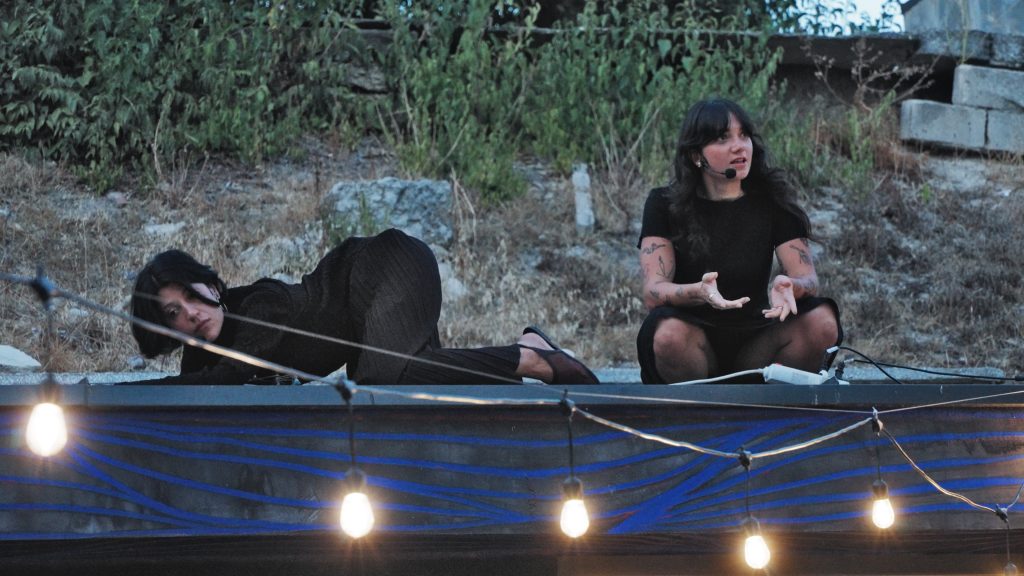
Avgust is an avid reader and deeply interested in feminist theory. The female voice as a subject of research and the ways in which women have systematically been muted throughout history speak innumerably to her. Writers like Audre Lorde, Anne Boyer and Gloria Anzaldúa are among the many prolific voices that have fed her artistic practice. “I saw how vulnerable and muted women can become inside extractive systems that do not truly care about their bodies. That brought me to feminist writers who had already lived those experiences.” This research is never directly addressed, but rather permeates her work.
Avgust received her MFA from Sint-Lucas Antwerp in 2021 and from the Piet Zwart Institute Rotterdam in 2023. She is one of the 92 emerging artists who recently received an Artist Start grant from the Mondriaan Fund, which enabled her to undertake a residency in Bulgaria. This inspired her latest artwork Performing a State of Permanence (2026), a ceramic installation that will be exhibited in the Prospects section of Art Rotterdam.
Embodied Text and Gestures
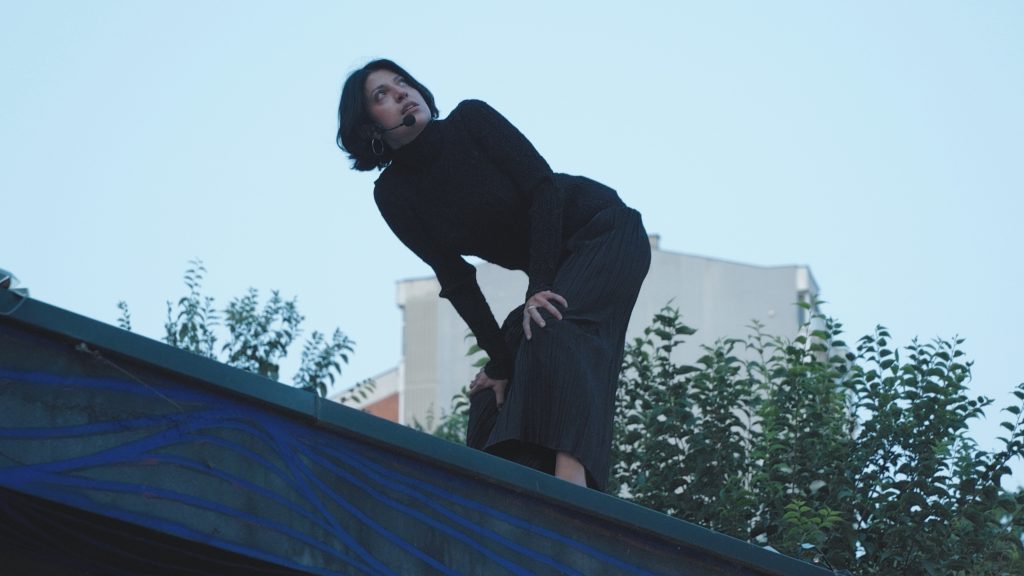
Vrouwenproblemen: Spinning the Mechanisms of Troublemaking (2025) is a strong example of her multifaceted and intersectional practice. The performance is developed together with Andrea Celeste La Forgia, a visual artist who is also exhibiting in the Prospects section of the fair. Conceptually, the work departs from two research lines that converge in one polyphonic translation.
“I’ve always had an affinity with language,” Avgust explains. “And often my writing builds the physical work where it is performed or embodied in choreographic gestures.” The movements of the performance are informed by The Weaver Speak, a hidden nonverbal language that women in the Textiel factory in Tilburg developed to communicate in secret. The script in the performance becomes a mix of archival elements and speculative forms of writing.
Avgust and Celeste La Forgia also researched Spinhuis in Amsterdam, which was the first reformatory institution and prison for women run by women. What initially appeared revolutionary in protecting women from abuse in mixed prisons ultimately housed another kind of abuse. “The women were taught how to spin wool and were basically practising free labour. During the weekends, the bourgeois visited them as if they were some kind of attraction,” Avgust says.
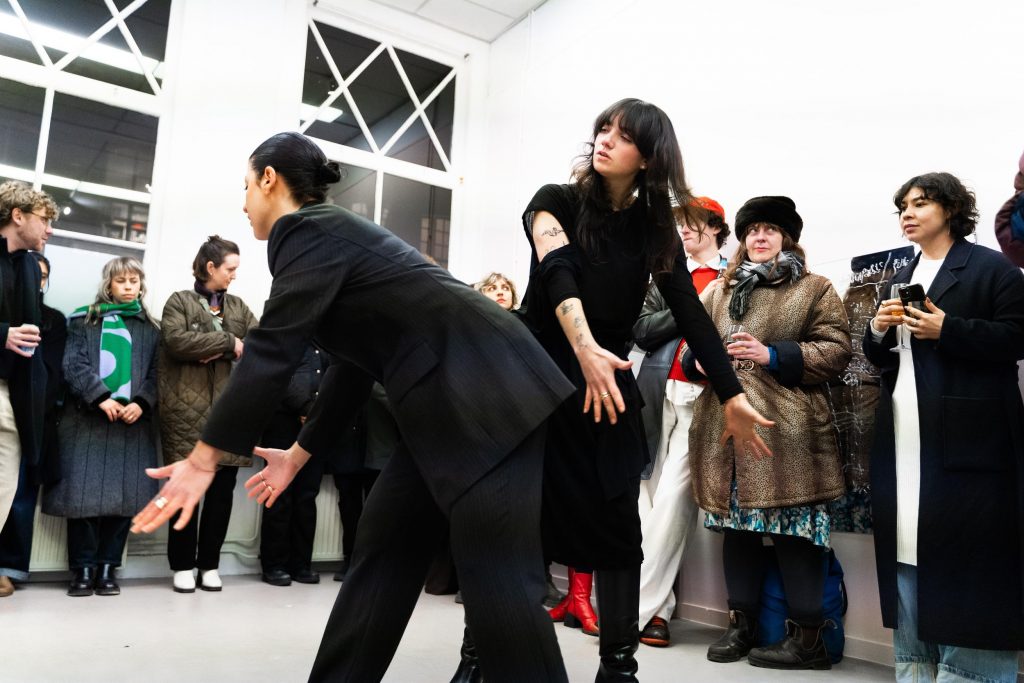
Another telling example of her performative practice is Slippages Of The Mouth (2025), which was also a collaboration with Andrea Celeste La Forgia. The visuals of the performance draw on the photographic archive of the controversial French neurologist Jean-Martin Charcot, who researched hysteria, a diagnosis applied almost exclusively to women. Charcot organised public demonstrations in which patients had to stage their ‘hysterical attacks’. These sessions were photographed, and since photography at the time still required long exposure times, the women had to hold these theatrical poses for extended durations.
Performing a State of Permanence
Performing a State of Permanence (2026) is still in development and will be exhibited at Prospects.
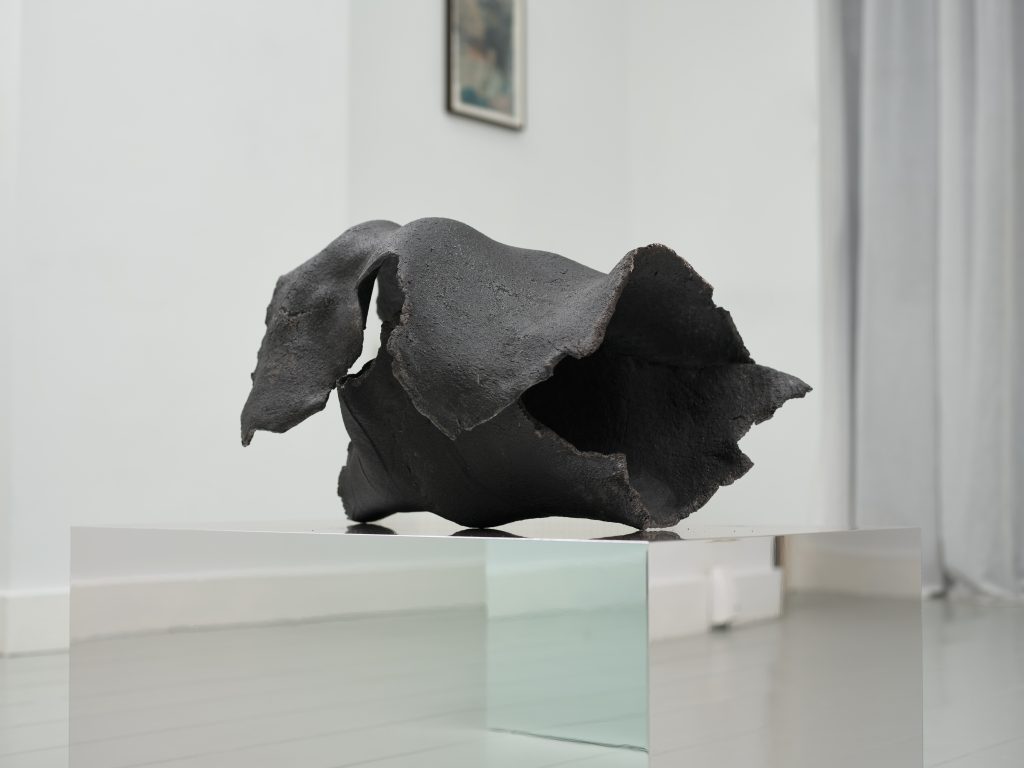
The ceramic work further builds on the motif of rupture that runs through Avgust’s practice. An ambiguous opening that at once holds a linguistic rupture, a physical incisional gesture, and a projection of violent beasthood onto the female body.
“Sappho, an Ancient Greek queer poet whose work survives only in fragments, really inspired my ceramic work. So much of her writing exists in bits and pieces, with lines missing or broken off. I think this is such a beautiful visual representation of the ripping of language, of stanzas, of meaning. And I wanted to physically translate that ripping into ceramics. The opening might be a mouth with a tongue and throat, but it could very well also look like a vagina and uterine wall. I’m intrigued by the theatricality of something that can open and close, that can reveal, conceal, threaten, mystify, where it has the potential to become a kind of stage.”
The image of the mouth as devouring organ folds back onto Charcot’s photography, where women’s bodies were staged as sites of hysterical animalistic excess. Avgust puts sharp rows of tin teeth in the hole as if an abstract monstrous creature is living inside.
The Voice of Glass
During her artist residency in Bulgaria, Avgust delved deep into spiritual rituals with pagan roots. “What I noticed is that much of that knowledge hasn’t been properly documented or archived, because a lot is transmitted by word of mouth and through songs,” she says. One ritual in particular stood out. “It was believed in Ancient Greece that the female voice was so cacophonous and piercing that when women gathered and wailed in the streets, it could open a portal to the underworld.” The practice was eventually banned because it was considered ugly and too disruptive. Yet similar traditions can still be found in Bulgaria and other Eastern- and Southern European countries, though they are also regarded as excessive.
From a patriarchal perspective, female togetherness is often framed as harmless or joyful, while anything that deviates from those expectations is quickly labelled disorderly. “Yet many of these rituals stemmed from collective grief and shared suffering, ” Avgust explains.
She links this lineage of thinking to Anne Carson’s essay The Gender of Sound in her book Glass, Irony and God. Carson observes how the female voice has historically been disciplined in tone, volume and emotional range and reflects on glass as a material that holds that tension: through glass one can see or hear someone, and still keep them at a distance.
It feels almost uncanny when Avgust mentions that the Bulgarian word for voice phonetically overlaps with “glass” in English. A serendipitous coincidence that will undoubtedly continue to inspire her practice where language and materials symbiotically feed one another.
Discover her newest work Performing a State of Permanence (2026) at the Prospects section of Art Rotterdam.
Written by Emily van Driessen
Hoe kneed je materialen met dezelfde gevoeligheid waarmee je woorden tot schrijven vormt? De onderzoeksgerichte praktijk van beeldend kunstenaar Gloriya Avgust (1993, Bulgarije) beweegt zich tussen tekst, sculptuur en performance, waarin ze de materialiteit van taal op een uitgesproken lichamelijke wijze benadert.
Avgust is een gretige lezer en heel geïnteresseerd in feministische theorie. De vrouwelijke stem als onderzoeksobject en de manieren waarop vrouwen doorheen de geschiedenis systematisch het zwijgen werden opgelegd, spreken haar in talloze opzichten aan. Schrijvers als Audre Lorde, Anne Boyer en Gloria Anzaldúa behoren tot de vele krachtige stemmen die haar artistieke praktijk hebben gevoed. “Ik zag hoe kwetsbaar en monddood vrouwen kunnen worden binnen extractieve systemen die zich niet werkelijk om hun lichamen bekommeren. Dat bracht mij bij feministische schrijvers die die ervaringen al hadden doorgemaakt.” Het onderzoek wordt nooit rechtstreeks aangesneden, maar doordrenkt haar werk.
Avgust behaalde in 2021 haar MFA aan Sint-Lucas Antwerpen en in 2023 aan het Piet Zwart Institute in Rotterdam. Ze is een van de 92 opkomende kunstenaars die recent een Kunstenaar Start-beurs ontvingen van het Mondriaan Fonds, wat haar in staat stelde een residentie in Bulgarije te ondernemen. Dat inspireerde haar nieuwste werk Performing a State of Permanence (2026), een keramische installatie die wordt getoond in de Prospects-sectie van Art Rotterdam.
Belichaamde tekst en gebaren
Vrouwenproblemen: Spinning the Mechanisms of Troublemaking (2025) is een sterk voorbeeld van haar veelzijdige en intersectionele praktijk. De performance werd ontwikkeld samen met Andrea Celeste La Forgia, een beeldend kunstenaar die eveneens exposeert in de Prospects-sectie van de beurs. Conceptueel vertrekt het werk vanuit twee onderzoekslijnen die samenkomen in één polyfone vertaling.
“Ik heb altijd een affiniteit gehad met taal,” legt Avgust uit. “En vaak vormt mijn schrijven het fysieke werk, waarin het wordt uitgevoerd of belichaamd in choreografische gebaren.” De bewegingen in deze performance zijn geïnspireerd door The Weaver Speak, een verborgen non-verbale taal die vrouwen in de textielfabriek in Tilburg ontwikkelden om in het geheim te communiceren. Het script in de performance is een mengvorm van archiefmateriaal en speculatieve schrijfvormen.
Avgust en Celeste La Forgia deden ook onderzoek naar het Spinhuis in Amsterdam, de eerste heropvoedingsinstelling en gevangenis voor vrouwen die door vrouwen werd geleid. Wat aanvankelijk revolutionair leek in het beschermen van vrouwen tegen misbruik in gemengde gevangenissen, huisvestte uiteindelijk een andere vorm van misbruik. “De vrouwen leerden wol spinnen en verrichtten in feite onbetaalde arbeid. In het weekend kwam de bourgeoisie hen bekijken alsof ze een soort attractie waren,” zegt Avgust.
Een ander sprekend voorbeeld van haar performatieve praktijk is Slippages Of The Mouth (2025), eveneens een samenwerking met Andrea Celeste La Forgia. De beeldtaal van de performance grijpt terug op het fotografisch archief van de controversiële Franse neuroloog Jean-Martin Charcot, die hysterie onderzocht, een diagnose die vrijwel uitsluitend op vrouwen werd toegepast. Charcot organiseerde publieke demonstraties waarin patiënten hun zogenaamd hysterische aanvallen moesten ensceneren. Deze sessies werden gefotografeerd, en omdat fotografie destijds lange belichtingstijden vereiste, moesten de vrouwen deze theatrale poses langdurig aanhouden.
Performing a State of Permanence
Performing a State of Permanence (2026) is nog in ontwikkeling en zal in Prospects worden tentoongesteld. Het keramische werk bouwt verder op het motief van de breuk dat door Avgust’ praktijk loopt. Een ambigue opening die tegelijk een taalkundige scheur en een fysieke snijdende geste uitbeeldt en een projectie is van gewelddadige dierlijkheid op het vrouwelijke lichaam.
“Sappho, een Oud-Griekse queer dichter wiens werk enkel in fragmenten is overgeleverd, heeft mijn keramisch werk sterk geïnspireerd. Een groot deel van haar schrijven bestaat uit losse flarden, met ontbrekende of afgebroken regels. Ik vind dat een prachtige visuele verbeelding van het scheuren van taal, van strofen, van betekenis. En ik wilde dat scheuren fysiek vertalen naar keramiek. De opening kan een mond zijn met een tong en keel, maar evengoed lijken op een vagina en baarmoederwand. Ik ben gefascineerd door de theatraliteit van iets dat kan openen en sluiten, onthullen, verbergen, dreigen, mystificeren, en het potentieel heeft een soort podium te worden.”
Het beeld van de mond als verslindend orgaan plooit terug op Charcots fotografie, waarin vrouwenlichamen werden geënsceneerd als plaatsen van hysterische, dierlijke excessen. Avgust plaatst scherpe rijen tinnen tanden in de opening, alsof er een abstract monsterlijk wezen binnenin leeft.
De stem van glas
Tijdens haar kunstenaarsresidentie in Bulgarije verdiepte Avgust zich in spirituele rituelen met heidense wortels. “Wat mij opviel, is dat veel van die kennis niet degelijk werd gedocumenteerd of gearchiveerd, omdat ze vooral via mondelinge overlevering en liederen werd doorgegeven,” zegt ze. Eén ritueel sprong er voor haar uit. “In het Oude Griekenland geloofde men dat de vrouwelijke stem zo kakofonisch en schril was dat wanneer vrouwen samenkwamen en door merg en been huilden op straat, ze een poort naar de onderwereld konden openen.” De praktijk werd uiteindelijk verboden omdat ze als lelijk en te ontwrichtend werd beschouwd. Toch bestaan gelijkaardige tradities vandaag nog in Bulgarije en andere Oost- en Zuid-Europese landen, al worden ook die als excessief bestempeld.
Vanuit een patriarchaal perspectief wordt vrouwelijke verbondenheid vaak voorgesteld als onschuldig of vrolijk, terwijl alles wat daarvan afwijkt snel als ontregelend wordt gezien. “Toch kwamen veel van die rituelen voort uit collectieve rouw en gedeeld lijden,” legt Avgust uit.
Ze verbindt deze denklijn met Anne Carsons essay The Gender of Sound in haar boek Glass, Irony and God. Carson observeert hoe de vrouwelijke stem historisch werd gedisciplineerd in toon, volume en emotioneel bereik, en reflecteert op glas als materiaal dat die spanning in zich draagt: door glas kan men iemand zien of horen, en toch op afstand houden.
Het voelt bijna onwaarschijnlijk wanneer Avgust vertelt dat het Bulgaarse woord voor stem fonetisch overeenstemt met “glass” in het Engels. Een toevallige samenloop die haar praktijk ongetwijfeld verder zal inspireren, waarin taal en materialen elkaar symbiotisch blijven voeden.
Ontdek haar nieuwste werk Performing a State of Permanence (2026) in de Prospects-sectie van Art Rotterdam.
Geschreven door Emily van Driessen
Internationally renowned visual artist Otobong Nkanga presents a new artwork during Art Rotterdam 2026 at the booth of Lumen Travo (Amsterdam) in the main section of the art fair.
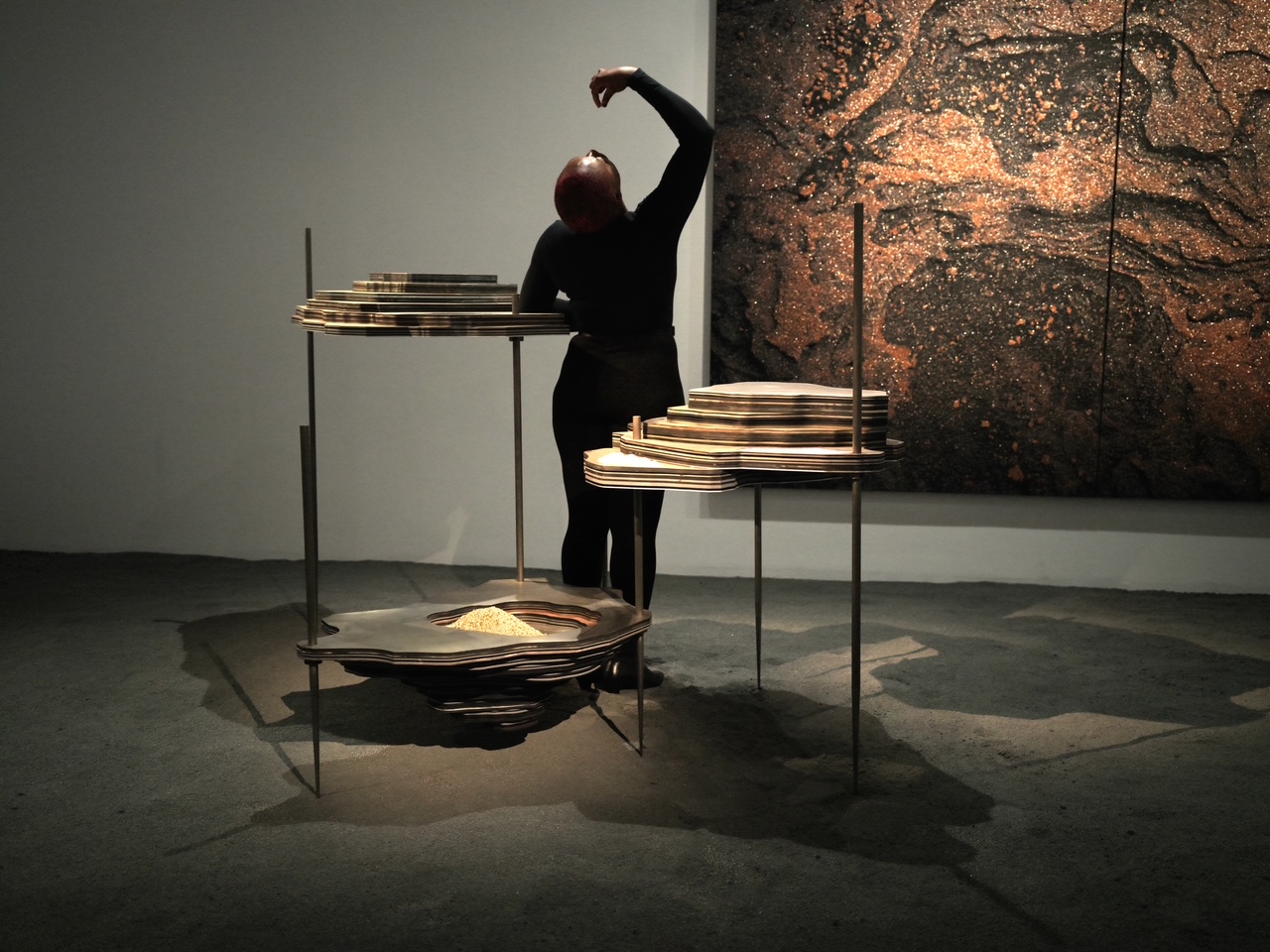
A common thread throughout her multidisciplinary practice is both earthing and unearthing: a horizontal grounding in the entanglement of human existence with natural elements, a physical contact with material realities, and a poetic effort to unearth and heal mutilated landscapes and seascapes. Her work reveals the consequences of humankind’s occupation, exploitation and spoliation of these very elements. And so in her work rivers flow through skies or run like veins through bodies, ropes resemble braided strands of hair bound together, golden textile streams trickle down like the tears of a waterfall.
Her textile works, paintings, drawings, performances, installations and videowork frequently address unequal cultural, economic and ecological exchanges between North and South, with particular attention to their impact on African countries. Nkanga lives and works in Antwerp, Belgium, but was born in Nigeria, a West African country that was under British colonial rule until gaining independence in 1960.
Trade routes
Nkanga is particularly interested in tracing ancient and contemporary trade routes of minerals, spices, herbs and oils, and the stories attached to their circulation. From the nineteenth century onwards, mining expanded rapidly across continents, leaving deep scars in the landscape and demanding physically taxing labour that resulted in a high human toll. In this context, earth appears as ancient and fundamental to humanity, while also dispersed, violated and distorted.
Weaving these links to raw materials into her work, they become tools for a poetic exploration of natural landscapes. In doing so, Nkanga reactivates former trade routes between South and North, while also addressing damage, loss and making attempts at repair. Her oeuvre unfolds as a cyclical narrative in which growth, exchange, decay and death lead to transformation and regeneration. These storylines engage all the senses, including smell: for example the sharpness of pink pepper or the deep, sweet warmth of raw cacao beans. In doing so, she also subtly activates memories whose fragments linger in the present.
Unearthed, 2021
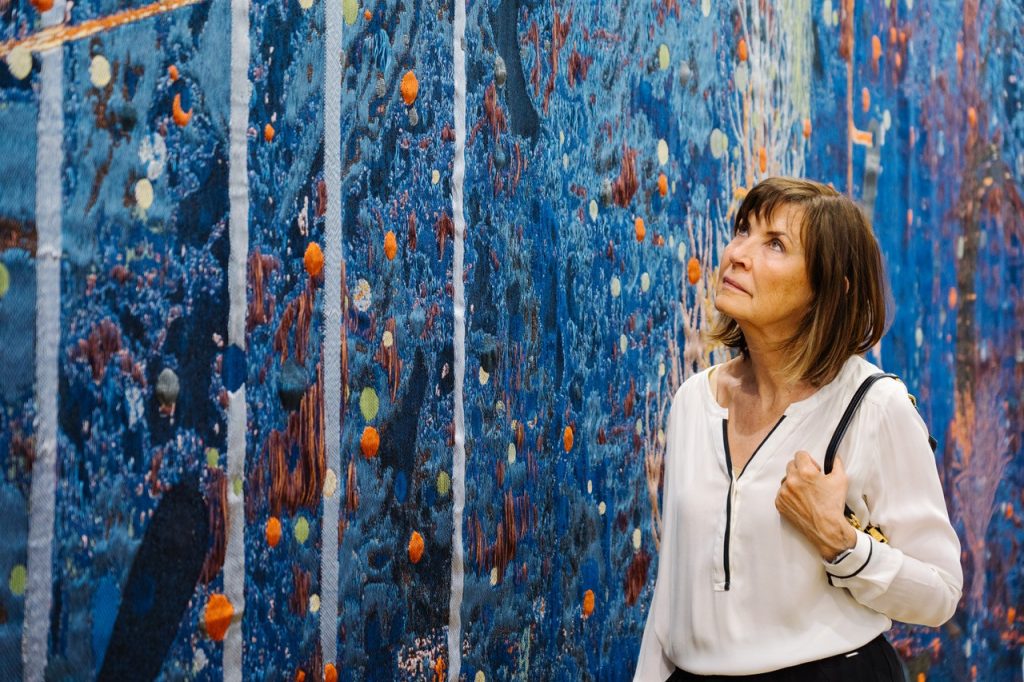
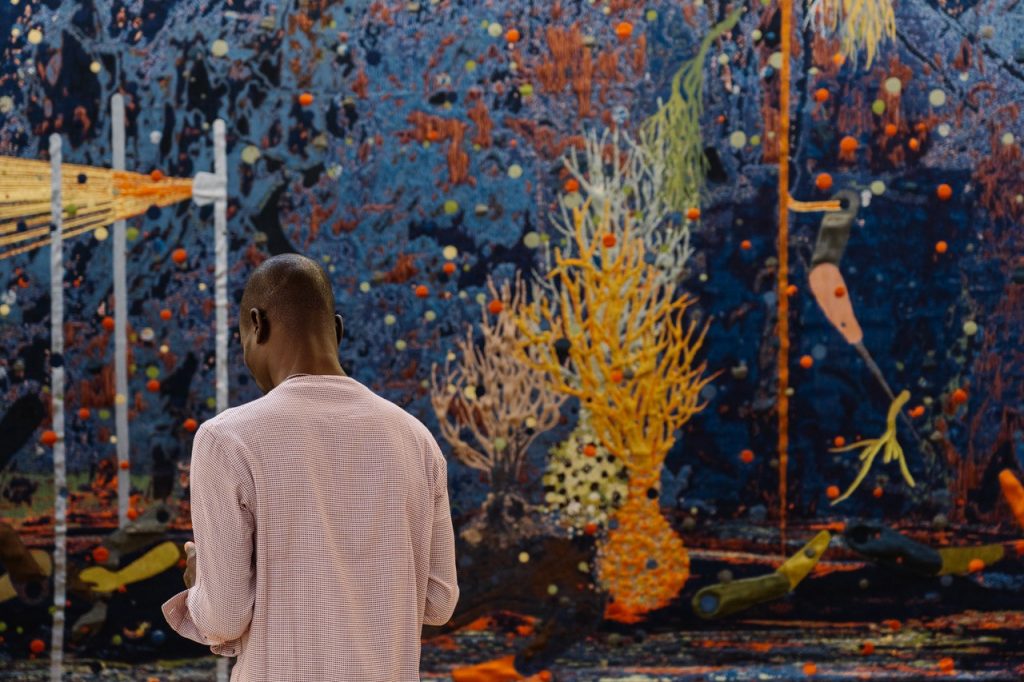
Textile plays a key role within this framework. Threads are woven together, allowing personal and collective stories to intersect. Weaving becomes a social act, based on shared contribution to a final result. A telling example is the tapestry series Unearthed (2021), which the late curator Koyo Kouoh described as “the unsung tales of the earth.” For this series, Nkanga worked with twelve different types of yarn, producing approximately 250 colours across four tapestries, Abyss, Midnight, Twilight and Sunlight, which together form a single narrative. They depict different sea levels and stages of mineral extraction, first by hand and later by machine. In these underwater worlds, anemones transform into human limbs, yarns glimmer like dumped plastic waste, and mechanical excavation arms appear to float in the endless depths of the sea. The body parts refer to the many people lost at sea, whose bodies merge with the water and turn into minerals, allowing the cycle of life to continue.
Cadence, 2024
Another impressive recent textile installation is Cadence (2024), commissioned for the atrium of MoMA, the Museum of Modern Art in New York. The work unfolds vertically through the space and uses the architecture itself as part of the installation. It is structured around the idea of a fall, like the cadence of a teardrop trickling through space. Cadencebrings together decay, mining, labour, water, plants, heat and light, showing how the underworld, the earth, the sun and outer space collapse into one another. Through layered weaving, sculptural handmade textile forms, and sound, Nkanga translates the constant rhythm of natural elements into a single continuous cadence of life.
The artist is currently showing a major retrospective at the Musée d’Art Moderne de Paris, running until 22 February 2026. She is also preparing new commissions for the 61st Venice Biennale and for the opening of the new KANAL Centre Pompidou in Brussels, soon to be the largest museum of contemporary art in Europe. Within this international trajectory, Art Rotterdam is the first stop where her latest work can be explored in the booth of Lumen Travo.
Bio
Otobong Nkanga’s practice explores the notion of land as a place of non-belonging and provides alternative meanings to the social ideas of identity. Paradoxically, she brings to light the memories and historical impacts provoked by humans and nature. A selection of recent solo exhibitions includes I Dreamt of You in Colours, Musée d’Art Moderne de Paris, Paris (runs until 22 February 2026), Each Seed a Body, Nasher Sculpture Center, Dallas (TX) (2025), Cadence, The Museum of Modern Art (MoMA), New York (2024), and Craving for Southern Light, IVAM Centre Julio González, Valencia (2023). A selection of recent group exhibitions includes Project a Black Planet, MACBA Museu d’Art Contemporani de Barcelona, Barcelona (2025), Magical Realism, WIELS centre d’art contemporain, Brussels (2025), and Blue Zone, Kunsthal Rotterdam, Rotterdam (2025). Otobong Nkanga has received several major awards, including the Nasher Prize (2025) and the Zeitz MOCAA Award for Artistic Excellence (2025).
Written by Emily van Driessen
De internationaal gerenommeerde beeldend kunstenaar Otobong Nkanga presenteert tijdens Art Rotterdam 2026 een nieuw kunstwerk op de stand van Lumen Travo (Amsterdam), in de Main Section van de kunstbeurs.
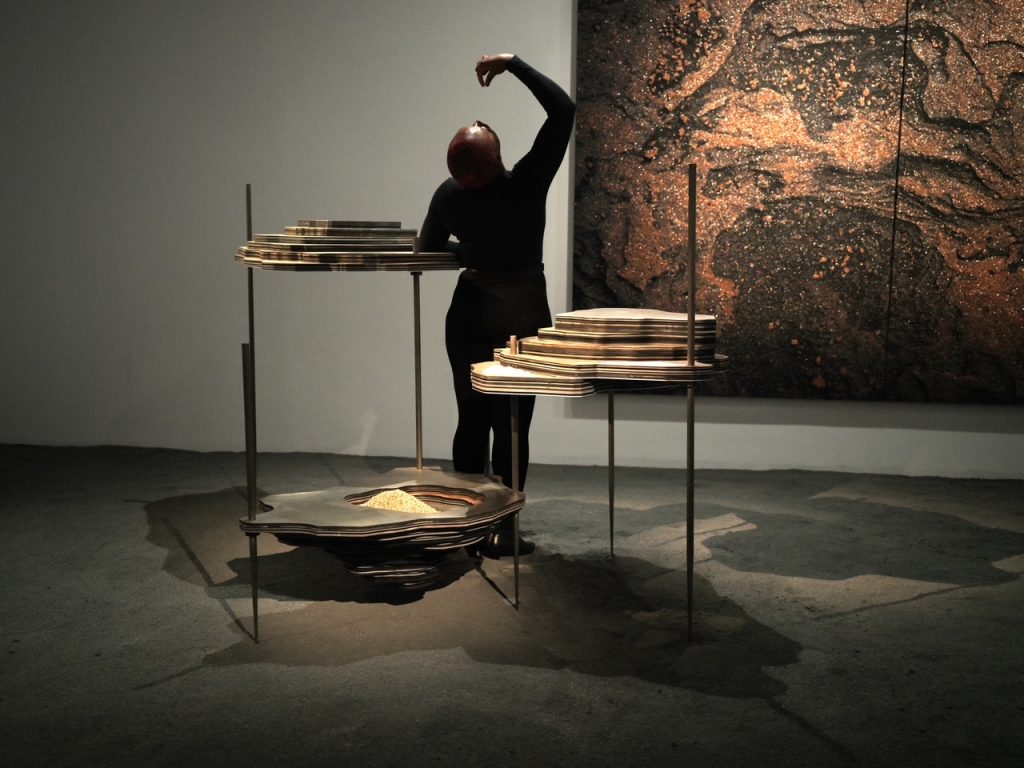
Een rode draad doorheen haar multidisciplinaire praktijk is zowel earthing en unearthing: een horizontale verankering in de verwevenheid van het menselijk bestaan met natuurlijke elementen, een lichamelijk contact met materiële realiteiten, en een poëtische poging om verminkte landschappen en zeegezichten bloot te leggen en te helen. Haar werk toont de gevolgen van de menselijke toe-eigening, exploitatie en uitputting van de elementen. Zo stromen in haar werk rivieren door de lucht of lopen ze als aders door lichamen, lijken touwen op samengevlochten haarlokken, en druipen gouden textielstromen neer als de tranen van een waterval.
Haar textielwerken, schilderijen, tekeningen, performances, installaties en videowerken behandelen vaak ongelijkwaardige culturele, economische en ecologische uitwisselingen tussen Noord en Zuid, met bijzondere aandacht voor hun impact op Afrikaanse landen. Nkanga woont en werkt in Antwerpen, maar werd geboren in Nigeria, een West-Afrikaans land dat tot 1960 onder Brits koloniaal bestuur stond.
Trade routes
Nkanga is in het bijzonder geïnteresseerd in het traceren van oude en hedendaagse handelsroutes van mineralen, specerijen, kruiden en oliën, en de verhalen die aan hun circulatie verbonden zijn. Vanaf de negentiende eeuw breidde mijnbouw zich snel uit over verschillende continenten, waarbij diepe littekens in het landschap werden geslagen en zwaar lichamelijk werk werd verricht dat een hoge menselijke tol eiste. In deze context verschijnt de aarde als iets ouds en fundamenteels voor de mensheid, maar tegelijk ook als versnipperd en geschonden.
Door deze verbanden met grondstoffen in haar werk te verweven, maken ze een poëtische verkenning van natuurlijke landschappen mogelijk. Nkanga activeert daarbij opnieuw voormalige handelsroutes tussen Zuid en Noord, terwijl ze tegelijk schade, verlies en pogingen tot herstel adresseert. Haar oeuvre is een cyclisch narratief waarin groei, uitwisseling, verval en dood leiden tot transformatie en regeneratie. Deze verhaallijnen spreken alle zintuigen aan, ook de reukzin, zoals met de scherpte van roze peper of de diepe, zoete warmte van rauwe cacaobonen. Op die manier activeert ze ook subtiel herinneringen waarvan fragmenten in het heden blijven nazinderen.
Unearthed, 2021
Textiel speelt binnen dit kader een sleutelrol. Draden worden met elkaar verweven en laten persoonlijke en collectieve verhalen in elkaar zakken. Weven wordt een sociale handeling, gebaseerd op een gedeelde bijdrage aan een gezamenlijk resultaat. Een sprekend voorbeeld is de tapijtenreeks Unearthed (2021), die door de overleden curator Koyo Kouoh werd omschreven als “the unsung tales of the earth”. Voor deze reeks werkte Nkanga met twaalf verschillende soorten garen en produceerde ze ongeveer 250 kleuren, verspreid over vier tapijten, Abyss, Midnight, Twilight en Sunlight, die samen één doorlopend verhaal vormen. Ze tonen verschillende zeeniveaus en stadia van minerale ontginning, eerst met de hand en later machinaal. In deze onderwaterwerelden transformeren anemonen in menselijke ledematen, glanzen garens als gedumpt plastic afval en lijken mechanische graafarmen te zweven in de eindeloze dieptes van de zee. De lichaamsdelen verwijzen naar de vele mensen die op zee zijn omgekomen, wier lichamen samensmelten met het water en in mineralen veranderen, waardoor de levenscyclus kan worden voortgezet.
Cadence, 2024
Een andere indrukwekkende recente textielinstallatie is Cadence (2024), in opdracht gemaakt voor het atrium van het MoMA, Museum of Modern Art in New York. Het werk ontplooit zich verticaal door de ruimte en betrekt de architectuur actief in de installatie. Het is opgebouwd rond het idee van een val, zoals het ritme van een traan die door de ruimte naar beneden sijpelt. Cadence brengt verval, mijnbouw, arbeid, water, planten, warmte en licht samen en toont hoe de onderwereld, de aarde, de zon en de kosmos in elkaar overvloeien. Via gelaagd weefwerk, sculpturale handgemaakte textielvormen en geluid vertaalt Nkanga het constante ritme van natuurlijke elementen in één doorlopende cadans van het leven.
De kunstenaar presenteert momenteel een grote retrospectieve in het Musée d’Art Moderne de Paris, die loopt tot 22 februari 2026. Daarnaast bereidt ze nieuwe opdrachten voor voor de 61ste Biënnale van Venetië en voor de opening van het nieuwe KANAL Centre Pompidou in Brussel, dat binnenkort het grootste museum voor hedendaagse kunst van Europa zal worden. Binnen dit internationale traject is Art Rotterdam de eerste plek waar haar nieuwste werk te zien is, op de stand van Lumen Travo.
Bio
De praktijk van Otobong Nkanga onderzoekt het begrip land als een plek van niet-toebehoren en reikt alternatieve betekenissen aan voor gangbare sociale ideeën over identiteit. Paradoxaal genoeg brengt ze daarbij herinneringen en historische impact aan het licht die zowel door de mens als door de natuur zijn veroorzaakt. Een selectie van recente solotentoonstellingen omvat I Dreamt of You in Colours, Musée d’Art Moderne de Paris, Parijs (te zien tot 22 februari 2026), Each Seed a Body, Nasher Sculpture Center, Dallas (TX) (2025), Cadence, The Museum of Modern Art (MoMA), New York (2024), en Craving for Southern Light, IVAM Centre Julio González, Valencia (2023). Recente groepstentoonstellingen zijn onder meer Project a Black Planet, MACBA Museu d’Art Contemporani de Barcelona, Barcelona (2025), Magical Realism, WIELS centrum voor hedendaagse kunst, Brussel (2025), en Blue Zone, Kunsthal Rotterdam, Rotterdam (2025). Otobong Nkanga ontving verschillende belangrijke prijzen, waaronder de Nasher Prize (2025) en de Zeitz MOCAA Award for Artistic Excellence (2025).
Geschreven door Emily van Driessen
What do our ancestors tell us, and what do we ourselves wish to pass on to future generations? These are the questions that occupy the artist Samboleap Tol (b. 1990, the Netherlands) and that materialise within her visual practice. She is one of the 92 emerging artists who recently received an artist start grant from the Mondriaan Fund, and also received a residency grant. With this support, she developed Dharma Songs (2023), Cosmic Tortoise (2024) and Starlight (2025). This latest work, a new kinetic sculpture that builds on her research into ancestral veneration, is presented in the Prospects section of Art Rotterdam 2026.
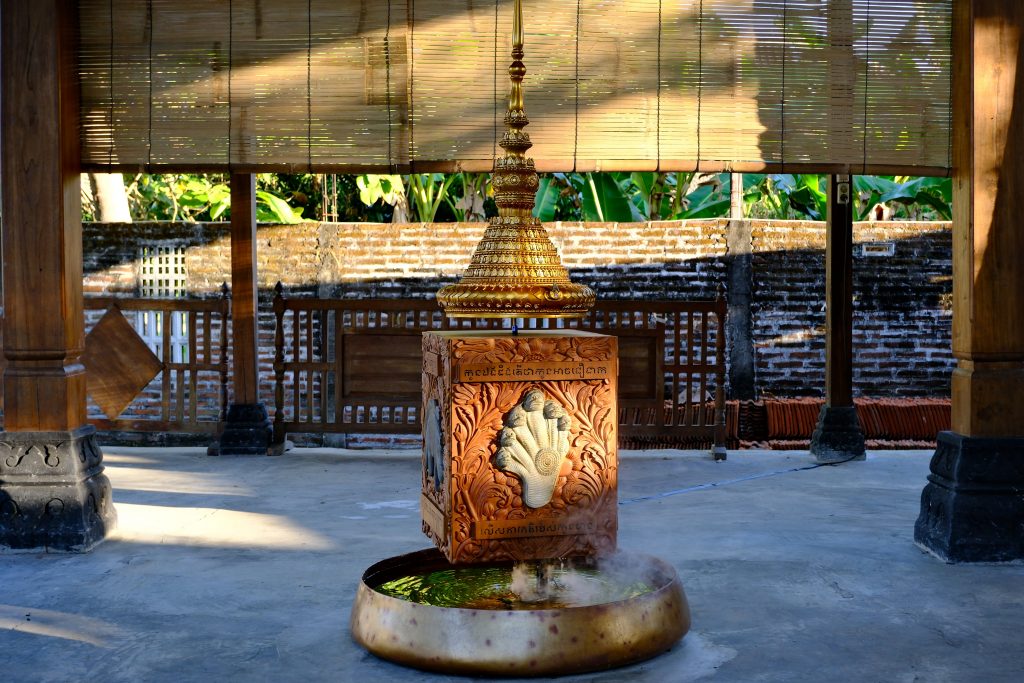
Samboleap grew up in the Netherlands with Cambodian parents who lived through the genocide under the Khmer Rouge. Her family history is at once deeply rooted in the broader history of the Cambodian community, marked by untold stories and unresolved trauma. She experienced how this background shaped her own life and noticed that peers from various communities across the Global South struggled with similar unanswered questions.
Her artistic practice departs from the community and ultimately returns to it. Through extensive conversations with people, she gathers insights into shared rituals, cultural customs and mythological origins that have gradually faded into the background. She then unravels these references in kinetic sculptures.
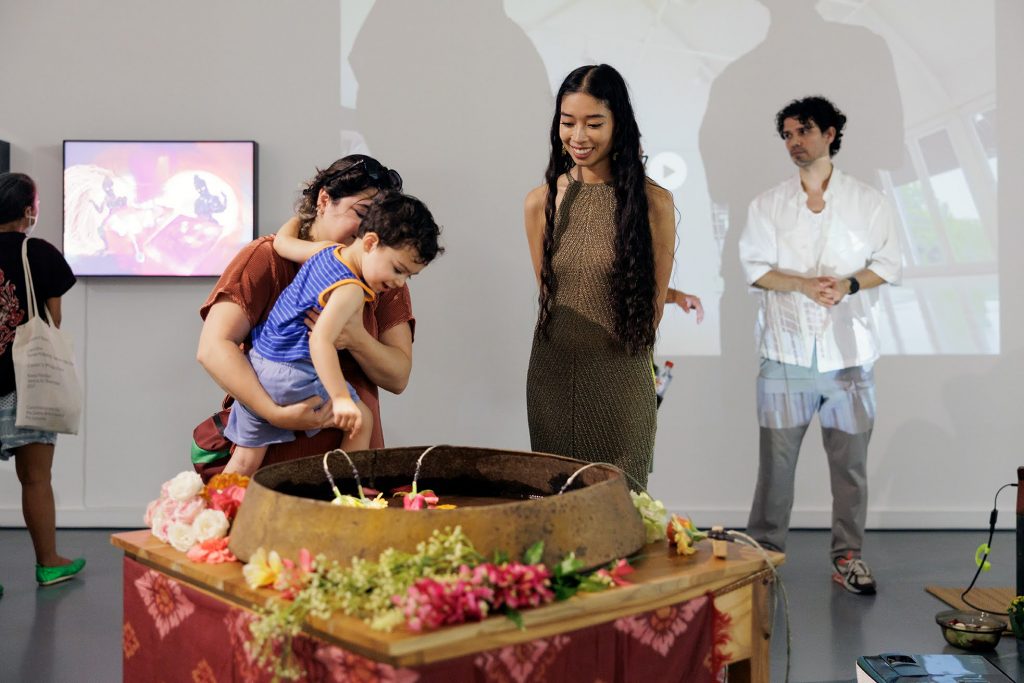
“I think that as a child, I mainly encountered art through the community,” Samboleap explains. “Uncles and aunts putting on costumes and, through dance or theatre, telling a mythological story. I do not associate art so much with objects in a sterile, static museum with a single grand author and one-way communication. In my experience, art is alive. It has a rhythm, a narrative. And that narrative adapts to where we are.”
This sense of vitality is also reflected formally. In addition to being interactive and communicative, her sculptures are often mechanical and musical. She draws inspiration from her father, an engineer whose inventions filled the living space, and from music, which during her formative years took her by the hand like a companion.
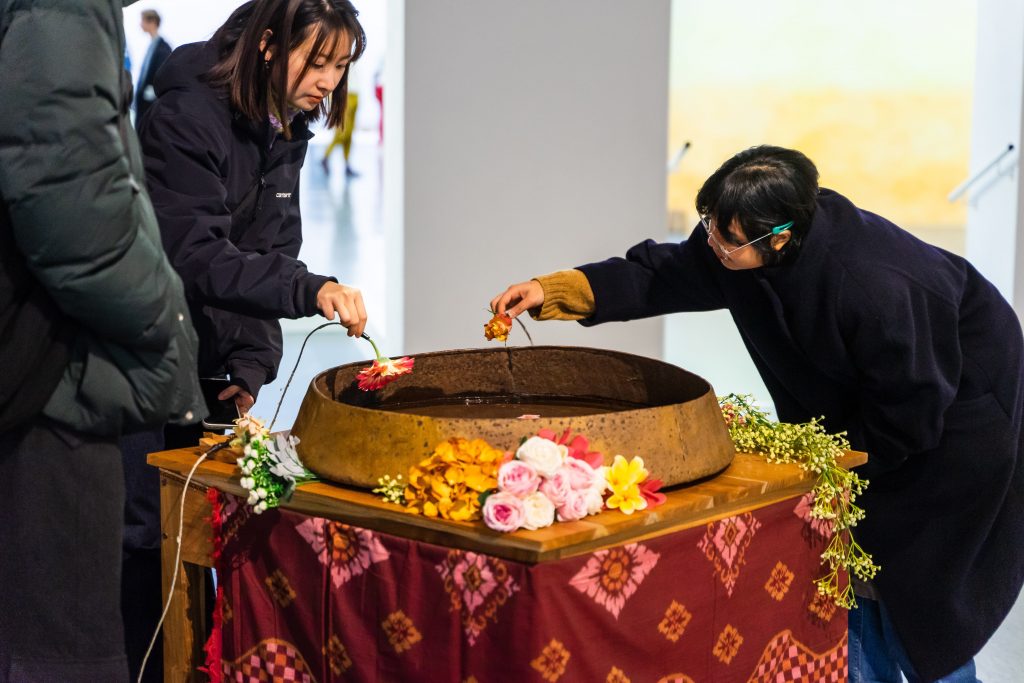
In that same spirit, Samboleap Tol describes how celebrations and commemorations within her community were a natural part of her life from an early age and now permeate her work. For instance, the dead are remembered by preparing food for them, and temples are honoured by placing flowers there. At the same time, there was an underlying awareness that these rituals were not always explained and that traumatic histories were not addressed. “As a child, your parents are a reflection of yourself. You use them very much as a mirror. But if you only receive part of the story, that is harmful to your health.”
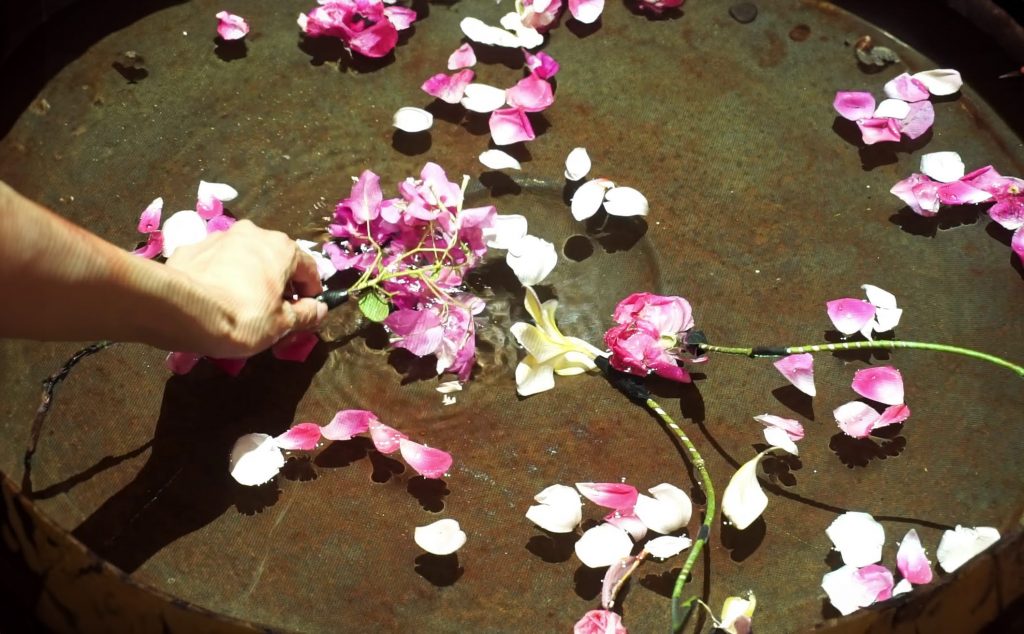
This absence was gradually, in part, filled by friends and mentors who had grown up with similar silences. From that search emerged Dharma Songs (2023), a series of interactive sound installations. “You are invited to place flowers in the water. At that moment, voices begin to speak from a hidden loudspeaker. I asked close friends and family members from diverse cultural backgrounds to respond to a question: if you could ask or tell your ancestors one last thing, what would it be?” The sculpture draws on a shared cultural heritage of ancestral veneration and offers space for the generational lack of connection with ancestors.
Thanks to the support of the Mondriaan Fund, Samboleap was given the opportunity to further explore her roots and to broaden her practice geographically and historically. She explains how she has always strongly associated herself with the Indonesian diasporas in the Netherlands, which felt to her like a parallel world. This led her to Yogyakarta, where conversations with historians increasingly clarified how closely the historical lines between Java and Cambodia are intertwined. “They refer to this as Purāṇic motifs, derived from the Purāṇas, ancient Indian mythological texts. From around the 5th to the 15th century, India exerted a tremendous influence on both Java and Cambodia, which remains visible in temples and palpable in cultural practices, despite the fact that neither place has practised Hinduism for over 500 years. We are both proud of the great temples in our back gardens, yet we actually know too little about their origins and motifs,” she explains. Samboleap now shares this accumulated knowledge through lecture performances, research articles and her visual work.
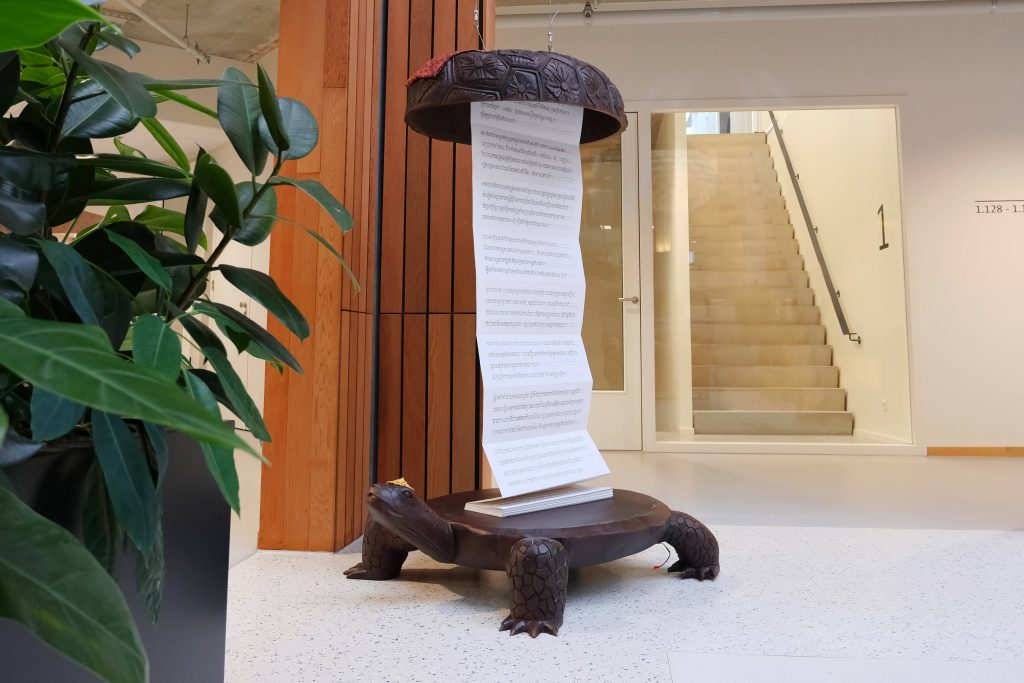
In Cosmic Tortoise (2024), Samboleap Tol returns to a myth in which the divine figure Vishnu assumes the form of a tortoise. The sculpture was created in collaboration with a large network of makers and cultural researchers with whom she has continued to work since her stay in Yogyakarta. “There were around forty people involved. I speak little Indonesian, and they often do not speak English. So it was often a matter of explaining things with hands and feet,” she laughs. The result is a mechanically moving tortoise made of teak wood. “When you press a button, the shell lifts up and a book appears that opens along a vertical line, while a voice begins to sing. I wrote the text for the book myself and had it translated by translators in Cambodia, into Khmer.”
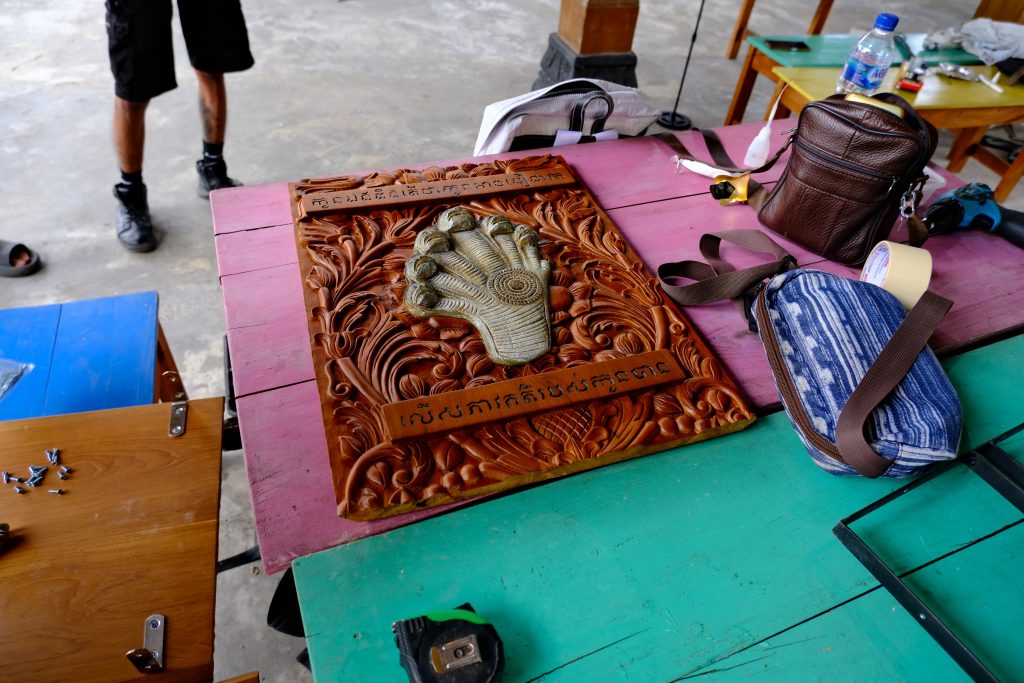
In the Prospects section of Art Rotterdam, Samboleap Tol presents her latest work Starlight (2025), which likewise emerged from an intensive collaborative process involving dozens of skilled practitioners. The central element of the kinetic sculpture consists of wood engravings, made in collaboration with a teak wood carver from Jepara, North Java, a city with a long tradition of woodcarving shaped by Indianisation, Islamisation and also Dutch influence.
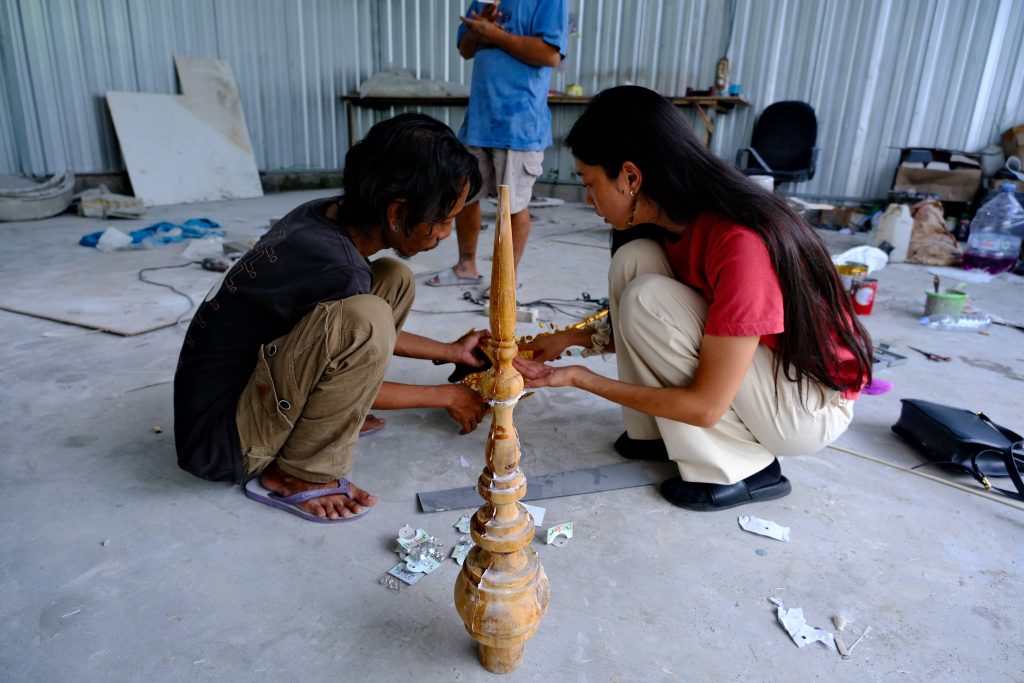
The origin of Starlight, however, is explicitly personal: “I lost my father during the Covid period. Only my mother was allowed to attend the funeral, so I followed everything online via a Facebook video. It was a pixelated experience that kept imposing itself over the years. I noticed that I still had painful feelings about it and that I wanted to do something with them. Starlight became a form of therapeutic processing.”
The form that imposed itself was that of the top of the cremation pavilion, an architectural element shaped like a crown. She discovered that this refers to Mount Meru, a mythical cosmic mountain in Hinduism and Buddhism that has been described for thousands of years in Purāṇic stories. At the same time, she learned that Cambodian dancers wear a similar crown, called a makhut. “A Belgian-Cambodian friend told me that this crown is made of gold so that dancers can be in communication with the heavens. Gold conducts energy well and functions as a kind of antenna.”
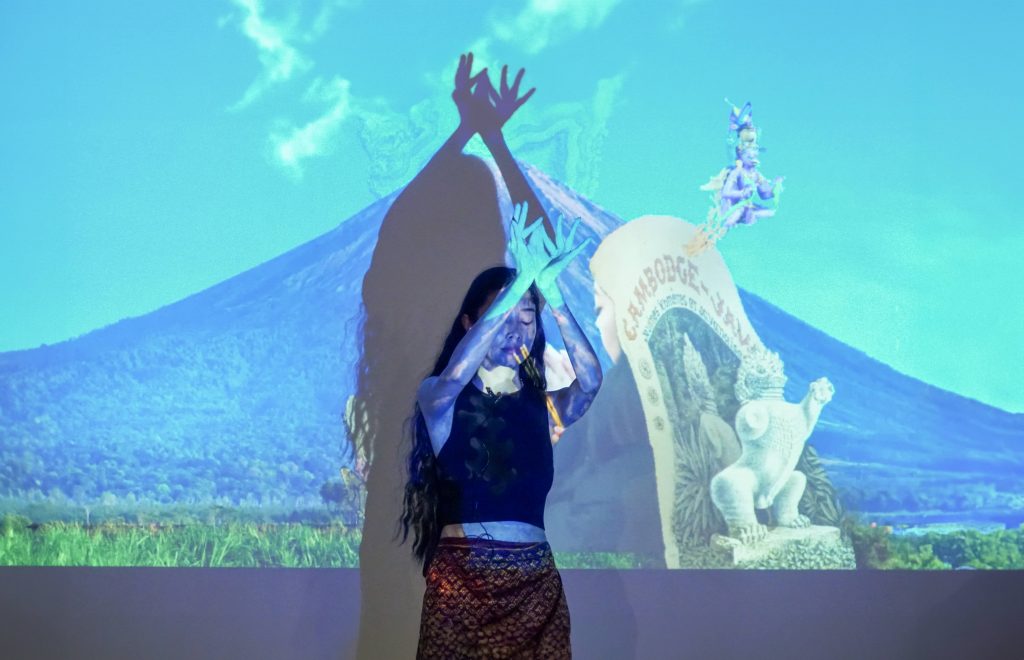
It is as if the development of her visual practice over recent years comes together in her latest work Starlight. In Dharma Songs, Samboleap Tol adopts a caring stance together with friends and family by turning towards the past and addressing questions to ancestors, even when answers remain absent. In Cosmic Tortoise, she connects this care to a longer timeline, through the mythological story of Vishnu, which points to continuity through time. With Starlight, Samboleap Tol explicitly turns towards the future. She asks those closest to her what advice they wish to pass on to future generations. Their words form part of the sculpture and can be discovered in the Prospects section during Art Rotterdam.
Written by Emily van Driessen
Wat vertellen onze voorouders ons, en wat willen we zelf meegeven aan de volgende generaties? Het zijn vragen die kunstenaar Samboleap Tol (1990, Nederland) bezighouden en die zich materialiseren in haar beeldende praktijk. Ze is één van de 92 startende kunstenaars die recent een kunstenaarsstartbeurs ontvingen van het Mondriaan Fonds, en kreeg daarnaast ook een residentie beurs. Met die ondersteuning ontwikkelde ze Dharma Songs (2023), Cosmic Tortoise (2024) en Starlight (2025). Dat laatste werk, een nieuwe kinetische sculptuur die voortbouwt op haar onderzoek naar voorouderlijke verering, is te zien in de Prospects-sectie van Art Rotterdam 2026.
Samboleap groeide op in Nederland met Cambodjaanse ouders die de genocide onder de Rode Khmer meemaakten. Haar familiegeschiedenis is tegelijkertijd diep verankerd in de bredere Cambodjaanse gemeenschapsgeschiedenis met onvertelde verhalen en onverwerkt trauma. Ze ervoer hoe die achtergrond haar eigen leven beïnvloedde en merkte dat generatiegenoten uit allerlei gemeenschappen van het globale zuiden met gelijkaardige onbeantwoorde vragen worstelden.
Haar kunstpraktijk vertrekt vanuit de gemeenschap en keert er ook naar terug. Door uitvoerig met mensen in gesprek te gaan, verzamelt ze inzichten in gedeelde rituelen, culturele gebruiken en mythologische oorsprongen die gaandeweg naar de achtergrond zijn verdwenen. Die referenties ontrafelt ze in kinetische sculpturen.
“Ik denk dat ik in mijn jeugd kunst vooral vanuit de gemeenschap heb meegemaakt”, vertelt Samboleap. “Ooms en tantes die een kostuum aantrekken en met dans of theater een mythologisch verhaal vertellen. Ik associeer kunst niet zozeer met dingen in een steriel, statisch museum met één grote maker en eenzijdige communicatie. In mijn beleving leeft kunst. Het heeft een ritme, een verhaal. En dat verhaal past zich aan aan waar we ons bevinden.”
Die levendigheid vertaalt zich ook formeel. Naast interactief en communicatief zijn haar sculpturen vaak mechanisch en muzikaal. Ze haalt daarbij inspiratie uit haar vader, een ingenieur wiens uitvindingen de leefruimte vulden, en uit muziek, dat tijdens haar formatieve jaren, zoals een kameraadje, haar bij de hand nam.
In diezelfde geest beschrijft Samboleap Tol hoe vieringen en herdenkingen binnen haar gemeenschap al van jongs af aan een vanzelfsprekend onderdeel van haar leven waren en nu doorsijpelen in haar werk. Bijvoorbeeld de doden worden herdacht door hen eten te bereiden en tempels worden geëerd door er bloemen bij neer te leggen. Tegelijk was er het nakende besef dat die rituelen niet altijd werden verklaard of traumatische voorgeschiedenis niet werd aangekaart. “Als kind zijn je ouders een reflectie van jezelf. Je gebruikt hen heel erg als spiegel. Maar als je maar een deel van het verhaal meekrijgt, dan is dat schadelijk voor je gezondheid.”
Die lacune werd gaandeweg deels opgevuld door vrienden en mentoren die met gelijkaardige stiltes waren opgegroeid. Uit die zoektocht ontstond Dharma Songs (2023), een reeks interactieve geluidsinstallaties. “Je wordt uitgenodigd om bloemen in het water te leggen. Op dat moment beginnen stemmen uit een verborgen luidspreker te spreken. Ik vroeg aan naaste vrienden en familieleden met uiteenlopende culturele achtergronden om te reageren op een vraag: als je nog één ding aan je voorouders zou mogen vragen of vertellen, wat zou dat dan zijn?” De sculptuur vertrekt vanuit een gedeeld cultureel erfgoed van voorouderlijke verering en biedt ruimte aan het generationele gemis aan verbinding met voorouders.
Dankzij de ondersteuning van het Mondriaan Fonds kreeg Samboleap de ruimte om haar roots verder te verkennen en haar praktijk geografisch en historisch te verbreden. Ze vertelt hoe ze zich altijd sterk heeft geassocieerd met de Indonesische diaspora’s in Nederland, die voor haar aanvoelde als een parallelle wereld. Dat leidde haar naar Yogyakarta, waar gesprekken met historici steeds duidelijker maakten hoe nauw de historische lijnen tussen Java en Cambodja met elkaar verweven zijn. “Zij noemen dat Purāṇische motieven, afkomstig uit de Purāṇa’s, oude Indiase mythologische teksten. India had vanaf ongeveer de 5de eeuw tot en met de 15de eeuw, een enorme invloed op zowel Java als Cambodja die nu nog steeds zichtbaar is in tempels en voelbaar in culturele gebruiken, ondanks het feit dat beide plekken al 500 jaar geen hindoeïstische religie meer praktiseren. We zijn allebei trots op de grote tempels in onze achtertuin, maar we weten eigenlijk te weinig van hun oorsprong en motieven,” vertelt ze. Die vergaarde kennis deelt Samboleap nu via lecture performances, onderzoeksartikelen en haar beeldende werk.
In Cosmic Tortoise (2024) grijpt Samboleap Tol terug naar een mythe waarin het goddelijk figuur Vishnu de gedaante van een schildpad aanneemt. De sculptuur ontstond in samenwerking met een groot netwerk van makers en culturele onderzoekers met wie ze sinds haar verblijf in Yogyakarta blijft samenwerken. “Er waren zo’n veertig mensen betrokken. Ik spreek weinig Indonesisch, en zij vaak geen Engels. Dus het was vaak uitleggen met handen en voeten,” lacht ze. Het resultaat is een mechanisch bewegende schildpad uit teakhout. “Wanneer je op een knop drukt, tilt het schild zich op en verschijnt er een boek dat zich opent in een verticale lijn, terwijl een stem begint te zingen. Ik schreef de tekst voor het boek zelf en liet ze vertalen door vertalers in Cambodja, in het Khmer.”
In de Prospects-sectie van Art Rotterdam toont Samboleap Tol haar nieuwste werk Starlight (2025), dat eveneens voortkomt uit een intens collaboratief proces met tientallen vakmensen. Het centrale element van de kinetische sculptuur bestaat uit houtgravures, gemaakt in samenwerking met een teakhoutsnijder uit Jepara, Noord-Java, een stad met een lange traditie in houtsnijkunst, gevormd door indianisering, islamisering en ook vernederlandsing.
De oorsprong van Starlight is echter uitgesproken persoonlijk: “Ik verloor mijn vader tijdens de coronaperiode. Enkel mijn moeder mocht de begrafenis bijwonen dus ik volgde alles online via een Facebook-video. Het was een gepixelde ervaring die zich over de jaren heen bleef opdringen. Ik merkte dat ik er nog steeds nare gevoelens bij had en dat ik er iets mee wilde doen. Starlight werd een vorm van therapeutische verwerking.”
De vorm die zich opdrong was die van de top van het crematiepaviljoen, een architecturaal element in de vorm van een kroon. Ze ontdekte dat die verwijst naar Mount Meru, een mythische kosmische berg in hindoeïsme en boeddhisme die al duizenden jaren beschreven werd in Purāṇische verhalen. Tegelijk leerde ze dat Cambodjaanse dansers een gelijkaardige kroon dragen, genaamd ‘makhut’. “Een Belgisch-Cambodjaanse vriend vertelde me dat die kroon van goud wordt gemaakt zodat dansers in communicatie kunnen staan met de hemelen. Goud kan energie goed geleiden en fungeert als een soort antenne.”
Het is alsof de ontwikkeling van haar beeldende praktijk van de afgelopen jaren samenkomt in haar nieuwste werk Starlight. In Dharma Songs neemt Samboleap Tol samen met vrienden en familie een zorgende houding aan door zich te richten tot het verleden en vragen te stellen aan voorouders, ook wanneer antwoorden uitblijven. In Cosmic Tortoise verbindt ze die zorg aan een langere tijdslijn, via het mythologische verhaal van Vishnu, dat verwijst naar continuïteit doorheen de tijd. Met Starlight richt Samboleap Tol zich expliciet op de toekomst. Ze vraagt haar directe omgeving welke adviezen zij willen meegeven aan de komende generaties. Hun woorden maken deel uit van de sculptuur, en kan je ontdekken in de Prospects-sectie tijdens Art Rotterdam.
Geschreven door Emily van Driessen
Developments in AI and biotechnology are progressing at lightning speed. How do they affect our understanding of life, individuality and identity? These are major questions and precisely what leading Japanese artist Meiro Koizumi is famous for addressing.
In his work, he explores such themes as nationalism, power relations and the role played by collective memory in shaping our behaviour. He links these subjects to questions about the position of the human body in a world that is increasingly unfolding online, where technology plays an ever more dominant role.
As mentioned above, these are substantial themes, making it all the more impressive that Koizumi’s work remains accessible and easy to grasp, from drawings and photographs to video installations and sculptures. This is partly due to his working method. While talking about Altars, his new series of sculptures, he explains that they are the result of a series of intuitive actions. “The sum of all these intuitive actions creates a work that transcends words and concepts and speaks directly to our instincts.”
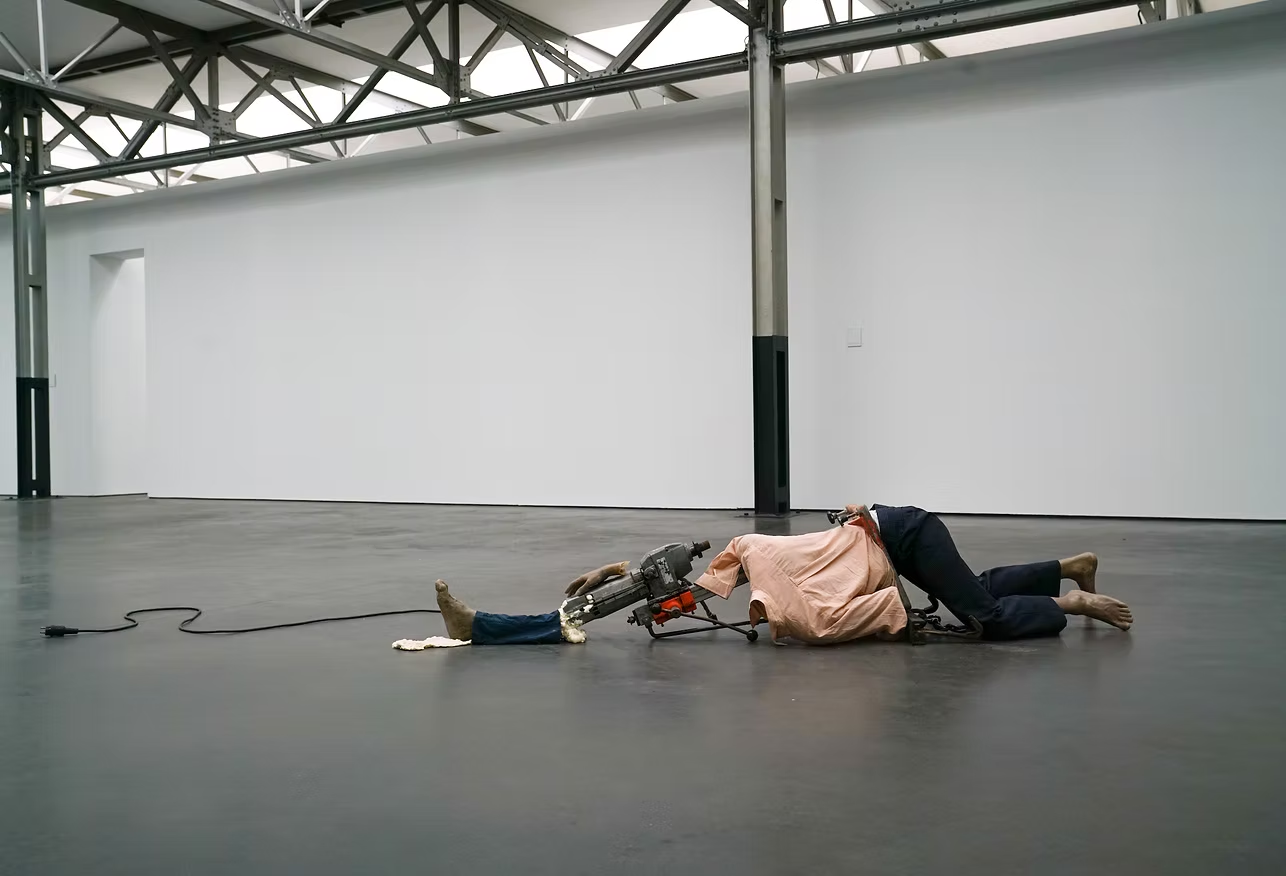
You can find out for yourself, as the recent sculpture BOR (2024) is currently displayed at Sculpture Park. Meiro Koizumi is represented by Galerie Annet Gelink.
Meiro Koizumi (Japan, 1974) lives and works in Yokohama, Japan. But it’s no coincidence that his work is being shown in the Netherlands. His relationship with the country now spans more than 20 years. After studying in Tokyo and London, he was a resident at the Rijksakademie in Amsterdam between 2005 and 2006. In his broad practice, Koizumi looks both to the future and the past, with such recurring elements as power relations, technology and collective memory.
Good Machine Bad Machine
After returning to Japan following his time at the Rijksakademie, he was able to view his homeland with fresh eyes. He noticed how the national mood had shifted. “Our economy was stagnating and the population began to shrink, while China was growing, South Korea was performing well and North Korea is located right next to us. Our self-confidence seemed to have taken a blow.”
He keenly observed how issues that had once been highly sensitive, such as displays of the national flag, celebrating the emperor’s birthday and calls for a national army, suddenly found fertile ground. This sentiment accelerated after the Fukushima disaster in 2011. Symbols can survive natural disasters, as they offer something to hold onto when everything around you is collapsing, both literally and figuratively.
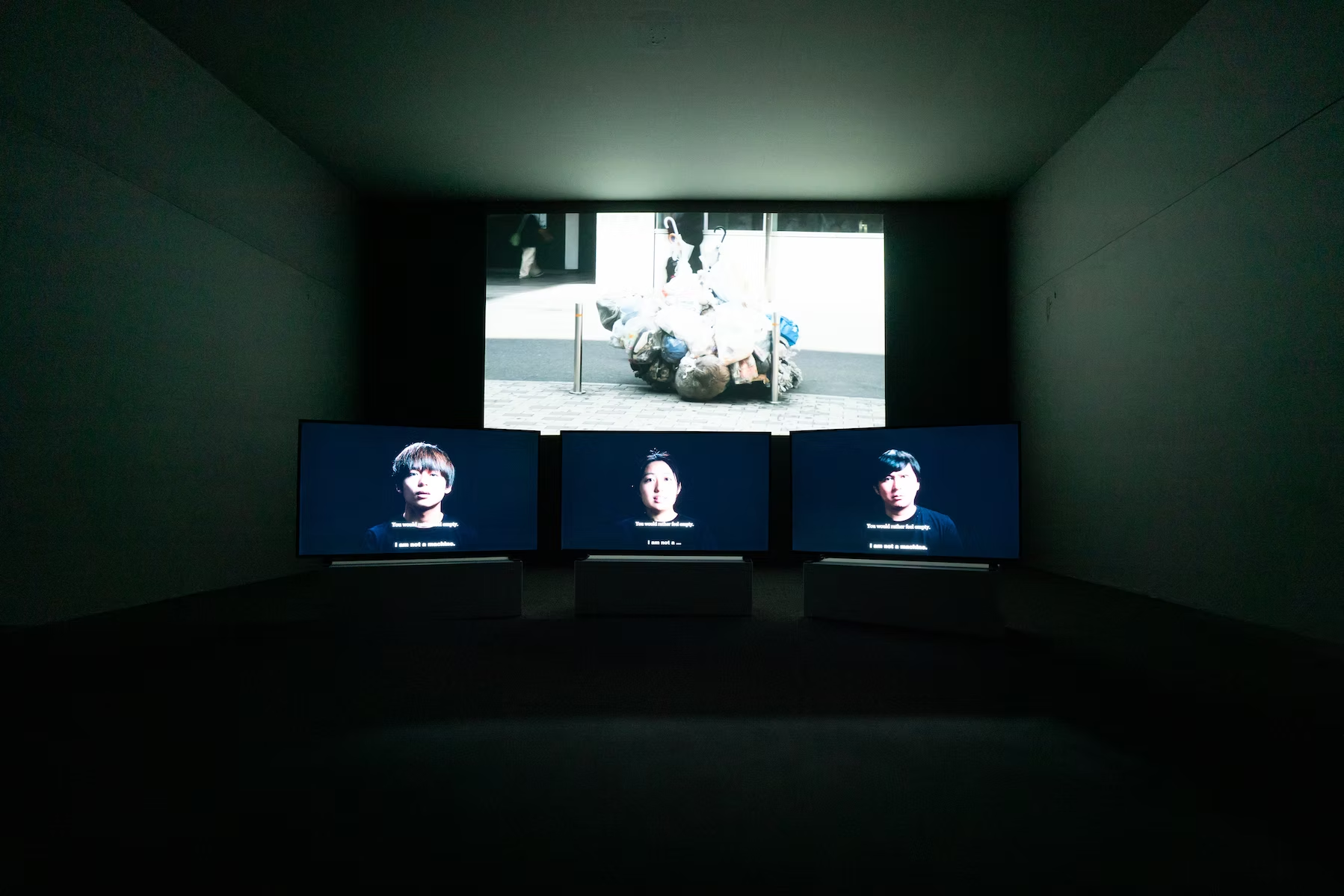
For 11 years, Meiro Koizumi filmed nationalist demonstrations. This resulted in the video installation Good Machine Bad Machine (2023). At the front, we see hypnotised actors uttering words and short phrases while moving through the full emotional spectrum, from fear and anger to happiness and enthusiasm. Behind them, we see footage of the demonstrations. By presenting these films simultaneously, Koizumi questions the extent to which we are truly in control of our own emotions. Do we consciously choose to become outraged about certain issues or are we fuelled by technology and unconsciously influenced by propaganda?

Soluble Meat
In the recent film, Soluble Meat (2025), the tension between technological progress and the loss of free will resurfaces. Again, he links the theme to our subconscious. Koizumi created Soluble Meat using the AI programme Luma Dream Machine. He fed the AI archival footage of hypnosis sessions and entered the prompt: “This is a tragic film about people who are losing their free will.”
He then repeatedly reinserted the image generated by the algorithm back into the programme, each time with the same prompt. By repeating this process every five seconds, a film emerged in which incomprehensible events slowly unfold. The scenes are recognisable yet dreamlike, creating an uncanny atmosphere. The video was subsequently entered into Google Gemini to generate the voice-over.
Although Koizumi considers the film an AI stream of consciousness, he emphasises that there is always a human behind the controls. Soluble Meat not only echoes the automatic writing of the Surrealists; it also demonstrates that our subconscious is influenced not only by memory and imagination, but now also by algorithms.
In limbo
With the series Altars, Koizumi shifts the question of technological influence from the mental to the physical domain. At Sculpture Park, BOR (2024) is on display, a sculpture featuring a lower torso on one side and on the other, a single leg and detached hand. Between them is a column drill. It appears as if the human body has been fed through a shredder and emerged in smaller fragments.
That is precisely the point Koizumi wishes to make. As our social lives increasingly unfold in the digital realm, our awareness of the physical body starts to fade. Last year at Museum De Pont, the Altars hung helplessly from chains, suspended between the real and the virtual in a limbo state that was neither human nor machine.
“What I find dangerous about this development is the tendency to treat living beings as objects. There is a potential for violence here,” says Koizumi. “The challenge is how we can rescue warm-bodied humans from this limbo. I consider that my life’s work.”

“The idea of connecting humans with machines has existed for 200 years – Frankenstein, for example, is now two centuries old. Yet a sculpture of a lower body topped with an engine block still creates a glitch in our brains. Our survival instincts are triggered by a sense of danger.”
Since his time at the Rijksakademie, Meiro Koizumi has been represented by Galerie Annet Gelink, where he has held seven solo exhibitions. His work is included in the collections of the Museum of Contemporary Art Tokyo, Museum of Modern Art, Tate, Kadist Art Foundation, Stedelijk Museum Amsterdam and Museum Boijmans Van Beuningen. Last year, he presented a retrospective exhibition at Museum De Pont in Tilburg in the Netherlands.
Written by Wouter van den Eijkel
De ontwikkelingen in AI en de biotechnologie gaan razendsnel. Hoe beïnvloeden die ons begrip van het leven, onze individualiteit en identiteit? Het zijn grote vragen, maar daar staat de vooraanstaande Japanse kunstenaar Meiro Koizumi om bekend.
In zijn werk onderzoekt hij thema’s als nationalisme, machtsverhoudingen en de rol die het collectief geheugen speelt in ons gedrag. Deze onderwerpen koppelt hij aan vragen over de plek die het menselijk lichaam inneemt in een wereld die steeds zich steeds meer online afspeelt en waarin technologie een steeds dominantere rol speelt.
Zoals gezegd: het zijn grote onderwerpen, des te knapper is het dat Koizumi’s werk toegankelijk en goed te begrijpen is, of het nu om zijn tekeningen, foto’s, video-installaties of sculpturen gaat. Deels komt dat door zijn werkwijze. Over Altars, zijn nieuwe serie sculpturen zegt hij dat ze het resultaat zijn van een reeks intuïtieve handelingen. ‘De optelsom van al die intuïtieve handelingen is een werk dat woorden en concepten overstijgt en direct onze instincten aanspreekt.’
Oordeel zelf, want in Sculpture Park is de recente sculptuur BOR (2024). Meiro Koizumi wordt vertegenwoordigd door Galerie Annet Gelink.
Meiro Koizumi (Japan, 1974) woont en werkt in Yokohama, Japan. Toch is het geen toeval dat zijn werk in Nederland te zien is. Zijn relatie met ons land gaat inmiddels ruim twintig jaar terug. Na in Tokyo en Londen te hebben gestudeerd, was hij tussen 2005 en 2006 resident aan de Rijksakademie in Amsterdam. In zijn brede praktijk kijkt Koizumi zowel naar de toekomst als naar het verleden. In beide gevallen keren de vaste ingrediënten machtsverhoudingen, technologie en collectief geheugen keren terug.
Good Machine Bad Machine
Toen hij na de Rijksakademie terugkeerde naar Japan kon hij zijn vaderland met een vers paar ogen bekijken. Hij ervoer hoe de stemming in het land was veranderd. “Onze economie stagneerde en de bevolking begon te krimpen, terwijl China opkwam, Zuid-Korea het goed deed en Noord-Korea naast ons ligt. Het zelfvertrouwen leek een deuk te hebben opgelopen.”
Hij observeerde scherp hoe zaken die voorheen heel gevoelig lagen, zoals vlagvertoon, het vieren van de verjaardag van de keizer en de roep om een leger, ineens in vruchtbare aarde vielen. Dat sentiment nam een vlucht na de ramp bij Fukushima in 2011. Symbolen zijn immer ook bestand tegen natuurrampen, je kan erop teruggrijpen als de om je heen letterlijk en figuurlijk ineenstort.
Elf jaar lang filmde Koizumi nationalistische demonstraties. Het resulteerde in de video-installatie Good Machine Bad Machine (2023). Vooraan zien we gehypnotiseerde acteurs woorden en korte zinnetjes uitspreken en daarbij het complete emotionele register doorlopen: van bang en boos tot blij en opgewekt. Daar achter zien we opnamen van de demonstraties. Door deze films tegelijk te tonen, werpt Koizumi de vraag opwerpt in hoeverre we meester zijn van onze eigen emoties. Kiezen we er bewust voor ons op te winden over bepaalde zaken of worden we gevoed door technologie en laten we ons onbewust ook leiden door propaganda?
Soluble Meat
In de recente film Soluble Meat (2025) duikt de tegenstelling tussen technologische vooruitgang en het verlies van vrije wil ook op. Ook hier koppelt hij het aan ons onderbewustzijn. Koizumi creëerde Soluble Meat met behulp van het AI-programma Luma Dream Machine. Hij voedde de AI archiefbeelden van hypnosesessies en gaf de prompt: “This is a tragic film about people who are losing their free will”.
Vervolgens voerde hij het beeld dat door het algoritme werd gegenereerd telkens opnieuw in het programma in, telkens met dezelfde prompt. Door dit proces elke vijf seconden te herhalen, ontstond een film waarin onbegrijpelijke gebeurtenissen zich langzaam ontvouwen. De scènes zijn herkenbaar, maar tegelijk droomachtig en roepen een unheimische sfeer op.
De video werd daarna ingevoerd in Google Gemini om de voice-over te genereren. Hoewel Koizumi de film beschouwt als een AI-stream of consciousness, benadrukt hij dat er altijd een mens achter de knoppen zit. Soluble Meat niet alleen het automatisch schrijven van Surrealisten. Het laat ook zien dat ons onderbewuste niet alleen wordt bespeeld door onze herinneringen en verbeelding, maar inmiddels ook door algoritmen.
In limbo
Met de serie Altars verlegt Koizumi het vraagstuk van beïnvloeding door technologie van het mentale naar het fysieke domein. In Sculpture Park is BOR (2024) te zien, een sculptuur met aan de ene kant een onderlichaam en aan de andere kant een enkel been en een losliggende hand. Daartussen zit een kolomboor. Alsof de mens door een shredder wordt gehaald en er in kleinere deeltjes uitkomt.
Dat is ook het punt dat Koizumi wil maken. Naarmate onze sociale levens zich steeds meer in de digitale wereld afspelen, begint ons besef van het fysieke lichaam te vervagen. In Museum De Pont hingen de Altars vorig jaar hulpeloos aan kettingen, zwevend tussen de echte en de virtuele wereld, in een limbo-toestand die noch mens noch machine is.
“Wat ik gevaarlijk vind aan deze ontwikkeling is dat er een neiging is levende wezens als object te behandelen. Er schuilt hier een potentieel voor geweld in”, aldus Koizumi. “De uitdaging is hoe we mensen met warme lichamen kunnen redden uit dit limbo. Ik zie dat als mijn levenswerk.”
“Het idee van het verbinden van mensen met machines bestaat al 200 jaar – Frankenstein is bijvoorbeeld al 200 jaar oud. Toch zorgt een sculptuur van een onderlichaam met daarop een motorblok voor een glitsch in onze hersenen. Onze overlevingsinstincten worden geactiveerd, door een gevoel van gevaar.”
Sinds zijn tijd aan de Rijksakademie wordt Meiro Koizumi vertegenwoordigd door Galerie Annet Gelink, waar hij al 7 solotentoonstellingen had. Zijn werk is onder meer opgenomen in de collecties van Museum of Contemporary Art Tokyo, MoMa, Tate Gallery, Kadist Art Foundation, Stedelijk Museum Amsterdam, Museum Boijmans Van Beuningen. Afgelopen jaar had hij een overzichtstentoonstelling in Museum De Pont in Tilburg.
Geschreven door Wouter van den Eijkel


