Coming soon
Coming soon
Select type
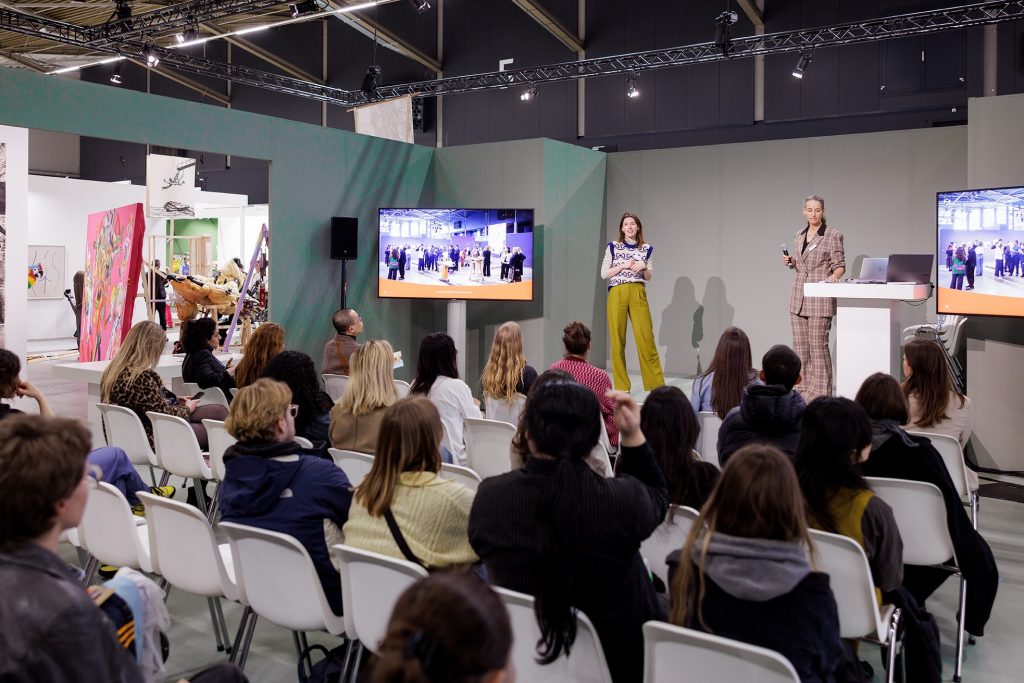
Once again, visitors to Art Rotterdam can count on an inspiring and freely accessible Talks programme. Reflections 2026 includes a number of engaging artist talks, Q&As and lectures on current topics, presented by artists, curators, museum directors and other experts from the artistic field.
| Friday 11.15 – 12.30 BK Informatie | ‘Het kan ook anders’ | Artist Talk A conversation about tipping points in the projecessional practice of visual artists | *Dutch spoken Art historian Meta Knol will be in conversation with podcaster and philosopher Esther Didden about our podcast about tipping points in the professional practice of visual artists. Two visual artists will be joining to discuss tipping points in their careers; 2025 Prix de Rome winner Kevin Osepa and Linda Molenaar. What challenges did they face, and how did they cope? What stands out to us in the podcast series? Do we see underlying patterns, or not? What questions does this raise about the state of artistic practice in the Netherlands? And should we perhaps look at it differently ourselves? Please note: subscription & tickets: bkinformatie.nl/register |
.
| Friday 14.00 – 14.30 Rijksakademie | artist Guy Woueté and newly appointed director of the Rijksakademie Laurence Rassel in conversation | *English spoken Artist Guy Woueté engages in conversation with Laurence Rassel, the newly appointed director of the Rijksakademie, about working within hybrid institutions across disciplines and continents. Woueté was a resident at the Rijksakademie (2009–2010) and later an advisor. They previously worked together at erg (école de recherche graphique) in Brussels, where Rassel was director for ten years and Woueté is currently a teacher. A thoughtful exchange on the importance of artistic development and international exchange. |
.
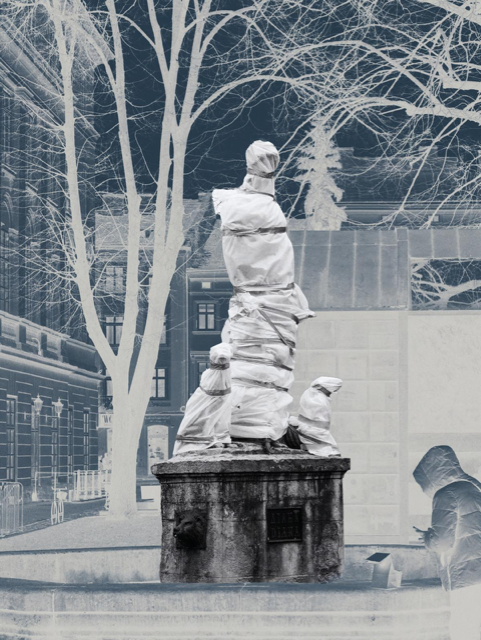
| Friday 15.00 – 15.30 Amidst Cries from the Rubble: Art of Loss and Resilience Lecture by Dr Laura Mueller, Deputy Director and Curator Museum of International Folk Art, Santa Fe, New Mexico, USA | *English spoken This lecture explores the curatorial development of Amidst Cries from the Rubble: Art of Loss and Resilience from Ukraine and the commissioning of Ukrainian photographer Marta Syrko’s series Wrapping Art—Art of Salvation. It considers how museums and curators have an opportunity to collaborate with contemporary artists during conflict to document cultural preservation, while the gravity of the subject matter lends profound depth and urgency to artworks that stand as powerful acts of witness, resilience, and cultural survival. |
.
| Friday 16.00 – 16.45 Artist Start – Panel discussion on a research into the career development of artists who received an Artist Start grant by the Mondriaan Fund | *Dutch spoken HKU and HTH Research conducted research commissioned by the Mondriaan Fund into the career development of artists who received an Artist Start grant, or a predecessor thereof, at the beginning of their artistic careers. The research results will be presented to a broad audience, with active involvement of students. |
.
| Friday 17.00 – 18.00 Mondriaan Fund Get a Grant event – The Prospects Edition Artist Talk and Subsidy information | *English spoken When can you apply for a grant and how does the process work? Especially for students and emerging artists, the Mondriaan Fund is organising the Get a Grant event, an information session on grant opportunities for starting visual artists. On Friday 27 March (5–6 pm), a staff member will explain the Artist Start grant and artist Jochem van den Wijngaard will share his experience with applying. There will also be time for questions and practical tips. You can register here. |
.
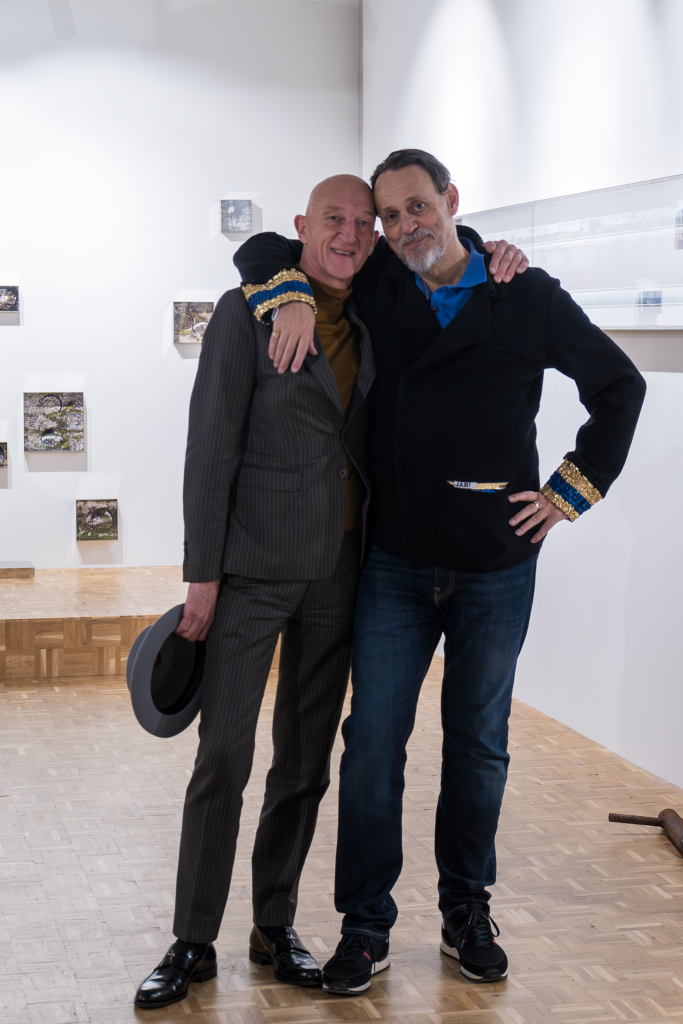
| Saturday 12.00 – 12.45 Talk show Hugo Borst & Wilfried de Jong Guests: Çiğdem Yüksel, Katinka Lampe, Anton Corbijn en Wim Pijbes | *Dutch spoken Hugo Borst and Wilfried de Jong have a lot in common. Rotterdam, radio & television, writing, journalism. They also differ. Wilfried is an actor, Hugo a gallery owner. Wilfried is the Polaroid man, Hugo collects art. Curiosity and humor drive this occasional duo. Especially for Art Rotterdam/Unseen Photo, they compose a special talk show. Guests: Çiğdem Yüksel, visual artist and photographer, Katinka Lampe, visual artist, Anton Corbijn, artist/photographer and film director and Wim Pijbes, art historian, director of Stichting Droom en Daad, a private cultural fund that invests in culture in Rotterdam. |
.
| Saturday 13.00 – 13.30 Museumtijdschrift presents: a live-interview with Fiona Lutjenhuis | *Dutch spoken An interview with artist Fiona Lutjenhuis by Jeroen Junte, editor-in-chief of Museumtijdschrift, the biggest art magazine of the Netherlands. Lutjenhuis is a finalist for the Prix de Rome 2026 and had a solo exhibition at the Noordbrabants Museum in 2025. From 2022 to 2024, she was a resident at the Rijksakademie van Beeldende Kunsten. During Art Rotterdam, the artist is represented by gallery Fleur & Wouter, on show at New Art Section booth K25 and Sculpture Park section. |
.
| Saturday 14.00 – 14.30 Rijksakademie | Artist Talk / Q&A Marieke Zwart and artist Dineke Blom in conversation | *Dutch spoken Artist and Rijksakademie alum Marieke Zwart and artist Dineke Blom engage in conversation about Zwart’s new book ‘she saw i saw’, which explores the visibility of maternity care in the Bijlmermeer neighbourhood of Amsterdam. They discuss the search for balance between distance and proximity – on paper and beyond. How does social practice relate to artistic considerations? The conversation will be moderated by Evita de Roode. |
.

| Saturday 15.00 – 15.20 AVROTROS’ MUZE presents: De Muzen van Morgen I Michelle Piergoelam Artist Talk / Q&A | *Dutch spoken Curator and art journalist Lieneke Hulsthof in converstation with a promising Dutch artist. In this edition, she talks with art photographer Michelle Piergoelam about how she brings hidden histories and cultural traditions to life in her work. |
.
| Saturday 15.30 – 15.50 AVROTROS’ MUZE presents: De Muzen van Morgen II Noa Zuidervaart Artist Talk / Q&A | *Dutch spoken Curator and art journalist Lieneke Hulsthof in converstation with a promising Dutch artist. In this edition, she talks with artist Noa Zuidervaart about how he explores complex issues in his work and translates them into drawings, sculptures, and found objects that come together in layered installations. |
.
| Saturday 16.30 – 17.00 The Role of Women Artists in the Art World! | Conversation / Q&A Carolina Alfonso, Artist and Moderator in conversation with Alejandra Castro Rioseco, Founder/Executive Director, MIA ART Collection | *English spoken The importance of raising awareness about gender equality in art is fundamental. Professional and private institutions must collaborate in creating spaces not only for exhibitions but also for reflection that unite the perspectives of civil society and academic institutions with those of artists, curators, collectors, and galleries. The role of MIA ART Collection is to invest in and create visibility for women artists in the art world, creating networks and channels of support and assistance for women professionals in the arts. |
.
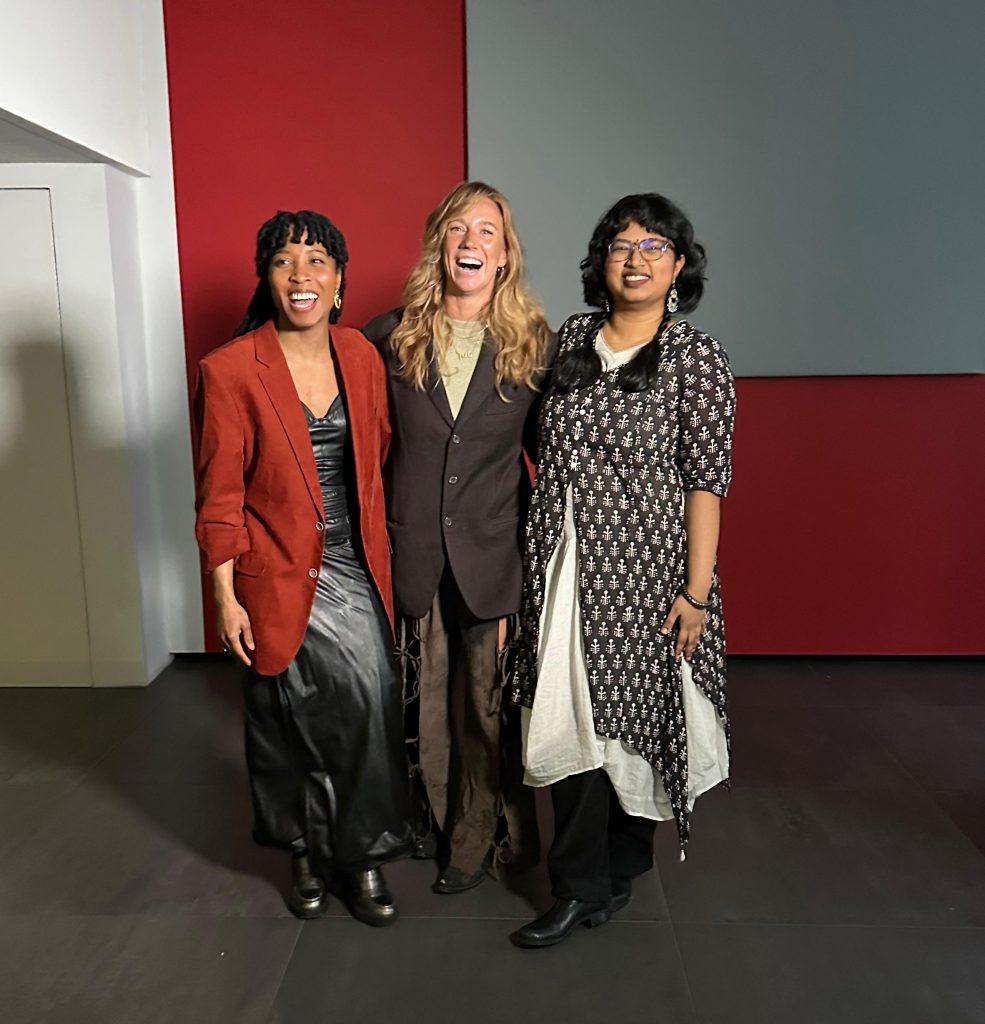
| Sunday 12.00 – 12.30 South Forward – DHB Art Space The City Through Us | Artist Talk / Q&A | *English spoken Join curator Jeanthalou Haynes and the artists of DHB Art Space – South Forward for an interactive artist talk on art, neighbourhood knowledge and sustainability in Rotterdam South. In every city, people and local initiatives contribute to the future of their neighbourhoods, often beyond the view of the wider public. Through stories and shared material samples from the artworks, the audience is invited to discover how artists make these stories visible and how art rooted in the city can contribute to a more sustainable future.Presentation South Forward on view at DHB Art Space booth J 04. |
.
| Sunday 13.00 – 14.00 From Carbon Footprint to Collective Action: Galleries, Fairs, and Artists in a Warming World | Lecture and subsequently 13.30: Panel discussion | *English spoken As the climate crisis intensifies, the art world has both the opportunity and the responsibility to reduce its carbon footprint. In this session, organized by the Dutch Gallery Association, the Gallery Climate Coalition will present its global initiatives, outlining practical strategies for carbon reduction across exhibitions, shipping, travel, and production. In the subsequent panel discussion 13.30 – 14.00, Lula Rappoport, Gallery Climate Coalition, Will Korner, TEFAF, Head of Fairs, artist Erik van Lieshout, gallerist Jaring Dürst Britt, and Geert van der Meulen, Dutch Gallery Association, will discuss how collective responsibility can lead to measurable impact and sustainable, structural change within the Dutch art sector. |
.
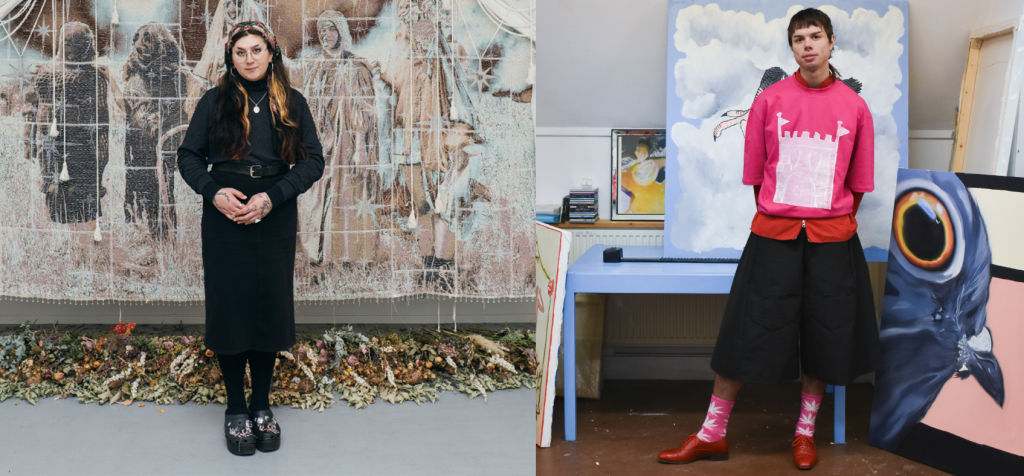
| Sunday 15.00 – 15.20 uur AVROTROS’ MUZE presents: De Muzen van Morgen III Dakota Magdalena Mokhammad Artist Talk / Q&A | *Dutch spoken Curator and art journalist Lieneke Hulsthof in converstation with a promising Dutch artist. In this edition, she talks with artist Dakota Magdalena Mokhammad about her search for identity, spirituality, the body, and gender — and how these themes take shape in her tapestries and installations. |
.
| Sunday 15.30 – 15.50 AVROTROS’ MUZE presents: De Muzen van Morgen IV Chris Nelck Artist Talk / Q&A | *Dutch spoken Curator and art journalist Lieneke Hulsthof in conversation with a promising Dutch artist. In this edition, she talks with artist Chris Nelck, whose diverse practice is characterized by humor and intellectual sharpness, and is informed by a trans and queer perspective. |
.
| Sunday 17.00 – 18.00 Kunstinstituut Melly presents Suitcase Economy Informal Economy (Barter space) | *Dutch and English spoken Artist Riet Wijnen brings Suitcase Economy to the fair. By running this experimental canteen, she is developing a method to connect daily contexts in, among others, Limburg (NL), South Korea and South Africa through histories of preservation and fermentation. In relation to this interest, Riet invites visitors to bring homemade preserved goods, ingredients for culturally specific dishes, recipes, or money to exchange for Suitcase Economy staples, experimenting with collapsing economic models through negotiation. More information: kunstinstituutmelly.nl |
The fair is proud to announce the appointment of two new Head Curators: Övül Ö. Durmuşoğlu for Art Rotterdam and Domenico de Chirico for Unseen Photo. From 1 July 2026, they will jointly shape the artistic direction of the fair and draw on their international networks to realise an even stronger, more diverse, and carefully curated gallery programme at the fair.
Both are well acquainted with the fair as it has taken shape at Rotterdam Ahoy over the past two years. Övül was responsible for the artistic programming of the New Art Section within Art Rotterdam for the past two editions; Domenico de Chirico curated the Unseen Encounters section.
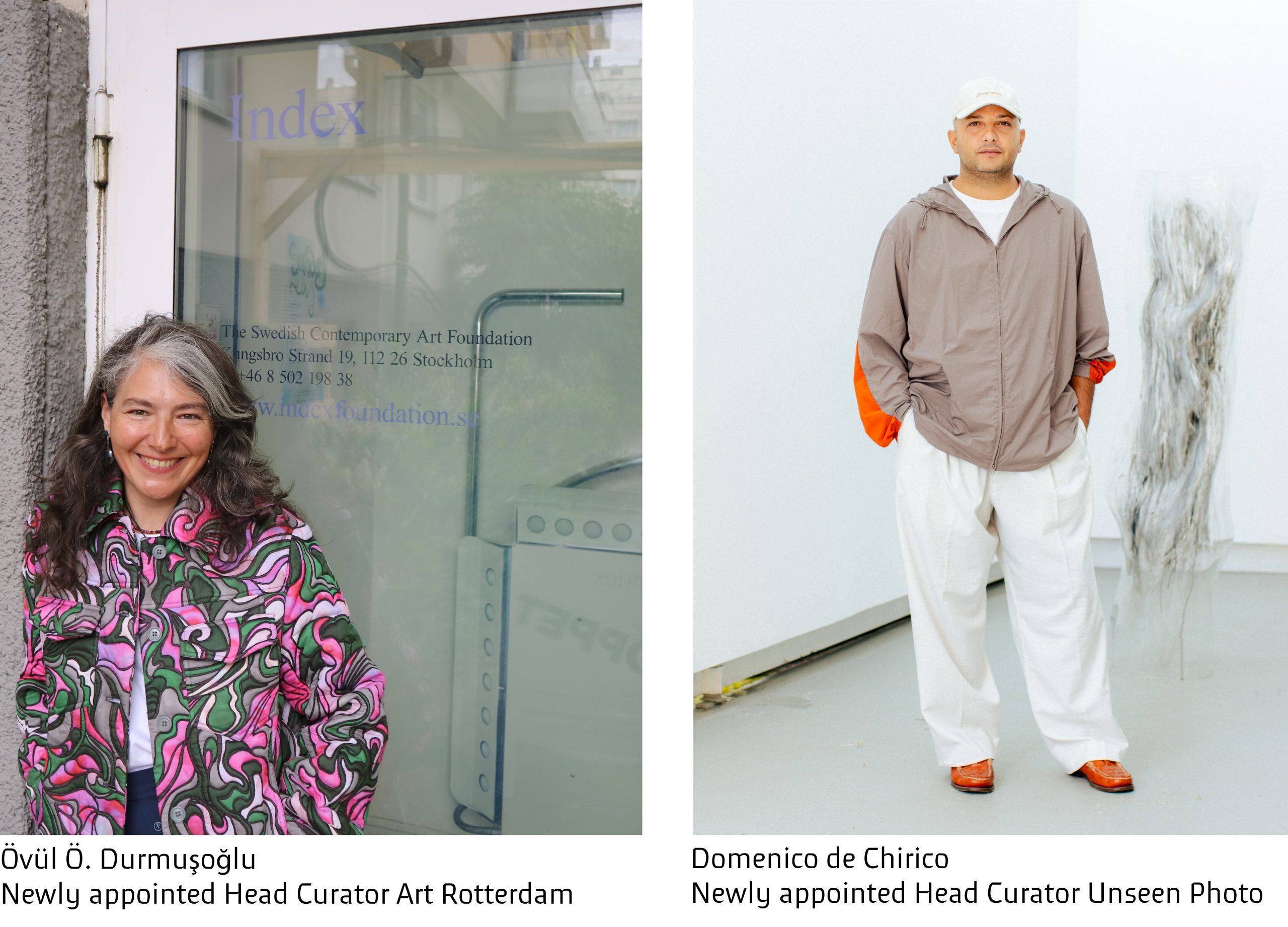
Övül Ö. Durmuşoğlu, newly appointed Head Curator Art Rotterdam: “Art Rotterdam is one of the key organisations that keep the heartbeat of the Dutch speaking art scene. To be entrusted with this overseeing curatorial role in its future steps is very humbling and exciting at the same time. I look forward to how we will shape its new horizons together.”
Domenico de Chirico, newly appointed Head Curator Unseen Photo: “Rooted in photography’s rich history while embracing its continuous transformation, UNSEEN Photo, as part of Art Rotterdam, is a platform dedicated to artistic discovery, critical dialogue, and the evolving language of photography. My vision is to strengthen its role as an international meeting place where emerging and established voices challenge conventions, inspire new perspectives, and reflect the complexities of contemporary visual culture.”
Fons Hof, director Art Rotterdam / Unseen Photo: “Övül and Domenico each bring a unique vision, an impressive international track record, and a valuable network of international curators and collectors. With their curatorial expertise and innovative perspective, we are taking an important step in the further artistic development and international positioning of Art Rotterdam / Unseen Photo.”
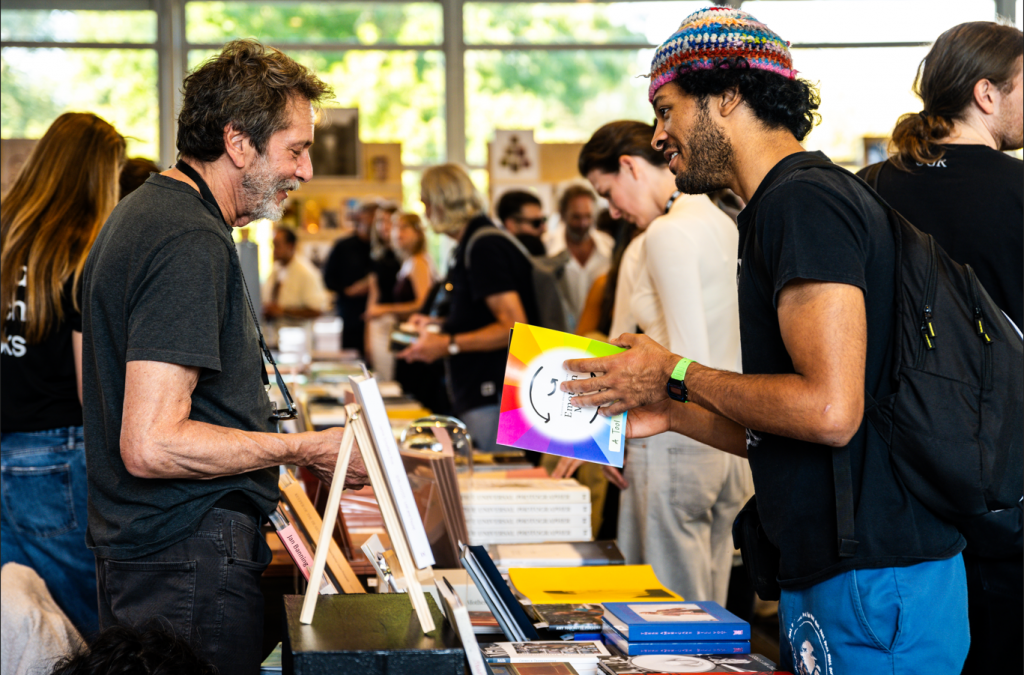
One of the first initiatives of Head Curator Domenico de Chirico is the return of the Unseen Book Market at the upcoming edition of Unseen Photo. This much-loved feature has long been closely associated with Unseen Photo and strengthens the character and identity of the fair.
The Unseen Book Market took place as a pop-up at the Nederlands Fotomuseum during the previous edition, but from the upcoming edition onwards it will for the first time form an integral part of Unseen Photo on the fair floor at Rotterdam Ahoy. With space for 40 international publishers specialising in photography books, the fair does not so much grow in scale, but becomes more attractive, complete, and rich in content for photography enthusiasts and professionals from the Netherlands and abroad.
Save the date: the upcoming edition of Art Rotterdam / Unseen Photo / Unseen Book Market takes place from 18 to 21 March 2027 at Rotterdam Ahoy.
About Övül Ö. Durmuşoğlu
Övül Ö. Durmuşoğlu (b. 1978, Turkey) is a curator, writer, and educator working on civilizations critique, infrastructural questions, togetherness as a question of aesthetics and practice. Planetary Peasants (Museum Moritzburg, 2025), STIMMMMMMMMUNG (HBK Braunschweig, 2025), The Story Behind Each Word Must Be Known (Ab-Anbar London, 2024), What If A Journey & All Images Will Disappear, One Day (3rd and 4th Autostrada Biennale, 2021-23), Portrait of a Movement (CA2M and Tensta Konsthall, 2022-23), Katrina Daschner: Burn and Gloom, Glow and Moon (Kunsthalle Wien, 2022) are among the recent exhibitions she curated. Durmuşoğlu has been co-leading the Art in Discourse programme at Braunschweig University of Art. She is just appointed as the director for Index- The Swedish Contemporary Art Foundation in Stockholm alongside the new responsibilities she takes in the coming edition of Art Rotterdam.
About Domenico de Chirico
Domenico de Chirico (b. 1983, Italy) is an independent curator based in Milan. He collaborates internationally with artists, galleries, institutions, art fairs, awards, and publications. Former Artistic Director of DAMA Fair, Turin (2016–2019), and curator of the “Beyond Photography – Dialogue” section at MIA Photo Fair BNP Paribas, Milan (2019–2026), he has been curator of PRISMA Art Prize since 2023. He has curated numerous exhibitions and projects worldwide and served on international juries and selection committees in the field of contemporary art. He has been a visiting speaker at Goldsmiths, University of London, and has delivered lectures at FAMU Prague, UMPRUM Prague, NABA Milan, and ABABO Bologna. He currently teaches Phenomenology of Contemporary Art at IED Milan.
Sakir Khader’s artistic practice arises from a deeply felt urgency to make injustice visible, without reducing the people he portrays to symbols of suffering. That is precisely where the strength of his images lies: they are harsh and confrontational when necessary, yet remain consistently humane, dignified and intimate. His work as a visual artist, photographer, film director, documentary maker and investigative journalist exists somewhere between art and document. In doing so, Khader underscores something fundamental: that behind every life lost lies an entire world, and that this world deserves to not only to be mourned, but also truly seen.
At Art Rotterdam, his work will be presented in the booth of No Man’s Art Gallery, in a duo presentation with Alejandro Galván.
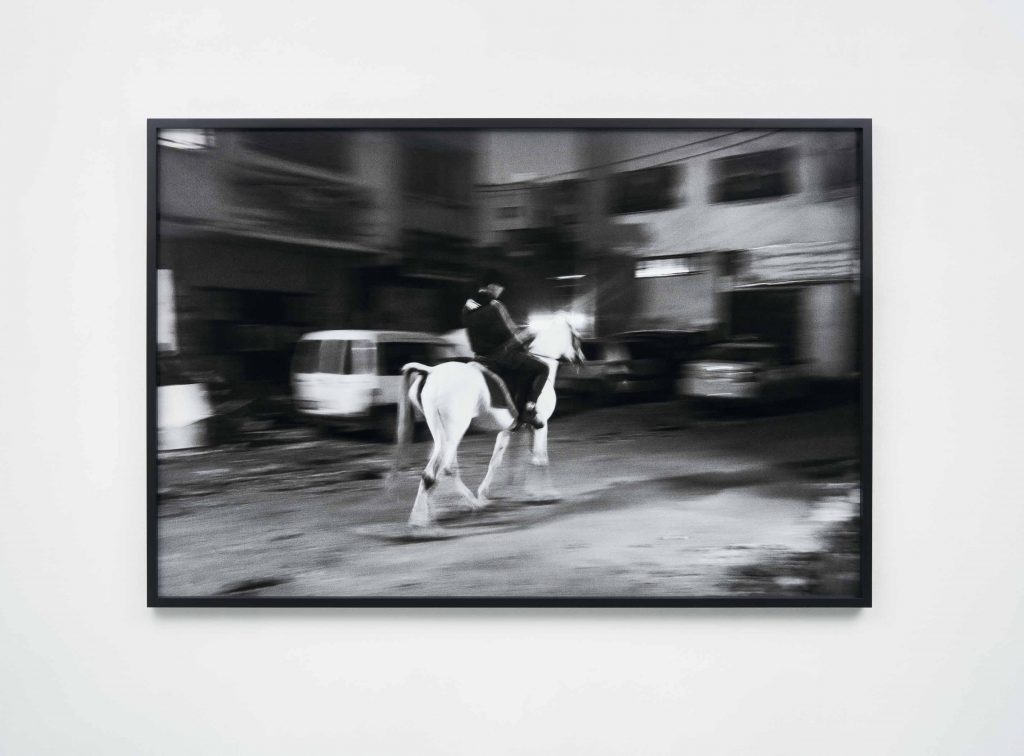
Khader was born in 1990 in Vlaardingen to Palestinian parents, but spent much of his time with family in the West Bank. This bilingual, bicultural background often works to his advantage in his practice. Because he speaks the language, listens attentively and instinctively understands subtle cultural codes, he is able to build long-term relationships and gain access to worlds that usually remain closed to outsiders. This is evident in his images: he does not observe from a distance, but works from within, guided by a strong sense of responsibility. His work departs from journalistic precision and a drive to document, and therefore also carries an archival function. He attempts to preserve something of people and worlds that are systematically erased and dehumanised. As a result, his work operates both as document and indictment. He has portrayed Palestinian fighters in the West Bank before their deaths, as well as the grief of the mothers they leave behind. In this context, the term ‘fighter’ is not limited to those who are armed, but also includes those who resist in other ways.
In 2024, Khader was nominated to join the prestigious photography collective Magnum Photos. He has received, among other honours, a Silver Camera Award and the Amsterdam Prize for the Arts, published several photobooks, presented a solo exhibition at Foam Amsterdam and appeared as a guest on the television programme Zomergasten.
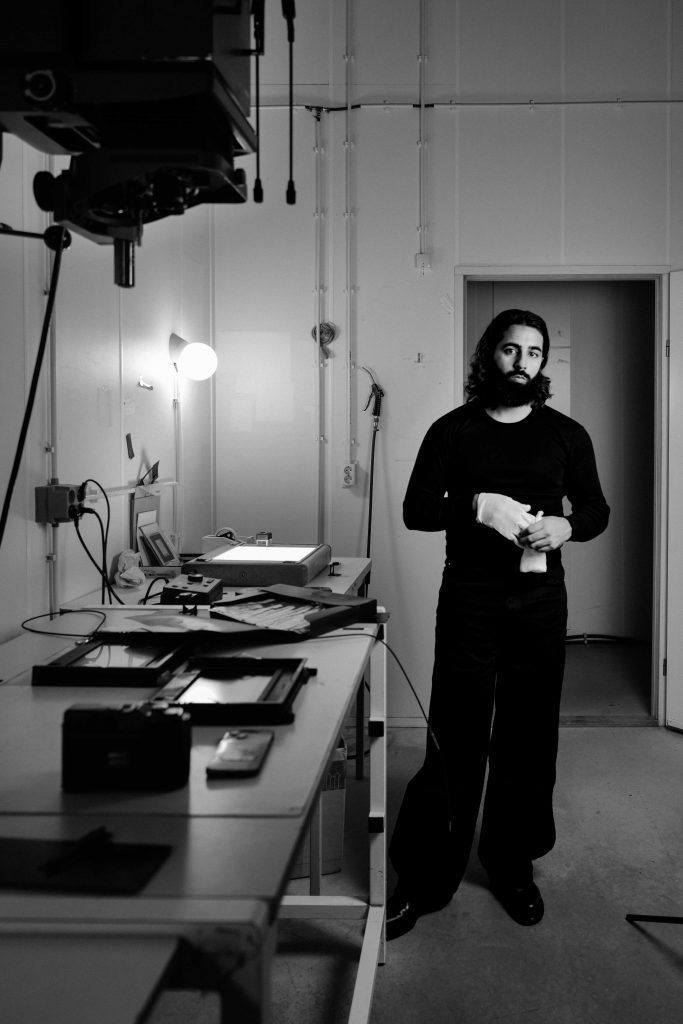
The artist’s practice depicts conflict zones in the Middle East or, more precisely and less Eurocentrically: West Asia. He has travelled to countries including Afghanistan, Syria and Iraq. Yet his work is not solely concerned with war in its most spectacular sense. Rather, it focuses on what war does to everyday life. Threat, structural uncertainty, historical displacement and loss exist alongside tenderness, beauty, humour and a love of life.
At its core, Khader’s oeuvre revolves around the relationship between life and death under occupation, particularly in Palestine. A defining moment was the death of his eleven-year-old cousin Kosay, who was shot by an Israeli soldier in 2002, shortly after Khader, who was around the same age, had spent a summer with him. Since then, the artist has used his camera as a tool to document what happens to Palestinian communities under occupation. His work shows the death and violence that Israel causes, but above all how these realities permeate everyday life: within families, in processes of mourning, in youth, in freedom of movement and in the ability to imagine a future. In doing so, he makes visible that oppression and genocide do not occur only in the moment of an attack or incursion, but also persists in the slow weight of loss, in constant fear and in the systematic disruption of daily life.
Khader employs a raw, emotional and cinematic visual language, often working in black and white with sharp contrasts. He creates his portraits at close range, using different types of cameras. At the same time, he also works with colour, video and documentary elements. Across these forms, he appears to be searching for a way of working that does justice to the complexity of what he records, to the human dimension that underlies political events.
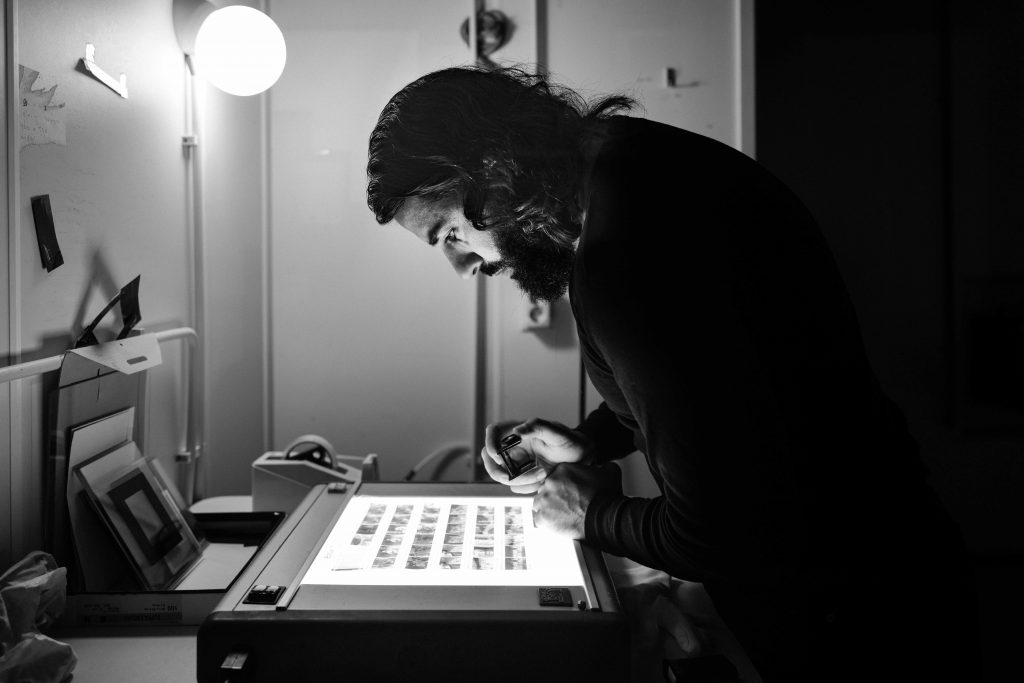
What makes Khader’s work so affecting is that pain and grief are never detached from dignity. He does not portray people as passive victims, but as individuals who, even under unbearable circumstances, strive to remain human. In this way, his work stands in contrast to the often one-sided representations found in Western media, both in language and in imagery. A form of forced resilience plays an important role in his photographs: not a romanticised notion, but the stark awareness that people must carry on, even when grief has not yet been processed and the next loss is already imminent. In Khader’s work, this impossible condition is given a face. He compels the viewer to look beyond Western frameworks of representation, illuminating not only death but also the life that precedes it.
A recurring element is the tension between innocence and its loss. Khader photographs children, mothers, friends, families, fighters, animals and landscapes in a way that reveals how a life under occupation or threat is never defined solely by violence. There is also play, food, work, laughter and waiting. By making these moments visible, he renders palpable what is at stake. His photographs and films emphasise not only the destruction of lives, but also their right to exist. In doing so, he connects personal stories with broader historical and political structures.
Written by FIor Iinckens
Watamula tells the story of René, a taciturn young man who emerges from a river wearing nothing more than a pair of trousers and an amulet. We follow him on his journey to the western side of Curaçao, to Watamula, a round hole in a rock that juts out above the sea. Beneath it, the ocean crashes against the rocks. It is the place where Curaçao breathes.
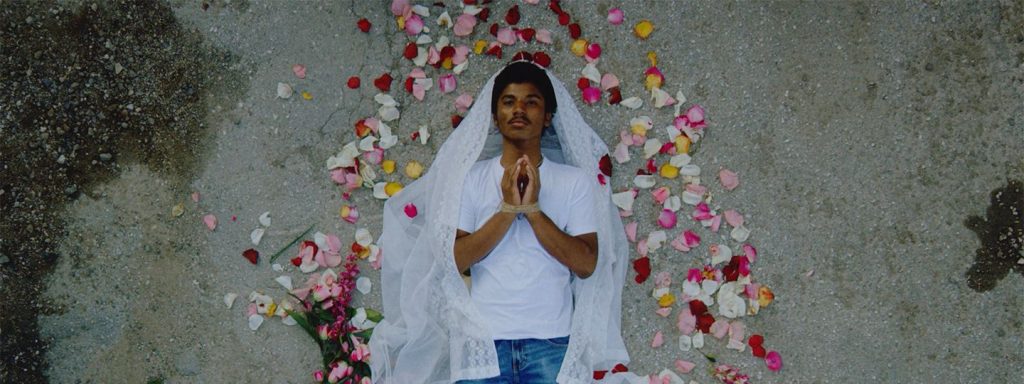
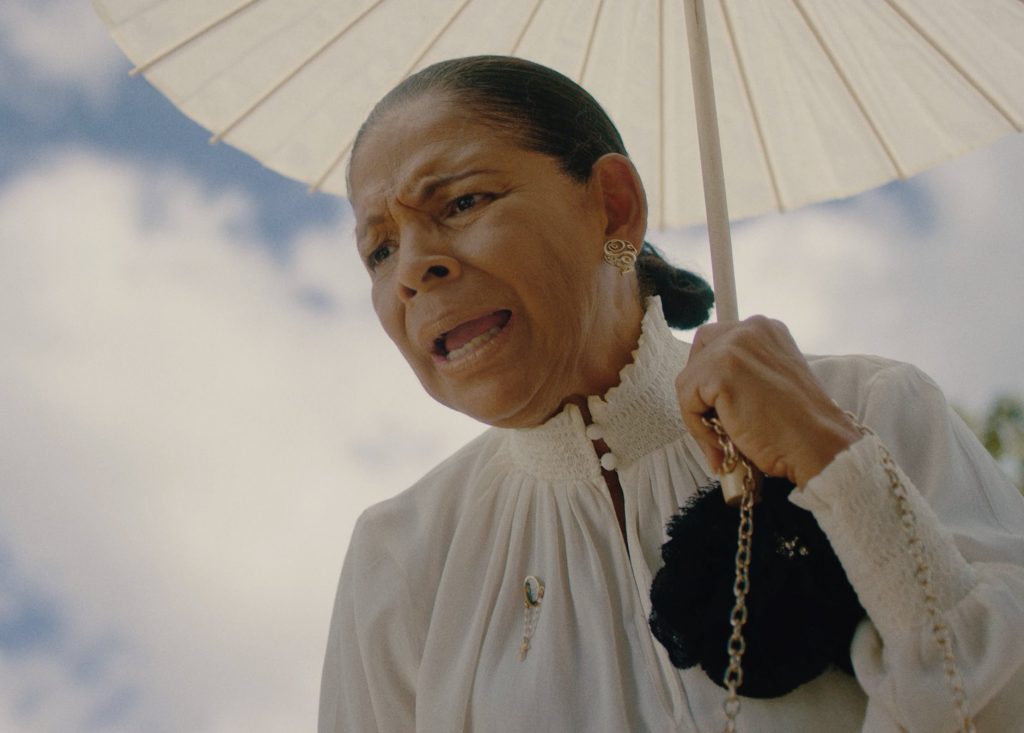
The road to Watamula is both physically and mentally challenging. Along the way, René clings to the amulet he was given at birth. Soon he encounters an older woman dressed in her finest clothes. She tends to René and watches over him. He is thrown out of a Catholic church and initiated into Afro-Caribbean rituals. There also seems to be a budding romance between him and Gabi, the woman’s son.
Kevin Osepa turns René’s journey into a magical-realist odyssey in which landscape and destiny, spirituality, sensuality and machismo converge.
Watamula by Kevin Osepa is shown in Projections. Kevin Osepa is represented by Galerie Ron Mandos.
Osepa’s work often draws on his own childhood and experiences in Curaçao, as well as on rituals, mysticism and stories of older generations from the Dutch Antilles. He frequently develops an idea or narrative into a shared experience aimed at collective healing and a deeper understanding of his own identity. As a result, his work is highly personal, yet accessible to a wider audience.
Last autumn, Kevin Osepa was awarded the prestigious Prix de Rome for Lusgarda, an installation he created especially for the prize. Lusgarda is a total experience in which film, objects, textiles and handmade figures come together to form a new reality. The installation invites viewers to look, feel and move along with it, without imposing a single, fixed interpretation.
Lusgarda revolves around the ritual of Ocho Dia: the eight-day mourning period following a funeral in Curaçao. Osepa focuses not only on individual loss, but also on collective loss: the gradual disappearance of knowledge, rituals and customs passed down from generation to generation. He presents mourning not as a closed moment, but as a process that continues to repeat and transform.
The jury recognised ‘an artist with a highly distinctive visual language who has grown rapidly in both narrative and expression, continually surpassing himself’. Osepa himself is still surprised by the win, he says over the phone. “I knew the Prix de Rome. At the academy, I had a lecturer who had been nominated, but you still feel a certain distance – you’re not anchored there. Also, since my work is personal – a way to process my own emotions – it was unexpected. For it to receive so much recognition is a unique experience.”
Osepa’s career can easily be described as meteoric. Osepa (Willemstad, 1994) moved to the Netherlands at the age of 17 to study photography at HKU. Watamula (2020) was his first short film. For his second film, La Ultima Ascensión (2022), he received a Golden Calf for Best Short Film. In 2023, he won the Charlotte Köhler Prize, the annual incentive award for promising artists.
For Watamula, Osepa swapped photography for film, a step that felt natural at the time. “I was already exploring how to deepen my worlds. I tried to make my photographs speak to one another. That is essentially what film is. As a medium, film also suits Curaçao better because there is no strong museum culture here.”
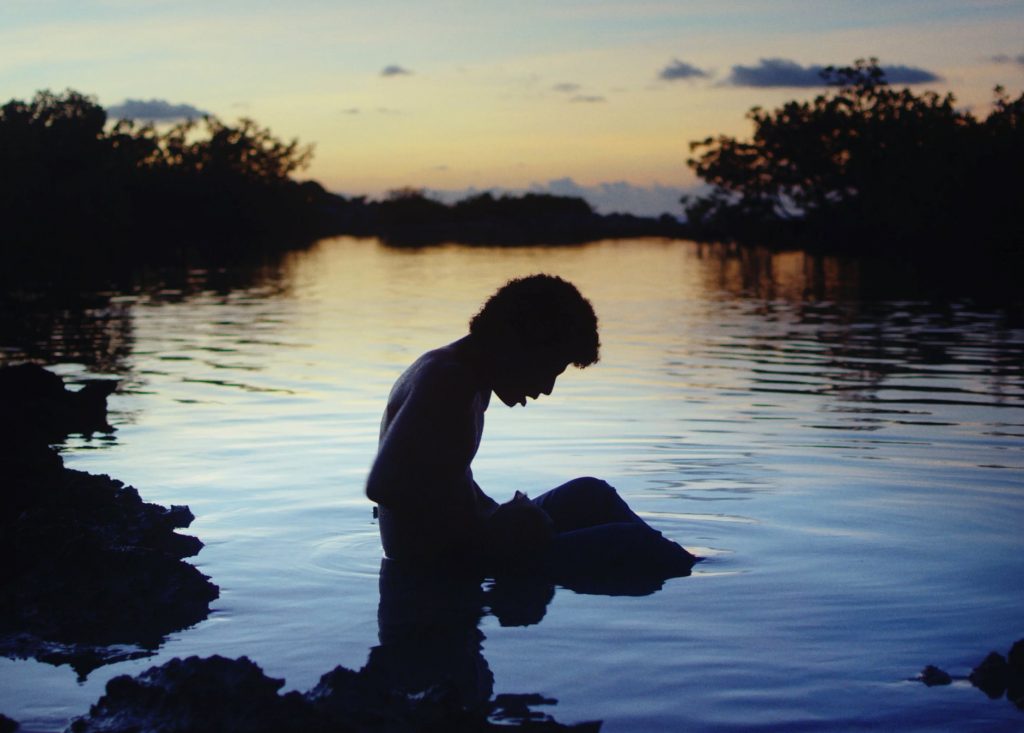
The medium of film gave Osepa greater freedom to work narratively. He draws both on historical source material from archives and on conversations with anthropologists and older Curaçaoans. Initially, Osepa thought this approach would yield little of use, but instead he tapped into a rich vein of stories that had never been explored.
“I collect stories and do not make a hierarchical distinction between archival material and conversation. All sources are equally valuable. What is unique about oral history is that the stories constantly contain new elements. They reflect the times. That gives you a certain freedom. By adding new images to a story, you can assign new meaning to an existing narrative. You can transform it.”
Many themes that appear in Osepa’s later work are already present in Watamula. A good example is the magical-realist mode of storytelling. The woman who watches over René also takes the form of a parakeet and a flamingo. “In Curaçao, there is only one reality; there is no division between science and superstition, there is just one continuum.” In his work, Osepa seeks to do justice to that reality.
At its core, Watamula is about longing, Osepa says, about belonging somewhere and being rejected. These themes are shaped by his experiences in both the Netherlands, where he lives, and Curaçao, where he spends several months each year. This alternation allows him to view the places he calls home with a fresh perspective, while also feeling not entirely at home in either. In the Netherlands, for example, he is more aware of his skin colour, while in Curaçao, his queer identity stands out in the strongly heteronormative environment.
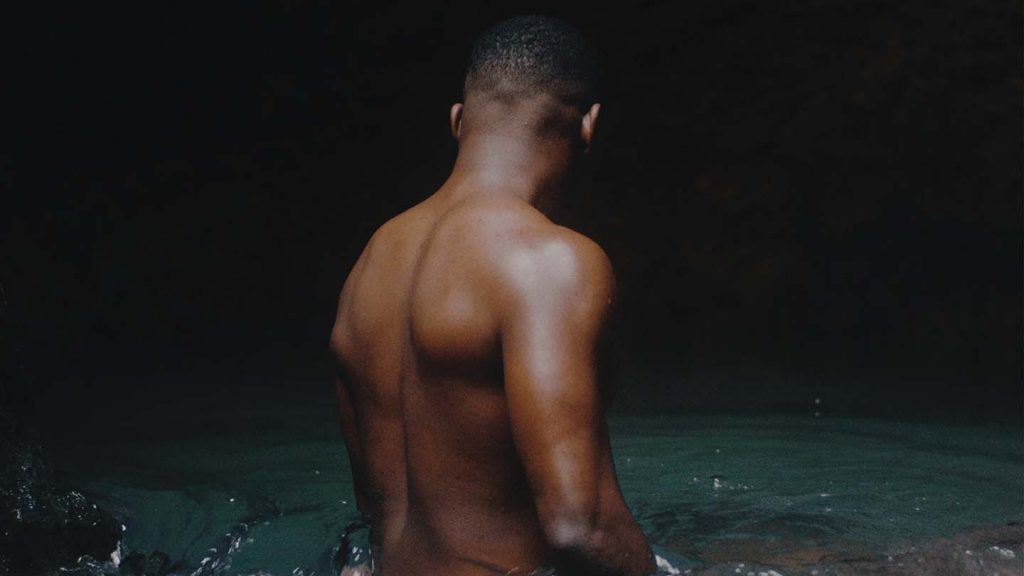
In Watamula, this is expressed subtly by making René, a queer protagonist, undertake the journey. He comes into conflict with the Catholic faith and halfway through the film, is literally thrown out of the church. Still lying on the ground, he is picked up by a man who initiates him into Afro-Caribbean rituals and points out the difficult path he must follow.
Looking back, Osepa says, “It’s easy to point to Catholicism, but you cannot simply say the Roman Catholic Church should disappear. Our traditions are inextricably linked to it. For example, Carnival in Curaçao ends on the Tuesday before Ash Wednesday and First Communion has been completely shaped by our culture with Afro-Caribbean rituals. It is precisely that tension that makes it interesting.”
Speaking over the phone, Osepa says that with Lusgarda, he felt he was finally making exactly what he wanted: an immersive work about presence and spirituality in which all the themes that engage him find a place. Spiritual healing is one of these: “Lusgarda is an active ritual that can release something.”
That element is already present in Watamula. Towards the end of the film, René has a dream in which he witnesses his own birth. A baby bonnet is buried and he finds the stone from which his amulet is a shard. He places the shard back onto the stone to make it whole again. Afterwards, he awakens and has one final encounter with the woman, who tells him she has followed him throughout his journey. She then digs up the baby bonnet and places it on a funeral pyre. The curse is lifted. The wound is healed. René can complete his journey to Watamula.
Written by Wouter van den Eijkel
Saturday March 28, 12.00-12.45 u
Guests: Çiğdem Yüksel, Katinka Lampe, Anton Corbijn en Wim Pijbes | *Dutch spoken
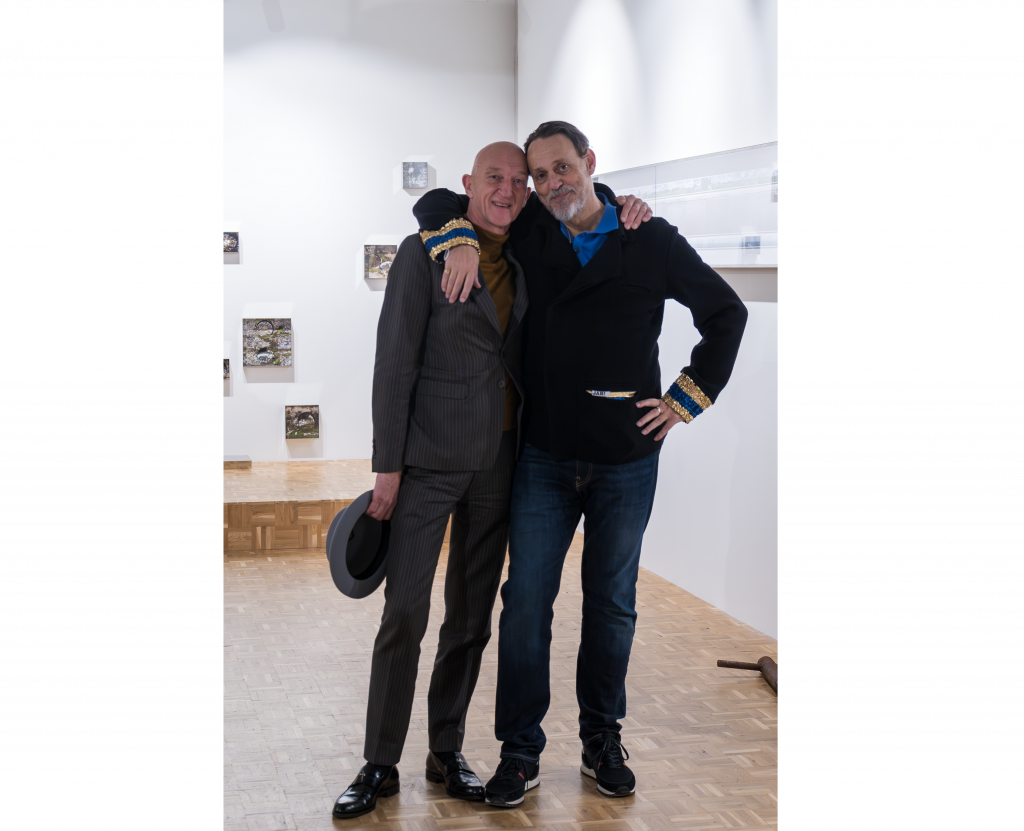
Hugo Borst and Wilfried de Jong have a lot in common. Rotterdam, radio & television, writing, journalism. They also differ. Wilfried is an actor, Hugo a gallery owner. Wilfried is the Polaroid man, Hugo collects art. Curiosity and humor drive this occasional duo. Especially for Art Rotterdam/Unseen Photo, they compose a special talk show. Guests: Çiğdem Yüksel, visual artist and photographer, Katinka Lampe, visual artist, Anton Corbijn, artist/photographer and film director and Wim Pijbes, art historian, director of Stichting Droom en Daad, a private cultural fund that invests in culture in Rotterdam. Make sure you attent this show on time!
193 Gallery (Paris | Saint-Tropez | Venice) will present a solo installation by Thandiwe Muriu at Art Rotterdam. In her vivid “Camo” series, the Kenyan artist employs the renowned wax textile to make her subjects a canvas for reflection on identity, representation, and female empowerment.
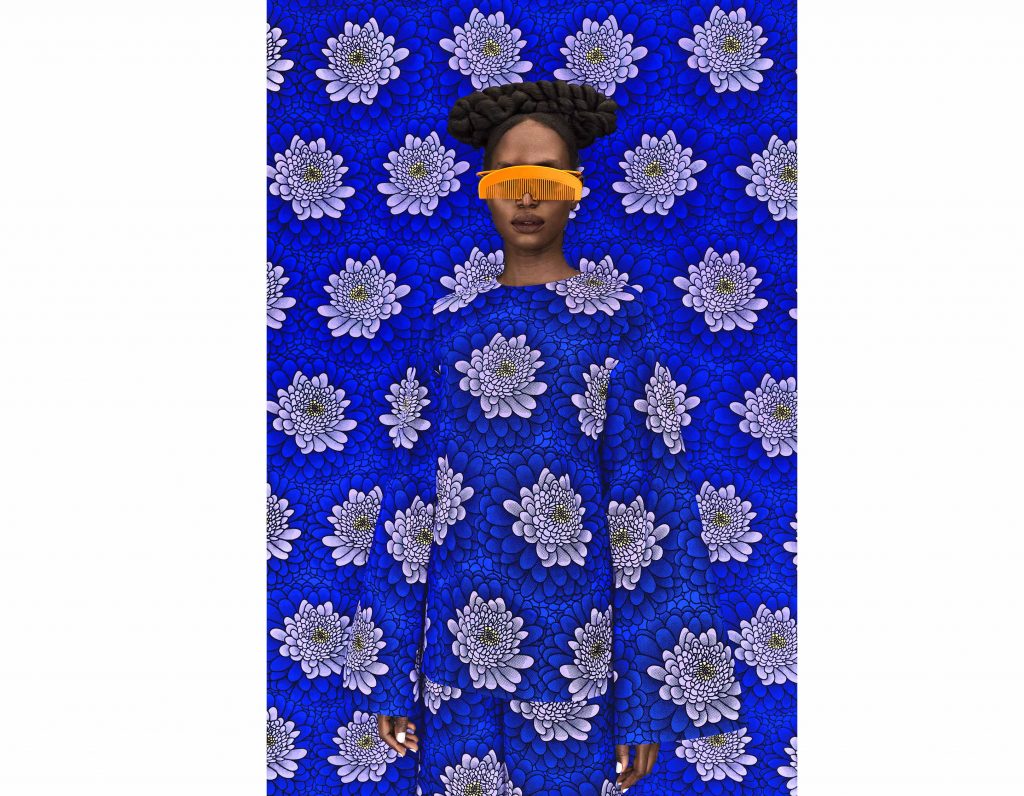
Produced since 1876 in the Netherlands by the historic textile house, Vlisco, wax has been worn, shared, reinterpreted, and emotionally invested in by many generations across the African continent. Through everyday life – celebrations, rituals, family moments – it has become deeply embedded in social norms and practices, making it a widely accepted symbol of ‘Africanness’ despite its controversial history. For Muriu, the fabric emphasises the various ways in which the past continues to shape the present as she considers how women today can thrive – not in spite of their cultural legacies, but through them.
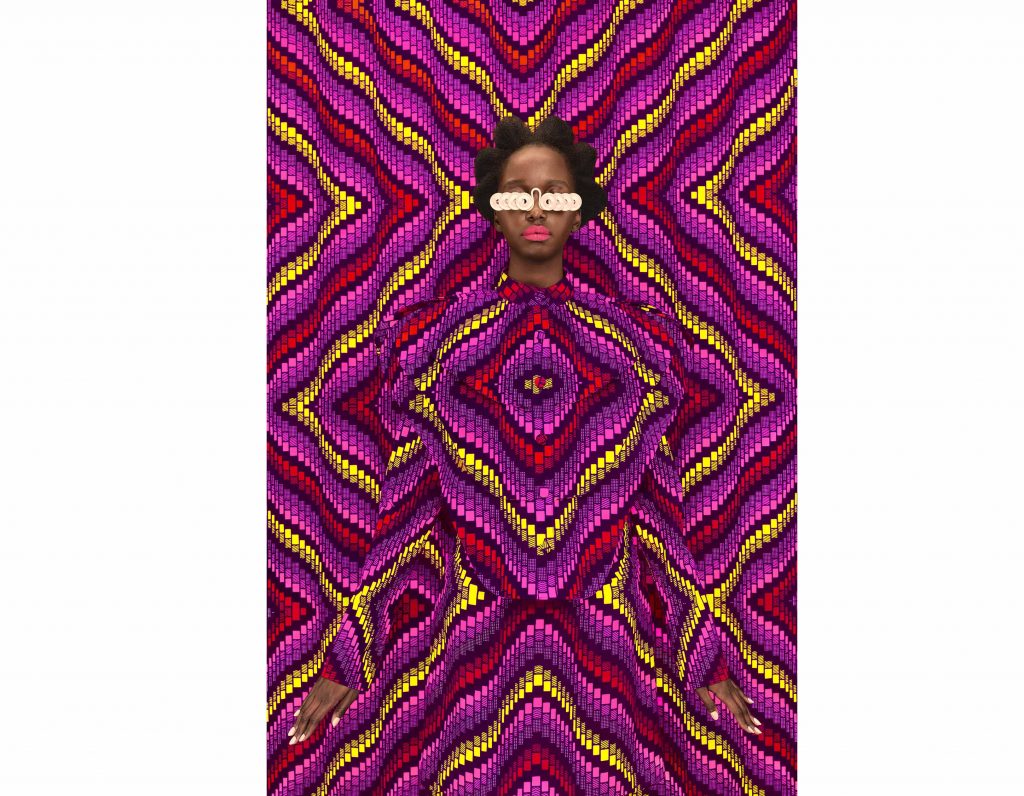
Vlisco developed its production by adapting colouring techniques from Javanese batik makers in the former Dutch East Indies. The prints were detached from their original symbolism and industrially produced in the Netherlands using a modified banknote printing machine, known as ‘La Javanaise’. African countries became the primary market for these fabrics. For the fair, 193 Gallery will incorporate original Vlisco textiles into the booth display bringing Muriu’s work into direct relation with the local and global histories embedded in the material, while anchoring the installation within Rotterdam’s role as an international trading city.
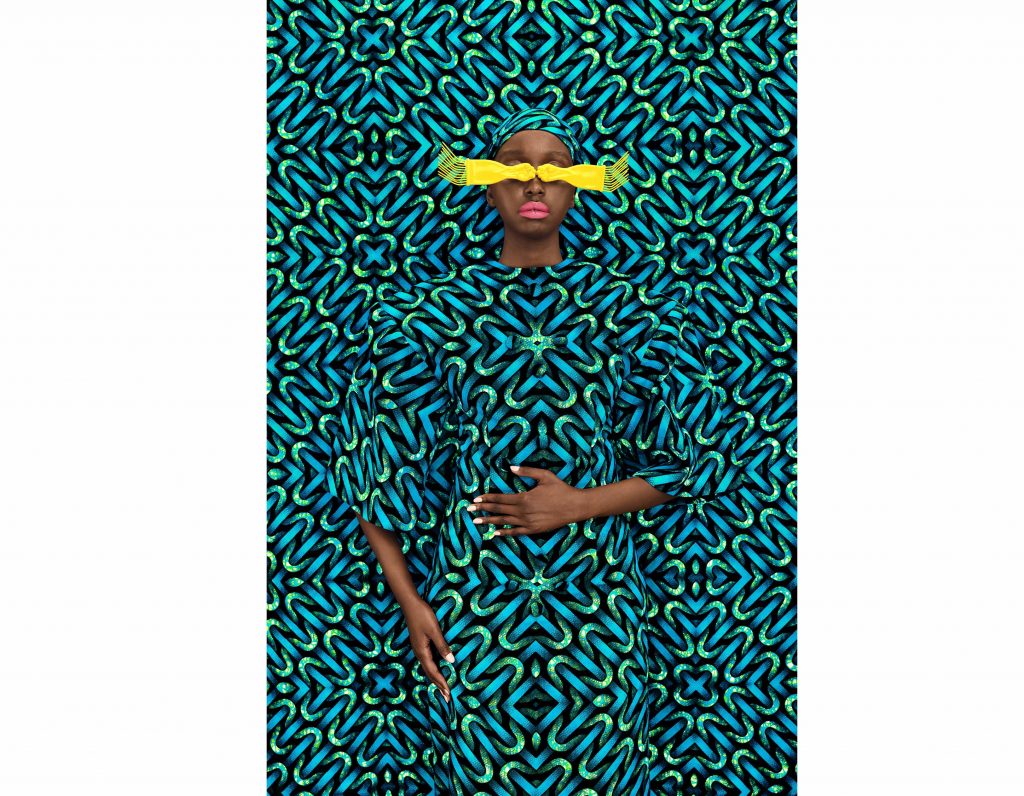
In 2024, 193 Gallery presented Muriu’s work in ‘Passengers in Transit’, a Collateral Event of the 60th Venice Biennale. This was followed by presentations at Museum Folkwang, Biennale della Fotografia Femminile, Musée de l’Homme, Museo Nacional de la Fotografía and a group exhibition curated by Pharrell Williams at Perrotin in Paris. This year, Muriu was selected for the KYOTOGRAPHIE International Photography Festival African Artist Residency Program.
This year, the culinary corner of Art Rotterdam will once again be filled with the rugged French atmosphere of the Rotterdam institution Café Marseille. Since 2020, this restaurant has been defying the equally rugged Kruiskade, with Derk Jan Wooldrik and Kris de Leeuw at the helm. Together they are also known as the Double Trouble Horecagroep and have quite a few successes to their name. The combination of a punk ship’s cook and a club legend [De Leeuw was co-owner of the legendary club Bar] turned out to be a golden one. There is, for instance, the musical neighbourhood pub Bar Alaska, which nowadays sails the Rotterdam Stoofboot along the Maas, and the brewery Eurobrouwers, which recently started serving their beer in their own atmospheric Café de Wilde Mossel. The latter, by the way, is not far from the real gem – Marseille, of course!
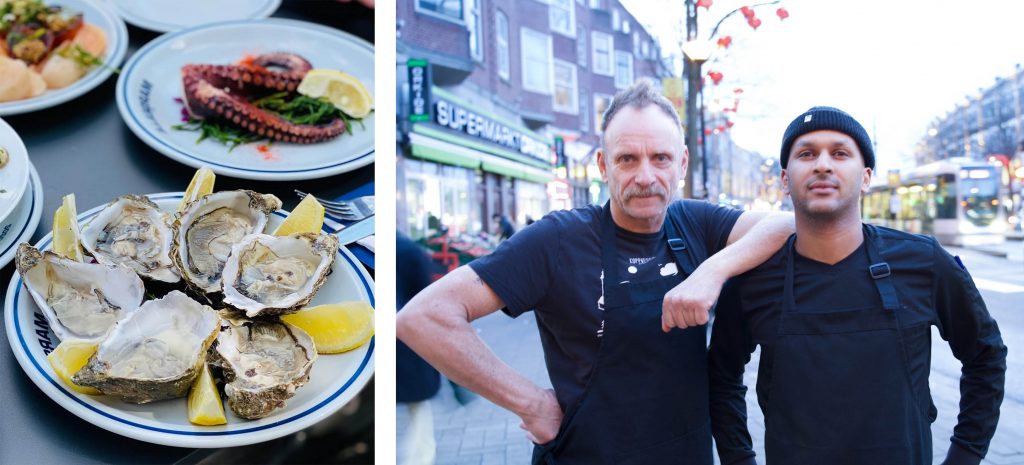
Menu Café Marseille
For the menu, Wooldrik and head chef Jona Haile travelled to the city where it all began. For three days, they started their day with a refreshing swim, after which they could search with fresh eyes for the essence of this complex city. This resulted in a highly culturally diverse menu. Think Italian ‘nduja and stracciatella over the Ombrine Carpaccio and the North African flavour of Ras el Hanout in the mussels. Just like the city, the restaurant is a good neighbour and they try to collaborate as much as possible with local entrepreneurs in the area. This style is something Wooldrik is known for – his dishes have always been a blend of his memories as a ship’s cook and the port cities where he came ashore. He has written a cookbook about this, in which he takes you on a cruise along all these magnificent places, complete with the accompanying wild stories. Since their brief trip to the great city, Wooldrik and Haile have developed such a taste for it that they will soon be travelling back to the city, to join forces and write a book together.
The distinctive atmosphere of the restaurant comes into its own in the scale of Ahoy. This is thanks to the work of set builder and set dresser Ben Zuydwijk. He made his mark in the film world and won two Golden Calves, the most recent for Hardcore Never Dies (2023). ‘We had already worked with him before for a Basque pop-up restaurant at Station Bergweg. For that he designed a Basque punk bar, Bar Bilbao. He is someone with an unconventional outlook who thinks on his feet,’ says Wooldrik.
Wooldrik and De Leeuw are delighted to once again welcome the audience of Art Rotterdam / Unseen Photo. Come raise a glass of bubbles, enjoy a quick oyster or a warm lunch – see you there!
This year marks the tenth edition of the NN Art Award. The annual incentive prize of €10,000 is awarded to a talented artist who completed their education in the Netherlands and presents work at Art Rotterdam (27–29 March at Rotterdam Ahoy). The professional jury nominated four artists: Fiona Lutjenhuis (Galerie Fleur & Wouter), Tina Farifteh (Gallery Vriend van Bavink), Mandy Franca (Night Café Gallery) and Kyra Nijskens (Prospects / Mondriaan Fonds). From 14 March to 25 May 2026, work by all nominees will be on view at Kunsthal Rotterdam.
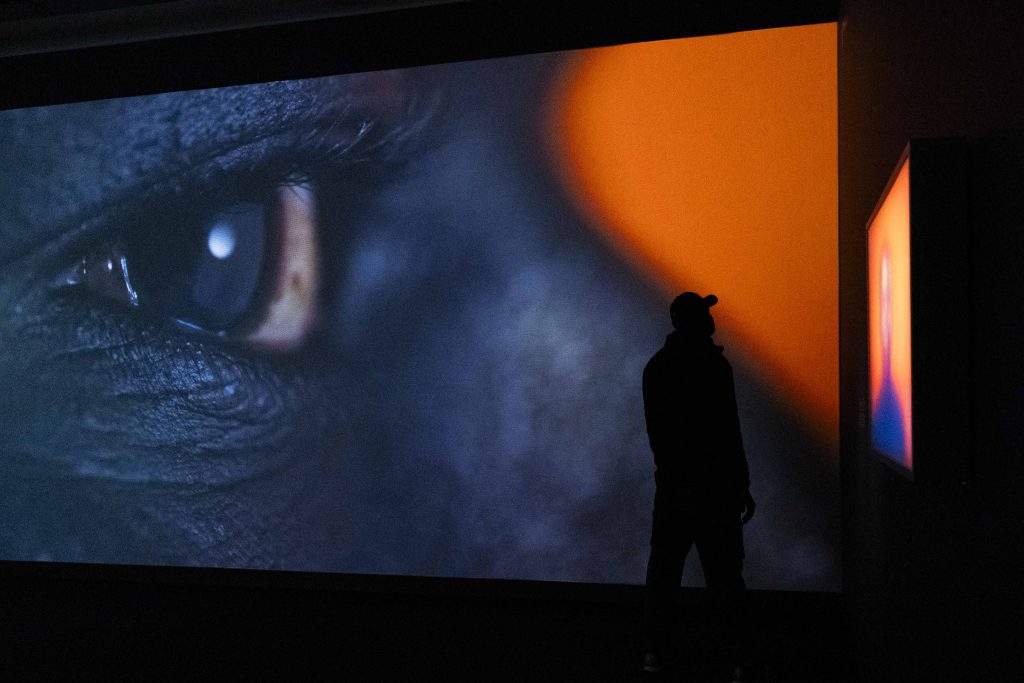
The multidisciplinary practice of Tina Farifteh examines the ways in which power structures shape the everyday lives of ordinary people, and how the images and words we hear and see influence our thinking, our actions and our emotions. As a photographer, filmmaker and visual artist she does not seek ready-made answers, but rather images that compel viewers to confront complex and uncomfortable truths. In doing so, she primarily appeals to our shared humanity. Through her installations, films and photographic projects, Farifteh attempts to narrow the gap between abstract political debates and human experience. Her work addresses feelings of home and belonging, migration and identity, empathy and exclusion, as well as policy, discourse and image-making.
Farifteh was born in Tehran in 1982 and moved to the Netherlands at the age of thirteen. She studied Photography at the Royal Academy of Art in The Hague and completed a master’s degree at Erasmus University Rotterdam. Her graduation project “The Flood” (2021) immediately attracted wide attention. In this audiovisual installation, visitors are surrounded by three enormous projections of a churning sea while a synthetic voice reads out the names, locations and statistics of missing and drowned refugees. Fragments of political rhetoric about migration can also be heard. The work reveals how refugees are often discussed in political discourse: in suspicious, criminalising and dehumanising terms, frequently through metaphors of waves, streams or tsunamis, words that are far from innocent because they shape our perception.
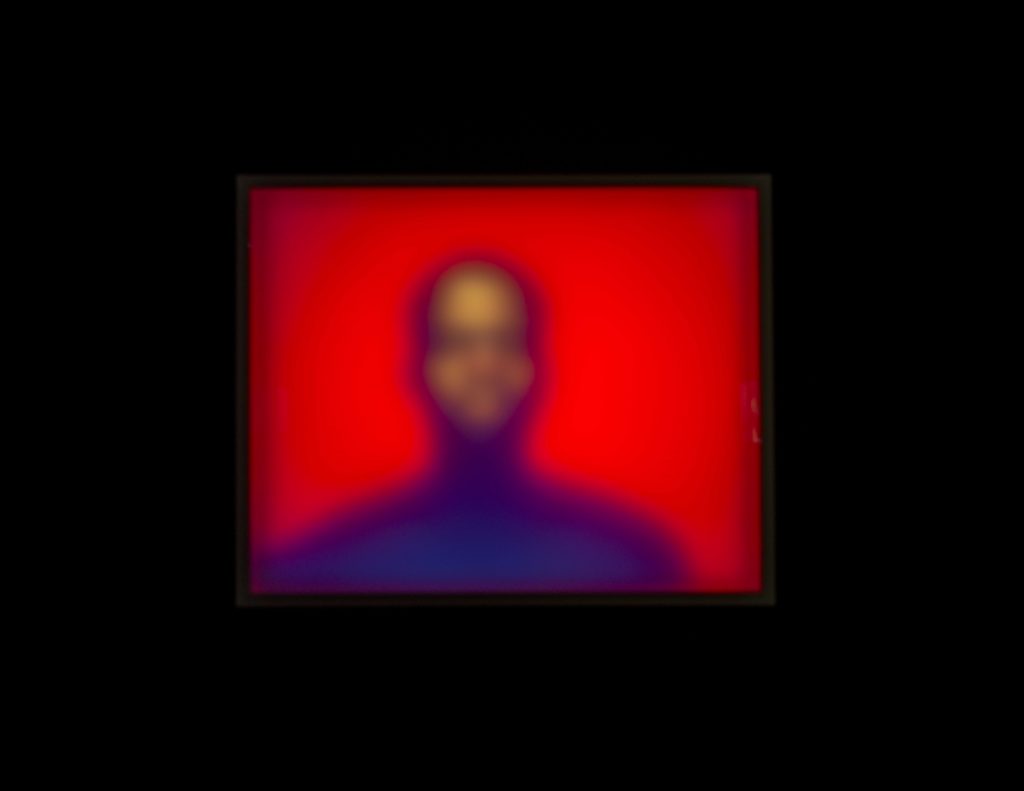
In the short documentary “Kitten or refugee?” (2023), Farifteh took a further step in her investigation into empathy. Test subjects were shown images and were asked to decide whom they would rescue in an emergency situation. But who deserves our help and why? The choices proved, unsurprisingly, to be strongly shaped by prejudice and reveal how quickly people attempt to rationalise their decisions. “Kitten or refugee?” was selected for the Debut Competition of the Netherlands Film Festival and received first prize in the Storytelling category of De Zilveren Camera.
In her installation “Toen ik de zon en de maan tegelijk zag” [“When I saw the sun and the moon simultaneously”], which was acquired by the Fries Museum, Farifteh poses a different, but related question. If society seems unable to offer a place to those who wish to feel at home somewhere, might the landscape provide space instead? With its openness and its apparent distance from political structures, the landscape here becomes a possible place of refuge. At the same time, the artist invites visitors to reflect on their own ideas about home, identity and exclusion, and not least on their own role.
Earlier this year, her most recent work was shown at the Rijksmuseum, which also acquired it for its collection. The museum invited her to visualise the theme ‘Asylum’ for the fiftieth edition of the annual photography commission Document Nederland. In this project, Farifteh reverses the perspective: instead of speaking about refugees, she allows them to speak themselves, showing us through their eyes who ‘we’ have become. Her practice is strongly rooted in research and for Document Nederland she spoke, often on location, not only with asylum seekers but also with specialists from across the field, from lawyers and staff members of COA and IND to journalists and people working for non-governmental organisations. This work also earned her a Zilveren Camera in the Storytelling category.
Can you tell us more about the work you present at Art Rotterdam and in Kunsthal Rotterdam?
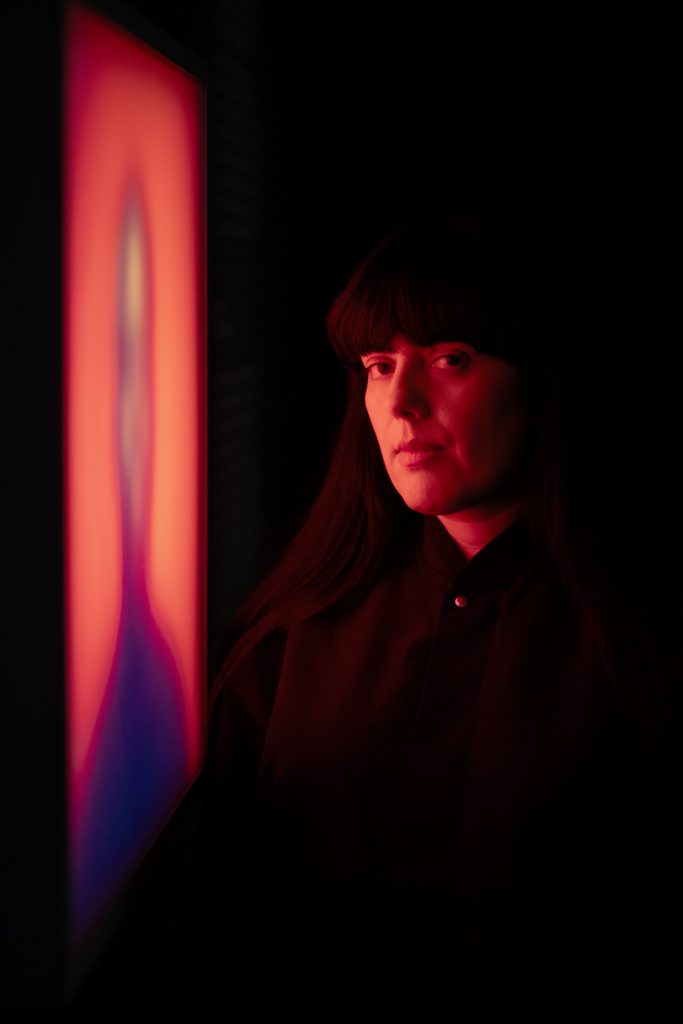
For Document Nederland, the Rijksmuseum’s annual photography commission, I photographed and filmed the Dutch asylum system. The central figure is B., who after more than four months in immigration detention at Schiphol and a stay in Ter Apel is now in the middle of an asylum procedure. By presenting B. as a guide and narrator, I reverse the gaze: instead of speaking about asylum seekers, I allow the audience, quite literally, to listen to one of them. In doing so I hold up a mirror to the Netherlands. This exhibition is not about them but about us.
At Art Rotterdam and in Kunsthal Rotterdam I present several elements from this exhibition. One of the key works is titled “Naturalisatie van het portret van B” [“Naturalisation of the portrait of B”]. B. spent more than four months detained at the Schiphol detention centre. He does not feel protected by our laws: he asked for help and ended up in a cell. Yet he wants to share his story because he believes society should know what happens behind these walls, even though he fears the consequences. As an artist, I hold no political power, but I can create images and tell stories. Museums, cultural institutions and collectors can preserve those images for the future.
The final step in the asylum procedure is naturalisation, officially becoming Dutch. This is only possible after five years of legal residence. B. is still far from that point. So I wondered whether I could already ‘naturalise’ B.’s portrait. B., the Rijksmuseum and I agreed that his portrait will be included in the collection, but as long as B. feels unsafe his portrait will remain unrecognisable and visible only behind frosted glass. These agreements also apply to acquisitions at the fair or the display of the work in Kunsthal Rotterdam. Only when he feels safe, or when he feels he has nothing left to lose, will his face and identity become visible. In this way we record not only his story but also the time in which he felt unprotected.

What are your plans for 2026?
An exhibition is a powerful medium. It allows a public to be immersed in a story, to create an experience that resonates and lingers. But exhibitions are often temporary. That is why I want to make a book, a lasting form in which not only the story of B. takes centre stage but above all: the story of the Netherlands and how we deal with people who ask us for protection.
‘Asiel’ is a layered visual essay in book form in which I connect the past and the present through four pillars of Dutch identity: culture, religion, the rule of law and the economy. I combine my own images with works from the collection of the Rijksmuseum, supplemented by material from news media and social media. Three storylines intertwine: the story of B., who has just arrived in the Netherlands, my personal journey through crucial locations within the asylum process, and an investigation into how ‘the asylum seeker’ has been represented historically and in the present.
‘Asiel’ questions our norms, values and freedoms and reveals how a system once rooted in empathy could harden into something distant and indifferent. By showing not only what happens but also what this says about us, the book opens a critical perspective on how the Netherlands deals with people seeking protection. The work breaks through distance and abstraction and invites reflection on our history, our identity and our responsibility in the present. For this book I am collaborating with design studio LMNOP for the design and with publisher The Eriskay Connection.
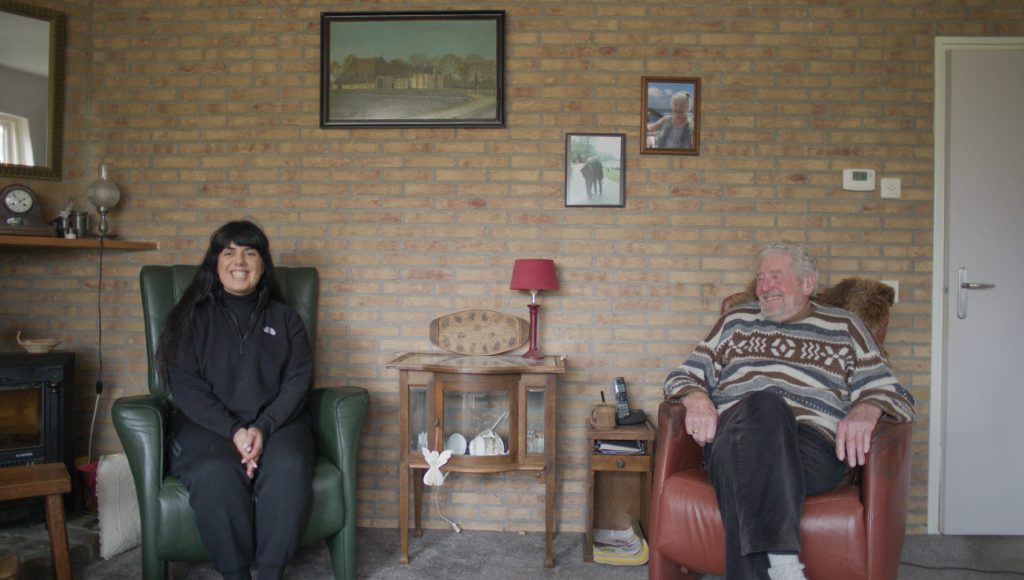
In addition, I am currently working on a three-part documentary series Tina in Sexbierum, which will be broadcast on VPRO / NPO from Thursday 7 May. A few years ago, I moved to a small village in Friesland because I could no longer find affordable housing in Amsterdam. Friends who leave the city often return to where they came from, but I cannot return to my birthplace Tehran. When I arrived in the village I encountered curious looks and prejudices from villagers about ‘outsiders’, but also my own assumptions about the countryside and the closed nature of my own Amsterdam bubble.
In Tina in Sexbierum, the two worlds that come together lead to honest and occasionally confronting encounters. I speak with my fellow villagers, from the mayor to the postman, bicycle repairer and GP. I meet the village brass band Door Samenwerking Groot and learn that cooperation is a skill that must be learned. And a close friendship develops with my 83-year-old fellow villager, former potato farmer Auke, with whom I drink coffee every week. I gradually come to know the small community better and discover what living together and caring for one another truly means. By looking at one another with humour, lightness and affection, both my fellow villagers and I begin to learn from each other despite our differences.
Tina in Sexbierum is a personal and disarming documentary series about displacement, detachment, the longing for a home and at the same time the inability to feel at home in a society that continually rejects you on an existential level. The three-part series forms part of the transmedial project of the same name.
In 2027, Foam Amsterdam will present a survey exhibition bringing together all parts of the project, including video, photography, text, light and sound, in a single presentation.
Can you describe how you felt when you heard that you had been nominated for the NN Art Award?
I was very surprised and honoured, and above all incredibly happy. Happy because the nomination gives more people the opportunity to see the work. But also because it creates greater attention and awareness for B.’s story and for the situation many people like B. currently face in the Netherlands. B. and I are grateful that the story reaches a wider audience in this way, so that no one will be able to say: we did not know.
Which project would you immediately take on if you were to win the award?
My dream is to publish the book ‘Document Nederland: Asiel’ and to launch it in a special way. We want to present it in a location that can be transformed both visually and conceptually, allowing us to immerse the audience in images, stories and connections. It should become a total experience in a physical way, a space in which the story can be felt and that visitors can then take home in the form of the book. For both the production of the book and its launch, we can use all the help and support we can get. Winning this award would be a tremendous step towards realising that dream.
The work of Tina Farifteh has previously been shown at Amsterdam Museum, the Rijksmuseum, the Fries Museum, Monopole – Schiedam Museum, Museum Hilversum, Sexyland, Melkweg Expo, The New Current, BredaPhoto and on NPO VPRO.
The winner of the NN Art Award 2026 will be announced on Friday 27 March at Kunsthal Rotterdam. During this festive evening, all exhibitions, including the NN Art Award exhibition, will be freely accessible to invited guests.
Written by Flor Linckens
Artists and Rotterdam residents shaping a sustainable city together
DHB Bank is once again the main sponsor of Art Rotterdam. This year, DHB Art Space presents South Forward, a continuation of the 2025 presentation Echoes of Us.
The project starts from a simple but powerful idea. Rotterdam South holds a wealth of knowledge, creativity and imagination that actively contributes to shaping the city’s future.
DHB Art Space functions as a place where art allows for other ways of seeing. Not by offering explanations or solutions, but by creating space for stories, imagination and everyday realities. It is within this space that dialogue can emerge. Encounters and exchanges that do not happen naturally, yet are essential for understanding one another, are made possible here.
Jeanthalou Haynes, curator at Unity in Diversity Rotterdam, reflects:
“Through our work at Unity in Diversity, we see Rotterdam South as a living source of stories. In many ways, it is the garden of Art Rotterdam: the neighbourhood surrounding Ahoy, where people work every day on coexistence, care and thinking ahead. With South Forward, we invite visitors to engage with the stories of the place they are in, and with the people who shape it.”
South Forward is developed in close collaboration with residents, artists and local initiatives from Rotterdam South. The project explores themes such as sustainability, community strength and everyday life, drawing from stories and practices that exist within the neighbourhoods themselves. This way of working together forms the core of the project.
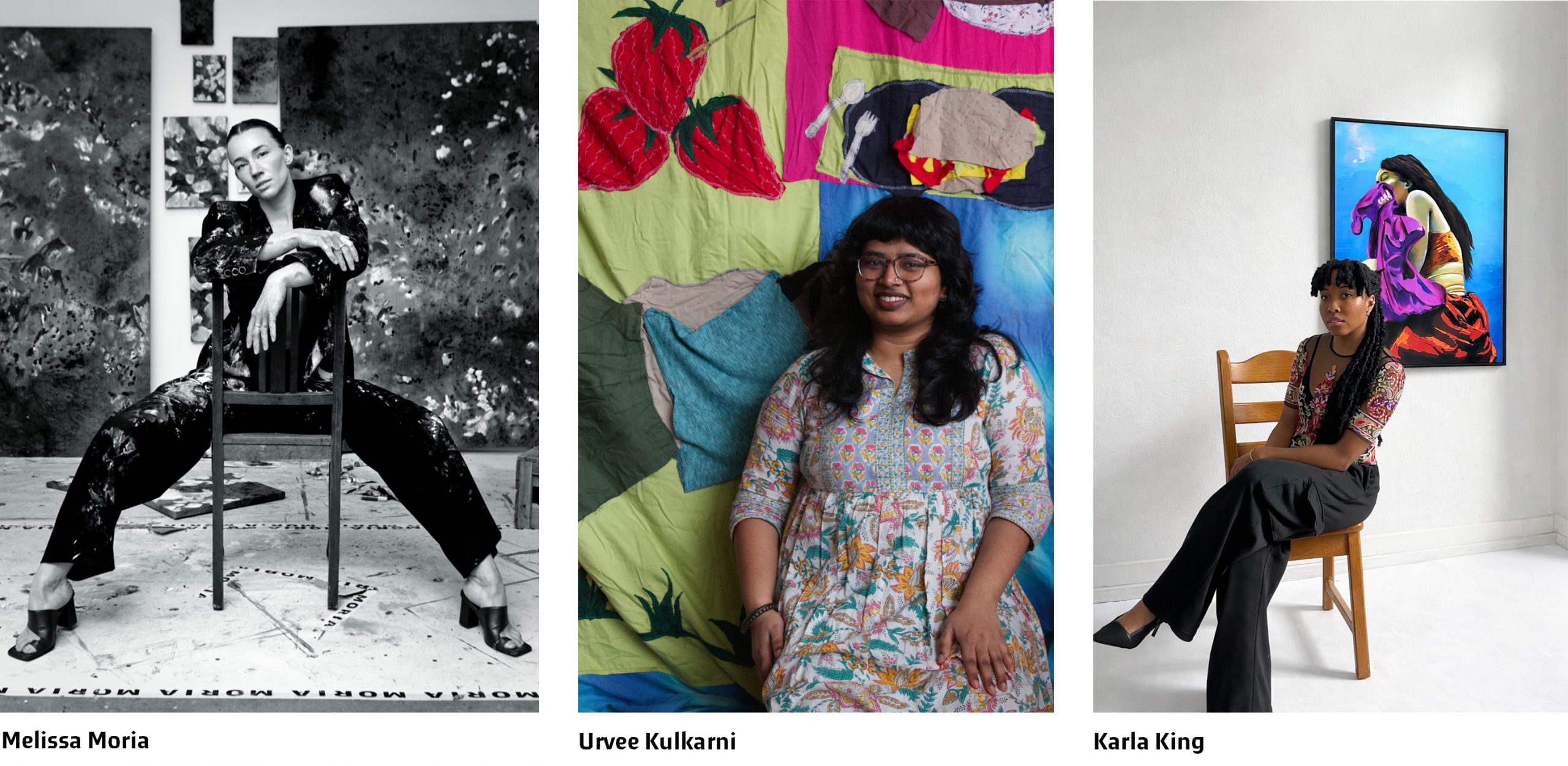
During Art Rotterdam 2026, DHB Art Space presents newly developed work by Karla King, Melissa Moria and Urvee Kulkarni. Each artist works from their own artistic practice, connecting artistic research, sustainable materials and local narratives. Their work opens up ways of imagining how care, community and living together can take form, now and in the future.
South Forward invites visitors not only to look, but to listen, to reflect and to enter into conversation with the stories that continue to shape life in Rotterdam South.
On Saturday 28 March (16:30–17:00), as part of the Reflections programme, an English-language talk will take place in which Carolina Alfonso, artist and moderator, will enter into conversation with Alejandra Castro Rioseco, founder and Executive Director of the MIA ART Collection.
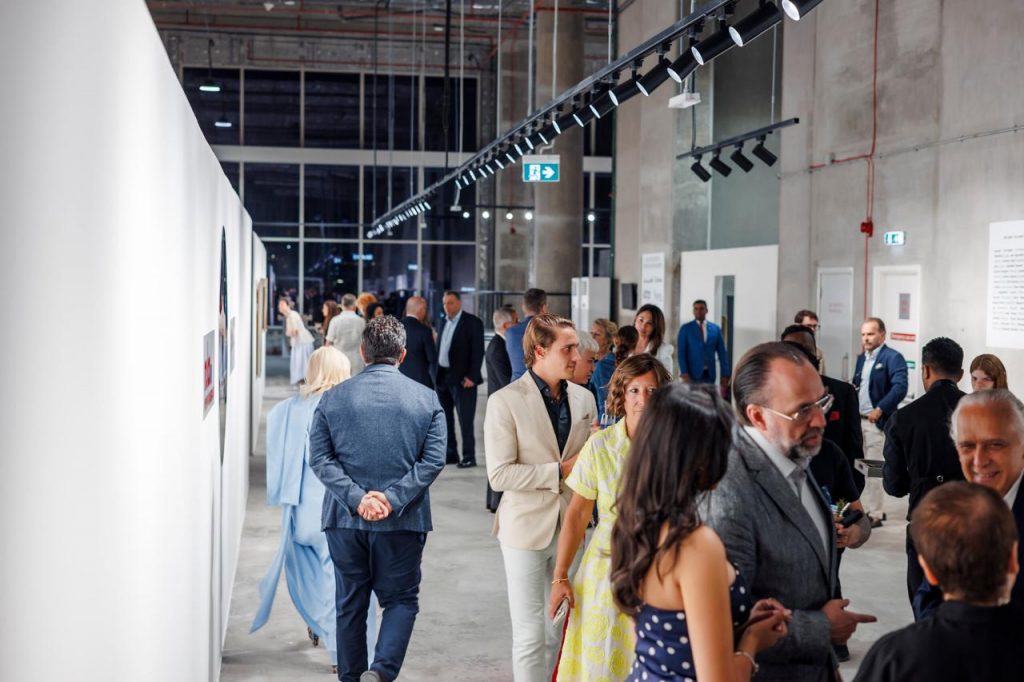
The role of MIA ART Collection is to invest in and create visibility for women artists in the art world, creating networks and channels of support and assistance for women professionals in the arts.
The importance of raising awareness about gender equality in art is fundamental. Professional and private institutions must collaborate in creating spaces, not only for exhibitions but also for reflection that unite the perspectives of civil society and academic institutions with those of artists, curators, collectors, and galleries.
Art Rotterdam asked Alejandra Castro Rioseco a few questions ahead of the talk.
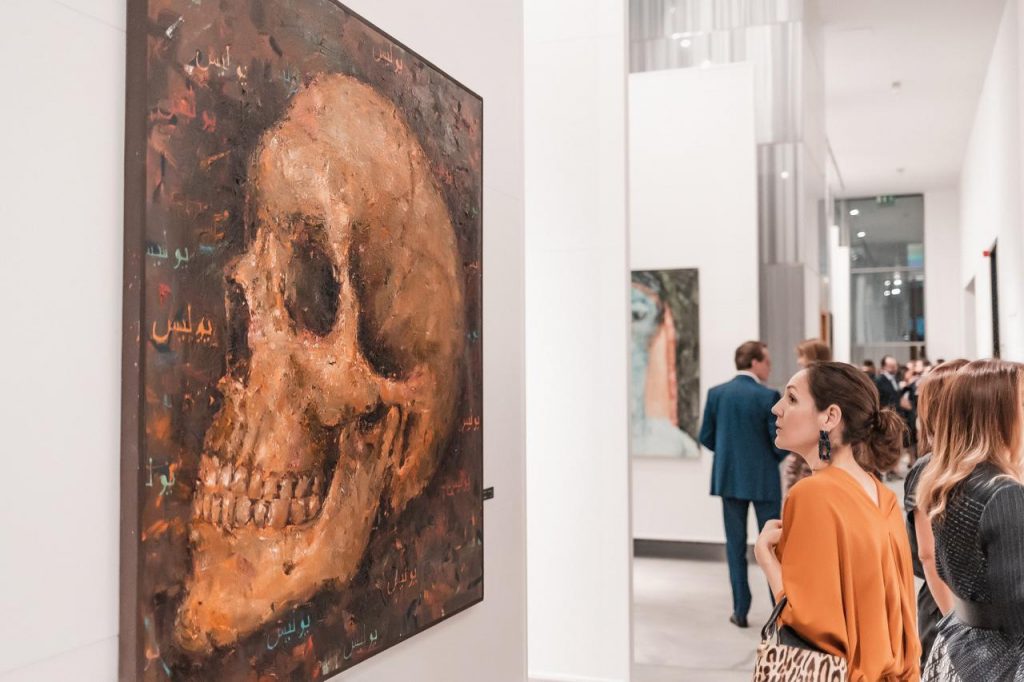
When did you establish the MIA Art Collection, and what is the mission of the organisation?
The Collection began to take shape almost 17 years ago, and then, when the pandemic hit, we decided to create the collection’s not-for-profit foundation, dedicated entirely to supporting women artists across the world.
We create and curate exhibitions that include emerging young women artists and pair them with
established names. We organize talks and presentations in collaboration with various art fairs and biennales around the world to bring the inequality of women in the world of art to the forefront. We have a scholarship that we award each year to support an artist with her studies.
We recently created a Residency Program in Antwerp, Belgium where we host three artists per year so they can study and document the history of women artists during the 1800s.
At its annual Gala & Awards, the MIA Art Collection presents Awards to ten distinguished individuals who contribute to and support women’s work in the art world.
The MIA mission, in short, is to support women artists to achieve greater visibility and recognition.
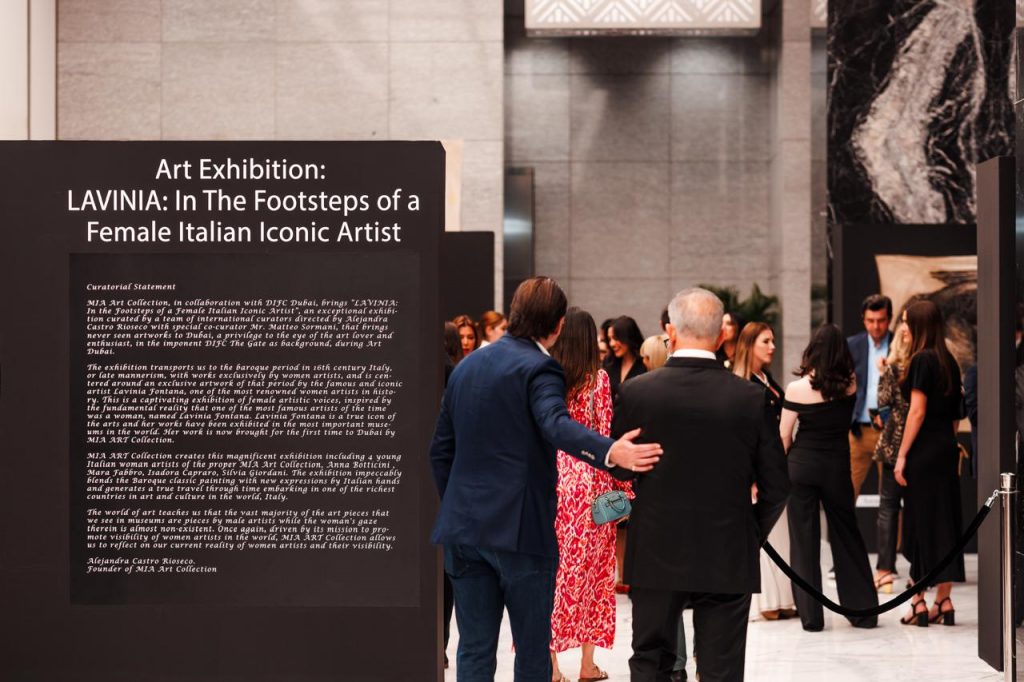
What is your vision for the future of female artists?
I would like to think that we have had a positive impact, that we are on the right track, that we have added to triggering an increasing awareness of the importance to achieve equality and its importance for a more balanced world. But still a long way to go. Women make an important contribution to the way we see and experience art. For years we have looked at the world through men’s eyes. It is time to see the world through women’s eyes.
What advice would you offer to women artists seeking to establish themselves in the art world?
There are many things I’d like to tell them, but the most important is not to lose hope, to be positive, that it is crucial to seek good advice, read and study the markets, study art history, in particular the history of women in the arts, their evolution and how they have overcome continued difficulties and forged their own paths in a world dominated by men!
Today, art schools and education programs are full of women studying art. This should be a sign that the market and world needs to change, and consequently, so do the conditions for and reality of women artists as a critical step forward for all!


