Coming soon
Coming soon
Select type
Dearest Strangers: on the cyclical interaction between absence and presence
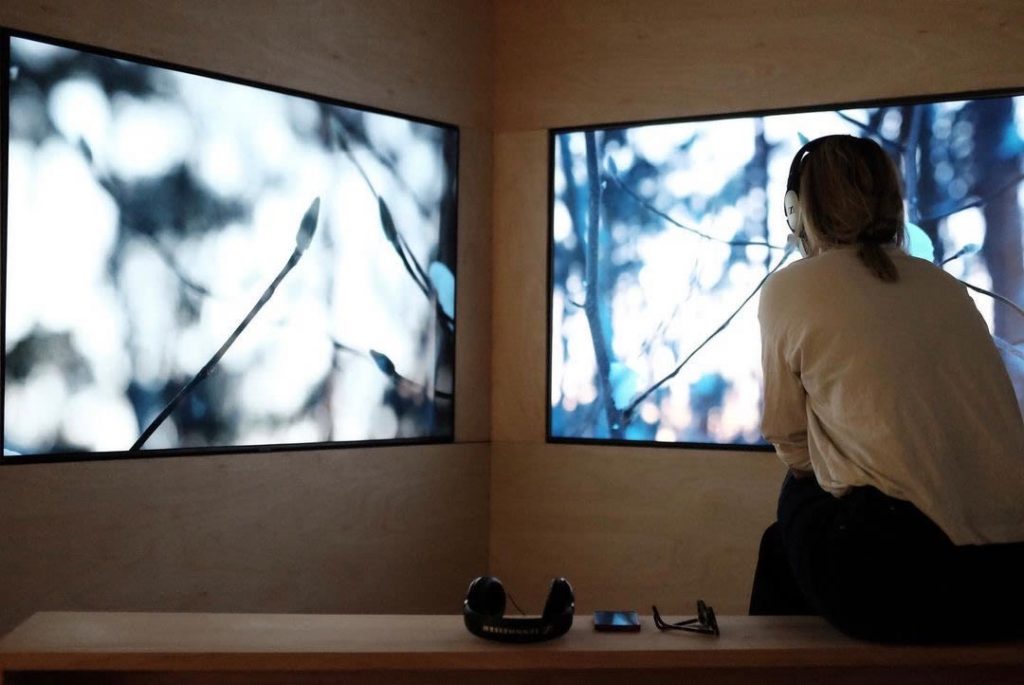
At Projections, the Antwerp gallery Fred & Ferry shows the video installation Dearest Strangers by the Belgian artist Lydia Hannah. She made the video installation on behalf of the Antwerp Hospital Network, intended for employees and patients. At first she was hesitant to accept the assignment, because her work has little to do with the medical world. Finally she decided to film the trees around her house 4 times a day for 4 seasons. It resulted in a film to the rhythm of nature. A subtle attempt to break through the dominance of efficient and purposeful action on the basis of the slow changes of the season and to escape from everyday reality.
Lydia Hannah, in full Lydia Hannah Debeer (1992), is a Belgian visual artist and musician. Her practice explores the spaces between image and sound. She creates immersive landscapes through video, music and live and recorded soundscapes. She subtly peels back the different layers of reality to show the cyclical interaction between absence and presence.
Gallery Fred & Ferry has been working with Lydia since the opening of the gallery in 2016, says Frederik Vergaert: “Initially, we invited her as ‘house sound artist.’ She was given the key and alarm code from the start and was free to come and go as she pleased; both during and outside regular opening hours.” The result was a presentation during the Antwerp Art Weekend in the form of a soundscape, as a video installation and a live performance. Lydia Hannah graduated from LUCA School of Arts in 2014 and obtained a postgraduate degree from HISK in 2016, both in Ghent. She is currently doing PhD research at PXL – Uhasselt on liminal states of mind and their sensory manifestations.
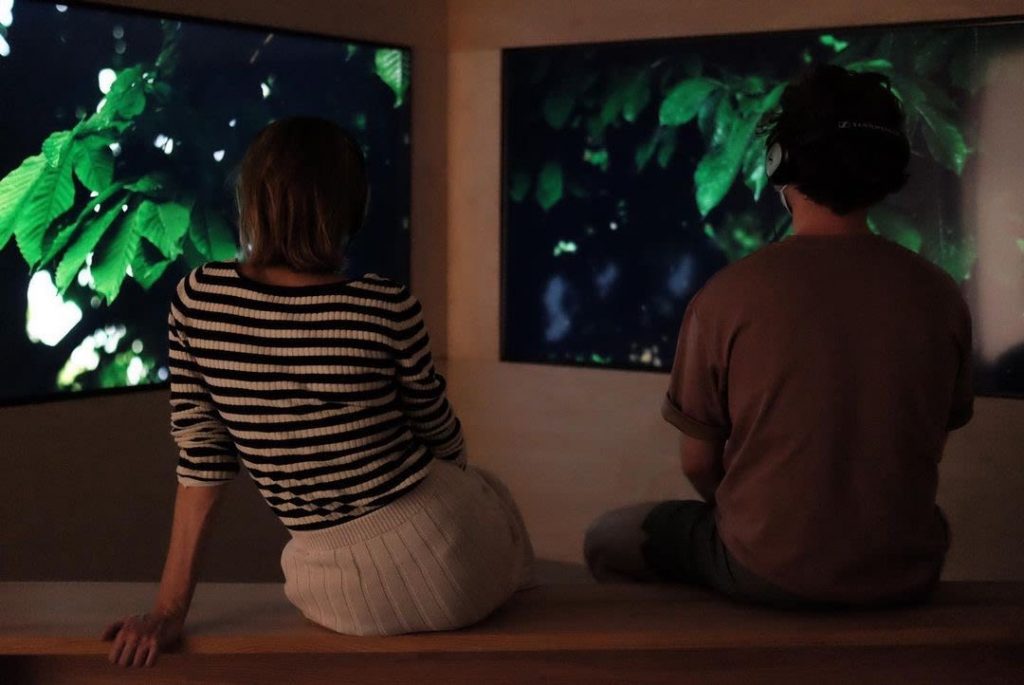
You made Dearest Strangers in 2021 for the employees and patients of Antwerp hospitals. Does the pandemic play a role in this work?
The invitation from Beatrijs Eemans, curator of the project, dates back to before the pandemic. At the time, she was working on ZNA Kunstenplatform, a contemporary art integration within ZNA. When the pandemic hit, the need for a space that would accommodate contemplation and interaction only increased.
What effect do you hope Dearest Strangers has on healthcare workers, patients and the general public?
I hope that viewers let themselves be carried away by the rhythm of nature and in this way come to a delay, a break from the daily and task-oriented. The film is certainly not exclusively ‘soothing’ across the board. Rather, it is a contemplation of the cyclical movement that we are all subject to and how it can affect our feelings, our health, our needs.
Conceptually, the work is quite far removed from the day-to-day activities in hospitals. Why did you choose to implement this idea in particular?
When asked to create a new work for a hospital, I hesitated. I did not see myself as being able to make a portrait about care or to make a specific therapeutic work. However, Beatrijs Eemans reassured me and made it clear that I would have complete artistic freedom. That I was free to interact with the infrastructure and employees or not.
The idea of taking the nature around our house as a subject was already brewing in the back of my mind before this assignment. The personal, fledgling connection – I had just moved from an urban to a forested area – with the trees that greet me every day and yet are foreign to me, as the new scientific discourse on the influence nature has on our health (even images of nature), propelled my fascination. Among other things, research has shown that spending time in a wooded area helps our body’s immune system by increasing the number and activity of disease-fighting cells. The number of NK (“Natural Killer” cells of the immune system) and the substances released by them are significantly higher on days when people are immersed in trees, and patients who have a view of trees or houseplants in their room have healed faster.
Watch Dearest Strangers, 2022 here
Your gallerist Frederik Vergaert states that your work expresses a ‘cyclical interaction between absence and presence’. Can you explain what he means by that?
It is rather by looking back at the works that I have already made that this fascination f has become clear to me, and yet I do not want to pin myself down to that. Now that I have started a PhD in the arts at PXL – Uhasselt on liminal states of mind and their sensory manifestations, I am grateful to be able to dive deeper into the investigative aspect of my work. I really like the concept of “the fertile void” that Julia Samuel coined: “In the movement between where we were and where we are heading, we need to allow space, time just to be, a time for not knowing: the fertile void”. It is this contradiction of standing still in order to move that fascinates me and has pushed me towards the visual arts. I myself am most grateful for those moments when the beauty, complexity, or power of a work of art, performance, or music has moved me so emotionally and physically that I have had no need to “understand” it intellectually. That the experience itself has already changed something and has brought about a wordless knowing.
You are also a musician; does that background affect your video work? For example, does this translate into a certain way of looking or a certain rhythm?
Because the way I make music has grown in parallel with my practice as an artist, I believe it’s a mutual influence. I have not had any formal training in music at a conservatory, for example, which means that this aspect has also grown very intuitively and is still growing. For a while music was mainly part of my work as a soundtrack to a video, but that is now growing more and more into an equal role. I often edit my videos to a certain rhythm, but I also compose my music in a very visual way.
How do you work and what does your studio look like?
How I go about it varies, but a certain sluggishness and a long run-up phase usually typical. The topics I choose and the way I approach them are very intuitive. Those rare moments when the puzzle suddenly fits are interspersed with long periods of watching, listening, reading and taking a step back.
My studio looks especially warm and cosy, it has always been that way. I remember that when I was at HISK, both colleagues and guest lecturers were always amazed at how ‘homely’ my studio was. It seems that I need that warmth in order to create. There are a lot of plants, a seat at the window that looks out at the trees, my harp, piano and some electronics and I have a high desk at the other window where I edit video and sound. On the wall hang some test images and sentences from books that reverberate or resonate with something I’m working on. I get a lot of inspiration from books, not directly, but in the form of suddenly recognizing something that I’ve been trying to articulate in images for a long time.
What are you currently working on?
I am currently working on the new work for Art Rotterdam and the next stop is the solo exhibition at Fred and Ferry in September. I may also show work again during Antwerp Art, at the invitation of Winnie Claessens, but that remains to be seen whether that is 100% certain. I also contribute to the soundtrack of Jana Coorevits’ new film matter on its dance through time, for which we went to Death Valley for 3 weeks before the summer to record. In the meantime, as I mentioned, I’m starting a PhD in the arts, so both creating new work by September and diving into my artistic research is what will keep me busy for the next few months.
By Wouter van den Eijkel
During Art Rotterdam, NN group will present the NN Art Award for the seventh time: to a contemporary art talent with an authentic visual language and an innovative approach. NN Group has been a partner of Art Rotterdam since 2017 and has been awarding an incentive award every year since then. An annually changing jury of art professionals makes a selection of four promising talents, from which a winner is ultimately chosen. The conditions are clear: it concerns artists who have been trained in the Netherlands and who show their work during Art Rotterdam. NN Group will purchases one or more works from the nominees for its corporate collection. Last year, the NN Art Award (worth €10,000) was won by the Lithuanian artist Vytautas Kumža. We’ve interviewed him to find out what winning the prize has meant to him and how he has experienced the past period.
How did it feel to win the NN Art Award?
Vytautas Kumža: “Honestly, I was really surprised to win the NN Art Award. I had known work by other nominees for years and it was just great to be included in such an impressive group of artists and to present artworks together. I was the youngest of the group, so it felt great that the jury believes in me and sees the importance of continuing my practice — and that they are also supporting it with this award.”
What has the past year been like for you?
VK: “The past year has been really intense and productive. I had a busy season and many art fairs, new works were presented at June Art Fair in Basel, Art Dubai, Enter Art Fair, Unfair and I have ended the year with a solo exhibition in Vilnius. I feel like I did develop a new way of working last year even though it was quite a full year.
I have traveled quite a lot during the past year and every place I visit leaves an impression or aesthetic in my mind. In my work, I don’t photograph people, because I’m more interested in gestures that people leave behind. So what is happening and what I see around me certainly leaves traces that are later translated into my practice, sometimes in a more subtle or direct way.”
How did the works that you showed during Art Rotterdam come about? Do you follow a specific process?
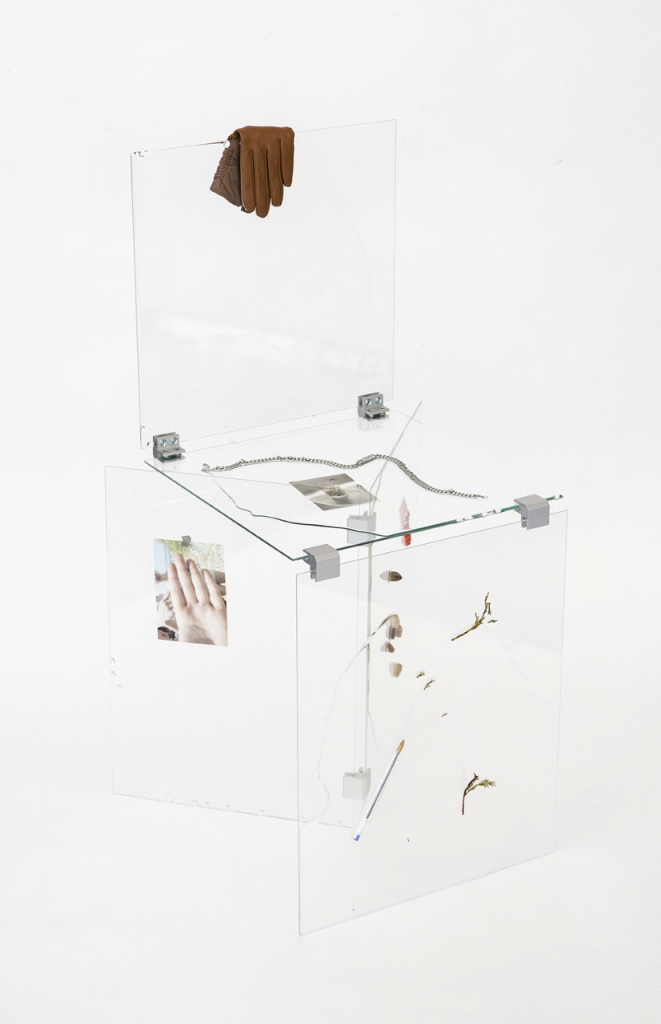
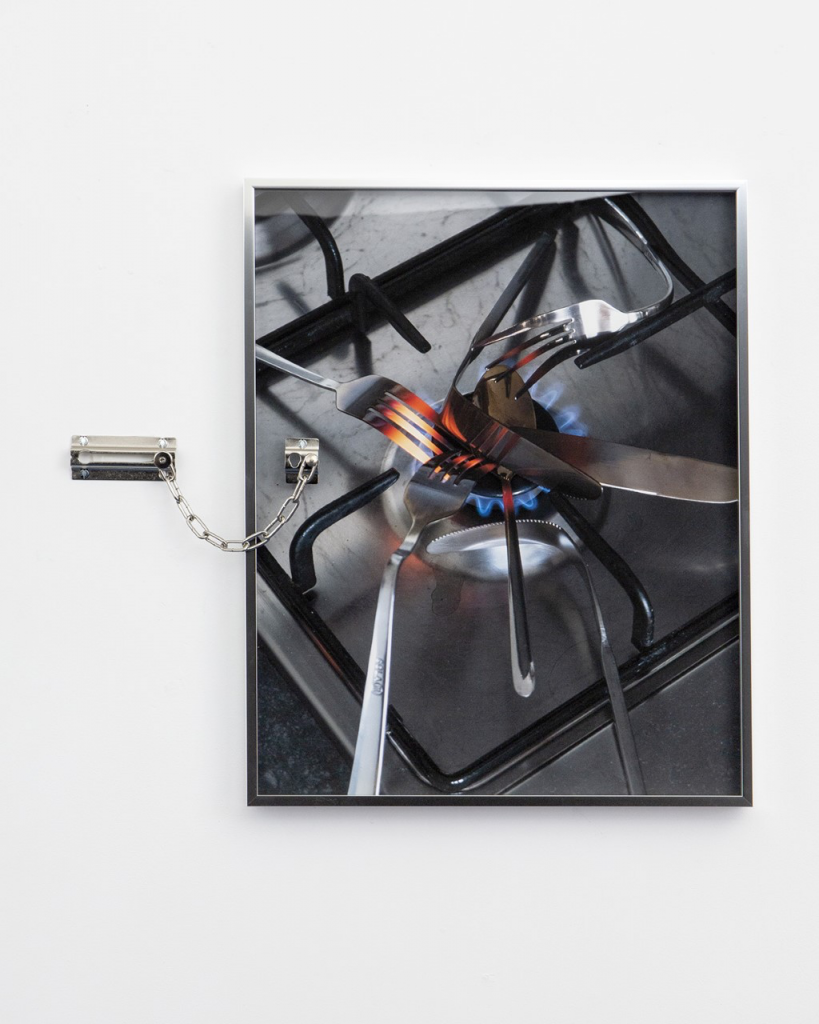
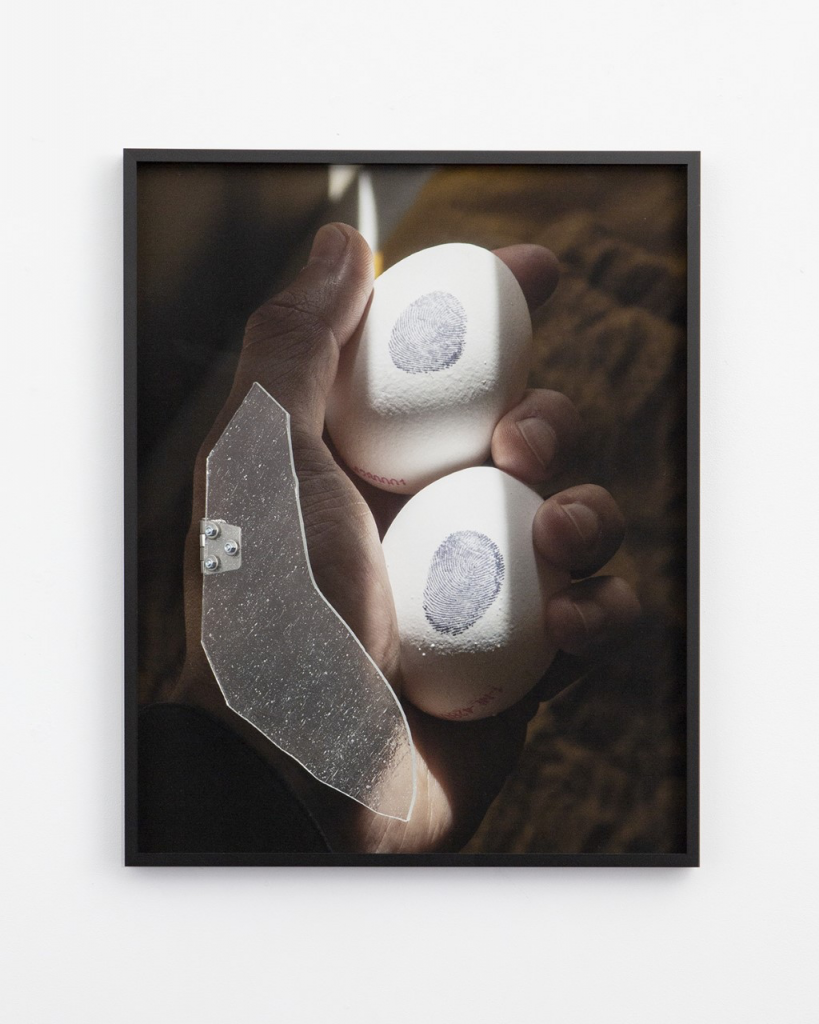
VK: “The series of works that I presented in the NN Art Award booth was inspired by the imaginations of people, that were created as a result of the recent times and its stories-flooded screens; in which urban spaces were taken out of social relations. I have noticed in the world of the post, the new form of imagination was gaining momentum, but its contours were blurring. By rethinking various everyday processes, I constructed photographic and glass constructions of found objects and memories and created several possible scenarios that deceive the gaze and question the logic of its view of the viewer. With this confusing instability I ask the question: ”Can observation change the nature of things or give them a different meaning?”. While leaving visible “seams and edges” in multi-layered photographic plans in the same way as lead sealed glass pieces, I created seamless stained glass constructions. This transparent obstacle, between the print and the viewer, becomes an indicator that we are looking through one’s constructed ‘filter’ of vision.”
Are there any particular things you were able to achieve thanks to the prize money?
VK: “I was able to create and produce a lot of new artworks, so all the prize money was invested in that. There wasn’t even a question of where and when it should be spent, so I did it with confidence and I’m really glad I didn’t have to think too much about it, that I could just do it and see the result, which in the end I was happy about. In the past year I have started to experiment more with different ways of incorporating glass and combining it with other objects. I have also expanded my practice in a more sculptural way. And I’m glad that there were a lot of opportunities to present it last year. During Art Rotterdam 2023, some of the most recent works will be presented, followed later in the year by a solo exhibition at the Martin van Zomeren gallery.”
What is your ultimate piece of advice for young artists?
VK: “It’s a tough question because there isn’t one ultimate piece of advice, because everyone needs something different and has their own unique path. Although I would just say to just keep making work and to not stop, even if it sometimes seems impossible to do so. I believe that as an artist, you have to get used to ups and downs in every stage of your career. It’s just a matter of making your practice a part of your routine and taking it seriously, while being open to mistakes, accidents and suggestions.”
Interview by Flor Linckens
During Art Rotterdam, you will see the work of hundreds of artists from all over the world. In this series, we highlight a number of artists who will show remarkable work during the fair.
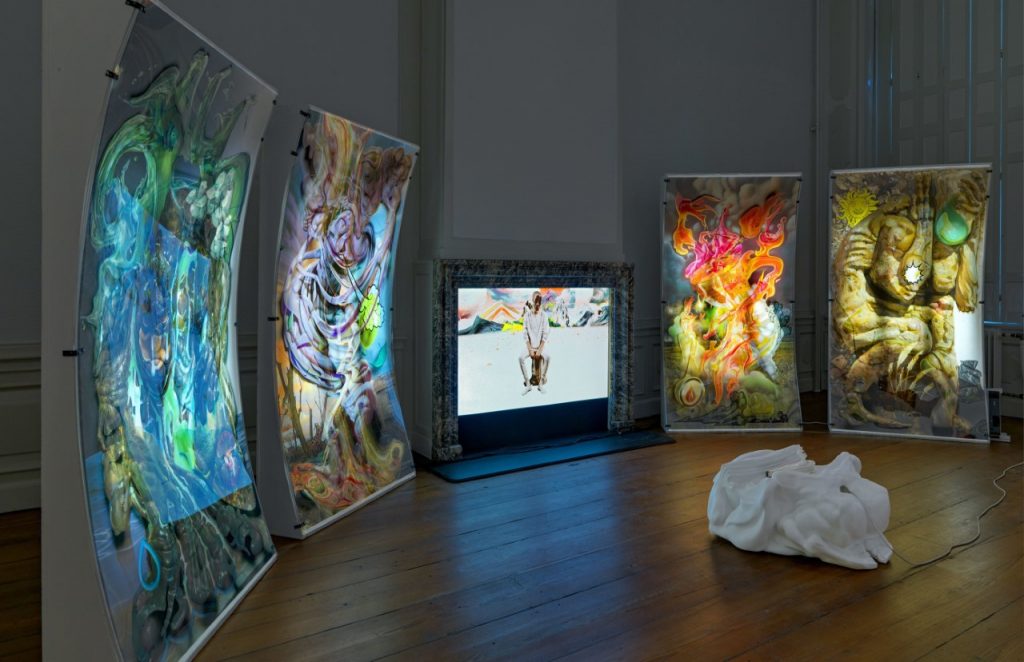
In his practice, the young French artist Kévin Bray explores the boundaries of various disciplines, such as video, (3D) photography, (digital) painting, computer graphics, animation, sculpture, graphic design and sound design. He then looks for ways to stretch these boundaries. The experiment plays a significant role in that. Bray then applies the implicit and explicit (visual) codes and rules of one medium to the other. How do they influence each other and how do they change the meaning of the artwork?
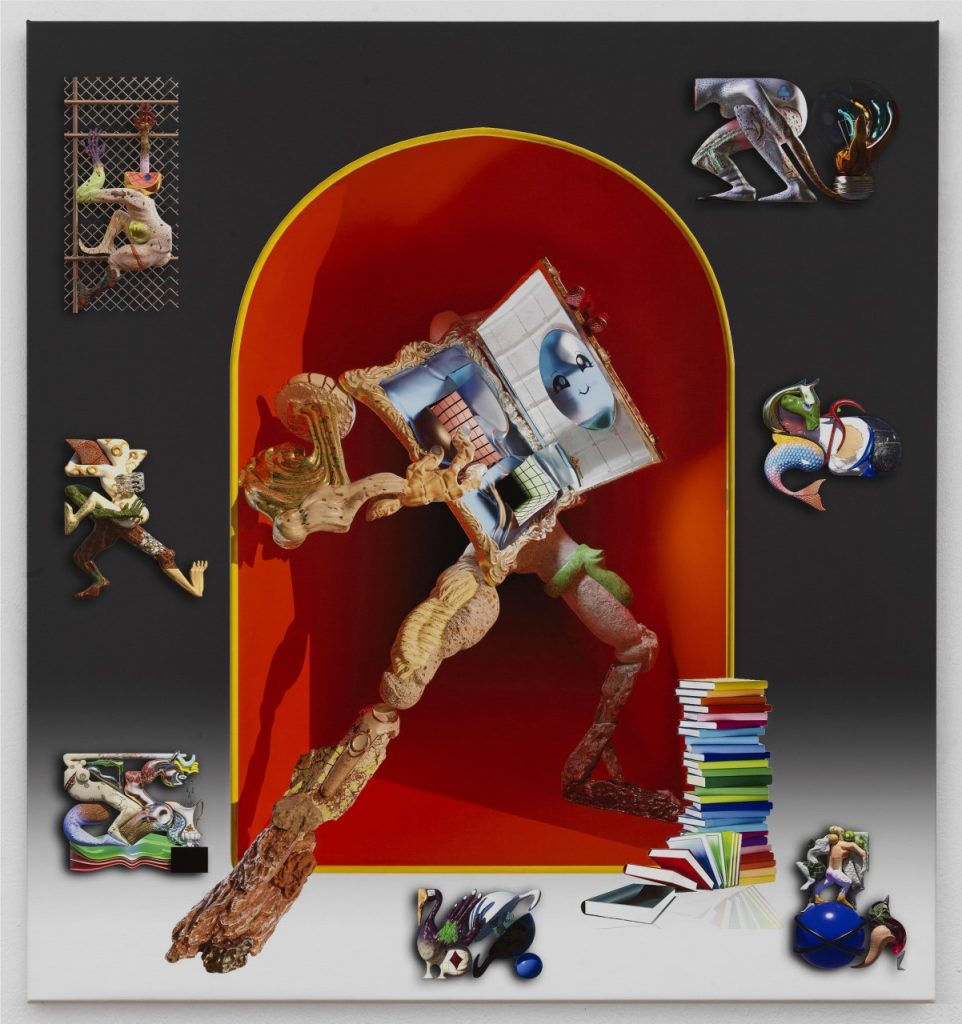
In his practice, Bray seems to refer in equal measure to art history, apocalyptic and dystopian stories and science fiction. He is also fascinated by fiction as a construct. When you watch a film, you often don’t realise how many factors have to come together perfectly to create a credible whole: from sound and art direction to visual language, camera work and special effects. Bray hopes to alert us to the fictional and deconstructed components in his work. He makes us aware of the underlying materials, manipulations and technologies that he has used to arrive at the end result. He mixes eerie and surrealistic elements and plays with the boundaries of the analog and the virtual. This creates a certain discomfort for the viewer, which makes for an exciting viewing experience. He uses both traditional techniques — including trompe l’oeil special effects from the world of cinema — as well as the most recent technologies.
Bray: “In my work I try to be a generalist of technologies, tools, and media. I believe that they are a language or at least an extension of it. I try to observe and learn from as many tools deriving from a diversity of systems, ranging from paintings, sculpting, writing, 3D modeling, filming, animating, composing, drawing methodologies and design to storytelling music making and sound design. Of course, I don’t master any of them but I try to understand and bridge all of those forms of language in unexpected ways, in order to encompass new realities and new perspectives on the shapes our narratives (social and political beliefs) are taking.”
His most recent works in “The Collective Shadow” consist of a series of sculptures, paintings and video projections that interact through different narrative techniques, to form a layered and hybrid multimedia installation.
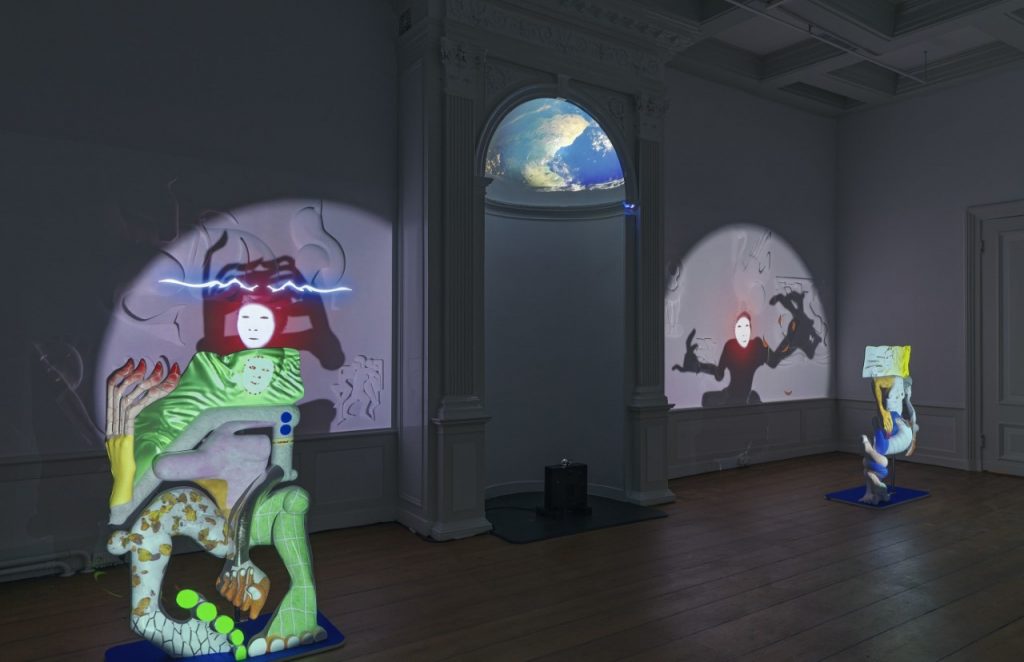
Bray trained as a graphic designer at L’Ésaab in France, followed by a period at the design department of the Sandberg Institute and a residency at the prestigious Rijksakademie van Beeldende Kunsten in Amsterdam. He has exhibited his work at the Palais de Tokyo in Paris, Foam Amsterdam, het HEM, the Dordrechts Museum and the K Museum of Contemporary Art in Seoul, among others. Bray made commissioned work for institutions including Kunstinstituut Melly and the Nieuwe Instituut.
During Art Rotterdam, the work of Kévin Bray will be on show in the booth of Upstream Gallery in the Main Section.
By Flor Linckens
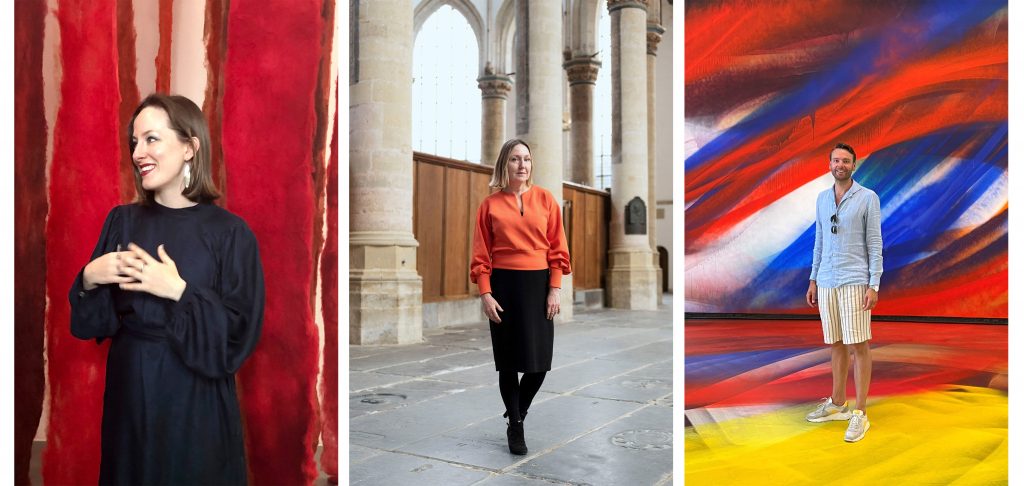
We asked Rotterdam-based art professionals and collectors for their special tips. Enjoy your stay during Art Rotterdam like a local!
My favourite place to dine in Rotterdam:
Hard to choose, but at this particular moment: Tensai Ramen.
Where I would take a guest visiting Rotterdam to have a drink in Rotterdam:
I’d take them to Williams Canteen of course. For cocktails, that is. Kaapse Maria for beer.
My favourite art space:
Well, beyond Kunstinstituut Melly I’m going to say Daily Practice in Rotterdam West.
My outdoor sculpture in Rotterdam:
The Franz West “Qwertz” that I walk past each day.
My secret spot that makes Rotterdam special:
I can’t give the top secret spot away, but here’s the runner-up: Evermore
My favorite place to dine in Rotterdam:
La Pizza centrum or Louise petit restaurant
Where I would take a guest visiting Rotterdam to have a drink in Rotterdam:
Wine bar Le Nord or L’Ouest.
My favourite art space:
Museum Boijmans Van Beuningen, but since it’s closed its Depot is the second best.
My favorite outdoor sculpture in Rotterdam:
Le Tamanoir by Alexander Calder (corner of the ‘Aveling’ and the ‘Venkelweg’, Hoogvliet)
My secret spot that makes Rotterdam special:
It’s not that secret, but to me the most beautiful spot in Rotterdam; just stroll through the Euromast parc, grab a coffee at Parqiet and walk towards the Erasmus bridge and de Veerhaven.
My favorite place to dine in Rotterdam:
Rotterdam is teeming with great places to dine. There’s a restaurant for every mood and time, however I always tend to end up in the same places:
La Pizza (vongole, vongole, vongole), Tai Wu (so much fun to order by number), Vislokaal Kaap (always willing to make you a dish that’s not on the menu)
Where I would take a guest visiting Rotterdam to have a drink in Rotterdam:
My current fave hangout is Amore Rotterdam, especially when it comes to drinking their caipirinhas; However: it is mandatory to visit Café de Schouw in the Witte de Withstraat this year. This bar is Rotterdam’s one and only Artist Bar, where sooo many artists met and made new plans over the decades. De Schouw is closing this summer, so let’s party one more time, and make new memories that will end up in future books/blogs/films about the vibrant Rotterdam art scene.
My favourite art space:
Brutus Rotterdam is an unconventional space for art and more, housed in a massive old warehouse in the rough harbour area of Rotterdam. Artist Atelier van Lieshout has created a 10,000-square-foot paradise of artistic curiosity and exhibition to show exciting established artists, up-and-coming talent, embracing all artistic disciplines.
My favorite outdoor sculpture in Rotterdam:
On Heemraadssingel, well respected artist Maria Roosen was commissioned to create a monument for writer and poet Anna Blaman (1905-1960). This free spirited writer wrote openly about her lesbian relationships. Blaman was a prominent writer of great significance for the LGTBQ+ community in the Netherlands. In her time, she was a striking figure, a woman riding a huge motorcycle, which was quite uncommon. Maria Roosen chose this motorcycle to remember Anna Blaman by, appealing to notions of independence, freedom, adventurousness.
My secret spot that makes Rotterdam special:
The historic garden Schoonoord is a true Secret Garden in the very center of Rotterdam. I often take a break from the urban hustle and bustle in this beautiful time capsule of an early 19th-century private garden. The English Style garden stayed in private hands until 1973 when the family decided to open it to the public. A bridge was built and the old manor gate was put on the bridge. This made the park hard to spot as a public place and it still is to this day only known by the locals. There are over 1000 plant species at the garden and it became a national monument in 2000. Schoonoord is open daily from 8.30-16.30. (Please be mindful of the environment)
During Art Rotterdam you will see the work of hundreds of artists from all over the world. In this series, we highlight a number of artists who will show remarkable work during the fair.
Moshekwa Langa was born in 1975 in the village of Bakenberg in South Africa, during the period of apartheid. Before he focused on the visual arts, he worked for the South African Broadcasting Corporation for a while. He also started experimenting with text, sculpture and sound recordings. In 1997 he was invited for a residency program at the Rijksakademie van Beeldende Kunsten in Amsterdam. Since then, the Dutch capital has been an important base for the artist. Later on, he completed residencies at the Thami Mnyele Foundation in Amsterdam and the Cité Internationale des Arts in Paris.
But it is his native village of Bakenberg that has always played an important role in his imagination. He returns there regularly and made his video work “Where do I begin” (2001) there, which was shown at the Venice Biennale in 2003, in Fondation Louis Vuitton in 2017 and until recently [early December 2022] in a retrospective at KM21 in The Hague. The artist’s key work is also part of the Tate Modern collection. The title refers to the song Love Story by Shirley Bassey. Langa only uses a snippet from the song and repeats it throughout the video. For four minutes we see people boarding a bus on a dusty road in Bakenberg, seen from the perspective of a small child. Langa deprives us of a narrative, we only see a series of anonymous legs. Yet the images provide visual information: perfectly ironed trousers next to worn-out shoes, a flowery skirt, an umbrella, an overflowing bag, stained clothing, a missing sock. The sentence “Where do I begin” suggests the beginning of a journey or a story. In combination with the repetitive movement, it says something about themes that recur frequently in Langa’s practice: travel, belonging, displacement, memories, identity, inclusion and exclusion, displacement and borders.
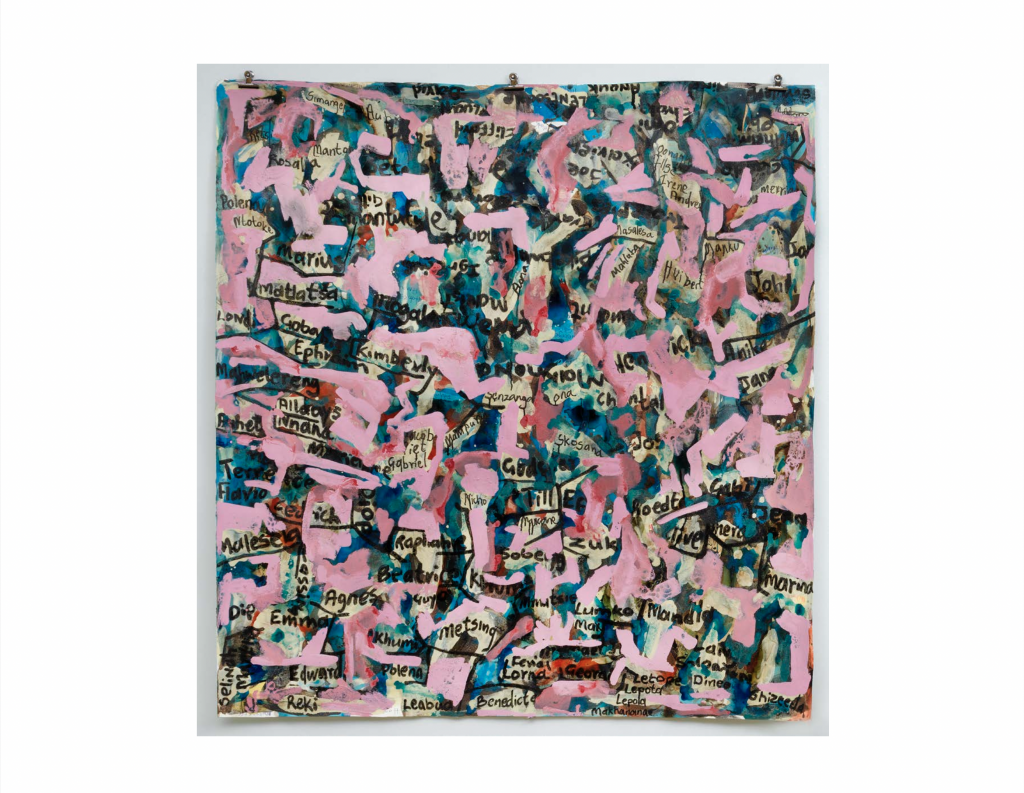
At the same time, the video implicitly speaks about the history of South Africa. During the apartheid regime, the National Party had allocated certain areas to black residents, the so-called homelands. That meant that many black residents had to travel great distances every day on their way to work. Bakenberg was not mentioned on any official maps during apartheid, a fact that thoroughly confused the artist when he first found out. It is therefore no coincidence that fictional and incomplete maps play a recurring role in his work. In a way, Bakenberg remains a static memory for Langa, yet he also reflects on contemporary developments in his native village, for example due to the rise of local platinum mining.
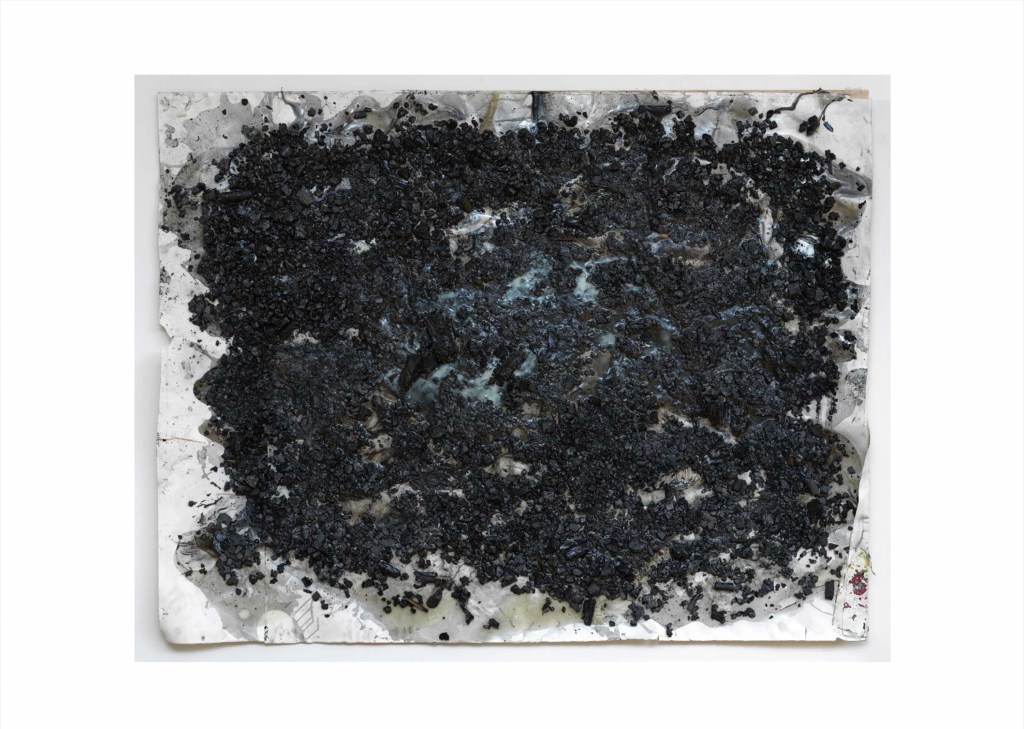
Langa’s practice is about living between different places, both in a physical and mental sense. He works in a multitude of media: from drawing and photography to video, collage and installation. The artist likes to experiment with different materials and uses salt, coffee, bills, paint, bubble wrap, pigments, cigarette butts, tape, Vaseline, cards, bleach, advertisements, corrugated iron, lacquer, plastic and natural charcoal. Language is also a regular feature in his practice. The artist also made a series of drag paintings that he dragged over the unpaved roads of Bakenberg to create a kind of abstract map of the area. Langa’s mostly abstract works are not infrequently marked by a thick texture: the artist layers the materials in the same way he layers meanings — which, incidentally, are not always easy to decipher. The titles of the works often resemble a riddle. Langa regularly applies the paint in puddles and will leave room for chance and free association. The viewer is also invited to associate freely.
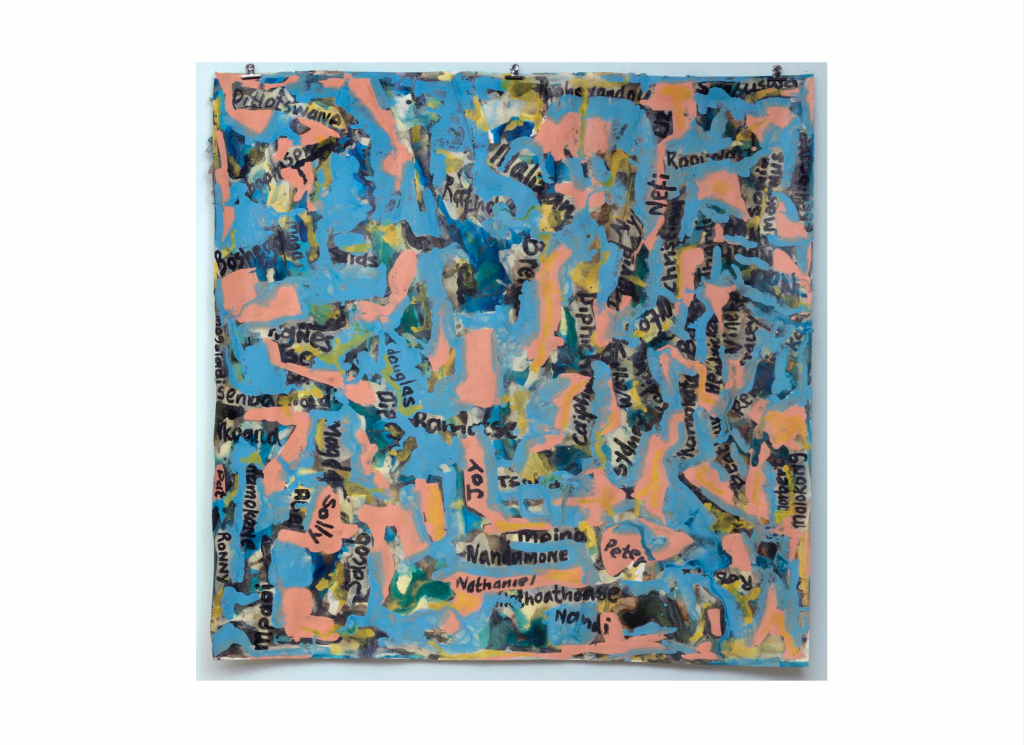
Langa’s work has been part of the Biennials of Venice, São Paulo, Johannesburg, Berlin, Havana, Gwangju and Istanbul and has been included in the collections of MoMA in New York, M HKA in Antwerp and Tate Modern in London. Furthermore, Langa presented his work at Fondation Louis Vuitton and Fondation Kadist in Paris, the MAXXI (Museo nazionale delle arti del XXI secolo) in Rome, the New Museum and the International Center of Photography in New York, Center d’Art Contemporain in Geneva, Kunsthalle Bern, the Walker Art Center in Minneapolis, the ZKM Museum of Contemporary Art in Karlsruhe and Museum Boijmans van Beuningen in Rotterdam.
During Art Rotterdam, Moshekwa Langa will show his work in the booth of Stevenson in the Main Section.
Written by Flor Linckens
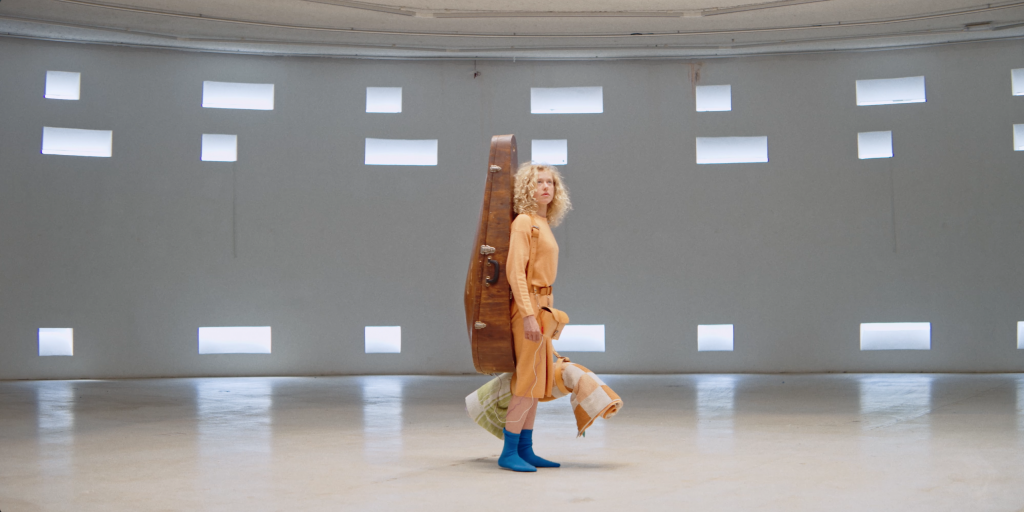
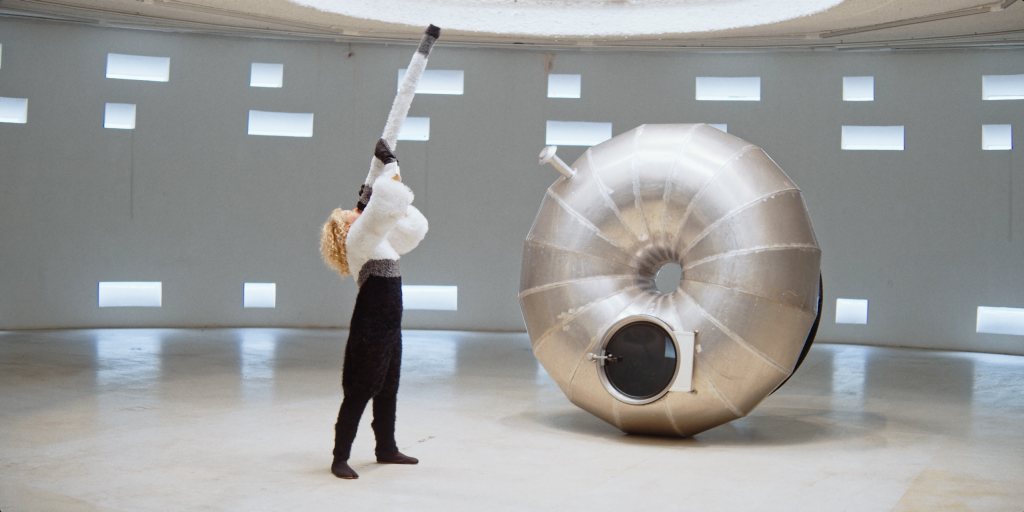
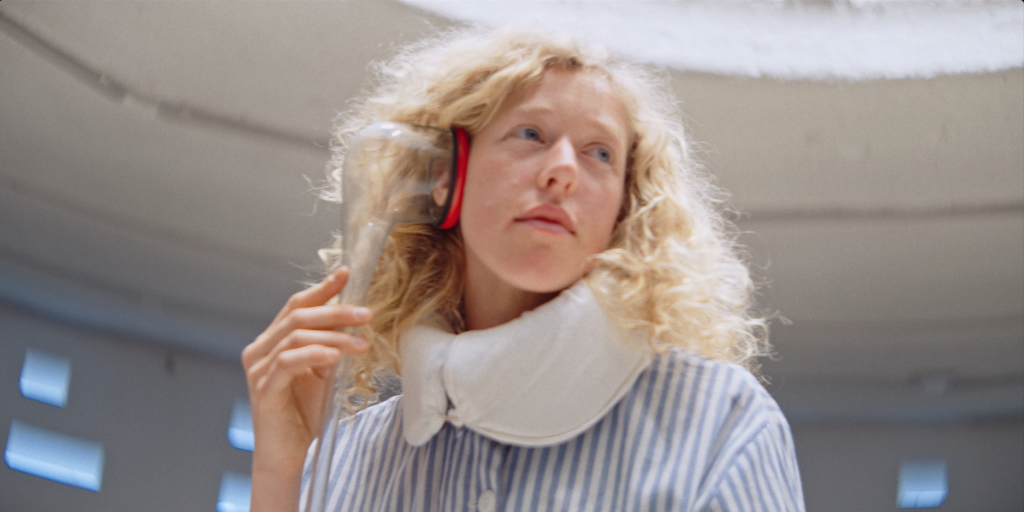
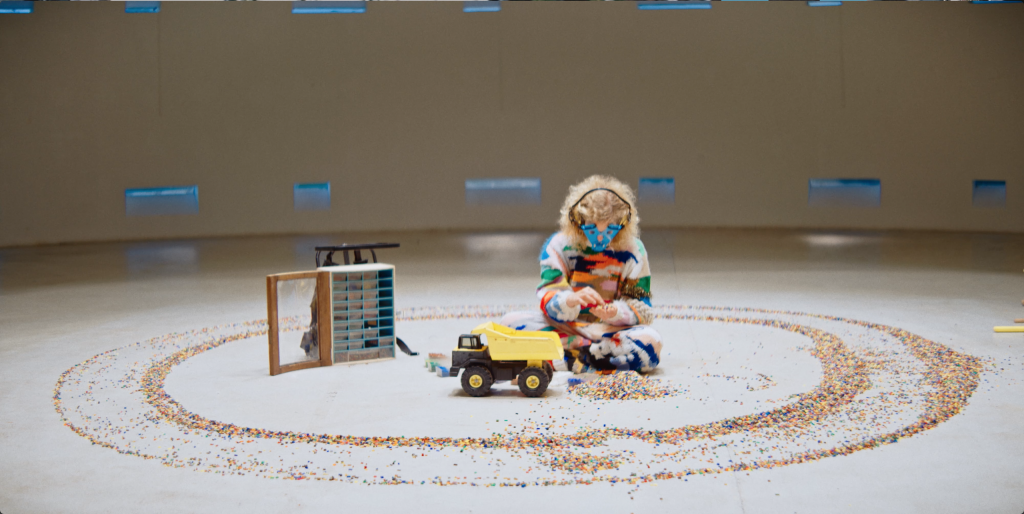
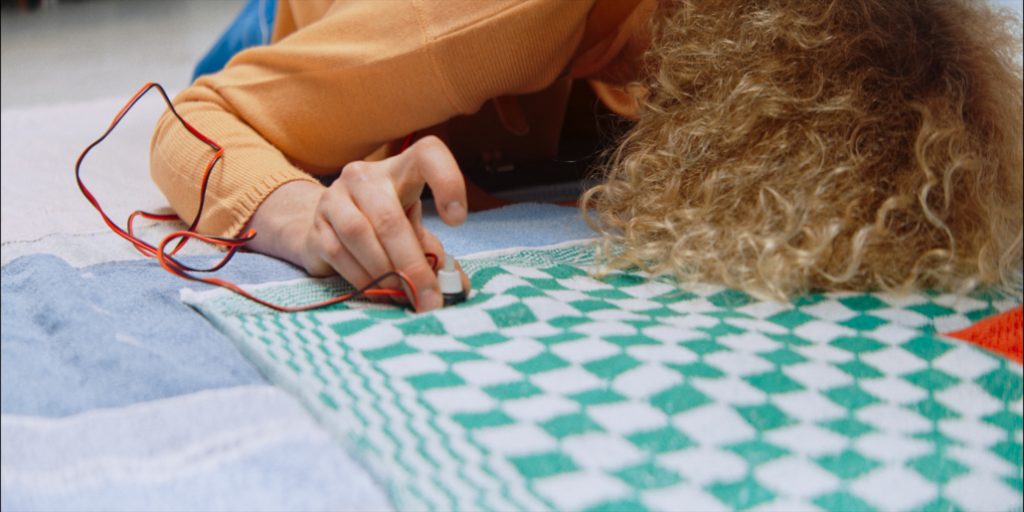
In the New Art section, LangArt is showing a new series by Maaike Fransen entitled How to Make a Living. The work comprises videos, but that does not do Fransen’s work justice. She personally designed and made absolutely everything in and for the six films, which she describes as parallel realities, one-person worlds – from the clothing and sculptures to the objects you see in the films to the performance.
Maaike Fransen (1987) graduated from the Design Academy in Eindhoven and earned a Master’s degree from the Sandberg Institute. Fransen is a multidisciplinary artist who dreams with her hands. Her work balances along the interface between fashion, design, performance and film. Using found materials as her starting point, she creates hybrid objects that balance between tools and autonomous sculptures and are often based on the human body.
What will you be showing at Art Rotterdam?
I am presenting a series of six films entitled How to Make a Living, including some of the two- and three-dimensional works from those films and a live performance in space.
In the series of films, different ideas and disciplines come together in what you might describe as absurdist-surrealistic one-person worlds. By ‘world’ I do not mean something big or wide, but rather a highly concentrated version of it. Perhaps habitat is a better word, or ‘comfort zone’, which was actually the working title of the series. They are essentially scenes of a unique, mutually related and interacting whole consisting of an installation, objects, person and action.
As a spectator, every film or performance gives you a glimpse of an alternative, parallel reality in which a mysterious ritual or unusual transformation takes place. I do everything myself and am a central part of the work, though I also try to disappear into it. You might also view the films as a series of moving self-portraits, DIY self-portraits.
You express yourself in videos, installations, performance and through fashion. It doesn’t get any more multidisciplinary than that. Is there a common theme in the work you produce in the various media?
When I consider my work of the past ten years, the common theme is perhaps that it is not so much one main theme, but a blend. Choosing has never been my strong suit. I always try to bring (too) much together. I have become skilled at collecting and collecting: combining, assembling, fusing existing objects and materials from my imagination. Creating unexpected interfaces and connections between very different, seemingly incompatible things. Intuitively and impulsively visually associating and constructing narratives. Perhaps I’m always striving for something like synergy or magic (1+1=3). Both I do this by allowing different ideas, forms, materials and techniques to work together, and in different disciplines and media.
Making things on and around (often my own) body is also a recurring theme in my work, as is trying to solve or work with personal topics, motives or problems. I like to erase the thin line between (my) life and (my) work by making things that are in between the real and unreal, between the normal and bizarre, the possible and impossible, things that slightly bend or question the status quo.
How do you choose a medium?
I consider the framework of the work: the question or assignment from which the need or desire to make the work arises, the resources at my disposal, the context or location where the work will end up or be presented. In short, the medium is often not preconceived, but a convergence of conditions.
As long as I don’t yet have a strong preference for any specific medium, I want the choice to develop during the process and feel like the most logical, natural or the most convenient and relevant one at that time. Making ‘something’ completely from scratch – even if the medium is fixed – does not fit my passion for collecting and compiling. I find it reassuring that I always have a find or a starting point somewhere in my studio that I can take in all kinds of directions, both imaginatively and materially.
What role does the result, i.e. the films, play in your work? Is this the primary focus or is the process more important to you?
I don’t consider the films that make up How to Make a Living as the result. They are certainly a result, but the installations, objects, sculptures and performance in the films stand on their own. As works of art and performances, I consider them a result. But because these films would be nothing without the things I made, and vice versa, I think the emphasis in this work is perhaps a little more on the things than on the films. And by things I mean the process, because I’m someone who comes up with an idea while working on something, and vice versa.
The work grows and evolves and slowly falls into place, or next to it. Sometimes, even after something seems finished, I continue to elaborate on it for a long time. It also happens that a work suddenly gain a new destination after being forgotten for a while. In a way, the films are an intermediate position, a snapshot. Making films or photographs helps me distance myself from the work for a while and truly see it, and then possibly finish it further. Filming is also a process in itself.
How to Make a Living consists of six short films in which the main characters have their own habitat with their own objects and rituals. Can you explain the idea behind this series?
In a literal sense, Making a Living refers to making or shaping ‘a life’, while figuratively it refers to ‘making ends meet’, supporting yourself financially. Ideally, you succeed at both and these two things smoothly coincide or emerge from each other, but in reality, at least in mine, they rub and clash and I am often confused and searching.
So, in this series, I try to do it for myself, partly fictionally and speculatively. ‘Make a life’ and at the same time reflect on it, fantasise about it. In some sense, these are sketches, a series of different attempts, a kind of exploration of alternatives and possibilities, as I place myself in different self-made settings. Which you could also view as abstracted jobs, functions or roles. Each work in the series tends to be subservient, useful, or at least entertaining, in order to earn its right to exist.
Would you consider the films an attempt to question your role as an artist in this world?
Yes, in a way I am attempting to intersect the arts with the everyday or necessary, with life and survival. In the films, I express personal wishes, dreams, desires, experiences, struggles, fears, disappointments, doubts and questions, such as: How do you live and survive in a capitalist system in which excessive value is placed on work, money and belongings? What is my place as an artist in this world? How do I keep myself alive from creativity alone, without commerce? How worth pursuing and how sustainable are individualism and self-reliance? How do you deal with alienation or loneliness? While making the series, I was recovering from a concussion. The enforced stagnation, uncertainty, worry, fatigue and limitations combined with bouts of hope and resilience from that time certainly influenced these dystopian and utopian worlds.
In that period of overstimulation and fatigue, I longed for a place of invisibility that defined peace and order, a place without all kinds of stressful and unnecessary things, where I could organise and execute things in my own way and where nothing was too much or too little. An equilibrium as it were. Yet the films are also disguised doomsday scenarios, or exit strategies. I was terrified that it would never go away and that I would become incapacitated for work with my faltering brain, that I would fall out of life and be unable to do anything. In the series, I take stock of and translate those things I was still able to do.
Apart from this personal layer, there is also a more general layer to the series: we are all born into a world that has already largely been imagined and created. How do you carve out your own place in it? What role can you play as an individual and to what extent do you have the freedom to shape that role and your own world? How can you use art and creativity for this? And how can you make a living from that without putting your work at the service of mass production and mass consumption.
From the very start of your career, for example in an early work like I-hat (2010), the tone of your work has been absurdist, playful and light. How did this become your preference?
Maybe that playful, light tone developed within me because of a lack of it as a way to deal with tension, heaviness and negativity. Creativity and absurdism as an outlet and escape, or as a way to put things that are difficult or annoying into perspective and sublimate them. Humour loosens up whatever is stuck in your mind and body.
You might say I have also experienced playfulness or play as a universal language that everyone speaks, knows and validates and with which you can easily connect with another person. To be honest, I have never consciously wondered if and why this is my preference. It is not on purpose or with much effort that I often create in this way; it usually just happens naturally. I think it’s my nature, a condition that suits me and makes me happy.
Geschreven door Wouter van den Eijkel
During Art Rotterdam you will see the work of hundreds of artists from all over the world. In this series we highlight a number of artists who will show remarkable work during the fair.
The German conceptual artist Erik Niedling is a bit of an enigma. He previously burned some of his earlier work and thinks about ways to fake his own disappearance. His works are about the ways in which we shape history and what that means for how that same history is collectively remembered. How do we collect, archive and organize things and what does that say about how we look at the world?
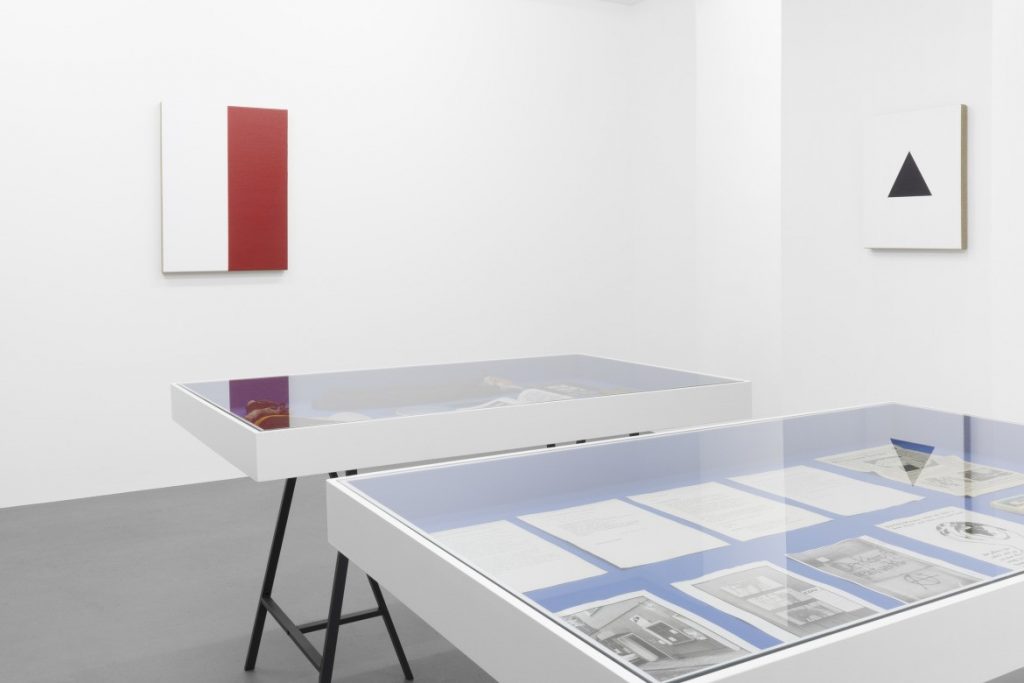
In 2010, Niedling co-directed and produced the documentary The Future of Art with Ingo Niermann, in which they interviewed leading curators, collectors, artists and art critics from the contemporary art scene, including Damien Hirst, Marina Abramović, Olafur Eliasson and Hans-Ulrich Obrist. A year later, the documentary was accompanied by a transcript in the book The Future of Art: A Manual. In it, Niermann proposes the idea of a special contemporary pyramid as a monumental work of art. Ideally, it would be financed by a single collector, who would then ensure a unique burial place after their death. In this line of thinking, the collector becomes a modern pharaoh, while indirectly elevating the artist as well. The project should be viewed through the lens of irony and sarcasm; it says something about the absurd amount of money flowing through the art market and the somewhat curious veneration for its players. In the documentary, Niermann and Niedling ask the curators, collectors, artists and art critics for advice to make the project an artistic and financial success. Their answers are sometimes a bit megalomaniac (Hirst) or self-aggrandizing (collector Thomas Olbricht) and few of the interviewees really criticize the rather absurdist plan.
At the end of the recording, Niermann hands over the idea to Niedling, for whom it has been the basis of many of his art projects ever since. One such project, “Mein letztes Jahr” (“My last year”) (2011-2012), involved him living for a year as if it were his last. He burned his earthly possessions and previous works and used the ashes to create new works. He captured the period in the work The Future of Art: A Diary, a sequel to The Future of Art: A Manual. He later made performances, publications and exhibitions about the pyramid mountain, for which he researched radical political movements in the state of Thuringia, among other things. He founded the Dokumentationszentrum Thüringen for this purpose, together with Niermann. On 8 May 8 2017, Niedling performed a ritual seizure of the Kleiner Gleichberg — on the day the Nazis surrendered to the Allies, 72 years before.
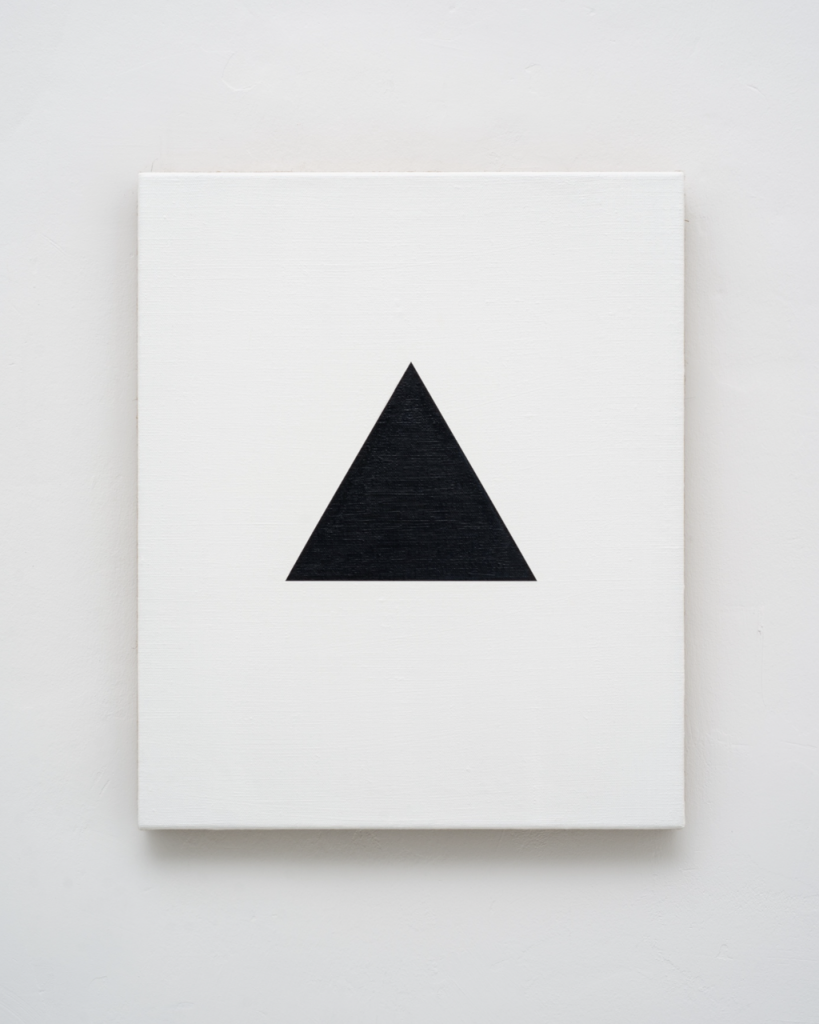
Niedling’s official statement was as follows:“I would like to build the largest tomb of all time and be buried there after my death, along with my artwork. Conceived by writer Ingo Niermann as part of our documentation The Future of Art (2010), Pyramid Mountain is a pyramid excavated from a mountain, standing no less than 200 meters high. Once I am buried, the carved-away material will once again be poured over the pyramid, effectively restoring the mountain to its original form. For the past seven years, I have been trying to create the necessary conditions to stage my own disappearance in a monumental way. I lived for one year as though it were my last, tried my hand as a political adviser and initiator of a new fitness movement to obtain the necessary financial resources, and created a new currency, the Pyramid Dollar. In 2012, I declared the Kleiner Gleichberg in my home state of Thuringia the future site of Pyramid Mountain, opening what amounted to a broad front of resistance. The multi-year international search for an alternative mountain proved unsuccessful, and I once again turned my attention to Kleiner Gleichberg: a highly visible landmark and natural bulwark used by everyone from the Celts to the East German National People’s Army. At 12 pm on May 8, 2017, I seized the Kleiner Gleichberg in an act of civil disobedience until final completion of Pyramid Mountain. As a sign of my claim, I will fix a flag on the summit, erect a pile of rocks in the shape of a pyramid and install a permanent exhibition with future grave items there. In a world where Donald Trump can become President of the United States, anything is possible: I am taking advantage of this propitious, revolutionary moment to set new rules. I have understood that only they who are ready for confrontation achieve their goal.”
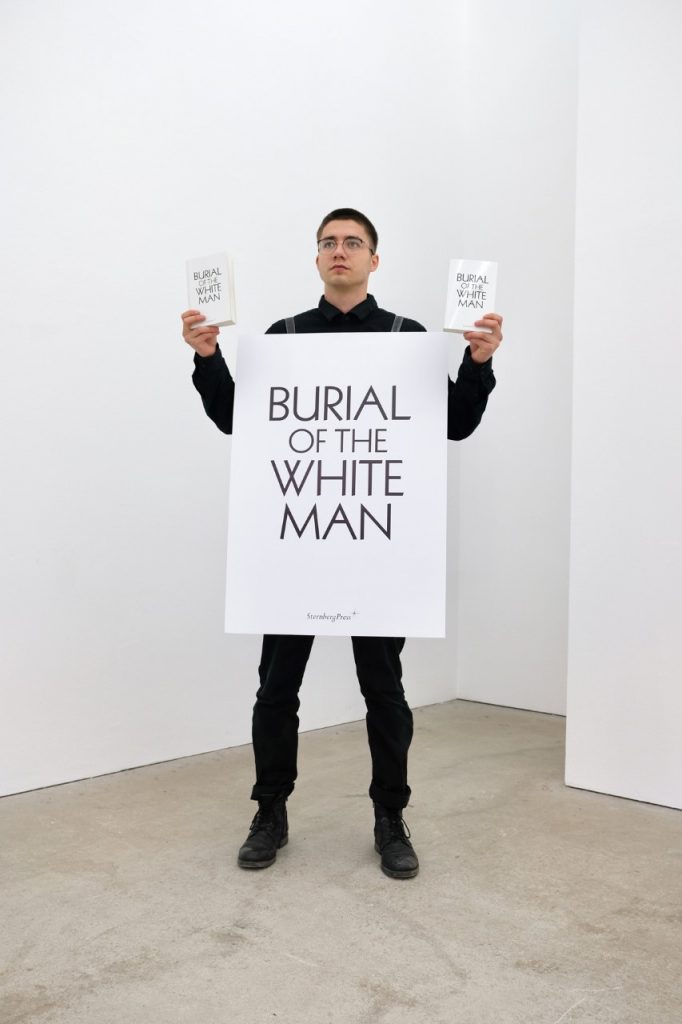
Since then, Niedling has performed “Burial of the White Man” on the mountain on the same day each year, symbolically burying the archetype of the white man, historically a symbol of oppression and violence. In 2019, he released an eponymous book, a biographical novel about his friendship with Niermann and the execution of a series of projects in extension of the pyramid that become increasingly large, absurd and ambitious — all of which seem, in essence, doomed to fail.
During Art Rotterdam, Erik Niedling will show his work in the booth of Galerie Tobias Naehring in the New Art Section. In it, the project of the pyramid mountain takes shape in a series of photographs, paintings and other works of art. Niedling’s work has previously been shown at Manifesta 12, the M HKA museum, De Appel Arts Centre, the Neues Museum Weimar and the Galerie für Zeitgenössische Kunst GfZK.
Written by Flor Linckens
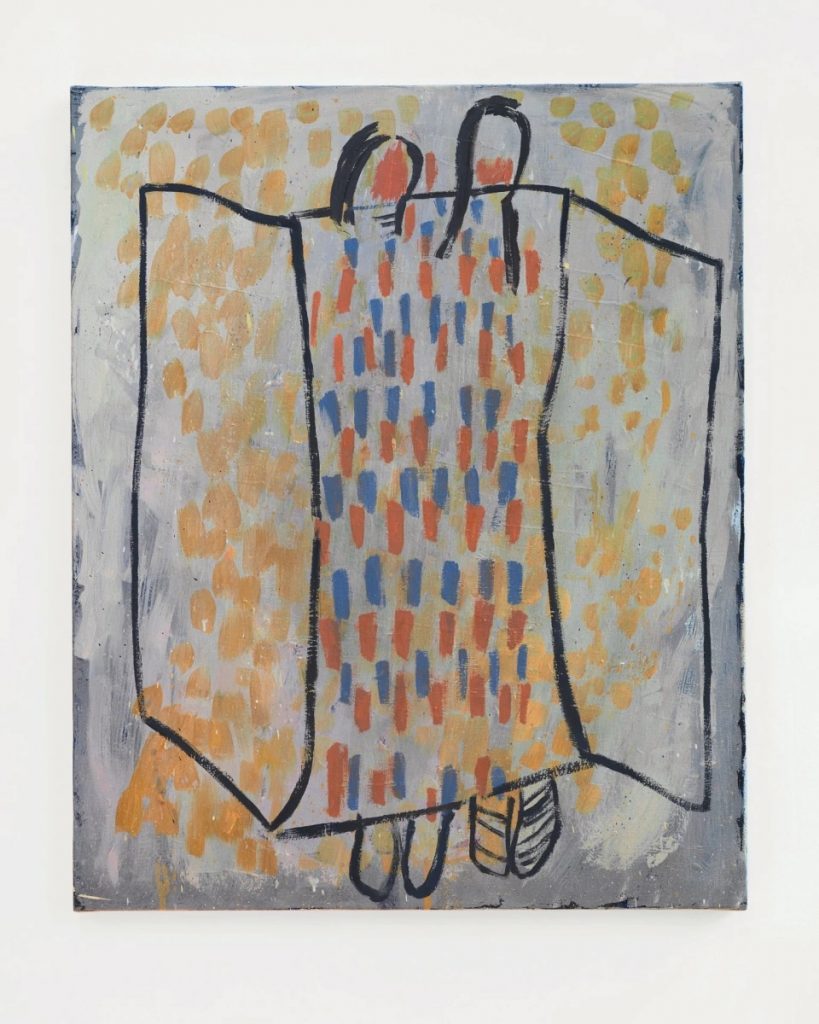
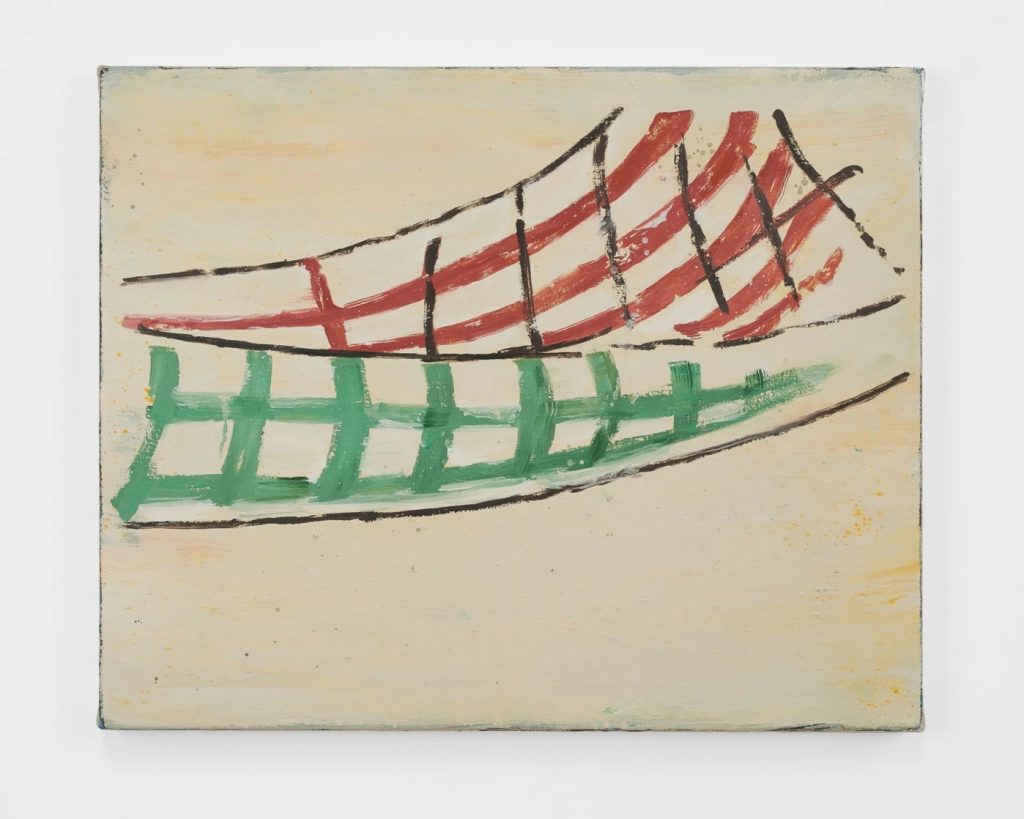
Kristof De Clercq Gallery is exhibiting new work by Ghent painter Veerle Beckers at Art Rotterdam. Her work is figurative and as a viewer, you immediately recognise Becker’s subjects, yet will never encounter them in the same way. Beckers navigates along the border between figuration and abstraction.
“For me, painting is very much about finding the right balance. It is a different translation exercise every time.”
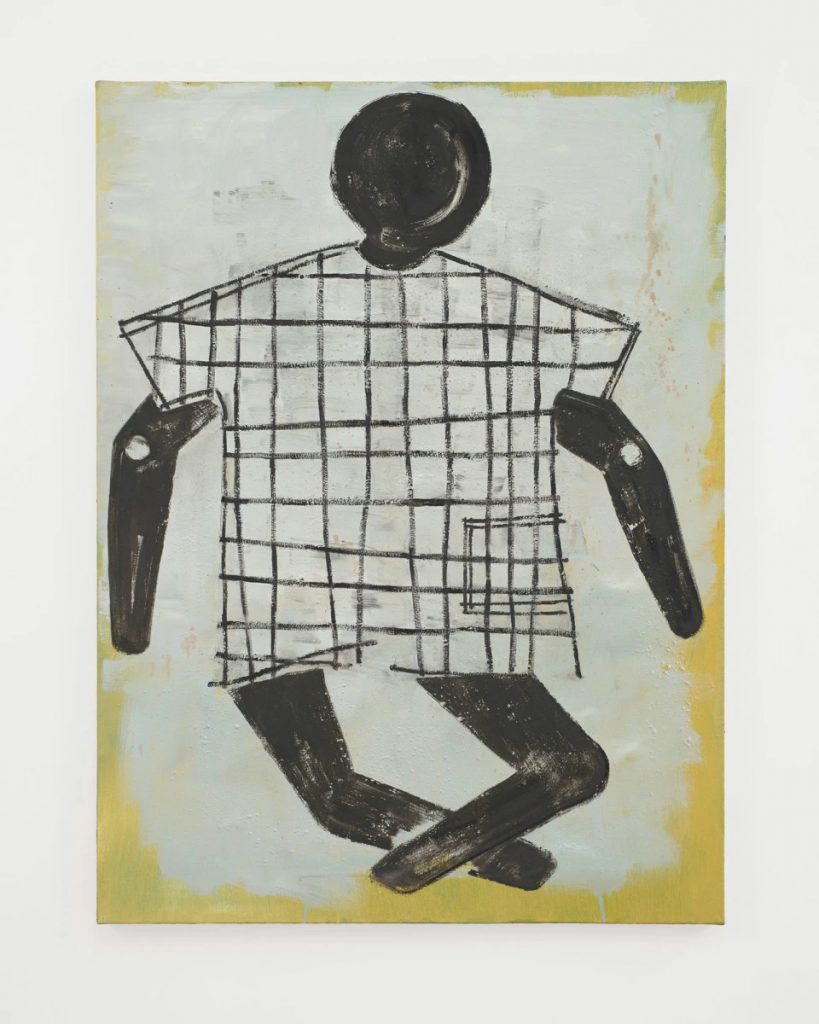
Do you know which works you will be showing at Art Rotterdam? Recent work will be on display, paintings that I painted during 2022. The final selection has yet to be made in coordination with my gallery.
Do you take that work in a new direction or build on existing principles?
Every canvas I paint is separate from the previous one, separate from the whole. This is how I work. I don’t make series of works. My work evolves along with me as a person. In my life lately, for instance, apart from working in the studio, I’ve been trying to let go of my urge for control a bit more, and this of course influences my approach to painting. At times when I am more introspective, what I paint is more layered anyway, more loaded.
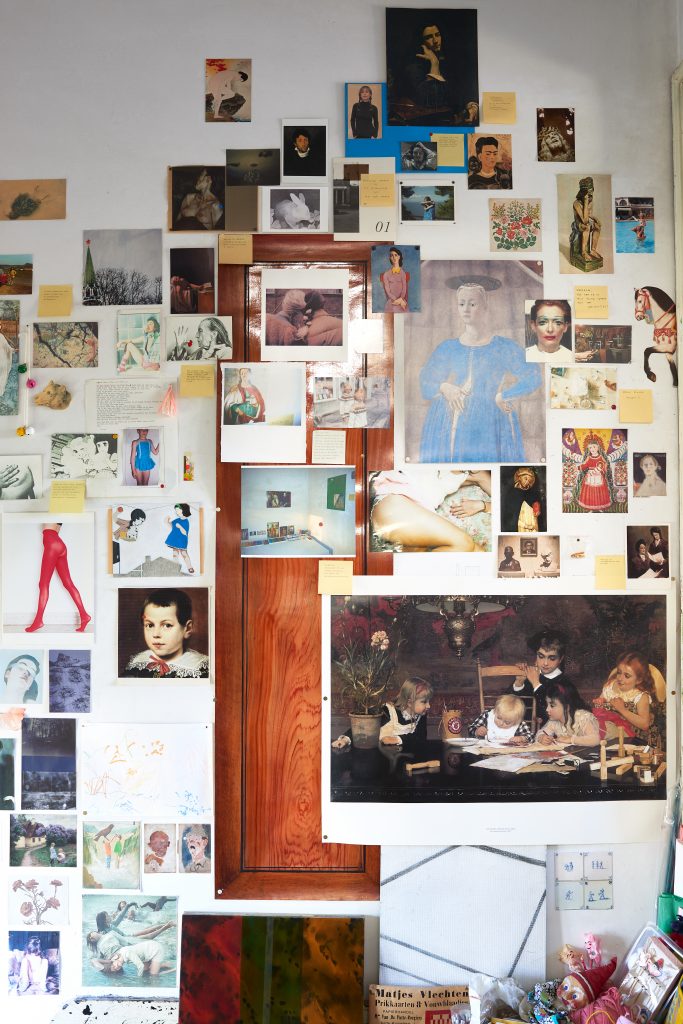
I noticed that your workplace is described in every article I read about your work. The path through your house to the attic with the countless clippings. This is rarely done as a rule, but it always happens with you. That cannot be coincidence. Can you describe your studio and its importance to your work?
People find it fascinating here. I should probably move, so that the focus will be on my paintings. 🙂 I paint in the house where I live. Working and living flow into each other. It’s an old house, narrow and tall. My studio is located in the attic, while the basement is where I live, cook, eat and have visitors. The walls of the hallway with the steep staircase that runs from bottom to top are covered with prints, photos, reproductions of paintings, post-its, collectibles…. You might say it is like a cabinet full of reference images, stimuli that nourish and inspire. But above all, they are stories, memories, twists and turns that provide clarity, a sort of anchor or backbone. I am extremely visual by nature and create stories with images. My studio is much more peaceful. There are fewer things hanging on the walls. Yet even there I feel the need to overload myself with images. Artbooks play a big role in my studio. I find open books inspiring.
I believe that the process of cutting and pasting and puzzling in my stairwell has to do with a fear of loss. A fear of forgetting, a fear of never feeling a certain feeling again, but above all, a fear of losing myself. The clippings and collages in the stairwell help me give my restlessness a place to land and are an instrument for understanding and exploring the world (my world).
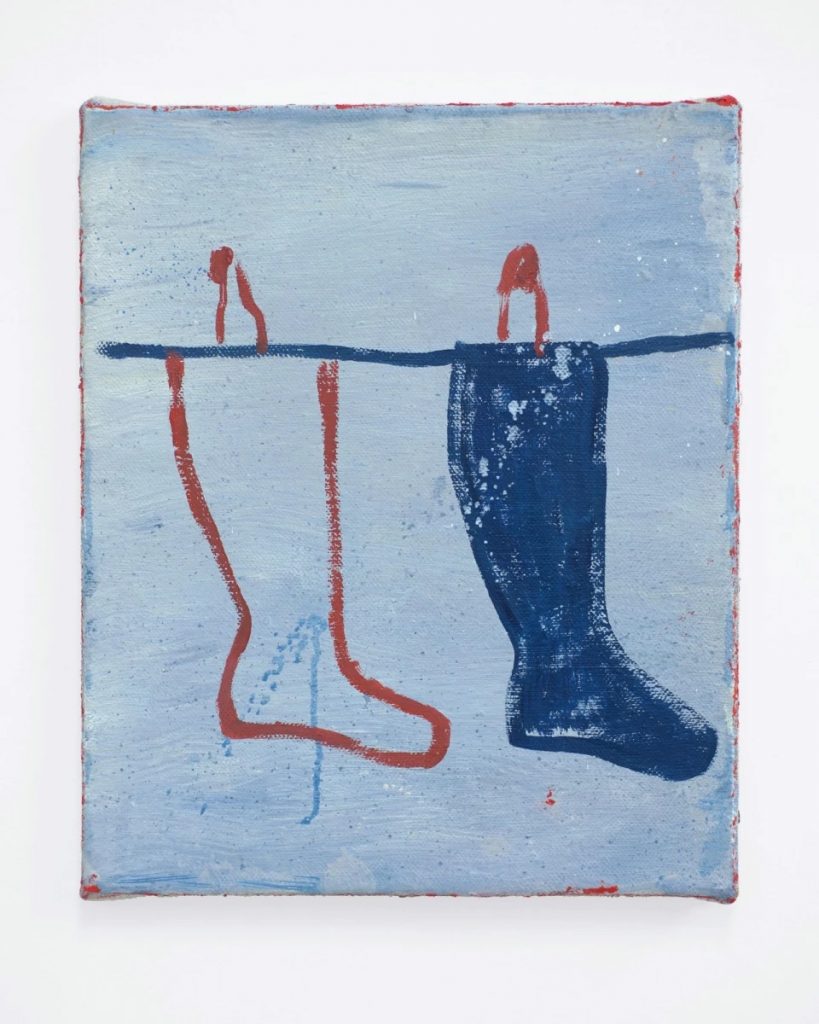
I understand that you are able paint in any style, but chose this specific style. Is that a conscious decision or something that evolves intuitively?
Yes, it is something that evolves gradually. And it also helps to know yourself well as a person. You don’t enjoy doing something just because you can do it. I would not recommend that a person with ADHD paint like the Flemish Primitives. It’s about developing a way of working that makes you happy.
The way I paint also has a lot to do with what I’ve seen. As a child, I saw a lot of paintings. My father was an art dealer and sold work by Roger Raveel, Raoul De Keyser, Constant Permeke, Jean Brusselmans, Edgard Tytgat and others. I strongly believe that what you see and experience in your childhood is decisive for later in life, also as a painter in the studio.
Your work is figurative but in an abstract way. As a viewer, you immediately recognise the subjects, but will never encounter them like that in reality. You create just enough distance to observe the subject once again. Is that also what you’re after?
Yes, of course. For me, painting is very much about finding the right balance. I don’t just want to copy an image. Yet, I don’t want the initial image to disappear entirely. It is a different translation exercise every time. Sometimes I want to tell a story through colour, while other times, I try to convey an emotion through subject matter. Each image requires a specific approach. Of course, when I am painting, the original image fades into the background and I am only concerned with the canvas – with colour, composition and paint.
You are trained as a restorer of murals and paintings. In addition to your work as an artist, do you also work as a restorer?
No, though I worked as a house painter and decorator for a long time. I have taken several courses on painting and paint, and which also included restoration. But restoration has never really interested me. I realised very early on that I wanted to do something with paint and that I wanted to create. For a long time, I didn’t know which direction those painting courses would take me. All I knew was that I loved paint, colour and texture. Today, I notice that many things I have learned have come together in my studio and I enjoy that. The fact that I ended up restoring wall paintings had much more to do with my preference for frescoes and medieval wall paintings. I wanted to know how a fresco was made, how they used to create them and I wanted to be able to create them myself.
Written by Wouter van den Eijkel
During Art Rotterdam you will see the work of hundreds of artists from all over the world. In this series we highlight a number of artists who will show remarkable work during the fair.
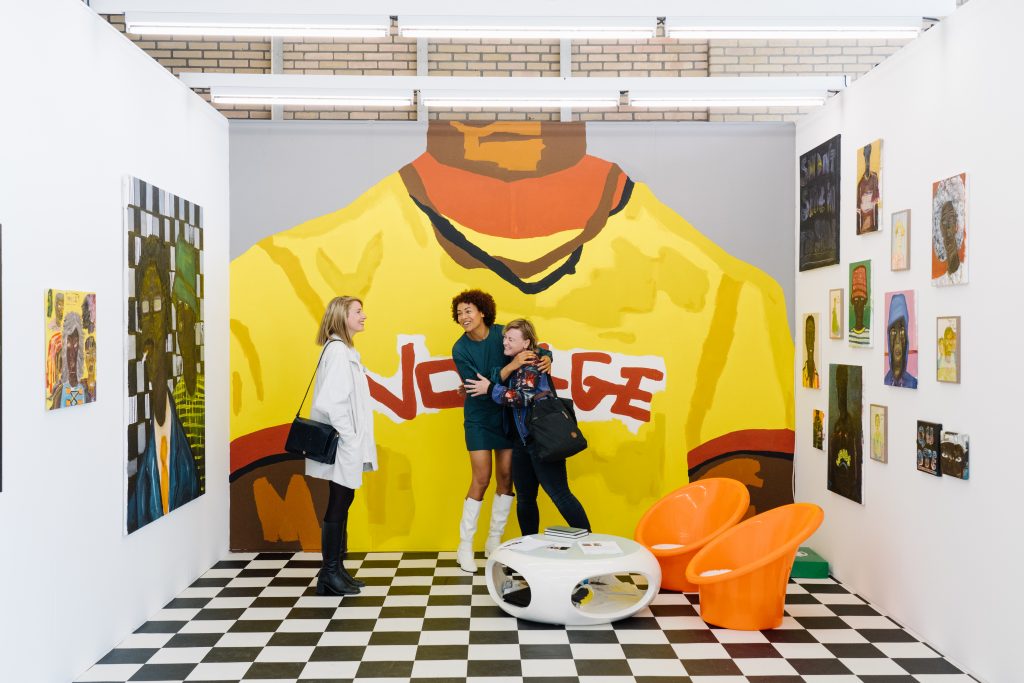
When De Volkskrant newspaper reported on Art Rotterdam in 2021, the headline was clear: ‘Artist Iriée Zamblé stands out at Art Rotterdam’. Zamblé (1995) immediately attracted attention after graduating from the HKU in 2019. She was offered a studio in The Rembrandt House Museum, a residency at Roodkapje Rotterdam and she won several awards, including the Sprouts Young Talents Award and the Royal [Dutch] Award for Modern Painting. One of her murals is currently on display in Stedelijk Museum Schiedam and her work has been included in the collections of the Ministry of Foreign Affairs, Ahold and The Rembrandt House Museum, among others.
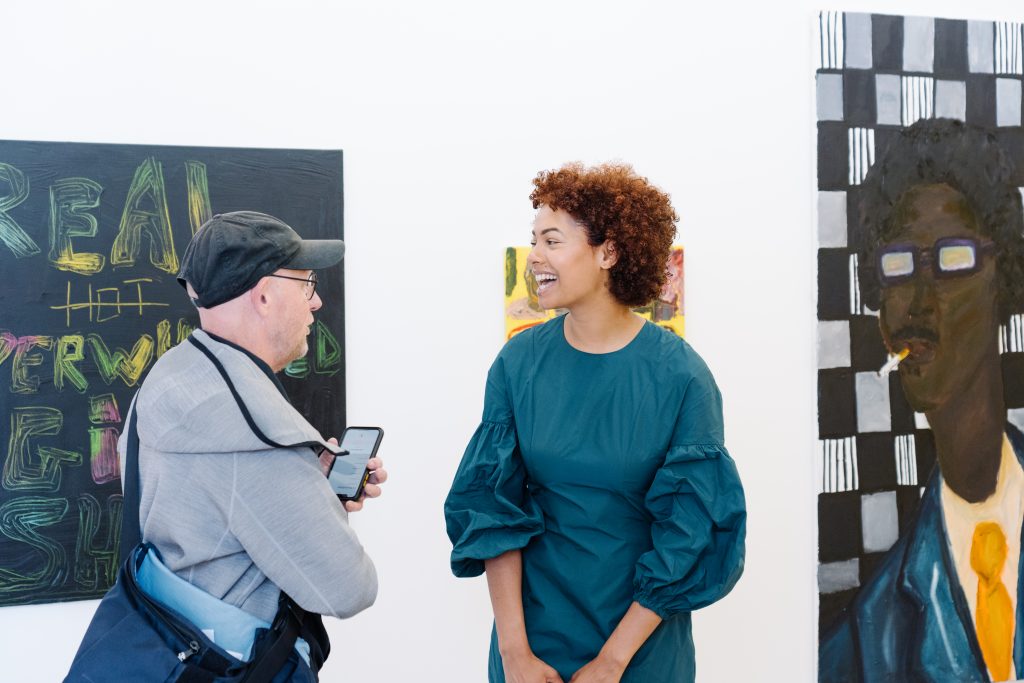
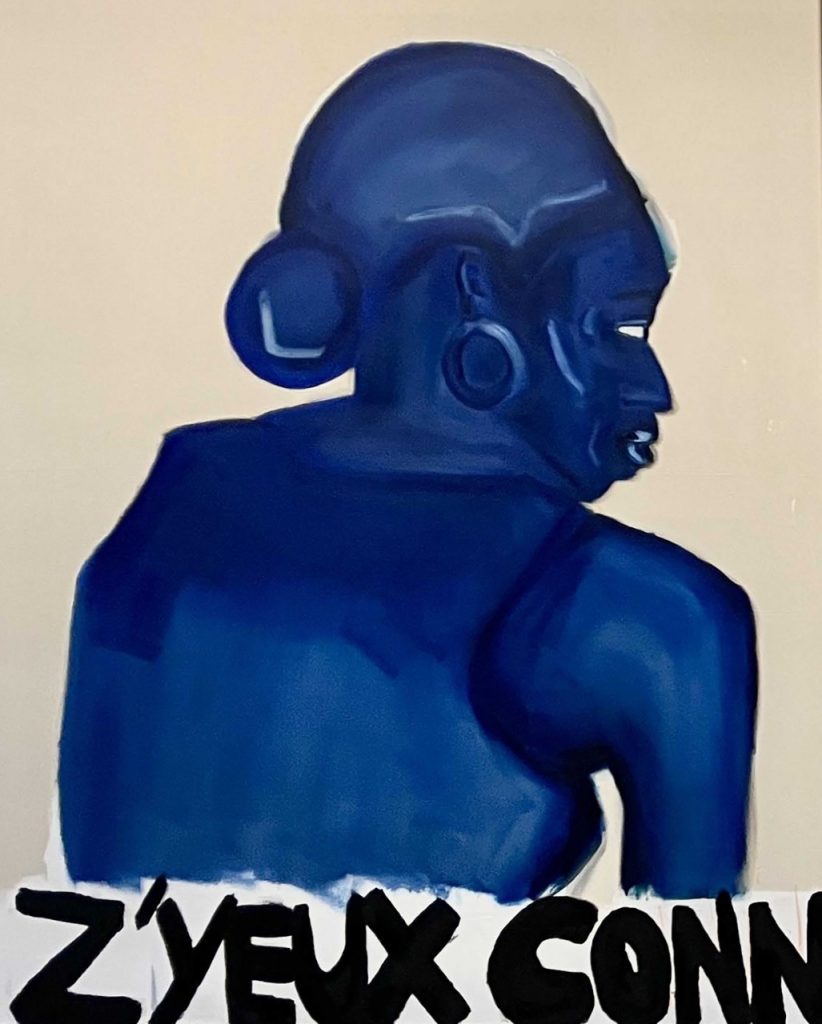
Zamblé is known for her expressive portraits on paper and canvas in which black people play a leading role, while they are usually the exception in the art historical canon. Where a painter like Kehinde Wiley often places the black body in elevated positions — like a contemporary Napoleon on horseback — Zamblé does the opposite: she shows everyday black people you might encounter on the street. She is inspired by photos of passers-by and appropriates certain elements of their appearance or clothing and then creates a new character on the canvas. Their personality emerges powerfully in those paintings. She works quickly, in rough lines, with materials such as acrylic, oil paint, pastel and spray paint. Zamblé is also intrigued by West African studio photography by artists like Sanlé Sory, who used striking fabrics for his backgrounds.
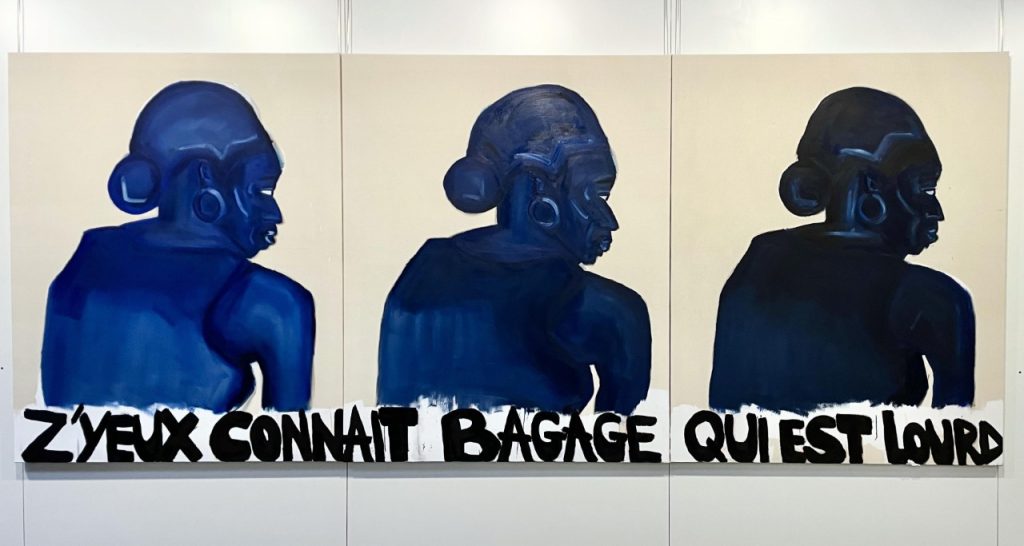
The artist is looking for a certain coolness, as defined in West Africa and African diaspora cultures. Her characters are empowered and have agency over their lives and decisions. They are confident and proud in their language, dress and attitude and dare to take up space. In the West, this coolness is almost an act of defiance against a history of oppression and a contemporary society in which white people and systemic racism are still the norm. These people reclaim and redefine blackness in a new context, stripped of colonial connotations. For example, Amsterdam-based artist Tyna Adebowale once said, “Before travelling outside Nigeria I never saw myself as black.” In her practice, Zamblé offer a critical look at the white lens as an automatic frame of reference, but also, for example, at the (short-term) performative activism after the Black Lives Matter protests. She is looking for more sustainable and effective ways to keep the conversation going about these topics. Zamblé is idealistic and hopes to make us look at the world in a new way, but at the same time she hopes that we will mainly see humanity in her work and not just blackness. That it evokes a certain curiosity about the person depicted.
Opposite to that coolness is a desire for self-protection. Where some characters stand confidently in the picture, others lower their eyes or hide behind hoodies. In addition, the artist is also interested in care, a theme within feminist theory that is increasingly reflected in the art world — not surprising as a counter-movement in a world (and discourse) in which struggle and activism play an significant role. Zamblé’s practice is also marked by fun; her booth at Art Rotterdam in 2021 was a total experience and was rarely empty. In addition to works of art, she also paints bags and produces merchandise, because she believes that her work should be accessible to everyone.
Zamblé is also inspired by the work of Ralph Ellison from the 1950s, who wrote about his experiences as a black American and the social problems and political and intellectual movements within that context. The book Afropean by the British writer, photographer and presenter Johny Pitts also plays a role in Zamblé’s practice. For this book, Pitts traveled through pre-Brexit Europe — from Lisbon and Paris to Stockholm — and spoke to several Europeans with African roots. For Pitts, the more equal term Afropean offered an opportunity to look at his own identity in a new way, not as half European and half “different”, as half “deviating from the white norm”, but rather as one unified term that doesn’t pit two sides of his identity against each other.
Zamblé’s practice is theoretically layered, but her paintings are in essence also accessible to people outside of the art world. Her latest works, that will be shown at Art Rotterdam, take a closer look at language, as a means of self-ownership (to include and exclude people). Zamblé: “I want to draw a new line in the legibility of my paintings. I think it’s interesting to see who you speak to as an artist and which language dominates in a space.”
During Art Rotterdam you can view Zamblé’s work in the Prospects exhibition of the Mondriaan Fund. For the 11th time in a row, the Mondriaan Fund presents the work of starting artists here. All 73 artists who show their work this year will receive a financial contribution from the Mondriaan Fund in 2021 to start their career.
Written by Flor Linckens
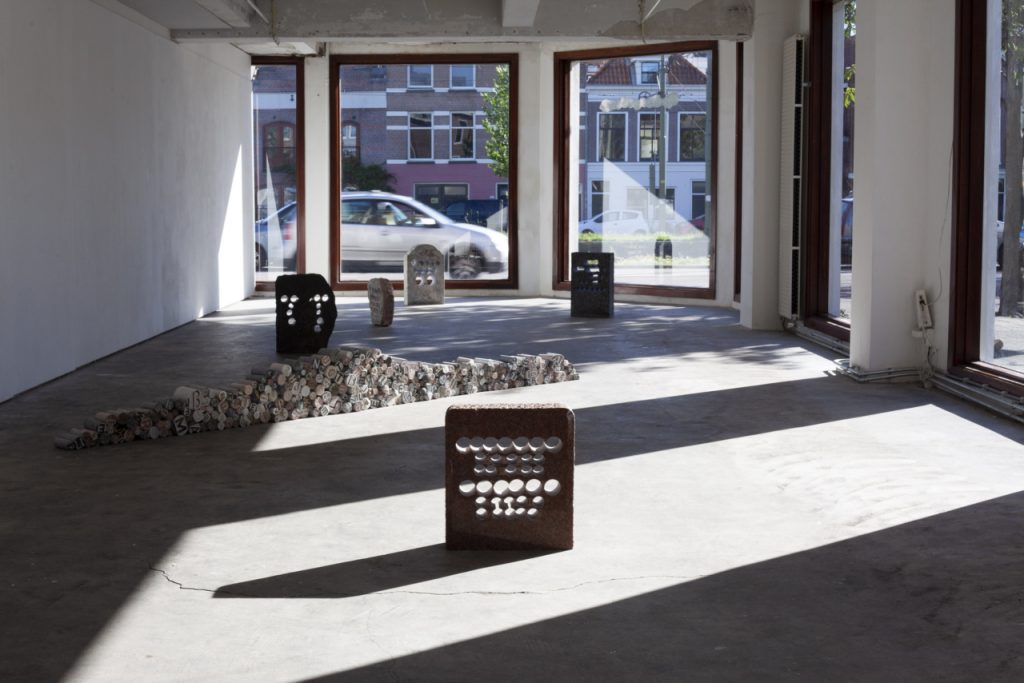
Laura Jatkowski shows Unvergessen at Prospects, an installation for which she worked removed tombstones with a drill. With this relatively simple intervention, the German artist touches on major themes such as life, death, mortality and the importance of objects such as tombstones as carriers of memories. It earned Jatkowski a nomination for the NN Art Award.
Laura Jatkowski (Germany, 1990) was trained as a sculptor in Glasgow and completed a Master’s degree at the Royal Academy of Art in The Hague. After her studies, she was involved in the establishment of the Trixie studio complex-cum-project space in The Hague. She lives and works in The Hague and Berlin.
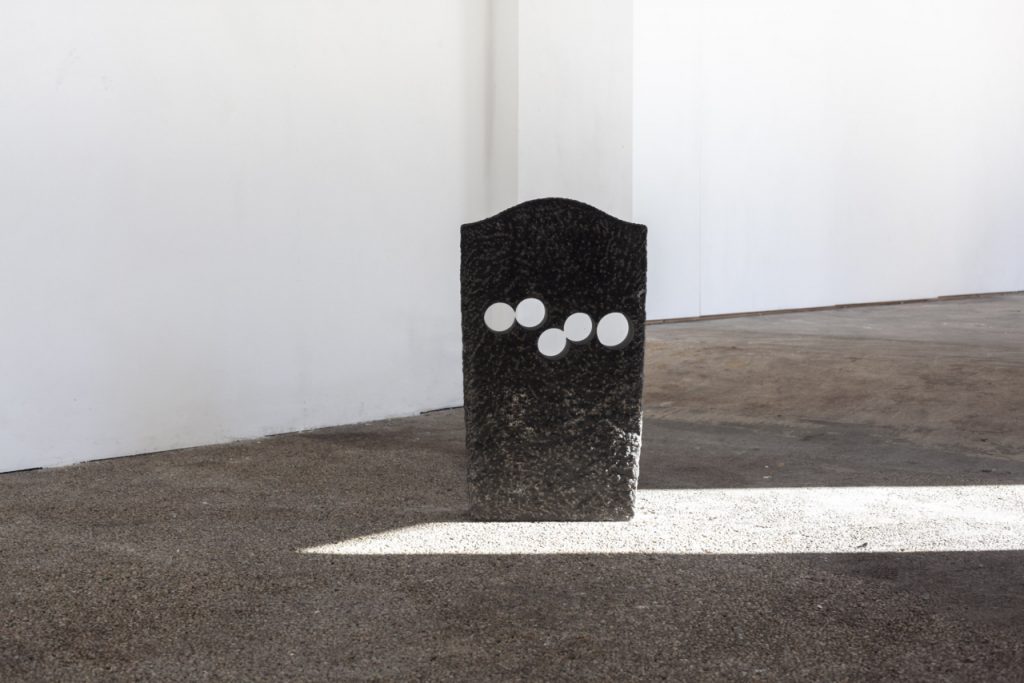
At Prospects you will be showing Unvergessen, a body of work consisting of discarded gravestones. When you first discovered them at Berlin’s Zionsfriedhof were you immediately aware of their potential? `
I wouldn’t say I saw potential, but the moment I discovered the pile, it left an impression on me, and I couldn’t get the image out of my head. We are speaking of at least 100 stones roughly thrown on top of one another. Depending on the culture, but in many European countries, it is common that one does not own a gravesite; instead, one leases it for ten up to twenty years. If the contract is not extended, these stones will be removed from the grave and demolished.
You’ve drilled out the letters of the headstones. How did you decide on that?
The idea to extract the letters evolved while thinking about the object and how to approach it. A headstone is a personal object that holds value and memories that do not belong directly to me. The object’s purpose of preserving memory is no longer given once they are removed from the grave to be erased. The gesture of extracting the letters allowed me to highlight the sense of erasure while at the same time bringing them back to people’s attention. My original starting point was to use the letters only and reassemble them into words/sentences. In the making, I realized the letters were already charged with so much meaning that this gesture felt forced. Later, while seeing the empty negatives of the grave markers, I realized that they indeed hold potential that I hadn’t realized before, so I decided to incorporate them into my installation.
What is Unvergessen about? Could you tell us a little bit about the themes you are addressing?
The work addresses loss and death and confronts the viewer with mortality. With this work, I am interested in exploring how memory is a valuable resource and how it is not only embedded within narratives but also in material artefacts and objects. The processes of remembering and forgetting and how memories are linked to objects make me curious. Memory is a strange process. It is with you every day and informs who you are. I am always surprised how some people can remember the smallest details where I tend to forget. There is an urge to remember and to be remembered. Humans have always created objects to hold their memories; we collect and accumulate things around us to keep us remembering and to counteract oblivion. I do not see forgetting as only negative. It also can allow one to reinvent themselves and move on, and sometimes it’s necessary to forget. How do we treat these memory objects and spaces? How do we preserve memories and keep them alive?
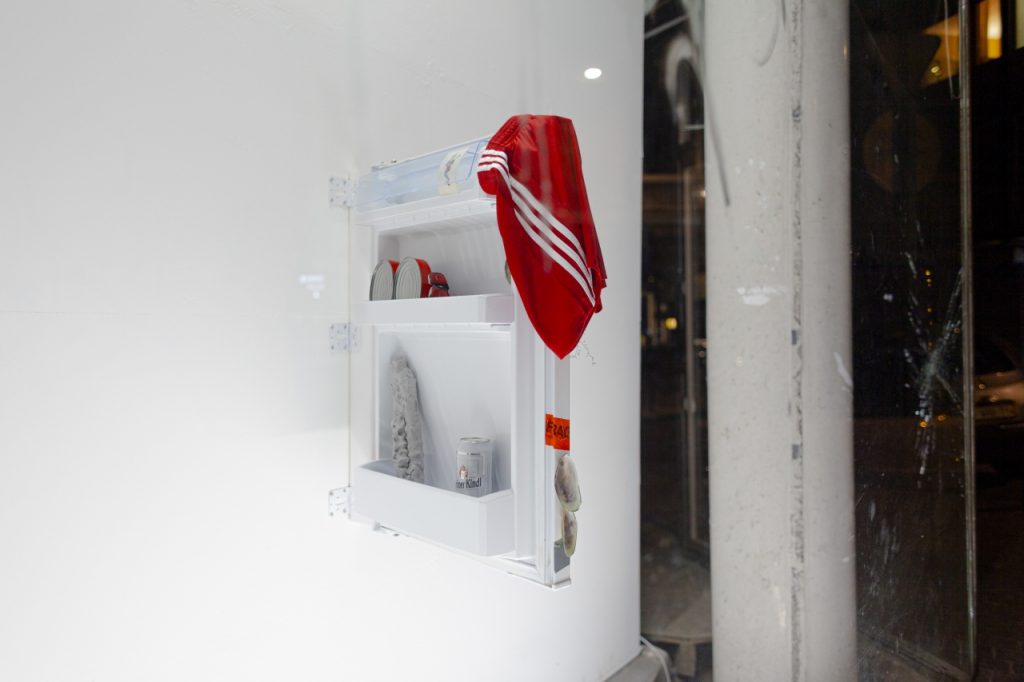
In previous works you’ve touched on topics such as mending flat tires and the contents of someone’s fridge as a way describing someone’s personality and desires. How does this project fit in with your previous work?
This project continues one of the central questions I engage within my practice: how particular objects and gestures carry emotional values and histories. I often work with everyday materials and take them out of their original context placing them in a new system of relationships.
Everyday objects or gestures offer an immediate connection for the viewer—there is already a relationship between the object and the person, a certain kind of ‘pre-history’ that is already embedded within their traces. This ‘pre-history’ carries information and signifiers. In this way, I can recharge the materials by showing them in a context unfamiliar to the viewer. For me, finding a suitable form that creates a level of abstraction is important. Between the concrete and the abstract, a space of tension is created and suddenly, a new space opens up that the viewer can fill with their questions and imagination.
In terms of tembre I can definitely tell there’s a sense of humour and playfulness to the excellent fridge door installation, but Unvergessen seems to strike a more serious tone. Do you agree to that statement and did you intend to make something of that nature, something emotional yet cerebral?
For me thinking and feeling are not separated from one another. It is indeed true that my works have different atmospheres. As I work mainly with everyday objects, each one brings their own connotations and references. My work puts to question our relationship with the given object. Some everyday objects like the fridge door or a wheelbarrow give me more room to approach and play with them during the process of creation, whereas with these headstones, due to the context of the object, I felt my room for intervention is limited.
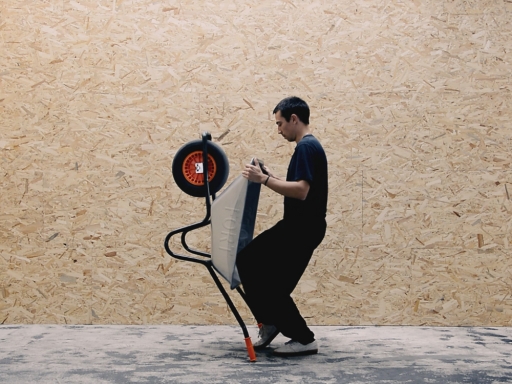
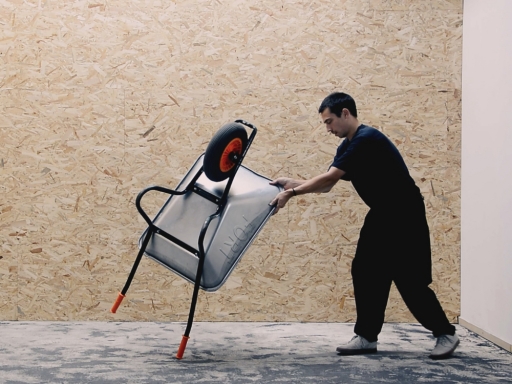
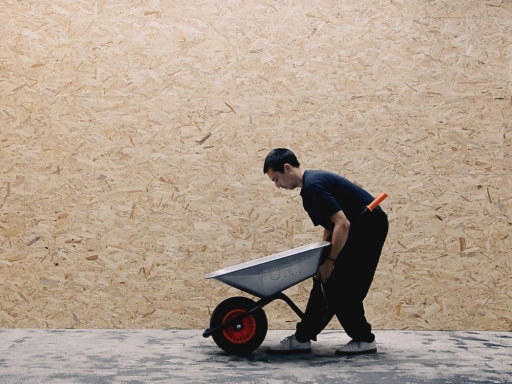
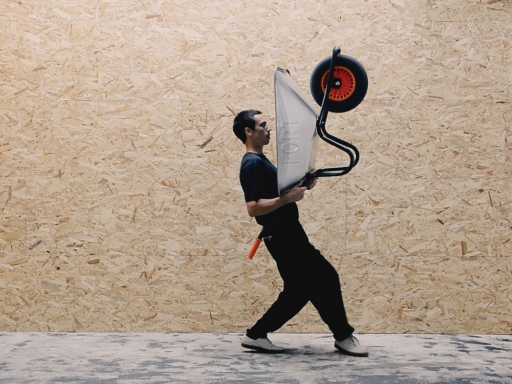
Before attending the KABK, you’ve obtained a BA in Sculpture in Glasgow. Do you consider yourself a sculptor or an artist not bound to a specific discipline?
I started my BA in Glasgow and finished it in the Netherlands. Even though I have a background in sculpture, I do not tie myself to any medium. With every idea, I experiment and see which medium is best to carry it. The result can then be a video, an installation or a sculpture. Nevertheless, the discipline of sculpture and has informed my thinking a lot. So, when it comes to installing a work, I think like a sculptor. The placement in relation to the viewer’s body, how it makes them perceive and move through space is important to me.
You’re one of the founding members of Trixie, the Hague’s studio complex annex artist-run art space. How did this initiative come about and why did you decide to get involved?
After graduation, I faced the challenge of finding myself without a studio like most art graduates. The academy to which I would usually go and do work while having a coffee with my friends and talking about art was gone. Shortly after, I found a studio, but the community was missing, like a car without fuel; both are crucial for me. Therefore, I gathered some artists, and we looked for options to create that for ourselves. With Stroom Den Haag‘s generous help, we found a space within The Hague city centre in 2018. Trixie has a gallery space, 15 studios and a big kitchen to cook and talk. Since it began, Trixie has become a well-known space within the cultural scene in The Hague and has allowed me to meet many great artists, form friendships and learn from each of them.
Written by Wouter van den Eijkel


