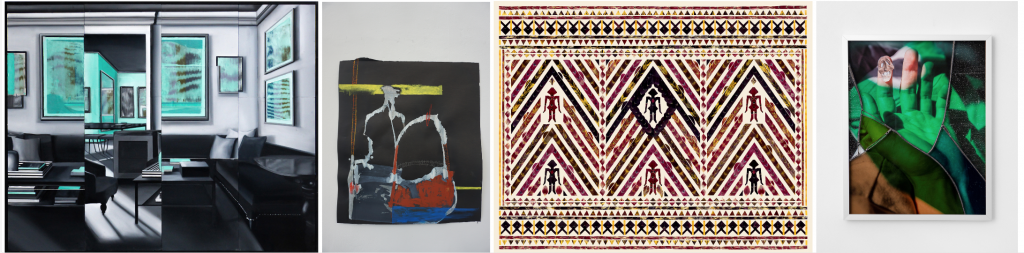
Inez de Brauw, Thierry Oussou, Jennifer Tee, Vytautas Kumža
Coming soon
Coming soon
Select type
This year the NN Art Award will be presented for the sixth time at Art Rotterdam to an extraordinary talent who has received an education in the Netherlands. The jury; Yuki Kho, culture journalist; Alexandra Landré, artistic director Stroom, The Hague; Charl Landvreugd, head of research & curatorial practice, Stedelijk Museum Amsterdam; Erik Mattijssen, visual artist and winner of the NN Art Award 2021; Elisah van den Bergh, advisor NN Art Collection has announced the 4 nominees:
The 4 nominated artists are:
Inez de Brauw – Brinkman & Bergsma
Vytautas Kumža – Gallery Martin van Zomeren
Thierry Oussou – Lumen Travo Gallery
Jennifer Tee – Gallery Fons Welters
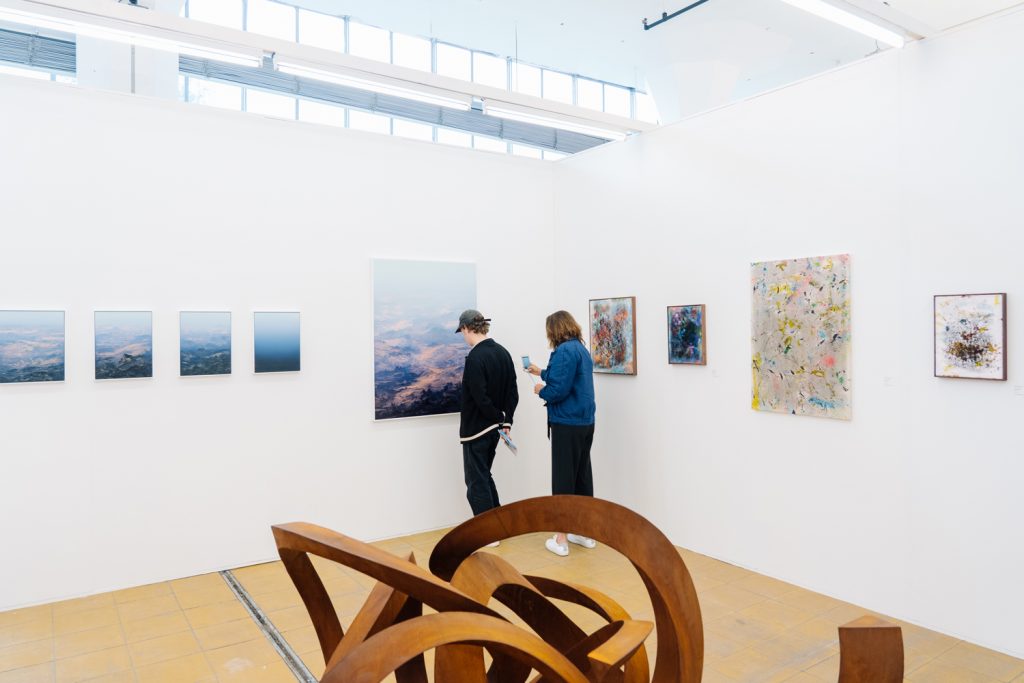
The works of the 4 nominated artists can be seen in the NN Art Award booth at Art Rotterdam 2022.
The winner of the NN Art Award 2022 will be announced during the Press Preview of Art Rotterdam on Wednesday 18 May. The winner of the Audience Award will be announced online on Sunday afternoon 22 May. The public can vote online from mid-April to Saturday 21 May at midnight via the Nationale-Nederlanden website. The public can also vote at the exhibition stand during the exhibition days from Thursday 19 to Saturday 21 May.
The winner will receive a cash prize of €10,000 and an artwork by one of the four nominees will be purchased for NN Group’s corporate collection. The public favorite will receive a cash prize of €5,000. The winners will also receive an online article on GalleryViewer.com.
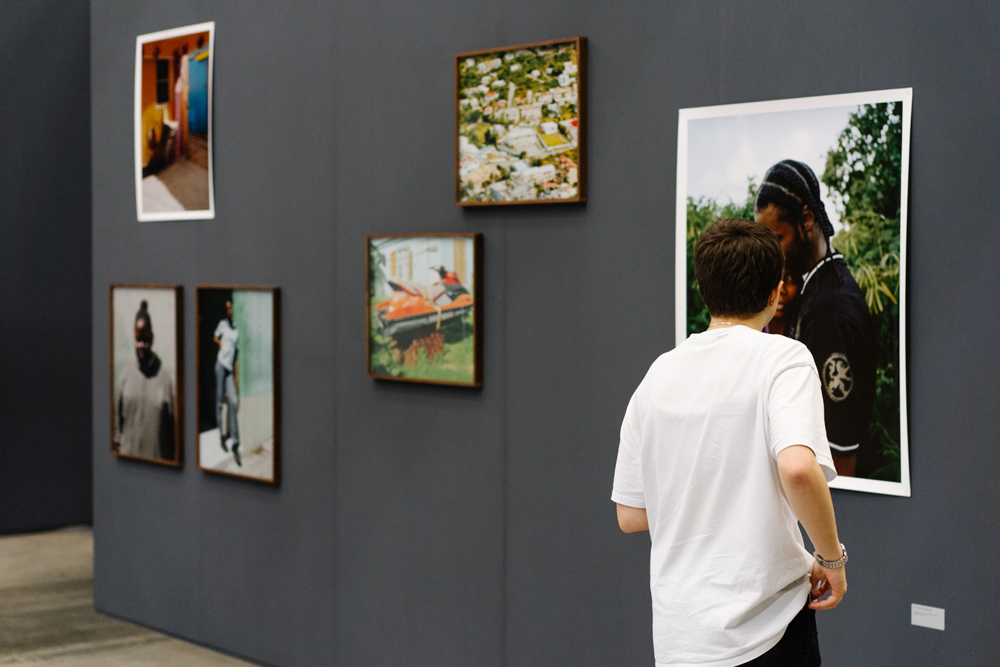
This year marks the tenth edition of Prospects, the recurring exhibition of the Mondriaan Fonds at Art Rotterdam. Each year, visitors get to explore work by artists who have recently received a contribution from the Fund, that they can use for the start of their professional practice. New this year is the extension of Prospects to the Expedition Building, directly opposite the Van Nellefabriek. The extension effectively doubles the amount of exhibition space in square meters. This year, visitors can immerse themselves into the work of 88 visual artists.
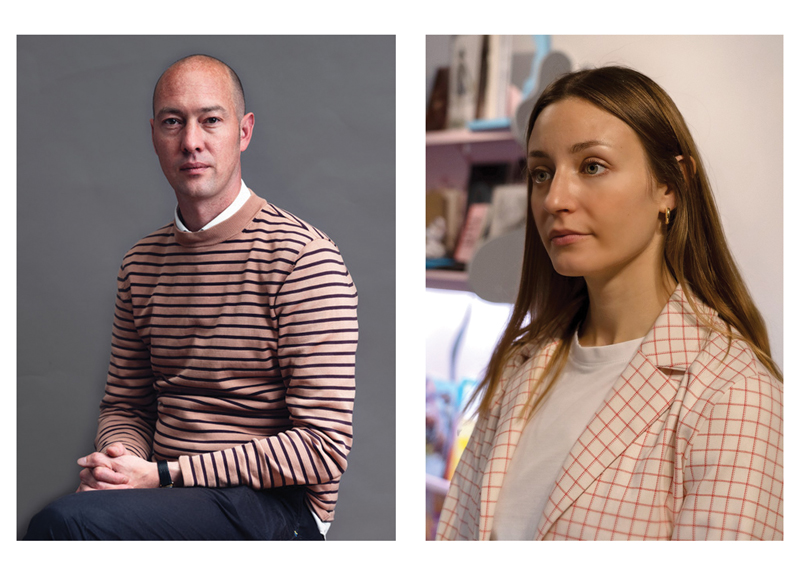
Their work is curated by Johan Gustavsson, who returns for the third time, in collaboration with Gabija Seiliute. Gustavsson is the co-director and curator at Project Space 1646 in The Hague, co-founder of The Hague Contemporary and he’s also active as a lecturer at the Royal Academy of Art in The Hague. Seiliute works as a creative freelancer, after finishing her studies in Art History and Curatorial Studies. In this interview, we ask them a bit more about this year’s edition of Prospects.
What does it take to curate an exhibition like this? What elements come into play?
GS: “Because the artists have already been selected, we are here to take care of the process, to guide them gently and to make sure that all of the requirements are met. It’s not like curating in the traditional sense, we have a coordinating role, in which we need to think in terms of the space, the budget and logistical restraints.”
JG: “In the end, our job is to make the artists look as good as possible and to make it a pleasurable event for visitors as well. The Prospects exhibition compares to the size of a biennial, and people generally take a few days to see that. So that is something we talk about with the artists, which artwork would be most suitable for an experience like that. We want them to consider the attention span of our visitors and their ability to absorb it all. But it’s always very much a conversation between us and the artists, who are often young and ambitious. It demands a bit of flexibility on our end. From a curatorial point of view, it’s about portioning out the works over two locations. The distribution hall in the Van Nellefabriek can be quite overwhelming. In collaboration with Mika Radescu from Tom Postma Design, we optimise the visitor journey, to make it more manageable. Some of the proposals were quite unexpected, for instance really large pieces. Then you have to consider how you can use the space in such a way that those works look their best. That is where we really rely on the buildup team. The main thing is to show much talent there is in the Netherlands at the moment. So you come up with creative solutions to make certain ideas work, within the budget and the challenges that a world heritage building can pose.”
GS: “We work in close collaboration with the artists and I rely on Johan’s experience and the entire production team. Because it really is a big production. I’m learning so much and I’m seeing a lot of art, soaking everything in. Of course, COVID made sure that things run a bit differently, but because this is the second year, we knew how to approach it.”
Have you been able to detect certain art world trends? The pandemic, metoo, the zoomification of our society and the climate must be recurring topics, as these themes are vital topics on our agenda, but is there anything else that stands out?
JG: “With 88 artists, the offer is extremely varied. What struck me was the production value. For instance, there will be quite a lot of video works on show during this edition, and they have fantastic production value. Of course, that is related to the accessibility of good cameras and other resources, which would have been much harder to get by a few years back. That is why Gaby and I decided to create a cinema, a special environment with a big screen and good sound, to honour that level of production. In total, there will be five works on show in the cinema.”
GS: “I noted many types of craft in the art works, things that were made with such precision. Of course, that may also be related to the increased accessibility of materials and machines.”
What is the role of the Mondrian Fund in the career of young artists? What does a starter’s contribution mean for these artists and how can it help them to get their career off the ground?
JG: “It’s quite unique, this type of support. To have this amount of support for fairly young artists, as far as I know, it doesn’t really exist anywhere else. The artists receive economical support, which is particularly crucial during the pandemic. That way, they can invest in their practice, both in time and materials. But it’s also incredibly valuable for them in terms of visibility: to show their work during Art Rotterdam. It’s almost functions like a quality mark.”
GS: “It’s also an opportunity to be noticed by the press, as well as a relevant network. Some artists are even able to sell work.”
JG: “Yes, some of these results are quite direct, like AkzoNobel buying work, or arts collectors in general. It’s also a time in which meaningful connections are forged between artists and galleries. Many curators will put artists on their list, perhaps for an exhibition years later. I’ve run 1646 for many years now and I’ve always gone to see the Prospects exhibitions during Art Rotterdam to see new art, I’m always scouting new talent that I didn’t know yet. But I may follow them for ten years before I work with them. So showing your work at Prospects can have long term effects as well. Some of the artists on show already have quite a career, the general level is really high and the extra space this year makes us, both the artists and ourselves, extra ambitious.”
The exhibition Prospects will be on show during Art Rotterdam, from 19 to 22 May 2022, in the Van Nellefabriek and across the street in the Expedition Building.
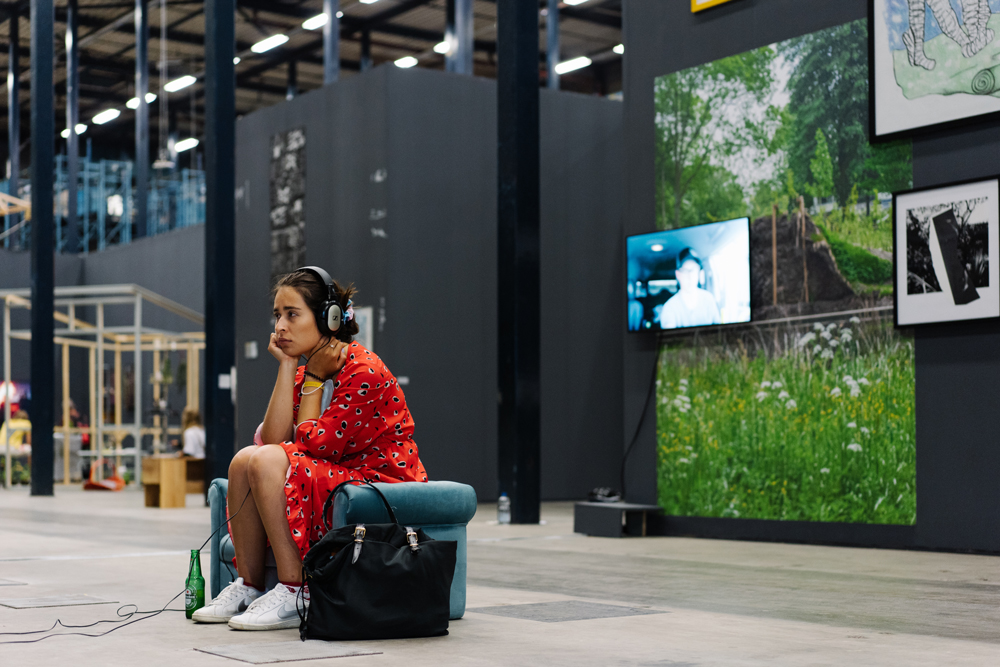
During Art Rotterdam you will find the work of hundreds of artists from all over the world. In this series we highlight a number of artists who will show special work during the fair.
The kinetic work of Dutch installation artist Philip Vermeulen
Philip Vermeulen is known for manipulating and isolating — and then maximizing or minimizing — physical phenomena such as light, sound and movement. This gives rise to what he calls ‘hypersculptures’: kinetic sculptures that move so quickly that their physical properties seem to transform before your eyes. With his latest installation ‘Fanfanfan’, which can be seen in the Prospects section, Vermeulen responds to a period of relative stagnation. For this installation, he bends bundled white light into thousands of pieces of color, using fans that move so fast that the projected white light is split and reflected multiple times.
With his practice, Vermeulen builds on the tradition of experimental kinetic art of art movements such as the ZERO movement, but also light art, op art, sound art and audiovisual art. Like many other artists from these movements, Vermeulen is interested in the ways in which our eyes translate images for our brain, and vice versa. In his installation ‘Flap Flap’, for example, we see a canvas that flutters so quickly that it seems to stand still. The effect is almost hypnotic. In other installations he uses stroboscopes to create visual illusions.
But Vermeulen’s experimental installations are characterized by movement and sound. Sometimes so hard that it becomes overwhelming. As a spectator you experience conflicting feelings: the works are aesthetic and elusive, but at the same time sharpen all your senses. There is always a certain danger lurking, because what if the device suddenly does something unpredictable? If you allow yourself to be sucked into that field of tension, the installations can even have a mind-expanding effect. Vermeulen consciously seeks out that field of tension: the border where beauty, fear and destruction overlap. His installations sometimes seem dangerous, such as his graduation artwork, in which tennis balls were fired at 150 kilometers per hour against a wooden sound box. Admittedly in a safe way — provided you as a visitor followed the directions carefully — but the tension and potential danger must have been clearly palpable.
Vermeulen: “My installations are all quite large and they are all about a kind of existential fear: when does the machine go so fast that you no longer trust it. When does it get visually so hardcore that you actually want to leave, but at the same time stay attracted.”
Although his installations sometimes seem to rage on in an uncoordinated way, there is indeed a choreography worked out in detail, as the artist himself refers to. An enormous amount of research precedes the installations and the artist is currently studying machine learning, among other things.
Vermeulen initially studied at the Film Academy for a while, followed by two years at an art academy, where he found the art history classes particularly traditional. He was only really in the right place when he ended up at the ArtScience Interfaculty, an interdisciplinary partnership between the Royal Academy of Art (KABK) and the Royal Conservatoire in The Hague. There was plenty of room for experimentation here and during this period Vermeulen mainly explored the limits of his materials. He graduated summa cum laude in 2017.
In 2020 Suzanne Swarts, director of Museum Voorlinden, nominated him for the Volkskrant Visual Arts Prize 2020. Swarts: “Philip Vermeulen’s work is about looking, but even more about feeling. Vermeulen makes compelling performative installations in which he stimulates all the senses with sound, light and movement. In each work, he once again allows science, technology, visual arts and theater to merge into unforgettable sensations with great ease.” In the same year, Vermeulen was also nominated for a Golden Calf in the category ‘Best Interactive 2020’.
Vermeulen’s installations have previously been shown in the Stedelijk Museum in Amsterdam, during Into the Great Wide Open, in the Berlin club Berghain, during TodaysArt and in the Stedelijk Museum Schiedam and Rijksmuseum Twenthe.
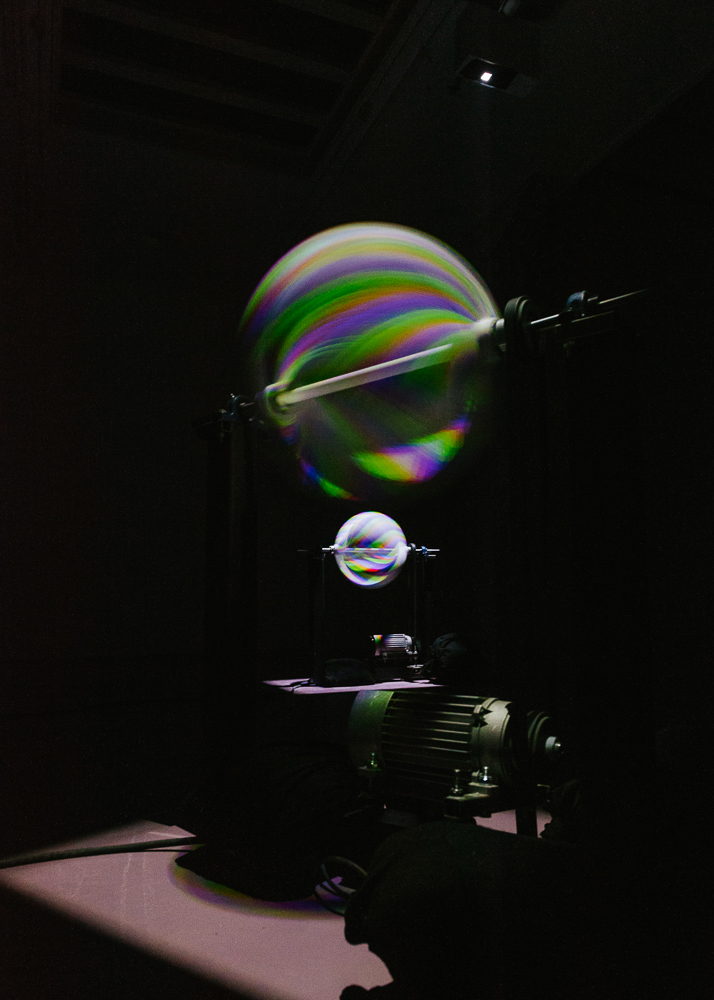
The work of the Dutch installation artist Philip Vermeulen can be seen during Art Rotterdam not only in the booth of No Man’s Art Gallery (Main Section), but also in the outdoor presentation around the Van Nelle factory and in the Prospects section. For ten years now, the Mondriaan Fund has presented work by artists who recently received a contribution for the start of their professional practice.
Watch the video Fanfanfan | Philip Vermeulen here
During Art Rotterdam, you can spot the work of hundreds of artists from all over the world. In this series we highlight a number of artists who will show remarkable work during the fair.
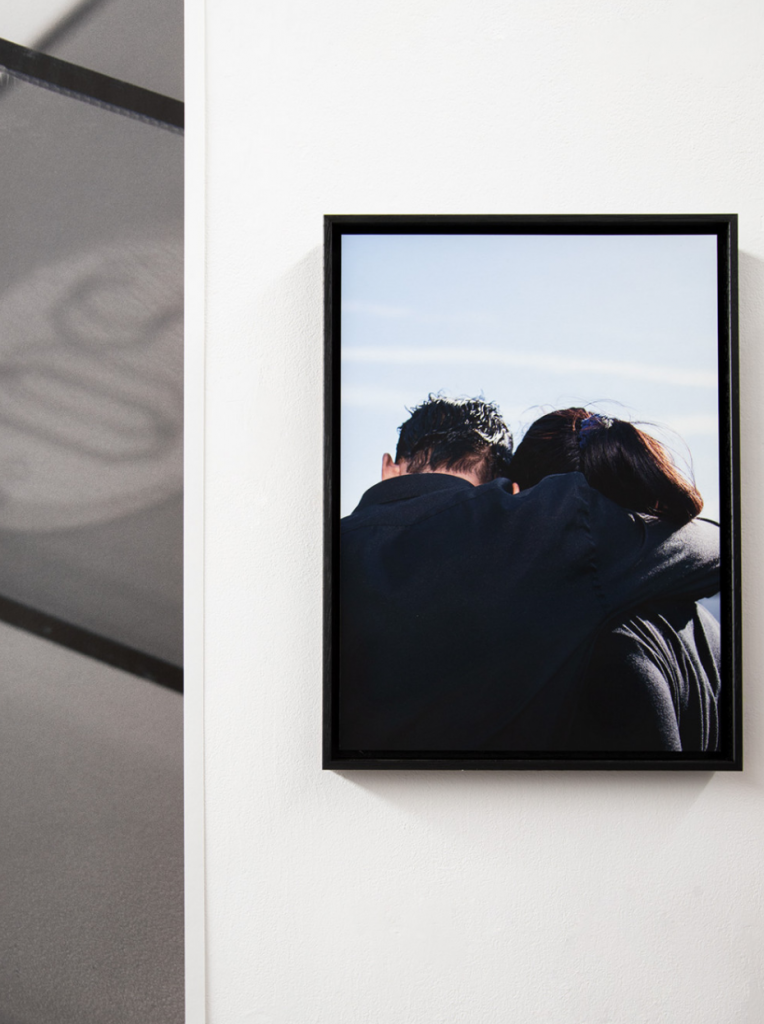
From a young age, the Polish-Dutch photographer Wiosna van Bon was extremely interested in how other people live. When she was six years old, she regularly walked to school alone, because her mother worked in nursery homes and her father usually worked several jobs at the same time. She would leave the house fifteen minutes earlier and then ring the doorbell at random houses on the way, asking if she could come in for a while. After a few months, these astonished neighbours would ring the doorbell at the six-year-old’s house; they appreciated the social calls, but perhaps not at a quarter to eight in the morning. It is a telling sign for the photographer’s curiosity, a curiosity that is strongly reflected in her work. During the same period, she also got her first analog camera, stimulated by her mother, who had a creative background and had completed a university degree in Poland. Van Bon’s father died at a young age, when the photographer was just twelve years old. It’s perhaps not surprising, then, that she has such a deep-rooted interest in the ways in which different family units function.
Van Bon studied documentary photography at the Royal Academy of Art in The Hague, but always retained an interested in psychology. She enjoys reading books by the British neurologist Oliver Sacks for instance, whose works offer a glimpse into the human mind. Van Bon actually does the same thing: she seeks out a niche social group and then tries to interpret them, to really understand them. When she accompanied her mother to the care facility where she worked, the photographer was fascinated by subtle differences. She noted how in some of the older homes, there was usually much more room for the individuality of the residents.
Later, she photographed people who claim to be hypersensitive to electromagnetic radiation, the predecessors of the people who are now firmly convinced of the possible damage of 5G. It’s always based on a genuine interest in their experience and combined with extensive research. For this project, she also entered into discussions with various experts, organisations and the people in question. She often spends months working on a project, which gives her a really good picture of the lives of these people. Van Bon noticed that she was sometimes confronted with her own conscious or unconscious prejudices and she hopes to encourage her viewers to look at these groups of people with a fresh perspective as well.
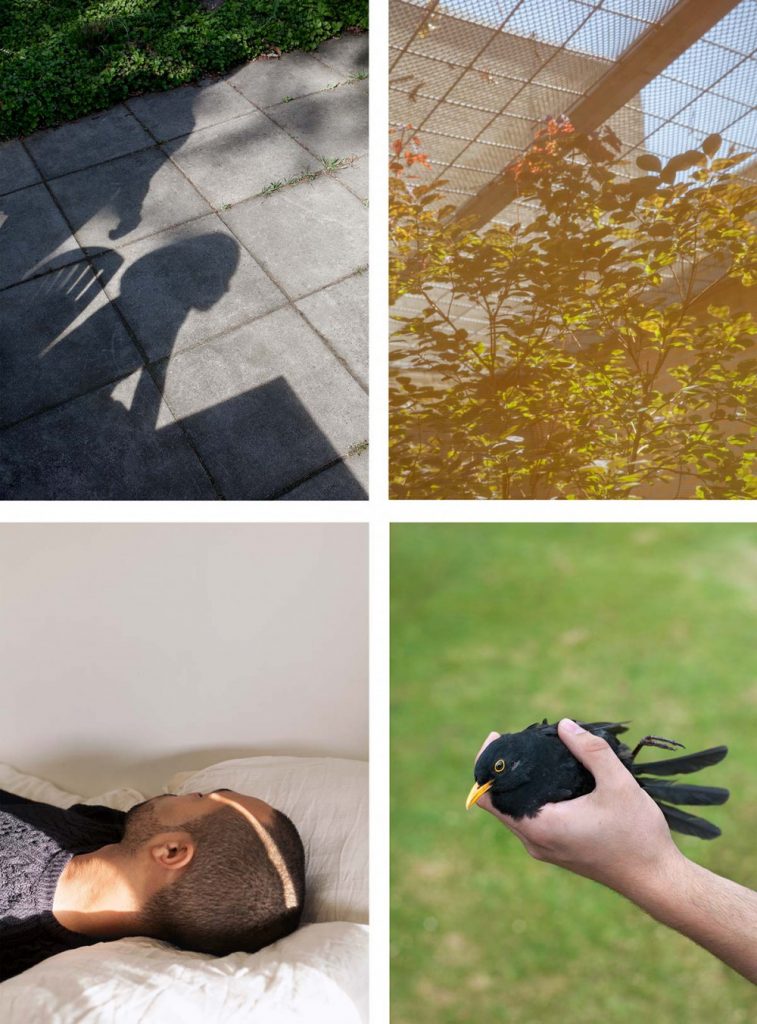
The photographer’s most eye-catching project is probably ‘Family Stranger’, which was published in 2020 in a photo book of the same name. In it, she puts the lens on relatives of detainees, who often feel judged by society. In a combination of images and quotes, she captures an underexposed narrative: how does your life change when a family member goes to prison? What does it mean to be an indirect victim of their actions? Family members will sometimes find themselves in financial trouble or are judged by those around them. A strange situation arises in which the prisoner ends up in a kind of time capsule where time seems to stands still, while the lives of their loved ones continue as usual. The series shows a glimpse of the interior of the Penitentiary Institution Vught, in combination with unrecognisable family members. Van Bon works in metaphors and symbols and depicts, among other things, shadows of bars, an inner courtyard, a clock or toys. Van Bon focuses on the (temporary) loss, the shame and vulnerability of these families, as well as the taboo that seems to overshadow everything. But at the same time, she also emphasises their humanity, strength, flexibility and perseverance. The photo book ‘Family Stranger’ was shortlisted for the Aperture First Book Award and The Author Book Award during the photography festival Les Rencontres d’Arles, among others. For a new series, the photographer focuses on homeless young people. What all of these diverse groups have in common is that they contain extremely lonely people, groups that are to some extent isolated from society. Van Bon looks at their lives and considers themes like power, behaviour and identity.
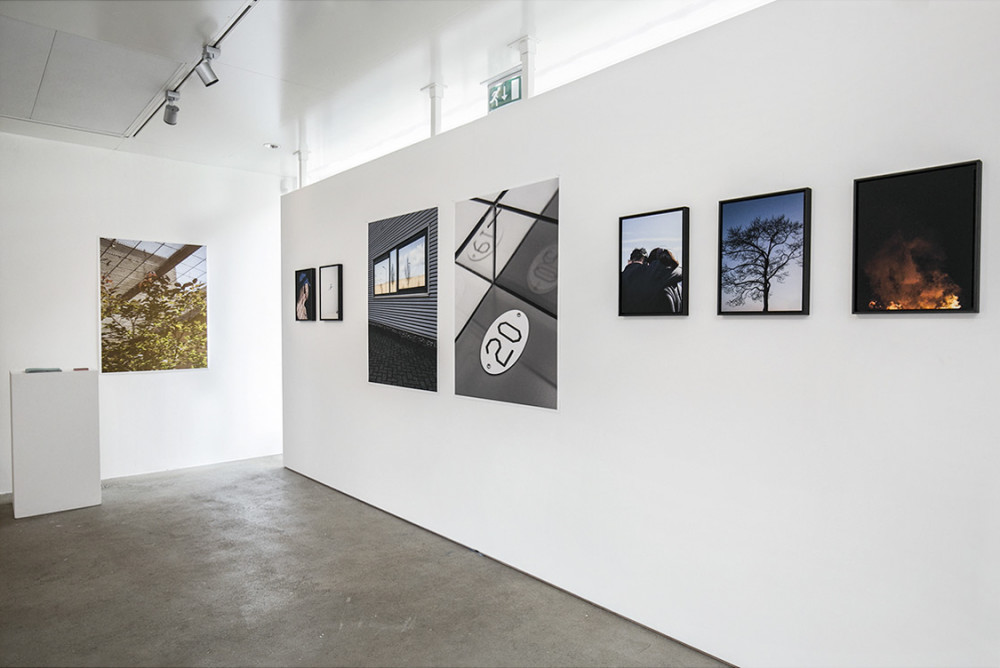
During Art Rotterdam, the work of Wiosna van Bon will be on show in the Prospects exhibition of the Mondriaan Fund. For the 10th time in a row, the Mondriaan Fund presents the work of 88 emerging artists here. In 2020, all of these artists received a financial contribution from the Mondriaan Fund to make a start in their career.
During Art Rotterdam you will find the work of hundreds of artists from all over the world. In this series we highlight a number of artists who will show special work during the fair.

Minne Kersten works at the intersection of art and literature and is fascinated by the relationship between image and the written word. She completed a bachelor’s degree in Image & Language at the Gerrit Rietveld Academy and a residency at the prestigious De Ateliers institute in Amsterdam. She also studied art history for a year and participated in the Slow Writing Lab, a postgraduate course of the Dutch Foundation for Literature, which focuses on creative writing. The artist’s literary background is expressed in large-scale installations, videos, sculptures and drawings, which are part of a fictional experiential world. In addition to her visual art practice, Kersten also writes poems and essays.
The artist’s works and visual language arise from a deep-seated desire to tell stories and, in a sense, function as a support for those stories. Sometimes the sculptural sets tell their own story. Chaos, decay and deconstruction are emphasized by the frequent use of natural materials and building materials. The animal or human figures in her narratives often relate to each other in unexpected ways and sometimes there are absurdist or eerie elements. Reality and imagination seem to flow seamlessly into one another in Kersten’s works.
Mourning and loss are recurring themes. The artist has done a lot of research into the symbolism and mythology surrounding mourning and loss in painting, sculpture and cinema. These are often symbolized by black birds, sometimes with mythological connotations. She recently made the video artwork ‘Constant Companion’ (2021) in a chapel in Hoorn, in which the leading role is reserved for a raven. Kersten films the bird close to its feathers as it explores its surroundings. Four hours of material were reduced to six minutes for this.
Kersten is also interested in the ways in which people relate to architectural structures and their immediate living environment. She analyzes spaces as psychological constructs, referring to theories such as the Stone Tape theory and place memory, which state, among other things, that certain spaces are permanently affected when emotional or traumatic events take place.
Later this year, her work will be featured in The Studio series at the Bonnefanten Museum in Maastricht, a special, small-scale solo exhibition for young artists. Kersten is also showing her work this year in The Living Art Museum in Reykjavik. In addition to the contribution from the Mondriaan Fund, she also won various other grants and grants, including from the Niemeijer Fund, the Dommering Foundation, the AFK and the Prins Bernhard Cultuurfonds.
During Art Rotterdam, the work of Minne Kersten can be seen in the booth of Annet Gelink Gallery as part of the video section Projections and in the Prospects exhibition of the Mondriaan Fund. For the 10th time in a row, the Mondriaan Fund presents the work of 88 starting artists here. In 2020, all artists received a financial contribution from the Mondriaan Fund to start their career.
During Art Rotterdam you will find the work of hundreds of artists from all over the world. In this series we highlight a number of artists who will show special work during the fair.
Modern solutions require modern problems
Just before the pandemic, Lund gave a presentation about his work in Ljubljana. It featured, among other things, trivial inventions for modern inconveniences, such as a magnifying glass for the small screen of your mobile phone. Or a mobile projector that allows you to share your screen with others in a decent way. The audience laughs. Finally, Lund shows an apparently equally odd device that manipulates your phone’s pedometer by means of a constant rocking motion. Why was this device invented, you ask? In China you get a discount on your health insurance if you demonstrably exercise a lot. Modern solutions require modern problems.
It is not surprising that Lund (SE,1984) has an eye for such inventions, because a number of central themes of his work come together: power relations, data analyses and algorithms, and how to circumvent them.
FOMO
The above themes are already reflected in early exhibitions such as Fear of Missing Out (Showroom Mama, Rotterdam, 2013). One of the works is a photo collage featuring the 100 most important curators. At least, according to Lund’s algorithm. According to Lund, his knowledge of the who-is-who would give him an edge over the average collector, he would be more aware of trends and appreciations.
At the beginning of his career, Lund, who was educated in the Netherlands, was sometimes accused of making art about art, including jokes that only insiders understand. Lund’s work is certainly playful and funny, but his message is broader. In 2019, for example, he set up the London Photographer’s Gallery as a twelve-person editorial team for making propaganda and fake news. Here too, Lund was interested in the data collection and Cambridge Analytica’s anything but neutral algorithm, which mainly concentrated its efforts on the leave voice.
Strings Attached
It is not a coincidence that Lund initially ended up in the art world; it’s a small, uncluttered version of the real world. According to Lund, the art world has a classic top-down structure, with a relatively small group of people at the top deciding among themselves what is good art. Underneath is a broad layer of gallery owners, collectors and artists.
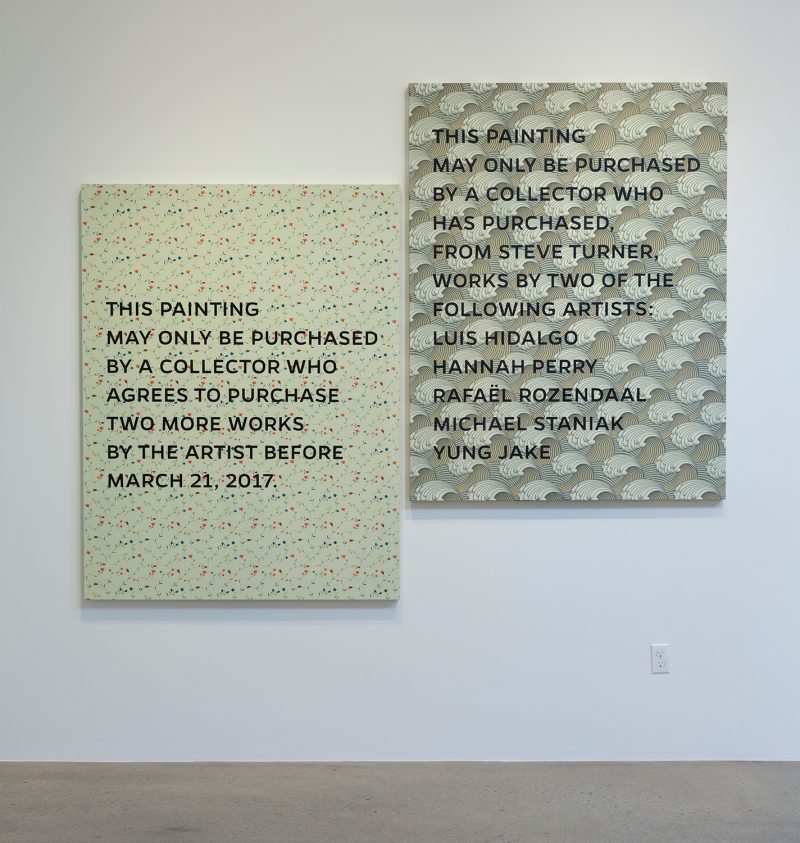
The power relations between the players in the bottom layer are discussed in the series Strings Attached (2015). Although the artist is the producer, he has little to say about how his work is marketed. Gallery owners can decide not to sell work to a collector no if the collector has not previously purchased a work from the gallery or only sell if a customer immediately buys two works or oblige the buyer to donate one of the purchased works to a museum. Lund circumvented these practices by stating the conditions on his canvases.
Invest in Jonas Lund
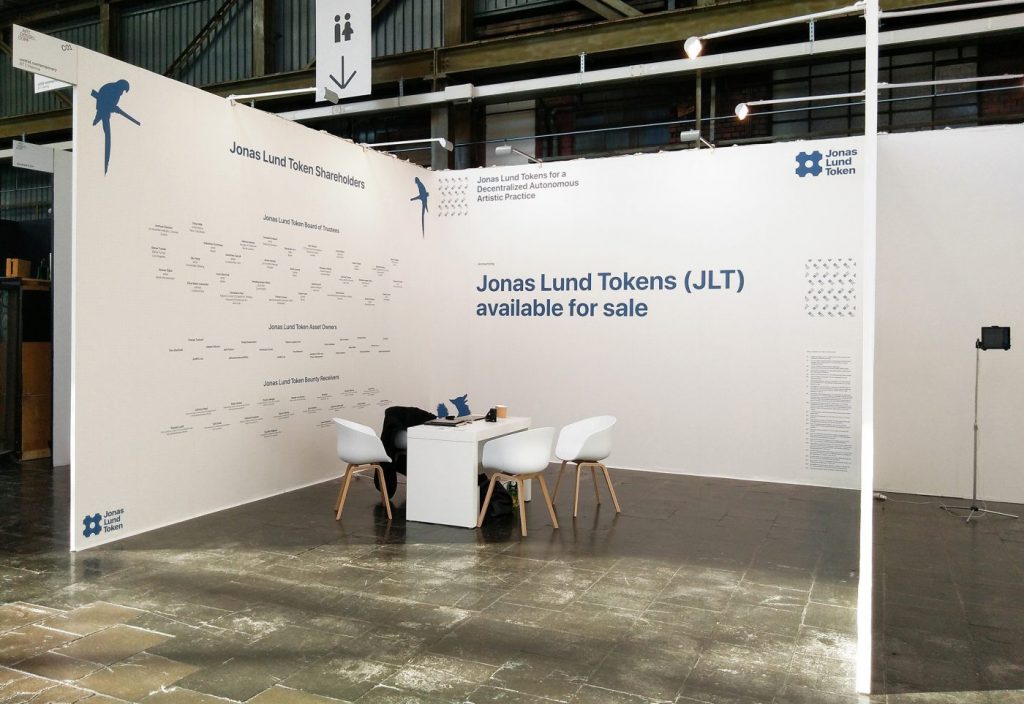
Of course, Lund also saw the possibilities of crypto currencies early on. In 2018, he developed his own Jonas Lund Token, including a daft corporate logo and advertising materials. At art fairs, the booths of his gallerist therefore looked exactly like those of a financial services provider.
This may seem like a far-fetched joke, but data collections and power relations play a major role here too. You can get JLTs by buying one of Lund’s work or by providing him with a service, such as inviting him to a lecture or advertising his work. Lund set up his token in such a way that owners of the JLTs are de facto shareholders in Lund’s artistic practice. He regularly puts questions to his shareholders and their advice is binding.
For you, by you
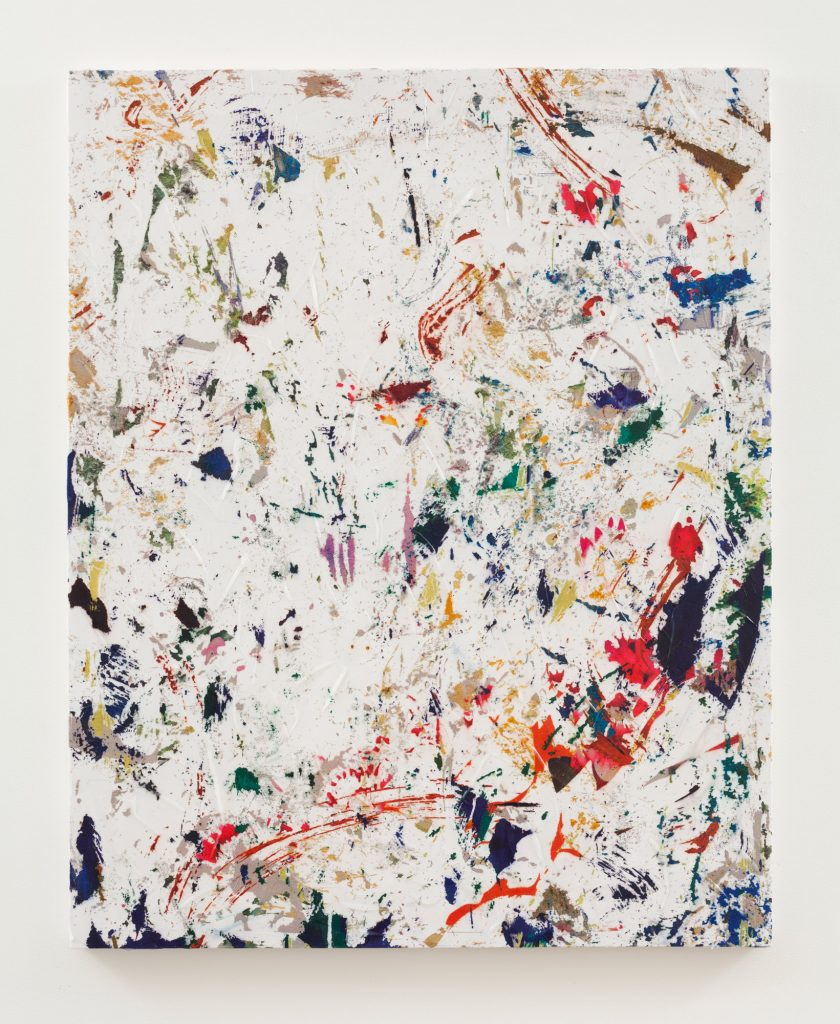
At Art Rotterdam, the Milanese gallery Bianconi is showing the work of this Swedish multimedia artist from the For you series from 2021. Lund created this series in response to the hyper-personalization that takes place on social media. On your favourite platform you are continuously served new content that matches your taste with the aim of letting you spend more time online.

In the works of this series, which include elements of recently auctioned well-known works of art, Lund translated this principle into a series of works that continuously adapts on the basis of algorithms. Just like on Instagram and Tiktok, Lund’s algorithms analyse the way the viewer relates to the works. As a result, the continuously changing compositions gradually match the behaviour of the viewer more and more. Because you, as a viewer, put together the works yourself, just like your social media feed, you become more and more entangled in your own bubble in which you never see anything unwelcome again.
Jonas Lund’s work can be seen in the Solo/Duo section, at Galleria Bianconi.
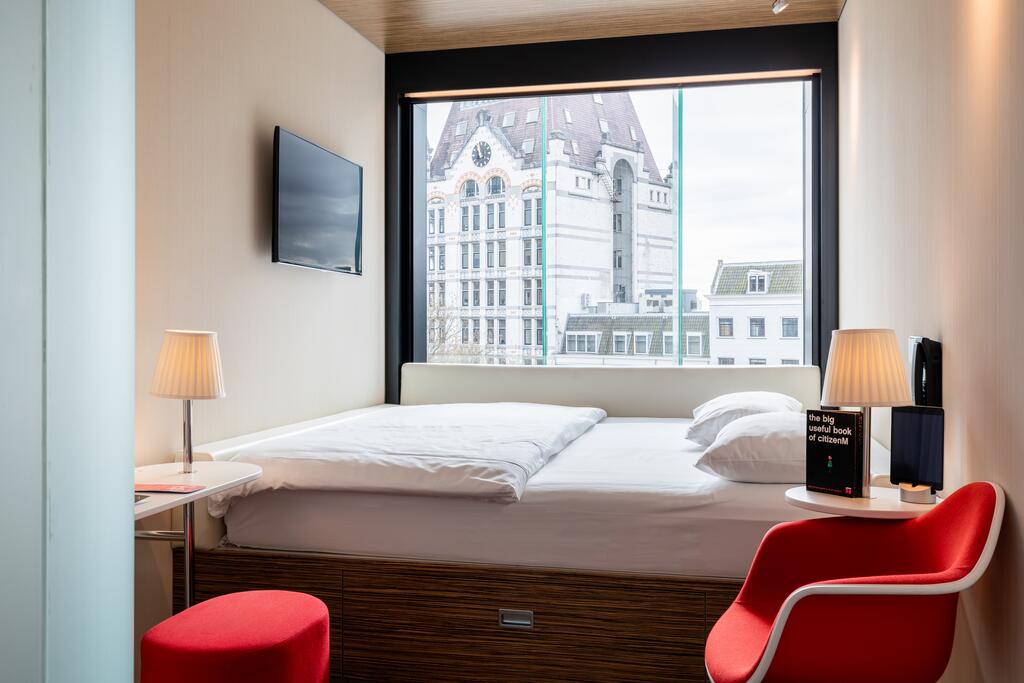
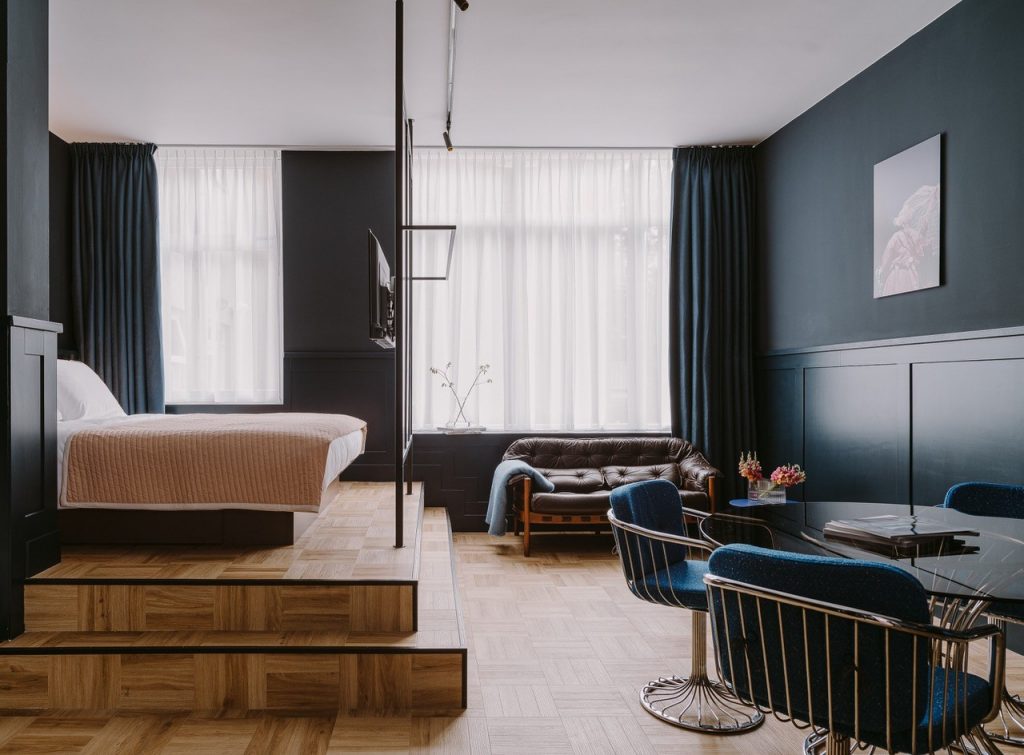
citizenM Rotterdam:
www.citizenM.com/ART2022
Special price: discount of 11% per room per night / king-size bed, including breakfast for 2 persons, VAT, excluding city tax.
Supernova Hotel:
www.supernovahotel.nl
Enter ‘ART010’ as promo code for 10% discount
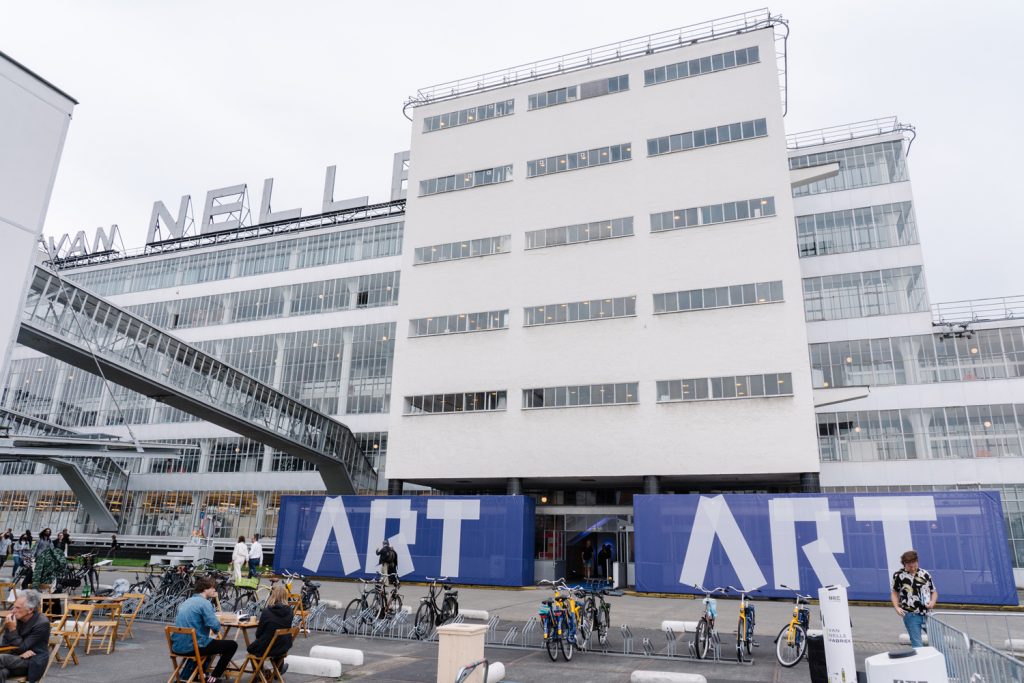
Sculpture Park Sculpture Park will feature ten to twenty primarily large-scale works of art related to nature or the urban environment. The presentation will be located in the Tabaksfabriek (Tobacco Factory), one of the industrial and historic sections of the Van Nelle Fabriek. The architectural details are being developed by spatial design studio Tom Postma Design (known not only for their work at Art Rotterdam, but also Art Basel, Frieze Masters and TEFAF). Part of the exhibition space is dedicated to artists who live in Rotterdam or are graduates of a Rotterdam art academy, since after all, Sculpture Park revolves around the connection with the city of Rotterdam. Rotterdam boasts a unique international collection of over 50 major works of art. These sculptures, placed at important locations throughout the city, form part of the public programme for Rotterdam Art Week. The administrator of this collection, Sculpture International, is also involved in the content and promotion of Sculpture Park at the Van Nelle Fabriek. As part of this involvement, a representative of Sculpture International, together with a representative of Tom Postma Design and a Rotterdam curator/museum director, are all on the selection committee. Stichting Doom en Daad is also an important initiator of Sculpture Park. This foundation, which was established in 2017, is a philanthropic fund that invests in projects that help make Rotterdam attractive and appealing to residents and visitors alike.
Sculpture Park selection committee
The works of art will be chosen by a selection committee consisting of Ove Lucas (director CBK Rotterdam and director Sculpture International Rotterdam), Saskia van Kampen (curator Boijmans Van Beuningen) and Tom Postma (creative director Tom Postma Design).
New Art Section
With the always surprising New Art Section, Art Rotterdam offers a unique presentation of up-and-coming artists. This year, the focus is enhanced. To endorse the philosophy behind Art Rotterdam – discovering new art and encouraging young talent – a central placement has been chosen. Visitors to this 24th edition cannot miss it, as the New Art Section is located directly next to the entrance and its innovative presentations are hard to ignore. Two restaurants are located adjacent to the presentation that are accessible from the entrance area.
Michiel Simons of galerie M.Simons, comments, “As a young gallery owner, I am extremely proud to once again have the opportunity to take part in the New Art Section at the most prominent contemporary art event in the Netherlands. The bold character and exceptional quality of Art Rotterdam make the event a platform where, together with my artists, I can always go the extra mile in creating a presentation that is as unexpected and surprising as possible. I look forward to welcoming visitors in February with a solo presentation of work by Hadrien Gerenton and to get inspired by my fellow gallery owners.”
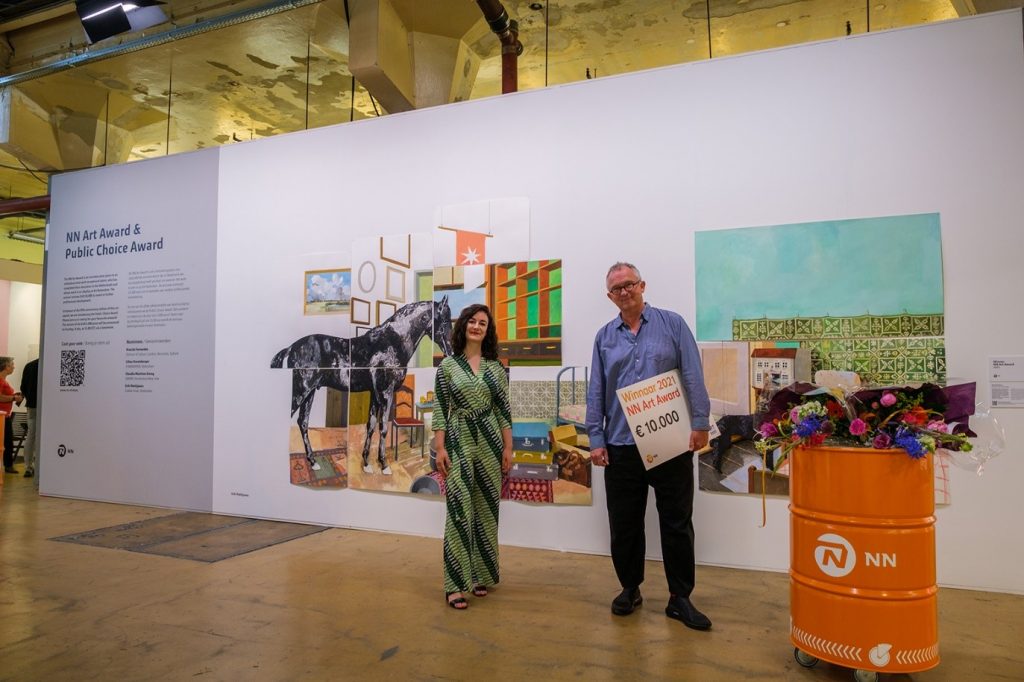
This prize is intended for artists who have completed their education at a Dutch art academy or a Dutch postgraduate institution; and their work can be seen at Art Rotterdam. The criteria: high-quality work, an interesting artistic position and adequate technical execution; authenticity and innovation (with a personal visual language); new perspectives on the world we live in and connection with/source of inspiration for the public. The selection criteria are multi-disciplinary: all media are eligible. The jury for 2022 consists of Yuki Kho, culture journalist; Alexandra Landré, artistic director Stroom, The Hague; Charl Landvreugd, head of research & curatorial practice, Stedelijk Museum Amsterdam; Erik Mattijssen, visual artist and winner of the NN Art Award 2021; Elisah van den Bergh, advisor NN Art Collection. The four nominees will be announced in mid-December 2021. The winner will receive a cash prize of €10,000. In addition, NN Group will purchase one or more works from the four nominees for its corporate collection.
NN Audience Award
The public can also vote online for one of the four nominees via the Nationale-Nederlanden website from mid-January to midnight on Saturday 12 February. The public is also welcome to vote during the exhibition days from Wednesday 9 to Saturday 12 February at the NN Art Award stand. The public favourite will receive a cash prize of €5,000. The winner of the NN Public Choice Award 2022 will be announced online on the closing day of the fair, Sunday 13 February, at 3:00 PM.
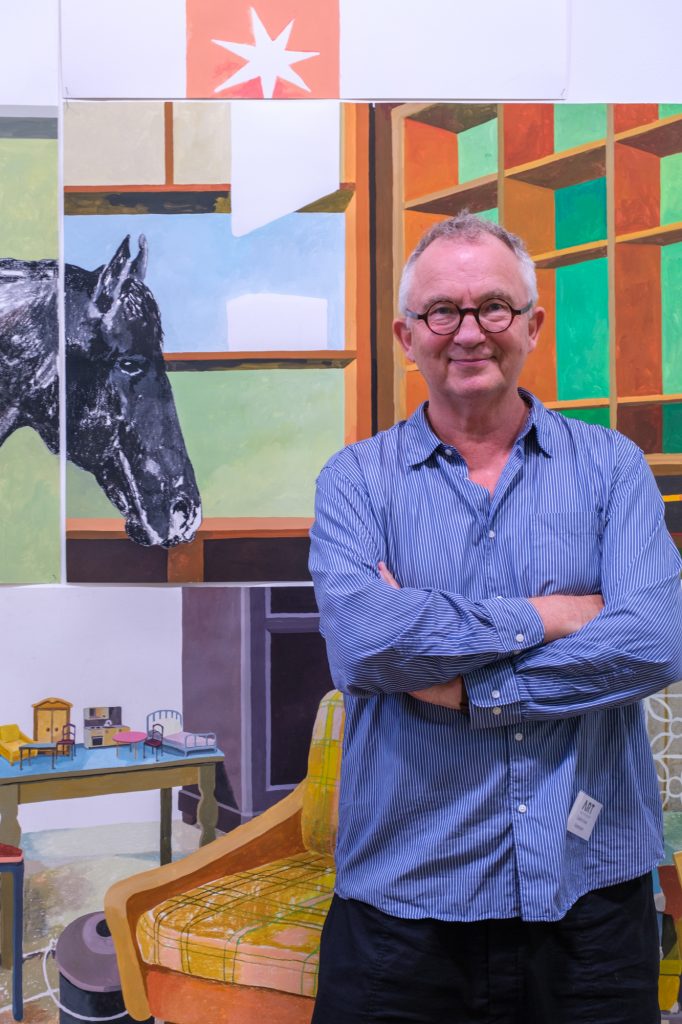
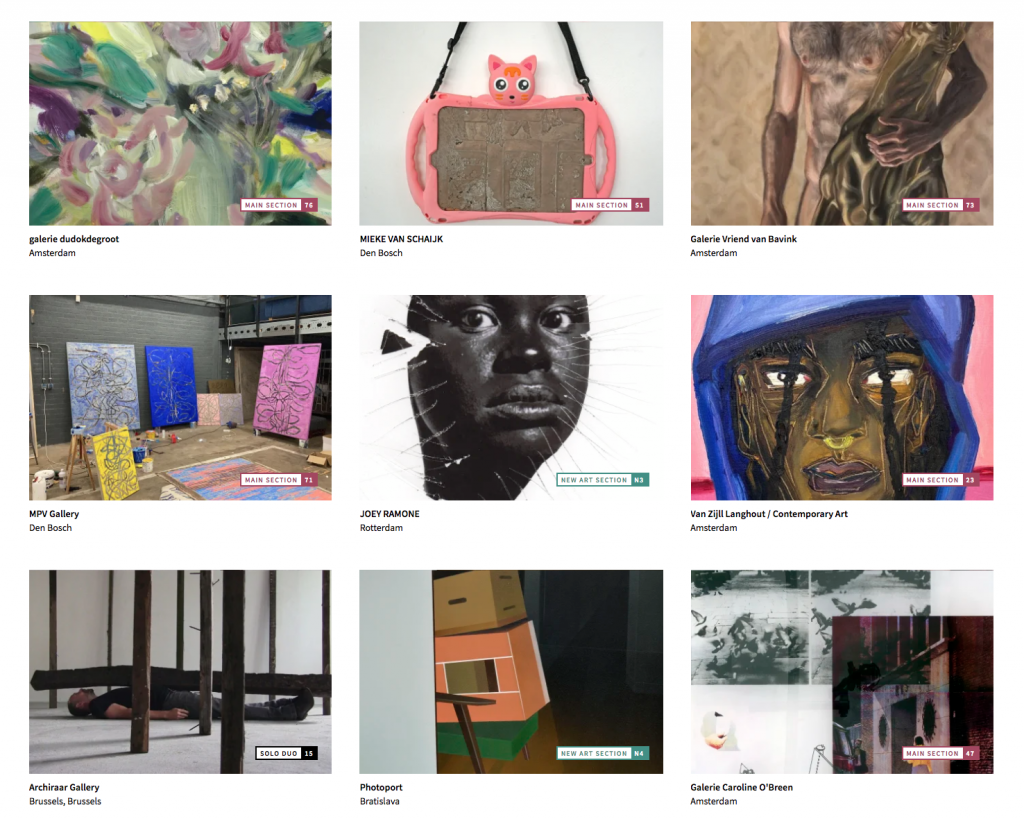
You can find the online catalogue at: GalleryViewer.com


